
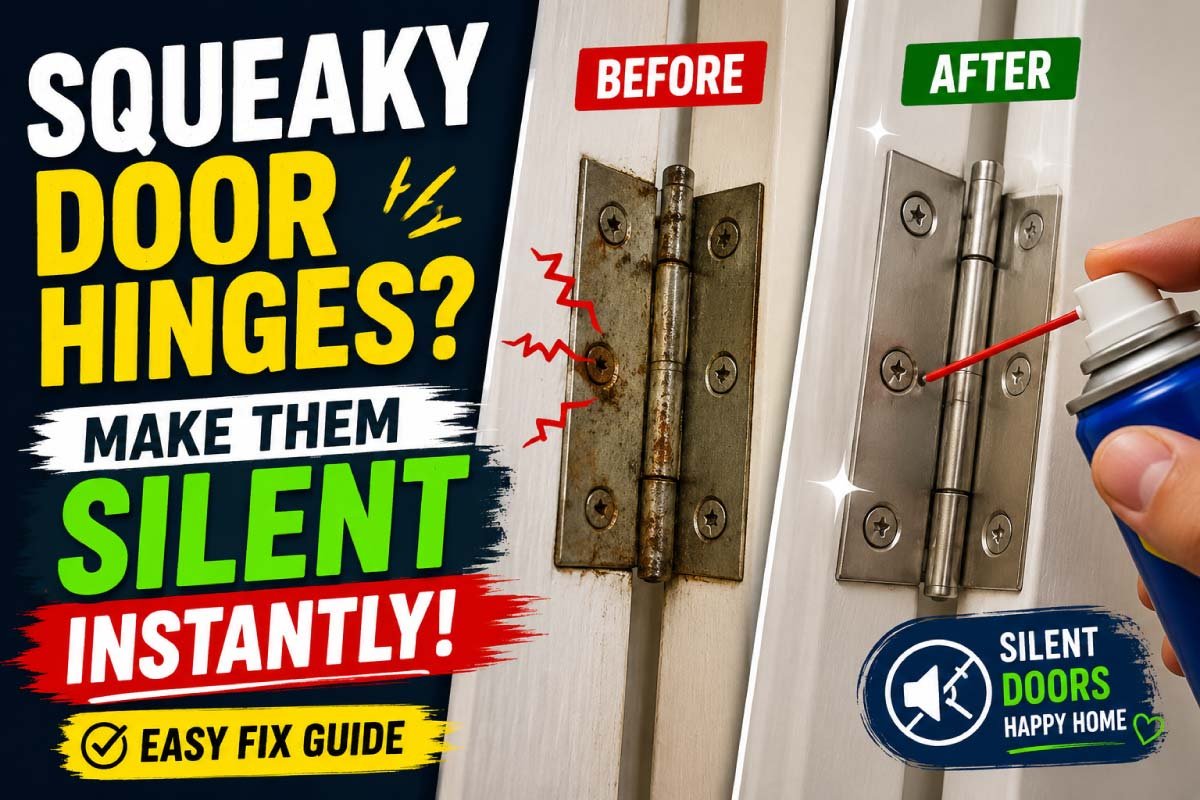
A squeaky door can be one of the most annoying sounds in any home. That high-pitched creak every time you open or close it doesn’t just irritate—it can also make your space feel older and poorly maintained. The good news is that fixing squeaky door hinges is one of the simplest home repairs you can do yourself, often in just a few minutes.
In this guide, you’ll learn why door hinges squeak, what causes the problem, and step-by-step methods to make them silent instantly using tools and materials you probably already have at home. Whether you live in a rented apartment or your own house, these fixes will help you restore quiet and smooth door movement without calling a handyman.
Why Do Door Hinges Start Squeaking?
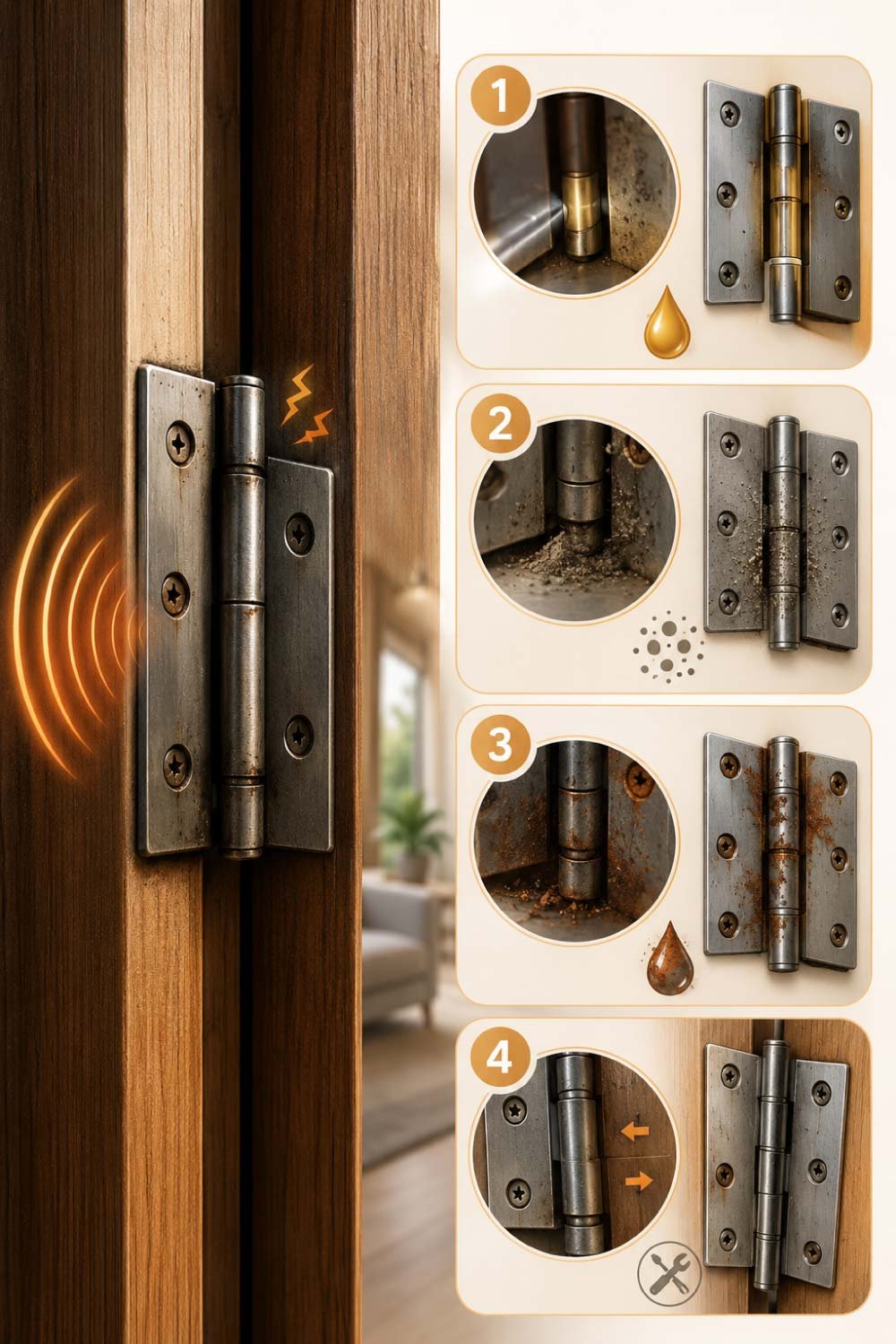
Before jumping into solutions, it helps to understand the cause. A squeaky hinge is not just random—it usually develops over time due to friction, dryness, or internal wear inside the metal mechanism. When two metal surfaces constantly move without proper lubrication or protection, they begin to produce that irritating high-pitched sound.
Here are the most common reasons:
1. Lack of Lubrication
Over time, the factory oil or grease inside hinges naturally dries out or gets pushed away through repeated door movement. Once this protective layer is gone, metal parts start rubbing directly against each other, creating friction and that familiar squeaking noise.
- Old grease loses effectiveness over time
- Constant door use removes lubrication
- Metal-on-metal contact increases sound
2. Dust and Dirt Build-Up
Dust particles easily enter hinges, especially in kitchens, outdoor doors, or high-traffic areas. When dust mixes with old grease, it forms a thick, sticky layer that blocks smooth movement and increases resistance inside the hinge.
- Dust enters through small gaps
- Grease traps dirt over time
- Sticky buildup slows hinge movement
3. Rust Formation
Moisture and humidity can slowly cause rust inside metal hinges, especially in bathrooms or exterior doors. Rust creates rough surfaces that prevent smooth rotation, leading to stiffness and squeaking sounds whenever the door is opened or closed.
- Moisture triggers corrosion
- Rust roughens metal surfaces
- Movement becomes uneven and noisy
4. Loose or Misaligned Hinges
Not all squeaks come from lack of oil—sometimes the issue is structural. Loose screws or slightly shifted hinges can cause uneven pressure, making the door move awkwardly and produce sound during opening and closing.
- Screws may loosen over time
- Door alignment shifts gradually
- Uneven movement causes friction noise
Quick Fix #1: Lubricate the Hinges (Fastest Solution)
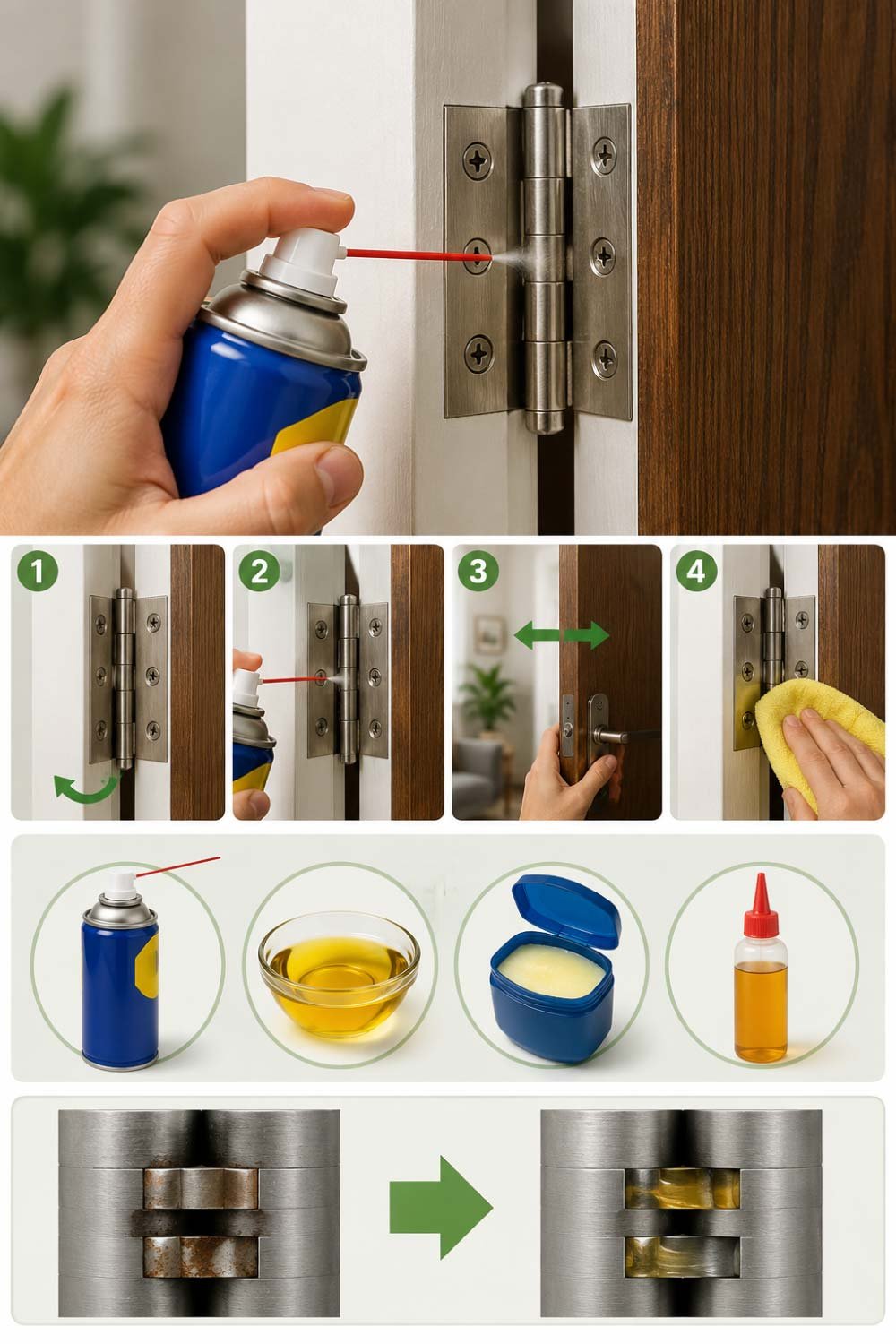
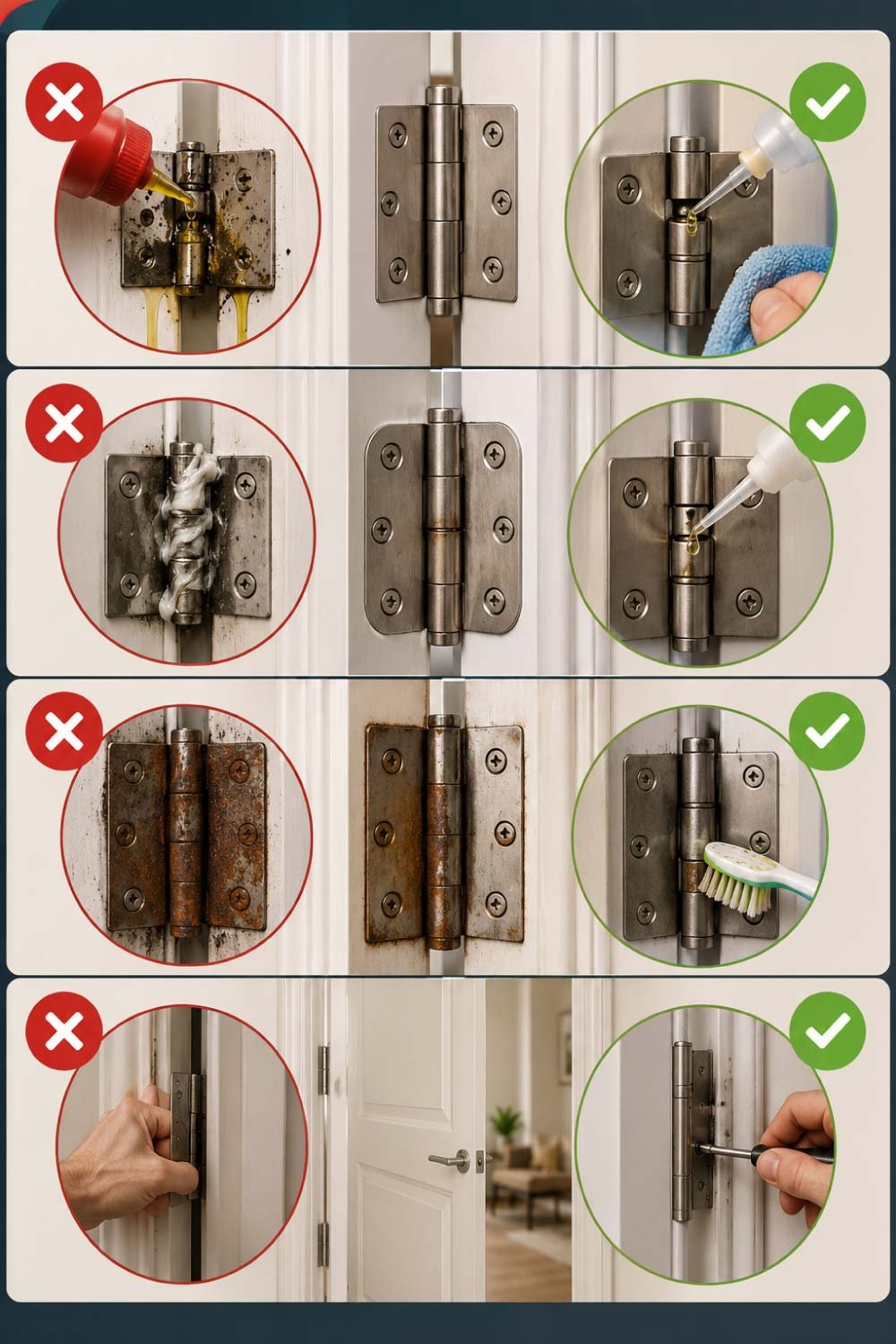
This is the simplest and most effective way to stop squeaking immediately. Lubrication restores smooth movement by reducing direct metal-to-metal contact inside the hinge. In most cases, this quick fix alone is enough to completely eliminate noise within seconds.
What You Can Use:
- WD-40 or any spray lubricant
- Cooking oil (in emergencies)
- Petroleum jelly
- Machine oil
Step-by-Step Process:
- Close the door slightly so the hinge pins are visible
- Spray lubricant directly into the hinge gap
- Open and close the door 5–10 times to spread oil evenly
- Wipe off excess oil with a cloth
Why It Works:
Lubrication reduces friction between metal parts, allowing smooth and silent movement instantly.
Tip: WD-40 is ideal for long-term smoothness, while cooking oil works only as a temporary fix.
Quick Fix #2: Remove and Clean the Hinge Pin
If lubrication doesn’t fully solve the problem, the hinge may have deep dirt, rust, or hardened grease trapped inside. Removing the hinge pin allows a deeper clean, restoring proper movement and eliminating hidden buildup that causes ongoing squeaking.
Tools Needed:
- Hammer
- Flathead screwdriver
- Cloth
- Cleaning solution or vinegar
Steps:
- Place a screwdriver under the hinge pin and gently tap it upward using a hammer
- Once removed, clean it thoroughly with a cloth
- If rust is present, soak it in vinegar for 30–60 minutes
- Dry completely before reinstalling
- Apply a little oil before putting it back
Result:
This removes deep dirt buildup and restores smooth motion.
Quick Fix #3: Use Petroleum Jelly for Silent Movement
If you don’t have spray lubricant at home, petroleum jelly is a strong and long-lasting alternative. It sticks well to metal surfaces and provides smooth movement for a longer time compared to light oils.
How to Apply:
- Remove the hinge pin or slightly lift the door
- Apply a small amount of petroleum jelly on the pin
- Reinsert and move the door back and forth
Why It Works:
Petroleum jelly acts as a thick lubricant that stays in place longer than oil and reduces friction effectively, keeping the hinge quiet for weeks.
Quick Fix #4: Tighten Loose Screws
Sometimes squeaking is not caused by the hinge mechanism itself but by loose screws that affect door alignment. When hinges are not tightly fixed, the door shifts slightly during movement, creating friction and noise.
Steps:
- Check all hinge screws on door and frame
- Use a screwdriver to tighten them
- Replace screws if they keep spinning
Extra Tip:
If screw holes are worn out, insert a wooden matchstick or toothpick with glue before reinserting screws. This improves grip and stability.
Quick Fix #5: Soap or Candle Wax Hack
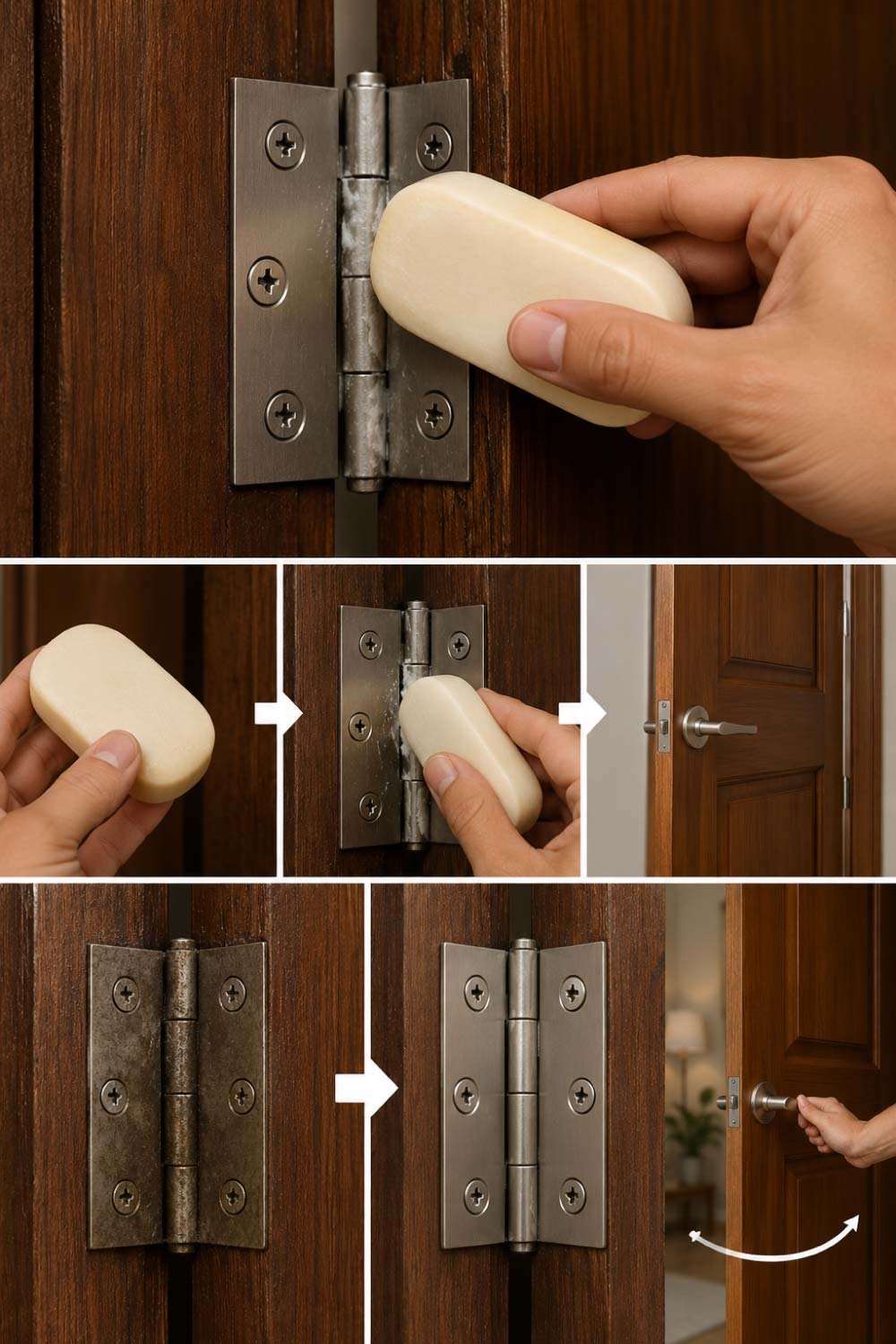
This traditional method is surprisingly effective when no lubricant is available. Soap or wax creates a smooth coating on the metal surface, reducing friction and temporarily stopping squeaking.
How to Do It:
- Take a bar of soap or candle
- Rub it directly on the hinge pin and moving parts
- Move the door several times to spread it evenly
Why It Works:
Soap and wax act as dry lubricants that reduce metal friction and allow smoother movement.
Best for: Quick emergency fixes when no oil is available.
Final Thoughts
A squeaky door might seem like a small annoyance, but it can quickly become frustrating in daily life. Fortunately, it’s one of the easiest home problems to fix. Whether you use lubricant, soap, petroleum jelly, or simply tighten screws, the solution is usually quick and inexpensive.
The key is to identify the cause first—dry hinges, dirt buildup, rust, or misalignment—and then apply the right fix. With regular maintenance, you can keep your doors opening and closing smoothly and silently for years.
So the next time your door starts “talking,” you’ll know exactly how to make it quiet again—instantly.
Don’t miss out on this helpful guide!