

Mold around windows is a very common household problem, especially in areas with humidity, poor ventilation, or temperature changes between indoors and outdoors. It usually appears as black, green, or dark patches on window frames, corners, or even nearby walls. At first, it may look harmless, but if ignored, it can spread quickly, damage surfaces, and even affect indoor air quality.
The good news is that mold around windows can be cleaned effectively and prevented from coming back with the right approach. This guide will walk you through why it happens, how to remove it safely, and what you can do to keep your windows mold-free for the long term.
Why Mold Grows Around Windows
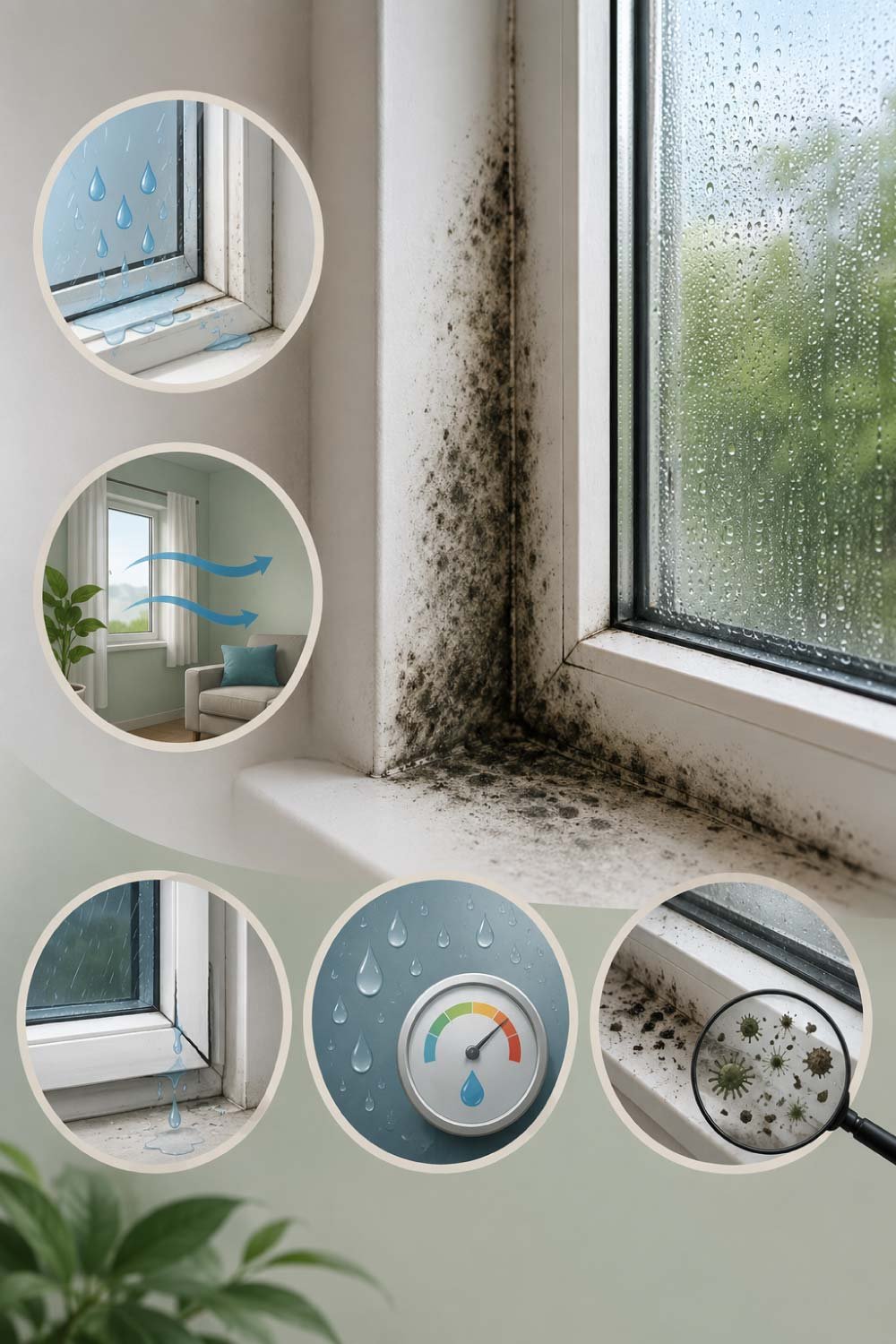
Window mold is a common household issue caused by moisture imbalance and environmental conditions. Understanding the root causes helps you prevent it effectively instead of just cleaning it repeatedly. Several everyday factors contribute to mold growth around window frames and glass areas.
To deal with mold properly, it’s important to understand why it appears in the first place. Mold is a type of fungus that grows in damp, warm, and poorly ventilated areas. Window areas often provide the perfect environment for it.
1. Condensation Build-Up
One of the biggest reasons is condensation. When warm indoor air meets a cold window surface, water droplets form. Over time, this moisture collects around frames and corners, creating a perfect breeding ground for mold.
2. Poor Ventilation
Rooms without proper airflow trap moisture inside. Kitchens, bedrooms, and bathrooms are especially prone to this issue. If air cannot circulate properly, humidity levels rise and mold starts forming.
3. Leaking Windows
If your window seals are damaged or not properly installed, rainwater can seep inside. Even a small leak can keep the area constantly damp.
4. High Humidity Levels
In humid climates, moisture in the air stays high throughout the day. Without dehumidification or airflow, windows become one of the first places where mold appears.
5. Dirt and Organic Material
Dust, dirt, and organic particles on window frames can act as food for mold spores. When combined with moisture, it speeds up mold growth.
Signs of Mold Around Windows
Mold around windows rarely appears overnight. It usually starts with subtle visual and sensory changes that homeowners often overlook. Recognizing early signs can help you stop the spread before it damages frames, paint, and indoor air quality, saving both repair costs and long-term structural issues.
Before mold becomes a serious problem, there are usually early warning signs you can notice:
- Black or green patches on window frames
- Musty or damp smell near windows
- Peeling paint or bubbling wood
- Water droplets forming regularly on glass
- Dark streaks on corners or seals
If you notice any of these signs, it’s best to take action immediately before it spreads further.
How to Clean Mold Around Windows Safely
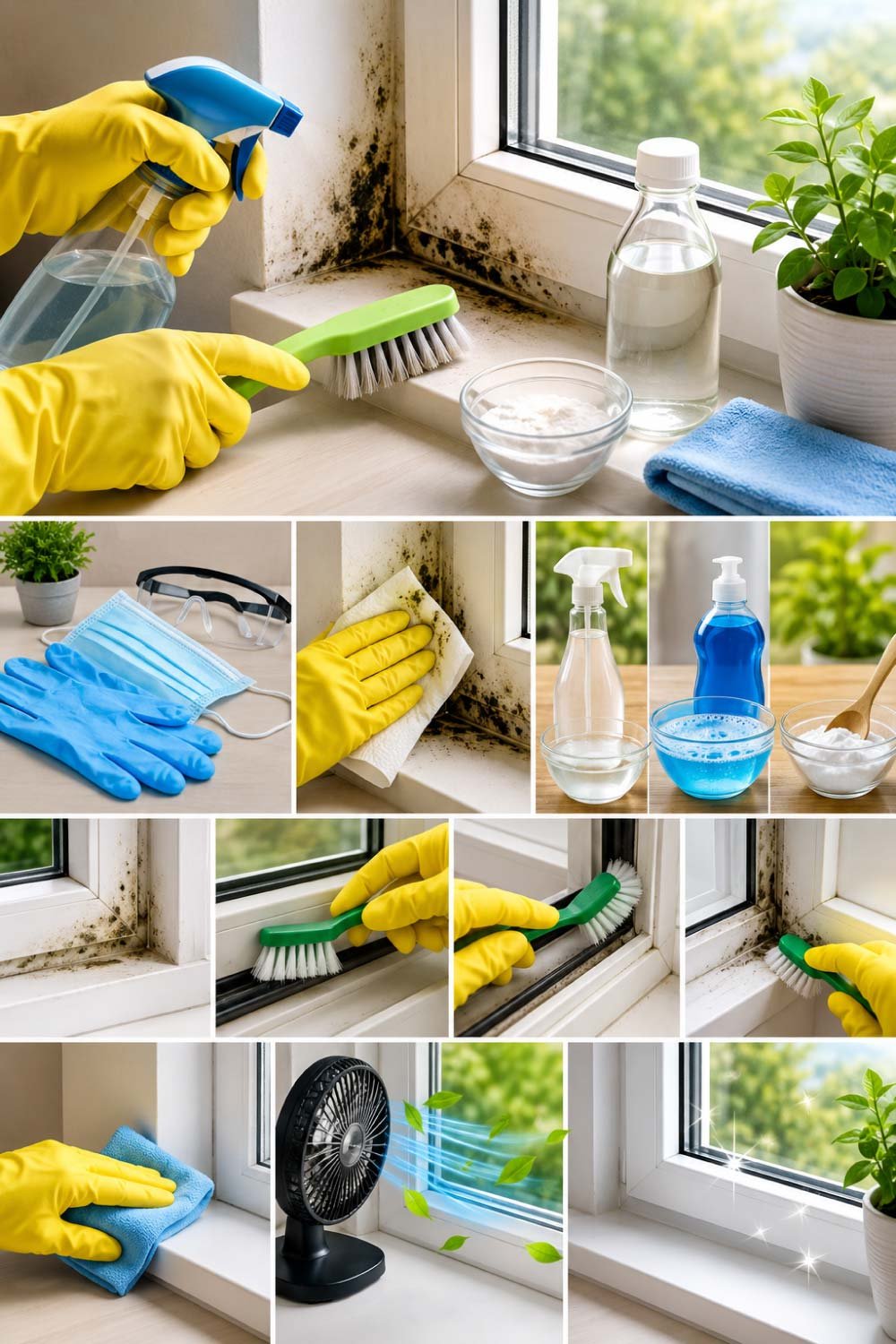
Cleaning mold from window areas requires careful steps to ensure spores are removed without spreading them further into your home. Using safe methods and proper preparation is essential to protect both your health and your window materials during the cleaning process.
Cleaning mold is not complicated, but it must be done carefully to avoid spreading spores into the air. Here’s a step-by-step method that works effectively.
Step 1: Prepare Safety Measures
Before starting any mold cleaning process, it is important to prioritize safety to avoid exposure to harmful spores. Proper preparation reduces health risks and ensures the cleaning process is more effective and controlled, especially in enclosed indoor spaces where airflow may be limited.
Before you begin cleaning:
Wear gloves to protect your skin
Use a mask to avoid inhaling spores
Open nearby windows for ventilation
Safety is important because mold spores can irritate allergies and respiratory systems.
Step 2: Remove Loose Mold
Removing surface mold first is a key step because it prevents spores from spreading during wet cleaning. Dry removal helps reduce contamination and makes the deeper cleaning process more effective and easier to manage across affected window areas overall efficiency.
Start by wiping the affected area with a dry cloth or paper towel. This helps remove surface-level mold and prevents it from spreading when wet cleaning begins. Dispose of the cloth immediately after use.
Also Read:
Step 3: Use a Cleaning Solution
Using the right cleaning solution is essential for killing mold effectively and preventing it from returning. Different household ingredients can be used safely depending on the severity of mold and the type of window surface you are treating without causing damage.
You can choose from simple household solutions:
Option 1: Vinegar Solution
Mix equal parts white vinegar and water
Spray directly on mold areas
Let it sit for 10–15 minutes
Scrub gently with a brush or sponge
Option 2: Soap and Water
Mix mild dish soap with warm water
Scrub the area thoroughly
Wipe clean with a dry cloth
Option 3: Baking Soda Paste
Mix baking soda with a little water
Apply paste to mold spots
Scrub after 10 minutes
Vinegar is especially effective because it kills most mold types and prevents regrowth.
Step 4: Scrub Window Frames Properly
Thorough scrubbing ensures that mold hidden in corners and joints is completely removed. This step requires attention to detail because window frames often have small spaces where mold can remain even after initial cleaning efforts if not cleaned carefully.
Use a soft brush or old toothbrush to clean corners and edges where mold hides. Avoid using very harsh tools on wooden frames, as they can cause damage.
Focus on:
- Window corners
- Rubber seals
- Sliding tracks
- Hidden joints
Step 5: Dry the Area Completely
Drying the surface properly is one of the most important steps after mold cleaning because leftover moisture is what allows mold to return quickly. Even if the area looks clean, hidden dampness inside corners or seals can restart growth within days if not handled correctly.
Moisture is the main reason mold returns. After cleaning, make sure everything is completely dry.
- Use a dry cloth
- Open windows for airflow
- Use a fan if needed
Never leave the area damp.
Also Read:
How to Fix Shower Water Flow: A Complete DIY Troubleshooting Guide
Deep Cleaning for Severe Mold
When mold has been growing for a long time, it often penetrates deeper into surfaces like sealants, wood, and hidden frame areas. In such cases, surface cleaning alone is not enough, and stronger methods are required to fully eliminate the problem.
If mold has spread heavily or has been there for a long time, simple cleaning may not be enough.
Use Hydrogen Peroxide
Hydrogen peroxide is stronger and can penetrate deeper mold layers effectively. It not only removes visible mold but also helps kill spores that are embedded inside porous surfaces, reducing the chance of regrowth.
- Spray on affected areas
- Leave it for 10 minutes
- Scrub thoroughly
Replace Damaged Sealant
Old silicone or rubber seals often trap mold inside tiny cracks where cleaning tools cannot reach. If contamination is severe, replacement is the most effective long-term solution.
- Remove infected sealant completely
- Clean the surface underneath
- Apply fresh sealant
Mold can grow inside old sealant and come back again and again.
Sand Wooden Frames (If Needed)
Wooden frames absorb moisture easily, making them more vulnerable to deep mold growth. Light sanding helps remove embedded mold and prepares the surface for repainting or sealing.
- Sand affected areas lightly
- Clean dust after sanding
- Repaint or reseal the surface
Also Read:
How to Fix a Leaking Tap: A Complete Step-by-Step Guide (DIY)
How to Prevent Mold Around Windows
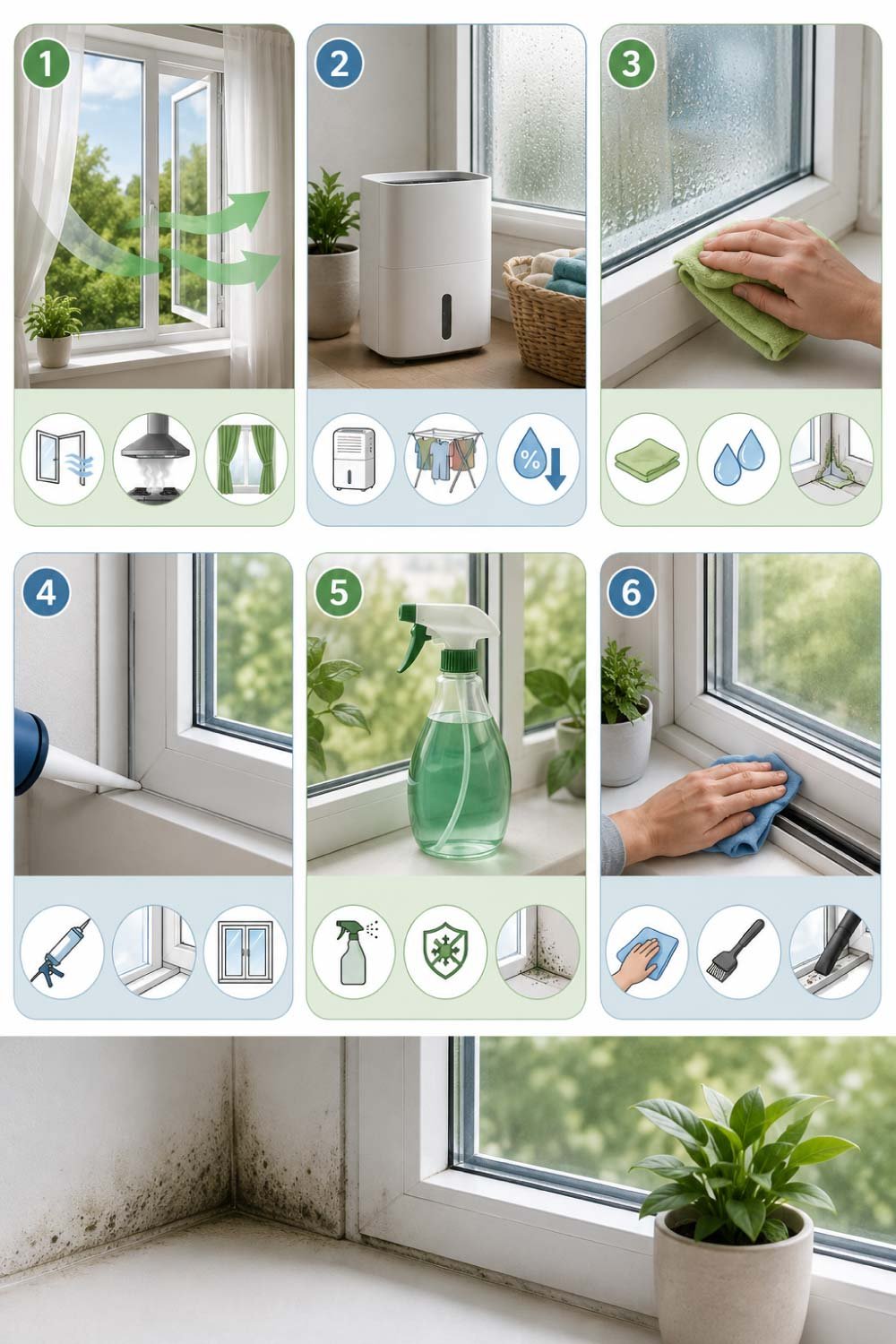
Preventing mold is always easier and more cost-effective than repeatedly cleaning it. By controlling moisture, improving airflow, and maintaining cleanliness, you can significantly reduce the chances of mold returning around your windows.
Cleaning is only half the solution. Prevention ensures mold does not return.
1. Improve Air Circulation
Good airflow prevents moisture from settling around windows and keeps surfaces dry. Poor ventilation is one of the biggest reasons mold develops repeatedly in the same areas.
- Open windows daily for fresh air
- Use exhaust fans when cooking
- Keep curtains slightly open for ventilation
Air movement reduces moisture buildup.
2. Reduce Indoor Humidity
Excess humidity creates the perfect environment for mold growth, especially in closed rooms. Keeping humidity levels under control helps protect both windows and walls from recurring issues.
- Use a dehumidifier if possible
- Avoid drying clothes indoors
- Keep humidity below 50% if you can
Even small changes in humidity levels can make a big difference.
3. Wipe Condensation Daily
Condensation is a direct trigger for mold around windows. If water droplets are left sitting for long periods, they slowly lead to staining, dampness, and fungal growth.
- Wipe window glass every morning
- Remove water droplets immediately
- Dry corners and seals properly
A simple daily wipe can save a lot of future cleaning effort.
4. Seal Window Gaps Properly
Gaps and leaks allow outside moisture to enter, increasing dampness around frames. Proper sealing ensures windows remain dry and protected even during rain or humid weather conditions.
- Reapply silicone sealant if needed
- Fix broken frames or gaps
- Ensure windows close tightly
This prevents outside moisture from entering.
5. Use Anti-Mold Spray
After cleaning, protective sprays help slow down mold regrowth by creating a barrier on surfaces. These are especially useful in high-humidity areas or rooms with poor ventilation.
- Apply after cleaning and drying
- Reapply periodically for best results
- Focus on corners and seals
6. Keep Windows Clean Regularly
Regular maintenance prevents dust, dirt, and organic particles from building up, which otherwise feed mold growth when moisture is present.
- Clean window areas weekly
- Wipe frames and tracks
- Remove dust buildup regularly
Common Mistakes to Avoid
Many people unintentionally make mold problems worse by using incorrect cleaning methods or ignoring early signs. Avoiding these mistakes helps ensure mold does not return quickly and keeps your windows in better condition for longer.
Many people accidentally make mold worse while trying to clean it. Avoid these mistakes:
- Using too much water during cleaning
- Painting over mold without cleaning it
- Ignoring small patches of mold
- Closing windows in damp weather
- Using strong chemicals without ventilation
These mistakes can cause mold to return even faster.
Health Risks of Ignoring Window Mold

Mold is not just a visual problem; it can also affect indoor air quality and lead to health issues if left untreated for long periods. People with allergies, asthma, or weak immune systems are especially at risk from prolonged exposure.
Mold is not just a cosmetic issue. Long-term exposure can affect health.
Possible effects include:
- Allergies and sneezing
- Coughing and breathing issues
- Eye and skin irritation
- Worsening asthma symptoms
That’s why early cleaning and prevention are important.
Final Thoughts
Mold around windows is a problem that almost every home faces at some point, but it is completely manageable. With regular cleaning, proper ventilation, and moisture control, you can keep your windows clean, fresh, and mold-free.
The key is consistency. Even small habits like wiping condensation, opening windows daily, and checking seals can make a big difference. Instead of waiting for mold to spread, taking preventive action keeps your home healthier and more comfortable in the long run.
Also Read:
How to Repair a Leaking Pipe Under the Sink (DIY Homeowner Guide)