
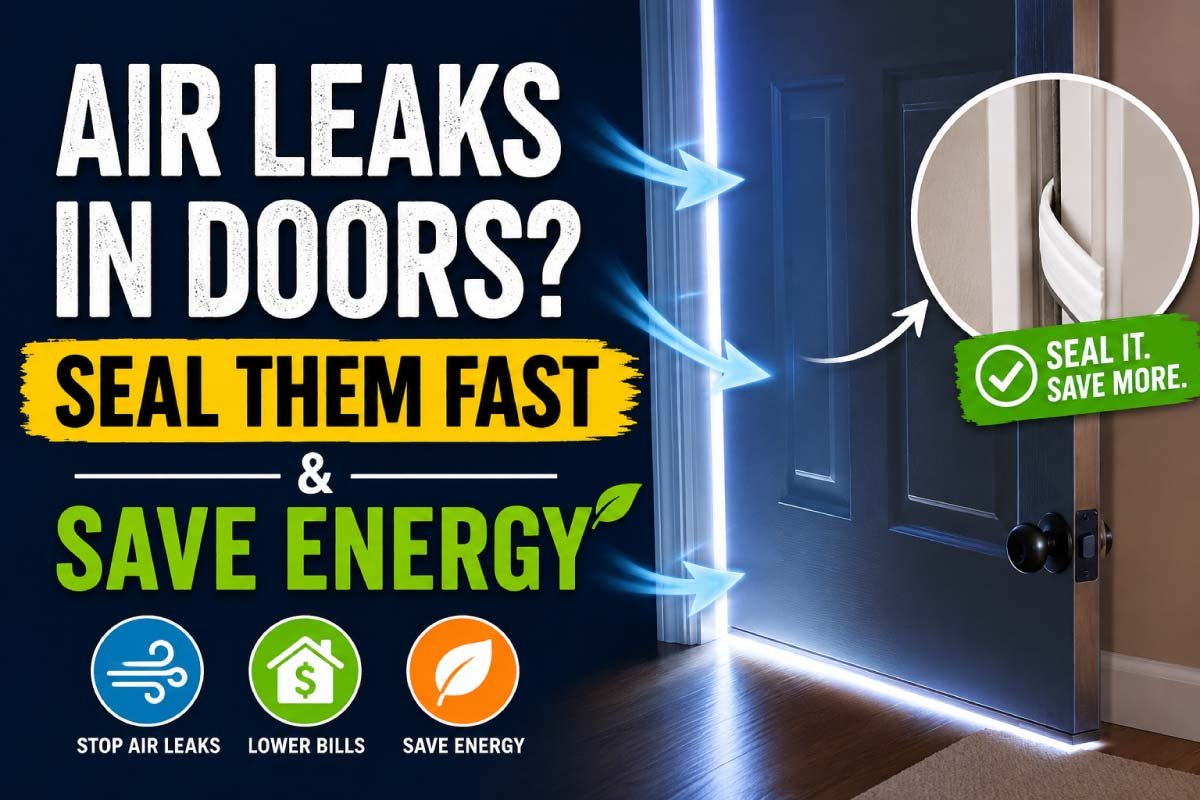
If your home feels colder in winter or hotter in summer even when the doors are shut, air leaks around your doors could be the hidden reason. These small gaps may not look serious, but they can quietly waste a surprising amount of energy every day. The result? Higher electricity bills, uncomfortable rooms, and a constant struggle to maintain indoor temperature.
The good news is that sealing air leaks in doors is one of the fastest, cheapest, and most effective home improvement fixes you can do yourself. You don’t need advanced tools or professional skills—just a bit of attention and the right materials.
In this detailed guide, we’ll explore why air leaks happen, how to find them, and how to seal them quickly so you can save energy and enjoy a more comfortable home.
Table of Contents
ToggleWhy Air Leaks in Doors Are a Big Problem

Air leaks might seem minor, but they create a constant exchange between indoor and outdoor air. This forces your heating or cooling system to work harder than necessary.
Here’s what happens when doors are not properly sealed:
- Warm air escapes during winter
- Cool air leaks out during summer
- Outdoor dust, noise, and insects enter easily
- Energy consumption increases
- HVAC systems wear out faster
Even a small gap around a door can behave like a permanently open window over time. That’s why fixing air leaks is not just about comfort—it’s about saving money.
Common Causes of Air Leaks in Doors
Before you fix the problem, it helps to understand where and why leaks happen. Most air leaks come from natural wear and tear or poor installation.
1. Worn-Out Weatherstripping
Weatherstripping is the rubber or foam seal around the door frame. Over time, it becomes hard, cracked, or flattened, allowing air to pass through.
2. Gaps Between Door and Frame
If the door is not properly aligned, even a slightly crooked installation can create visible gaps.
3. Damaged Door Sweeps
The bottom part of the door often has a sweep or seal. If this gets damaged, air can easily flow underneath.
4. Shrinking or Expanding Wood
Wooden doors change size due to humidity and temperature changes, creating seasonal gaps.
5. Poor Installation Work
If the door was not installed properly, uneven spacing around the frame can lead to constant air leakage.
How to Detect Air Leaks in Your Doors
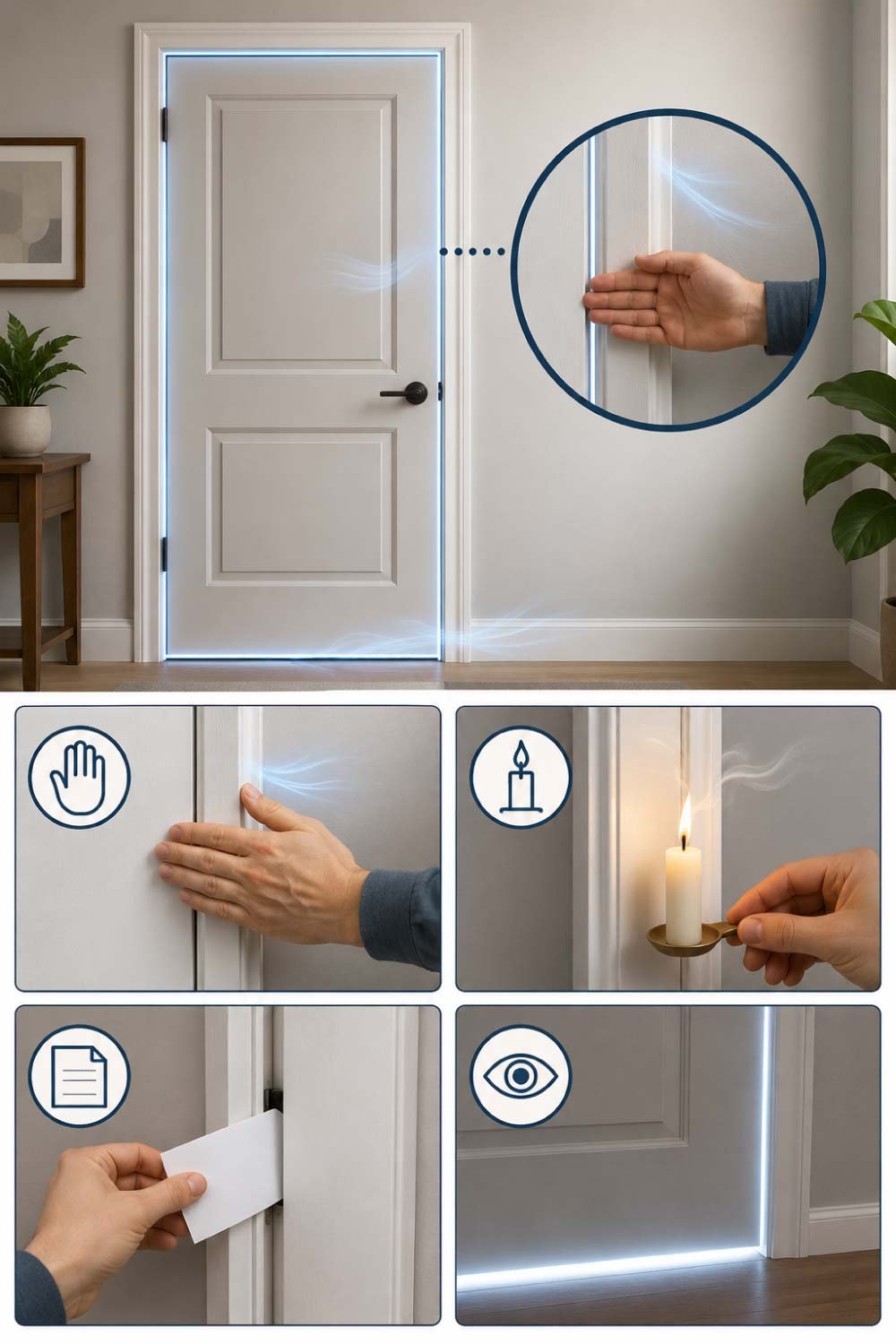
Finding air leaks is easier than most people think. You don’t need special equipment—just a few simple tricks.
Hand Test Method
Run your hand slowly around the edges of the closed door. If you feel a breeze, there’s a leak.
Candle or Incense Stick Test
Light a candle or incense stick and move it around the door frame. If the flame or smoke flickers, air is moving through that spot.
Paper Test
Place a piece of paper between the door and frame, then close the door. If you can pull it out easily, the seal is weak.
Visual Inspection
Look for visible light coming through gaps when the door is closed.
Once you identify the problem areas, you can move on to fixing them.
Quick Fixes for Sealing Air Leaks in Doors
Now let’s look at practical solutions you can apply immediately. These methods are affordable and highly effective.
1. Replace Old Weatherstripping
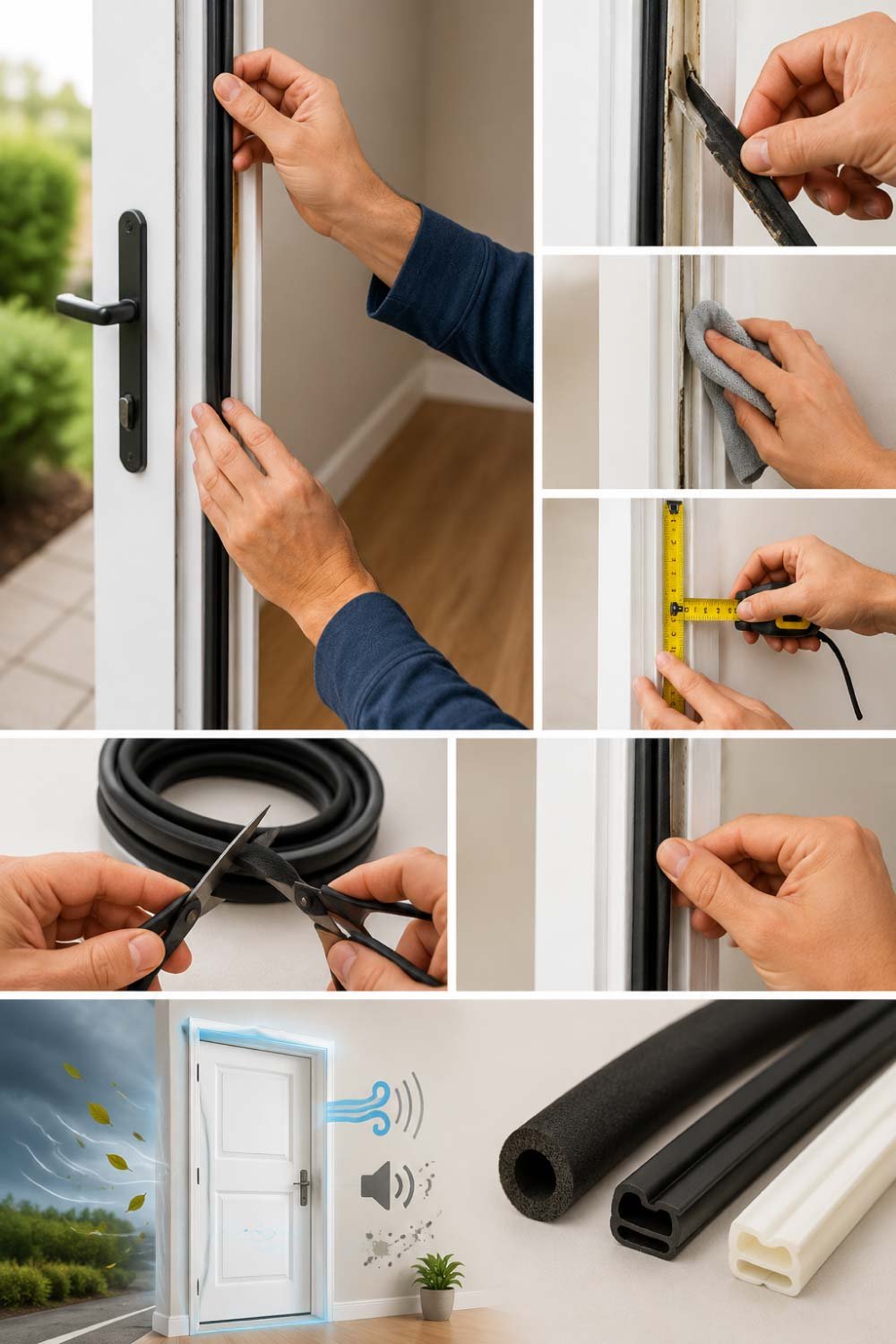
One of the fastest ways to fix air leaks is by replacing worn-out weatherstripping.
How to Do It:
- Remove old strips carefully
- Clean the surface thoroughly
- Measure the door frame
- Cut new weatherstripping to size
- Press it firmly into place
Benefits:
- Blocks air completely
- Improves insulation instantly
- Reduces noise and dust
Foam, rubber, and silicone strips are commonly available and easy to install.
2. Install a Door Sweep
If air is entering from the bottom of the door, a door sweep is the perfect solution.
Steps:
- Measure door width
- Buy a matching sweep (rubber or brush type)
- Screw or stick it onto the bottom edge
- Ensure it lightly touches the floor
Why It Works:
It blocks airflow without making the door difficult to open or close.
3. Use Caulk for Small Gaps
Caulking is ideal for sealing tiny cracks between the door frame and wall.
How to Apply:
- Clean the gap area
- Load caulk into a gun
- Apply a steady bead along the gap
- Smooth it with a finger or tool
- Let it dry fully
Best For:
- Stationary gaps
- Frame edges
- Long-term sealing
4. Adjust the Door Hinges
Sometimes the problem is not the seal but the door alignment.
Fixing Steps:
- Tighten loose screws on hinges
- Replace damaged screws with longer ones
- Adjust hinge position if needed
A properly aligned door reduces gaps naturally.
5. Add Foam Tape for Temporary Fixes
If you need a quick, low-cost solution, foam tape works well.
Usage:
- Peel off backing
- Stick it along door edges
- Press firmly
Advantage:
It’s easy to install and replace, making it great for rental homes.
6. Install a Draft Stopper
A draft stopper is a fabric tube placed at the bottom of the door.
Benefits:
- Blocks cold/hot air instantly
- Easy to move
- No installation required
You can even make one at home using cloth and filling material.
7. Use Door Frame Insulation Kits
For long-term energy savings, insulation kits provide a more professional solution.
Includes:
- Seals for all edges
- Adhesive strips
- Sometimes bottom sweep
These kits are especially useful for older homes.
Don’t miss out on this helpful guide!
Don’t miss out on this helpful guide!
Long-Term Benefits of Sealing Air Leaks
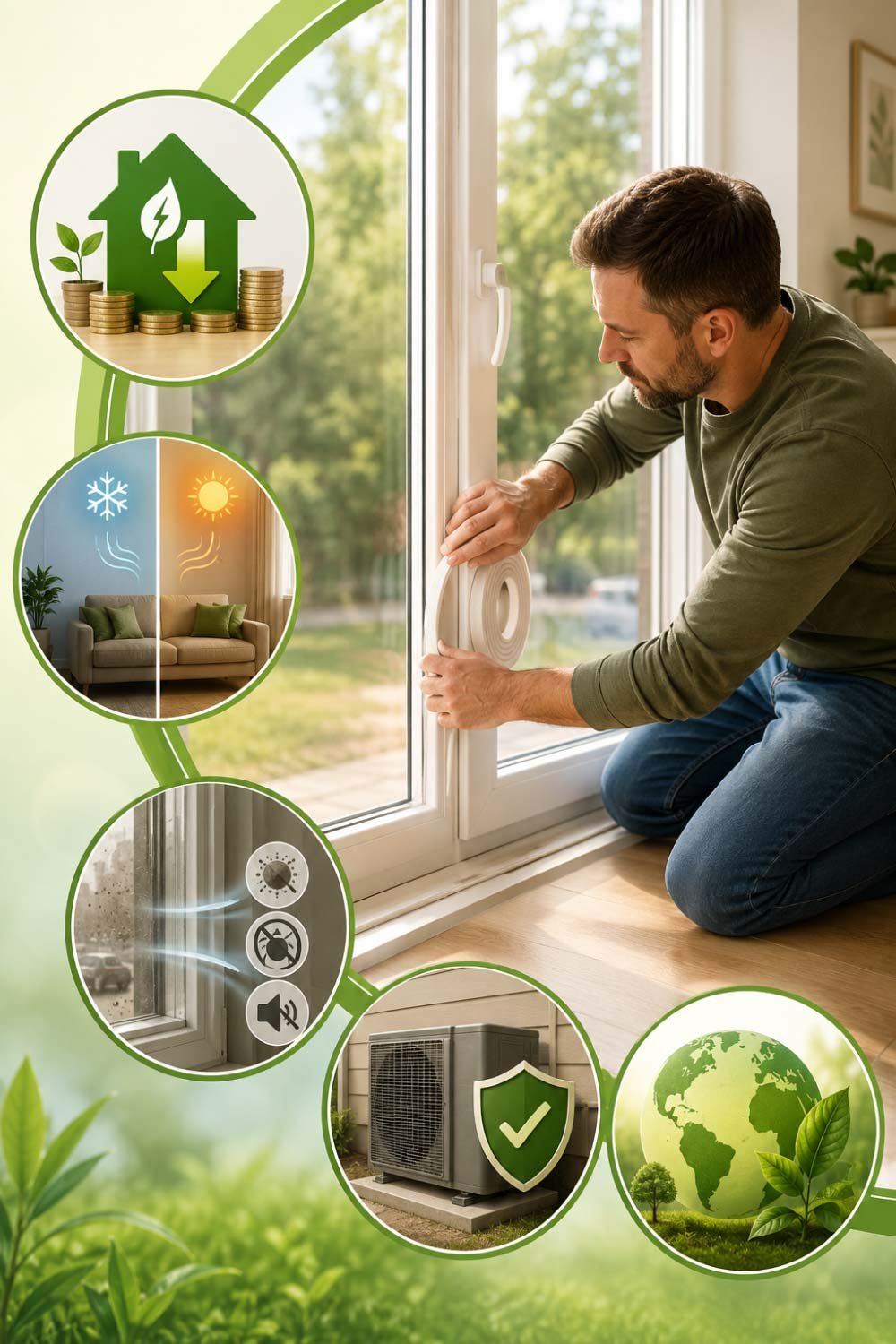
Sealing air leaks around doors and windows is more than just a quick fix for drafts. It provides long-term benefits that improve comfort, reduce household expenses, and protect your home environment. Even small gaps can allow significant heat loss during winter and cool air loss during summer. By properly sealing these openings, you create a more energy-efficient, comfortable, and healthier living space for years to come.
1. Lower Energy Bills
One of the biggest advantages of sealing air leaks is reduced energy consumption. When warm or cool air escapes through gaps, heating and cooling systems must work harder to maintain the desired indoor temperature. This increases electricity usage and monthly utility bills. Proper sealing keeps conditioned air inside the home, allowing HVAC systems to run more efficiently and lowering overall energy costs throughout the year.
2. Better Indoor Comfort
Air leaks often create uncomfortable drafts and uneven room temperatures. Some areas may feel too cold in winter or too warm in summer because outside air continuously enters through small gaps. Sealing these leaks helps maintain a steady indoor climate, making rooms feel more comfortable and balanced. A properly sealed home also reduces sudden temperature changes that can make living spaces unpleasant during extreme weather conditions.
3. Reduced Dust and Noise
Gaps around doors and windows do not only let air inside—they also allow dust, dirt, insects, and outdoor noise to enter the home. Sealing these openings creates a tighter barrier against outside elements. This helps keep indoor spaces cleaner and quieter, especially in busy neighborhoods or dusty environments. Reduced dust can also improve indoor air quality and make cleaning easier over time.
4. Longer Appliance Life
Heating and cooling systems experience extra strain when air leaks force them to operate continuously. Overworking HVAC equipment can lead to faster wear and tear, increased maintenance costs, and a shorter lifespan for appliances. By sealing leaks and improving energy efficiency, your heating and cooling systems can run with less effort. This reduces mechanical stress and helps appliances last longer while maintaining better performance.
5. Eco-Friendly Living
Reducing energy waste is not only good for your budget but also beneficial for the environment. Homes that use less electricity and fuel produce fewer carbon emissions and place less demand on energy resources. Sealing air leaks is a simple yet effective way to support environmentally friendly living. Small improvements in energy efficiency can collectively make a significant positive impact on environmental conservation over time.
Don’t miss out on this helpful guide!
Common Mistakes to Avoid
Sealing air leaks around doors is usually a simple home improvement task, but certain mistakes can reduce the effectiveness of the repair. Incorrect installation or poor material choices may allow drafts to continue or even create new problems. By understanding these common errors before starting, you can ensure a stronger seal, better energy efficiency, and longer-lasting results without damaging the door or frame.
Using the Wrong Material
Not all weatherstripping or sealing materials are suitable for every type of door or gap size. Using material that is too thin may fail to block air leaks, while overly thick material can prevent the door from closing properly. Before purchasing supplies, carefully measure the size of the gaps around the door. Choosing the correct material ensures proper sealing, smooth door operation, and long-lasting performance without unnecessary adjustments later.
Ignoring Door Alignment
Many homeowners focus only on sealing gaps without checking whether the door itself is properly aligned. If the door is sagging, tilted, or uneven, adding weatherstripping alone may not solve the problem. Misalignment can continue to create gaps and place pressure on the frame. Always inspect the hinges and door position first. Correcting alignment before sealing ensures the door closes evenly and the seal works effectively.
Over-Sealing the Door
Applying too much weatherstripping or using overly thick sealing material can create excessive pressure when closing the door. This may make the door difficult to open and shut, damage the frame over time, or cause the weatherstripping to wear out quickly. The goal is to create a snug seal without forcing the door. Properly fitted sealing materials should block drafts while still allowing smooth and comfortable operation.
Skipping Surface Cleaning
One of the most overlooked steps during sealing is cleaning the surface beforehand. Dust, grease, moisture, and old adhesive residue can prevent weatherstripping and sealants from sticking properly. If the surface is dirty, the material may peel off quickly and lose effectiveness. Before installation, wipe the door and frame thoroughly with a clean cloth and allow the area to dry completely for the best adhesion and long-lasting results.
When to Consider Replacing the Door
Sometimes, repairs are not enough. You may need a new door if:
- The frame is badly warped
- Cracks are too large
- Repairs don’t stop air leaks
- Energy loss is still high
Modern insulated doors are designed to prevent air leakage much more effectively.
Don’t miss out on this helpful guide!
Final Thoughts
Air leaks in doors are a small problem that can create big discomfort and unnecessary energy costs. The positive side is that they are easy to fix with simple tools and materials.
Whether you choose weatherstripping, caulking, door sweeps, or quick foam tape solutions, each method helps improve your home’s insulation and comfort.
By sealing those hidden gaps today, you not only save money but also create a more peaceful, energy-efficient living space.