
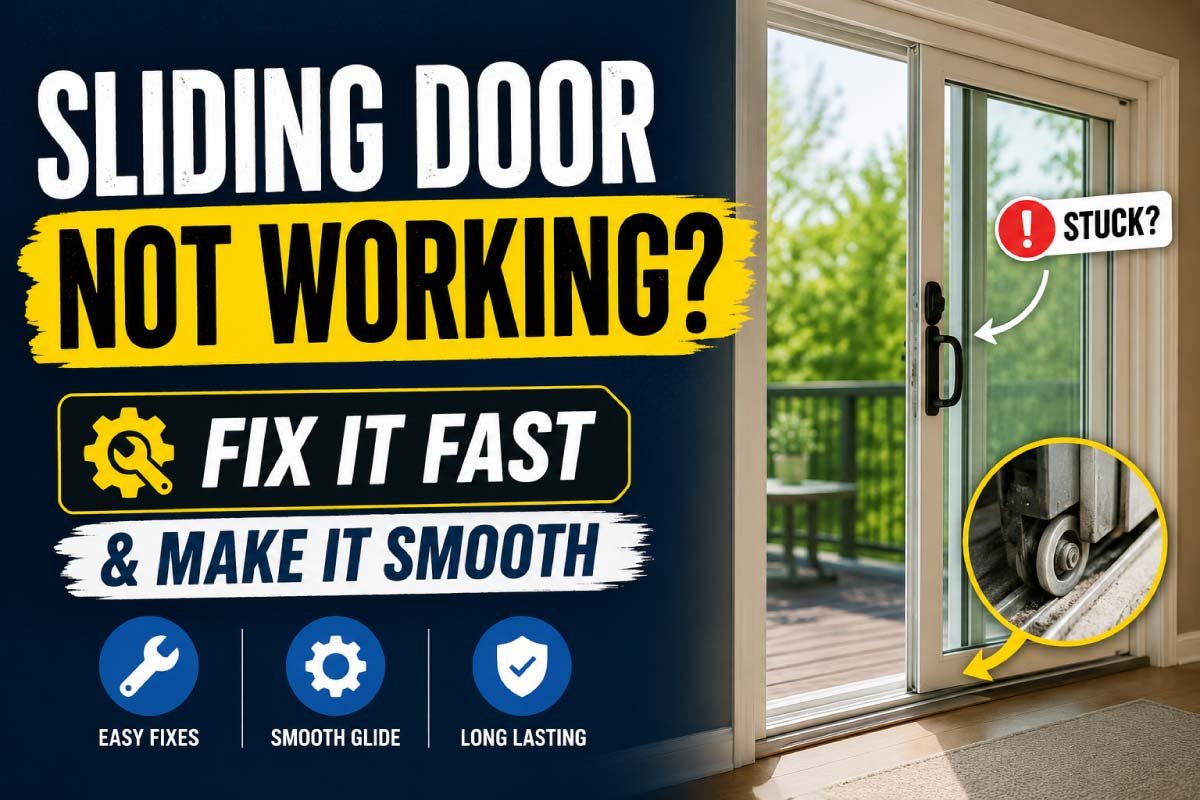
Sliding doors are one of those home features we barely notice—until they stop working. When they start sticking, dragging, jumping off track, or refusing to slide at all, it can quickly become frustrating. The good news is that most sliding door problems are not serious and can be fixed at home without calling a professional.
Whether you’re dealing with a wardrobe door, patio door, or room divider, the issues are usually similar: dirt buildup, worn rollers, misaligned tracks, or loose hardware. In this guide, you’ll learn how to diagnose the problem and fix it quickly so your sliding door moves smoothly again.
Table of Contents
ToggleWhy Sliding Doors Stop Working Properly
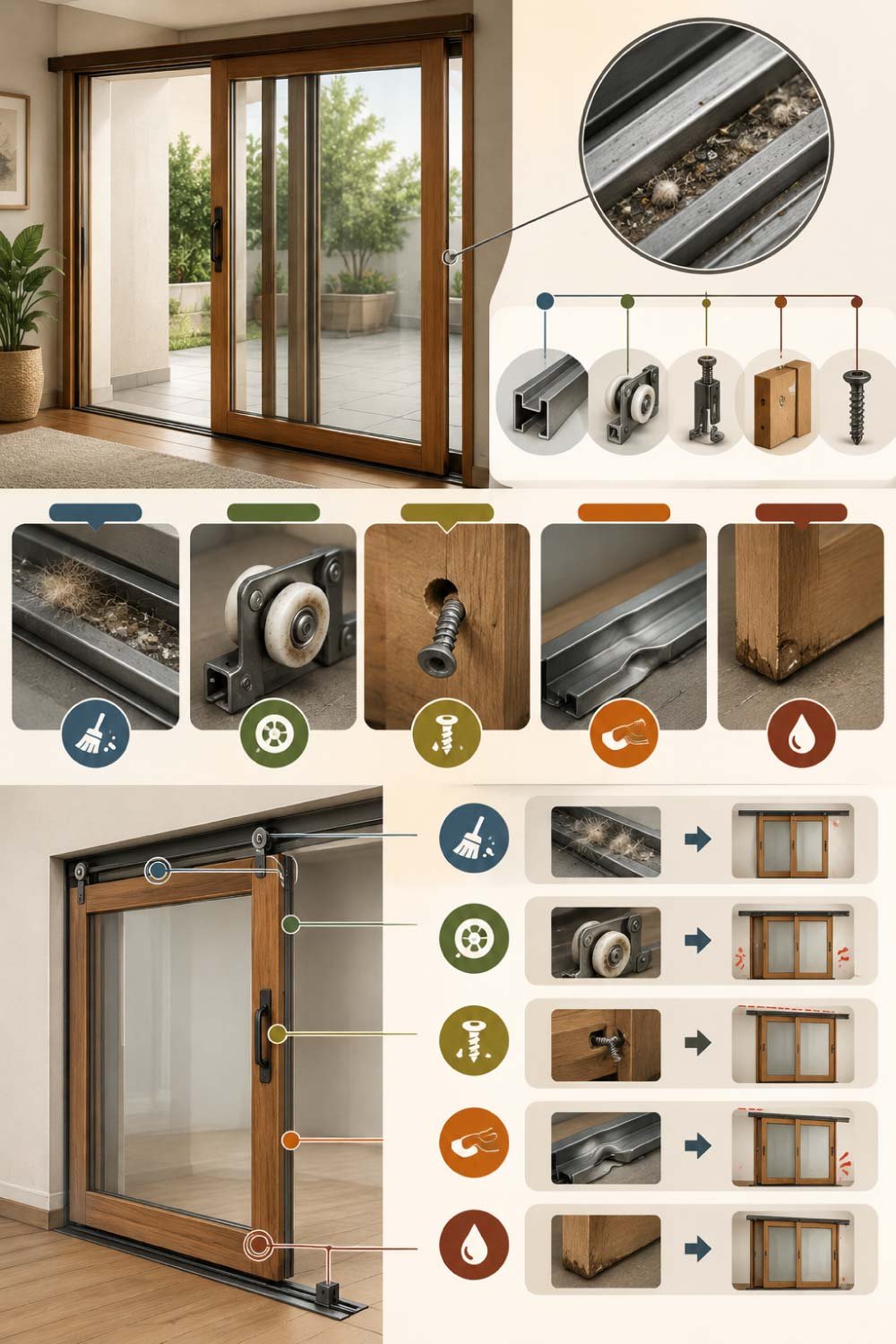
Sliding doors are simple but rely on multiple interacting parts. When any part develops wear, blockage, or misalignment, movement becomes difficult or uneven. Understanding the root causes helps you diagnose problems faster and avoid unnecessary replacements or costly repairs.
Key components involved:
- Tracks (top and bottom guides)
- Rollers or wheels
- Alignment and balance system
- Door frame and mounting screws
- Clear, debris-free sliding path
Common failure triggers:
- Dust and dirt buildup in tracks
- Worn-out or broken rollers
- Loose or missing screws
- Bent or damaged track sections
- Moisture causing wood swelling
Before jumping into repairs, it helps to understand what usually goes wrong. Sliding doors are simple systems, but they depend on a few key parts working together:
Tracks (top and bottom guides)
Rollers or wheels
Alignment system
Door frame and screws
Clean, obstruction-free path
When even one of these components is compromised, the entire door becomes difficult to operate.
Common reasons sliding doors fail:
Dirt, dust, or pet hair in the track
Damaged or worn-out rollers
Loose screws causing misalignment
Bent or dented tracks
Swollen wooden frames due to humidity
Improper installation over time
Once you identify the cause, fixing it becomes much easier.
Step 1: Inspect the Sliding Door Carefully
Before attempting any repair, a careful inspection helps you understand the exact issue affecting your sliding door. Many problems look similar at first glance, but close observation reveals whether the issue is mechanical, structural, or simply due to dirt and obstruction.
What to observe during inspection:
- Where the door sticks or resists movement
- Whether it drags on one side or the floor
- Any unusual noises during sliding
- Visible gaps or uneven alignment
Areas to check closely:
- Bottom track for dirt or blockage
- Top track for alignment issues
- Roller movement and condition
- Loose screws or fittings
Start by observing how the door behaves.
Ask yourself:
Does it stick at one point or throughout the movement?
Is it scraping the floor or track?
Does it tilt to one side?
Is it hard to push or pull?
Slowly move the door back and forth and watch closely. Most problems reveal themselves visually.
Also check:
Bottom track for debris
Top track for alignment
Screws on rollers and frame
Any visible damage or bending
A proper inspection saves time and prevents unnecessary repairs.
Step 2: Clean the Tracks Thoroughly
Dirty tracks are one of the most frequent reasons sliding doors stop gliding smoothly. Dust, debris, and grime accumulate over time, increasing friction and blocking roller movement. A proper cleaning routine often restores performance without needing any mechanical repairs or part replacements.
Effective cleaning approach:
- Remove loose dirt using a vacuum cleaner
- Scrub corners with a small brush
- Wipe using a damp cloth
- Use mild soap for stubborn buildup
- Dry completely before use
Maintenance tips:
- Clean tracks regularly every few weeks
- Avoid letting dust accumulate for long periods
- Keep pets away from track areas when possible
In most cases, a dirty track is the main culprit behind a sliding door not working smoothly.
Over time, dust, hair, grease, and small debris build up inside the track and block the rollers.
How to clean it properly:
Remove loose dust using a vacuum cleaner
Use a small brush (like a toothbrush) for corners
Wipe the track with a damp cloth
For stubborn grime, use mild soap and water
Dry the track completely before testing
Pro Tip:
A small amount of silicone spray after cleaning can greatly improve smoothness and reduce friction.
Avoid using heavy grease or oil—they attract more dust and make the problem worse over time.
Also Read:
Step 3: Check and Adjust the Rollers
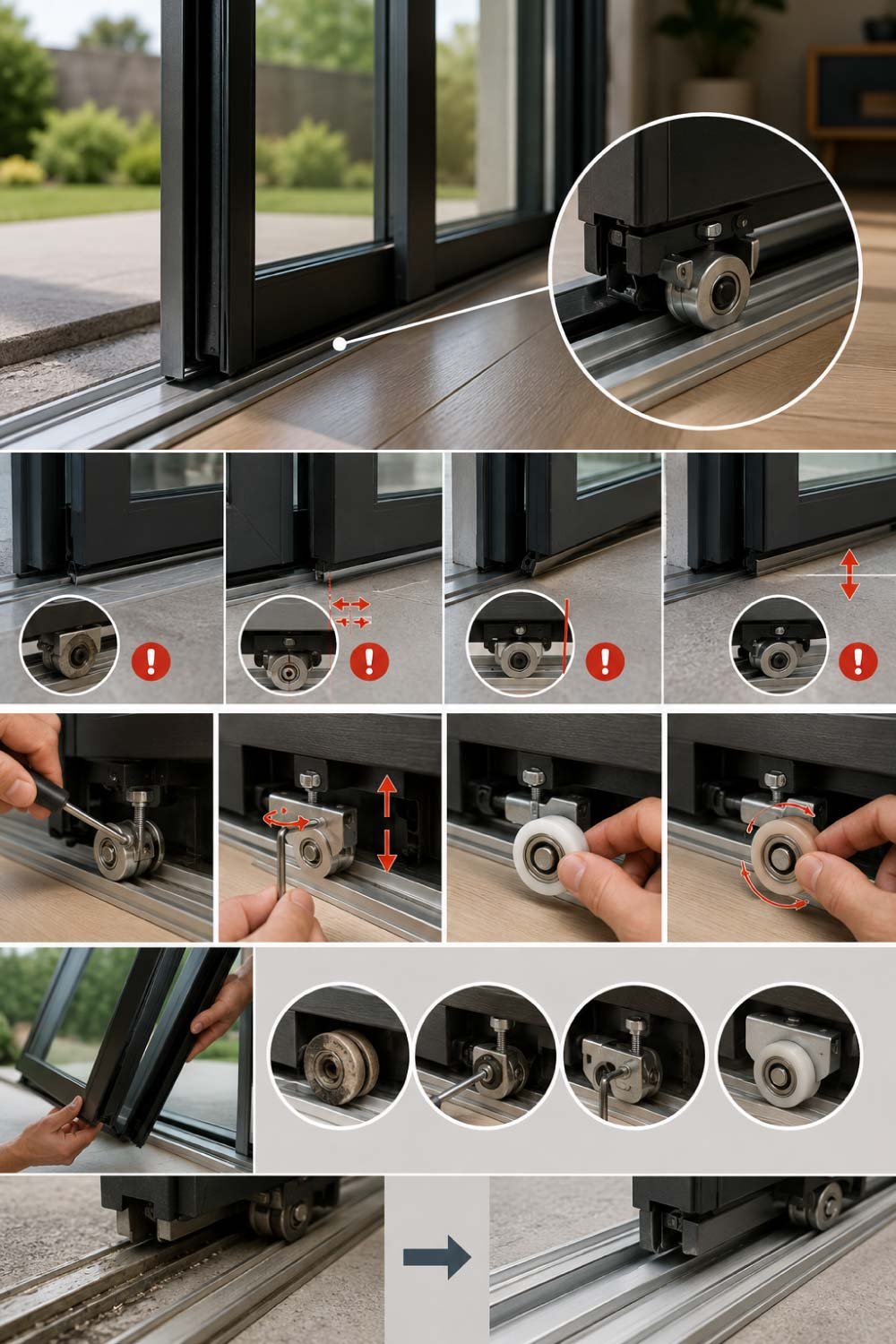
Rollers play a crucial role in ensuring smooth sliding door movement. When they become worn, loose, or uneven, the door starts dragging or sticking. Identifying roller issues early helps prevent further damage to the track and keeps the door operating efficiently and safely.
Signs of roller problems:
- Rough or grinding movement
- Door feels heavier than normal
- Uneven sliding motion
- Door lifting or dropping on one side
Adjustment actions:
- Tighten loose roller screws
- Adjust height settings evenly
- Replace damaged wheels if needed
- Ensure smooth wheel rotation
Rollers are what allow your sliding door to glide smoothly. If they’re worn out or misaligned, the door will feel heavy or stuck.
Signs of roller issues:
Grinding noise while sliding
Uneven movement
Door jumping off track
One side of the door dropping lower
How to fix rollers:
Remove the door carefully (if possible)
Inspect the wheels for damage or wear
Tighten loose roller screws
Adjust roller height using adjustment screws
Replace rollers if they are cracked or worn out
Even a small height adjustment can completely change how smoothly the door moves.
Step 4: Fix Door Alignment Issues
Misalignment occurs when the sliding door is no longer positioned evenly within its frame. This can lead to scraping, sticking, or uneven movement. Proper adjustment of screws and rollers ensures the door sits straight, allowing smooth and balanced operation across the entire track.
Alignment correction steps:
- Check door balance from both sides
- Tighten all mounting screws securely
- Adjust roller heights equally
- Ensure parallel positioning with the frame
Helpful tips:
- Make small adjustments gradually
- Test movement after each change
- Avoid over-tightening screws
Misalignment is another common issue, especially in older sliding doors.
If the door is not sitting evenly in the track, it will drag or get stuck.
To fix alignment:
Check if the door is leaning left or right
Tighten all mounting screws on the top and bottom
Adjust roller height equally on both sides
Ensure the door is parallel to the frame
A properly aligned door should glide without touching the frame excessively.
Also Read:
Step 5: Lubricate the Moving Parts
A sliding door won’t feel truly smooth even after cleaning and alignment if the moving parts lack proper lubrication. Friction between rollers and tracks gradually builds up, causing stiffness and noise. Applying the right lubricant reduces resistance, improves glide, and extends the life of both rollers and track components significantly.
Best lubricants for sliding doors:
- Silicone spray (recommended)
- Dry Teflon lubricant
- Graphite powder (for metal tracks)
How to apply:
- Apply a light, even coating along the track
- Move the door back and forth several times
- Wipe away any extra residue
Once the track is clean and rollers are adjusted, lubrication helps restore smooth motion.
Best lubricants for sliding doors:
Silicone spray (recommended)
Dry Teflon lubricant
Graphite powder (for metal tracks)
How to apply:
Spray lightly along the track
Move the door back and forth to spread it evenly
Wipe excess to avoid buildup
Avoid using cooking oil or thick grease, as they can make dust stick and worsen performance over time.
Step 6: Fix Bent or Damaged Tracks
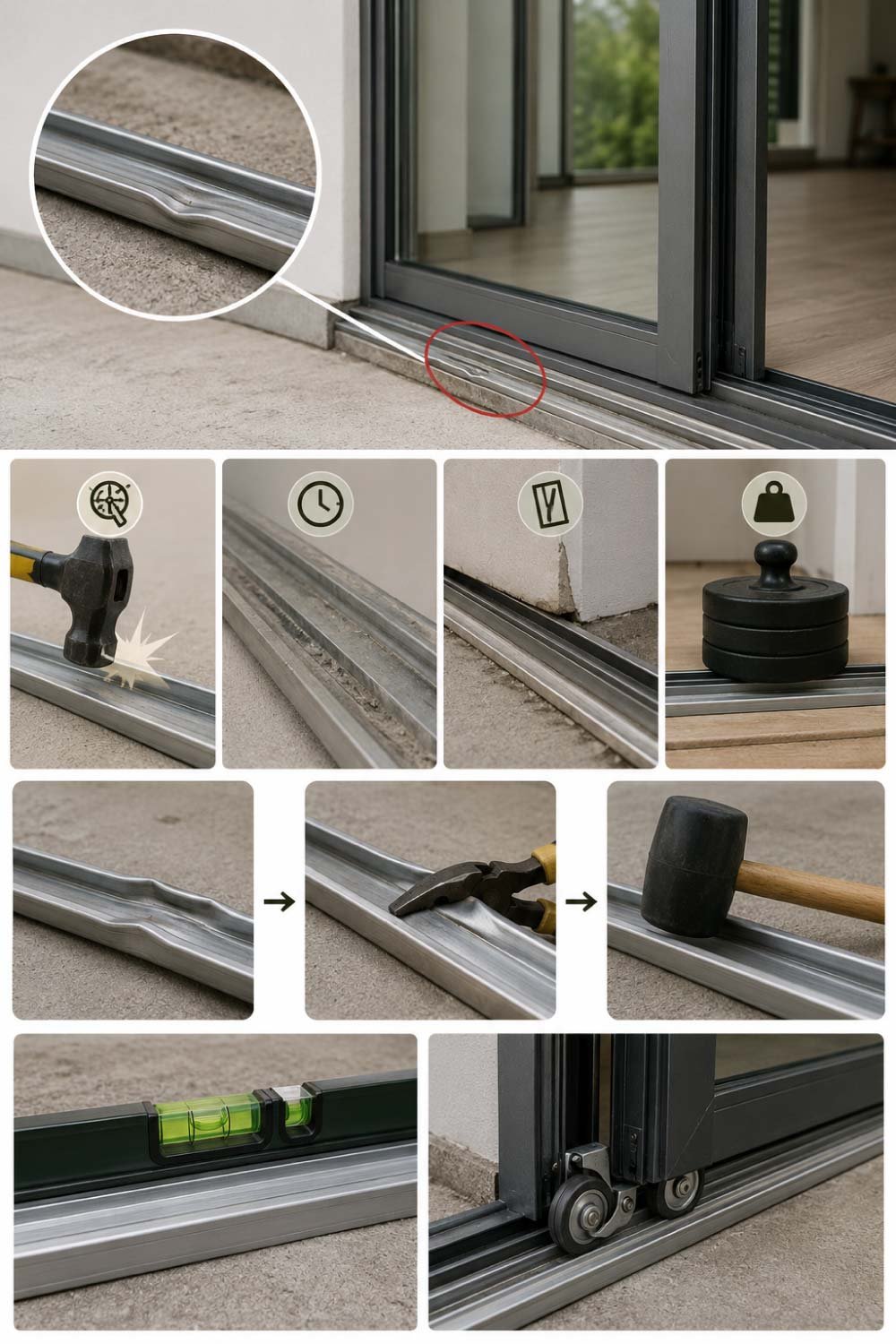
When a sliding door continues to stick even after cleaning and lubrication, the issue may lie in the track itself. Bent or damaged tracks disrupt smooth roller movement and create resistance. Identifying and correcting minor bends early can prevent further wear and restore proper door functionality effectively.
Common causes of track damage:
- Heavy impact or force
- Long-term wear and tear
- Poor or uneven installation
- Excess weight on the door system
Repair approach:
- Inspect the track closely for bends
- Straighten minor dents carefully
- Replace severely damaged sections if needed
If your door still doesn’t move smoothly, the track itself might be bent or damaged.
This often happens due to:
Heavy impact
Long-term use
Poor installation
Excess weight on the door
How to repair minor bends:
Remove the door from the track
Inspect the damaged area
Use pliers or a rubber mallet to gently straighten the metal track
Ensure the surface is level before reinstalling the door
If the track is severely damaged, replacing it may be the only solution.
Also Read:
Step 7: Tighten Loose Hardware
Loose hardware is one of the simplest yet most overlooked causes of sliding door problems. Even slightly loose screws can lead to wobbling, misalignment, or sticking. Regularly checking and tightening all hardware components ensures stability, improves movement, and prevents long-term structural damage to the door system.
Key areas to check:
- Roller brackets and mounts
- Door handles and fittings
- Track support screws
- Frame connection points
Fixing methods:
- Tighten all visible screws securely
- Replace stripped or damaged screws
- Reinforce loose holes with fillers
Loose screws are often overlooked but can cause major sliding issues.
Check:
Roller brackets
Door handles
Track mounts
Frame connections
Fixing loose hardware:
Tighten all visible screws with a screwdriver
Replace stripped screws with slightly larger ones
Use wood filler or toothpicks for loose holes in wooden frames
A stable frame ensures smooth and consistent sliding movement.
Step 8: Handle Swollen Wood or Frame Issues
Wooden sliding doors and frames can expand due to moisture, especially in humid environments. This swelling creates friction and makes the door difficult to move. Addressing moisture-related expansion early helps restore clearance, reduce scraping, and maintain smooth door operation throughout seasonal changes.
Signs of swelling:
- Door sticks only in certain seasons
- Rubbing or scraping sounds
- Visible edge friction marks
Fixing approach:
- Sand down swollen areas gently
- Apply protective sealant
- Improve room ventilation
In humid environments, wooden sliding doors or frames can swell, causing friction.
Signs of swelling:
Door becomes tight only during certain seasons
Scraping sound while sliding
Visible rubbing marks on edges
How to fix:
Lightly sand down swollen edges
Apply wood sealant to prevent moisture absorption
Keep the area dry using ventilation or a dehumidifier
This helps prevent the problem from returning.
Also Read:
Step 9: Reinstall the Door Properly (If Needed)
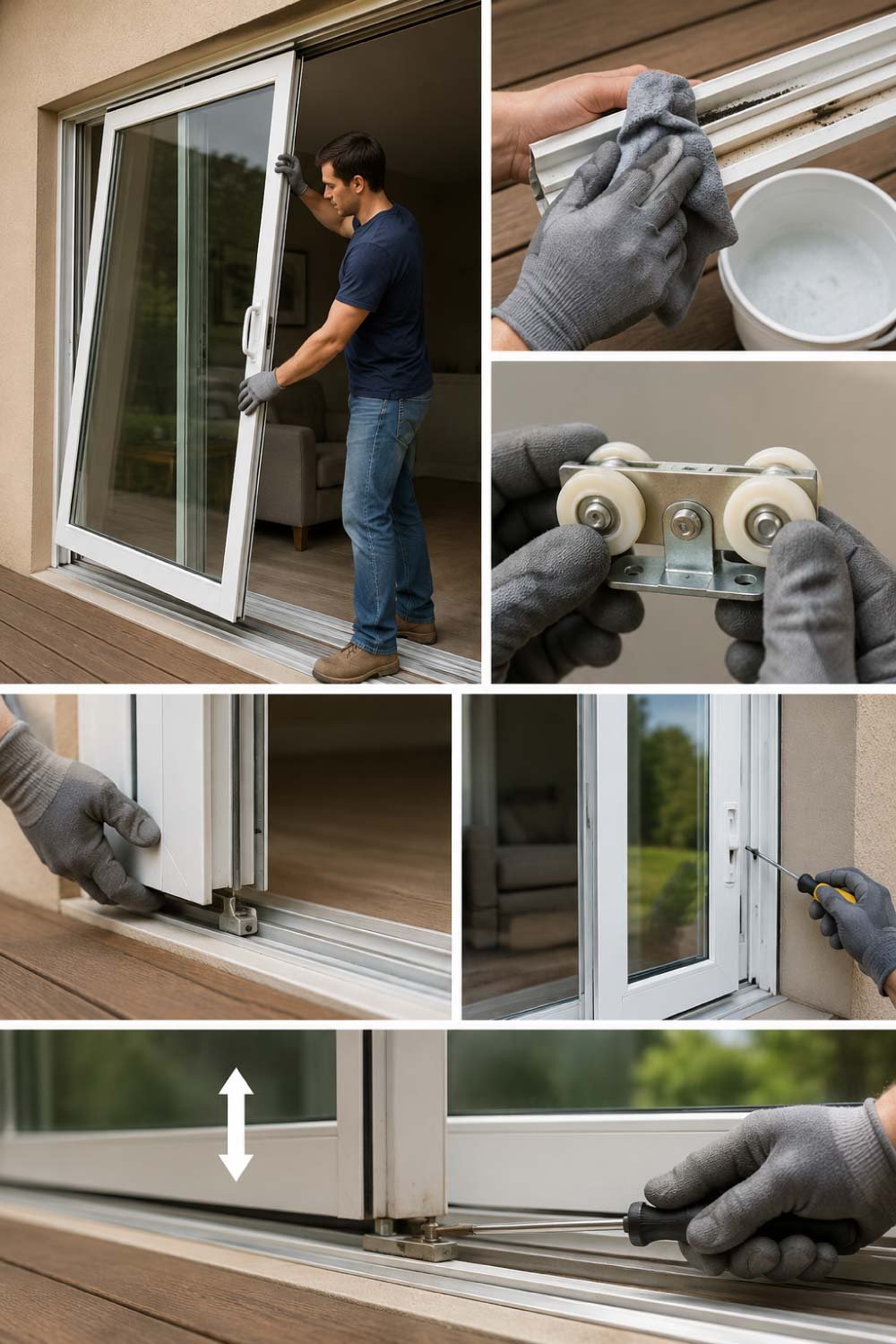
Sometimes sliding door issues persist even after all repairs because the initial installation was incorrect. Reinstalling the door allows you to reset alignment, clean components thoroughly, and ensure proper roller positioning. This step is especially useful for older or frequently repaired sliding door systems that still perform poorly.
Reinstallation steps:
- Remove the door carefully from the track
- Clean all components thoroughly
- Inspect and replace faulty rollers
- Reinstall evenly on the track
- Adjust alignment gradually
If everything else fails, reinstalling the door can reset alignment issues.
Steps:
Carefully lift the door off the track
Clean all components thoroughly
Check rollers and replace if necessary
Reinstall the door evenly on the track
Adjust height and alignment gradually
This method is especially useful for doors that have been installed incorrectly from the beginning.
Preventing Future Sliding Door Problems
Preventive maintenance is the key to keeping sliding doors operating smoothly for years. Instead of waiting for issues to appear, regular care helps avoid costly repairs and ensures consistent performance. Simple cleaning, lubrication, and inspections can dramatically extend the lifespan of your sliding door system.
Maintenance tips:
- Clean tracks regularly
- Lubricate moving parts periodically
- Avoid excessive force when opening/closing
- Inspect screws and hardware often
- Keep tracks free from debris
Fixing a sliding door is one thing—keeping it working smoothly is even better.
Maintenance tips:
Clean tracks every 2–3 weeks
Avoid slamming or forcing the door
Lubricate lightly every few months
Check screws and tighten if needed
Keep tracks free from dust and debris
Small maintenance habits can significantly extend the life of your sliding door system.
When to Call a Professional
While many sliding door issues can be resolved at home, some situations require expert attention. Structural damage, heavy glass doors, or repeated failures after repair attempts may indicate deeper problems. In such cases, professional repair ensures safety, accuracy, and prevents further damage to the door system.
Call a professional if:
- Track or frame is severely damaged
- Door is too heavy or unsafe to handle
- Structural alignment issues persist
- DIY fixes fail repeatedly
Most sliding door issues are DIY-friendly, but sometimes professional help is necessary.
Call a technician if:
The track is severely broken or misaligned
The door is extremely heavy or glass-based
Structural damage is visible in the frame
Repeated fixes don’t solve the issue
Professional repair ensures safety and prevents further damage.
Final Thoughts
A sliding door not working properly can feel like a big inconvenience, but in most cases, the fix is surprisingly simple. From cleaning tracks and adjusting rollers to tightening screws and lubricating parts, small actions can restore smooth movement quickly.
The key is to identify the real cause instead of guessing. Once you understand whether the problem is dirt, alignment, or hardware-related, the solution becomes straightforward.
With regular maintenance and timely adjustments, your sliding door can stay smooth, silent, and hassle-free for years.