
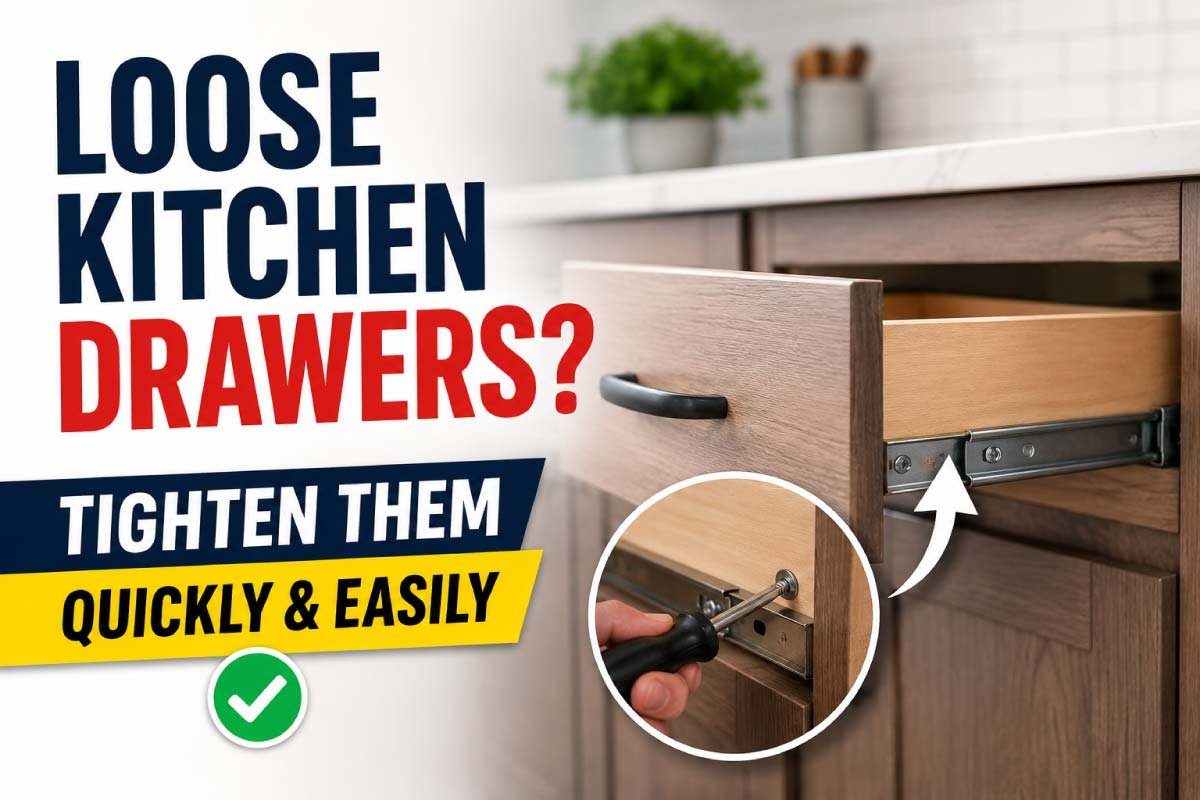
Loose kitchen drawers are one of those small household problems that slowly become a daily frustration. At first, it might just feel like a slight wobble when you pull the drawer open. But over time, it turns into misalignment, sticking tracks, noisy movement, or even drawers that feel like they might fall out entirely.
The good news is that this is usually a simple fix. In most cases, you don’t need to replace anything or call a professional. With a few basic tools and a little time, you can tighten and restore your kitchen drawers so they glide smoothly again.
This guide walks you through why drawers become loose, how to diagnose the problem, and step-by-step methods to fix them quickly and effectively at home.
Why Kitchen Drawers Become Loose Over Time
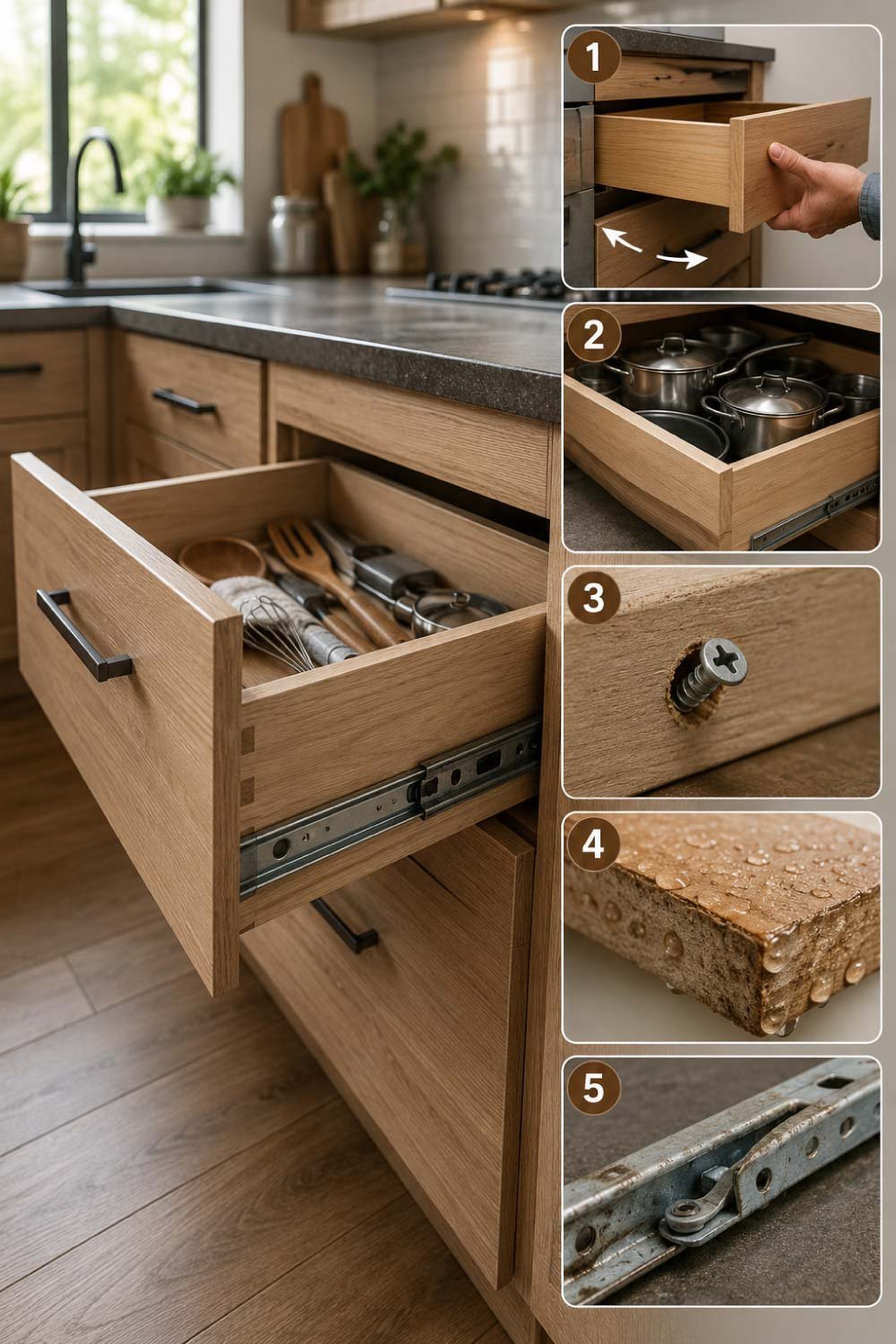
Before jumping into repairs, it helps to understand what actually causes the issue. Kitchen drawers deal with constant daily use, humidity, and weight stress. Over time, even well-built cabinets begin to loosen.
1. Repeated Daily Use
Every time you open and close a drawer, pressure is placed on screws, rails, and joints. After thousands of cycles, small movements start to widen screw holes or loosen fasteners.
2. Overloading the Drawer
Many kitchen drawers carry more weight than intended—utensils, pans, jars, and gadgets. Excess weight puts strain on the slides and frame, causing sagging or misalignment.
3. Loose Screws and Hardware
The most common reason is simply screws working themselves loose. Vibration and movement gradually reduce grip, especially in wooden cabinets or particleboard.
4. Moisture and Humidity
Kitchens naturally have moisture from cooking and washing. Wood absorbs humidity, expands, and contracts. This weakens joints and causes shifting over time.
5. Poor Installation or Aging Hardware
If drawers were not installed properly or the hardware is old, they may loosen faster. Metal slides can also wear out or bend slightly with age.
Signs Your Kitchen Drawers Need Tightening
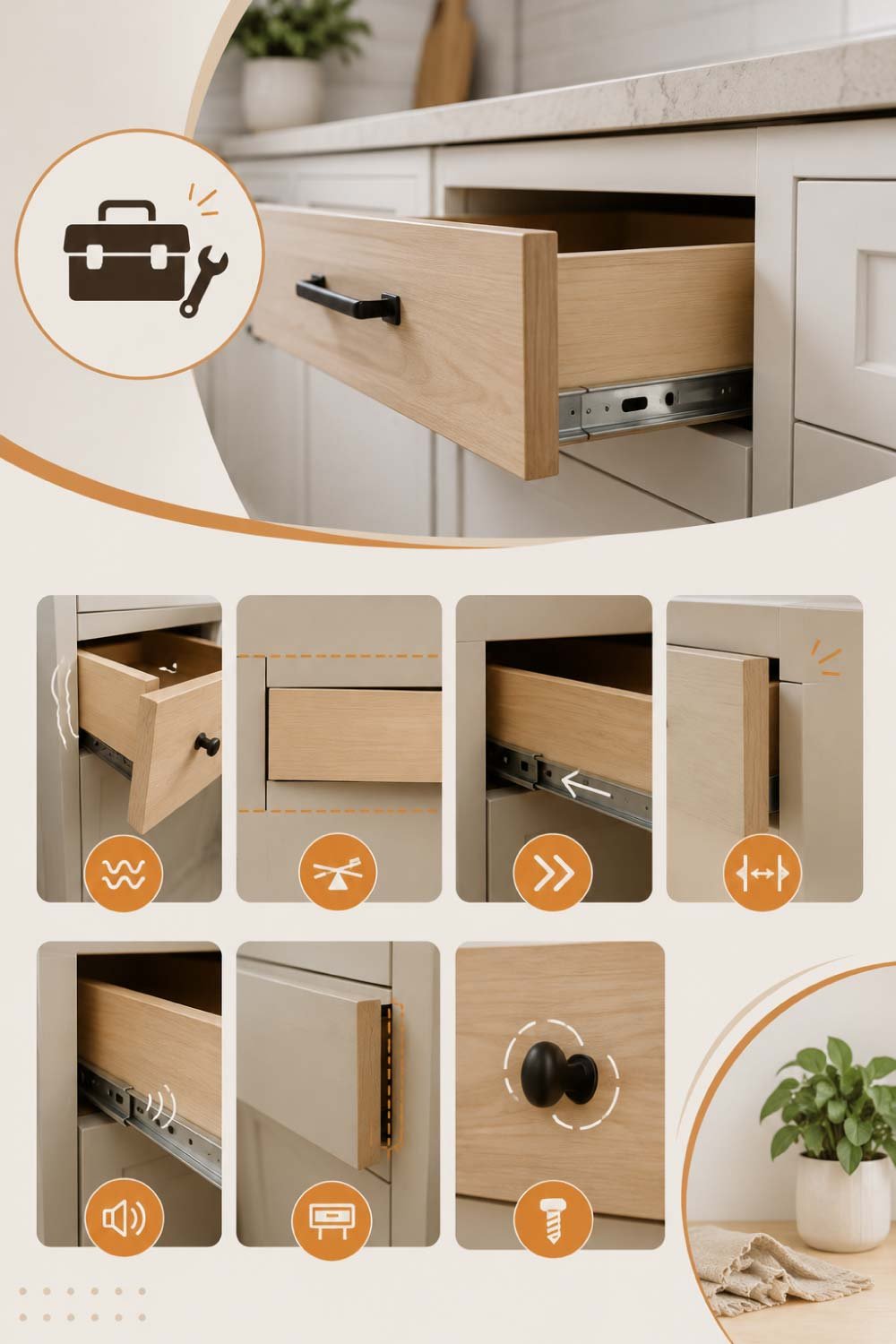
Not every drawer problem is obvious at first. Watch for these early warning signs:
- Drawer feels wobbly when pulled
- One side sits lower than the other
- Drawer sticks or drags during movement
- Visible gaps between drawer and cabinet frame
- Clicking or scraping noises
- Drawer does not close flush
- Handles feel loose or unstable
Catching these signs early makes the repair much easier.
Tools You’ll Need for the Repair
Most drawer tightening jobs require only basic tools:
- Screwdriver (Phillips or flat-head)
- Drill (optional, for stubborn screws)
- Wood glue (for stripped holes)
- Toothpicks or wooden matches
- Measuring tape or level
- Replacement screws (if needed)
- Lubricant (silicone spray or wax)
You don’t need expensive equipment—just simple household tools.
Step 1: Empty the Drawer Completely
Start by removing everything inside the drawer. Even light items can affect alignment while you work.
Once empty, pull the drawer fully out and inspect it closely. If it slides out completely, set it on a flat surface like a table or floor.
This step helps you clearly see where the looseness is coming from—whether it’s the sides, rails, or bottom panel.
Also Read:
Step 2: Inspect the Drawer Slides
Most modern kitchen drawers use metal slide tracks on either side or underneath.
Check for:
- Loose screws on the rails
- Bent or misaligned tracks
- Dirt or debris blocking movement
- Gaps between rail and cabinet wall
If the slide is loose, that alone can cause the drawer to wobble or sag.
Fix:
Tighten all visible screws using a screwdriver. If screws keep spinning without tightening, the hole may be stripped (we’ll fix that later).
Step 3: Tighten All Screws on the Drawer Frame
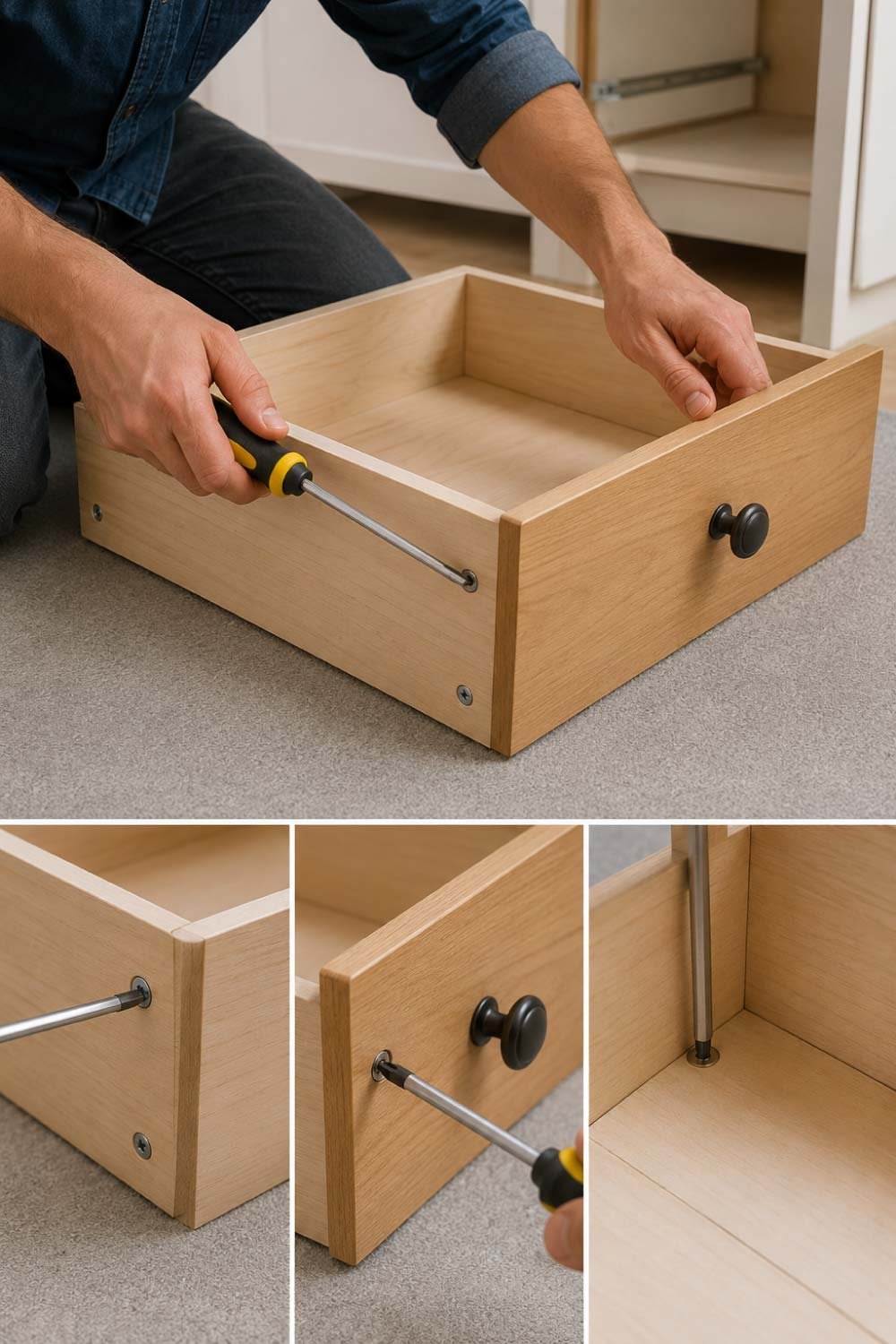
Next, inspect the drawer itself—not just the cabinet rails.
Look at:
- Side panels
- Front face (handle area)
- Bottom panel connections
Use a screwdriver to tighten every screw you find. Even slightly loose screws can affect the entire structure.
If you find missing screws, replace them immediately with similar-sized ones.
Step 4: Fix Stripped Screw Holes (Very Common Issue)
One of the biggest causes of loose drawers is stripped screw holes—especially in wooden or particleboard cabinets.
Quick Fix Method:
- Remove the loose screw
- Insert 2–3 wooden toothpicks into the hole
- Add a drop of wood glue
- Break off excess toothpicks flush with surface
- Reinsert the screw tightly
This simple trick rebuilds grip inside the hole and holds screws firmly again.
For stronger repairs, you can also use wooden dowels or wall anchors.
Step 5: Realign the Drawer Slides
If your drawer still feels uneven, the slides may be slightly misaligned.
How to fix alignment:
- Loosen mounting screws slightly
- Adjust the slide position up, down, or sideways
- Ensure both sides are level
- Push drawer in and test movement
- Retighten once aligned
A small adjustment can make a huge difference in smoothness.
Tip: Use a level or even your phone’s leveling tool for accuracy.
Step 6: Check the Drawer Bottom Panel
Many people overlook this part. The bottom panel of the drawer often loosens or sags, especially in older cabinets.
Check for:
- Gaps at edges
- Loose nails or staples
- Sagging in the center
Fix:
- Add small screws along edges
- Apply wood glue under loose sections
- Reinforce with thin wooden strips if needed
This prevents future wobbling when heavy items are stored.
Step 7: Lubricate the Slides for Smooth Movement
Even after tightening, drawers may feel stiff. Lubrication helps restore smooth motion.
Use:
- Silicone spray
- Furniture wax
- Dry bar soap (temporary solution)
Apply lightly along the metal tracks and move the drawer back and forth a few times.
Avoid using oil-based lubricants like cooking oil—they attract dust and make things worse over time.
Also Read:
Step 8: Adjust Drawer Height if Needed
If the drawer still doesn’t sit evenly, height adjustment may be required.
Some drawer systems have adjustable clips or screws on the slides. Turning these slightly can raise or lower one side.
Make small adjustments and test repeatedly until the drawer sits evenly inside the cabinet frame.
Step 9: Strengthen Weak Cabinet Mounting Points
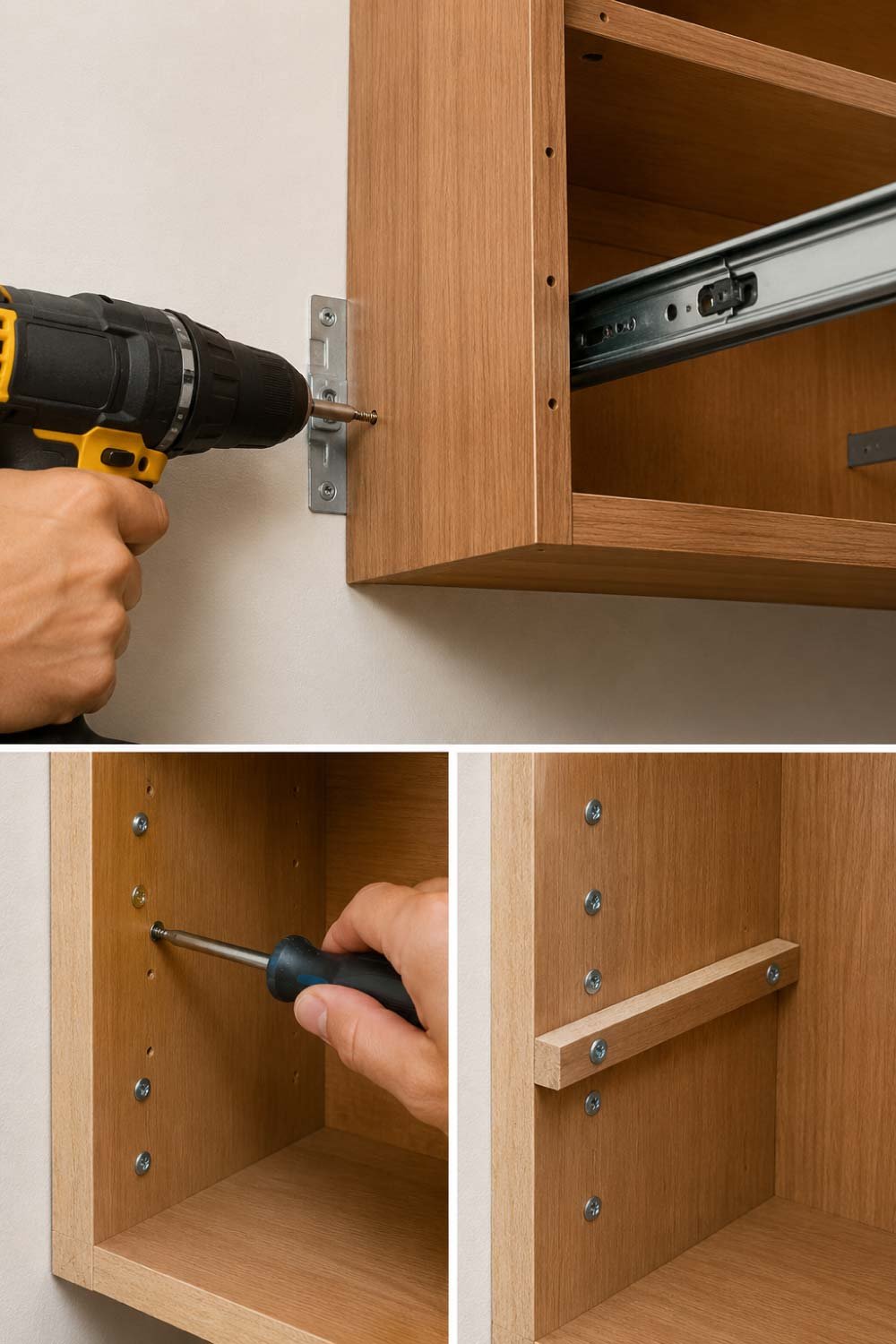
Sometimes the issue isn’t the drawer—it’s the cabinet frame itself.
Check if the cabinet sides are loose or shifting. Tighten any wall-mounted screws holding the cabinet in place.
If the cabinet box is weak, adding extra support screws can stabilize the entire structure.
Step 10: Prevent Future Loosening
Once your drawers are fixed, you want to keep them that way. A few preventive habits can make a big difference:
Don’t overload drawers
Spread heavy items across multiple drawers instead of concentrating weight in one.
Tighten screws every few months
A quick check can prevent long-term damage.
Keep drawers clean
Dust and debris can wear down slides over time.
Avoid slamming
Gentle use significantly extends hardware life.
Control humidity
Use ventilation or a small dehumidifier in humid kitchens.
Also Read:
When You Should Replace Drawer Hardware
Sometimes tightening isn’t enough. You may need replacement if:
- Metal slides are bent or rusted
- Screws no longer hold even after repair
- Drawer repeatedly falls off track
- Wood structure is cracked or broken
In these cases, replacing the slide system is more reliable than repeated repairs.
Final Thoughts
Loose kitchen drawers may seem like a minor annoyance, but they can quickly affect the overall feel and functionality of your kitchen. The good news is that most of these issues are easy to fix at home with basic tools and simple techniques.
From tightening screws to fixing stripped holes and realigning slides, each step helps restore stability and smooth movement. With a little attention, your drawers can feel almost brand new again.
Regular maintenance and careful use will ensure they stay strong for years, saving you from repeated repairs and unnecessary frustration.