
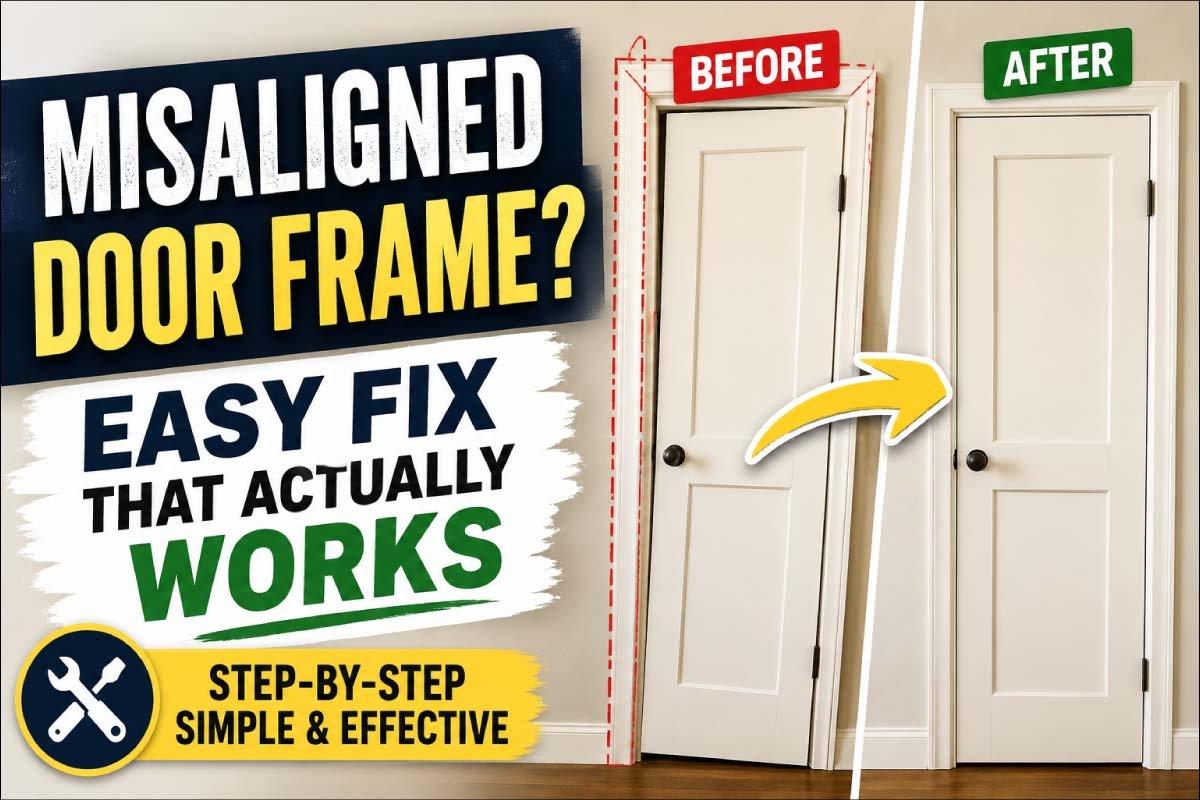
A misaligned door frame is one of those household problems that starts small but quickly becomes annoying. At first, you might notice the door rubbing slightly or not closing smoothly. Over time, it gets worse—scraping sounds, difficulty locking, gaps that let in air or dust, and sometimes even a door that won’t close at all.
The good news is you don’t need to replace the entire door or call a professional right away. In most cases, a misaligned door frame can be fixed with simple tools and a bit of patience. In this guide, you’ll learn what causes the problem, how to diagnose it properly, and step-by-step methods that actually work.
Step 3: Check and Adjust Door Sagging
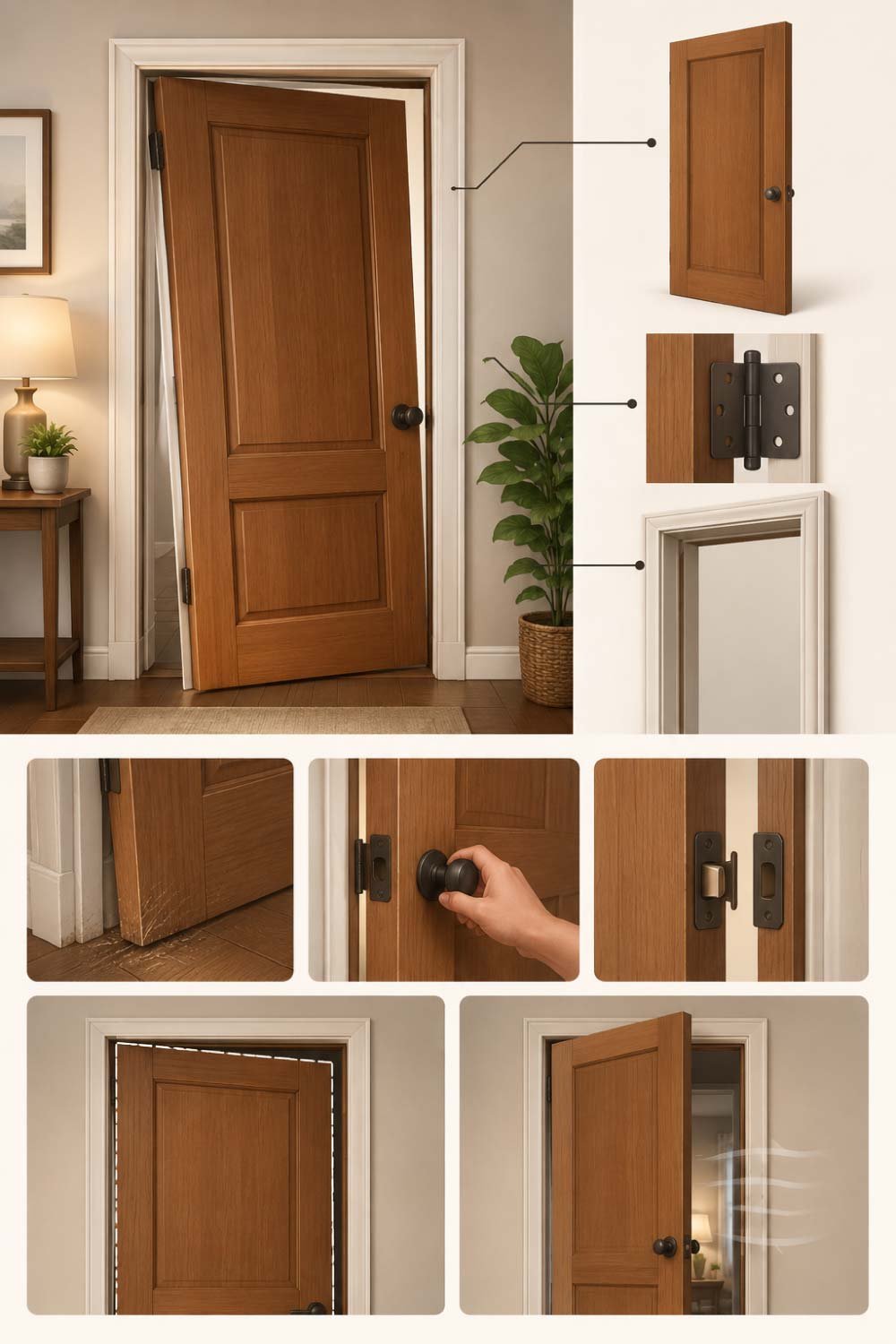
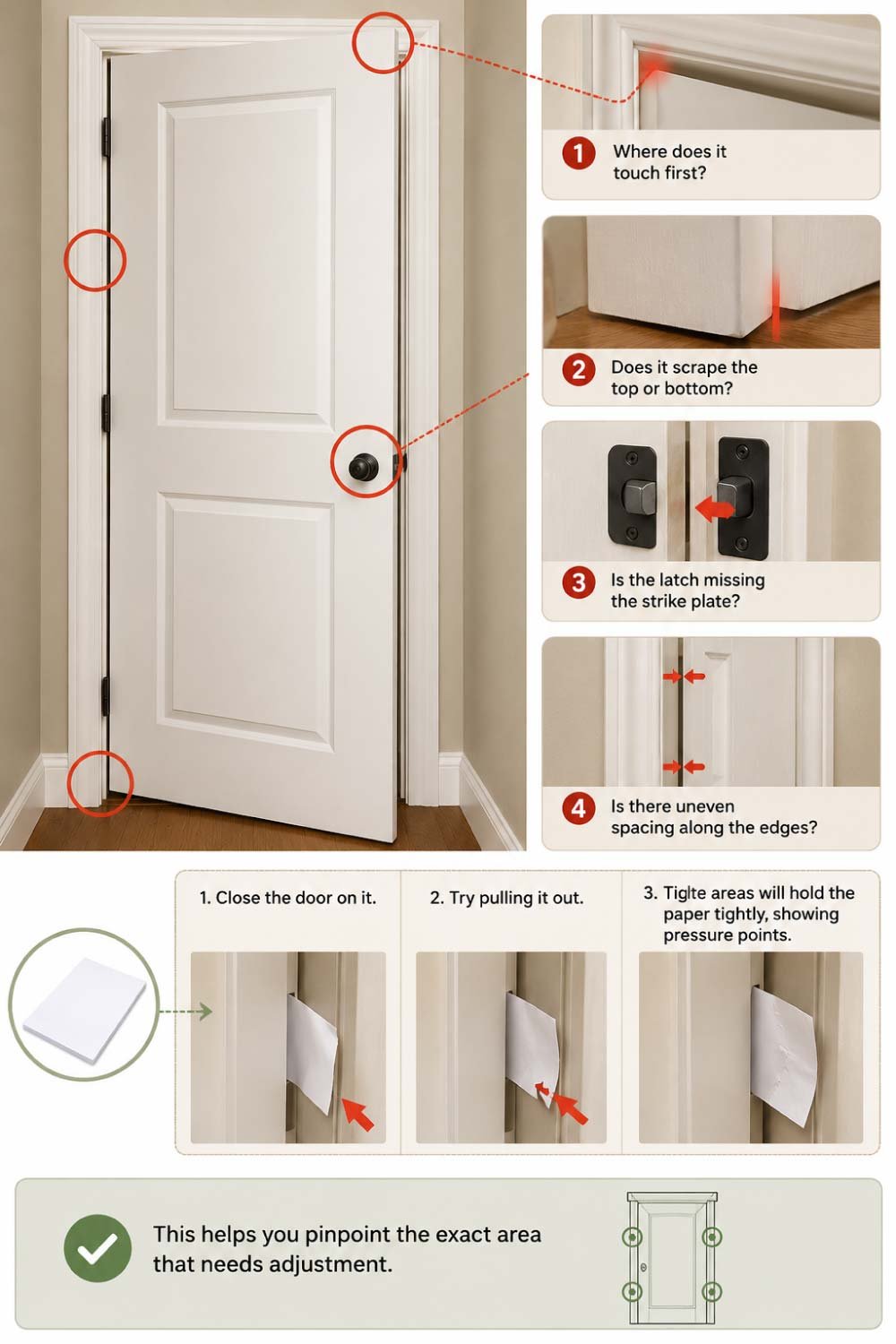
If tightening screws doesn’t fully solve the issue, the door itself may be sagging under its own weight. This is a very common problem, especially in older doors or those with heavy use. Sagging causes the door to drop slightly on one side, which leads to rubbing, misalignment, and difficulty closing smoothly.
Quick lift test:
- Open the door halfway.
This position reduces pressure on the hinges and makes movement easier to observe. - Lift it slightly upward.
Apply gentle upward force from the handle side to see if the door shifts into a better position. - If it moves into better alignment, sagging is confirmed.
This indicates that the hinges or screws are no longer holding the door at the correct height.
Fix method:
- Place a wedge or cardboard under the door for support.
This temporarily supports the weight and prevents further dropping during adjustment. - Lift the door slightly.
Hold it in the corrected position to restore proper alignment with the frame. - Tighten hinge screws while holding it in position.
Securing the hinges while the door is lifted locks in the corrected alignment.
This resets the door’s natural alignment without removing it.
Step 4: Adjust the Hinges (Advanced but Effective)
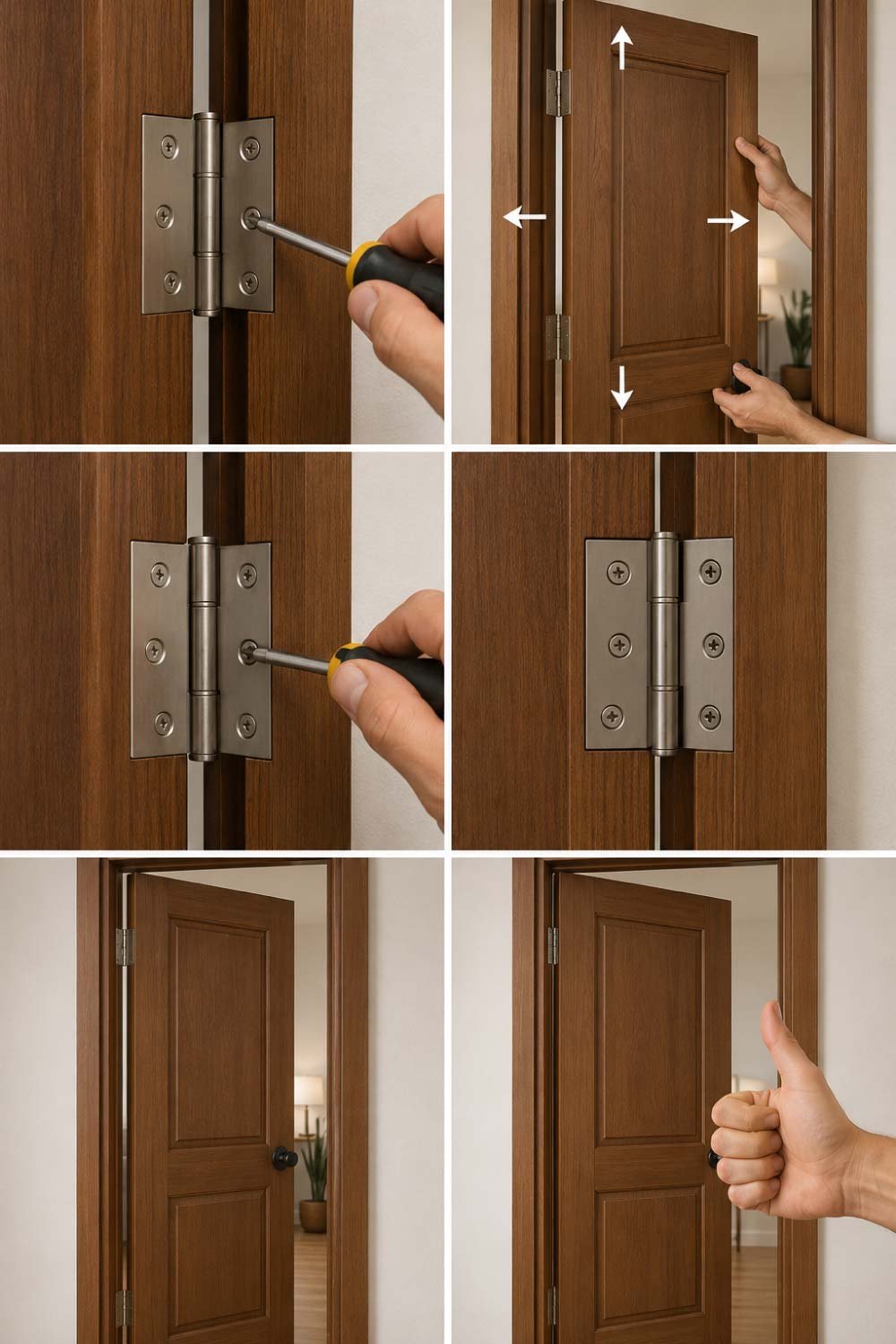
If tightening and sag correction still don’t fully resolve the issue, the hinges themselves may need slight repositioning. This method is more precise and is often used when the door is only slightly out of alignment but enough to cause scraping or latch issues.
Steps:
- Loosen hinge screws (don’t remove fully).
This allows controlled movement without losing hinge placement completely. - Shift the door slightly up, down, or sideways.
Small adjustments can correct uneven spacing and improve overall fit. - Retighten screws while holding position.
Secure the hinge firmly once the correct alignment is achieved. - Test the door movement.
Open and close the door several times to confirm smooth operation.
Even a 1–2 mm adjustment can make a big difference.
Also Read:
Step 5: Fix Frame Misalignment with Shims
Sometimes the issue is not the door or hinges but the frame itself shifting slightly out of square. In such cases, adjusting the frame using shims is one of the most reliable professional methods to restore proper alignment without rebuilding the entire structure.
What are shims?
Shims are thin pieces of wood or plastic used to adjust alignment and fill small gaps between the frame and wall.
Steps:
- Remove the trim around the frame (if necessary).
This exposes the frame edges for accurate adjustment. - Locate gaps between frame and wall.
These gaps indicate where the frame has shifted or loosened. - Insert thin shims behind the frame where adjustment is needed.
Position them carefully to correct alignment without forcing the frame. - Tighten screws to lock frame in corrected position.
This secures the frame firmly in its new alignment. - Recheck door movement.
Ensure the door opens and closes smoothly after adjustment.
This method is commonly used in professional installations.
Step 6: Correct Strike Plate Alignment
If your door closes but doesn’t latch properly, the strike plate is often the main issue. Even if the door looks aligned, a small mismatch between the latch and strike plate can prevent proper locking.
Symptoms:
- Door shuts but doesn’t lock
The latch fails to enter the strike plate hole correctly. - You need to lift or push door to lock it
Extra force is required, indicating slight misalignment.
Fix:
- Close the door slowly and observe where latch hits.
This helps identify the exact misalignment point. - Mark the correct position.
Use a pencil to note where the latch should ideally sit. - Unscrew the strike plate.
Remove it carefully without damaging surrounding wood. - Shift it slightly up, down, or sideways.
Adjust based on the latch position. - Reattach and test.
Ensure smooth locking without resistance.
For minor issues, you can also file the strike plate hole slightly instead of repositioning it.
Step 7: Sand or Trim Rubbing Areas
If the door still scrapes after alignment corrections, the issue may be physical contact between the door edge and frame. This usually happens when wood swells or slight misalignment remains even after hinge adjustments.
For wooden doors:
- Mark rubbing points using chalk or pencil.
This clearly shows where friction is occurring. - Remove the door if needed.
This allows safer and more precise sanding. - Lightly sand the area.
Smooth out only the affected portion gradually. - Reinstall and test.
Check movement and repeat if necessary.
Important:
Always remove small amounts gradually. Over-sanding can create new gaps.
Also Read:
Step 8: Check for Frame Damage
If none of the previous fixes resolve the issue, the problem may be structural damage in the frame itself. This is less common but important to inspect before assuming more minor fixes will work.
Look for:
- Cracks or warping
These can distort the entire door alignment. - Corners separating
Indicates frame instability or loosening joints. - Tap gently to check looseness
Hollow or shifting sounds may indicate structural weakness.
Severely damaged frames may need partial repair or reinforcement, but this is less common.
Quick Fix Summary (Fast Checklist)
If you’re in a hurry, follow this order:
- Tighten all hinge screws
- Lift door and re-tighten hinges
- Adjust strike plate
- Test alignment
- Sand rubbing points if needed
This solves most misaligned door issues without complex work.
Preventing Door Misalignment in the Future
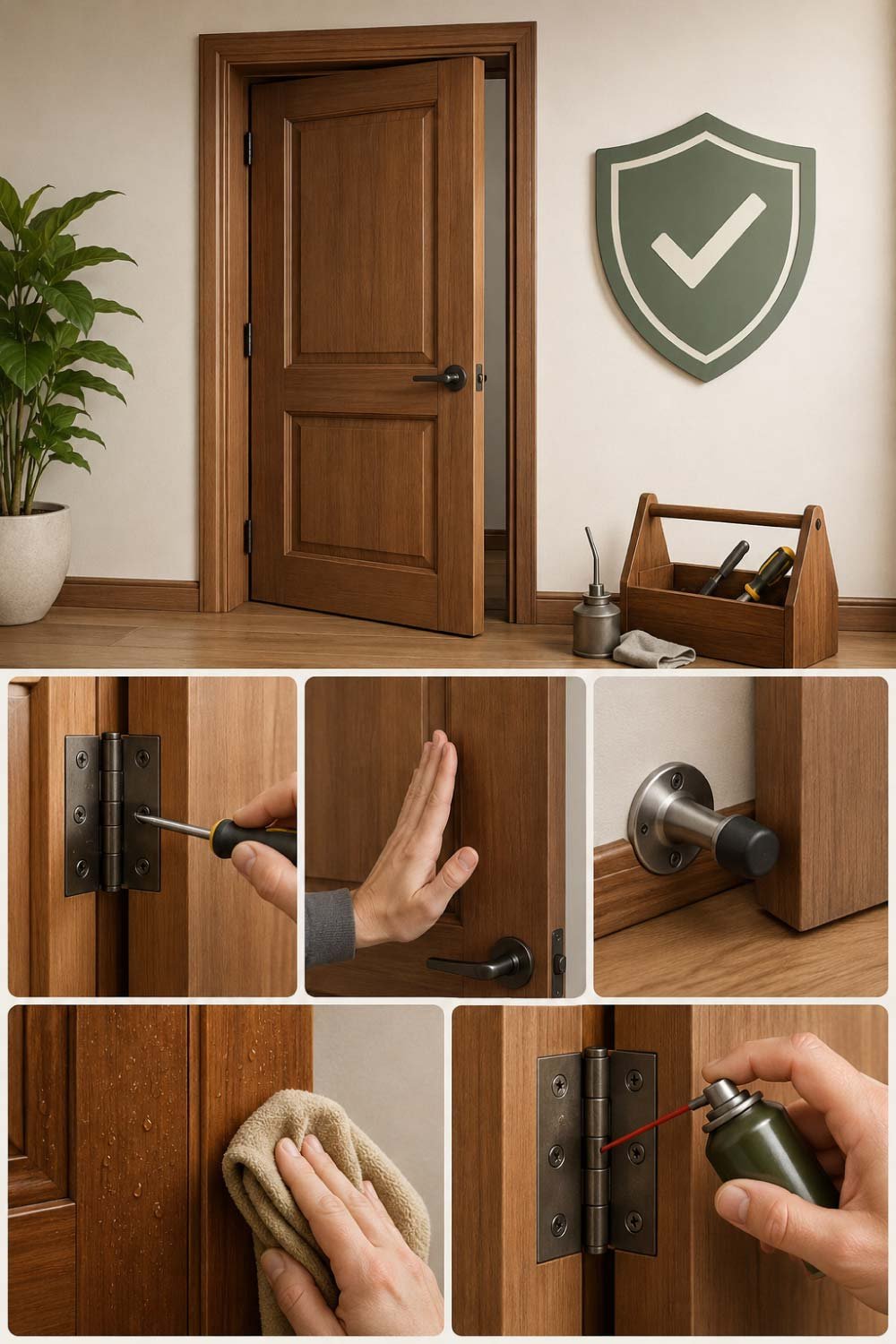
Once fixed, it’s important to maintain proper alignment so the problem doesn’t return. Simple habits can significantly extend the life of your door system and reduce future repair work.
- Tighten hinge screws every few months
Prevents gradual loosening and sagging over time. - Avoid slamming doors
Reduces stress on hinges and frame joints. - Use door stoppers to reduce stress
Prevents overextension and impact damage. - Keep wooden doors protected from moisture
Helps avoid swelling and shrinking issues. - Lubricate hinges occasionally
Ensures smooth movement and reduces wear.
Small maintenance habits can extend door life significantly.
When You Should Call a Professional
While most door alignment issues can be fixed with basic tools, some situations require expert attention. Ignoring structural problems can lead to repeated failures and additional damage.
Consider professional help if:
- The entire frame is visibly warped
- The wall structure is shifting
- Door repeatedly becomes misaligned after fixing
- You notice cracks in surrounding walls
These may indicate deeper structural issues.
Final Thoughts
A misaligned door frame may look like a complicated problem, but in reality, it is usually caused by simple issues like loose hinges, minor settling, or small shifts in alignment. With basic tools and careful adjustments, you can fix most of these problems in under an hour.
The key is patience—small changes make a big difference. Instead of forcing the door or ignoring the issue, taking a systematic approach ensures long-term results.
Once properly adjusted, your door should open smoothly, close quietly, and latch securely—just like it was meant to.