A jammed door lock is one of those small problems that can instantly turn into a big frustration. You’re in a hurry, you insert the key, turn it—and nothing happens. The key won’t rotate, the lock feels stuck, or worse, it turns halfway but refuses to open the door. Whether it’s your home door, office door, or a storage lock, a jammed mechanism can feel like a serious inconvenience.
The good news is that in most cases, you don’t need a locksmith right away. Many jammed locks are caused by simple issues like dirt, misalignment, or lack of lubrication. With the right approach, you can often fix the problem in minutes using basic tools and a few smart tricks.
This guide walks you through why locks get jammed and the fastest, most effective ways to unlock them safely without causing damage.
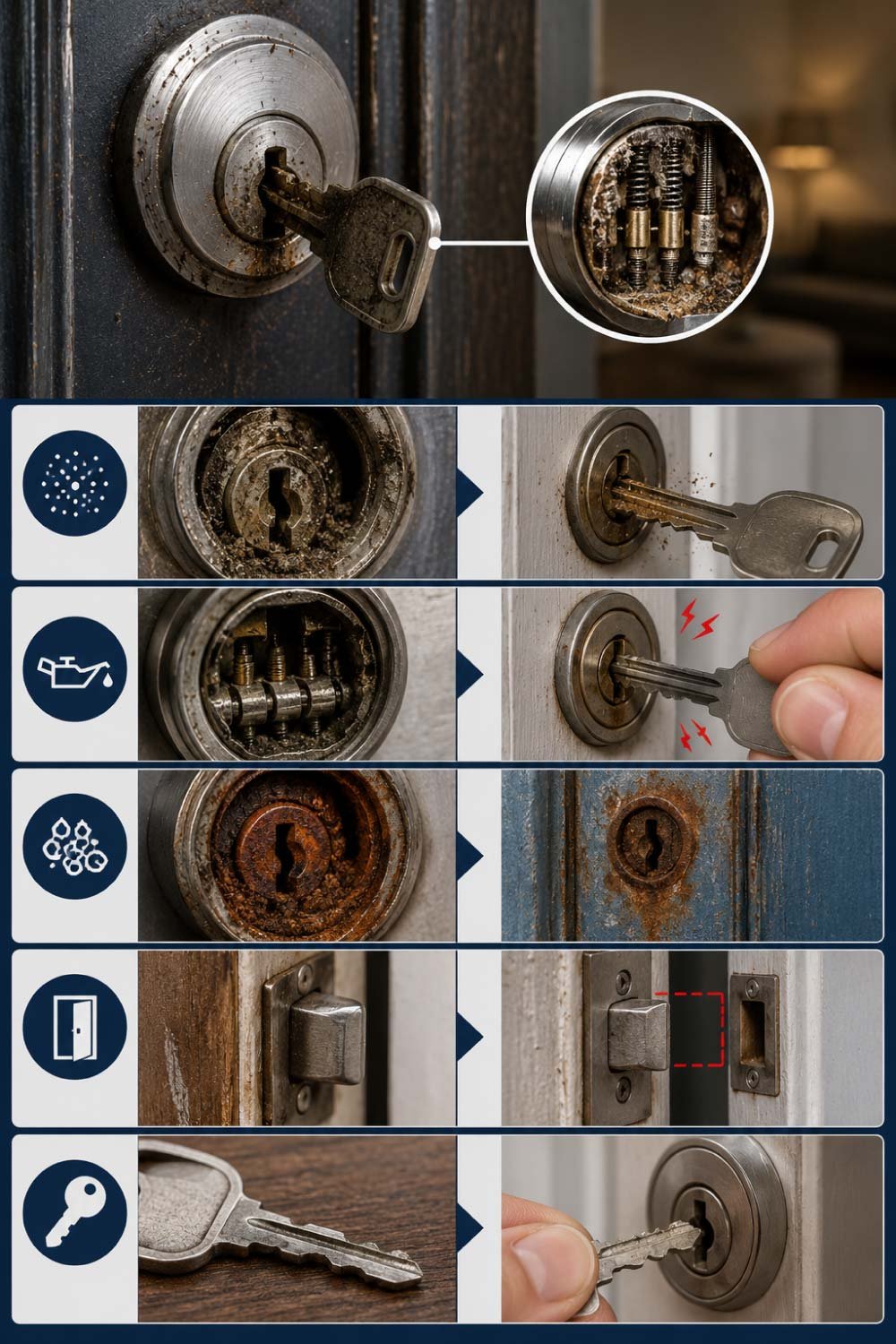
Before jumping into fixes, it helps to understand what’s actually going wrong. A jammed lock doesn’t usually fail suddenly without reason. It’s typically a buildup of small issues over time. Knowing the root cause makes it easier to choose the right fix and prevents the problem from coming back again.
Dirt, rust, lack of lubrication, and wear are the most common reasons behind jammed locks.
Problems usually develop slowly, not instantly.
Both the lock mechanism and door alignment can contribute to the issue.
1. Dirt and Dust Accumulation
Tiny particles of dust, rust flakes, and debris gradually build up inside the lock cylinder. Over time, these particles block the smooth movement of internal pins, making it harder for the key to turn. This is especially common in outdoor doors or rarely cleaned locks.
Dust settles inside the keyhole and cylinder pins.
Movement becomes stiff and uneven.
Common in old or frequently exposed locks.
2. Lack of Lubrication
Locks contain small metal components that need occasional lubrication to move freely. Without proper lubrication, friction increases inside the mechanism. This makes the key feel tight, sticky, or even completely stuck when turning.
Metal parts rub against each other without smooth movement.
Key rotation becomes difficult or rough.
Regular maintenance prevents this issue.
3. Rust or Corrosion
Moisture is one of the biggest enemies of door locks. When water or humidity enters the lock, it can cause internal rusting. Rust slowly eats away at the metal parts, making the mechanism stiff, weak, and unresponsive over time.
Moisture leads to oxidation inside the lock.
Internal parts become stiff and damaged.
Common in outdoor or bathroom doors.
4. Misaligned Door or Lock
Sometimes the lock itself is fine, but the door is slightly misaligned. When the latch or bolt doesn’t properly line up with the strike plate, it creates resistance. This can make it feel like the lock is jammed even when it’s not.
Door shifting affects latch positioning.
Bolt struggles to enter the strike plate.
Often mistaken for a broken lock.
5. Worn-Out Key
Over time, keys can bend, wear down, or lose their original shape. A damaged key may not properly engage the internal pins inside the lock cylinder. This leads to partial turning, jamming, or complete failure to unlock.
Key teeth become worn or bent.
Pins inside lock don’t align correctly.
Old keys often need replacement.
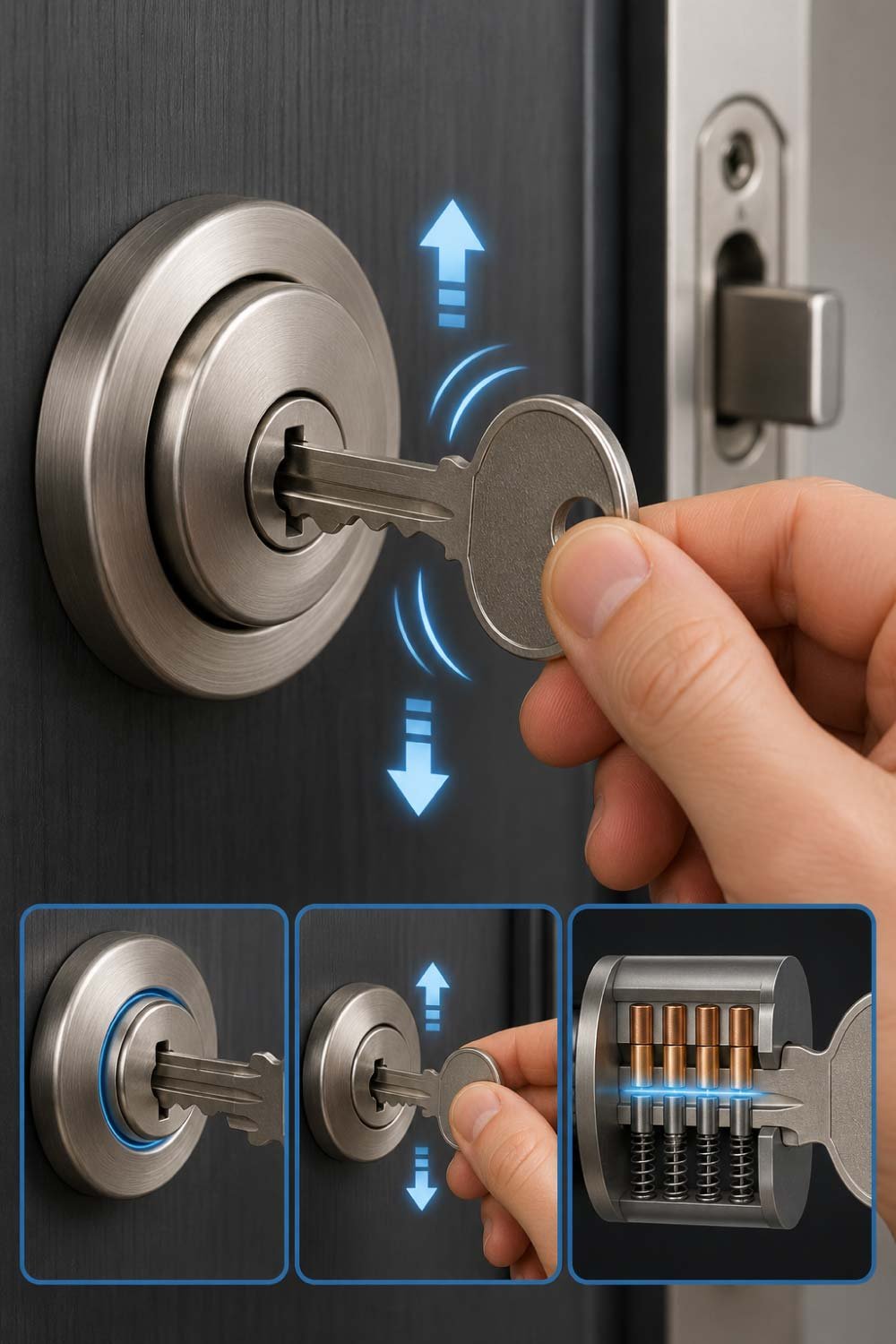
Quick Fix Trick: The “Wiggle + Lubrication” Method
If you want the fastest possible solution, this is the first method you should try. It works in many everyday lock jam situations. This technique focuses on freeing stuck pins and reducing friction inside the lock without damaging the mechanism.
Step 1: Gently Wiggle the Key
Insert the key fully into the lock. Instead of forcing it, gently wiggle it up and down while applying slight turning pressure. This helps reposition stuck pins inside the cylinder and can immediately loosen minor jams.
Insert key fully and avoid force.
Move it gently up and down.
Helps realign internal pins.
Step 2: Apply Light Lubrication
Use a graphite-based lubricant or silicone spray for best results. Avoid heavy oils like cooking oil because they attract dust and worsen the problem later. A small amount is enough to reduce internal friction effectively.
Use graphite or silicone spray only.
Avoid oil-based household products.
Apply small amount into keyhole.
Step 3: Turn Slowly, Not Forcefully
After lubrication, gently try turning the key again. Slow and steady pressure allows internal pins to settle into position. Forcing the key can break it or damage the lock further, so patience is important.
Apply slow, steady turning pressure.
Do not force the key.
Lock often frees within seconds.
Trick #2: The Tap-and-Turn Method
Sometimes internal pins get stuck due to dirt buildup or slight misalignment. A gentle tapping technique can help shake them loose and restore movement. This method works especially well for older or rarely maintained locks.
How to Do It:
Insert the key halfway into the lock.
Lightly tap the key head with a screwdriver handle.
While tapping, slowly attempt to turn the key.
The vibration helps loosen stuck pins and realign internal components. This method is simple but surprisingly effective when the lock is slightly jammed.
Important: Do not hit too hard. Excess force can snap the key inside the lock and make the situation worse.
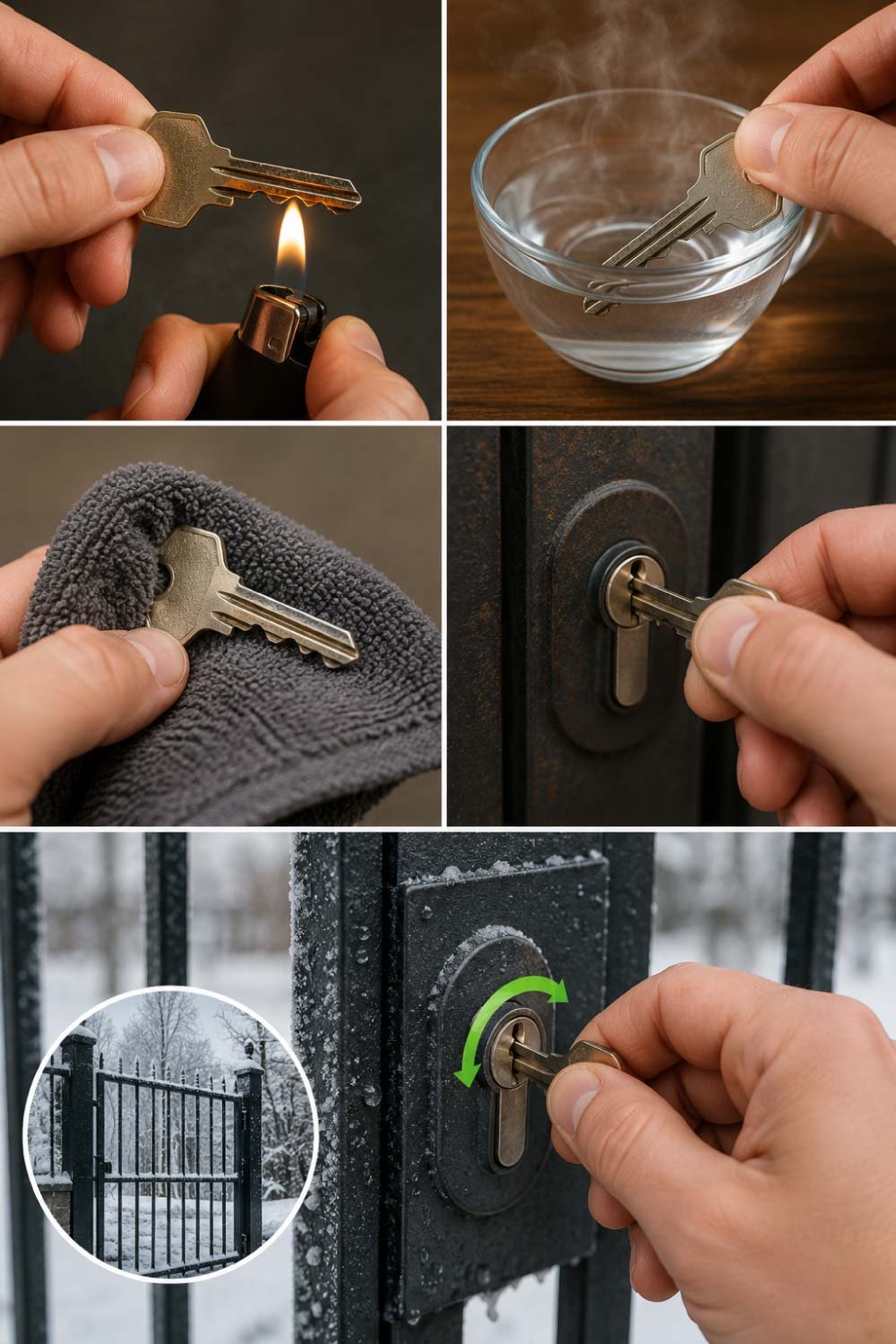
Trick #3: Heating the Key (For Cold or Rusty Locks)
If your lock is exposed to cold weather or moisture, internal parts may become stiff or slightly contracted. Warming the key gently can help reduce this resistance and improve movement inside the lock.
Steps:
Warm the key slightly using a lighter or warm water.
Make sure it is not too hot.
Dry it completely before inserting.
Insert and turn gently.
The mild heat helps expand metal components slightly, loosening stuck parts inside the lock. This is especially useful for outdoor gates or metal doors affected by weather conditions.
Trick #4: Graphite Powder Fix for Long-Term Smooth Operation
If your lock frequently jams, quick fixes may not be enough. Graphite powder is one of the most effective long-term solutions because it provides dry lubrication without attracting dust or dirt.
Why Graphite Works Better:
Unlike oil-based lubricants, graphite does not collect debris. Instead, it creates a smooth, dry coating that allows internal pins to move freely for a longer time.
How to Use It:
Clean or blow out dust from the keyhole.
Insert a small amount of graphite powder.
Insert key and turn multiple times.
After this treatment, the lock should operate more smoothly and stay reliable for a longer period without frequent jamming issues.
Trick #5: Check Door Alignment Before Blaming the Lock
Many people assume the lock is jammed when in reality the door itself is slightly misaligned. If the latch and strike plate don’t line up properly, the lock will feel tight or stuck even though the internal mechanism is perfectly fine. This issue slowly develops over time due to regular use, loose hinges, or shifting door frames.
Misalignment creates unnecessary pressure on the lock.
The latch may scrape or miss the strike hole.
Often mistaken for a faulty or jammed lock.
How to Test:
Close the door slowly without forcing it.
Observe if the latch naturally enters the strike hole.
If you need to lift, push, or pull the door, alignment is off.
Simple Fix:
Tighten all hinge screws properly.
Adjust the strike plate slightly up, down, or sideways.
Test the door multiple times for smooth closing.
A misaligned door puts constant stress on the locking mechanism, making it feel jammed even when the lock itself is in good condition.
Trick #6: The Pencil Key Rescue Method (Emergency Fix)
If you don’t have lubricant or proper tools nearby, this simple household trick can act as a quick emergency solution. It uses graphite from a pencil to reduce friction inside the lock temporarily, helping you unlock it without damage.
Works best in urgent situations.
Uses common household item (pencil).
Provides temporary lubrication effect.
Steps:
Take a graphite pencil (preferably soft lead).
Rub the pencil tip firmly on the key’s teeth.
Coat it lightly with graphite dust.
Insert the key into the lock carefully.
Turn slowly while applying gentle pressure.
The graphite acts as a dry lubricant, reducing internal friction between the pins inside the lock cylinder. While this is not a permanent solution, it can quickly get you out of a jammed situation.
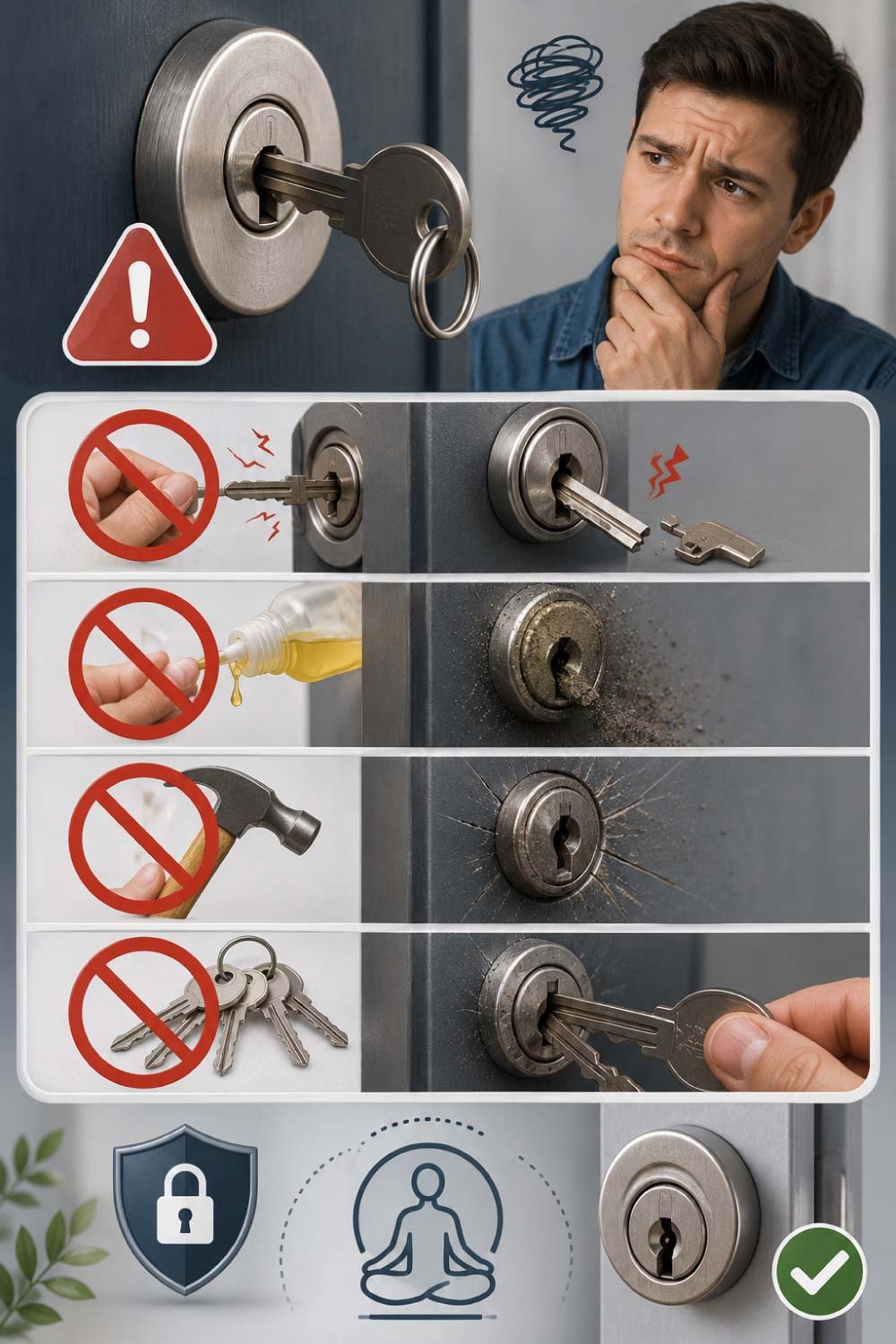
What NOT to Do When a Lock Is Jammed
When a lock gets stuck, frustration often leads to wrong actions that can permanently damage it. Many people try forcing the key or using unsuitable substances, which usually makes the problem worse instead of solving it.
Avoid These Mistakes:
Forcing the key hard → may snap it inside the lock.
Using cooking oil or grease → attracts dust and worsens jamming.
Hammering or hitting the lock → damages internal pins and cylinder.
Trying multiple incorrect keys → increases wear and misalignment.
Staying patient is important. Most jammed locks can be fixed safely without force if handled correctly.
Not every jammed lock can be repaired at home. In some cases, the internal components are too worn out, rusted, or damaged to function properly. Knowing when to stop trying is important to avoid further damage.
The lock keeps jamming even after cleaning and lubrication.
In such cases, replacing the lock or calling a locksmith is often more cost-effective than repeated temporary fixes.
Preventing Future Lock Jams
Once your lock is working again, the best approach is to prevent the issue from returning. Regular care and small maintenance steps can significantly extend the lifespan of your lock and keep it functioning smoothly.
Preventive care avoids expensive repairs.
Keeps locks smooth and reliable.
Reduces long-term wear and tear.
Simple Maintenance Tips:
Lubricate locks every 3–6 months.
Keep keyholes clean and free from dust.
Avoid applying excessive force when turning keys.
Replace bent or worn-out keys early.
Protect outdoor locks from rain, moisture, and dust exposure.
A few minutes of regular maintenance can greatly reduce the chances of future lock jams and keep your door security strong for years.
Final Thoughts
A jammed door lock can feel like a serious problem in the moment, but in most cases, it’s caused by simple issues like dirt, dryness, or minor misalignment. With basic tools and the right techniques, you can usually fix it within minutes.
The most effective approach is to stay calm and start with the simplest solution: gentle key movement and lubrication. If that doesn’t work, move on to tapping, alignment checks, or graphite treatment.
Understanding how your lock behaves—and maintaining it regularly—will save you time, stress, and unnecessary repair costs in the long run.
A smooth-working lock isn’t just about convenience; it’s about keeping your daily routine uninterrupted and secure.