
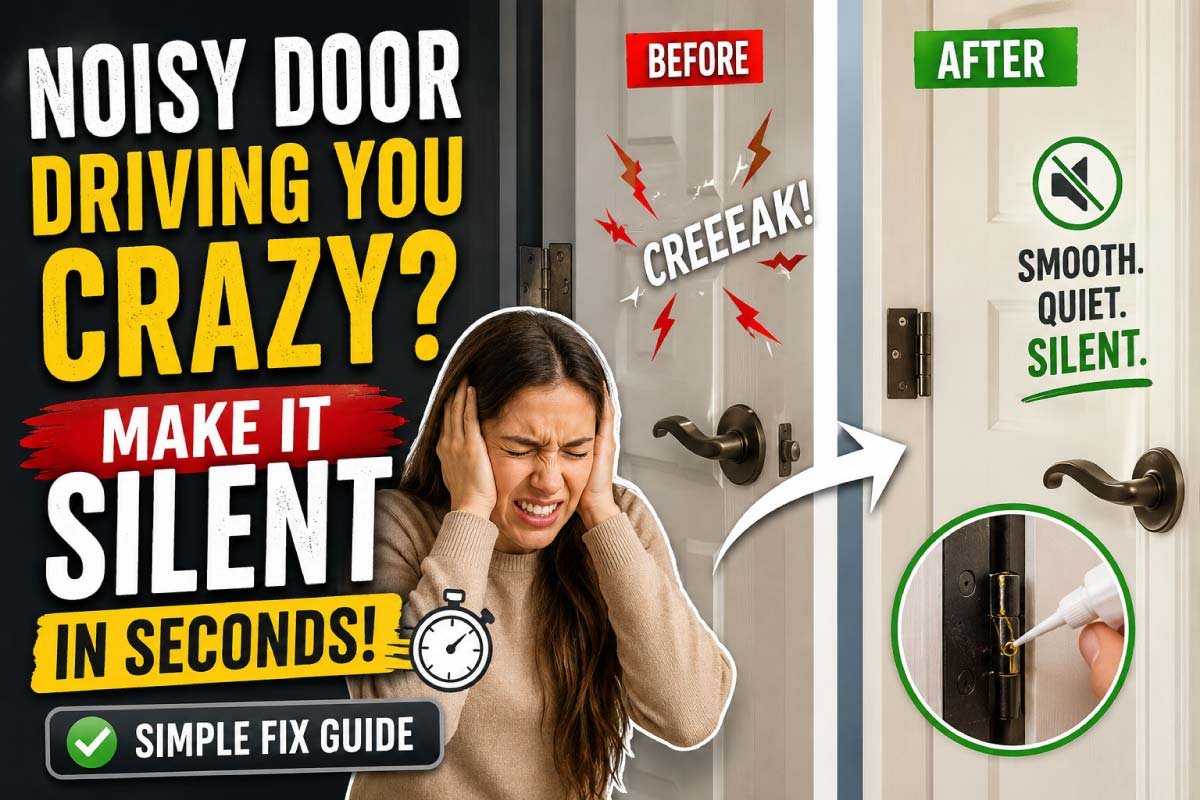
A squeaky, creaky, or rattling door can become one of the most annoying sounds in a home. It doesn’t matter whether it’s a bedroom door that wakes someone up at night or a main door that groans every time it opens—persistent noise can quickly get on your nerves.
The good news is that most noisy door problems are not serious. In fact, many of them can be fixed in just a few minutes using simple tools you probably already have at home. You don’t need to replace the door or call a professional right away. You just need to understand where the noise is coming from and apply the right fix.
In this guide, we’ll break down the most common causes of noisy doors and show you practical, quick solutions to make them silent again.
Why Doors Become Noisy in the First Place
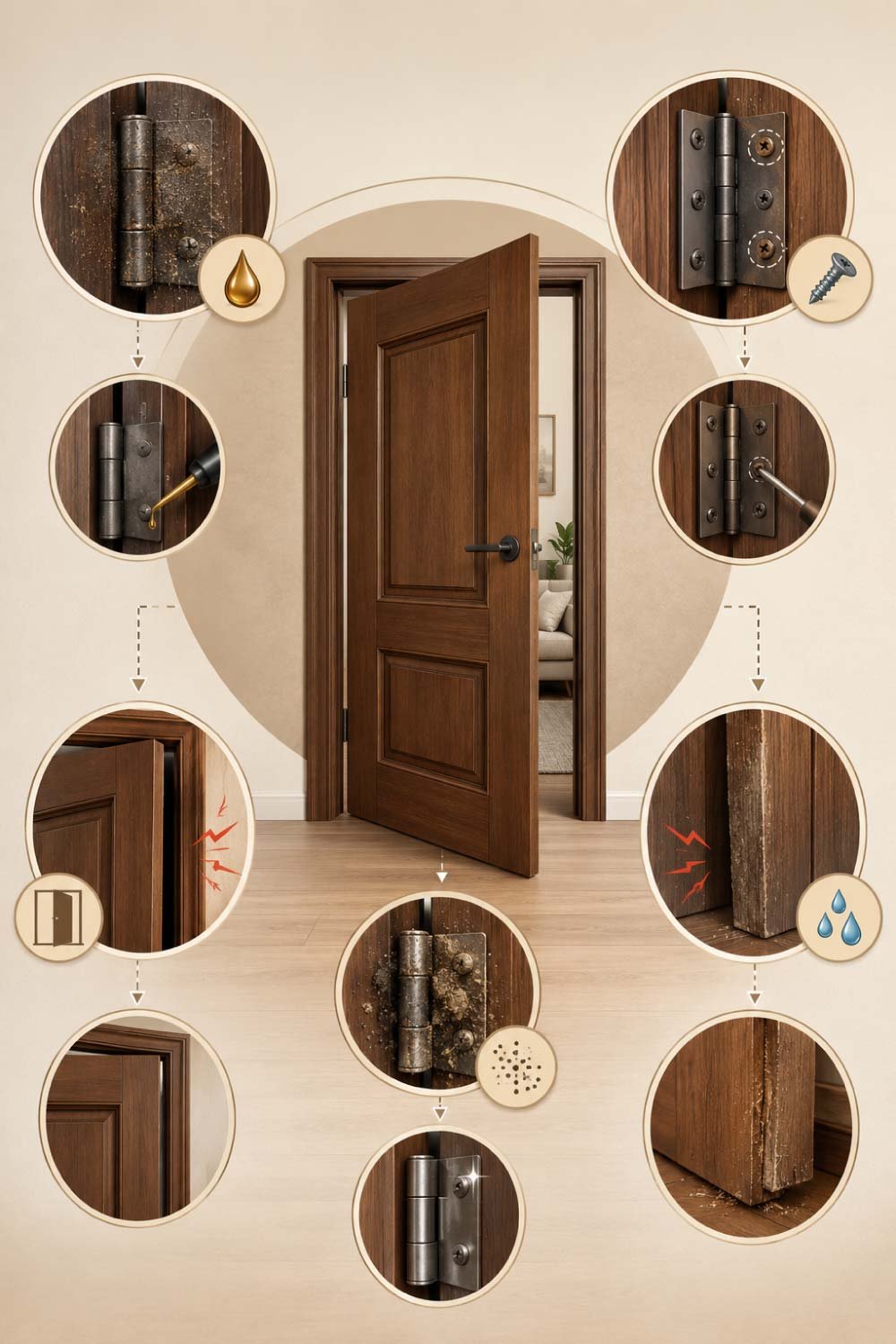
Before fixing a noisy door, it’s important to understand why the problem starts. In most cases, door noise doesn’t appear suddenly. It builds up slowly over time due to daily use, environmental changes, and lack of maintenance. When small issues combine, they create friction and movement problems that result in squeaking, creaking, or scraping sounds.
1. Dry Hinges
Hinges are the metal joints that allow your door to swing open and close smoothly. With continuous use, the internal lubricant dries out or wears away completely. Once that happens, metal parts begin rubbing directly against each other, producing a sharp squeaking or grinding sound every time the door moves.
2. Loose Screws
When hinge screws become loose, the door loses its firm position in the frame. This slight movement causes shifting every time the door opens or closes. Over time, this leads to irritating creaks, wobbling sensations, and sometimes even metal scraping noises as the hinges struggle to stay aligned.
3. Misaligned Door
A door must sit perfectly within its frame to function quietly. Even a minor shift in alignment can create constant friction between the door edges and the frame. This misalignment often happens due to long-term use, foundation settling, or repeated slamming of the door.
4. Dust and Dirt Buildup
Over time, dust, dirt, and tiny debris particles collect inside the hinges and latch areas. These particles create extra resistance between moving parts, making the door harder to operate. As the door moves, this buildup causes friction noises that gradually become more noticeable.
5. Swollen Wood
Wooden doors are highly sensitive to moisture and humidity changes. When exposed to damp conditions, the wood absorbs moisture and expands slightly. This swelling causes the door to rub tightly against the frame, producing scraping, dragging, or stiff movement sounds during opening and closing.
Once you identify the cause, fixing the noise becomes much easier.
Quick Fix #1: Lubricate the Hinges (Fastest Solution)
This is the simplest and quickest method to stop door noise. In most cases, squeaking hinges are the main issue, and proper lubrication instantly restores smooth movement. It reduces metal friction and allows the door to swing quietly without resistance or irritating sounds.
What You Need:
- Cooking oil, petroleum jelly, or WD-40 (if available)
- A cloth or tissue
Steps:
- Open the door fully so the hinges are visible.
- Apply a small amount of lubricant directly into the hinge joints.
- Move the door back and forth several times.
- Wipe away any excess oil to avoid dripping.
Why It Works:
Lubrication reduces friction between metal parts, instantly stopping squeaks and creaks. In many cases, the noise disappears within seconds.
If you don’t have professional lubricant, even a small amount of cooking oil can work temporarily.
Quick Fix #2: Tighten Loose Screws
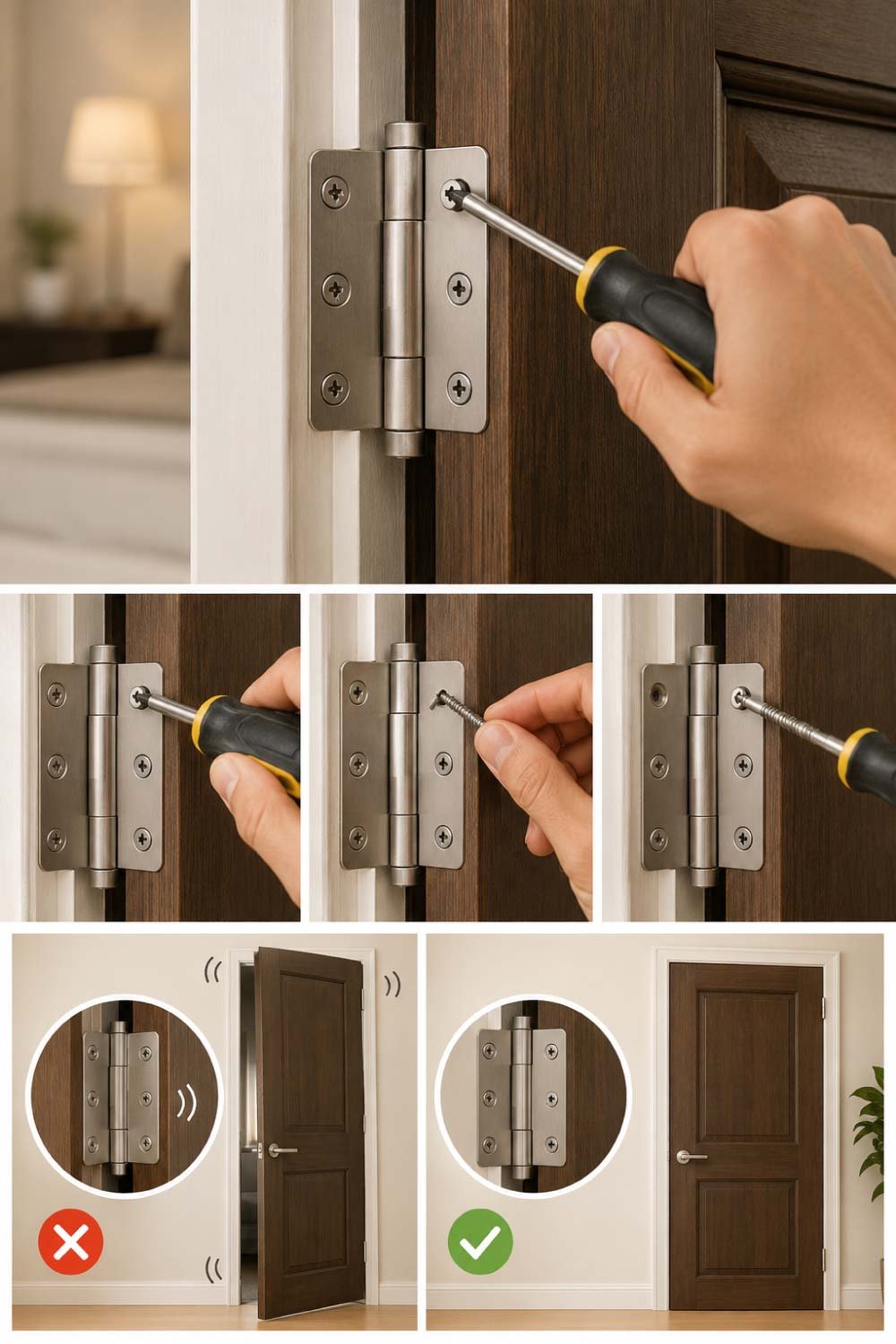
Loose screws are a very common but often ignored reason for noisy doors. When the hinges are not firmly secured, the door shifts slightly with every movement. This small instability creates repeated creaking sounds and can also affect long-term door alignment if not fixed quickly.
What You Need:
- Screwdriver
Steps:
- Open the door and inspect all hinge screws.
- Tighten each screw carefully.
- If a screw keeps spinning and won’t tighten, remove it and replace it with a slightly longer screw.
Pro Tip:
Start tightening from the top hinge first. The top hinge carries most of the door’s weight.
Why It Works:
Tight screws stabilize the door, preventing movement that causes creaking and rattling sounds.
Quick Fix #3: Clean the Hinges
Sometimes lubrication doesn’t fully solve the problem if dirt and debris are trapped inside the hinge mechanism. Over time, buildup can block smooth movement and increase friction, making the door noisy even when it is properly oiled.
What You Need:
- Dry cloth or brush
- Optional: mild cleaner
Steps:
- Open the door fully.
- Wipe away visible dust and dirt from the hinges.
- If possible, remove the hinge pin and clean it separately.
- Reassemble and apply lubricant.
Why It Works:
Dirt creates resistance inside moving parts. Cleaning ensures smooth motion and improves the effectiveness of lubrication.
Quick Fix #4: Fix a Misaligned Door
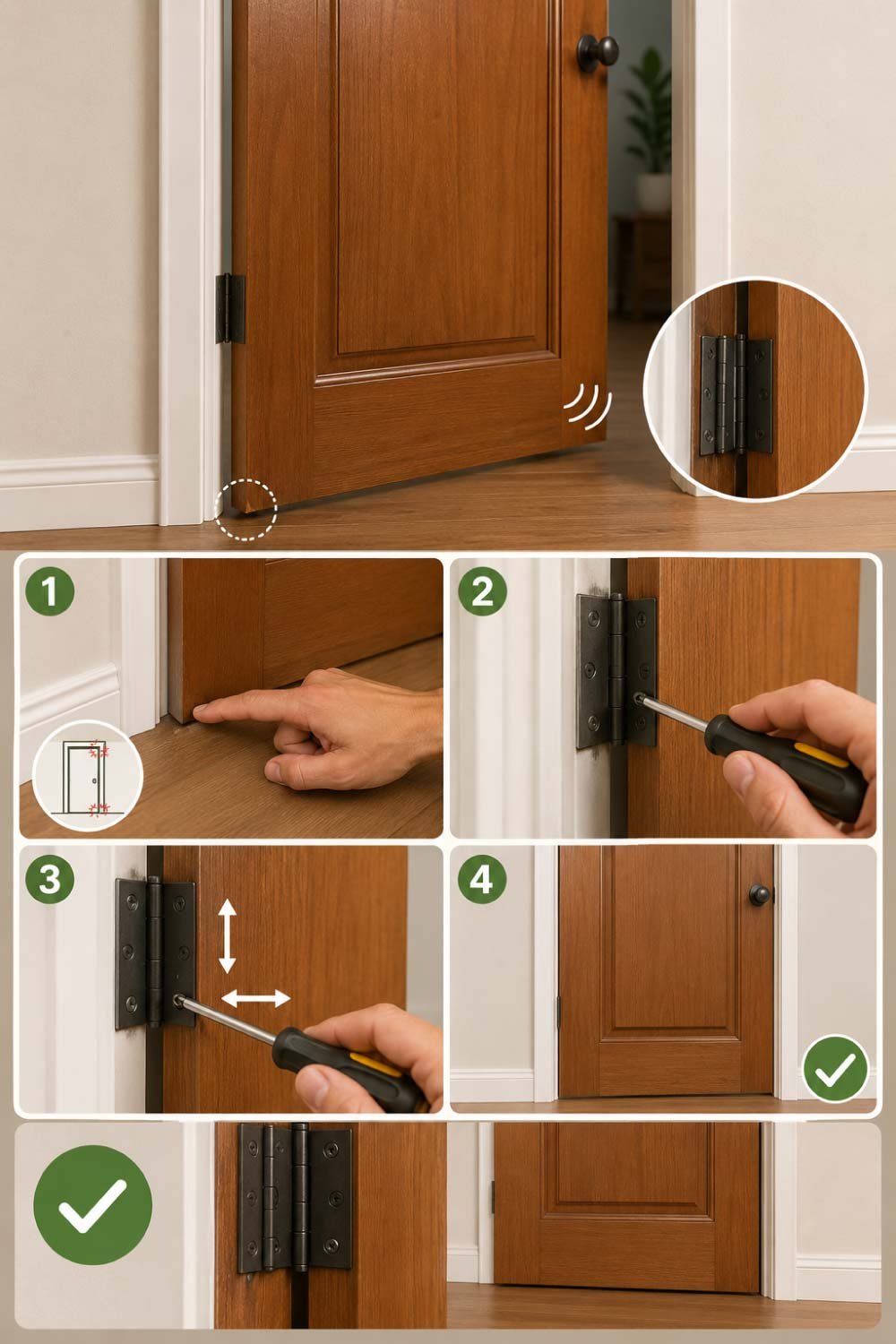
A misaligned door is one of the most common reasons behind scraping, stiffness, and poor closing performance. Over time, hinges can shift slightly or the frame can settle, causing the door to sit unevenly. This creates friction between the door edges and frame, resulting in noisy and rough movement.
Signs of Misalignment:
- Door rubs against the floor or frame
- You hear scraping instead of squeaking
- Door doesn’t latch properly
Steps:
- Check where the door is rubbing.
- Tighten hinge screws first (sometimes this alone fixes alignment).
- If needed, slightly adjust hinge position by loosening screws and shifting the door.
- Retighten and test.
Why It Works:
Proper alignment ensures the door moves smoothly without friction against the frame.
Quick Fix #5: Use the Hinge Pin Trick
This method is especially useful when standard lubrication doesn’t fully stop the noise. The hinge pin is the central part where most movement and friction occur, and treating it directly can solve deeper squeaking issues that regular surface lubrication may miss.
Steps:
- Remove the hinge pin using a screwdriver or hammer.
- Clean it thoroughly.
- Apply a thin layer of oil or grease.
- Reinsert it and move the door back and forth.
Why It Works:
The hinge pin is where most friction occurs. Lubricating it directly gives long-lasting silence.
Quick Fix #6: Stop Door Rattling
Door rattling usually happens when the door is closed but not tightly secured. This creates small gaps between the latch and strike plate, allowing the door to move slightly with vibration, wind, or pressure changes. The result is an annoying shaking or tapping sound.
Steps:
- Check if the door is loose when closed.
- Tighten the strike plate screws.
- Add a small rubber pad or tape where the latch meets the frame.
- Test closing.
Why It Works:
Rattling happens when the door has extra space to move. Padding or adjusting the strike plate removes that gap.
Quick Fix #7: Handle Wooden Door Swelling
Wooden doors naturally react to humidity and moisture changes in the environment. During humid weather, the wood expands slightly, which can cause the door to scrape against the frame or become harder to close. This issue is very common in seasonal weather changes.
Steps:
- Identify the rubbing area.
- Lightly sand the swollen edge.
- Apply a protective sealant or paint.
- Keep the area dry if possible.
Why It Works:
Removing excess material restores smooth clearance between the door and frame.
Don’t miss out on this helpful guide!
Don’t miss out on this helpful guide!
Preventing Door Noise in the Future
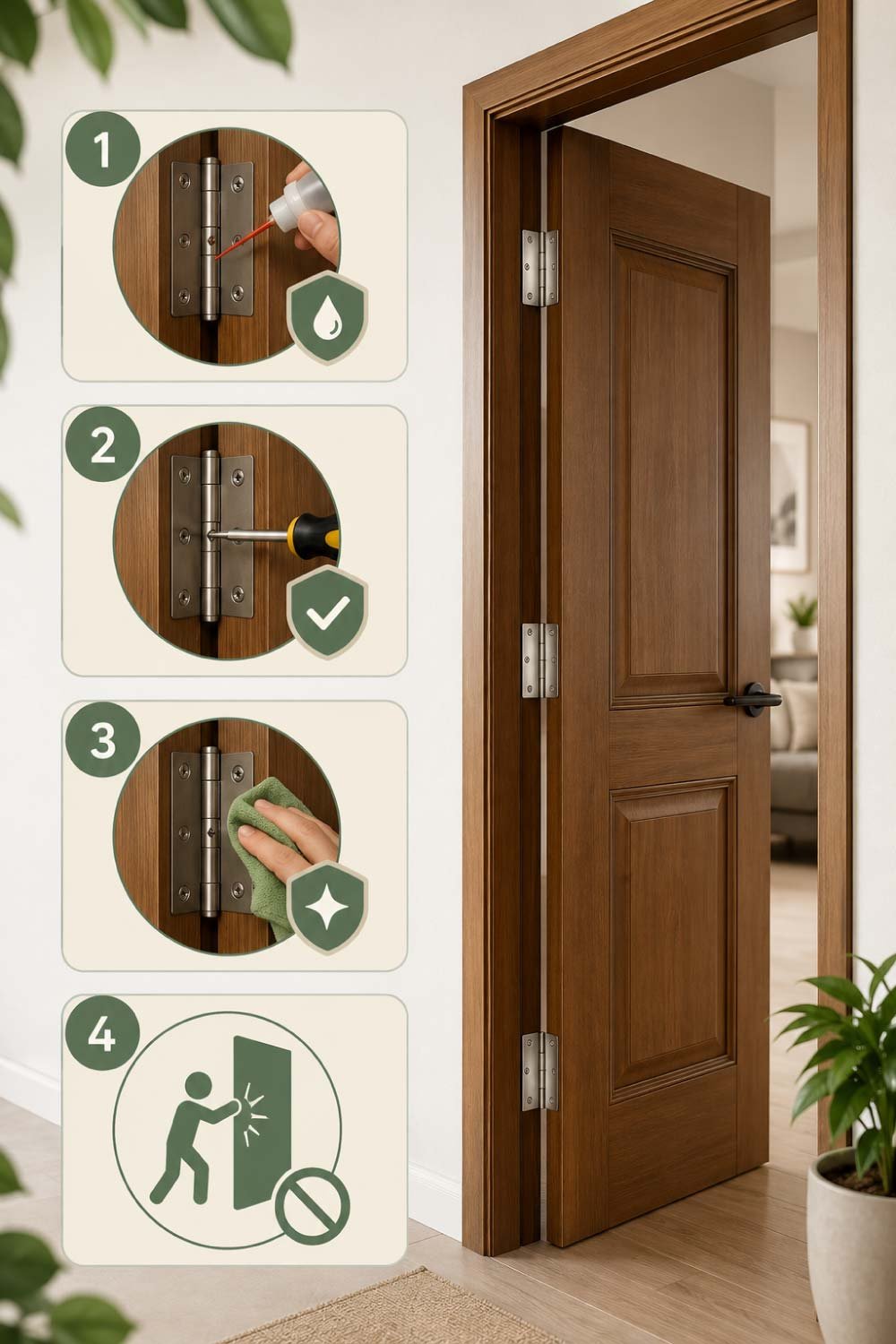
Fixing a noisy door is useful, but regular care is what truly keeps it silent and smooth over time. Simple maintenance habits can prevent most common issues before they even start, saving you effort, time, and repeated repairs in the future.
1. Lubricate Hinges Twice a Year
Regular lubrication keeps hinges smooth and prevents metal friction from building up, reducing the chances of squeaking or stiffness.
2. Tighten Screws Periodically
Loose screws gradually affect alignment and stability. Checking them every few months helps maintain a firm and steady door structure.
3. Keep Hinges Clean
Dust and dirt buildup is a silent cause of long-term noise. Cleaning prevents resistance and keeps movement smooth.
4. Avoid Slamming Doors
Strong impacts weaken hinges, loosen screws, and disturb alignment over time, leading to recurring noise and damage.
Don’t miss out on this helpful guide!
When You Should Consider Professional Help
Most door noise issues can be fixed with simple tools at home, but in some cases, the problem may be deeper than surface-level wear and tear. Structural damage or long-term shifting requires expert attention to avoid further complications.
You may need a professional if:
- The door frame is warped
- Hinges are broken or bent
- The structure is shifting due to foundation issues
- Severe wood damage or rot is present
If you notice any of these, a professional carpenter may be needed.
Final Thoughts
A noisy door can feel like a small problem, but it becomes surprisingly irritating over time. The constant squeak or rattle disrupts peace, especially in quiet environments.
Fortunately, most door noise issues are easy to fix with basic tools and a few minutes of attention. Whether it’s lubrication, tightening screws, cleaning hinges, or adjusting alignment, each solution targets a specific cause.
The key is not to ignore the problem. The sooner you fix it, the easier the repair will be.
With the steps shared above, you can turn a noisy, frustrating door into a smooth, silent one in just a few minutes—without spending much money or effort.