
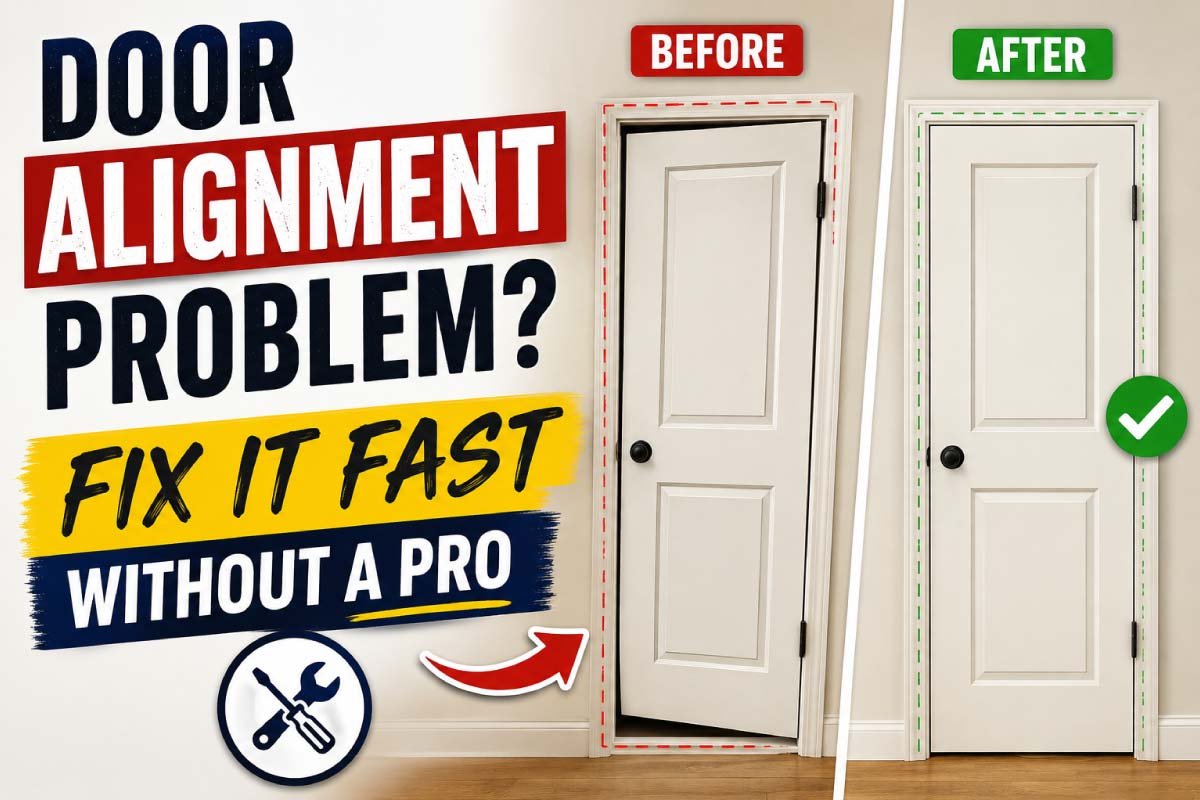
A door that doesn’t sit properly in its frame may seem like a small annoyance at first, but over time it can become a daily frustration. It might scrape the floor, refuse to latch, swing open on its own, or create gaps that let in dust, noise, or even pests. The good news is that most door alignment problems do not require a professional carpenter. With a few simple tools and a bit of patience, you can fix the issue yourself and restore smooth operation.
This guide walks you through everything you need to know about diagnosing and fixing door alignment problems quickly and effectively.
Table of Contents
ToggleUnderstanding Door Alignment Problems
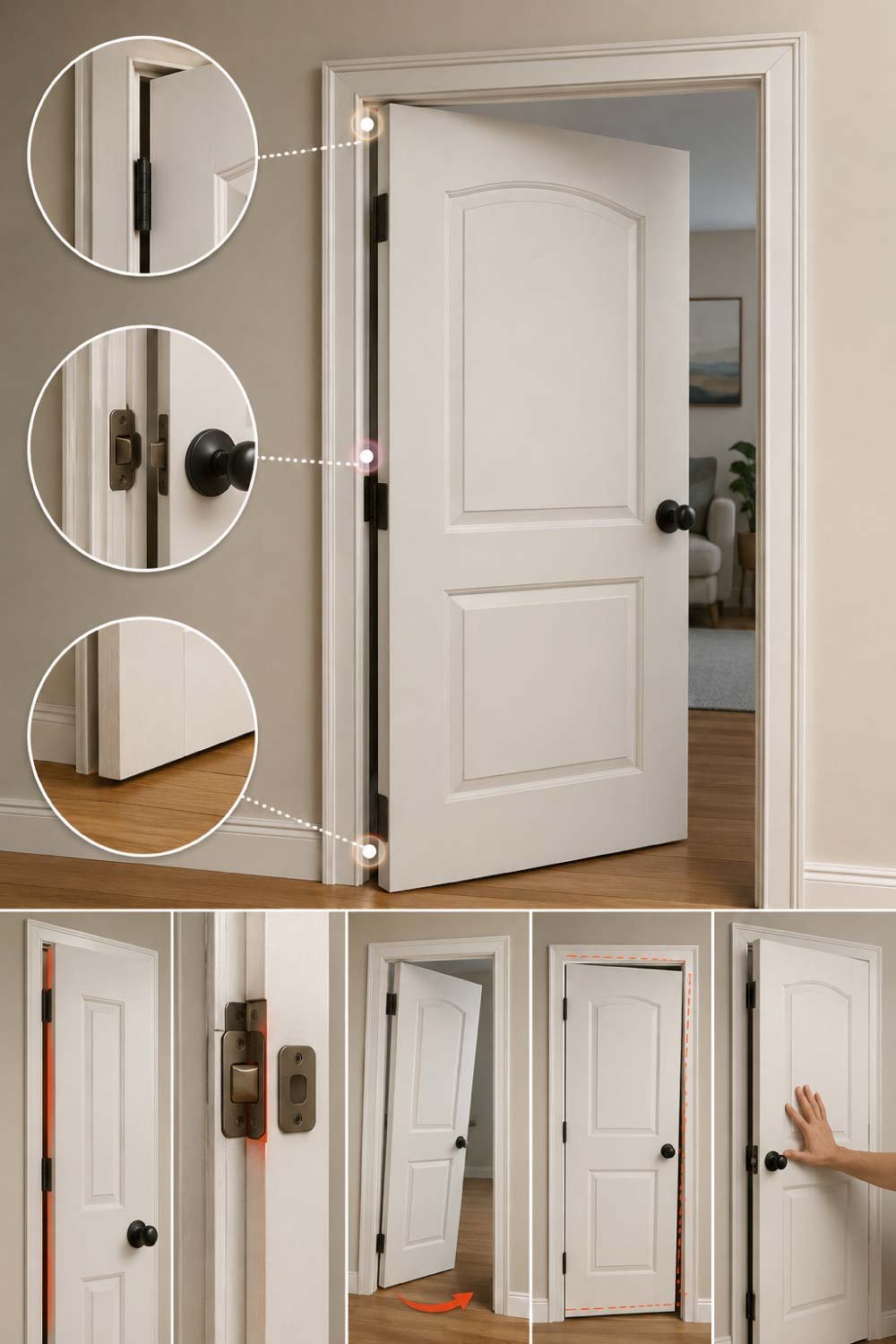
Door alignment problems happen when the door no longer sits correctly within its frame, affecting smooth movement and proper locking. These issues may seem small at first but gradually become frustrating in daily use, impacting comfort, security, and overall door performance over time.
Door alignment refers to how well a door fits inside its frame and interacts with its hinges, latch, and strike plate. When everything is properly aligned, the door opens and closes smoothly, locks easily, and stays in place.
When alignment is off, you may notice:
- The door rubs against the floor or frame
- The latch doesn’t catch properly
- The door swings open or shut on its own
- Uneven gaps around the edges
- Difficulty closing without force
These issues usually develop gradually due to everyday use, humidity changes, loose screws, or settling of the building structure.
Common Causes of Door Misalignment
Understanding the root causes of door misalignment is important because it helps you apply the correct fix instead of temporary solutions. Most alignment issues develop slowly over time due to structural movement, hardware wear, or environmental factors affecting the door and frame.
Before jumping into repairs, it helps to understand what’s causing the problem. Identifying the root cause ensures you apply the right fix.
1. Loose Hinges
Over time, hinge screws can loosen due to constant movement. This causes the door to sag slightly, leading to rubbing or poor latching.
2. Settling of the House
Buildings naturally shift over time. Even small shifts in the foundation can affect door frames, especially in older homes.
3. Swollen or Warped Door
Wooden doors can absorb moisture, causing them to expand. This is especially common in humid climates, making doors harder to close.
4. Improper Installation
If a door was not installed correctly from the beginning, alignment issues will show up sooner or later.
5. Worn Hinges or Hardware
Old hinges can bend or wear out, preventing smooth movement.
Tools You’ll Need
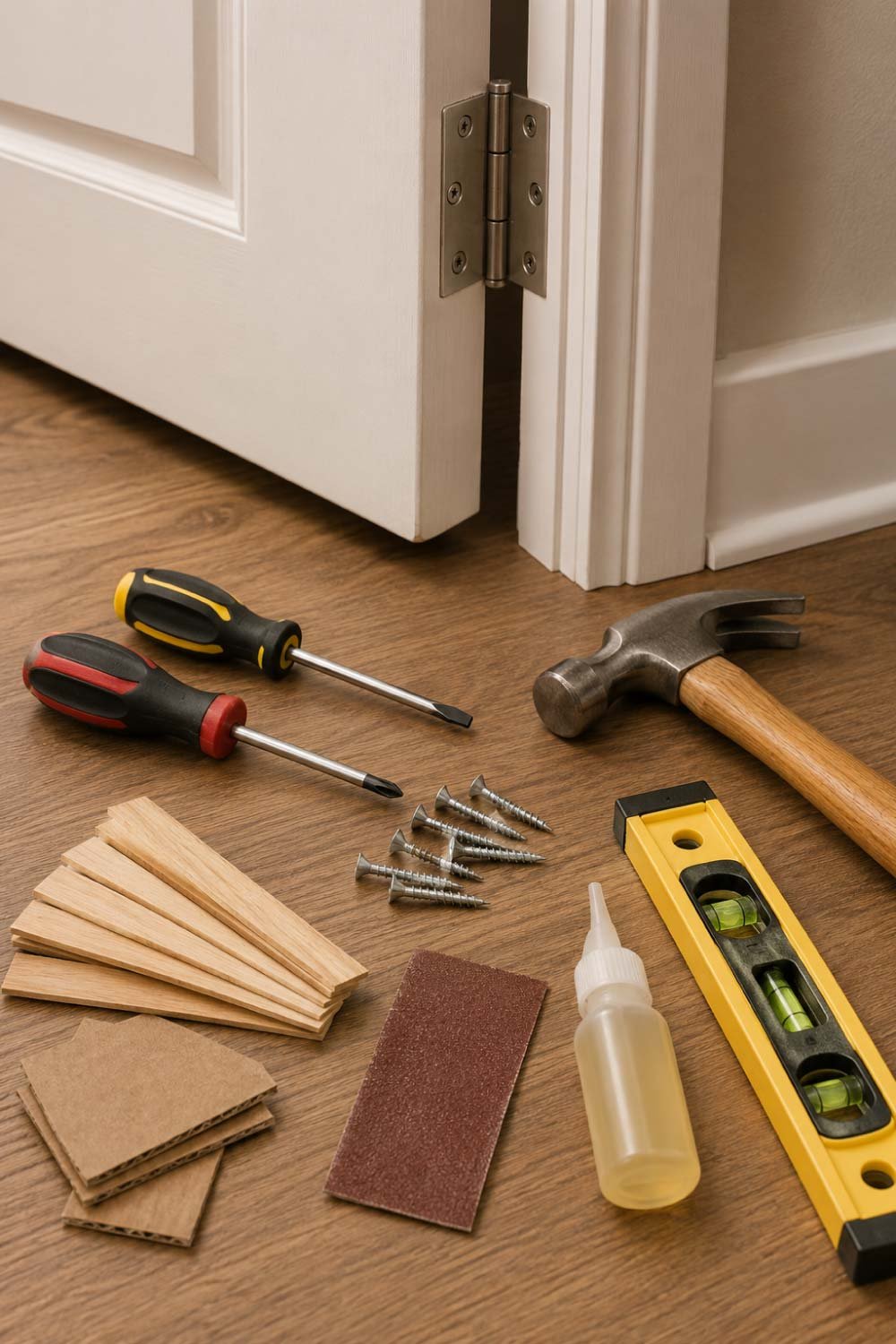
Having the right basic tools ready before starting any door alignment fix makes the process faster and more efficient. Most repairs are simple and do not require professional equipment, just a few household items that help with adjustment, tightening, and minor corrections.
Most door alignment fixes require only basic household tools:
- Screwdriver (flathead and Phillips)
- Wood screws (if replacements are needed)
- Hammer
- Wood shims or cardboard pieces
- Sandpaper or a file
- Lubricant (optional, for smoother movement)
- Level (helpful but not required)
You don’t need expensive tools or special training—just a careful approach.
Step-by-Step Fix for Door Alignment Problems
Fixing door alignment becomes much easier when you follow a structured step-by-step approach. Instead of guessing, each step helps you identify the issue and apply a precise correction, ensuring smoother movement, better closing, and long-lasting results without unnecessary repairs.
Now let’s go through practical solutions you can try depending on the issue.
Step 1: Check the Problem Carefully
Start by opening and closing the door slowly. Observe:
- Where is it rubbing?
- Does it stick at the top or bottom?
- Is the latch missing the strike plate?
Also check gaps between the door and frame. Uneven spacing is a strong sign of misalignment.
This step is important because it tells you exactly where the correction is needed.
Step 2: Tighten All Hinge Screws
This is the simplest and most effective fix.
How to do it:
Open the door fully
Use a screwdriver to tighten all screws on the hinges
Check both the door side and frame side hinges
If any screw spins without tightening, it means the hole is stripped. In that case, insert a wooden matchstick or toothpick with glue into the hole, break it off, and reinsert the screw.
This alone fixes many alignment issues instantly.
Step 3: Lift and Reposition the Door
If the door is sagging, lifting it slightly can realign it.
Steps:
Open the door halfway
Place a wedge or cardboard under the door for support
Lift the door slightly to its correct position
While holding it, tighten the hinge screws again
This resets the door position and often corrects rubbing issues at the bottom or latch misalignment.
Step 4: Adjust the Hinges
If tightening alone doesn’t help, you may need to adjust hinge positioning.
Slight adjustment method:
Loosen the hinge screws slightly (do not remove them)
Shift the door a tiny bit in the direction needed
Retighten the screws while holding the door in place
Even a few millimeters of movement can fix alignment problems.
Step 5: Fix Rubbing Areas
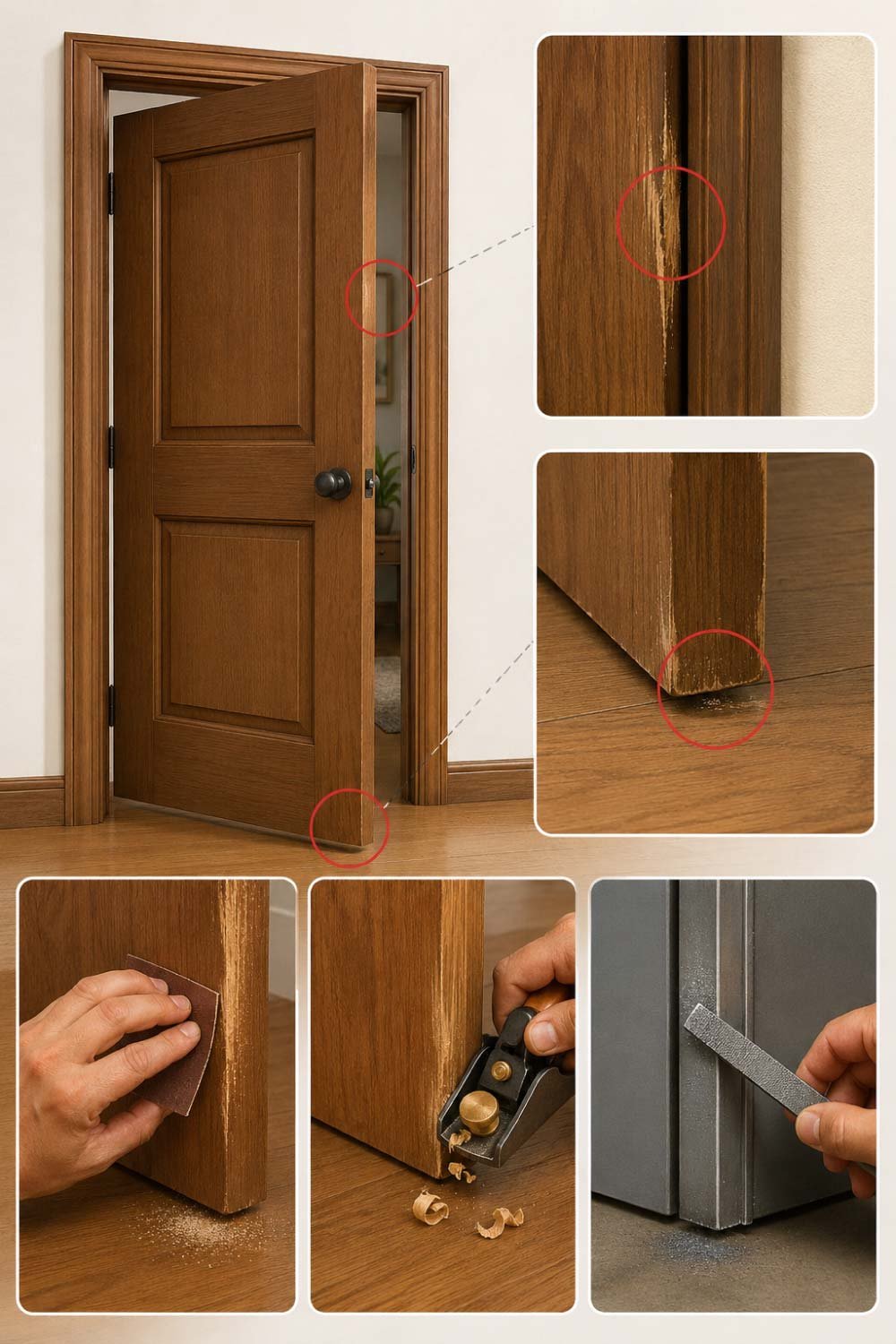
Rubbing or scraping is one of the most common door alignment issues, and it usually happens when the door has slightly shifted or swollen. Fixing it requires careful trimming or smoothing of the contact points so the door can move freely without damaging the frame or floor.
If the door is scraping against the frame or floor, identify the exact contact point.
Solutions:
- For wooden doors: gently sand the rubbing edge
- For minor gaps: shave off small amounts gradually
- For metal doors: use a metal file carefully
Always remove small amounts at a time. It’s better to go slow than to over-correct.
Step 6: Realign the Strike Plate
A misaligned strike plate is often the reason a door won’t latch even when it closes properly. This happens when the latch and plate no longer meet at the correct position, requiring slight adjustment to restore smooth locking.
If your door closes but doesn’t latch, the strike plate is likely misaligned.
Fix it like this:
- Close the door slowly and mark where the latch hits
- Remove the strike plate screws
- Adjust its position slightly up, down, or sideways
- Reattach and test the door
If adjustment is minor, you can also enlarge the strike opening slightly using a file instead of moving the entire plate.
Step 7: Use Shims for Better Alignment
Shims are a simple but highly effective solution for correcting door tilt and uneven spacing. They help fine-tune hinge positioning, especially when tightening screws alone does not fully resolve alignment issues.
Shims are thin pieces of wood or cardboard used to adjust hinge spacing.
How to use them:
- Remove hinge screws on the frame side
- Insert a thin shim behind the hinge
- Reattach screws tightly
This method helps correct tilt issues and uneven gaps.
Step 8: Check for Warping
Warping is a more serious issue where the door itself changes shape due to moisture or temperature changes. Unlike simple alignment problems, warping affects the entire structure of the door and may require partial repair or replacement.
If the door is warped due to moisture, alignment fixes may only partially work.
Signs of warping:
- Door looks curved
- Gaps vary across the frame
- Door sticks in humid weather
Solutions:
- Sand high-pressure areas
- Use a dehumidifier if possible
- In severe cases, consider replacing the door
Step 9: Lubricate Hinges for Smooth Operation
Sometimes what feels like an alignment issue is actually friction caused by dry or stiff hinges. Lubrication helps reduce resistance, allowing the door to move smoothly and quietly while also extending hinge life.
Sometimes the issue isn’t alignment but friction.
Apply a small amount of lubricant to hinges to:
- Reduce squeaking
- Improve smooth movement
- Prevent wear and tear
Avoid over-lubrication, as it can attract dust.
Step 10: Test the Door Multiple Times
After completing all adjustments, testing is essential to ensure the door is functioning correctly. Repeated checking helps you confirm smooth operation and catch any small misalignments that may still need fine-tuning.
After making adjustments:
- Open and close the door several times
- Check latch alignment
- Observe gaps and movement
Small adjustments may still be needed, so be patient.
Don’t miss out on this helpful guide!
Don’t miss out on this helpful guide!
Preventing Future Door Alignment Problems
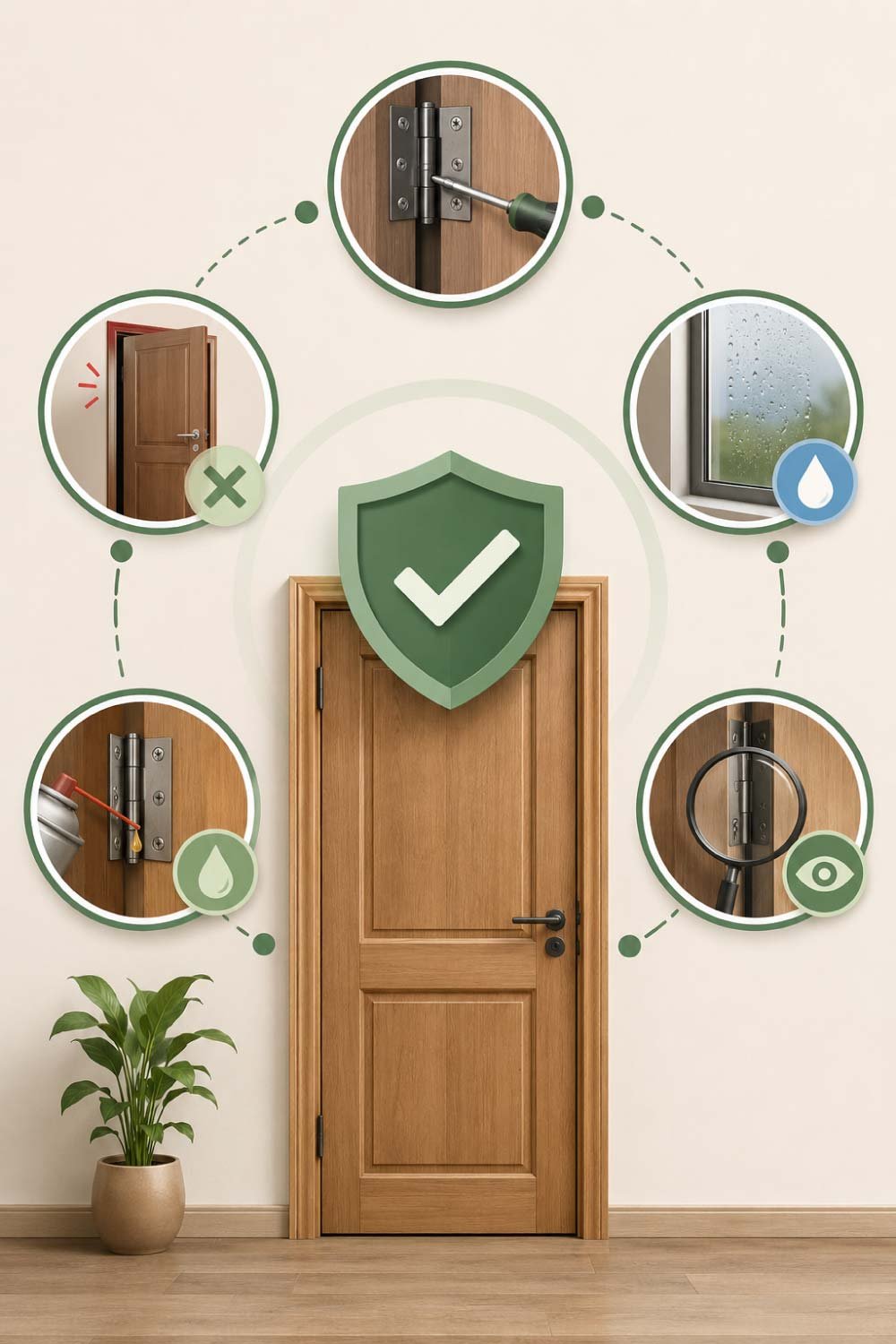
Preventive care is just as important as fixing the issue itself. Simple maintenance habits can significantly reduce the chances of future misalignment, helping your door stay smooth, stable, and durable for years.
Once your door is fixed, you can keep it in good condition with a few simple habits:
1. Tighten screws regularly
Check hinges every few months.
2. Avoid slamming doors
Hard impact loosens hardware over time.
3. Control humidity
Excess moisture causes swelling and warping.
4. Lubricate hinges occasionally
Keeps movement smooth and reduces stress on screws.
5. Inspect early signs
Fix minor issues before they become major problems.
Don’t miss out on this helpful guide!
When to Call a Professional
While most door alignment issues can be handled at home, some situations require expert attention. Knowing when to stop DIY repairs helps prevent further damage and ensures the door or frame is properly restored.
While most alignment issues are DIY-friendly, you should consider professional help if:
- The frame itself is damaged
- The door is severely warped
- Structural movement is visible in walls
- DIY fixes do not improve the issue
A carpenter can realign the entire frame if needed.
Final Thoughts
A misaligned door can be frustrating, but it’s rarely a serious problem. In most cases, it comes down to loose screws, slight shifts, or minor wear and tear. With simple tools and careful adjustments, you can restore smooth operation in under an hour.
The key is to work step by step—observe carefully, adjust gradually, and test often. Once fixed, your door will open and close smoothly again, saving you time, effort, and unnecessary repair costs.
A properly aligned door not only improves comfort but also adds to the overall feel and functionality of your home.