
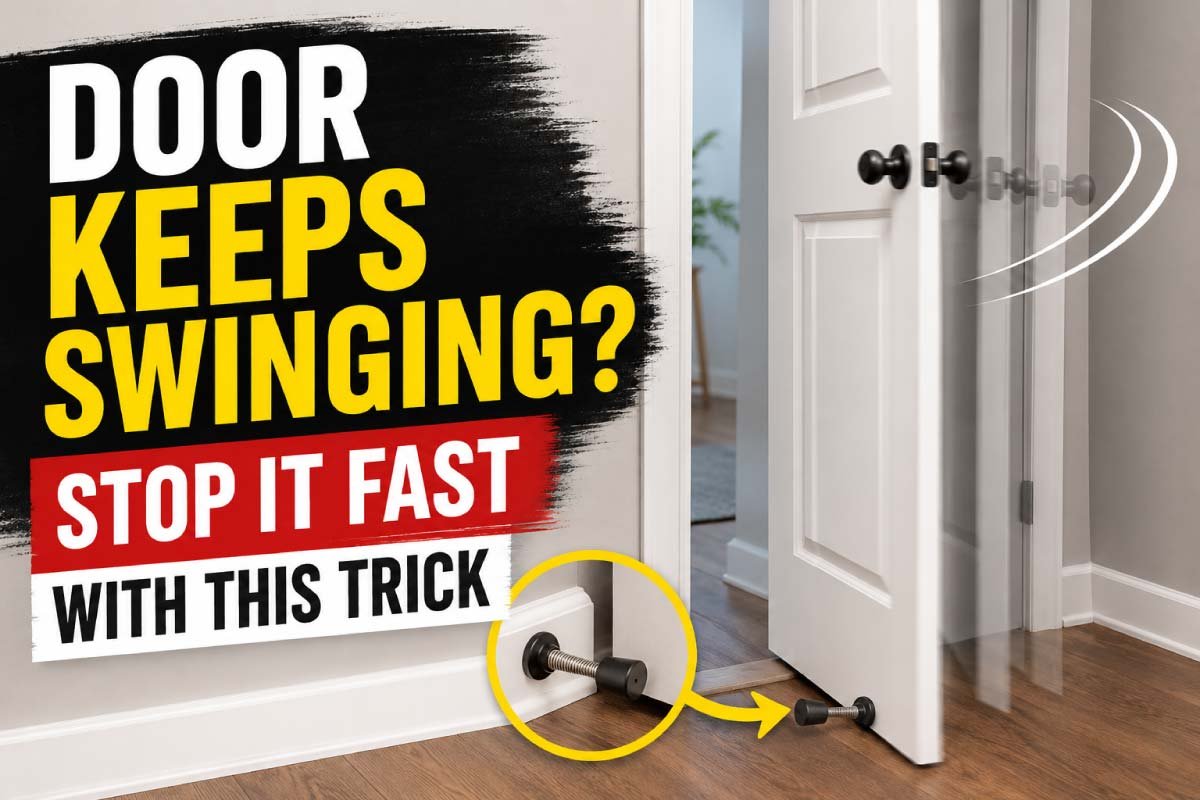
A door that won’t stay still can be surprisingly annoying. You close it, and it slowly swings back open or slams shut on its own. It’s not just a minor inconvenience—it can let in drafts, reduce privacy, make noise, and even become a safety issue if it keeps moving unexpectedly.
The good news is that you don’t need expensive tools or professional help to fix it. In most cases, a swinging door can be stopped with a simple adjustment or a quick DIY trick that takes only a few minutes.
In this guide, you’ll learn why doors swing on their own, and most importantly, how to stop it fast using practical, proven solutions.
Table of Contents
ToggleWhy Does Your Door Keep Swinging?
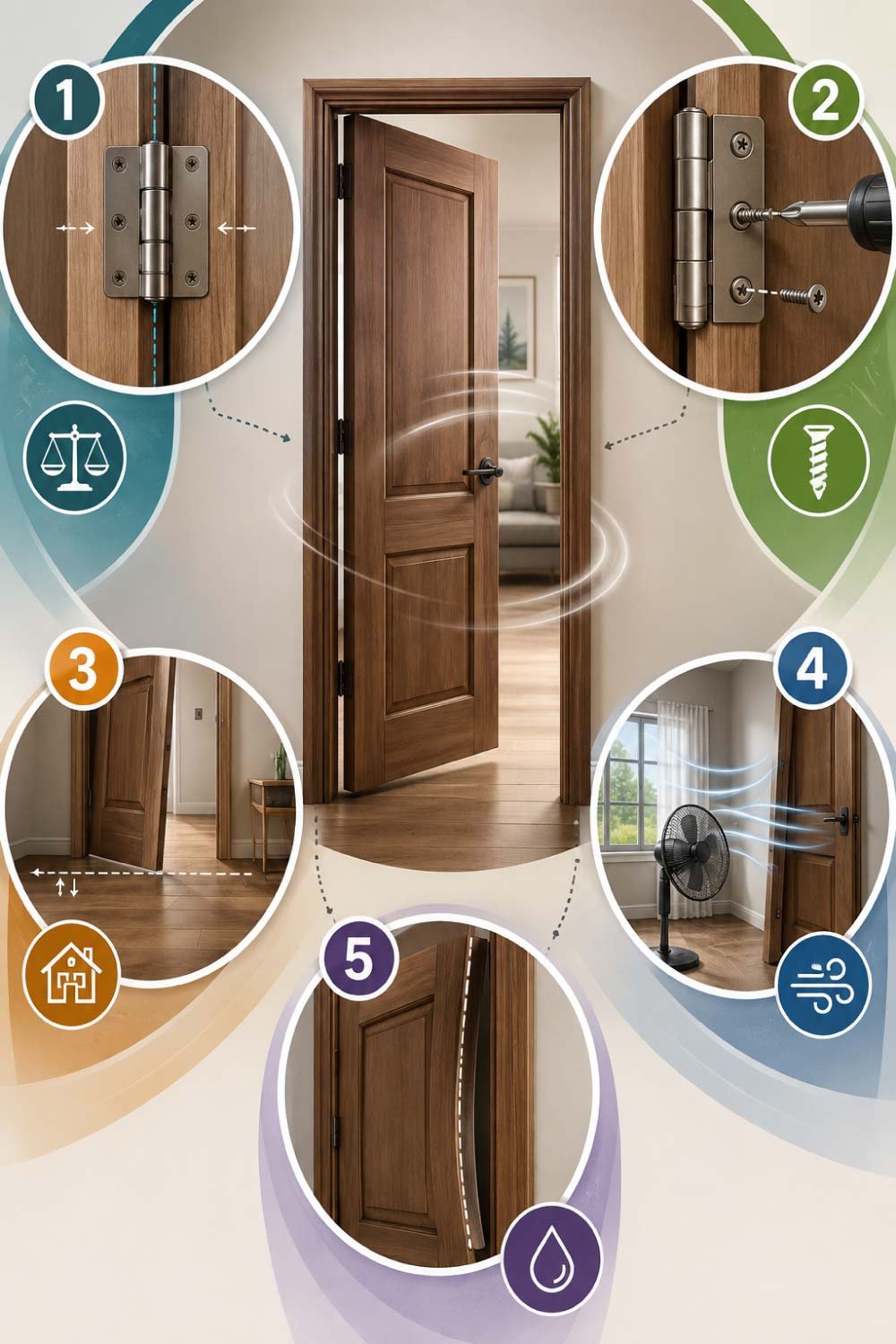
Before jumping into fixes, it helps to understand what’s actually causing the problem. A swinging door usually isn’t random—it’s physics, structure shifts, and everyday wear combining over time. When a door refuses to stay still, it’s usually reacting to imbalance in the frame, hinge tension, or even airflow inside the room.
- Doors naturally respond to gravity and pressure changes
- Small structural shifts build up over time
- Hardware wear gradually affects alignment
- Environmental factors like humidity play a role
1. Improper Hinge Alignment
The most common reason behind a swinging door is slightly misaligned hinges. Even a minor shift in positioning can change how weight is distributed across the door. Over time, this imbalance allows gravity to pull the door in a specific direction, causing it to swing open or shut on its own.
- Hinges may shift due to long-term usage
- Uneven weight distribution affects balance
- Even millimeter-level misalignment matters
- Gravity exaggerates small structural errors
2. Loose Screws in Hinges
Loose hinge screws are another major cause of door movement issues. With repeated opening and closing, screws slowly loosen inside the frame, reducing stability. This allows the door to tilt slightly, creating a constant swing effect that becomes more noticeable over time.
- Screws gradually loosen with daily use
- Reduced grip causes slight door tilt
- Movement increases with each cycle of opening
- Weak anchoring affects overall stability
3. Uneven Flooring or Frame
If your house has settled over time or the floor isn’t perfectly level, doors can behave unpredictably. Gravity naturally pulls the door toward the lowest point, making it swing in that direction even when no one touches it.
- Structural settling can shift alignment
- Uneven floors influence door balance
- Frame distortion leads to directional movement
- Gravity pulls toward the lowest angle
4. Air Pressure or Drafts
Air movement inside a home can quietly push doors open or closed without obvious force. Fans, ventilation systems, or even open windows can create pressure differences that affect lightweight doors, making them swing unexpectedly.
- Airflow creates subtle pressure changes
- Fans and vents influence door movement
- Open windows can push doors slightly
- Lightweight doors react more strongly
5. Warped Door or Frame
Wood naturally expands and contracts due to changes in temperature and humidity. Over time, this can cause a slight warp in either the door or the frame. Even a small bend prevents the door from resting evenly, leading to continuous swinging.
- Moisture affects wood structure over time
- Expansion and contraction cause bending
- Warping prevents proper alignment
- Small distortions create constant movement
Once you identify the cause, the fix becomes much easier.
Quick Fix #1: The “Hinge Pin Adjustment Trick” (Fastest Solution)
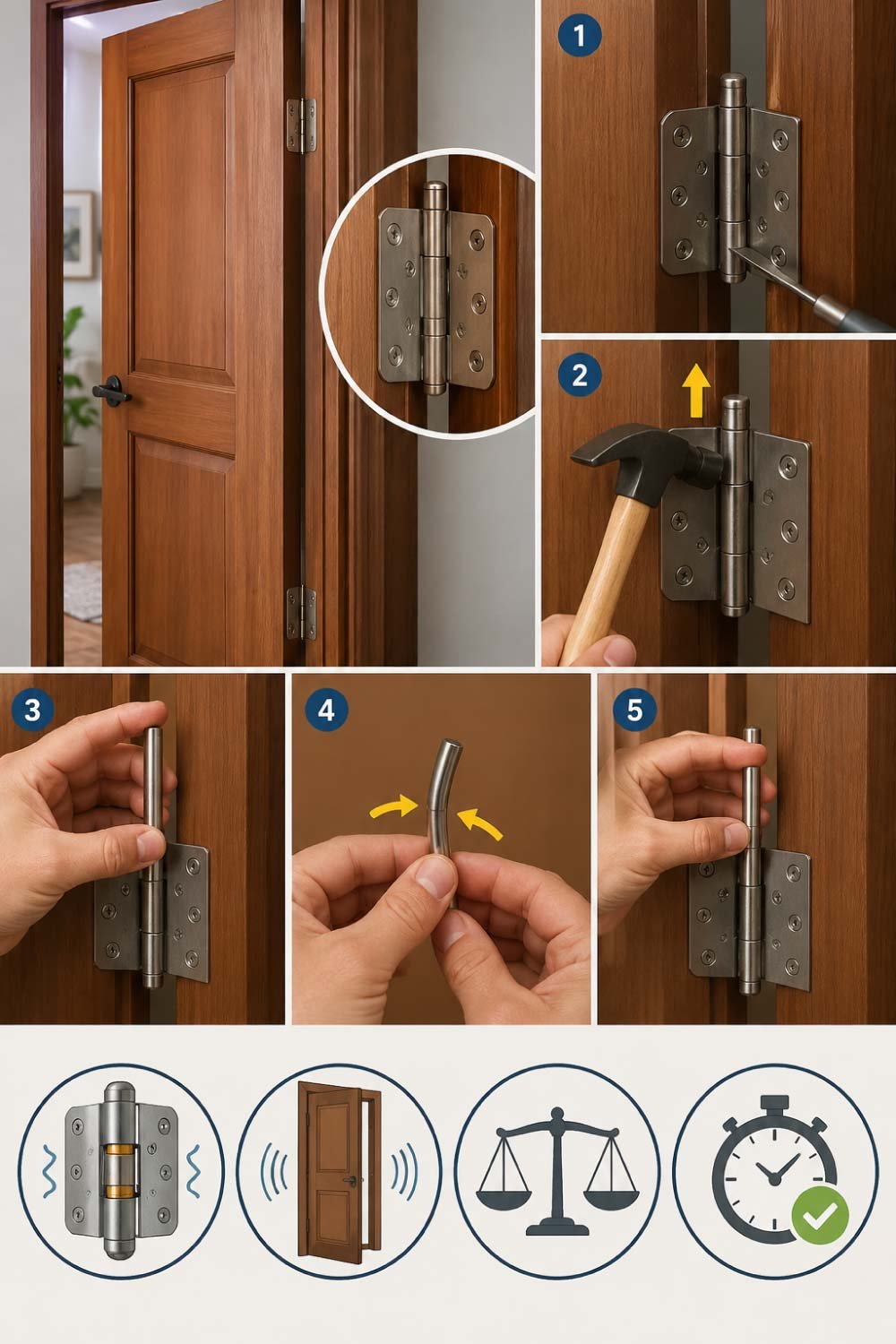
This is one of the simplest and most effective ways to stop a swinging door quickly. It works by subtly changing the friction inside the hinge system, helping the door resist unwanted movement without replacing any hardware.
What You Need:
Hammer
Flathead screwdriver
Paper towel or cloth
Steps:
- Open the door slightly for hinge access
- Tap the hinge pin upward gently
- Remove the pin carefully from the hinge
- Slightly bend the pin using light force
- Reinsert and test door movement
Why This Works:
By slightly altering the hinge pin shape, you introduce controlled friction inside the hinge. This small resistance slows down free movement and helps the door stay in a stable position instead of drifting.
- Creates internal hinge resistance
- Prevents free swinging motion
- Improves balance without replacement
- Works instantly in most cases
It’s a small adjustment, but surprisingly effective.
Quick Fix #2: Tighten All Hinge Screws
Loose screws are one of the easiest problems to fix, yet often overlooked. When screws lose grip inside the wood, the hinge shifts slightly and affects the door’s balance. Tightening them restores stability and prevents unwanted swinging.
Steps:
- Inspect all hinge screws carefully
- Tighten top, middle, and bottom hinges
- Replace any stripped or spinning screws
- Use longer screws for better grip if needed
Pro Tip:
Installing a longer screw (2–3 inches) in at least one hinge anchors the frame deeper into the wall stud. This significantly improves door stability and reduces movement over time.
- Strengthens door frame connection
- Prevents future loosening issues
- Improves long-term alignment
- Reduces hinge stress
Quick Fix #3: The Pencil Shim Trick (Hidden Fix That Works Wonders)
This clever DIY method adjusts hinge positioning slightly without visible changes. It’s especially useful when the door swings due to minor alignment issues that aren’t severe enough for full repairs.
What You Need:
Pencil (wooden)
Utility knife (optional)
Steps:
- Remove one hinge pin carefully
- Cut a thin sliver from a wooden pencil
- Insert it into the hinge pin hole
- Reinsert hinge pin tightly
- Test door movement afterward
Why It Works:
The shim slightly shifts hinge alignment, correcting the door’s resting angle. This tiny adjustment is often enough to stop unwanted swinging behavior without affecting appearance.
- Alters hinge angle subtly
- Fixes minor alignment issues
- Completely hidden after installation
- No permanent modification required
It’s invisible once done, but very effective.
Quick Fix #4: Adjust the Top Hinge (Gravity Control Method)
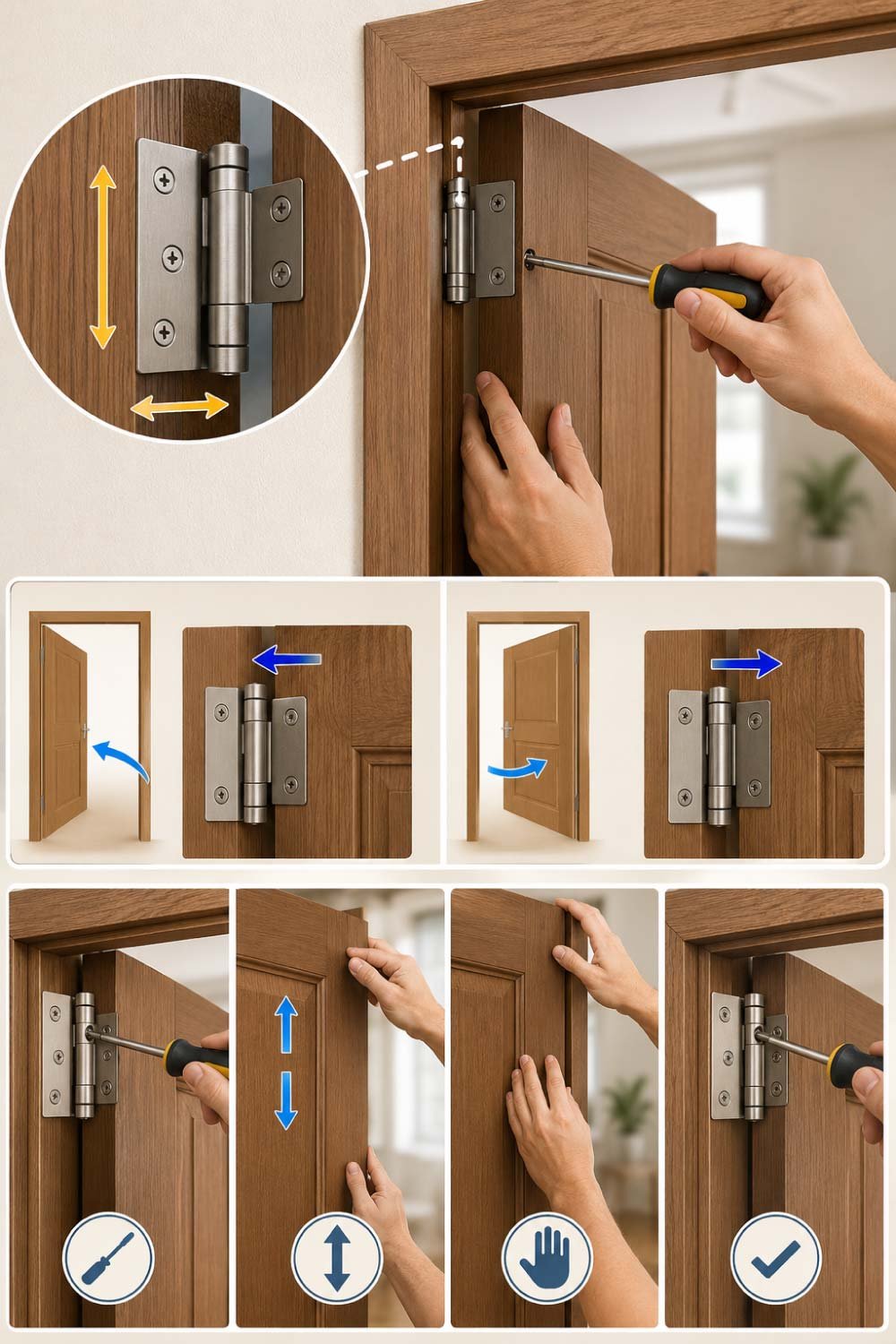
Most swinging door problems are strongly influenced by the top hinge because it carries a large portion of the door’s weight and controls its natural pivot direction. A small adjustment here can completely change how gravity pulls the door, helping you fine-tune its balance without major repairs.
Steps:
- Slightly loosen the screws on the top hinge
- Gently push the door up or down based on swing direction
- Hold the door steady in the corrected position
- Retighten all screws firmly while maintaining alignment
When to Use This:
- Door swings open by itself → adjust top hinge inward
- Door swings shut on its own → adjust top hinge outward slightly
This method changes how gravity affects the door.
- Fine-tunes door balance at the main support point
- Helps correct long-term alignment drift
- Works with natural gravity instead of against it
- Requires only minor adjustments for noticeable results
Quick Fix #5: Add Friction Using Soap or Wax
If your door moves too freely, it will continue swinging due to lack of resistance. Adding a small amount of friction to the hinge system slows down this movement and helps the door stay in place more naturally without affecting its overall function.
Steps:
- Rub a bar of soap, candle wax, or beeswax on hinge pins
- Open and close the door several times to spread it evenly
- Check whether the movement has become slower and more stable
Why It Works:
Adding lubrication-like resistance creates controlled drag inside the hinge. This reduces free movement and prevents the door from swinging too easily due to minor air pressure or imbalance.
- Increases controlled resistance in hinges
- Reduces over-smooth swinging motion
- Improves door stability instantly
- Easy and completely reversible method
Don’t miss out on this helpful guide!
Quick Fix #6: Use a Door Stop or Magnetic Catch
If you want a fast, no-tools solution, adding external control is the simplest option. Instead of fixing the hinge itself, you physically limit how far the door can move, keeping it in a stable position whenever needed.
Options:
- Rubber door stop
- Magnetic door catch
- Spring door holder
Benefits:
- Provides instant stability without repairs
- Requires no technical skill or tools
- Affordable and widely available in stores
- Works well for bedrooms and bathrooms
This is especially useful for interior doors like bedrooms and bathrooms.
- Best for quick everyday control
- Prevents unwanted movement immediately
- Ideal temporary or semi-permanent solution
- Works without altering door structure
Quick Fix #7: Check for Floor Slope Issues
Sometimes the door is not actually the problem—the floor or building structure is. If the surface is slightly uneven, gravity will naturally pull the door in one direction, making it swing even after hinge adjustments.
How to Test:
- Open the door halfway
- Let it go gently without pushing
- Observe whether it moves consistently in one direction
If it always swings the same way, the floor or frame may be slightly slanted.
Solution:
- Make small hinge adjustments for balance
- Use a door stopper to control final movement
- Avoid full reconstruction unless necessary
Full floor correction is rarely needed.
- Identifies structural imbalance in the building
- Helps separate door issues from floor issues
- Prevents unnecessary repairs or replacements
- Simple testing reveals hidden causes
Quick Fix #8: Correct Air Pressure Imbalance
Air pressure inside a home can silently push doors open or closed without obvious force. This often happens when airflow moves between rooms, especially when fans, windows, or exhaust systems create uneven pressure zones.
Common Causes:
- Ceiling fans running nearby
- Open windows on opposite sides of the house
- Kitchen or bathroom exhaust fans
Fix:
- Close nearby windows during testing
- Turn off fans temporarily
- Improve ventilation balance if needed
If the door stabilizes after this, air pressure was the issue.
- Eliminates invisible airflow effects
- Helps identify environmental causes
- Simple test with immediate feedback
- Often overlooked but very common
Don’t miss out on this helpful guide!
Quick Fix #9: Rehang the Door (Advanced Fix)
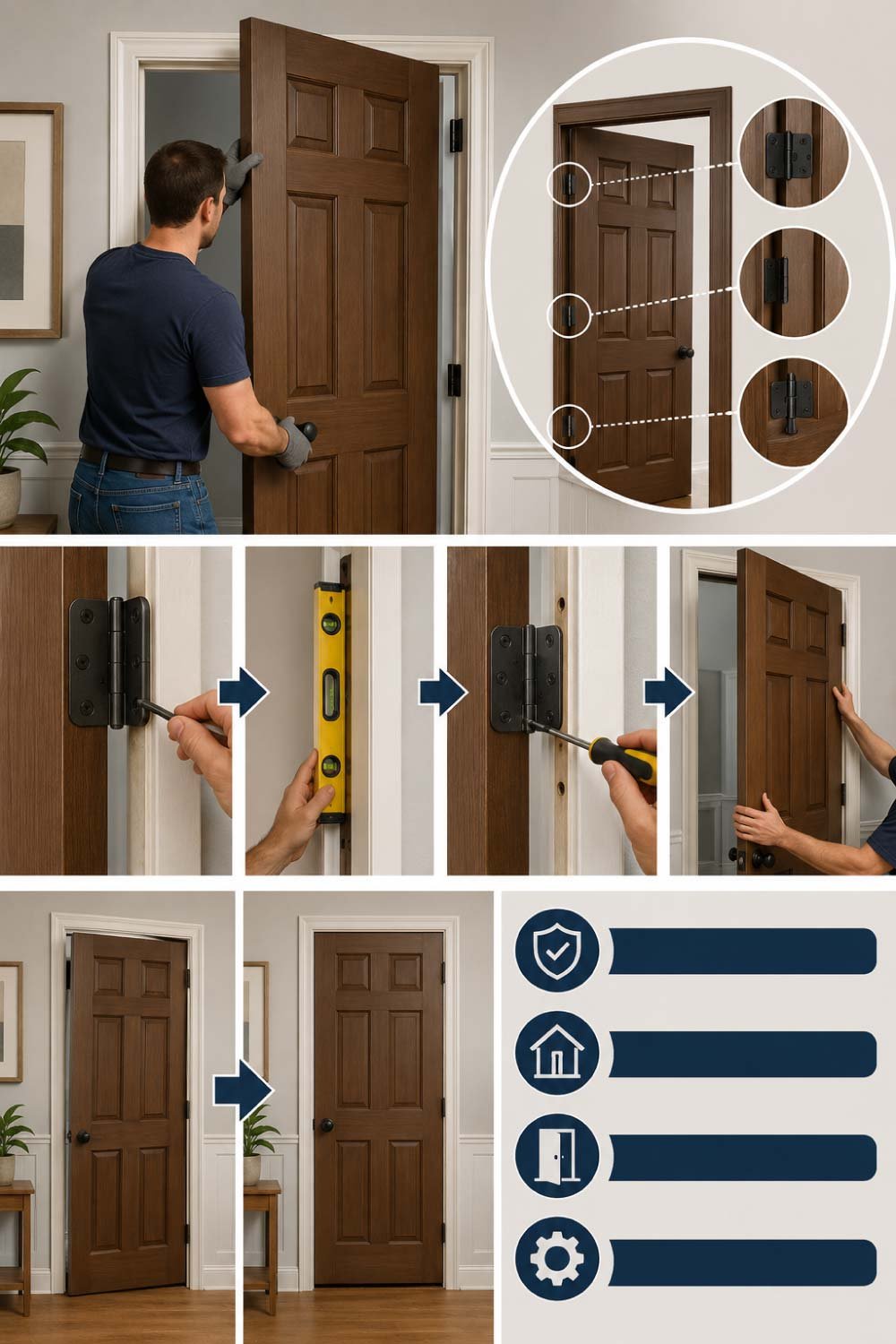
If none of the previous solutions work, the issue may be structural misalignment that requires repositioning the entire door. This is a more advanced fix but provides a long-term and permanent solution when basic adjustments are not enough.
Steps:
- Remove hinge pins and carefully take off the door
- Check frame alignment using a level tool
- Adjust hinge placement slightly if needed
- Rehang the door carefully and test movement
When to Use:
- Severe or persistent swinging issues
- Visible frame or door misalignment
- Warped or shifted structure over time
This is more time-consuming but provides a permanent fix.
- Fully resets door alignment
- Corrects long-term structural issues
- Best for severe swinging problems
- Ensures lasting stability when done properly
also Read:
Preventing the Problem in the Future
Once you fix your door, maintaining it is just as important. A few simple habits can prevent the swinging problem from returning and keep your door operating smoothly for years.
1. Check Screws Every Few Months
Loose screws are the root cause of most door issues. Regular tightening helps maintain alignment and prevents gradual shifting.
2. Avoid Slamming Doors
Hard impacts weaken hinge grip over time and slowly affect door balance and structure.
3. Control Humidity
Excess moisture can cause wood to expand or warp, leading to long-term misalignment. Proper ventilation helps prevent this.
4. Lubricate Hinges Occasionally
A light application of lubricant keeps movement smooth while preventing stiffness and uneven wear.
🔥 Don’t miss out on this helpful guide!
Final Thoughts
A door that keeps swinging is frustrating, but it’s rarely a serious problem. In most cases, it comes down to hinge alignment, loose screws, or subtle environmental factors like air pressure or uneven flooring.
The good news is that you don’t need to replace the door or spend money on expensive repairs. With simple tricks like tightening screws, adjusting hinges, or using a small shim, you can stabilize your door in minutes.
Start with the easiest fix first—the hinge pin adjustment or screw tightening—and work your way up only if needed. In most homes, the problem is solved long before it gets complicated.
A steady door might seem like a small thing, but it makes your space feel more comfortable, quieter, and well-maintained.