
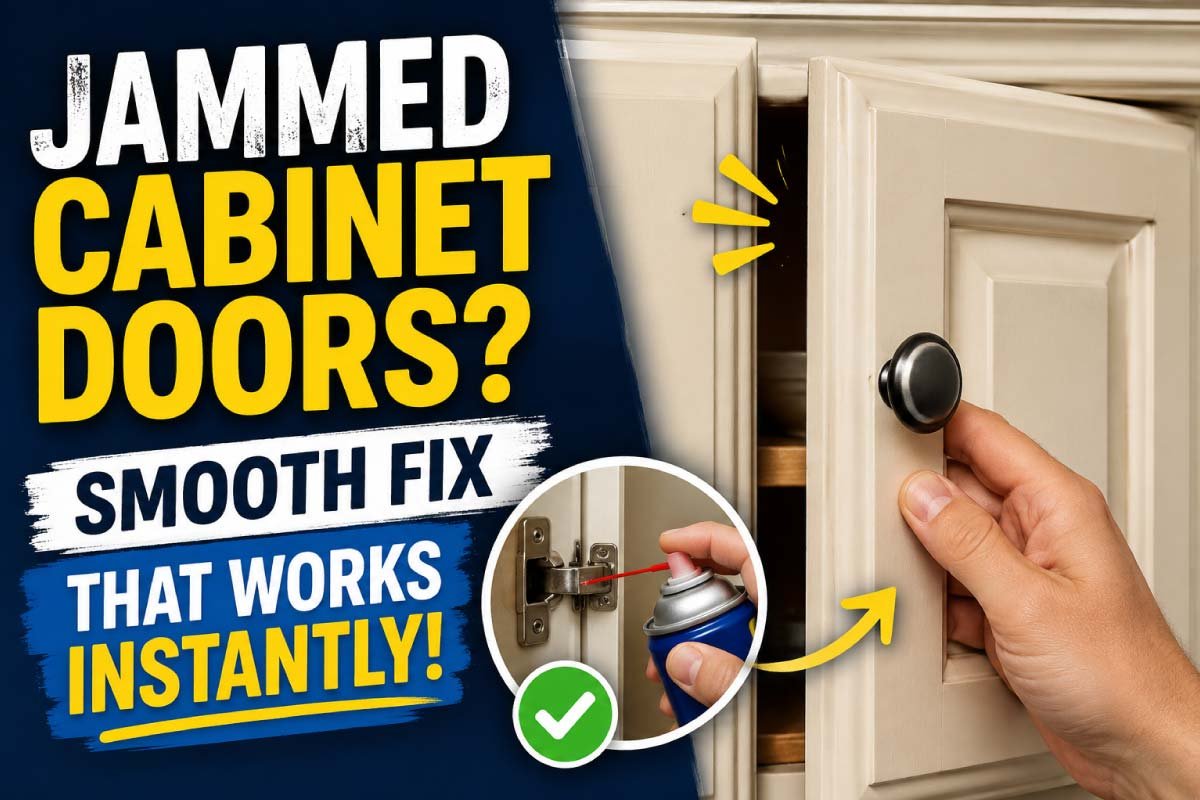
A jammed cabinet door is one of those small household problems that can quickly become irritating. You reach for a plate, a mug, or an important item—and the door refuses to open smoothly. It sticks, scrapes, or feels completely locked in place. While it may seem like a serious issue, the good news is that most jammed cabinet doors can be fixed quickly with simple tools and basic techniques.
In this guide, you’ll learn why cabinet doors get jammed in the first place and how to fix them instantly without calling a carpenter or replacing the entire cabinet. Whether it’s a kitchen cabinet, bathroom storage unit, or wardrobe door, these practical solutions will restore smooth movement in minutes.
Table of Contents
ToggleWhy Cabinet Doors Get Jammed in the First Place
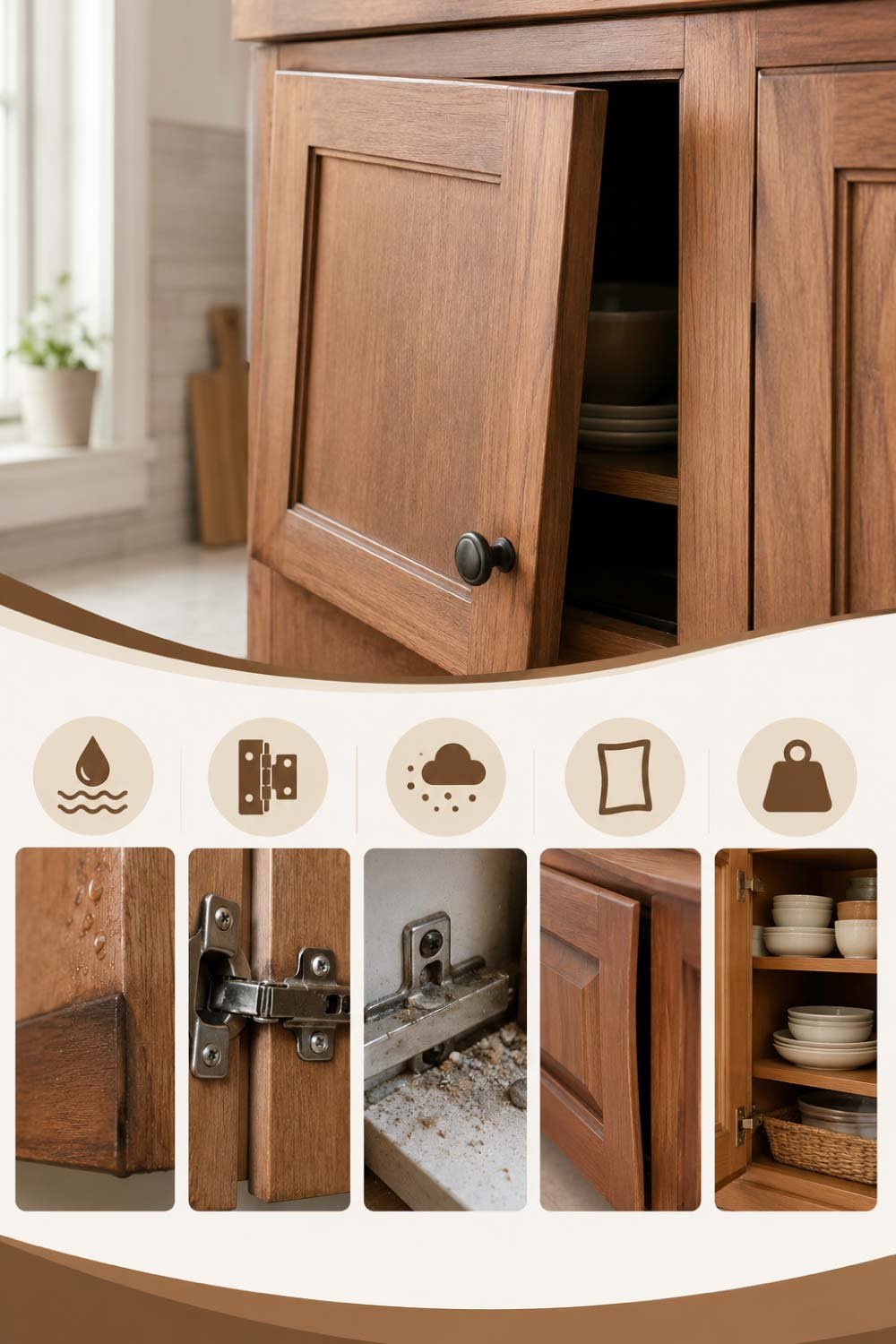
Before jumping into repairs, it helps to understand the root cause. A jammed cabinet door usually doesn’t happen overnight—it develops slowly due to environmental changes, wear and tear, or structural stress. Identifying the exact reason is important because each cause requires a slightly different fix for long-term results.
- Humidity and seasonal moisture changes affect wood expansion
- Loose hinges gradually shift door alignment over time
- Grease, dust, and grime increase resistance on moving parts
- Warped wood changes the original shape of the cabinet door
- Overloaded shelves add extra pressure on hinges and frames
Understanding the cause helps you choose the right fix instead of just applying temporary solutions.
1. Humidity and Moisture Swelling
Wood is a natural material that reacts strongly to environmental changes, especially moisture. In kitchens and bathrooms, steam, cooking heat, and water exposure increase humidity levels. This causes cabinet doors to absorb moisture and expand slightly, often just enough to make them stick or jam against the frame.
- Wood expands in humid weather and shrinks in dry conditions
- Even a few millimeters of swelling can cause tight friction
- Common in kitchen and bathroom cabinet doors
- Seasonal changes often make the problem worse
Even small changes in size can lead to noticeable sticking, especially in tightly fitted cabinets.
2. Loose or Misaligned Hinges
Hinges carry the full weight of the cabinet door, and with daily use, their screws gradually loosen. When this happens, the door no longer stays in its correct position. It may sag, tilt, or shift slightly out of alignment, causing it to rub against the frame or fail to close smoothly.
- Frequent use loosens hinge screws over time
- Door begins to sag or hang unevenly
- Misalignment causes scraping or sticking
- Small shifts lead to big movement issues
This is one of the most common and easily fixable causes of jammed cabinet doors.
3. Dirt, Grease, and Dust Build-Up
Kitchen cabinets are exposed to cooking fumes, oil particles, and airborne dust every day. Over time, these particles settle on hinges and along the door edges. This build-up creates resistance, making the door harder to open or close smoothly, and may even cause minor sticking points.
- Grease buildup increases hinge friction
- Dust accumulates in corners and joints
- Sticky residue slows door movement
- Poor cleaning worsens long-term wear
Regular cleaning can prevent this issue and extend the life of your cabinet hardware.
4. Warped Wood
Wood naturally changes shape when exposed to long-term heat, moisture, or uneven pressure. Over time, cabinet doors may bend or twist slightly, making them no longer fit perfectly within their frames. This misfit causes rubbing, jamming, or uneven gaps along the edges.
- Long-term moisture exposure causes bending
- Heat sources can dry and distort wood
- Old cabinets are more prone to warping
- Misfit edges create constant friction
Warping is a structural issue and may require adjustment, sanding, or replacement depending on severity.
5. Overloaded Cabinet Shelves
Cabinets are designed to carry a certain weight limit. When shelves are overloaded with heavy dishes, bottles, or tools, the pressure gradually transfers to the hinges. Over time, this extra weight pulls the door downward, causing misalignment and jamming issues.
- Excess weight strains hinges and screws
- Continuous pressure causes door sagging
- Lower hinges bear most of the load
- Leads to long-term structural imbalance
Keeping cabinet load balanced helps prevent unnecessary stress on the door system.
Quick Fix #1: Tighten the Hinges (The Fastest Solution)
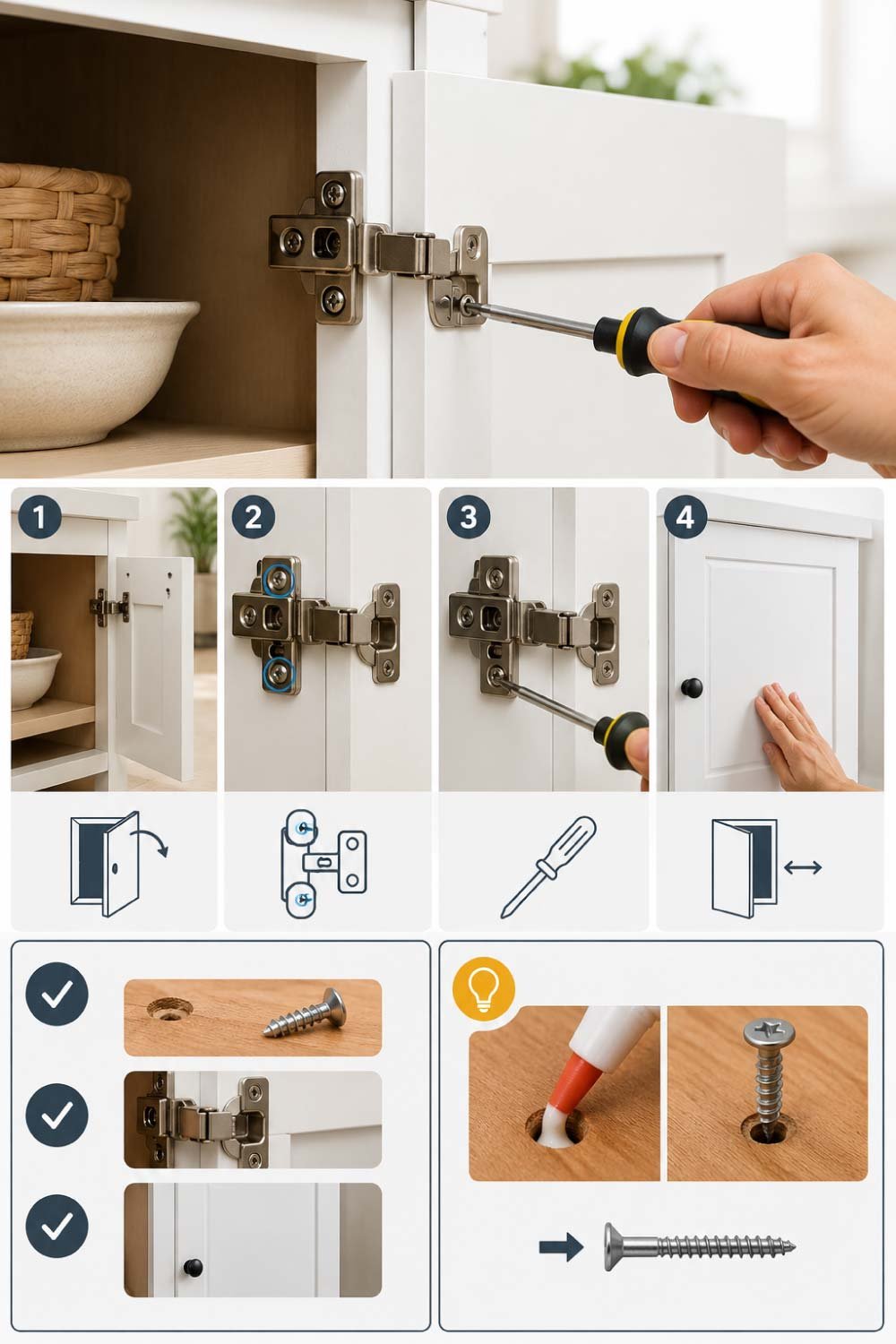
In most cases, the simplest solution is also the most effective—tightening the hinges. Loose screws are often the main reason behind misaligned or jammed cabinet doors. A quick tightening session can immediately restore alignment and improve door movement without needing any special tools or replacement parts.
Steps:
- Open the cabinet door fully.
- Check all hinge screws on both the door and frame.
- Use a screwdriver to tighten any loose screws.
- Test the door movement.
Why it works:
- Loose hinges are the most common cause of misalignment
- Tightening restores proper door positioning instantly
- Eliminates unnecessary rubbing or dragging
Pro Tip:
- If screws keep loosening, remove them and add a small amount of wood glue or replace them with slightly longer screws for a stronger grip.
Also Read:
Quick Fix #2: Adjust the Hinges for Alignment
If tightening doesn’t solve the issue, the door is likely misaligned rather than just loose. Most modern cabinets use adjustable hinges that allow small corrections in multiple directions. These fine adjustments can fix rubbing, uneven gaps, and sticking problems without removing the door completely.
Steps:
- Locate the hinge adjustment screws (usually three per hinge).
- Turn the horizontal screw to move the door left or right.
- Adjust the vertical screw to raise or lower the door.
- Test after small adjustments until the door sits evenly.
Why it works:
- Even minor misalignment can cause friction
- Adjustable hinges allow precise positioning
- Restores smooth opening and closing movement
Small adjustments can make a big difference in door performance.
Quick Fix #3: Sand the Rubbing Edges
When a cabinet door physically scrapes or sticks against the frame, the issue is often caused by slight swelling or warping of the wood. Sanding is an effective way to remove just enough material to restore smooth clearance without damaging the structure of the door.
Steps:
- Open the door and identify where it rubs.
- Lightly mark the area with a pencil.
- Remove the door if possible.
- Use medium-grit sandpaper to gently sand the marked area.
- Reinstall and test the door.
Why it works:
- Removes excess material causing friction
- Restores proper clearance between door and frame
- Improves smooth opening and closing
Important Note:
- Sand gradually. Removing too much wood can create gaps that affect appearance and function.
Quick Fix #4: Lubricate the Hinges
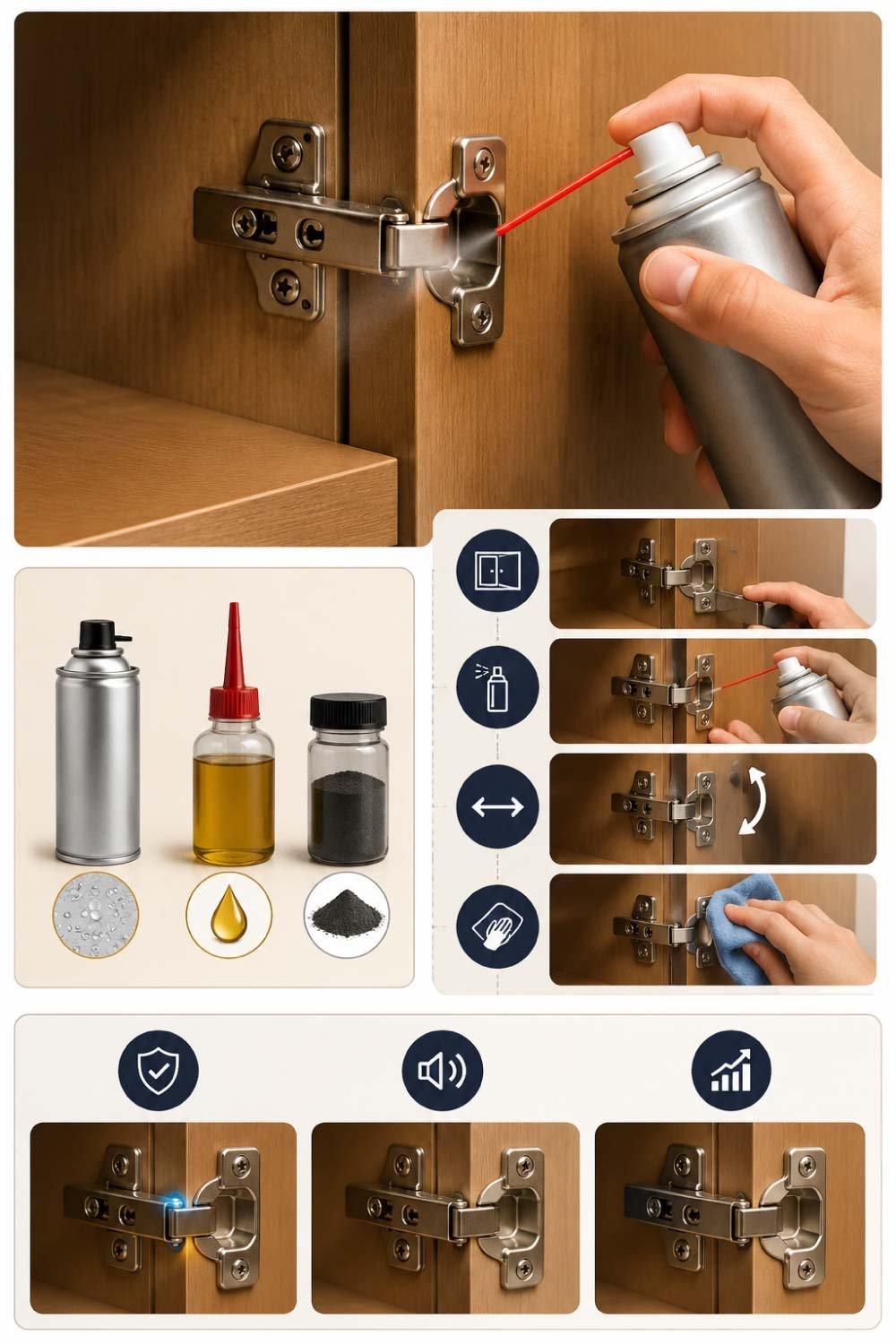
Sometimes cabinet doors jam not because of alignment or wood issues, but due to friction in the hinge mechanism itself. Over time, metal parts can become dry, stiff, or slightly rusty. Lubrication helps restore smooth movement instantly and reduces noise as well.
Best Lubricants:
- Silicone spray
- Light machine oil
- Graphite powder
Steps:
- Open the cabinet door.
- Apply a small amount of lubricant to the hinge joints.
- Move the door back and forth to distribute it evenly.
- Wipe away excess oil.
Why it works:
- Reduces metal-on-metal friction instantly
- Eliminates squeaking and stiffness
- Improves long-term hinge performance
Quick Fix #5: Fix Swollen Wood from Moisture
If humidity is causing the jam, you’ll need to address swelling.
Steps:
- Identify swollen edges where the door is tight.
- Remove the door if necessary.
- Sand down swollen areas lightly.
- Place the door in a dry, ventilated space.
- Apply a protective wood sealant.
Extra Tip:
Using a dehumidifier in kitchens or bathrooms helps prevent the issue from returning.
Quick Fix #6: Reposition the Strike Plate
If the cabinet uses a latch system, misalignment between the latch and strike plate can cause jamming.
Steps:
- Close the door slowly and observe where it catches.
- Unscrew the strike plate.
- Reposition it slightly up, down, or sideways.
- Tighten screws and test.
Why it works:
Proper alignment ensures the latch engages smoothly without resistance.
Also Read:
Quick Fix #7: Replace Damaged Hinges
If your cabinet is old, hinges may simply be worn out or bent.
Signs You Need Replacement:
- Door sags even after tightening
- Visible rust or damage
- Screws no longer hold firmly
Steps:
- Remove old hinges using a screwdriver.
- Match new hinges with the same size and style.
- Install new hinges carefully.
- Test door alignment.
Why it works:
New hinges restore original strength and alignment, eliminating repeated jamming issues.
Quick Fix #8: Check for Overloading Inside the Cabinet
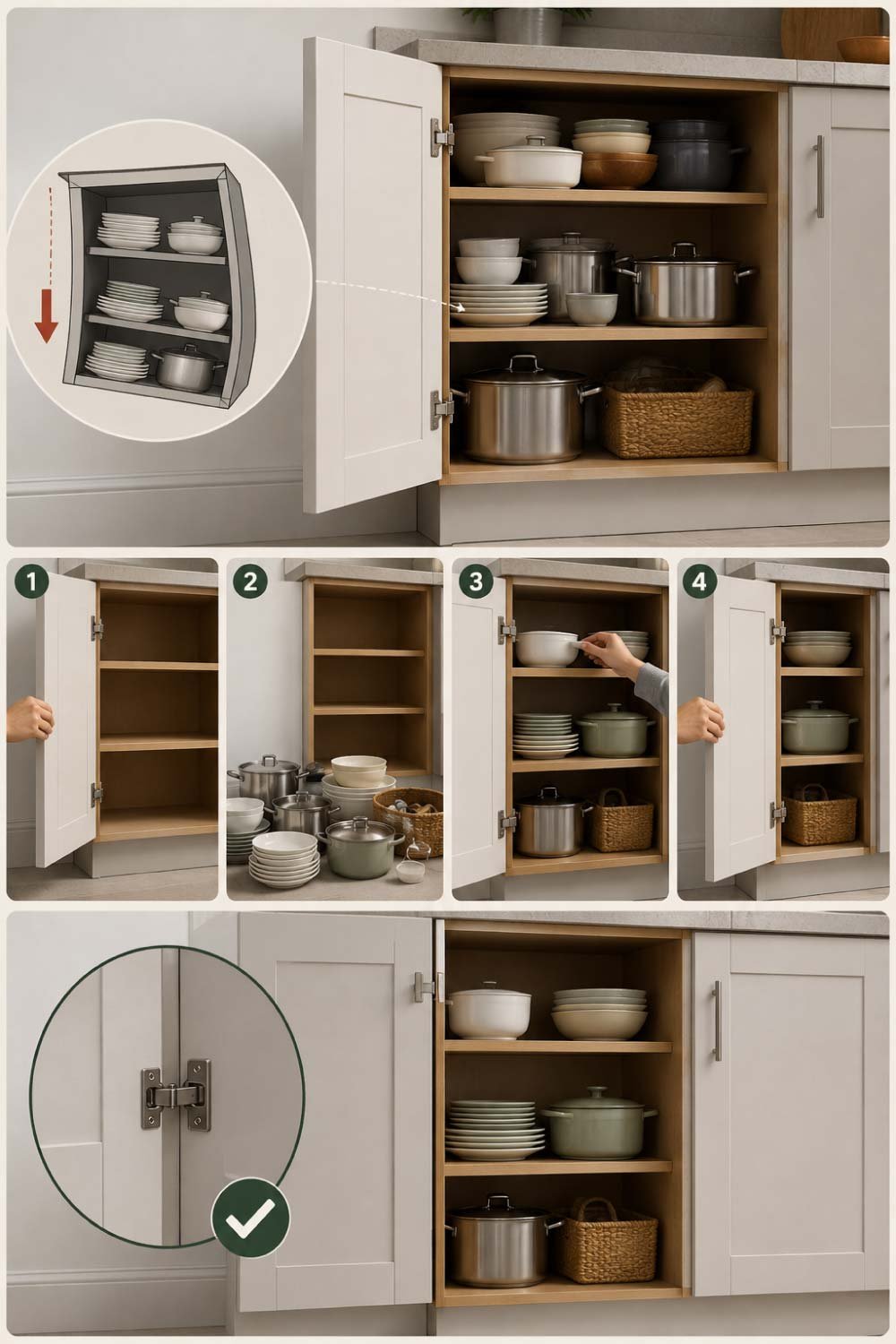
Sometimes the issue is not the door itself but what’s inside.
Steps:
- Open the cabinet fully.
- Remove heavy or unnecessary items.
- Redistribute weight evenly.
- Test door movement again.
Why it works:
Excess weight can pull shelves and frames downward, slightly distorting door alignment.
Preventing Cabinet Doors from Jamming Again
Fixing the problem is important—but preventing it saves time in the long run.
1. Control Humidity
Keep kitchen and bathroom areas well ventilated to reduce wood swelling.
2. Regular Maintenance
Tighten hinge screws every few months before they loosen too much.
3. Clean Hinges and Edges
Remove grease, dust, and dirt buildup regularly.
4. Avoid Slamming Doors
Gentle use reduces stress on hinges and screws.
5. Use Protective Sealants
A thin coat of wood sealant helps prevent moisture absorption.
When You Should Call a Professional
While most jammed cabinet doors are easy DIY fixes, there are situations where professional help is better:
- Severe warping across the entire cabinet frame
- Broken internal cabinet structure
- Multiple doors misaligned at once
- Water damage affecting wood integrity
In these cases, a carpenter can restore or rebuild sections of the cabinet more effectively.
Also Read:
Final Thoughts
A jammed cabinet door may seem like a frustrating problem, but it’s usually a simple mechanical or environmental issue. In most cases, a few minutes with a screwdriver, sandpaper, or lubricant is enough to restore smooth movement instantly.
The key is identifying the cause—whether it’s loose hinges, swelling wood, or dirt buildup—and applying the right fix. With regular maintenance and a bit of care, your cabinet doors can stay smooth, silent, and fully functional for years.
So the next time your cabinet sticks or jams, you won’t need stress or guesswork—you’ll have a clear, instant solution ready to go.