
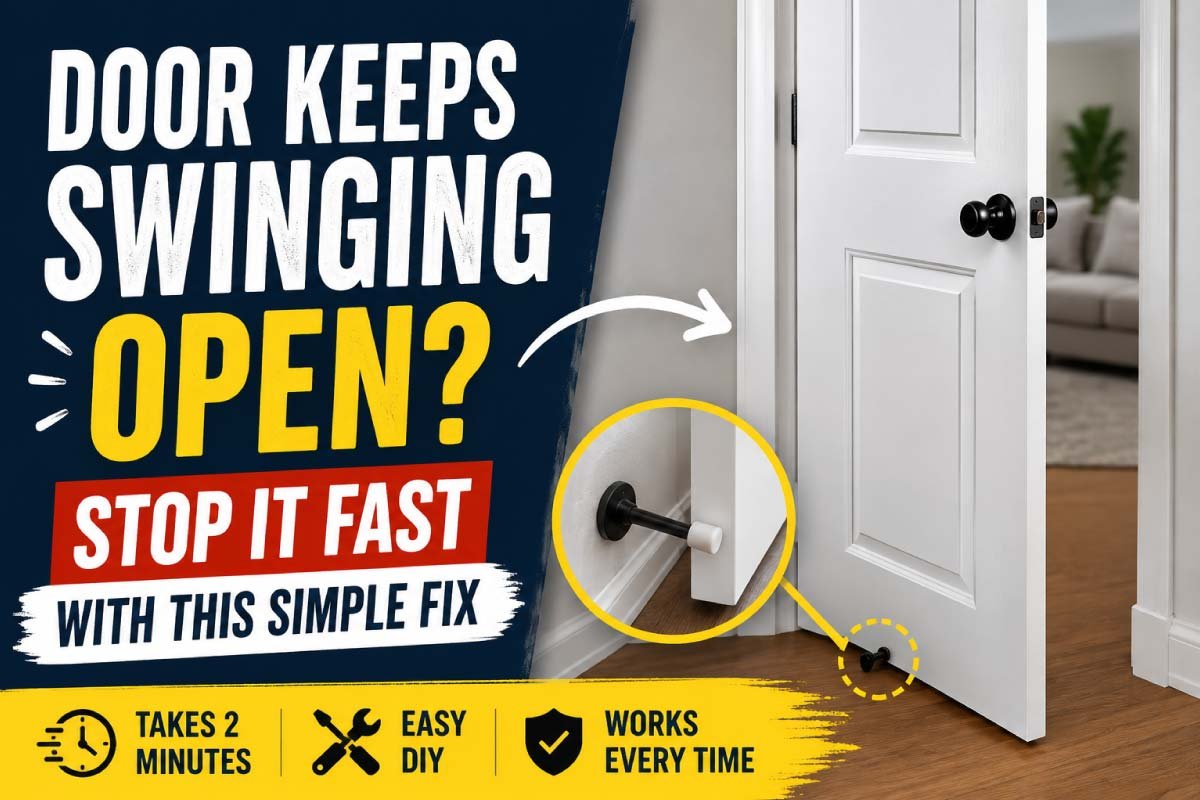
A door that won’t stay in place can be surprisingly annoying. You close it, and it slowly swings back open like it has a mind of its own. It might seem like a small issue, but over time it becomes frustrating—especially in bedrooms, bathrooms, or kitchen areas where privacy and airflow control matter.
The good news is you don’t need to replace the door or call a professional in most cases. In fact, in many situations, you can fix the problem in just a few minutes using simple tools you already have at home.
This guide explains why doors swing open on their own and gives you practical, easy-to-follow solutions that actually work.
Why Your Door Keeps Swinging Open
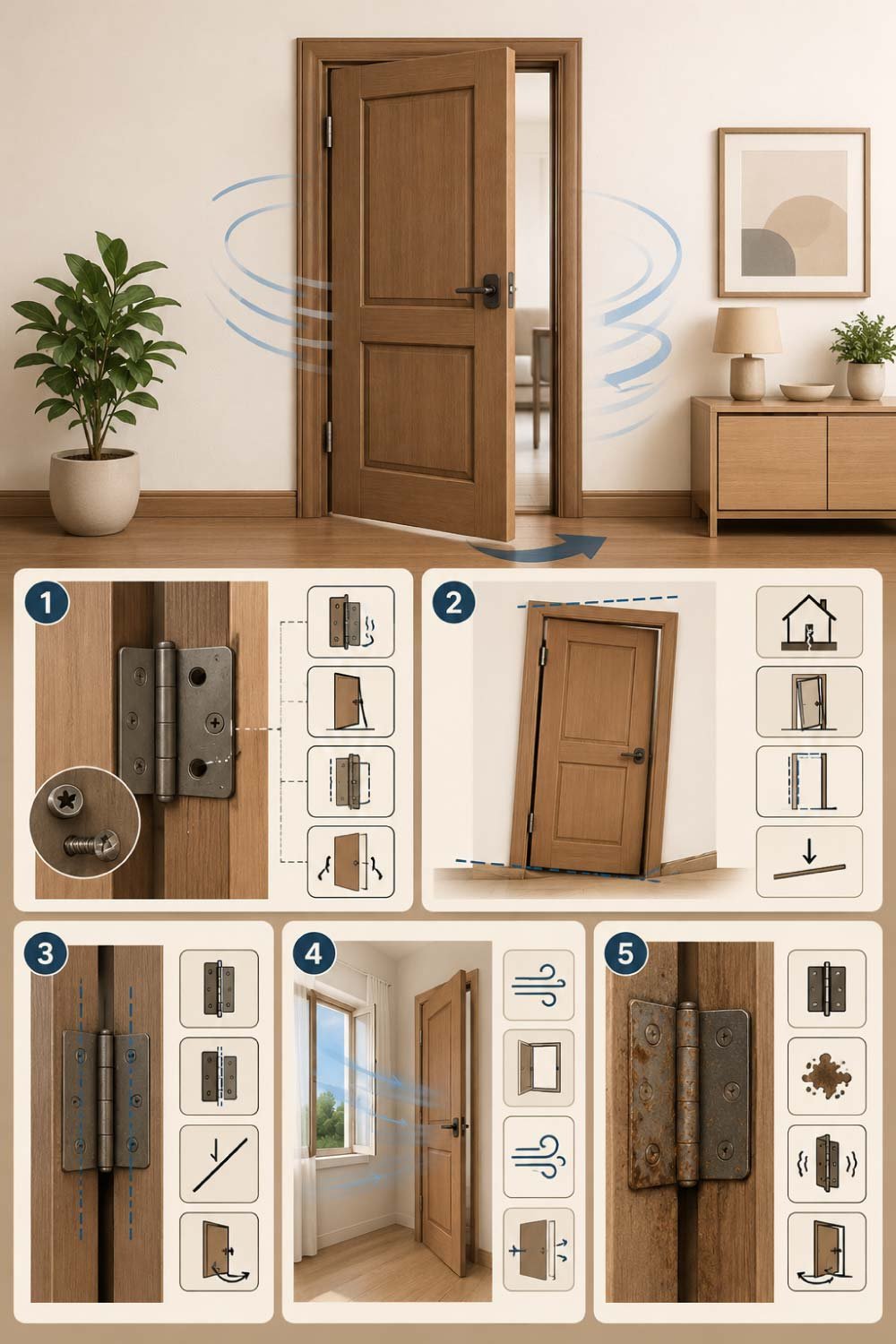
A door that refuses to stay closed can be frustrating, especially when it happens repeatedly. In most cases, it’s not a serious issue but rather a combination of small mechanical or structural problems. Understanding the root cause is the first step toward fixing it properly instead of relying on temporary solutions.
- Loose or misaligned hinges
- Uneven floor or door frame
- Improper installation angle
- Air pressure or drafts inside the room
- Worn-out hinge hardware
1. Loose or Misaligned Hinges
Hinges carry the full weight of the door, and over time they naturally loosen due to constant opening and closing. Even a slight shift in hinge alignment can affect the door’s balance. When this happens, gravity takes over and the door slowly swings open or shut on its own.
- Frequent use loosens hinge screws
- Small shifts affect door balance
- Misalignment changes door positioning
- Causes uncontrolled swinging motion
2. Uneven Floor or Frame
If your home structure has settled over time, even slightly, it can cause uneven floors or door frames. This imbalance affects how the door rests in its frame. As a result, gravity pulls the door toward the lower side, making it swing open unexpectedly.
- House settling creates uneven surfaces
- Door leans toward lower side
- Frame misalignment affects stability
- Gravity controls door movement
3. Improper Hinge Installation
Sometimes the issue exists from the very beginning due to incorrect installation. If hinges are not aligned perfectly during setup, even a brand-new door can behave strangely. A slight tilt or uneven spacing is enough to cause continuous swinging.
- Incorrect installation angle from start
- Uneven hinge placement on frame
- Small tilt leads to imbalance
- Door never sits perfectly straight
4. Air Pressure or Drafts
Airflow inside the house can silently push doors open or closed. This usually happens when windows or vents create pressure differences between rooms. Even if the door is perfectly fine, moving air can affect its position without you noticing.
- Airflow pushes lightweight doors
- Open windows create pressure imbalance
- Drafts cause unexpected movement
- Door reacts to invisible air shifts
5. Worn-Out Hinges
With time, hinges lose their strength and smooth movement. Metal fatigue, rust, or lack of lubrication reduces their ability to hold the door steady. When hinges become weak, the door no longer stays in a fixed position and starts drifting.
- Hinges weaken with long-term use
- Rust reduces smooth movement
- Loss of tension affects stability
- Door becomes hard to control
Quick Fix #1: Tighten the Hinges (Fastest Solution)
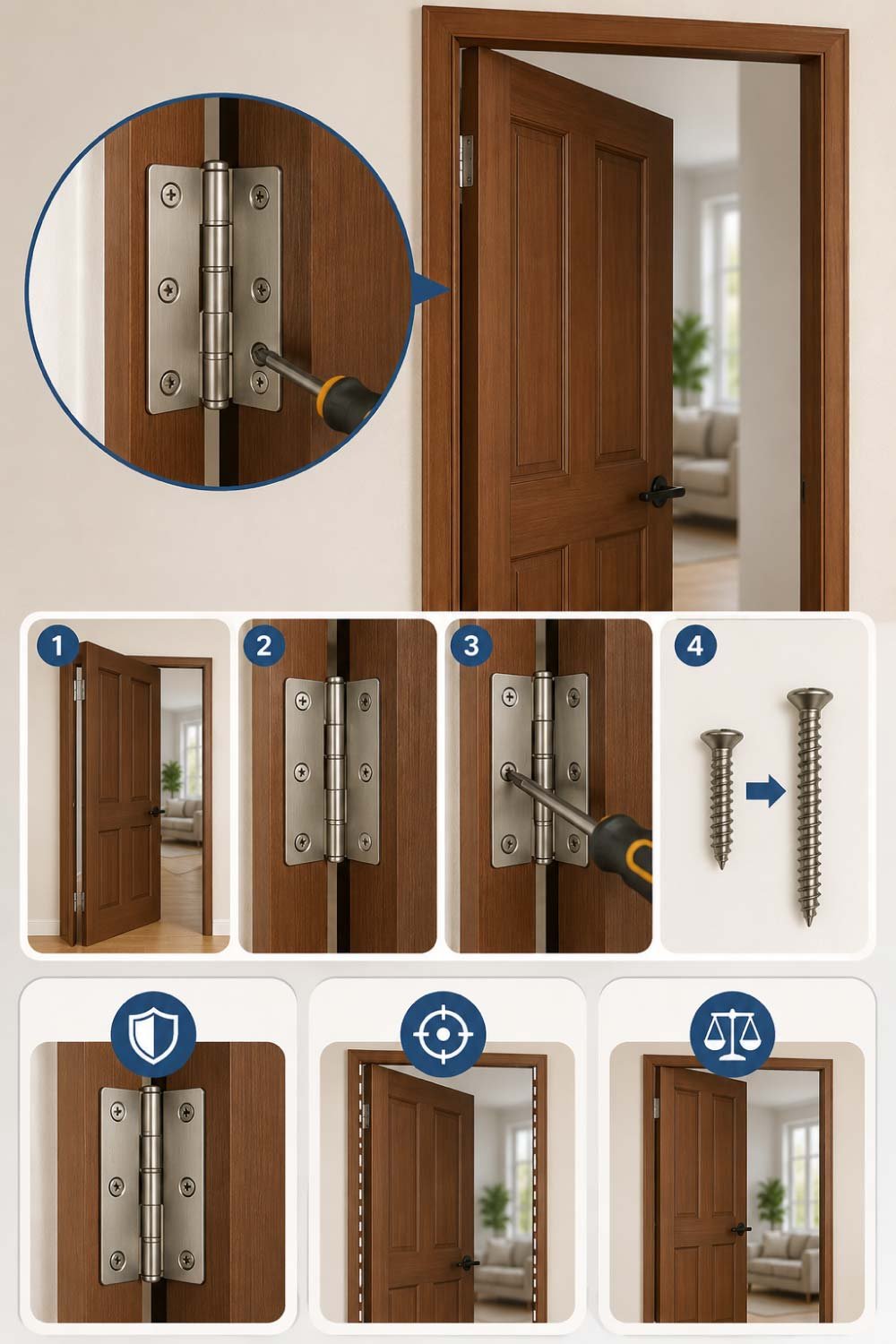
This is the simplest and most common fix for a swinging door. Loose screws are often the main reason behind instability. Tightening them restores proper alignment and quickly improves door balance without requiring any special tools or skills.
What You Need:
- Screwdriver (flathead or Phillips depending on your screws)
Steps:
- Open the door fully.
- Inspect all hinge screws on both the door and frame side.
- Tighten any loose screws firmly.
- Replace worn screws with slightly longer ones if needed.
Why This Works:
- Restores hinge strength and stability
- Fixes minor alignment issues instantly
- Improves door weight distribution
Quick Fix #2: Adjust the Top Hinge Slightly
If tightening alone doesn’t solve the issue, a small alignment adjustment can help correct the door’s angle. This method works by subtly changing how the door sits in the frame, preventing it from drifting in one direction.
Steps:
- Loosen the top hinge screws slightly.
- Gently pull the door toward the frame.
- Retighten screws while holding position.
What This Does:
- Corrects minor frame misalignment
- Changes door tilt slightly
- Helps stabilize natural swing direction
Quick Fix #3: The Pencil Trick (Simple but Effective)
This clever DIY method helps improve grip inside loose screw holes. It’s especially useful when wood around the hinge has become slightly worn out. The added material gives screws better hold and improves overall hinge stability.
Steps:
- Remove one hinge screw from the frame.
- Insert a small piece of pencil wood into the hole.
- Reinsert and tighten the screw firmly.
Why It Works:
- Fills loose screw holes for better grip
- Strengthens hinge attachment
- Helps correct slight door tilt issues
Quick Fix #4: Check for Air Drafts
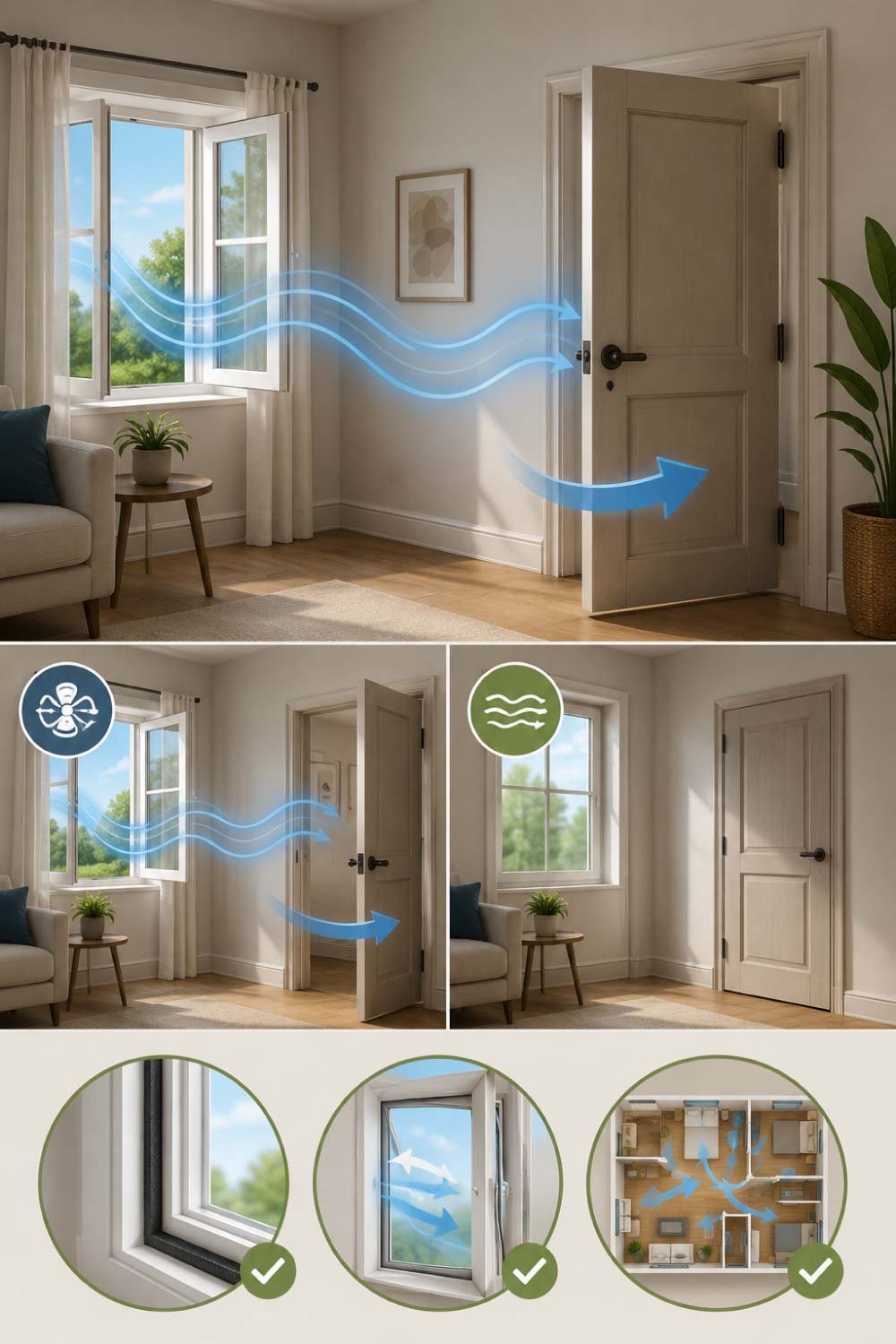
Sometimes the door is not actually faulty—it’s just reacting to airflow inside the house. Pressure differences between rooms can silently push doors open or closed, especially if windows are open or ventilation is uneven.
How to Check:
- Open nearby windows and observe movement.
- Close windows and test again for comparison.
Solution:
- Install weather stripping around windows
- Balance airflow by adjusting window openings
- Reduce pressure differences between rooms
Even small air movements can significantly affect door position.
Quick Fix #5: Adjust the Hinges Using a Washer
If the door swings too freely, adding slight resistance can help stabilize it. A washer placed in the hinge mechanism increases friction just enough to hold the door in place without making it hard to move.
What You Need:
- Small metal washer
- Screwdriver
Steps:
- Remove one hinge pin or screw carefully.
- Place a washer between hinge and frame.
- Reassemble and tighten securely.
Result:
- Adds controlled friction to hinge movement
- Helps door stay in desired position
- Improves overall stability
Quick Fix #6: The Hinge Pin Bend Method
This is a slightly advanced but highly effective trick.
Steps:
- Remove the hinge pin.
- Place it on a hard surface.
- Gently tap it with a hammer to create a very slight bend.
- Reinsert the pin.
Why It Works:
The slight bend creates resistance inside the hinge, preventing free swinging.
Important: Do this carefully. A small bend is enough—too much can damage the hinge.
Quick Fix #7: Use a Door Stopper (Instant Solution)
If you want a zero-effort fix, a door stopper is your best friend.
Types You Can Use:
- Rubber wedge stopper
- Spring door stop
- Magnetic stopper
How It Helps:
It physically blocks the door from moving past a certain point, keeping it exactly where you want it.
This is especially useful in homes with airflow issues or uneven flooring.
Also Read:
Quick Fix #8: Check the Door Frame Alignment
If none of the above works, the issue might be structural.
Signs of Frame Issues:
- Door moves on its own even after hinge tightening
- Visible gaps around the frame
- Door rubs at certain points
Solution:
- Use a level tool to check alignment
- Adjust frame screws if possible
- In extreme cases, use a carpenter’s adjustment for reshaping
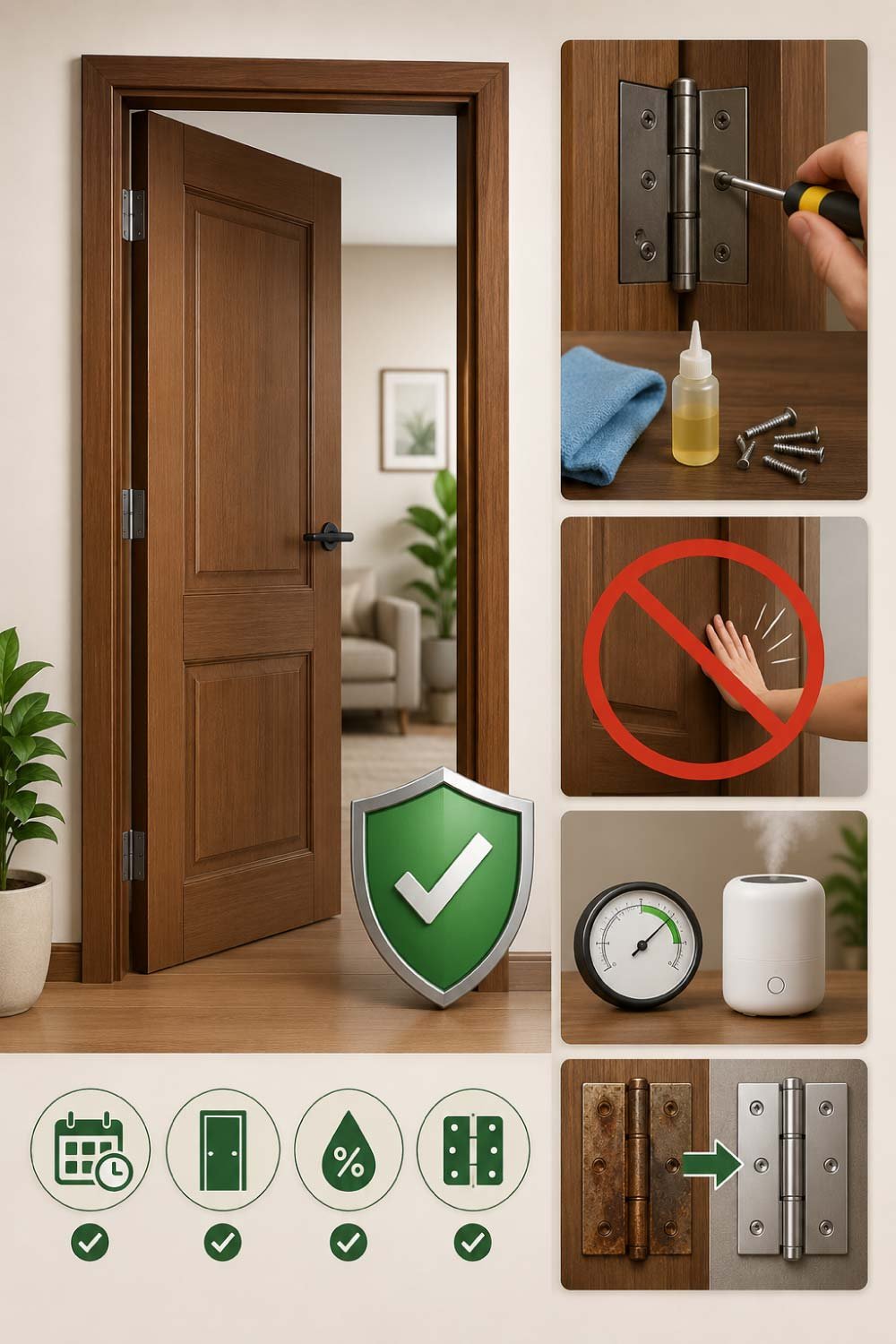
Fixing the issue is great—but preventing it saves you time later.
1. Regular Maintenance
Every 6–12 months:
- Tighten hinge screws
- Lubricate hinges lightly
- Check for rust or wear
2. Avoid Slamming Doors
Strong impacts loosen hinges over time, leading to imbalance.
3. Control Moisture Levels
Wooden doors expand and contract with humidity, which can slowly change alignment.
4. Use Quality Hinges
Cheap hinges wear out quickly. Investing in stronger hardware reduces long-term issues.
Also Read:
When You Should Call a Professional
Most swinging door problems are DIY-friendly, but sometimes professional help is necessary.
Call a carpenter if:
- The door frame is visibly warped
- Hinges keep loosening repeatedly
- The door drags heavily on the floor
- Structural damage is present
Ignoring serious alignment issues can make the problem worse over time.
Final Thoughts
A door that keeps swinging open might feel like a small inconvenience, but it’s usually a sign of a simple mechanical or alignment issue. In most cases, the solution is as easy as tightening screws, adjusting hinges, or balancing airflow in your home.
Start with the simplest fix—tighten the hinges. If that doesn’t fully solve it, move step-by-step through alignment and resistance methods. One of these quick tricks will almost always stop the problem without needing expensive repairs.
With a few minutes of effort, you can turn that stubborn swinging door into one that stays exactly where you want it—quiet, stable, and properly aligned.
Also Read: