
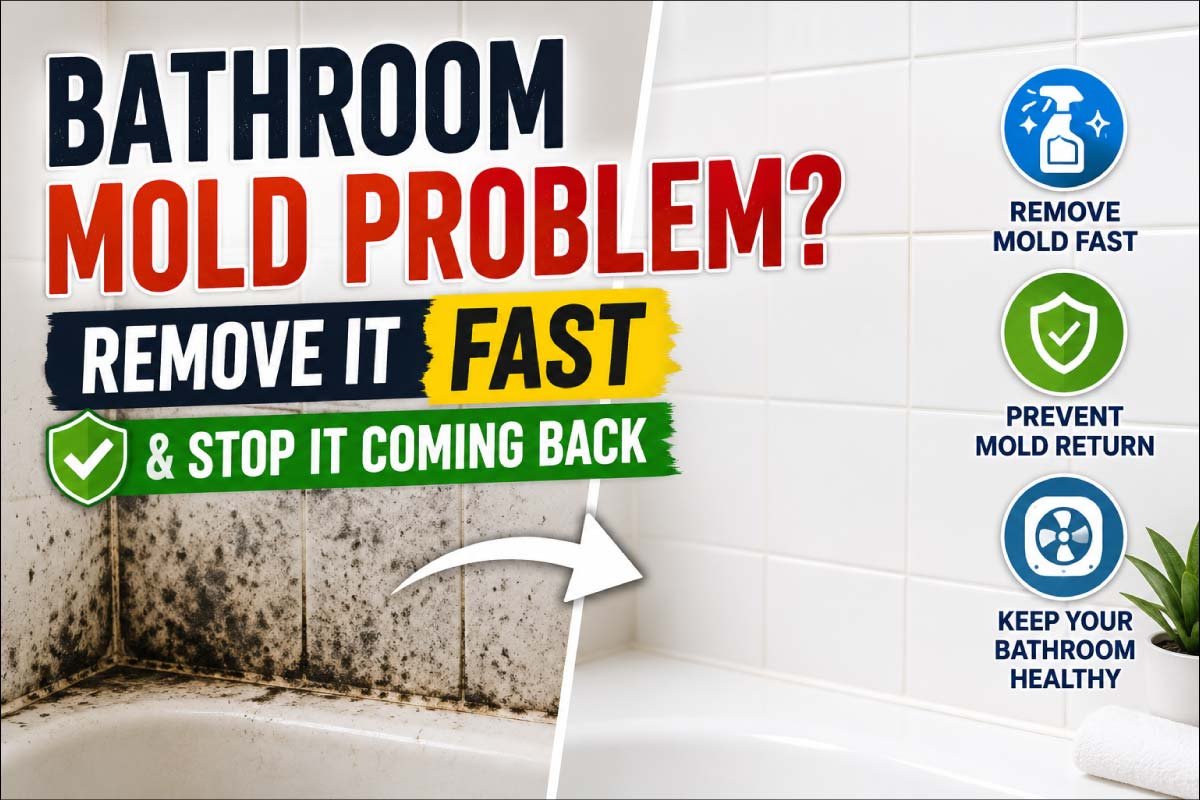
Bathroom mold is one of those problems that starts small but quickly turns into a serious issue if ignored. At first, it may look like tiny black dots on grout or faint green patches near the shower. But over time, it spreads across tiles, walls, ceilings, and even hidden corners. Not only does it ruin the appearance of your bathroom, but it can also affect air quality and cause unpleasant odors.
The good news is that bathroom mold can be removed effectively with the right methods, and more importantly, it can be prevented from coming back. In this guide, we’ll break down everything you need to know—from why mold appears in bathrooms to step-by-step removal methods and long-term prevention strategies.
Why Mold Grows in Bathrooms
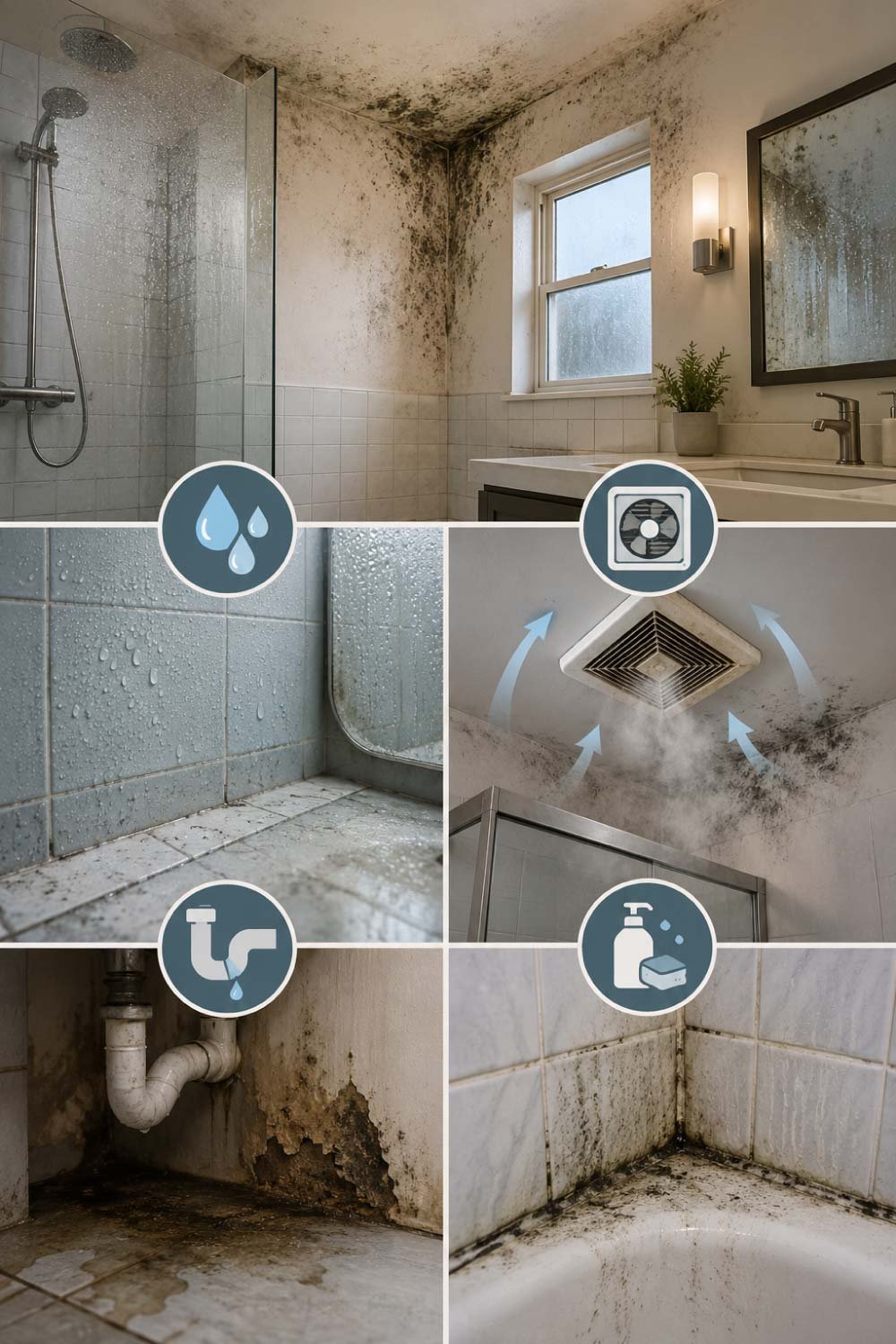
Bathrooms naturally create the perfect environment for mold because they stay warm, humid, and often lack proper ventilation. After showers or baths, moisture lingers on surfaces, allowing spores to grow quickly. When this moisture combines with organic buildup like soap residue, mold starts spreading in hidden and visible areas.
- Excess Moisture
Every shower or bath produces steam that fills the room. This moisture settles on cold surfaces such as tiles, ceilings, mirrors, and floors. If not dried properly, it creates damp conditions where mold spores can easily grow and multiply over time. - Poor Ventilation
Bathrooms without windows or exhaust fans trap humid air inside. When there is no airflow to remove moisture, surfaces remain wet for long periods. This continuous dampness significantly increases the chances of mold formation, especially in corners and hidden areas. - Leaks and Plumbing Issues
Even small leaks from pipes, taps, or behind walls can keep certain areas constantly damp. These hidden wet spots are ideal for mold growth because they remain unnoticed for long periods, allowing mold to spread internally before becoming visible. - Lack of Cleaning
Soap scum, body oils, and shampoo residue build up over time and provide nutrients for mold. If bathrooms are not cleaned regularly, these deposits mix with moisture and create a surface where mold can grow faster and become harder to remove.
Common Places Mold Appears in Bathrooms
Mold does not spread randomly; it targets specific damp and poorly cleaned areas. Knowing these hotspots helps in early detection and faster removal. Bathrooms with high humidity often show mold growth in hidden corners, joints, and surfaces that stay wet for longer periods.
- Shower corners and grout lines
Water constantly collects in tile joints and corners, making them one of the first places mold appears. Grout is porous, so it absorbs moisture easily and allows spores to grow deep inside. - Around bathtubs and sinks
Water splashes frequently around these areas. If not wiped dry, the constant dampness leads to mold forming along edges, drains, and sealing areas. - Bathroom ceilings (especially above showers)
Rising steam sticks to the ceiling, and without proper ventilation, mold patches can develop, often appearing as dark or discolored spots. - Behind toilets
This area is rarely cleaned and often stays slightly damp due to condensation or minor leaks, making it a hidden mold hotspot. - Window frames and seals
Moisture from steam collects around window edges, especially if windows are not opened regularly, allowing mold to grow in corners and rubber seals. - Silicone caulking around tubs and sinks
Silicone traps moisture underneath its surface. Once mold enters, it spreads quickly and is often difficult to remove completely without replacement.
Once you identify these areas, you can target mold more effectively.
Step-by-Step Guide to Remove Bathroom Mold
Before starting, wear gloves and ensure good ventilation by opening windows or turning on exhaust fans. This helps reduce inhaling spores and keeps the cleaning process safer. Proper preparation also ensures the cleaning solution works more effectively on affected areas.
- Step 1: Prepare a Cleaning Solution
You can use several effective solutions depending on severity:- Mild mold: White vinegar (undiluted)
- Moderate mold: Baking soda + water paste
- Heavy mold: Bleach solution (1 part bleach to 3 parts water)
Vinegar is safer for most surfaces, while bleach is stronger for stubborn mold (but should be used carefully).
- Step 2: Apply the Solution
Spray or apply your chosen solution directly onto the moldy area until fully covered. Ensure all affected spots are saturated so the solution can penetrate deeply and begin breaking down mold spores effectively. - Step 3: Scrub Thoroughly
Use a scrub brush, sponge, or old toothbrush to clean the area. Focus on grout lines, corners, and textured surfaces where mold is more likely to hide. Apply extra pressure for stubborn patches and reapply solution if necessary for better results. - Step 4: Rinse and Wipe Clean
Wash the area with clean water after scrubbing and wipe it dry immediately. Removing all residue is important because leftover moisture can allow mold to return quickly, even after a successful cleaning. - Step 5: Dry the Area Completely
Use a fan, towel, or open ventilation to ensure the bathroom dries fully. This final step is critical because even small amounts of moisture can restart mold growth within hours or days.
How to Remove Mold from Different Surfaces
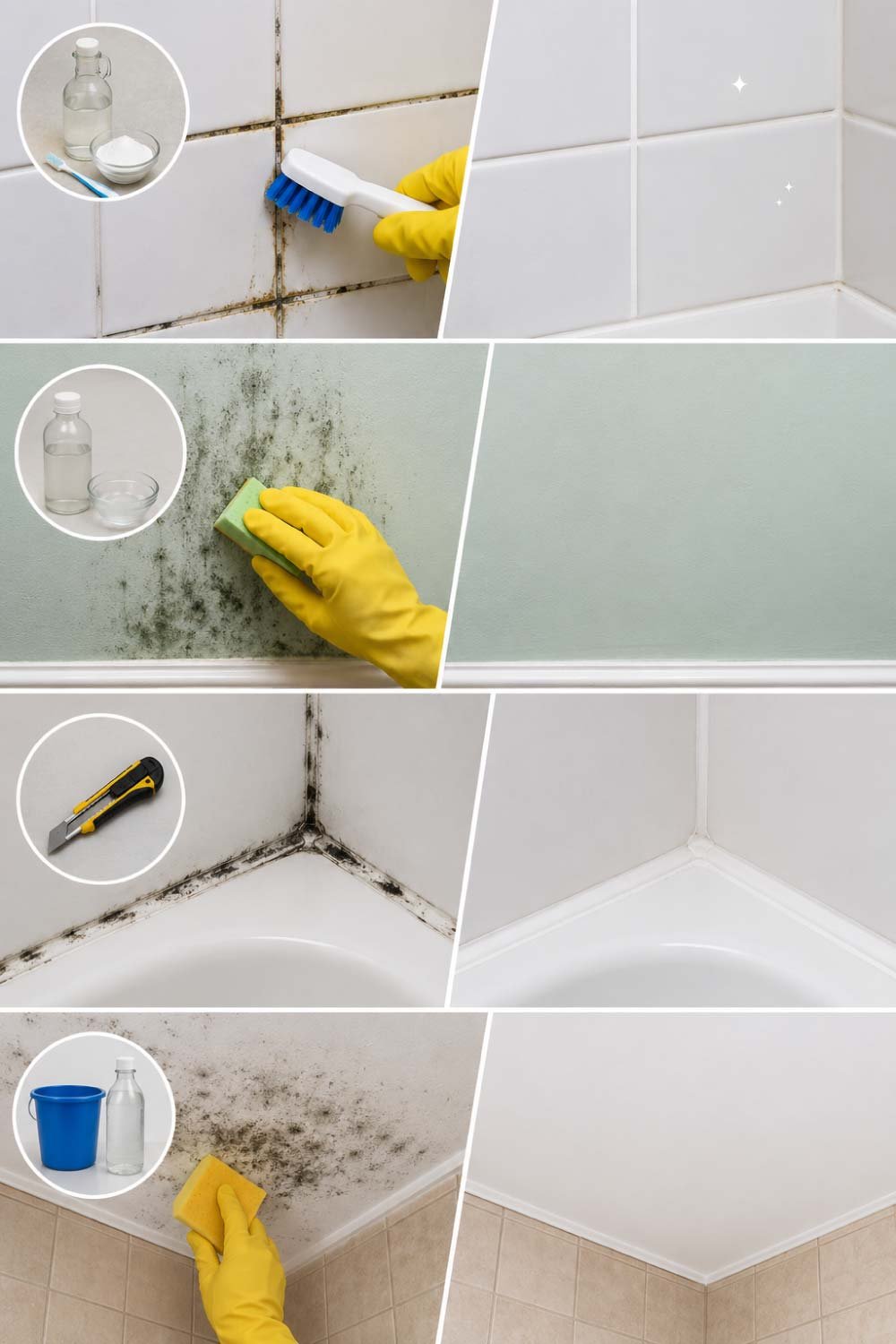
Different bathroom surfaces react differently to moisture and cleaning products, so using the right method is important. Some areas can be cleaned easily, while others may require deeper treatment or even replacement if mold has spread extensively.
- Tiles and Grout
Use vinegar or a baking soda paste to clean tiles effectively. Scrub grout lines thoroughly with a toothbrush because mold often hides deep inside porous grout, making regular wiping ineffective. - Painted Walls
Apply a mild vinegar solution using a soft sponge. Avoid soaking the wall, as too much moisture can damage paint and cause peeling or bubbling over time. - Silicone Sealant
Mold in silicone is difficult to remove once it penetrates deeply. If cleaning solutions do not work, replacing the sealant is often the most reliable and long-term solution. - Ceiling Mold
Use a sponge lightly dipped in diluted bleach solution and gently clean affected spots. Be careful to avoid dripping water, as excess moisture can damage the ceiling surface.
Health Risks of Bathroom Mold
Ignoring mold is not just a visual problem—it can affect health too.
Common issues include:
Allergies and sneezing
Eye irritation
Skin irritation
Coughing and breathing discomfort
Worsening asthma symptoms
People with respiratory conditions, children, and elderly individuals are more sensitive to mold exposure.
How to Prevent Bathroom Mold from Coming Back
Removing mold from bathroom surfaces is not enough if the environment remains damp. Prevention focuses on controlling moisture, improving airflow, and maintaining cleanliness. With consistent habits and small upgrades, you can significantly reduce the chances of mold returning and keep your bathroom fresh and hygienic long-term.
- Improve Ventilation
Proper ventilation is one of the most effective ways to prevent bathroom mold. When humid air is removed quickly, moisture cannot settle on surfaces. Good airflow keeps the environment dry, reduces damp buildup, and stops mold spores from finding the conditions they need to grow.
- Always ensure airflow after showers.
- Turn on exhaust fans
- Open windows for 15–30 minutes
- Keep bathroom doors slightly open when not in use
Good ventilation reduces humidity quickly.
- Wipe Surfaces After Use
Moisture left on bathroom surfaces after showers quickly turns into a breeding ground for mold. Developing simple wiping habits helps eliminate excess water immediately. This small daily routine reduces humidity levels and prevents mold spores from settling and spreading across tiles, glass, and fixtures.
- Wipe shower walls after bathing
- Dry sink areas regularly
- Remove standing water from floors
This prevents moisture buildup.
- Fix Leaks Immediately
Even minor leaks in bathrooms can create constant moisture that encourages mold growth over time. Water seepage behind walls or under sinks often goes unnoticed until damage becomes visible. Fixing leaks quickly helps maintain dry conditions and prevents long-term structural and mold-related problems.
- Check regularly for:
- Dripping taps
- Pipe leaks under sinks
- Damp patches on walls
Repairing early prevents long-term damage.
- Use Mold-Resistant Products
Using modern mold-resistant materials during construction or renovation greatly reduces the risk of mold growth. These products are specially designed to resist moisture absorption and prevent fungal development. They are especially useful in high-humidity areas like bathrooms where damp conditions are unavoidable.
- Use mold-resistant paint
- Choose anti-mold silicone sealant
- Install moisture-resistant tiles
These materials reduce mold growth significantly.
- Deep Clean Weekly
Regular deep cleaning plays a key role in controlling mold spores before they spread. Bathrooms naturally accumulate soap residue, dirt, and moisture, all of which support mold growth. Weekly cleaning ensures these buildups are removed, keeping surfaces fresh, dry, and less vulnerable to mold formation.
- Focus on:
- Grout lines
- Shower corners
- Faucet areas
- Behind toilet base
A quick weekly scrub prevents buildup.
- Control Humidity Levels
Controlling indoor humidity is essential for long-term mold prevention. Bathrooms with high moisture levels create the perfect environment for spores to thrive. By managing humidity through ventilation or equipment, you can significantly reduce the chances of mold returning and keep the space healthier overall.
- Use a dehumidifier if needed
- Improve ventilation system
- Avoid long hot showers in closed spaces
Lower humidity = less mold growth.
Don’t miss out on this helpful guide!
Don’t miss out on this helpful guide!
Natural Remedies for Light Mold
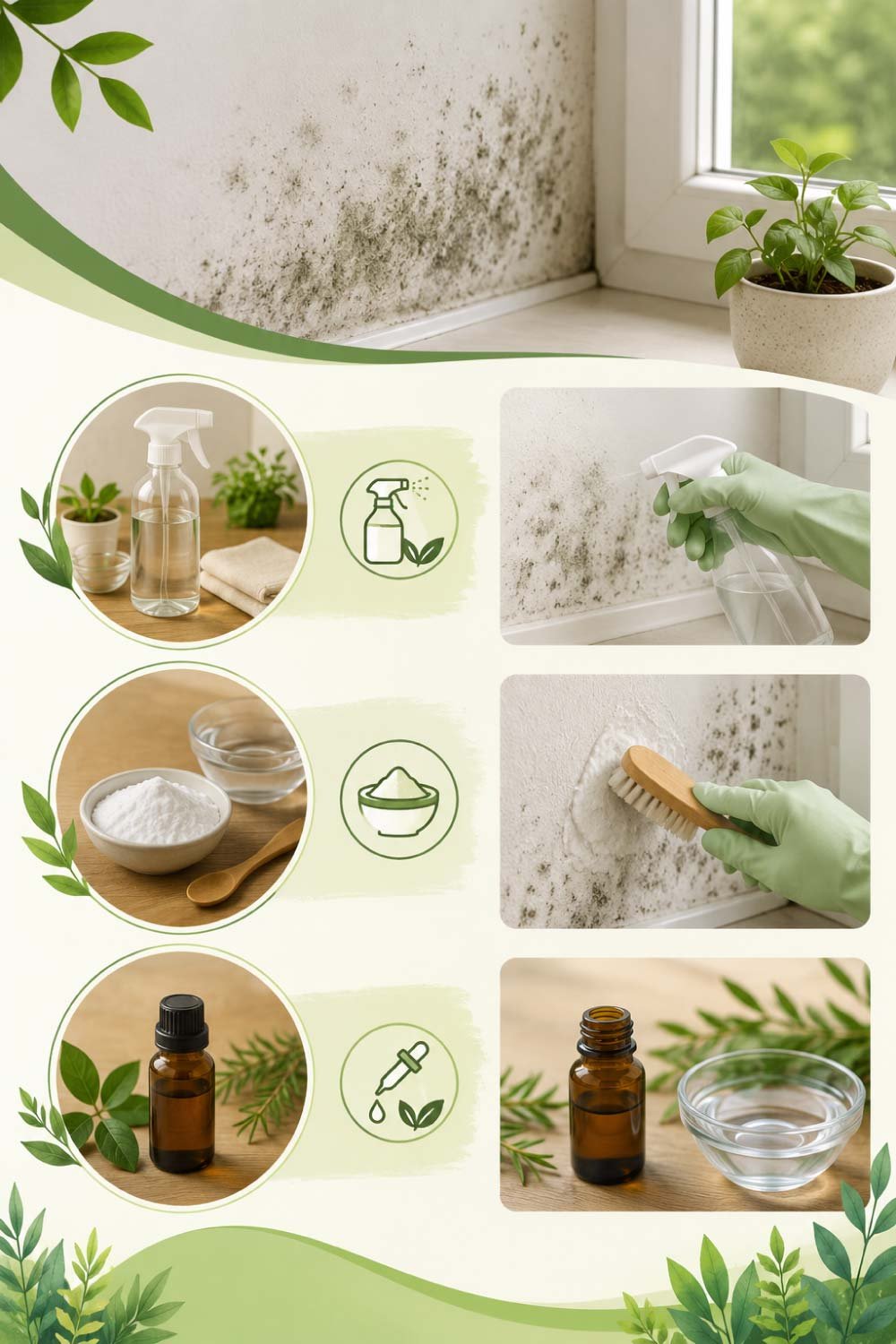
For light mold issues, natural cleaning solutions offer safe and eco-friendly alternatives to harsh chemicals. These remedies are effective for early-stage mold and help maintain a healthier indoor environment. They are especially useful for households looking to avoid strong chemical exposure while still achieving good cleaning results.
- Vinegar Spray
Spray white vinegar directly and leave for an hour before wiping. - Baking Soda Paste
Mix baking soda with water, apply to mold, scrub after drying. - Tea Tree Oil Solution
A few drops mixed with water can help kill mold spores naturally.
These are safe and eco-friendly options for mild cases.
Don’t miss out on this helpful guide!
When to Call a Professional
In some cases, bathroom mold becomes too widespread or deeply embedded for regular cleaning methods to handle. When mold spreads inside walls or repeatedly returns, it indicates a more serious issue. Professional intervention ensures safe removal and prevents further damage to your bathroom structure and health risks.
- Mold covers large wall or ceiling areas
- It keeps coming back despite cleaning
- There is a strong musty smell everywhere
- Mold is inside walls or hidden plumbing areas
Professionals can remove deep-rooted mold safely and prevent structural damage.
Final Thoughts
Bathroom mold is a common issue, but it doesn’t have to be a permanent one. With proper cleaning, consistent maintenance, and good ventilation habits, you can completely remove mold and keep it from returning.
The key is not just cleaning it once—but changing the conditions that allowed it to grow in the first place. A dry, well-ventilated bathroom is the best long-term defense against mold.
If you stay consistent with prevention steps, your bathroom will remain fresh, clean, and mold-free all year round.