
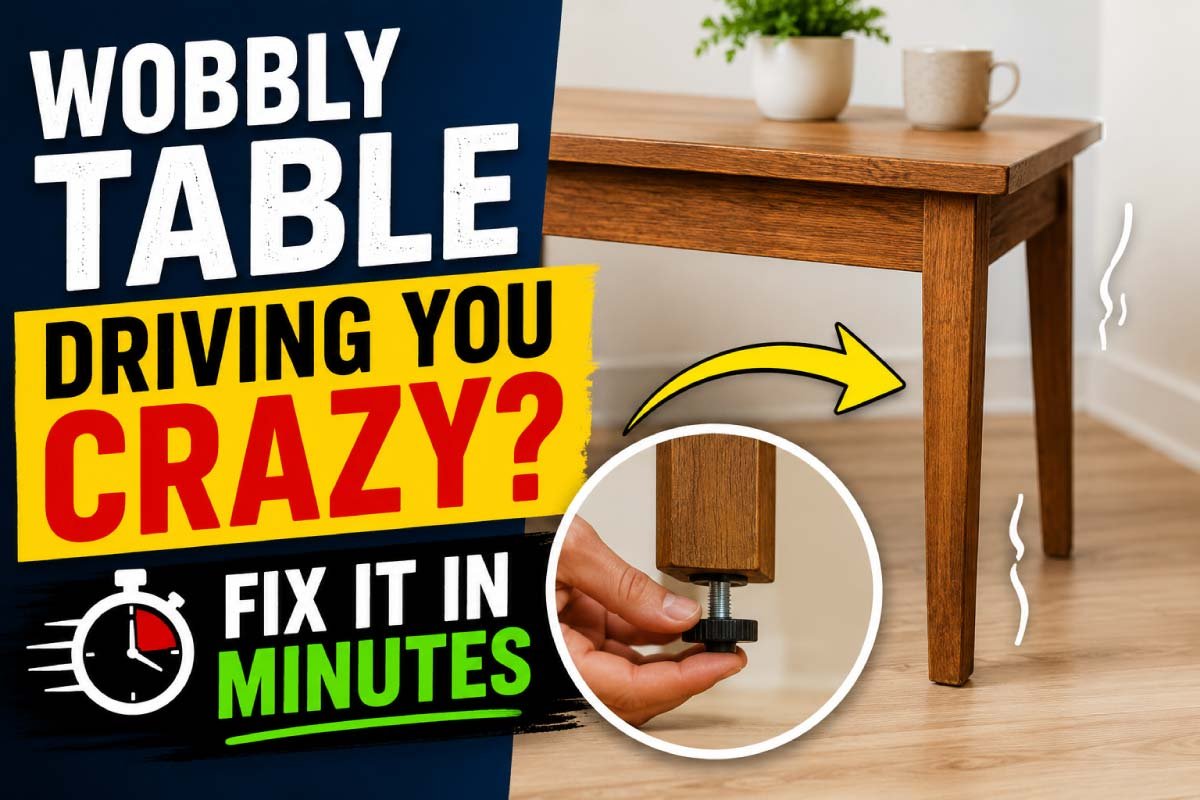
A wobbly table might seem like a small problem, but anyone who has lived with one knows how irritating it can be. Whether you’re trying to enjoy a meal, work on your laptop, or simply place a cup of tea, that constant shaking ruins comfort and focus.
The good news? You don’t need to be a carpenter or spend money on a new table. In most cases, you can fix a wobbly table in just a few minutes using simple tools and easy techniques.
This guide will walk you through the real causes of table wobble and practical step-by-step solutions you can apply right away at home.
Table of Contents
ToggleWhy Tables Become Wobbly in the First Place
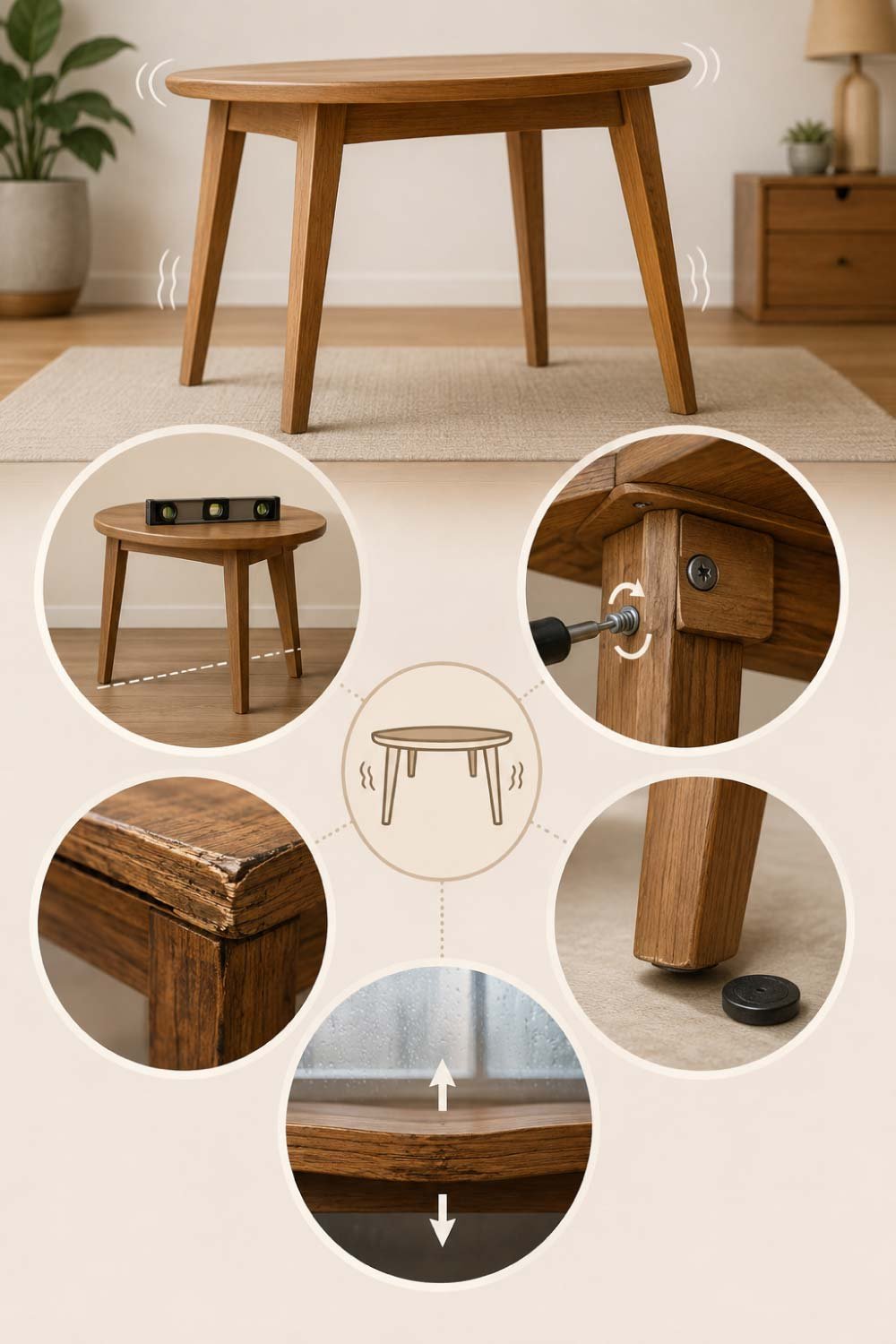
Before jumping into repairs, it’s important to understand why a table starts wobbling in the first place. Most people assume it happens suddenly, but in reality it develops slowly over time due to small structural or environmental changes. Identifying the root cause helps you apply the correct fix instead of temporary guesses.
- Floors are rarely perfectly even, and even a slight slope can throw off balance.
- Daily use gradually loosens screws, joints, and connectors.
- Moisture and age can change the shape or strength of wooden parts.
- Missing rubber or plastic foot pads create direct imbalance.
- Humidity causes wood to expand, contract, or warp slightly over time.
Understanding the cause makes it much easier to choose the right fix instead of guessing.
1. Uneven Floors
Uneven flooring is one of the most overlooked reasons behind a wobbly table. Even when the table itself is perfectly fine, a slight dip or raised tile under one leg can create imbalance. This is especially common in older homes or tiled floors where surfaces shift over time.
- Floors may have slight slopes that are not visible to the eye
- One table leg may sit higher or lower than others
- Tiles or wooden flooring can settle unevenly over time
- Even carpet thickness differences can cause imbalance
- Small height changes create noticeable wobble at the top
A stable table often starts with checking the ground beneath it first.
2. Loose Joints
Loose joints are a very common reason tables lose stability. With daily movement, pressure, and vibration, screws and glued connections gradually weaken. Over time, even a strong table can start shaking or wobbling when weight is applied, especially at corners or edges.
- Screws slowly loosen with repeated use
- Glue joints weaken due to stress and age
- Movement while cleaning or shifting furniture affects tightness
- Corner joints are usually the first to fail
- Small gaps appear between connecting parts
Tightening or reinforcing joints often restores most of the table’s stability.
3. Worn-Out Table Legs
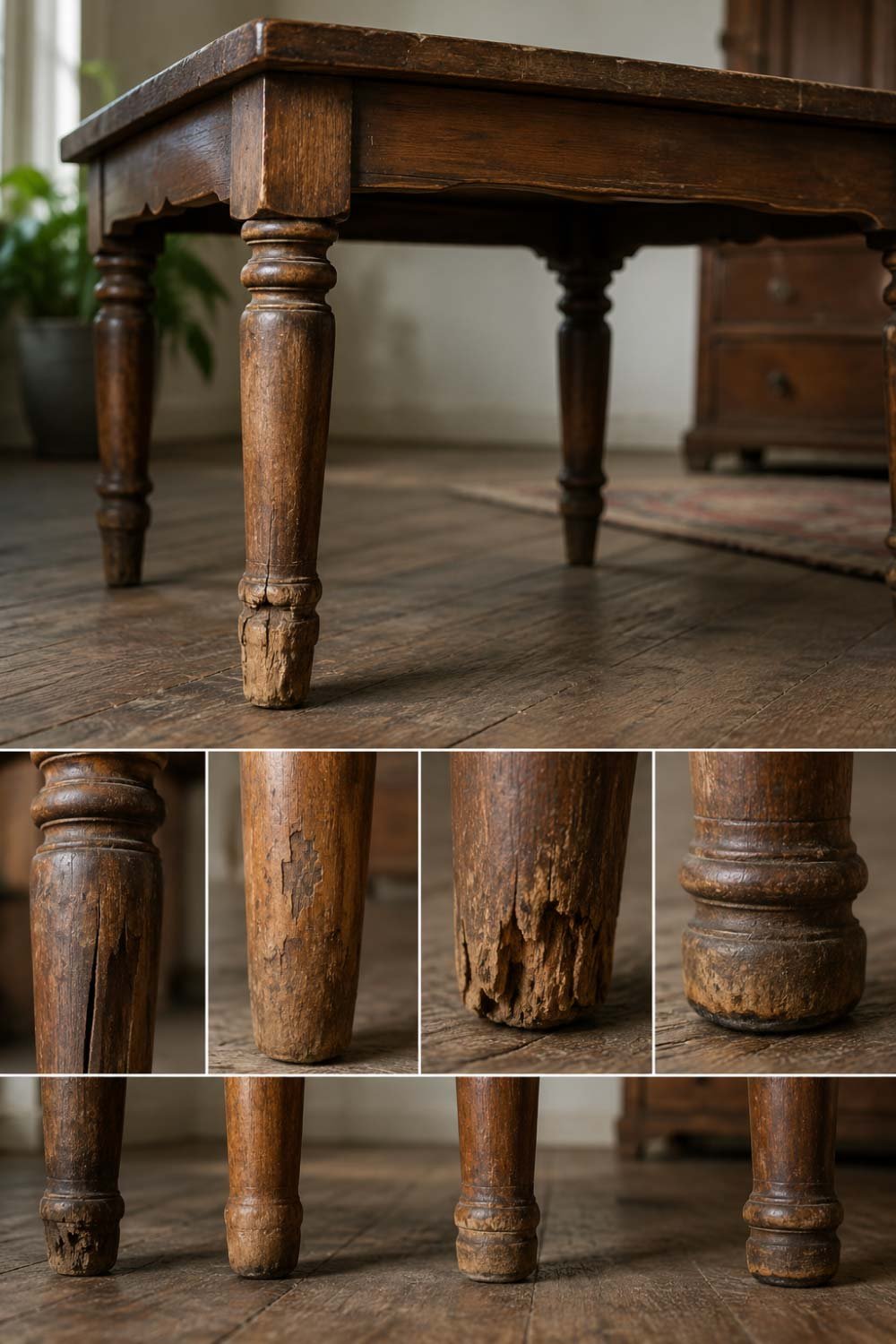
Table legs carry all the weight, so they naturally wear down over time. In older furniture, wood may crack, chip, or slightly shorten due to pressure and environmental conditions. This uneven wear leads to imbalance even if everything else looks fine.
- Wooden legs may shrink or crack with age
- Bottom edges can wear down from constant friction
- Moisture exposure weakens structural strength
- Slight height differences develop between legs
- Damage often starts from the base area
Even small changes in leg length can cause noticeable wobbling on flat surfaces.
4. Missing or Damaged Foot Pads
Foot pads may look small, but they play a big role in stability. These rubber or plastic caps at the bottom of table legs help balance height and reduce slipping. When one is missing or damaged, the table immediately becomes uneven.
- Rubber or plastic caps wear out over time
- One missing pad creates instant imbalance
- Damaged pads reduce grip on smooth floors
- Scratches on flooring can also indicate missing pads
- Different pad thickness affects overall balance
Replacing or adjusting foot pads can quickly restore proper stability.
5. Warped Wood
Wood is a natural material that reacts to temperature and humidity changes. Over time, it can expand, contract, or bend slightly. This slow deformation often leads to uneven surfaces or misaligned legs, making the table unstable even if it was once perfectly balanced.
- Humidity causes wood to swell or shrink
- Long-term exposure leads to bending or twisting
- Frame alignment slowly shifts over time
- Heat and moisture accelerate warping
- Uneven structure affects all four legs differently
Warped wood requires careful correction or reinforcement to regain balance.
Quick Fix #6: Add a Stabilizing Cross Brace
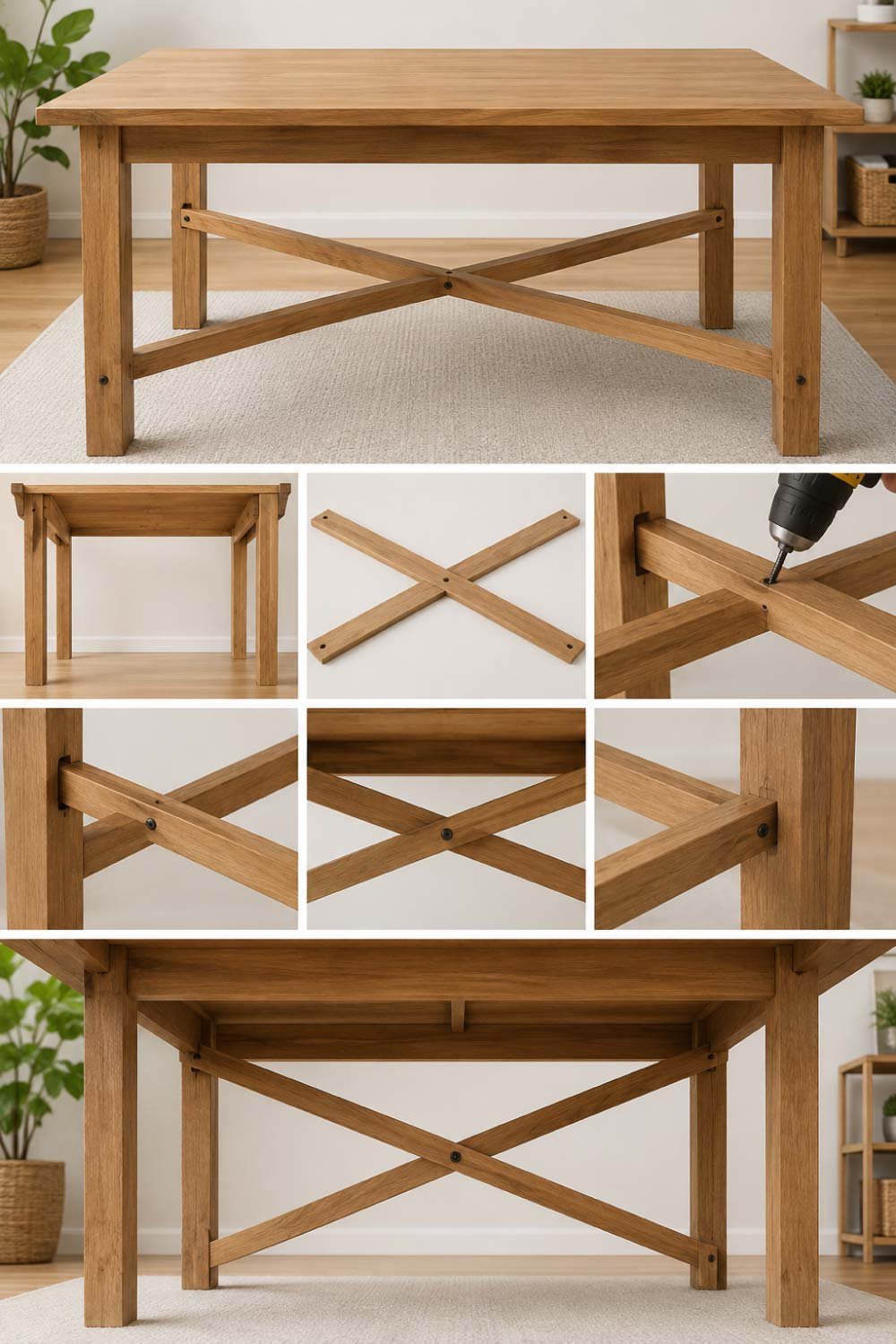
Some tables wobble simply because they lack enough structural support between the legs. Without a connecting framework, the legs can move independently, especially when weight or pressure is applied. Adding a cross brace underneath the table is a strong and reliable way to improve overall stability and reduce unwanted movement.
- Attach a wooden or metal brace between opposite legs
- Position it underneath the table for hidden support
- Secure tightly with screws on all connection points
- Ensure the brace is centered for balanced strength
- Check stability by gently pressing the table surface
This is a commonly used DIY reinforcement method for long-term durability.
Benefits:
- Adds strong structural support between legs
- Reduces shaking and side-to-side movement
- Improves overall durability of the table frame
- Ideal for larger or frequently used tables
- Helps prevent future loosening of joints
This is commonly used in DIY furniture upgrades.
Also Read:
Quick Fix #7: Use Rubber Wedges for Uneven Floors
Rubber wedges are a much more durable and reliable solution compared to paper or cardboard. They are specifically designed to handle weight and pressure without compressing easily. If your table is wobbling due to uneven flooring, this is one of the most practical and long-lasting fixes you can use.
- Place the table in its normal position first
- Identify the shortest or unbalanced leg
- Slide a rubber wedge under that leg carefully
- Adjust until the table feels fully level
- Test stability by applying light pressure on corners
Rubber wedges stay firm even under heavy furniture weight.
Advantages:
- Long-lasting and highly durable solution
- Does not compress or lose shape easily
- Works well on tiles, marble, and wooden floors
- Provides better balance than temporary fillers
- Easy to adjust and reuse when needed
This is one of the best inexpensive solutions for everyday use.
Quick Fix #8: Reinforce With Corner Brackets
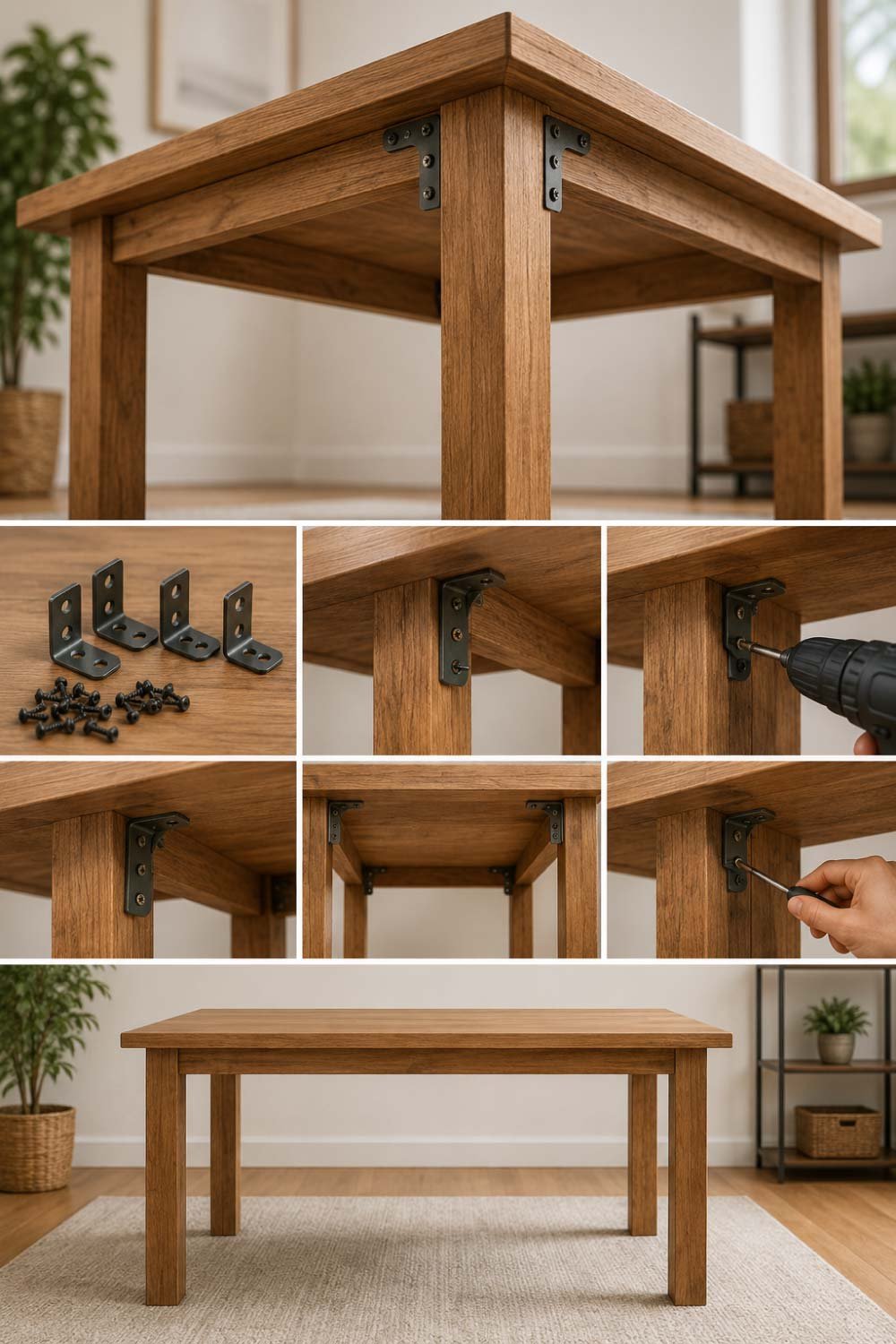
If your table still feels weak even after tightening and leveling, structural reinforcement may be needed. Metal corner brackets are a simple but highly effective way to strengthen the connection between the tabletop and legs. They add rigidity and reduce movement at the weakest points of the structure.
- Purchase small L-shaped metal brackets from hardware stores
- Position them at inside corners under the tabletop
- Screw them securely into both legs and surface frame
- Ensure all corners are evenly tightened for balance
- Test the table for improved firmness and stability
This method is especially useful for older or frequently used tables.
Result:
- Significantly stronger table structure
- Reduced shaking and side movement
- Improved long-term durability and safety
- Better support for heavier loads
- Helps prevent future joint loosening
A dramatically stronger and more stable table.
Also Read:
Preventing Table Wobble in the Future
Fixing a wobbly table is usually simple, but preventing the problem from returning saves time and effort in the long run. A few basic care habits can significantly extend the life and stability of your furniture, keeping it firm and balanced for years.
- Avoid dragging the table; always lift it when moving
- Tighten screws and joints every few months
- Keep furniture away from moisture and water exposure
- Use floor mats or pads on uneven surfaces
- Avoid placing excessive weight on one side
Small maintenance steps can prevent major stability issues later.
When You Should Consider Replacing the Table
Most wobbling tables can be repaired easily, but there are situations where repairs are no longer practical or safe. If structural damage is too severe or continues returning after multiple fixes, replacing the table becomes the better and safer option.
- Legs are badly cracked, broken, or weakened
- Frame is heavily warped or misshaped
- Repairs only provide temporary stability
- Joints repeatedly fail even after reinforcement
- Table feels unsafe under normal use
At that point, fixing becomes temporary and unreliable.
Final Thoughts
A wobbly table can be annoying, but it’s rarely a serious problem. In most cases, it comes down to simple issues like loose screws, uneven flooring, or worn-out supports. With basic tools and a few minutes of effort, you can restore stability and enjoy a firm, steady surface again.
From quick fixes like paper shims to long-term solutions like brackets and adjustable feet, you now have multiple ways to handle the problem depending on your situation. The key is to identify the cause first, then apply the right fix—not just a random one.
Once your table is stable again, you’ll wonder why you put up with the wobble for so long.