
A door that refuses to close smoothly can be one of the most frustrating household problems. It may stick halfway, scrape the floor, refuse to latch, or require a hard push every time you use it. While it may seem like a big repair issue, in most cases the solution is surprisingly simple—and you can fix it yourself without calling a carpenter.
In this detailed guide, we’ll break down the real reasons behind a door not closing smoothly and walk through quick, practical fixes you can try at home. These methods are beginner-friendly, cost-effective, and require only basic tools.
Table of Contents
ToggleWhy Your Door Isn’t Closing Smoothly
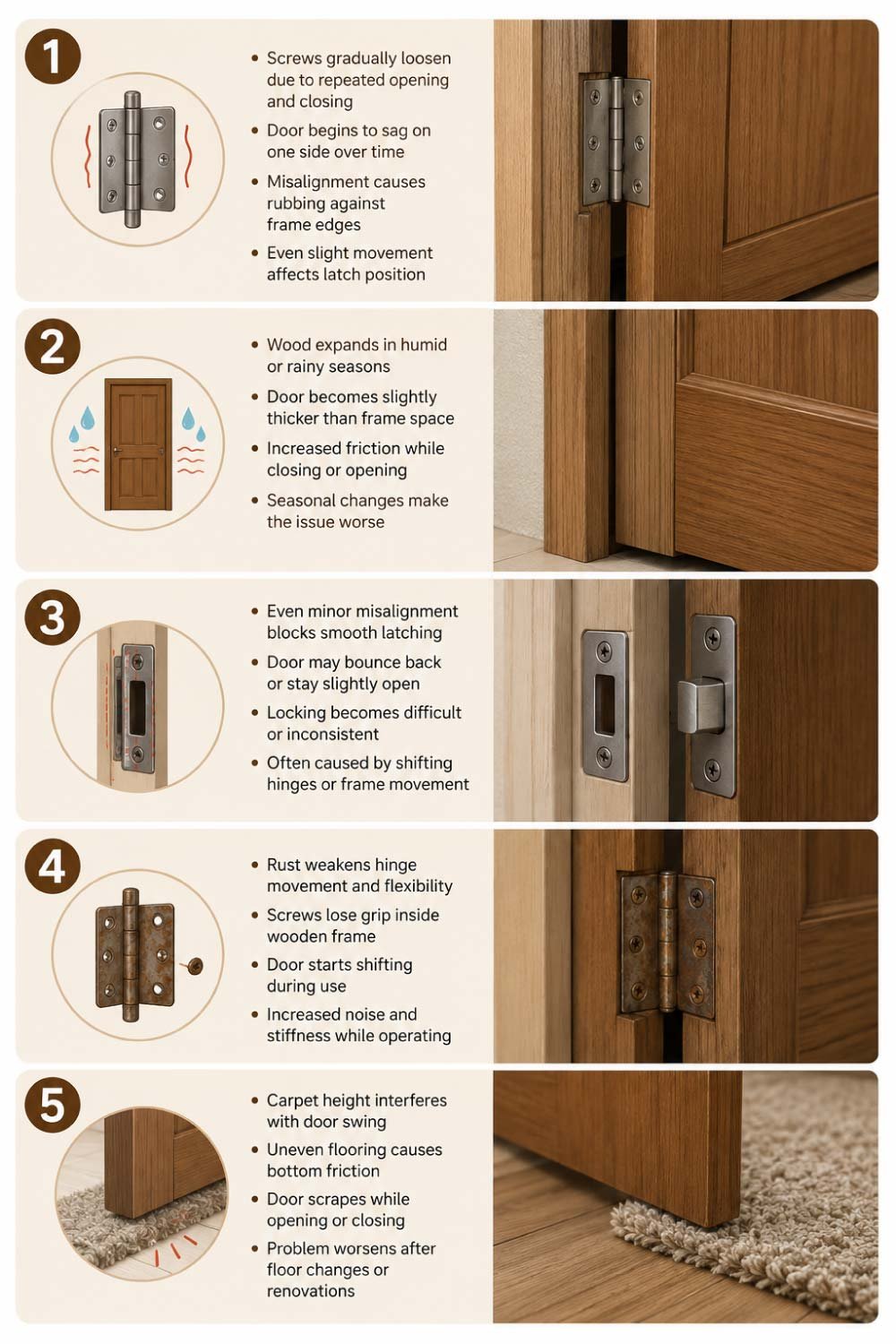
Before jumping into repairs, it’s important to understand what’s actually causing the problem. Doors rarely stop working for a single reason. Usually, it’s a combination of small issues that build up over time and gradually affect alignment, movement, and latch performance.
1. Loose Hinges
Loose hinges are one of the most common reasons a door stops closing properly. With everyday use, screws slowly loosen, causing the door to sag or shift slightly out of alignment. This small movement is enough to create friction with the frame or floor.
- Screws gradually loosen due to repeated opening and closing
- Door begins to sag on one side over time
- Misalignment causes rubbing against frame edges
- Even slight movement affects latch position
2. Humidity and Moisture
Wooden doors naturally react to changes in weather, especially humidity. In moist conditions, wood absorbs water and expands. This expansion changes the door’s shape slightly, making it harder to fit into the frame and causing resistance when closing.
- Wood expands in humid or rainy seasons
- Door becomes slightly thicker than frame space
- Increased friction while closing or opening
- Seasonal changes make the issue worse
3. Misaligned Strike Plate
The strike plate is the metal piece on the frame where the latch enters. If it is even slightly off position, the latch won’t slide in smoothly. This results in the door not closing fully or requiring extra force to lock.
- Even minor misalignment blocks smooth latching
- Door may bounce back or stay slightly open
- Locking becomes difficult or inconsistent
- Often caused by shifting hinges or frame movement
4. Worn-Out Hinges or Screws
Over time, hardware wears out due to constant use and environmental exposure. Rusted hinges or stripped screws lose their strength, causing instability in the door’s position. This leads to uneven movement and difficulty in closing properly.
- Rust weakens hinge movement and flexibility
- Screws lose grip inside wooden frame
- Door starts shifting during use
- Increased noise and stiffness while operating
5. Floor or Carpet Obstruction
Sometimes the issue isn’t with the door at all but with what’s underneath it. Thick carpets, rugs, or uneven flooring can interfere with the door’s bottom edge. This creates dragging and prevents smooth closure.
- Carpet height interferes with door swing
- Uneven flooring causes bottom friction
- Door scrapes while opening or closing
- Problem worsens after floor changes or renovations
Quick Fix #1: Tighten All Hinges Properly
One of the fastest and most effective solutions is tightening all hinge screws. Loose screws are often the main reason behind misalignment. By securing them properly, the door regains stability and returns closer to its original position, improving overall movement instantly.
Steps:
- Open the door fully
- Use a screwdriver to tighten every screw on all hinges
- Check both the door-side and frame-side screws
- Close the door slowly and test movement
Pro Tip:
If the screws keep spinning without tightening, remove them and insert a wooden toothpick coated with wood glue into the hole. Then reinsert the screw. This gives the screw a stronger grip.
Why This Works:
Tightening hinges restores the door’s original alignment, allowing it to sit properly inside the frame again.
Quick Fix #2: Adjust the Hinges for Alignment
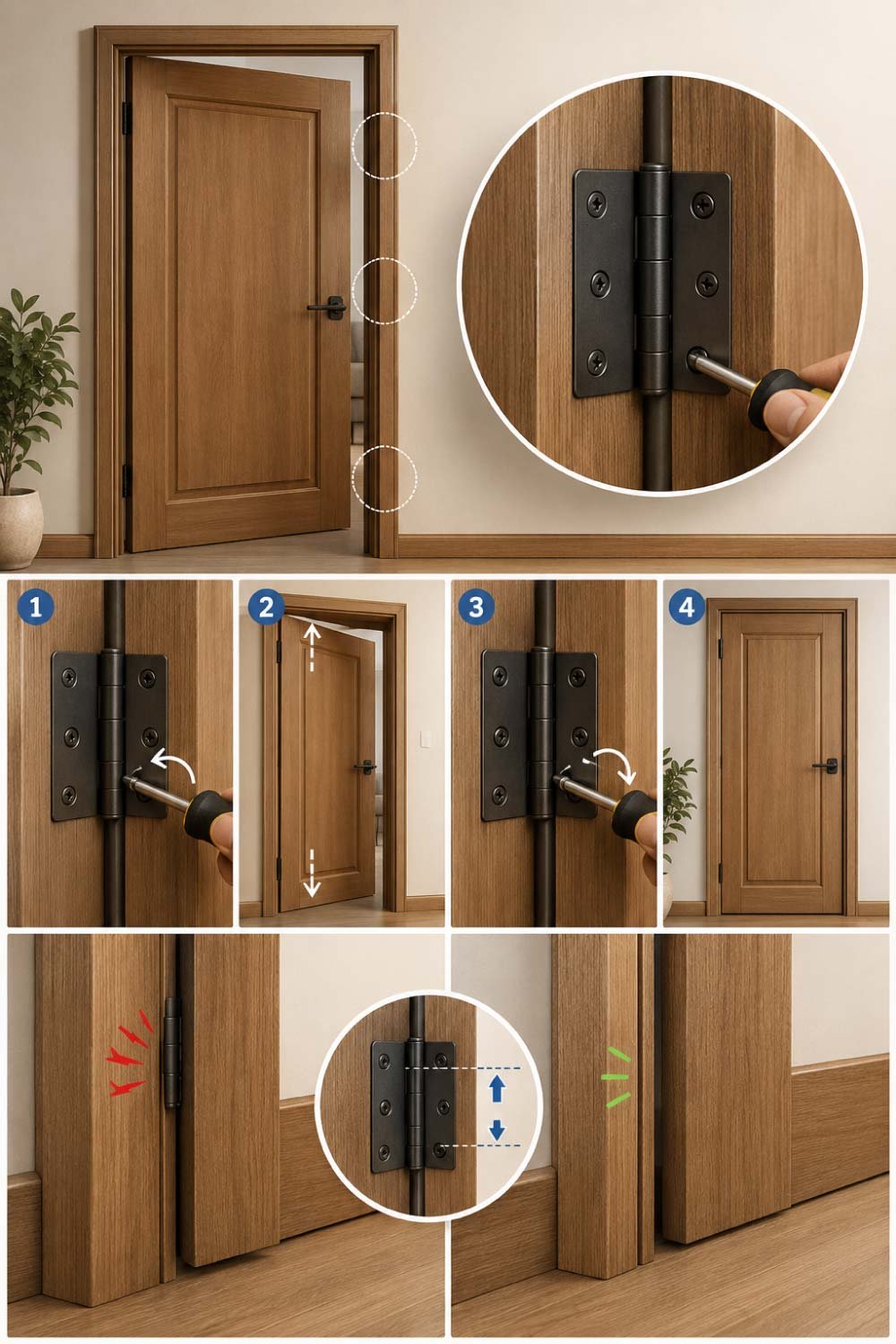
If tightening doesn’t fully solve the issue, the door may still be slightly misaligned. In such cases, small hinge adjustments can make a big difference. Even a minor shift can correct rubbing problems and restore smooth closing without needing major repairs.
Steps:
- Loosen the middle hinge slightly
- Adjust the door upward or downward depending on where it is rubbing
- Retighten the screws while holding the door in position
- Test the door multiple times
What You’ll Notice:
Even a 2–3 mm adjustment can dramatically improve how the door closes.
Quick Fix #3: Sand the Sticking Area
If your door physically rubs against the frame or floor, sanding is one of the most practical solutions. Instead of forcing the door to fit, you gently remove excess material from the problem area to create smooth clearance.
Tools Needed:
- Sandpaper (medium or coarse grit)
- Pencil for marking
Steps:
- Close the door and identify where it sticks
- Mark the rubbing area with a pencil
- Remove the door if necessary (for better control)
- Sand the marked area gently
- Reinstall and test
Important Tip:
Do not over-sand. Remove small amounts at a time and test frequently.
Also Read:
Quick Fix #4: Lubricate Hinges for Smooth Movement
Sometimes the door is not misaligned—it is simply stiff due to friction or dryness in the hinges. Lubrication helps restore smooth motion and reduces resistance, making the door feel like new without any structural changes.
What to Use:
- Silicone spray
- Light machine oil
- Even petroleum jelly in small amounts
Steps:
- Open the door wide
- Apply lubricant directly to the hinge joints
- Move the door back and forth to spread it evenly
- Wipe away excess oil
Benefits:
- Reduces squeaking
- Improves smooth movement
- Prevents future rusting
Quick Fix #5: Fix the Strike Plate Alignment
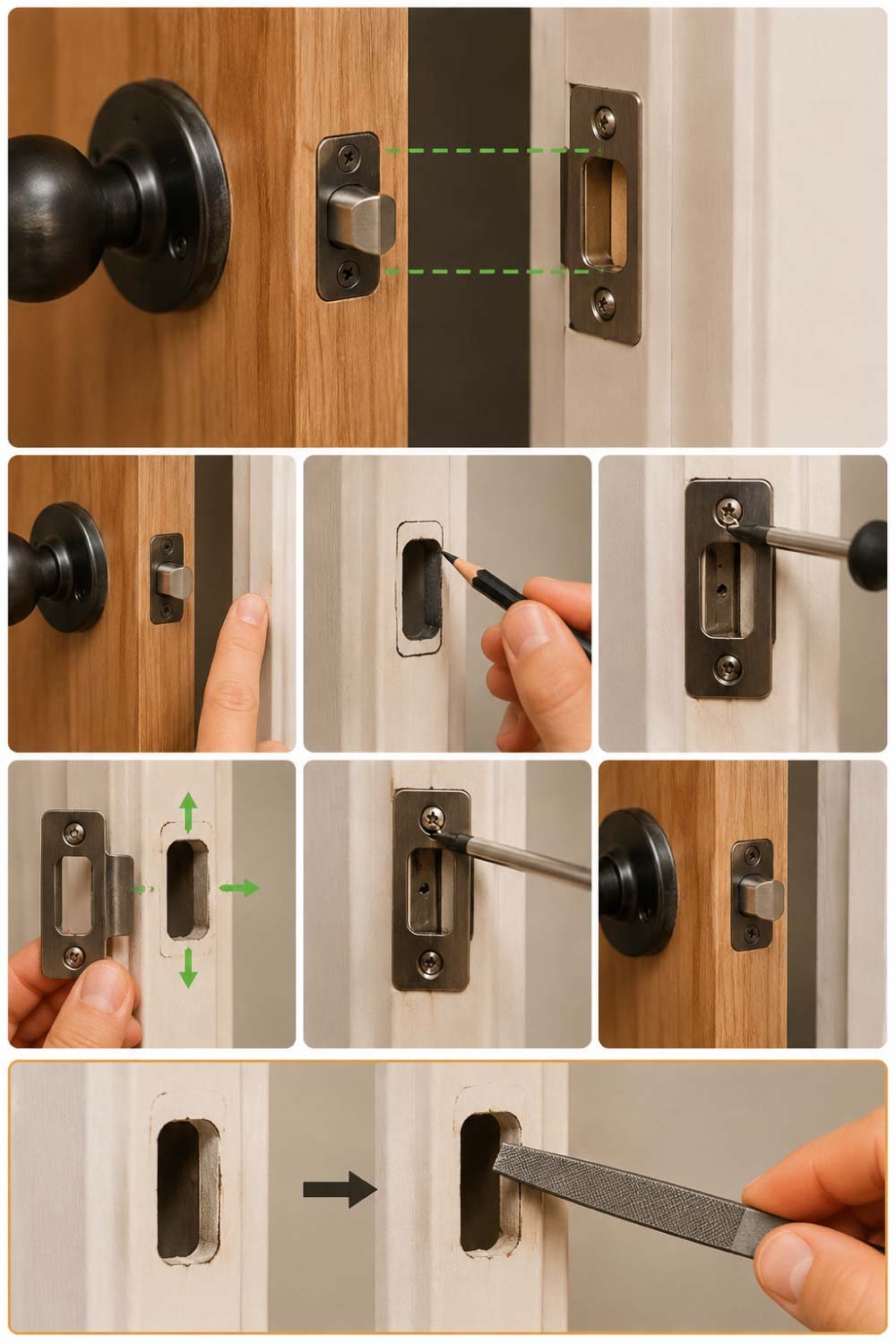
If your door closes but doesn’t latch properly, the strike plate may be off.
Steps:
- Close the door slowly and observe where the latch hits.
- Mark the correct position.
- Unscrew the strike plate.
- Reposition it slightly up, down, or sideways.
- Reattach and test.
Simple Trick:
If adjustment is minimal, you can also enlarge the strike hole slightly using a metal file instead of repositioning the entire plate.
Also Read:
Quick Fix #6: Check for Door Swelling (Seasonal Issue)
Wood expands in moisture and heat, especially during rainy seasons.
Signs:
- Door becomes tight suddenly
- Hard to close only during specific weather
- Edges look slightly swollen
Solution:
- Sand swollen edges lightly
- Apply a protective sealant or varnish
- Keep room ventilated to reduce moisture buildup
Long-Term Fix:
Sealing your wooden door annually can prevent repeated swelling issues.
Quick Fix #7: Lift and Reset the Door Alignment
If your door has sagged over time, this simple trick works surprisingly well.
Steps:
- Open the door halfway.
- Lift it gently upward.
- While holding it, tighten hinge screws.
- Slowly release and test closing.
Why It Works:
This resets the door to a more natural position, correcting downward sagging caused by gravity and usage.
Quick Fix #8: Check for Obstructions
Sometimes the issue is not mechanical at all.
Things to Inspect:
- Thick carpets under the door
- Dirt buildup at the bottom
- Loose flooring tiles
- Paint buildup around frame edges
Solution:
Remove or trim any obstruction and clean the area properly.
Also Check:
Quick Fix #9: Replace Old Screws or Hinges
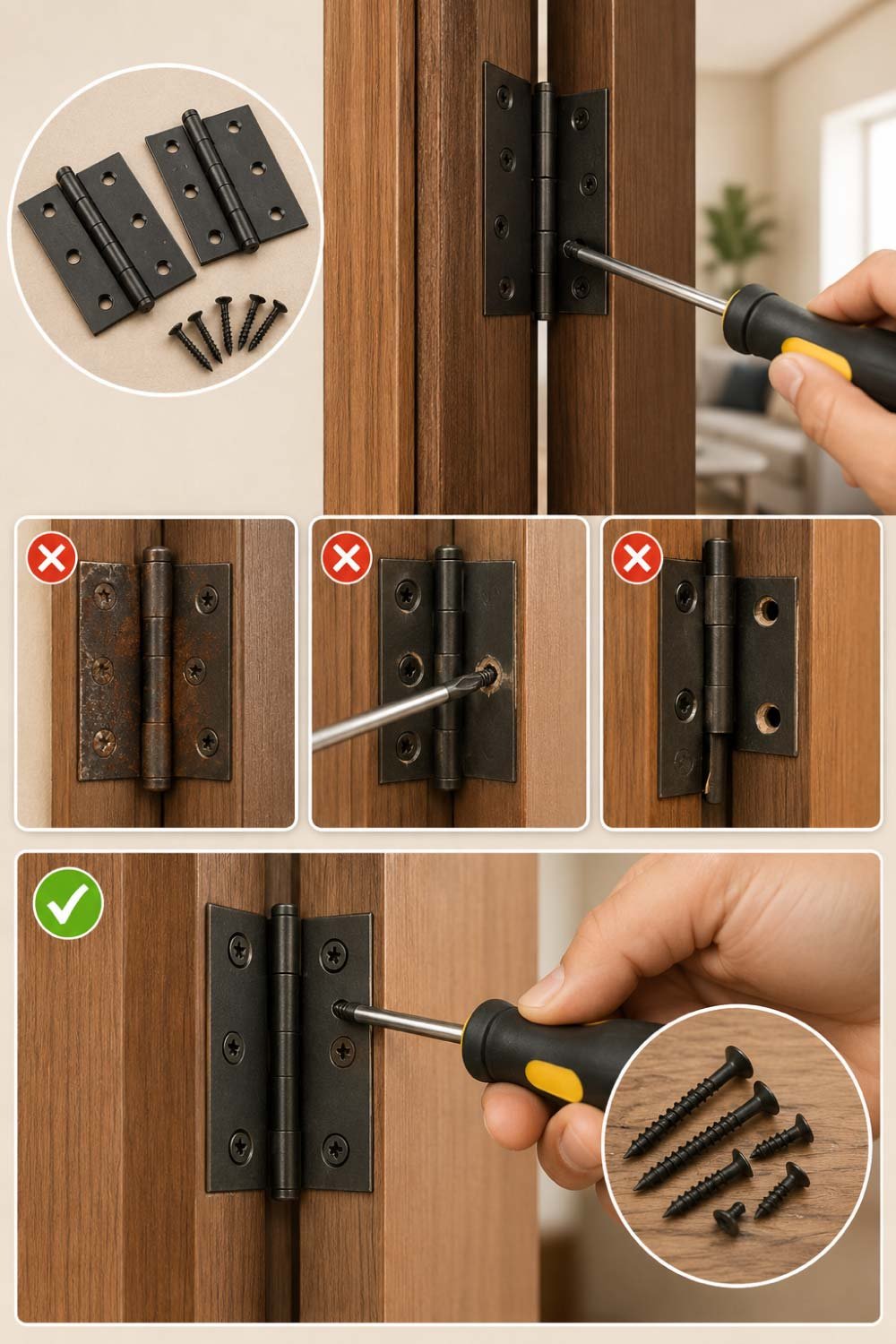
If your door still doesn’t close smoothly after all adjustments, the hardware itself may be worn out.
Signs You Need Replacement:
- Rust on hinges
- Screws won’t tighten
- Hinges feel loose even after fixing
Solution:
Replace with new, stronger screws or heavy-duty hinges for long-term stability.
Preventing Future Door Problems
Once your door is working smoothly again, a little maintenance can prevent future issues.
Regular Maintenance Tips:
- Tighten screws every 3–6 months
- Lubricate hinges twice a year
- Avoid slamming doors
- Keep humidity under control indoors
- Inspect alignment periodically
These small habits can significantly extend the life of your doors.
Final Thoughts
A door that won’t close smoothly can feel like a major inconvenience, but in most cases, the fix is simple and quick. Whether it’s tightening a few screws, sanding a small edge, or adjusting alignment, you don’t need advanced tools or professional help for most repairs.
The key is to identify the root cause first and then apply the correct fix instead of guessing. With a little patience and attention, your door can be restored to smooth, effortless operation in just a few minutes.
If you maintain it regularly, you can avoid most of these issues altogether and keep your home running quietly and smoothly.
Also Read: