
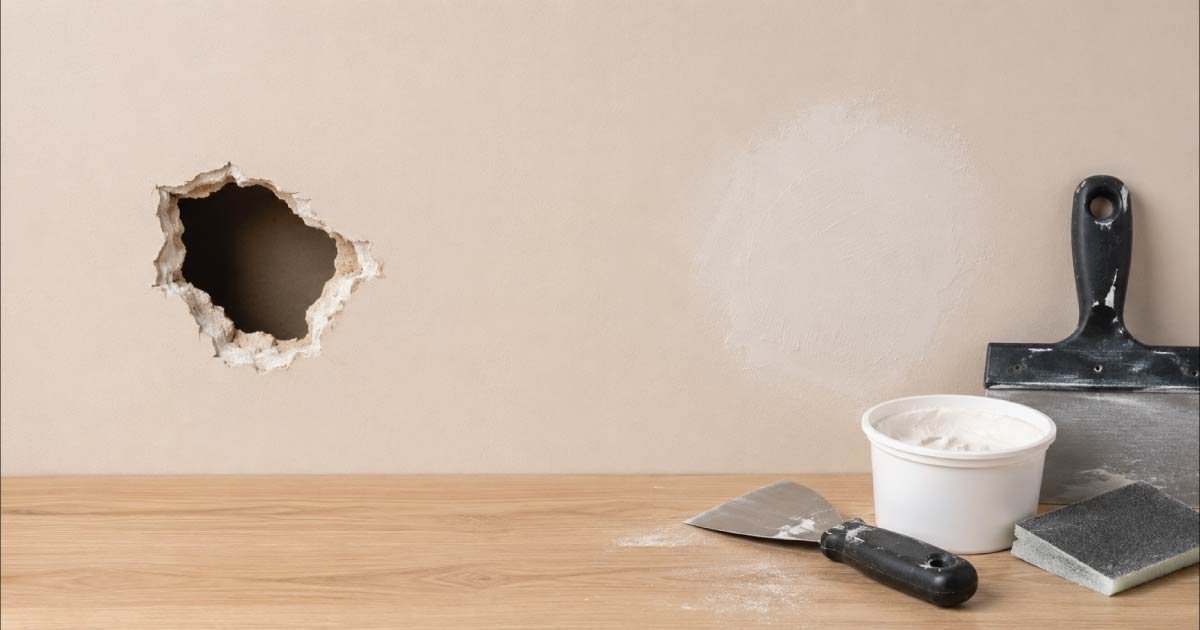
Wall holes are an inevitable part of living in a home. Hanging pictures, mounting shelves, moving furniture, door handles hitting the wall, or even removing old anchors can all leave behind unsightly damage. While wall holes may look intimidating at first, the truth is that most of them are easy to fix with the right tools, materials, and techniques.
This guide walks you step by step through how to patch wall holes of all sizes, from tiny nail holes to larger drywall damage. Whether you’re preparing your home for painting, fixing rental damage, or simply keeping your walls looking clean and polished, this guide will help you get professional-looking results without hiring a contractor.
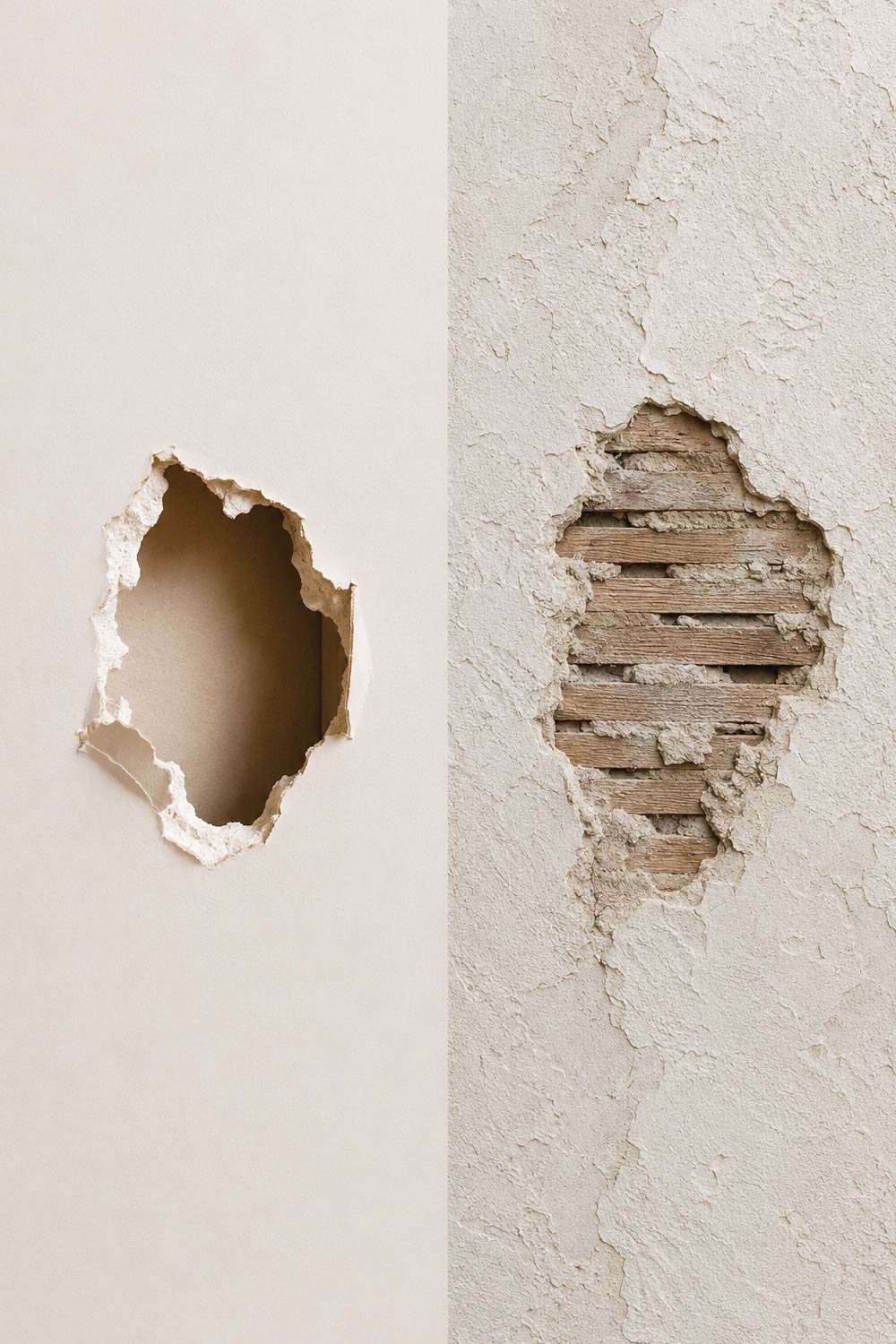
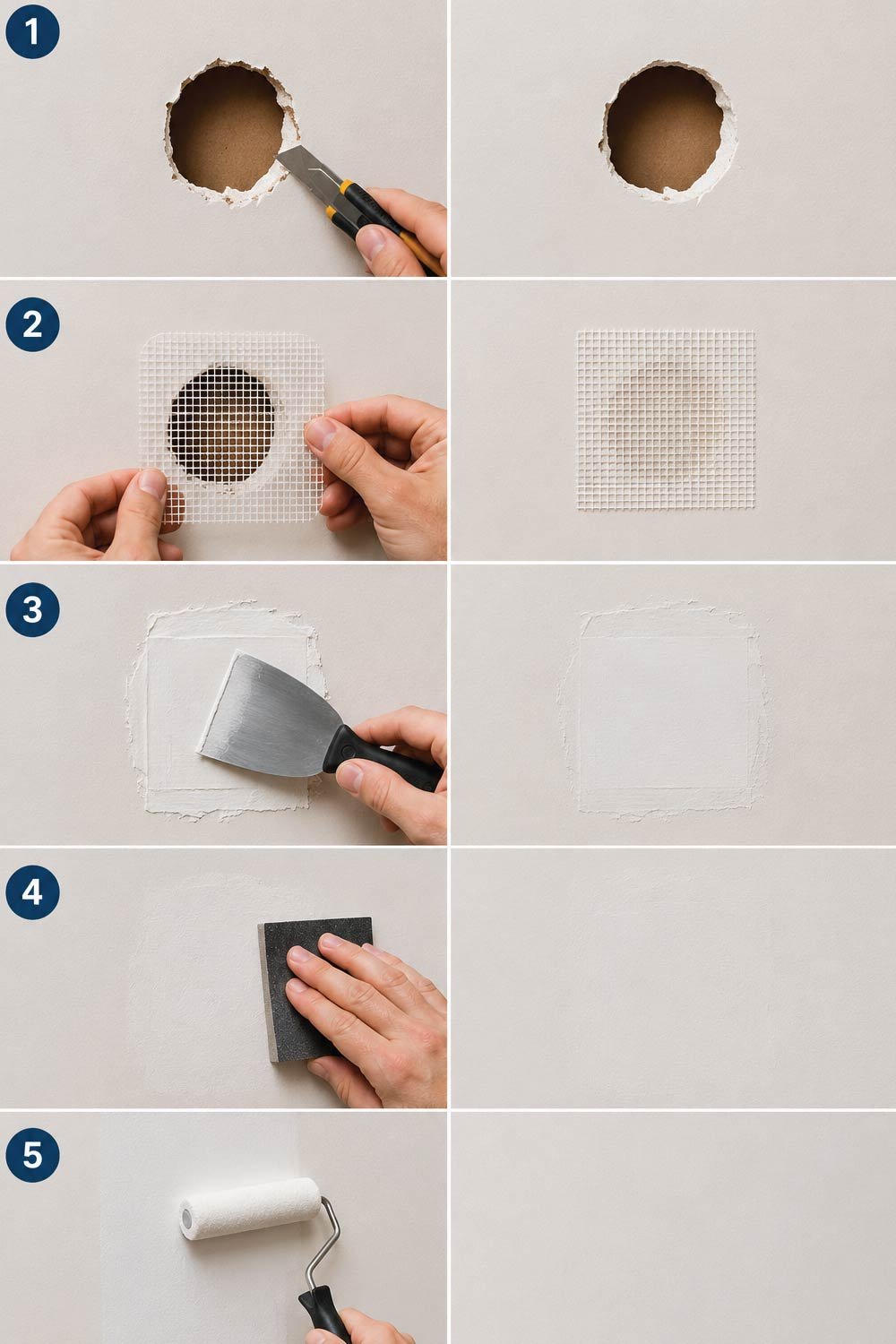
How to Patch Large Holes (Over 6 Inches)
Large drywall holes may seem difficult to repair, but with proper steps and patience, they can be fully restored to a smooth and seamless finish. The key is creating strong internal support, securely attaching a new drywall piece, and carefully finishing the surface with multiple layers of compound.
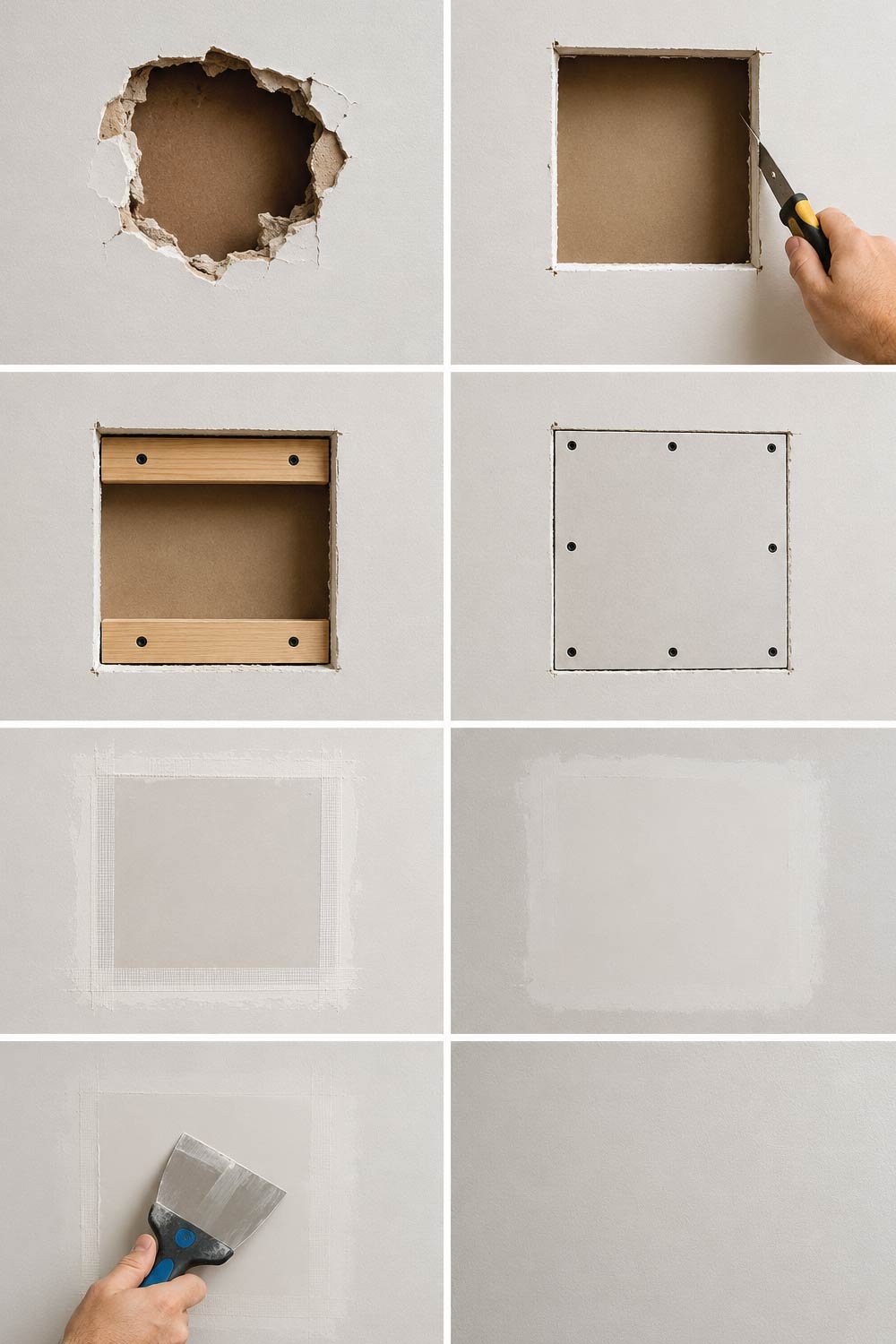
Large holes may look overwhelming, but with patience, they’re completely fixable.
Step 1: Cut the Hole Into a Square
Shaping the damaged area into a clean geometric form makes installation of the patch much easier and ensures tighter, more professional seams.
Use a drywall saw to cut the damaged area into a neat square or rectangle. Straight edges make repairs much easier.
Step 2: Add Support
Internal support is essential for holding the new drywall patch securely and preventing future sagging or cracking.
Insert a wooden backing strip inside the wall and secure it with drywall screws above and below the hole. This provides a surface to attach the patch.
Step 3: Insert the Drywall Patch
A properly fitted patch ensures a strong base and reduces the amount of finishing work needed later.
Cut a piece of drywall to fit the hole exactly. Screw it into the backing support.
Step 4: Tape the Seams
Taping the joints reinforces the connection between old and new drywall and helps prevent visible cracks over time.
Apply drywall tape over all seams to prevent cracking.
Step 5: Apply Joint Compound
Multiple thin coats of joint compound help create a smooth, invisible transition between the patch and the existing wall.
Spread joint compound over the taped seams, feathering outward. Allow to dry, sand, and repeat with additional thin coats until smooth.
Step 6: Prime and Paint
Finishing with primer and paint ensures the repaired area blends seamlessly with the surrounding wall surface.
Finish with primer and paint for a seamless look.
Also Read:
How to Replace a Faucet Washer: Simple Step-by-Step DIY Guide
Repairing Wall Cracks
Wall cracks are commonly caused by natural house settling, temperature fluctuations, or humidity changes. While minor cracks are easy to fix, addressing them early prevents them from expanding into larger structural issues.
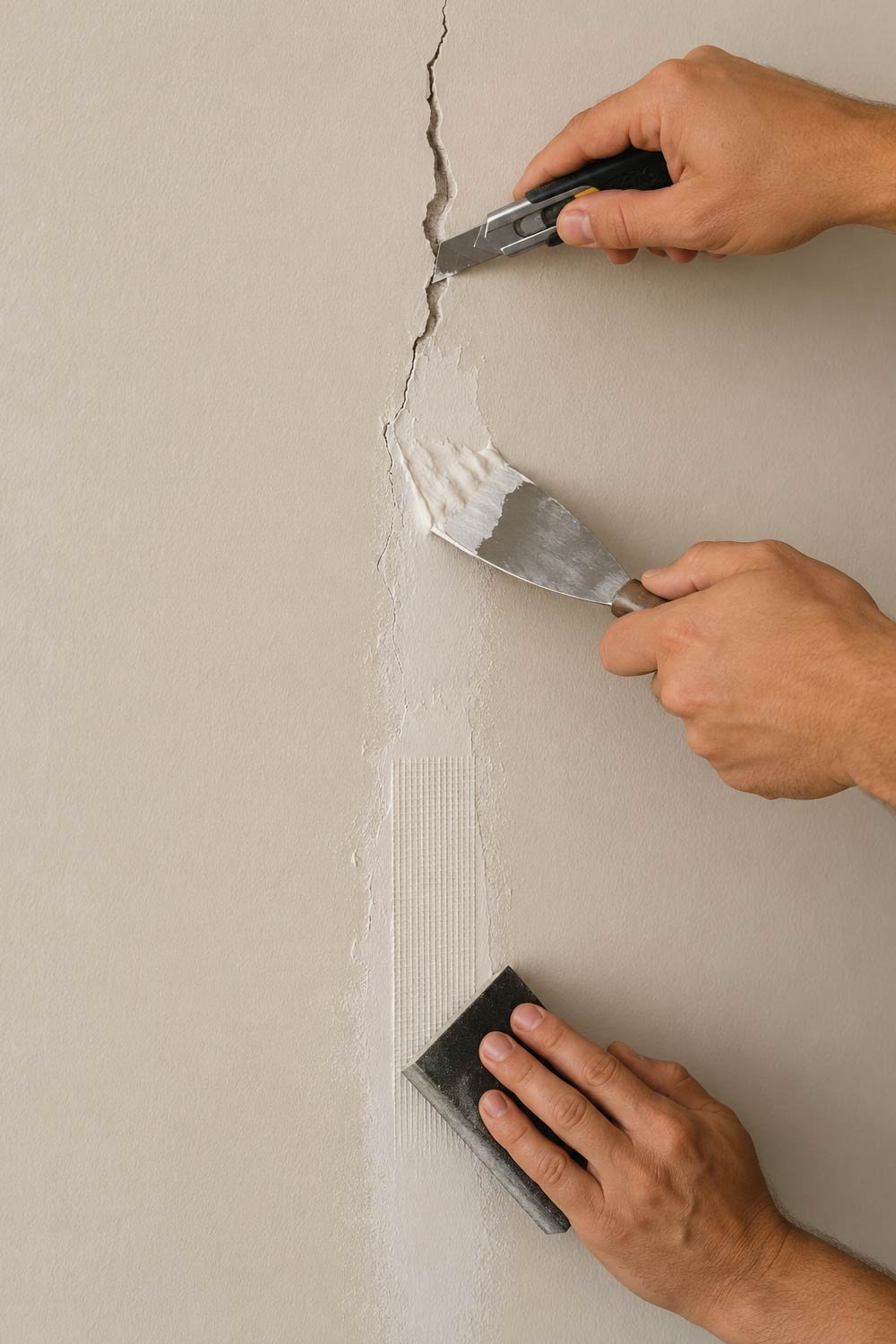
Cracks often appear due to house settling, temperature changes, or humidity. Small cracks can be repaired similarly to holes.
Widen the crack slightly with a utility knife so compound can penetrate. Apply joint compound, smooth it out, let it dry, and sand. For recurring cracks, mesh tape provides added strength.
Common Mistakes to Avoid
Many DIY drywall and wall repair issues occur due to simple but avoidable mistakes. Being aware of these helps ensure a smoother finish, stronger repair, and fewer repeat fixes in the future.
Many DIY wall repairs fail due to avoidable mistakes:
- Applying compound too thickly, leading to long drying times and cracking
- Skipping sanding between coats
- Not feathering edges far enough
- Painting without primer
- Rushing the drying process
Taking your time and working in thin layers produces far better results.
Tips for a Professional Finish
Achieving a professional-quality finish depends more on technique and patience than advanced tools. Proper layering, lighting checks, and correct paint matching can make repairs virtually invisible.
- Use multiple thin coats instead of one thick coat
- Shine a light across the wall to spot imperfections
- Match paint sheen (flat, eggshell, satin, etc.)
- Clean sanding dust before painting
Professional results come from patience more than skill.
Also Read:
Plumbing Repair at Home DIY: A Practical Guide for Homeowners
When to Call a Professional
While many wall repairs can be safely completed as DIY projects, certain situations require professional expertise to avoid safety risks or further damage to the structure of the home.
While most wall holes are DIY-friendly, consider professional help if:
- The hole exposes electrical wiring or plumbing
- The wall has structural damage
- The repair area is very large or load-bearing
Safety should always come first.
Cost and Time Expectations
Understanding the cost and time involved in wall repair helps set realistic expectations. Most minor repairs are inexpensive and quick, while larger repairs require more time due to drying and layering processes.
Most wall hole repairs cost very little. Small hole fixes may cost only a few dollars in materials, while larger repairs typically stay under $50 if you already own tools. Time investment ranges from 30 minutes for small holes to a few hours over multiple drying cycles for large patches.
Also Read:
Helpful Learning Resources
For those who want to explore wall repair in more depth, trusted home improvement guides offer step-by-step visuals, tool recommendations, and expert techniques for achieving professional-level results.
If you’d like additional step-by-step guidance, these trusted resources provide detailed tutorials and material recommendations:
- Home Depot Drywall Repair Guide
- This Old House – Drywall Repair
Also Read:
DIY Plumbing Repair Guide: Fix Common Plumbing Problems Without a Professional
Final Thoughts
Learning how to patch wall holes is a valuable skill for any homeowner or renter. With basic tools, a bit of patience, and the right techniques, you can restore your walls to like-new condition and save money in the process.
Whether you’re fixing a tiny nail hole or tackling a large drywall patch, the key is preparation, thin layers, and proper finishing. Once you’ve mastered the basics, wall repairs become quick, easy, and even satisfying.
With this guide, you’re fully equipped to handle wall holes confidently—and your walls will thank you for it.