

Starting a small restaurant can be one of the most rewarding business ventures if done strategically. With the growing appetite for diverse cuisines and personalized dining experiences, opening a restaurant allows entrepreneurs to combine creativity with business acumen.
However, the restaurant industry is also highly competitive, and success requires careful planning, smart investment, and an unwavering focus on customer satisfaction.
This guide breaks down the steps you need to take to launch your small restaurant, from conceptualization to long-term growth strategies.
1. Define Your Concept and Niche
Before investing in a physical location, it is essential to define the concept of your restaurant.
Your concept is what differentiates you from competitors and guides every other decision, from menu design to interior decoration.
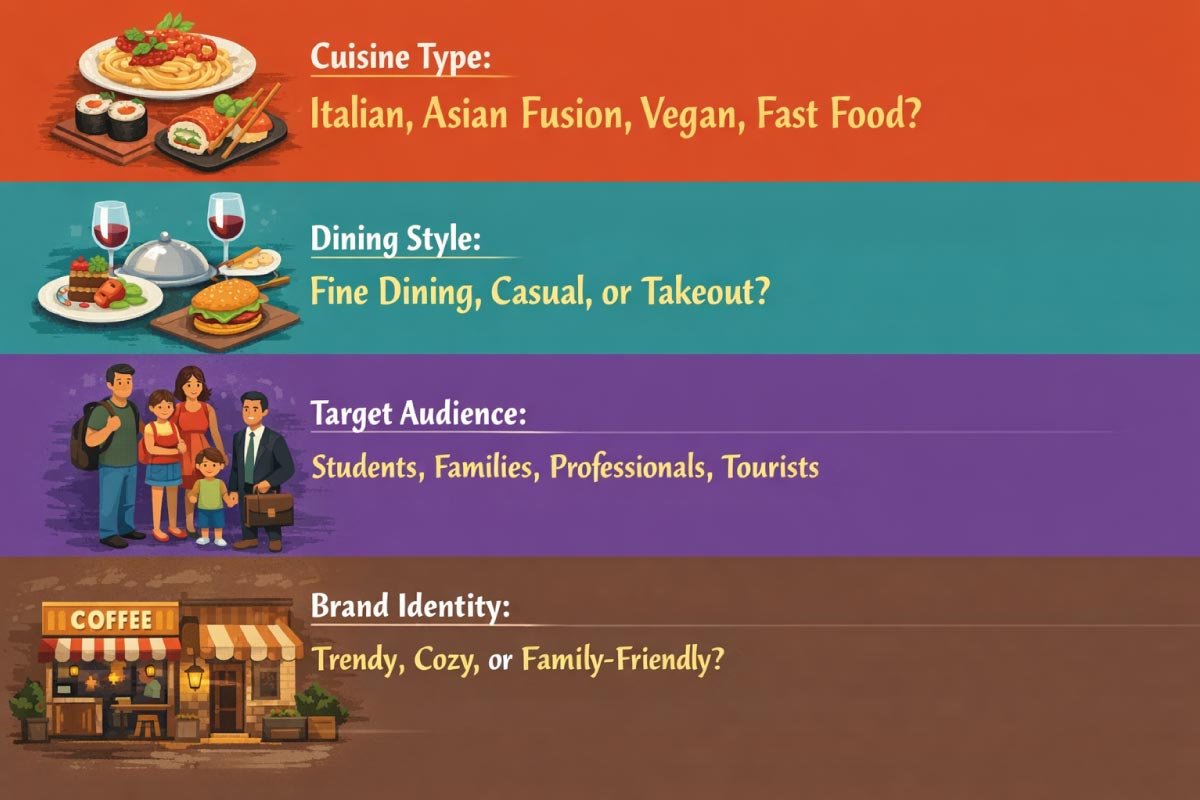
Key Considerations for Your Concept:
-
Cuisine Type: Will you serve Italian, Asian fusion, fast food, vegan, or comfort food?
-
Dining Style: Will it be fine dining, casual, fast-casual, or a takeout-focused establishment?
-
Target Audience: Identify the demographic you want to attract—students, families, professionals, or tourists.
-
Brand Identity: Your restaurant’s name, logo, and overall style should reflect your concept.
Table 1: Concept Planning Checklist
| Aspect | Questions to Answer | Examples |
|---|---|---|
| Cuisine Type | What type of food will you serve? | Italian, Mexican, Asian fusion, Vegan |
| Dining Style | How formal or casual will the experience be? | Fast-casual, Fine dining, Takeout-only |
| Target Audience | Who are your potential customers? | Students, Families, Office workers |
| Brand Identity | How will your restaurant be perceived? | Trendy, Cozy, Elegant, Family-friendly |
2. Conduct Market Research
Understanding your local market is critical before launching a restaurant. Research helps you identify competitors, customer preferences, pricing standards, and potential gaps you can fill.
Steps to Conduct Market Research:
-
Analyze the competition: Visit other restaurants, check menus, pricing, and customer reviews.
-
Study customer behavior: Identify what attracts customers, peak dining times, and preferred cuisines.
-
Location analysis: Assess foot traffic, parking facilities, and neighborhood demographics.
Table 2: Market Research Framework
| Research Area | Method | Key Insights |
|---|---|---|
| Competitor Analysis | Visit and review local restaurants | Identify gaps in cuisine or service |
| Customer Preferences | Surveys, social media polls | Determine popular dishes and pricing tolerance |
| Location Study | Foot traffic count, demographic study | Evaluate suitability for your restaurant type |
| Pricing Benchmark | Compare menus and specials | Determine competitive pricing without undercutting |
3. Develop a Business Plan
A strong business plan lays the foundation for restaurant success. “Develop a Business Plan” helps you define your vision, set objectives, and outline strategies for operations, marketing, and finances.

Learn how to plan effectively, anticipate challenges, and guide your restaurant toward sustainable growth and profitability.
Key Elements of a Restaurant Business Plan:
-
Executive Summary: An overview of your restaurant concept and objectives.
-
Market Analysis: Insights from your research on target customers and competitors.
-
Menu Strategy: Pricing, ingredients, and signature dishes.
-
Operations Plan: Staff structure, workflow, suppliers, and inventory management.
-
Marketing and Sales Plan: Strategies to attract and retain customers.
-
Financial Plan: Start-up costs, revenue projections, break-even analysis, and funding needs.
Table 3: Sample Restaurant Business Plan Layout
| Section | Details to Include | Purpose |
|---|---|---|
| Executive Summary | Restaurant concept, location, target market | Provides investors with a clear snapshot |
| Market Analysis | Competitor landscape, demographics | Identify opportunities and challenges |
| Menu Strategy | Pricing, portion sizes, signature dishes | Guides purchasing and preparation |
| Operations Plan | Staffing, supplier contracts, workflow | Ensures smooth daily operation |
| Marketing Plan | Promotions, social media, loyalty programs | Attracts and retains customers |
| Financial Plan | Budget, revenue projections, break-even point | Determines viability and funding requirements |
You May Also Like:
4. Secure Funding
Adequate funding is essential to launch and grow your restaurant. “Secure Funding” explores options like loans, investors, and personal capital.
Learn how to assess your financial needs, present a compelling plan, and obtain the resources necessary to start operations and support your restaurant’s long-term growth.
Common Startup Costs:
-
Lease or property purchase
-
Kitchen equipment and appliances
-
Interior decor and furniture
-
Licenses and permits
-
Marketing and branding
-
Initial inventory and staff salaries
Funding Options:
-
Personal savings
-
Bank loans or small business loans
-
Investors or partners
-
Crowdfunding platforms
Table 4: Startup Cost Breakdown
| Expense Category | Estimated Cost Range | Notes |
|---|---|---|
| Lease / Rent | $1,500 – $5,000/month | Depends on location and size |
| Kitchen Equipment | $10,000 – $50,000 | Includes ovens, stoves, refrigerators |
| Interior & Furniture | $5,000 – $25,000 | Tables, chairs, decor |
| Licenses & Permits | $500 – $3,000 | Food service licenses, health permits |
| Marketing & Branding | $500 – $5,000 | Website, social media, flyers |
| Inventory & Supplies | $1,000 – $5,000 | Initial stock for kitchen and bar |
| Staff Salaries | $2,000 – $10,000 | Depends on team size |
5. Choose the Right Location
Selecting the perfect location is vital for restaurant success. “Choose the Right Location” guides you in evaluating foot traffic, target demographics, and competition.
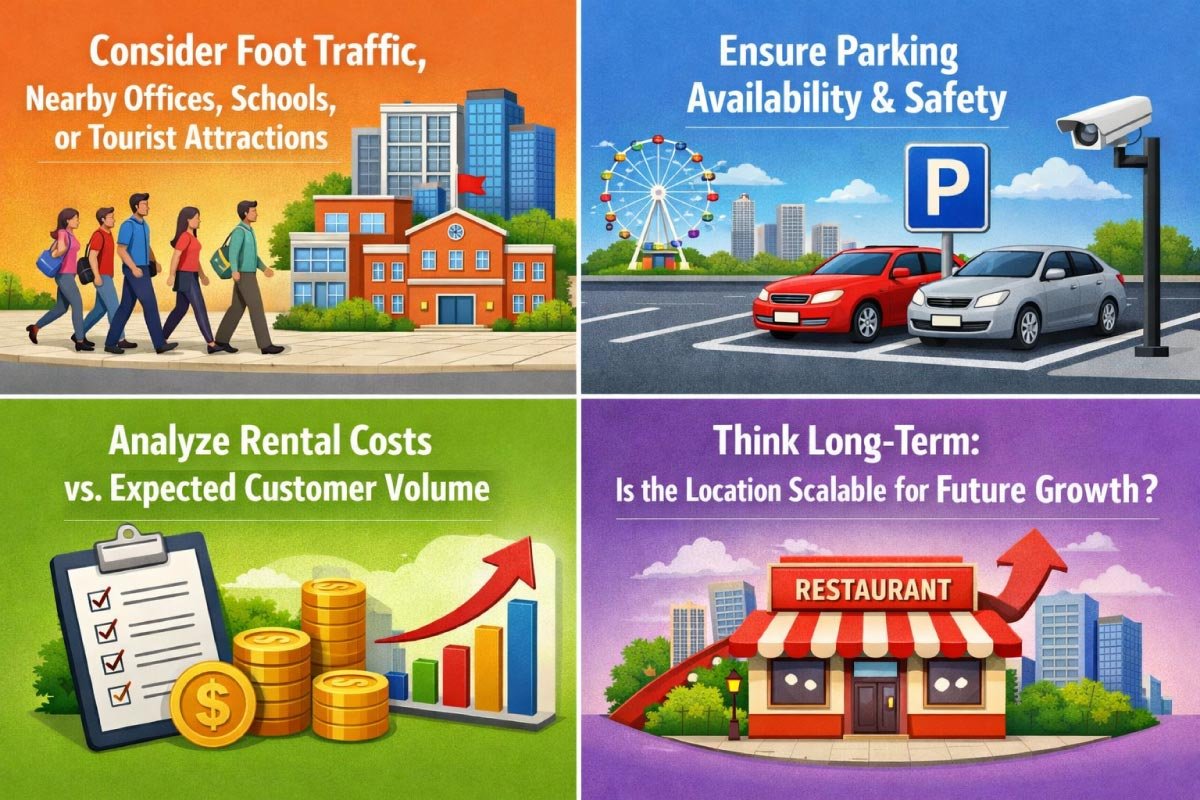
Learn how to find a spot that maximizes visibility, attracts your ideal customers, and sets your restaurant up for sustainable growth and profitability.
Location Tips:
-
Consider foot traffic, nearby offices, schools, or tourist attractions.
-
Ensure parking availability and safety.
-
Analyze rental costs versus expected customer volume.
-
Think long-term: Is the location scalable for future growth?
You May Also Like:
How to Start a Laundry Service Business: A Comprehensive Guide
6. Legal Requirements and Licenses
Common Licenses and Permits:
-
Food service license
-
Health department permit
-
Liquor license (if serving alcohol)
-
Fire safety certificate
-
Business registration and tax identification number
7. Menu Development
A thoughtfully crafted menu attracts customers and drives sales. “Menu Development” helps you design appealing dishes, balance pricing, and highlight signature offerings.

Learn how to create a menu that reflects your restaurant’s brand, meets customer preferences, and encourages repeat visits for a memorable dining experience.
Tips for a Profitable Menu:
-
Keep it focused: Avoid overcomplicating the menu with too many items.
-
Highlight signature dishes that define your brand.
-
Price strategically: Use cost analysis to ensure profitability while remaining competitive.
-
Include options for dietary preferences, such as vegetarian or gluten-free items.
You May Also Like:
8. Hiring and Training Staff
A skilled and motivated team is essential for restaurant success. “Hiring and Training Staff” guides you in recruiting the right employees, providing thorough training, and fostering a positive work environment.
Learn how to build a reliable team that delivers excellent service and enhances your restaurant’s reputation.
Key Staff Positions:
-
Head chef or kitchen manager
-
Line cooks and prep staff
-
Servers and hosts
-
Bartender (if applicable)
-
Cleaning and maintenance staff
Staff Training Tips:
-
Emphasize customer service and hospitality.
-
Train staff on menu items, preparation, and portion sizes.
-
Establish workflow standards to optimize kitchen and service efficiency.
9. Marketing Your Restaurant
Effective marketing drives customers through your doors and builds brand loyalty. “Marketing Your Restaurant” covers strategies like social media promotion, local advertising, loyalty programs, and community engagement.

Learn how to attract new diners, retain regulars, and position your restaurant as the go-to destination for great food and experiences.
Effective Marketing Strategies:
-
Social media presence: Share photos, promotions, and customer reviews.
-
Loyalty programs: Encourage repeat visits with discounts or reward points.
-
Local collaborations: Partner with nearby businesses for cross-promotion.
-
Grand opening event: Generate buzz through special offers and media coverage.
You May Also Like:
10. Monitor Finances and Operations
Keeping a close eye on finances and daily operations ensures long-term success. “Monitor Finances and Operations” guides you in tracking revenue, controlling expenses, and analyzing performance metrics.
Learn how to make data-driven decisions, optimize efficiency, and keep your pizza shop running smoothly and profitably.
Key Metrics to Track:
-
Food cost percentage
-
Labor cost percentage
-
Daily revenue and expenses
-
Customer feedback and reviews
11. Scaling and Expansion
Once your pizza shop is thriving, it’s time to grow. “Scaling and Expansion” explores strategies for opening new locations, franchising, and increasing operational capacity.
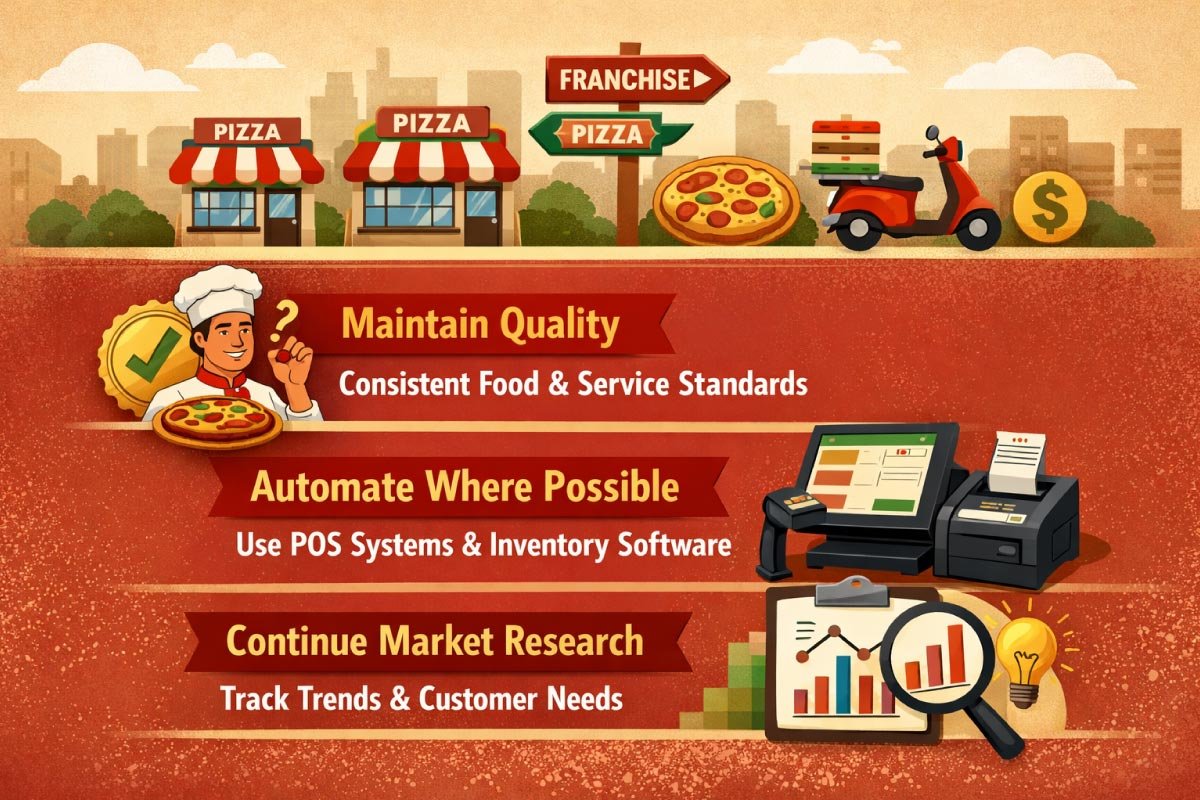
Learn how to expand thoughtfully, maintain quality, and turn your successful local shop into a larger, profitable pizza brand.
Tips for Scaling:
-
Maintain quality: Growth should not compromise food or service standards.
-
Automate where possible: Use POS systems and inventory software.
-
Continue market research: Trends evolve, and staying informed is vital.
You May Also Like:
Final Thoughts
Starting a small restaurant requires more than just cooking skills—it demands careful planning, market insight, financial discipline, and a commitment to exceptional customer experiences.
By following the steps outlined above—defining your concept, conducting market research, crafting a solid business plan, securing funding, obtaining licenses,
and focusing on operations and marketing—you increase your chances of building a restaurant that is both profitable and loved by the community.