

Starting a juice bar business is an exciting and profitable venture, especially as consumers increasingly prioritize health, wellness, and fresh food options.
Whether you want a small kiosk in a busy shopping area or a full-scale juice bar with seating, the potential for growth is significant.
However, launching a successful juice bar requires careful planning, strategy, and execution. This guide will take you step by step through the process of starting your own juice bar business.
1. Understanding the Juice Bar Market
Before diving into any business, it’s essential to understand the market. Juice bars cater to health-conscious consumers looking for fresh, nutrient-packed drinks.
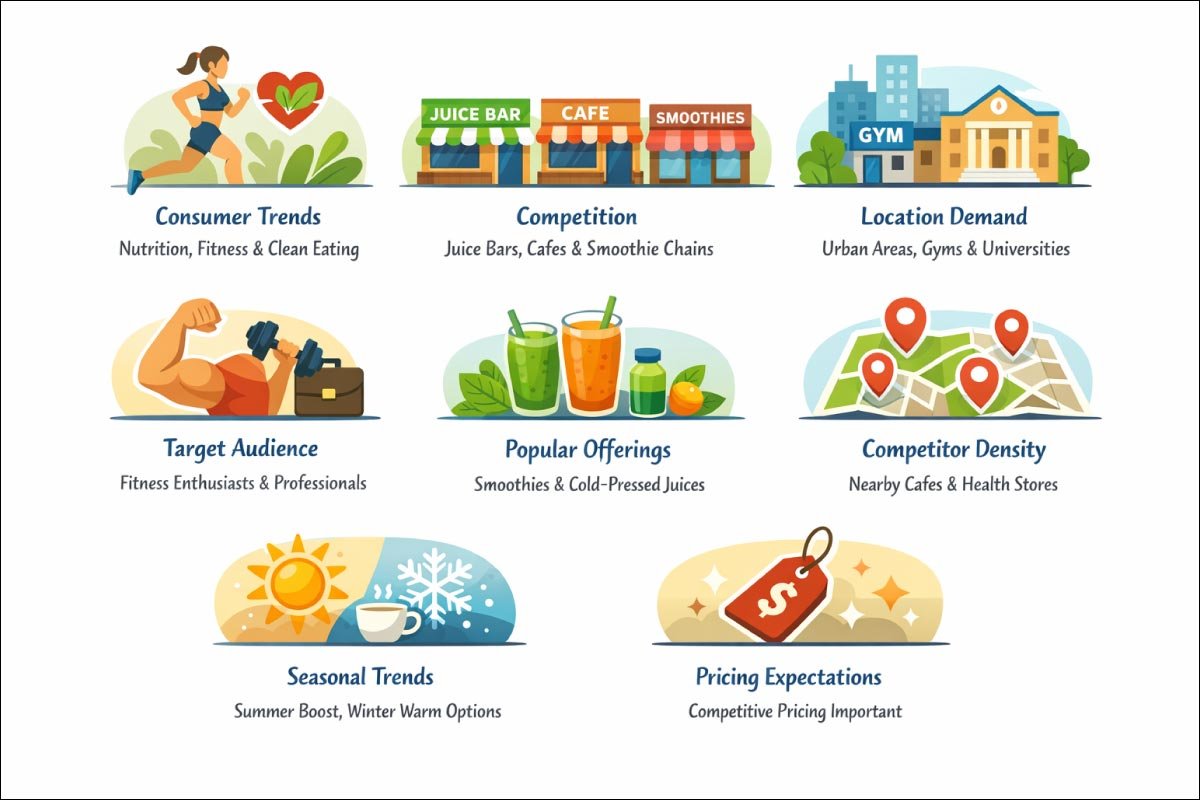
Trends like cold-pressed juices, smoothies, detox drinks, and plant-based options have significantly increased demand.
Key market considerations include:
-
Consumer trends: Rising awareness of nutrition, fitness, and clean eating.
-
Competition: Local juice bars, cafes, and smoothie chains.
-
Location demand: Busy urban areas, gyms, wellness centers, and universities often have higher demand.
Table 1: Juice Bar Market Overview
| Factor | Importance | Example Considerations |
|---|---|---|
| Target audience | High | Fitness enthusiasts, students, professionals |
| Popular offerings | High | Smoothies, cold-pressed juices, wellness shots |
| Competitor density | Medium | Nearby cafes, health food stores |
| Seasonal trends | Medium | Summer demand higher, winter may require warm options |
| Pricing expectations | High | Competitive pricing is crucial |
2. Defining Your Concept and Niche
Defining your concept and niche helps your juice bar stand out in a competitive market. Whether specializing in detox blends, smoothie bowls, or organic juices, a clear identity guides your menu, branding, and marketing.
A well-defined niche attracts your ideal customers and builds a loyal, engaged following.
-
Organic Juice Bar: Focus on organic fruits, vegetables, and health shots.
-
Smoothie Bar: Emphasis on blended smoothies, protein shakes, and meal replacements.
-
Detox and Wellness Bar: Specializing in detox drinks, immune-boosting juices, and functional beverages.
-
Quick Grab-and-Go: Small footprint with takeaway-focused drinks.
Creating a niche ensures that your juice bar stands out from competitors and attracts loyal customers.
Table 2: Juice Bar Concept Comparison
| Concept Type | Pros | Cons |
|---|---|---|
| Organic Juice Bar | Premium pricing, health-conscious audience | Higher ingredient costs, smaller audience |
| Smoothie Bar | Popular, versatile menu | Requires blending equipment, moderate costs |
| Detox & Wellness Bar | Trendy, health-focused | Limited daily customers, education needed |
| Grab-and-Go Kiosk | Low overhead, fast turnover | Limited menu options, less seating space |
3. Conducting Market Research
Conducting market research is crucial for understanding your juice bar’s target audience, competitors, and industry trends.
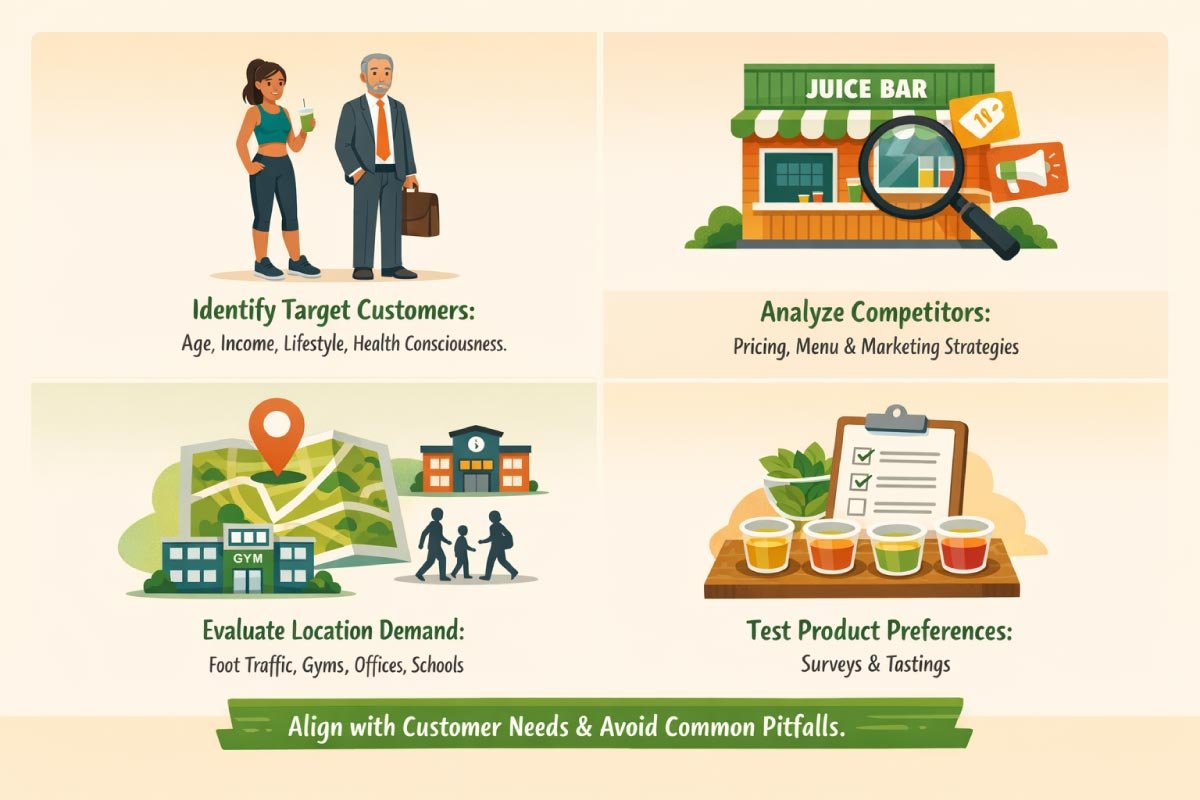
By analyzing customer preferences, demand patterns, and local opportunities, you can make informed decisions on menu offerings, pricing,
promotions, and location, ensuring your business meets market needs and stands out effectively.
-
Identify target customers: Age, income, lifestyle, and health consciousness.
-
Analyze competitors: Look at their pricing, menu, and marketing strategies.
-
Evaluate location demand: Foot traffic, nearby gyms, offices, or schools.
-
Test product preferences: Conduct small-scale surveys or tastings to gauge interest.
Market research ensures that your juice bar aligns with customer needs and avoids common pitfalls.
You May Also Like:
4. Creating a Business Plan
Creating a business plan is essential for guiding your juice bar toward success. It outlines your vision, target market, menu strategy, budget, and marketing approach. A well-structured plan helps make informed decisions, secure funding, anticipate challenges, and ensure sustainable growth while keeping your business focused and organized.
-
Executive summary: Overview of your business concept.
-
Market analysis: Research on customers, competitors, and industry trends.
-
Menu and products: Detailed list of juices, smoothies, and add-ons.
-
Operational plan: Staffing, supply chain, equipment, and workflow.
-
Financial projections: Startup costs, revenue forecasts, and break-even analysis.
-
Marketing strategy: Social media, local promotions, and partnerships.
Table 3: Key Sections of a Juice Bar Business Plan
| Section | Purpose | Key Details |
|---|---|---|
| Executive Summary | Introduce the business | Concept, vision, goals |
| Market Analysis | Understand market and demand | Competitor study, customer insights |
| Menu & Products | Define offerings | Juice types, smoothies, add-ons |
| Operations Plan | Outline daily functioning | Staff roles, equipment, supplier sources |
| Financial Plan | Budgeting and projections | Startup costs, expected revenue, profit margin |
| Marketing Strategy | Attract and retain customers | Social media, local advertising, loyalty programs |
5. Legal Formalities and Licensing
Completing legal formalities and obtaining the necessary licenses is essential for running your juice bar legally and safely.
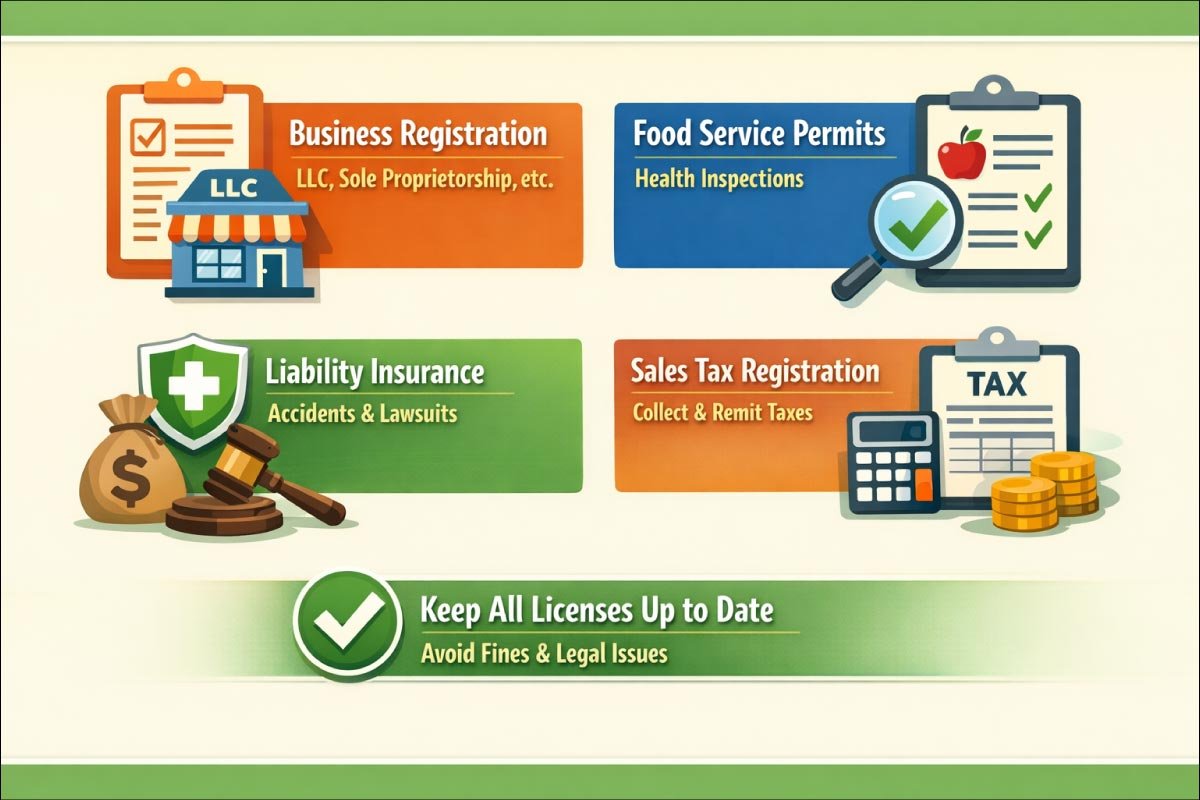
This includes business registration, health and food safety permits, and compliance with local regulations.
Proper legal compliance protects your business, builds customer trust, and prevents fines or operational disruptions.
-
Business registration: Register your juice bar as a legal entity (LLC, sole proprietorship, etc.).
-
Food service permits: Health department inspections for safe food handling.
-
Liability insurance: Protects against accidents or lawsuits.
-
Sales tax registration: Collect and remit applicable taxes.
Ensure all licenses are up to date to avoid fines and legal issues.
You May Also Like:
6. Choosing the Right Location
Choosing the right location is critical for your juice bar’s success. High foot traffic, visibility, and accessibility attract more customers, while proximity to gyms, offices, or busy streets boosts sales potential.
A strategic location enhances brand exposure, convenience, and long-term growth opportunities, laying the foundation for a thriving business.
-
High-traffic areas: Shopping malls, gyms, business districts.
-
Accessibility: Easy parking and visibility.
-
Size: Enough for prep area, storage, and customer seating.
-
Lease terms: Understand rent, duration, and renewal terms.
A strategic location can make or break your juice bar.
7. Menu Development and Sourcing Ingredients
Menu development and sourcing quality ingredients are vital for your juice bar’s success.
Crafting a diverse, appealing menu that highlights fresh, seasonal produce attracts customers and encourages repeat visits.
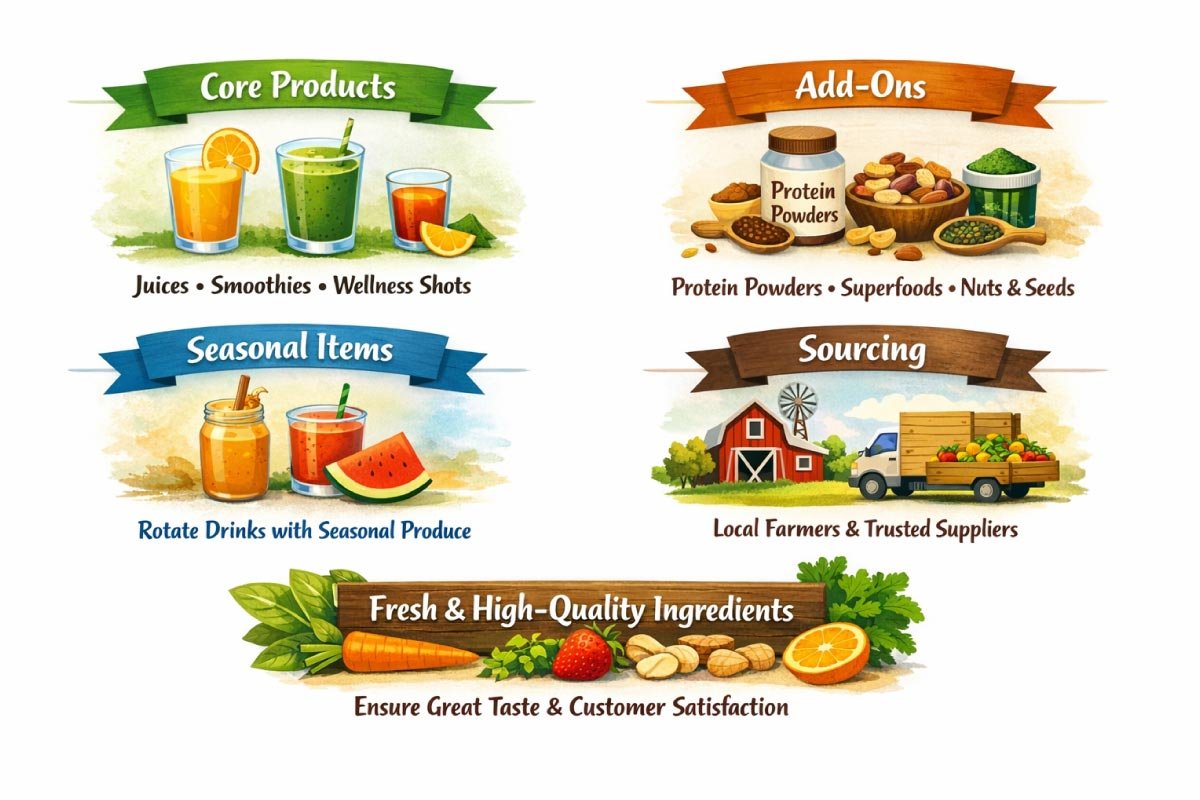
Partnering with reliable suppliers ensures consistent quality, flavor, and supply, supporting both customer satisfaction and efficient, cost-effective operations.
-
Core products: Juices, smoothies, wellness shots.
-
Add-ons: Protein powders, superfoods, nuts, and seeds.
-
Seasonal items: Rotate drinks based on available produce.
-
Sourcing: Partner with local farmers or trusted distributors for fresh ingredients.
Using fresh, high-quality ingredients ensures taste and customer satisfaction.
Table 4: Juice Bar Menu Structure
| Category | Example Items | Notes |
|---|---|---|
| Fresh Juices | Orange, carrot, green detox | Cold-pressed preferred |
| Smoothies | Berry blend, tropical, protein smoothie | Can include vegan protein |
| Wellness Shots | Ginger, wheatgrass, turmeric | Small, concentrated, immunity-boosting |
| Seasonal Specials | Pumpkin spice smoothie, summer melon juice | Rotate based on produce availability |
| Add-ons | Chia seeds, spirulina, honey, almond milk | Optional for customization |
You May Also Like:
How to Start a Cosmetic Shop Business In 2026: A Complete Guide
8. Equipment and Setup
Selecting the right equipment and setting up your juice bar efficiently is crucial for smooth operations.
High-quality blenders, refrigerators, and display units ensure consistency and freshness, while a well-organized layout maximizes workflow.
Proper setup enhances productivity, reduces waste, and provides customers with a seamless, enjoyable experience.
-
Juicers and blenders
-
Refrigeration units
-
Display refrigerators
-
Prep tables and storage
-
POS system for orders and payments
-
Cups, straws, and takeaway containers
Proper setup improves workflow, reduces waste, and enhances customer experience.
9. Hiring and Training Staff
Hiring and training the right staff is essential for the success of your juice bar.
Competent, motivated employees ensure smooth operations, maintain product quality, and provide excellent customer service.
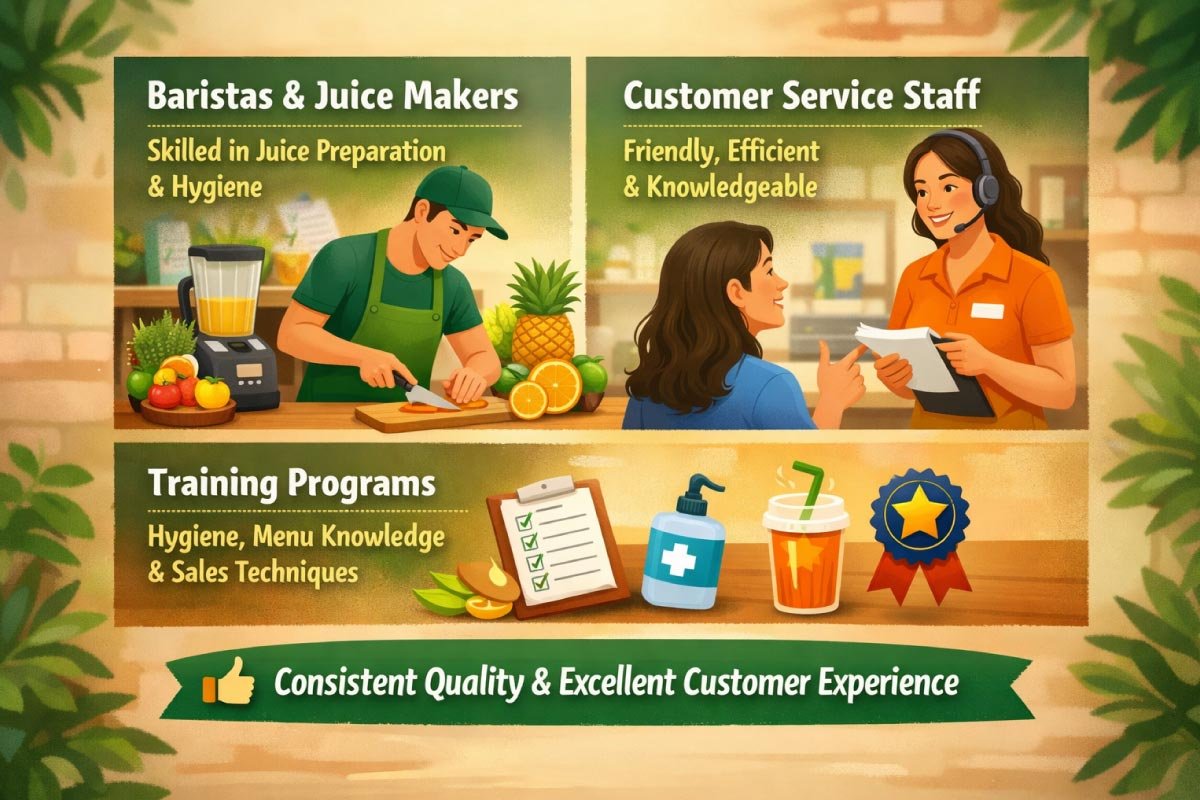
Comprehensive training equips your team with knowledge of recipes, hygiene standards, and service skills, creating a welcoming environment that encourages repeat business.
-
Baristas and juice makers: Skilled in juice preparation and hygiene.
-
Customer service staff: Friendly, efficient, and knowledgeable.
-
Training programs: Hygiene, menu knowledge, and sales techniques.
A well-trained team ensures consistency in product quality and customer experience.
You May Also Like:
10. Marketing Your Juice Bar
-
Social media presence: Instagram, TikTok, and Facebook.
-
Local collaborations: Gyms, yoga studios, and wellness centers.
-
Promotions: Loyalty programs, seasonal discounts, and tastings.
-
Online listings: Google Business Profile, local directories, and delivery apps.
Consistent branding and community engagement help establish a loyal customer base.
11. Managing Finances and Operations
Managing finances and operations is crucial for the smooth running of your juice bar.
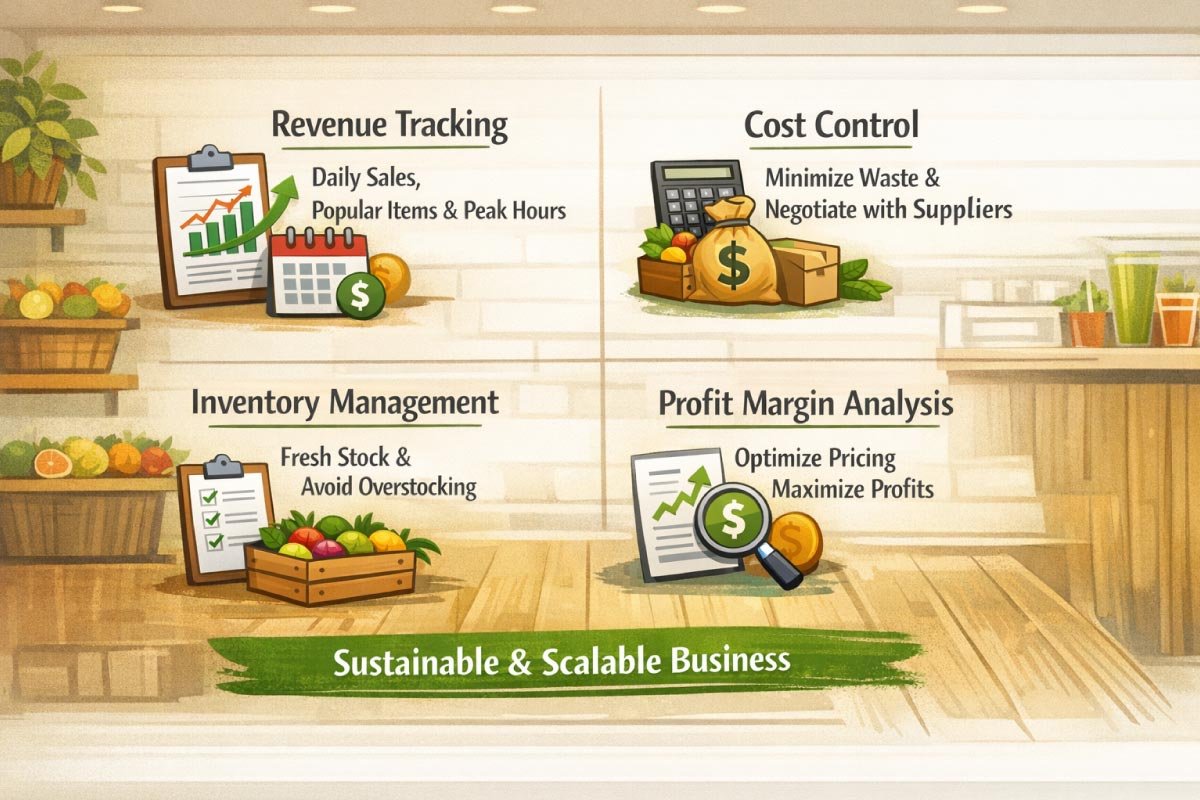
Tracking expenses, revenue, and key performance metrics ensures profitability, while efficient operational processes maintain quality and customer satisfaction.
Effective management helps identify growth opportunities, reduce costs, and keep your business sustainable and competitive.
-
Revenue tracking: Monitor daily sales, popular items, and peak hours.
-
Cost control: Minimize wastage and negotiate with suppliers.
-
Inventory management: Ensure fresh ingredients while avoiding overstocking.
-
Profit margin analysis: Identify high-margin products and optimize pricing.
Efficient management keeps the business sustainable and scalable.
You May Also Like:
12. Expanding Your Juice Bar Business
Expanding your juice bar business requires strategic planning, market analysis, and operational efficiency.
By exploring new locations, diversifying your menu, and enhancing marketing efforts, you can attract more customers and increase revenue.
Thoughtful growth ensures brand consistency, strengthens customer loyalty, and positions your juice bar for long-term success.
-
Multiple outlets: Open branches in other high-traffic areas.
-
Franchising: Expand through franchise partnerships.
-
Online delivery: Partner with food delivery apps.
-
Product diversification: Introduce packaged juices or smoothies.
Expansion allows you to tap into new markets and increase brand recognition.
Conclusion
Starting a juice bar business is a rewarding venture for entrepreneurs passionate about health, nutrition, and customer service. By carefully planning your concept, conducting market research, creating a detailed business plan,
and executing effective marketing, you can establish a profitable and sustainable juice bar. Remember, quality, freshness, and excellent customer experience are the keys to long-term success.
With dedication, creativity, and strategic execution, your juice bar can become a go-to destination for health-conscious consumers in your community.