
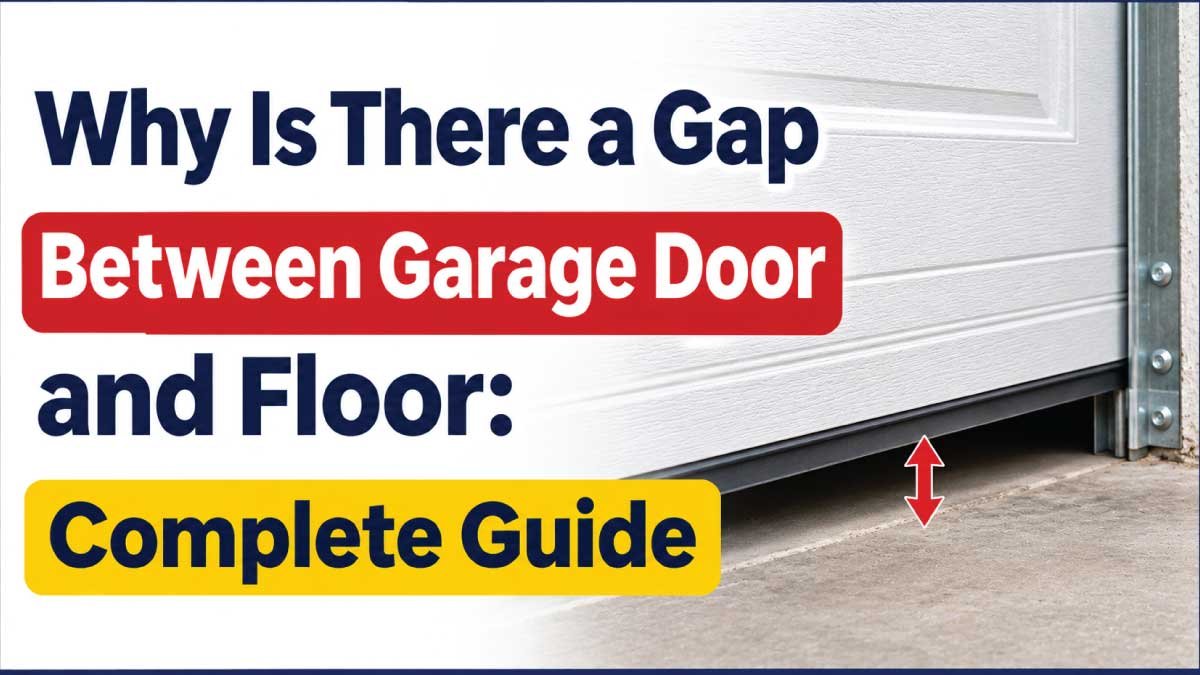
A gap between a garage door and floor can allow cold air, rainwater, dust, insects, and rodents to enter your garage. Even a small opening along the bottom of the door can affect indoor temperatures, increase moisture problems, and make your garage less comfortable. This issue is common in both older and newer garages, but the underlying cause can vary.
A garage door may leave a gap because its bottom weather seal is worn, the concrete floor is uneven, the door is not properly aligned, or the closing mechanism prevents it from reaching the floor correctly. Sometimes, the door itself is damaged or the garage floor has settled over time.
Identifying the actual cause is important because replacing the bottom seal will not solve a problem caused by uneven concrete or incorrect door alignment. In this guide, you will learn why there is a gap between your garage door and floor, how to identify the source, which repairs you can safely perform yourself, and when professional service is necessary.
Common Signs and Symptoms
A gap between a garage door and floor is not always noticeable from a distance. Some openings appear only at one corner, while others extend across the entire bottom edge. Paying attention to where the gap appears and how the door behaves during closing can help identify the underlying problem before it becomes more serious.
Common signs include:
- Visible daylight: You can see sunlight coming through underneath the closed garage door.
- Water entering the garage: Rainwater flows underneath the door, especially during heavy rainfall.
- Cold air coming inside: The garage feels colder during winter because outside air enters through the opening.
- Dust and dirt accumulation: Fine dust, leaves, and outdoor debris collect near the garage entrance.
- Insects or rodents entering: Small pests find their way inside through openings beneath the door.
- Uneven bottom clearance: One side of the garage door touches the floor while the opposite side remains elevated.
- Worn bottom rubber: The weather seal appears cracked, flattened, loose, or separated from the door.
- Door stops before reaching the floor: The opener closes the door, but a small opening remains underneath.
- Water stains near the entrance: Repeated moisture exposure leaves marks on the concrete floor or nearby walls.
The location and shape of the gap provide useful clues. A uniform opening often indicates a seal or closing-position problem, while a gap on only one side may point toward uneven flooring or door alignment.
How a Garage Door Normally Works
Understanding normal garage door operation makes it easier to recognize why a gap develops. A properly installed sectional garage door travels vertically along its tracks before moving horizontally beneath the ceiling. Its bottom edge should meet the garage floor evenly when fully closed, allowing the weather seal to compress against the concrete.
The bottom weather seal is usually made from flexible rubber or vinyl. It attaches to a retainer along the lower edge of the door and helps close small irregularities between the door and floor.
Other important components include:
- Tracks: Guide the rollers and control the door’s movement.
- Rollers: Allow the door sections to travel smoothly.
- Springs: Counterbalance the door’s weight.
- Cables: Help lift and lower the door evenly.
- Garage door opener: Provides powered opening and closing.
- Bottom seal: Blocks air, water, dust, and pests from entering.
When these components work correctly, the door closes smoothly and its bottom seal makes consistent contact with the floor.
Most Common Reasons This Problem Happens
Several mechanical and structural problems can create an opening underneath a garage door. Some involve inexpensive components, such as weather stripping, while others require adjustments to the door system or garage floor. Understanding these causes helps prevent unnecessary replacement of parts that are still working properly.
Worn or Damaged Bottom Weather Seal
The bottom weather seal gradually deteriorates because of temperature changes, sunlight, moisture, friction, and regular door movement.
Common symptoms include:
- Cracked or brittle rubber.
- Flattened sections that no longer touch the floor.
- Missing pieces along the bottom edge.
- Water or air entering beneath the door.
Inspect the entire length of the seal. If it looks damaged or no longer maintains contact with the floor, replacement is usually necessary.
Uneven Garage Floor
An uneven concrete floor is another frequent reason for a bottom gap. Concrete can develop low spots, slopes, cracks, or settlement over time.
For example, the middle of the garage floor may be slightly lower than both corners. When the door closes, its bottom seal touches the outer edges but leaves an opening in the center.
Check the floor with a long straightedge or level to identify low areas.
Incorrect Garage Door Alignment
A door that sits crooked inside its opening may leave different-sized gaps along the bottom. This can happen because of damaged rollers, track problems, loose mounting hardware, or an imbalance in the lifting system.
Look for uneven spacing between the door and its side tracks. If one side hangs lower than the other, professional inspection may be necessary.
Incorrect Opener Closing Settings
Some garage door openers use adjustable travel limits to determine how far the door moves before stopping.
If the closing limit is set incorrectly, the door may stop before its bottom seal reaches the floor. This can create a consistent gap even when the weather seal is in good condition.
A door that reverses immediately after touching the floor may also have an incorrect force or travel setting.
Loose or Damaged Bottom Seal Retainer
The retainer holds the rubber weather seal in position. If it becomes bent, loose, corroded, or damaged, the seal may hang unevenly or pull away from the door.
Inspect the metal or plastic channel along the bottom edge. Pay attention to missing fasteners, distorted sections, and loose seal material.
Damaged Garage Door Panels
Bent or damaged door sections can prevent the bottom edge from sitting evenly. This sometimes happens after an accidental vehicle impact or repeated stress on the door.
Look for dents, creases, separated joints, or visible bending near the bottom panel.
Worn Rollers or Track Problems
Worn rollers and damaged tracks can interfere with smooth door movement. The door may tilt, bind, or stop before reaching its normal closing position.
Listen for grinding sounds and observe whether the door moves unevenly. Damaged tracks and rollers should be inspected before attempting further operation.
Safety Precautions Before Troubleshooting
Garage doors are heavy mechanical systems containing components under significant tension. Even a simple-looking gap can be associated with a serious spring, cable, or alignment problem. Before inspecting the door, understand which tasks are safe for homeowners and which require trained technicians.
Follow these precautions:
- Keep children and pets away from the garage door during inspection.
- Never stand underneath a partially open or unsupported door.
- Do not touch torsion springs, extension springs, or lifting cables.
- Never loosen bottom brackets, as they may be connected to tensioned cables.
- Avoid adjusting track brackets while the door is under load.
- Disconnect the opener’s electrical power before performing appropriate maintenance.
- If manually operating the door, follow the manufacturer’s instructions for safely using the emergency release.
- Never force a door that feels unusually heavy or becomes stuck.
- Keep your hands away from rollers, hinges, and moving joints.
- Do not bypass safety sensors or automatic reversal features.
Important: If the door is crooked, has a broken cable, or appears unstable, stop operating it and contact a qualified garage door technician.
Tools Required
Most basic inspections and weather-seal replacements require only a few household tools. However, the tools needed depend on the actual cause of the gap. Avoid using repair tools on springs, cables, or loaded door components because these parts can cause serious injuries.
| Tool | Purpose |
|---|---|
| Flashlight | Locate openings and inspect the bottom seal |
| Measuring tape | Measure the door width and gap size |
| Long level | Check floor unevenness |
| Straightedge | Identify low or raised concrete areas |
| Screwdriver | Remove suitable weather-seal retainers |
| Pliers | Handle appropriate small clips and fasteners |
| Replacement weather seal | Restore the bottom barrier |
| Cleaning cloth | Remove dirt from the retainer |
| Mild detergent | Clean the bottom edge before installation |
| Work gloves | Protect hands during basic inspection |
Step-by-Step Troubleshooting Guide
A systematic inspection helps determine whether the problem comes from the weather seal, floor surface, opener, or door hardware. Start with simple visual checks before considering any adjustments. Do not dismantle the lifting system or attempt to correct mechanical problems without understanding the associated safety risks.
Step 1: Close the Garage Door Completely
Use the normal opener controls to close the door. Observe its movement and check whether it stops smoothly.
- Inspect: Watch the door as it approaches the floor.
- Why it matters: A door that stops early may have a closing-limit problem.
- Expected result: The door should close fully without reversing or binding.
- Next action: If it stops prematurely, inspect the opener settings and arrange professional service if necessary.
Step 2: Locate the Gap
Look along the entire bottom edge of the closed door.
- Inspect: Check the center, left corner, and right corner.
- Why it matters: Gap location helps distinguish floor problems from seal or alignment problems.
- Expected result: The bottom seal should make reasonably consistent contact.
- Next action: Record whether the opening is uniform, localized, or limited to one side.
Step 3: Examine the Bottom Weather Seal
Inspect the rubber or vinyl strip for visible damage.
- Inspect: Look for cracks, flattened areas, missing sections, and loose edges.
- Why it matters: A damaged seal cannot close the opening effectively.
- Expected result: The seal should remain flexible and properly seated.
- Next action: Replace it if it has deteriorated.
Step 4: Check the Concrete Floor
Use a long level or straightedge to examine the floor beneath the door.
- Inspect: Look for dips, raised sections, cracks, and uneven surfaces.
- Why it matters: A low spot can leave an opening even when the door is correctly installed.
- Expected result: The floor should provide reasonably consistent contact with the seal.
- Next action: Consider a compatible garage door threshold or professional concrete repair if necessary.
Step 5: Inspect the Retainer
Look along the channel holding the bottom seal.
- Inspect: Check for loose sections, corrosion, bending, or missing fasteners.
- Why it matters: A damaged retainer can prevent proper seal positioning.
- Expected result: The channel should remain straight and secure.
- Next action: Replace or repair damaged components using an appropriate method.
Step 6: Observe Door Alignment
Stand inside the garage and look at the door’s position within the opening.
- Inspect: Compare the spacing on both sides and check for visible tilting.
- Why it matters: Uneven positioning may indicate track, roller, cable, or spring problems.
- Expected result: The door should travel evenly without binding.
- Next action: Stop using a visibly crooked or unstable door and arrange professional inspection.
Step 7: Check the Opener’s Closing Position
If the door and floor appear level and the seal is intact, the opener’s travel settings may need attention.
- Inspect: Check the manufacturer’s instructions for travel-limit settings.
- Why it matters: Incorrect settings can prevent the door from reaching its intended closed position.
- Expected result: The door should close without leaving an unintended opening or reversing.
- Next action: Make only manufacturer-approved adjustments if the system is otherwise operating normally. Contact a technician if the cause is unclear.
Also Read:
How to Install Garage Door Side Weather Stripping: Complete Guide
Quick Diagnosis Table
Different gap patterns often point toward different underlying problems. Comparing the visible symptoms with common causes can help narrow down the repair before purchasing replacement parts. Use this table as an initial diagnosis rather than assuming that every opening requires a new weather seal.
| Symptom | Possible Cause | Recommended Solution |
|---|---|---|
| Gap across the entire bottom | Worn weather seal | Replace bottom seal |
| Gap in the center | Uneven concrete floor | Install a suitable threshold or repair floor |
| Gap on one side | Door misalignment | Arrange professional adjustment |
| Door stops above the floor | Incorrect travel limit | Check opener settings |
| Seal hangs loosely | Damaged retainer | Repair or replace retainer |
| Door closes unevenly | Track or roller damage | Professional inspection |
| Gap after vehicle impact | Bent door panel | Repair or replace damaged section |
| Water enters during rain | Poor floor contact or drainage | Improve sealing and drainage |
How to Fix Each Common Cause
Once you identify the source of the gap, choose a repair that addresses the actual problem. Replacing a weather seal is generally manageable for homeowners, while correcting door alignment or repairing structural concrete may require specialized knowledge and equipment.
Replace the Bottom Weather Seal
If the existing rubber is cracked, flattened, or missing, installing a new seal is often the simplest solution.
- Measure the width of the garage door.
- Identify the existing seal profile and retainer type.
- Purchase a compatible replacement seal.
- Follow the manufacturer’s instructions to release the old seal.
- Clean the retainer channel thoroughly.
- Install the new seal evenly without stretching it excessively.
- Check that both ends are properly positioned.
- Close the door and inspect the contact along the floor.
Do not assume that every garage door uses the same seal design. Some use a T-shaped or bulb-style seal, while others use different channel configurations.
Also Read:
Best Garage Door Side Seals for Uneven Door Frames: Complete Guide
Install a Garage Door Threshold
A garage door threshold can help close small openings caused by minor floor irregularities. It is commonly made from durable rubber or a similar flexible material.
Before installation, clean and dry the concrete surface. Measure the opening and select a threshold compatible with your door and floor. Install it according to the manufacturer’s adhesive and curing instructions.
A threshold can also help limit rainwater entering the garage, but it should not block necessary drainage or create a trip hazard.
Repair an Uneven Concrete Floor
If the floor has a significant dip or raised area, replacing the bottom seal may not solve the problem.
Minor surface imperfections may be corrected using an appropriate concrete repair product. Larger settlement problems may require professional concrete leveling or resurfacing.
Avoid applying ordinary household caulk across a large floor depression. It is not designed to provide a durable structural correction.
Correct a Loose Seal Retainer
A damaged retainer should be repaired or replaced with a compatible component. Minor issues involving accessible, non-loaded fasteners may be suitable for DIY maintenance.
However, if the retainer is attached to damaged door panels or the bottom brackets are involved, professional repair is safer.
Address Opener Closing Problems
If the opener stops the door too early, consult the manufacturer’s instructions for the correct travel-limit procedure.
Never increase the closing force simply to push the door harder against the floor. Excessive force can create a safety hazard, damage the door, or interfere with automatic reversal protection.
Also Read:
How to Stop Cold Air Coming Through Garage Door Sides: Complete Guide
Advanced Troubleshooting
Some gaps remain even after replacing the weather seal and checking the concrete. These situations require a closer examination of the door’s mechanical condition. Understanding less common failures can help homeowners recognize when a seemingly simple sealing problem is actually part of a larger garage door malfunction.
Consider these possibilities:
- Spring imbalance: A damaged or incorrectly balanced spring can affect door movement and closing behavior. Spring adjustments require professional service.
- Cable problems: A loose, frayed, or damaged lifting cable can cause one side of the door to sit lower.
- Track deformation: Bent tracks can prevent rollers from traveling correctly.
- Structural movement: Settlement around the garage opening can change the door’s alignment.
- Panel deformation: Repeated stress or impact can distort the lower section.
- Sensor or control problems: Certain opener faults can interrupt normal closing, although they do not directly create a physical floor gap.
If the door behaves differently when operated manually, the opener or its settings may be involved. However, manual testing should only be performed according to the manufacturer’s instructions and when the door is stable and safe to release.
When Repair Is Not Worth It
Not every garage door problem justifies replacing the entire system. A worn bottom seal or damaged retainer is usually inexpensive to repair. However, extensive corrosion, repeated mechanical failures, and major structural damage may make replacement a more practical long-term decision.
Consider replacement when:
- Multiple door panels are severely damaged.
- The door has extensive rust or structural deterioration.
- The track and lifting system require extensive repairs.
- Compatible replacement parts are difficult to obtain.
- Repair costs approach the cost of a suitable replacement door.
- The door repeatedly develops alignment problems because of serious structural damage.
Compare the complete repair estimate with the cost of a new door, including installation, hardware, and disposal. A professional inspection can help determine whether replacement is genuinely necessary.
Preventive Maintenance Tips
Regular maintenance helps keep the bottom seal flexible, reduces unnecessary wear, and allows homeowners to identify developing problems early. A few simple inspections throughout the year can prevent minor sealing issues from becoming expensive repairs or allowing repeated water intrusion.
Follow these maintenance practices:
- Inspect the bottom weather seal every few months.
- Clean dirt and debris from the retainer channel.
- Check for visible cracks or missing rubber sections.
- Keep the concrete area near the entrance clean.
- Inspect the door for dents, corrosion, and loose visible hardware.
- Watch for uneven movement during opening and closing.
- Keep garage door tracks free from obstructions.
- Follow the manufacturer’s lubrication recommendations.
- Test the automatic reversal and safety sensors according to the owner’s manual.
- Address water drainage problems around the garage entrance.
- Schedule professional inspections if the door becomes noisy, crooked, or difficult to operate.
Avoid applying grease to the tracks unless the manufacturer specifically recommends it. Lubricate only the components identified in the maintenance instructions.
Common Mistakes to Avoid
Incorrect repairs can make a small gap worse or create additional mechanical problems. Homeowners sometimes focus on covering the opening without checking why it developed. Choosing the right repair method is more important than simply adding extra material beneath the door.
Avoid these common mistakes:
- Installing an incompatible weather seal: Different retainers require different seal profiles.
- Ignoring uneven concrete: A new rubber strip cannot correct a significant floor depression.
- Using excessive closing force: This may damage the door or compromise safety features.
- Filling the gap with random materials: Wood, cardboard, and unsuitable foam are not durable weather-sealing solutions.
- Ignoring damaged tracks: Continuing to operate a misaligned door can increase damage.
- Replacing the entire door unnecessarily: Many bottom-gap problems require only a small component replacement.
- Adjusting springs yourself: These components can cause severe injuries.
- Blocking drainage: An improperly installed threshold may trap water inside the garage.
When to Call a Professional
Some garage door problems require more than basic maintenance. If the door is heavy, crooked, unstable, or makes unusual mechanical noises, a qualified technician can inspect the lifting system and identify the underlying fault without exposing you to unnecessary risks.
Call a professional when:
- A torsion or extension spring is broken.
- A lifting cable is loose, frayed, or damaged.
- The door hangs unevenly or appears unstable.
- Tracks are bent or pulling away from their supports.
- The bottom brackets or lifting hardware require adjustment.
- The door reverses unexpectedly or refuses to close correctly.
- Opener adjustments do not resolve the problem.
- Concrete settlement has significantly changed the garage opening.
- The door has suffered major impact damage.
A technician can also check the door balance, inspect the rollers, evaluate the opener settings, and verify that safety features operate correctly.
Estimated Repair Costs
Garage door repair costs depend on the door type, material, damage severity, replacement parts, and local labor rates. The following figures are approximate US-dollar estimates intended for general budgeting. Actual prices may differ considerably by location and service provider.
| Repair | Estimated Cost | DIY or Professional |
|---|---|---|
| Replace bottom weather seal | $20–$80 | DIY |
| Replace seal retainer | $30–$120 | DIY or Professional |
| Install garage door threshold | $25–$100 | DIY |
| Minor concrete surface repair | $30–$150 | DIY or Professional |
| Concrete leveling | $300–$1,000+ | Professional |
| Roller replacement | $100–$250 | Professional |
| Track repair or replacement | $125–$350 | Professional |
| Door alignment service | $100–$250 | Professional |
| Spring replacement | $150–$400 | Professional |
| Damaged panel replacement | $250–$800+ | Professional |
These estimates are not fixed quotations. Ask for an itemized estimate before approving major work, particularly when the technician recommends replacing multiple components.
Frequently Asked Questions
Homeowners often have similar questions when they notice an opening beneath their garage door. The following answers address common concerns about acceptable clearances, weather sealing, water intrusion, and repair options so you can make a more informed decision.
Should There Be a Gap Between a Garage Door and the Floor?
A garage door should generally close with its bottom weather seal making consistent contact with the floor. A small amount of flexibility in the rubber seal is normal, but a visible opening that allows air, water, or pests inside indicates a sealing problem. The goal is proper contact, not forcing the door against the concrete.
How Much Gap Is Acceptable Under a Garage Door?
There is no universal acceptable gap measurement because garage door designs, seal profiles, and installation requirements vary. The bottom seal should accommodate minor floor irregularities while maintaining contact across the opening. If you can see daylight or notice water entering underneath, inspect the seal and floor rather than relying on a specific measurement.
Why Does My Garage Door Have a Gap Only in the Middle?
A center gap commonly develops when the concrete floor dips beneath the middle of the garage entrance. The door may touch the floor at both ends while leaving an opening in the center. A damaged or incorrectly sized weather seal can produce a similar symptom, so inspect both the seal and concrete before choosing a repair.
Can a New Weather Seal Fix a Garage Door Gap?
Yes, a new weather seal can correct gaps caused by cracked, flattened, missing, or deteriorated rubber. However, it will not solve serious floor irregularities, bent panels, damaged tracks, or incorrect door alignment. Check the underlying cause before purchasing a replacement so you do not spend money on a repair that cannot solve the problem.
Why Does Rainwater Come Under My Garage Door?
Rainwater can enter when the bottom seal does not contact the concrete properly, the floor slopes toward the garage, or exterior drainage directs water toward the entrance. Inspect the seal and surrounding driveway. A suitable threshold may help with minor openings, but persistent water intrusion may require drainage improvements or concrete repair.
Can I Put a Rubber Strip Under My Garage Door?
You can install a compatible garage door bottom seal or a floor-mounted rubber threshold to close an opening. However, these products serve different purposes and must be installed according to their manufacturers’ instructions. Avoid attaching random rubber materials beneath the door because they may interfere with closing, drainage, or normal operation.
Why Does My Garage Door Touch the Floor on One Side but Not the Other?
Uneven contact on opposite sides may indicate a sloping floor, incorrect door alignment, damaged rollers, or a lifting-system problem. Compare the floor surface and door position carefully. If the door looks crooked or moves unevenly, stop operating it and arrange professional inspection rather than attempting to adjust the cables or springs.
Will a Garage Door Threshold Stop Water From Entering?
A properly selected and installed garage door threshold can reduce water entering through small openings beneath the door. However, it cannot correct major flooding, poor exterior drainage, or significant floor settlement. Choose a threshold compatible with your door and ensure it does not obstruct water drainage or create an unsafe raised edge.
How Often Should I Replace My Garage Door Bottom Seal?
There is no fixed replacement schedule because weather exposure, material quality, and frequency of use affect seal life. Inspect it several times a year and replace it when it becomes brittle, cracked, flattened, or detached. A seal that remains flexible and makes consistent floor contact does not need replacement simply because of its age.
Final Thoughts
A gap between a garage door and floor can result from several problems, including a worn bottom weather seal, uneven concrete, damaged retainers, incorrect opener settings, or mechanical misalignment. Identifying the actual cause is the most important part of choosing an effective repair.
Start with a visual inspection of the entire bottom edge. Check the rubber seal, measure the opening, and examine the concrete for dips or raised areas. If the seal is damaged, replacing it with a compatible product may solve the problem without expensive repairs. A suitable garage door threshold can also help with minor floor irregularities and water intrusion.
However, do not overlook mechanical warning signs. A crooked door, damaged cable, broken spring, or bent track requires professional attention. Never attempt to adjust tensioned lifting components yourself.
Regular maintenance, proper drainage, and timely weather-seal replacement can help prevent future gaps. Most importantly, make repairs based on the actual cause rather than simply covering the opening. A properly functioning garage door should close smoothly and provide a reliable barrier against outdoor weather, dust, and pests.