
The food truck industry has exploded in recent years, combining mobility with culinary creativity.
If you love cooking, interacting with people, and running your own business, a food truck can be a perfect venture.
Unlike traditional restaurants, food trucks require lower initial investments, offer flexibility, and allow you to test your concept in different locations.
However, success in this field requires careful planning, strategic execution, and dedication. This guide will walk you step-by-step through starting your food truck business.
Step 1: Conduct Market Research
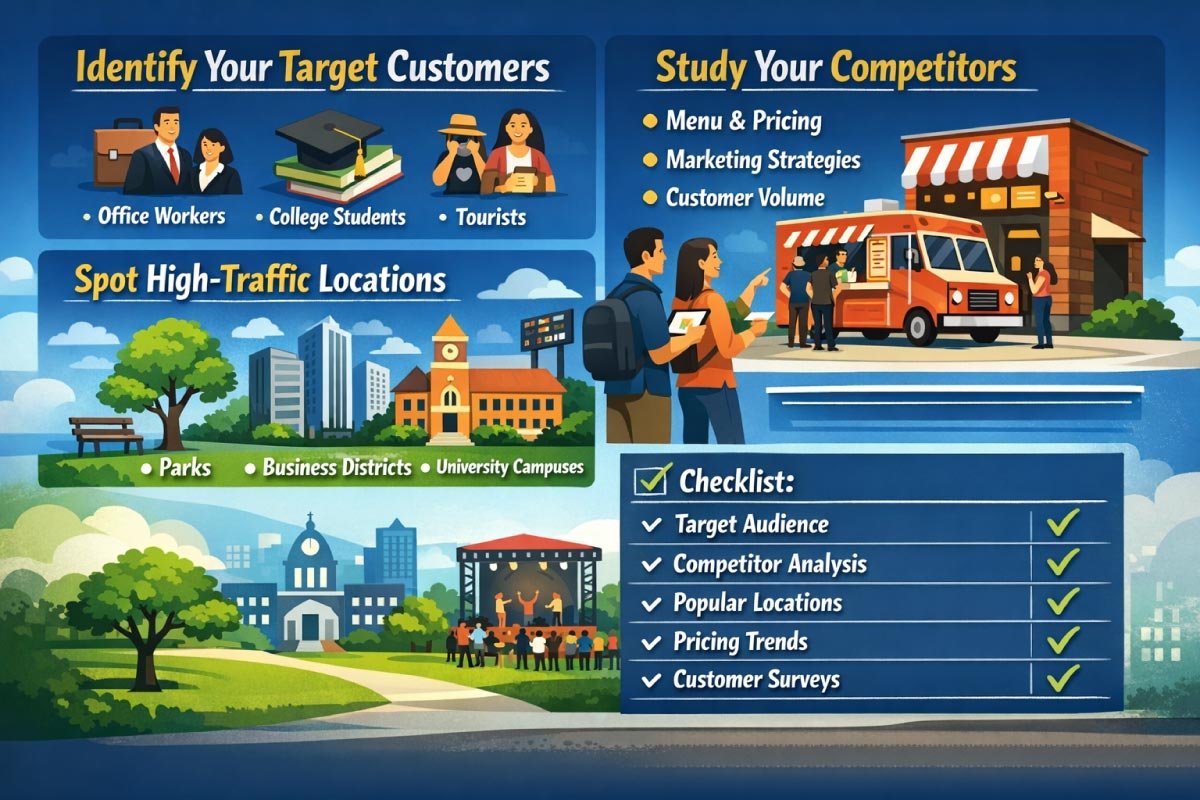
Key Steps for Market Research:
Identify your target customers – Are you aiming for office workers, college students, tourists, or families? Understanding your audience helps tailor your menu, pricing, and locations.
Study your competitors – Visit existing food trucks and restaurants serving similar cuisine. Observe their menu, pricing, marketing strategies, and customer volume.
Spot high-traffic locations – Parks, business districts, university campuses, and event venues can generate consistent foot traffic.
Market Research Checklist
| Task | Details | Status (✓/✗) |
|---|---|---|
| Identify target audience | Define age, income, and lifestyle of customers | |
| Analyze competitors | List nearby food trucks and similar restaurants | |
| Evaluate popular locations | Research high-traffic areas and event spots | |
| Study pricing trends | Compare menu prices and portion sizes | |
| Survey potential customers | Collect feedback on food preferences and demand |
Step 2: Define Your Concept and Menu
A strong concept helps your food truck stand out. It defines your brand, menu style, and the customer experience.
You could focus on niche cuisines, fusion foods, desserts, or even healthy options.
Considerations for Menu Planning:
-
Keep the menu simple but unique – Limited items reduce inventory complexity and speed up service.
-
Highlight signature items – Special dishes become your truck’s selling point.
-
Adapt to food trends – Vegan, keto, or ethnic fusion can attract niche audiences.
-
Ensure portion sizes and pricing are profitable yet competitive.
Table 2: Menu Planning Template
| Dish Name | Description | Ingredients | Price | Prep Time |
|---|---|---|---|---|
| Gourmet Burger | Beef patty, cheddar, special sauce | Beef, cheese, buns, sauce | $8 | 10 mins |
| Veggie Wrap | Mixed veggies with hummus | Lettuce, carrot, hummus, tortilla | $6 | 7 mins |
| Fusion Taco | Asian-inspired taco | Chicken, slaw, teriyaki sauce | $7 | 8 mins |
| Sweet Treat | Dessert option | Chocolate, cream, pastry | $4 | 5 mins |
Step 3: Develop a Solid Business Plan
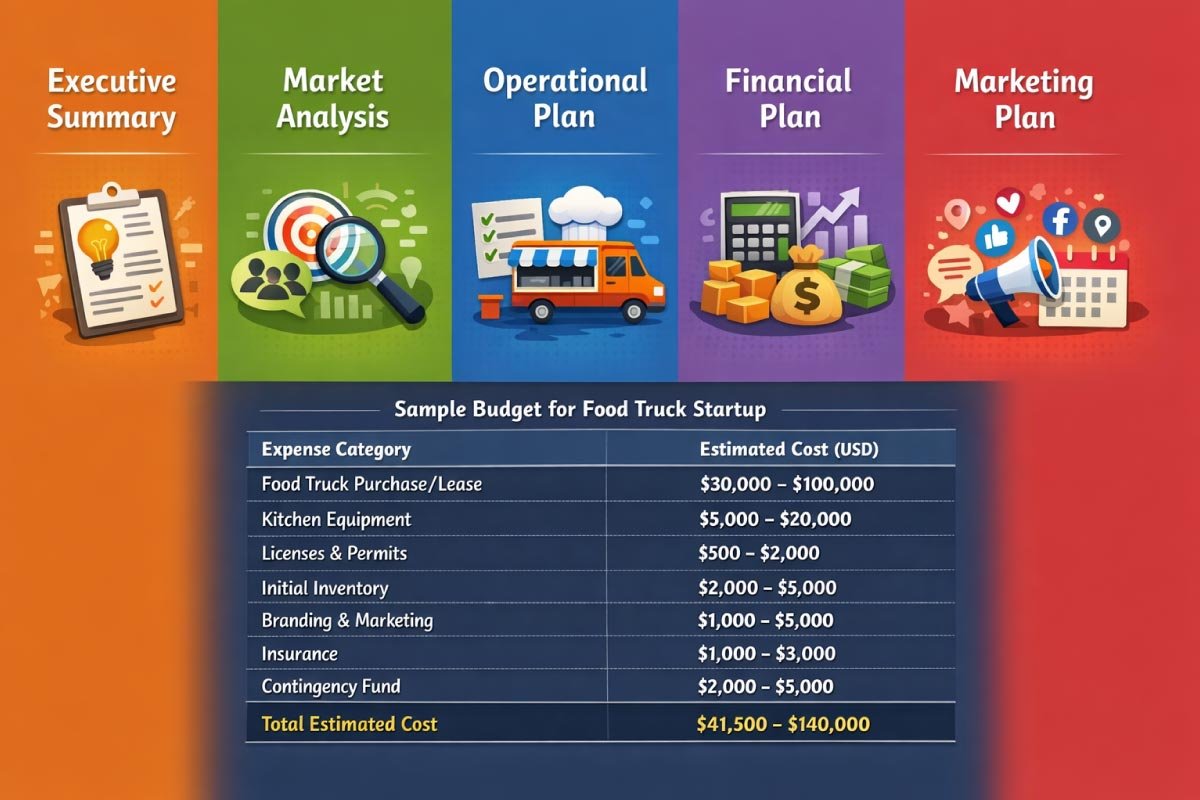
Components of a Food Truck Business Plan:
-
Executive Summary – A brief overview of your concept, target market, and unique selling proposition.
-
Market Analysis – Insights from your market research, competitor analysis, and customer demographics.
-
Operational Plan – Daily operations, suppliers, food preparation, and staffing.
-
Financial Plan – Budget for startup costs, projected revenue, and break-even analysis.
-
Marketing Plan – Branding, promotions, social media presence, and events strategy.
Table 3: Sample Budget for Food Truck Startup
| Expense Category | Estimated Cost (USD) |
|---|---|
| Food Truck Purchase/Lease | $30,000 – $100,000 |
| Kitchen Equipment | $5,000 – $20,000 |
| Licenses & Permits | $500 – $2,000 |
| Initial Inventory | $2,000 – $5,000 |
| Branding & Marketing | $1,000 – $5,000 |
| Insurance | $1,000 – $3,000 |
| Contingency Fund | $2,000 – $5,000 |
| Total Estimated Cost | $41,500 – $140,000 |
You May Also Like:
Step 4: Handle Legal Requirements and Licensing
“Handle Legal Requirements and Licensing” emphasizes the necessity of complying with laws and regulations to operate your business smoothly.
Securing permits, licenses, and adhering to health and safety standards protects your business from legal issues, builds credibility, and ensures a trustworthy, professional presence in the market.
Essential Legal Steps:
-
Register your business – Decide whether to operate as a sole proprietorship, LLC, or corporation.
-
Get a food truck license – Local authorities usually require a mobile food vendor permit.
-
Comply with health and safety codes – Your truck and food prep must pass inspections.
-
Obtain liability insurance – Protect your business against accidents, theft, or property damage.
-
Check zoning laws – Certain areas may restrict where food trucks can operate.
Step 5: Purchase and Customize Your Food Truck
“Purchase and Customize Your Food Truck” focuses on acquiring the right vehicle and tailoring it to fit your brand and operational needs.
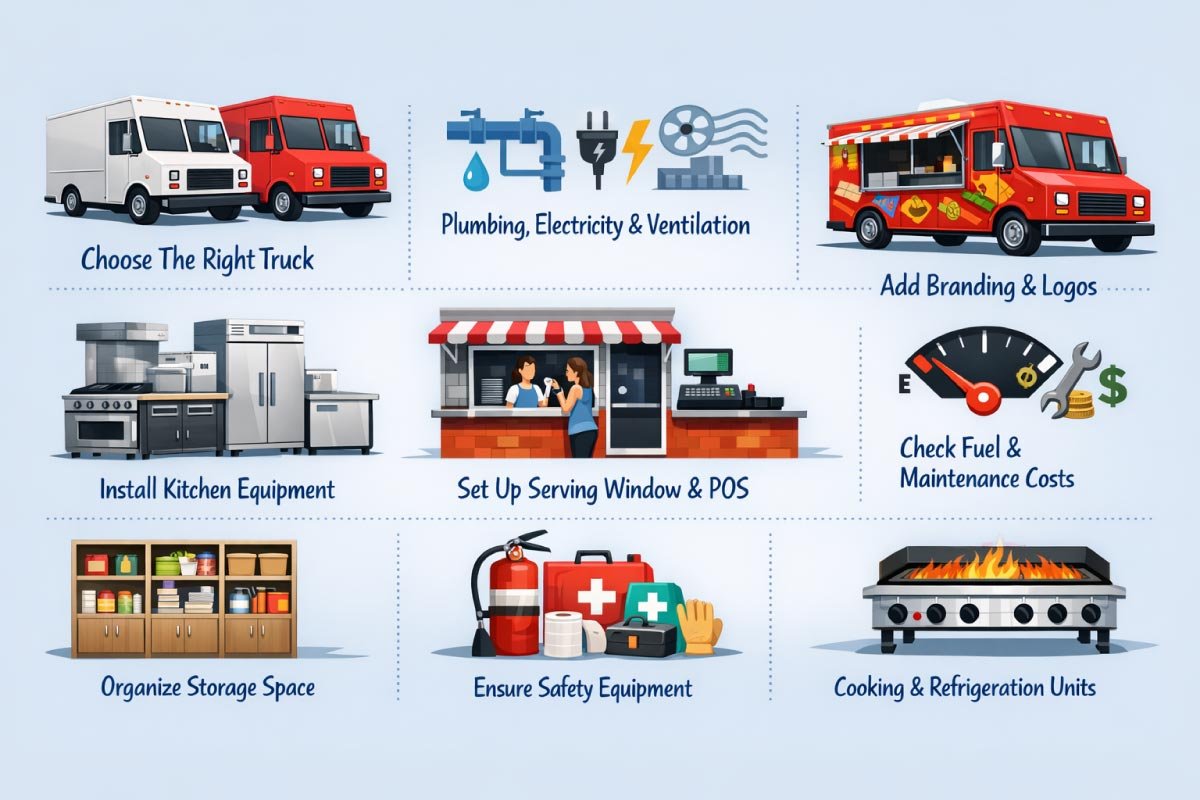
From layout design to equipment setup, customization ensures efficiency, safety, and a unique customer experience, laying a strong foundation for a successful and memorable mobile food business.
Truck Selection Tips:
-
Choose a truck with adequate space for kitchen equipment and storage.
-
Ensure plumbing, electricity, and ventilation meet your menu requirements.
-
Customize the truck’s exterior with branding, colors, and logos.
-
Consider fuel efficiency and maintenance costs to reduce long-term expenses.
Table 4: Food Truck Equipment Checklist
| Equipment | Purpose | Notes |
|---|---|---|
| Commercial stove/grill | Cooking main dishes | Propane or electric |
| Refrigerator & freezer | Food storage | Required for perishables |
| Prep counters & sinks | Food preparation and cleaning | Stainless steel preferred |
| Serving window & cash register | Customer service & payment collection | Include POS system |
| Storage cabinets | Utensils, ingredients, packaging | Maximize space |
| Fire extinguisher & safety gear | Emergency preparedness | Mandatory |
Step 6: Hire and Train Staff
“Hire and Train Staff” highlights the importance of building a skilled, motivated team.
By recruiting the right talent and providing thorough training, businesses ensure high-quality service, operational efficiency, and a positive work culture.
Well-trained staff are key to customer satisfaction, productivity, and long-term business success.
Tips for Staffing:
-
Hire employees with culinary skills and customer service experience.
-
Train staff on food safety, cooking procedures, and hygiene standards.
-
Maintain a flexible schedule, as food trucks often operate late nights, weekends, and events.
-
Cross-train staff to manage both kitchen and service tasks efficiently.
You May Also Like:
Step 7: Develop a Marketing Strategy
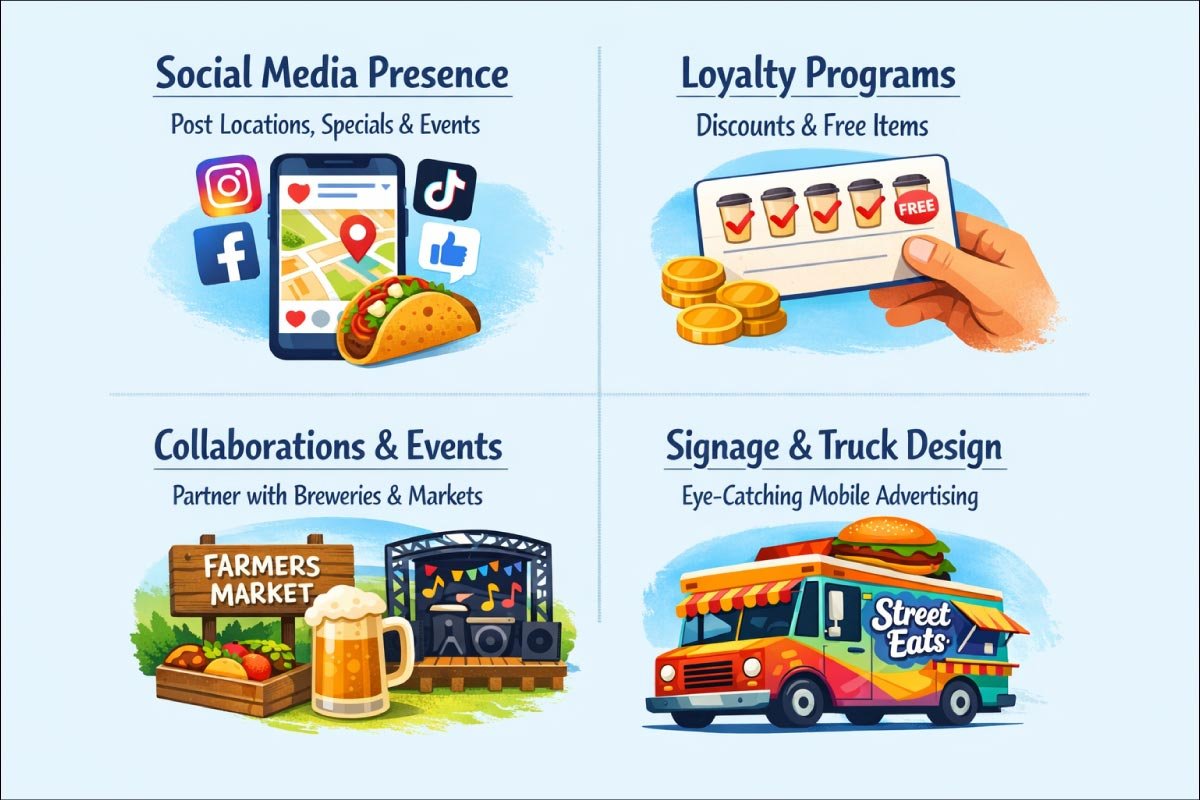
Effective Marketing Strategies:
-
Social Media Presence – Post daily locations, menu specials, and events on platforms like Instagram, Facebook, and TikTok.
-
Loyalty Programs – Offer discounts or free items after multiple visits.
-
Collaborations & Events – Partner with local breweries, farmers’ markets, or festivals to increase visibility.
-
Signage & Truck Design – A visually striking truck acts as mobile advertising.
Step 8: Choose Strategic Locations and Schedule
“Choose Strategic Locations and Schedule” focuses on optimizing your business presence and timing.
By selecting high-traffic, accessible locations and planning operations around peak demand, you can maximize customer reach, improve efficiency, and boost overall profitability.
Smart location and scheduling decisions are key to sustainable growth and competitive advantage.
Tips for Location Strategy:
-
Rotate locations to reach different customer bases throughout the week.
-
Attend food festivals, fairs, and farmers’ markets for high exposure.
-
Track sales data to identify most profitable spots and times.
You May Also Like:
Step 9: Monitor Finances and Operations
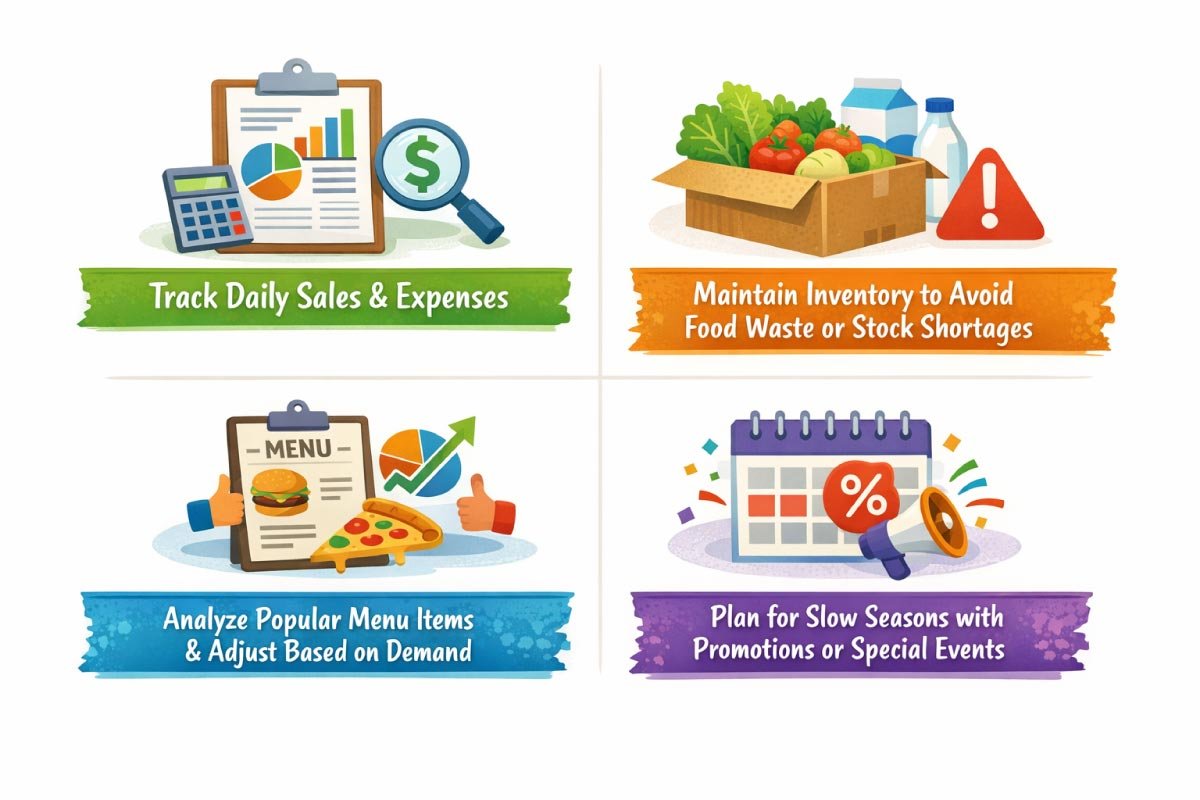
Key Financial Practices:
-
Track daily sales and expenses.
-
Maintain inventory to avoid food waste or stock shortages.
-
Analyze popular menu items and adjust based on demand.
-
Plan for slow seasons with promotions or special events.
Step 10: Expand and Innovate
“Expand and Innovate” is about pushing boundaries and unlocking new opportunities for growth.
By embracing fresh ideas, adopting cutting-edge strategies, and exploring untapped markets, businesses can evolve, stay competitive, and drive long-term success.
Innovation fuels expansion, turning challenges into possibilities and inspiring sustainable progress.
Growth Opportunities:
-
Additional Food Trucks – Target new neighborhoods or cities.
-
Catering Services – Weddings, corporate events, and parties.
-
Franchise or Brand Partnerships – Collaborate with restaurants or retail brands.
-
Menu Innovations – Introduce seasonal items, limited-time offers, or health-focused dishes.
You May Also Like:
Final Thoughts
Starting a food truck business can be exciting, profitable, and fulfilling. The combination of mobility, creativity, and customer interaction makes it a unique venture.
Success depends on thorough planning, understanding your market, serving quality food, and maintaining operational efficiency.
By following this step-by-step guide, you’ll have a clear roadmap from concept to execution and beyond.
Remember: a great food truck doesn’t just serve food—it delivers an experience. Focus on quality, service, and engagement, and your customers will keep coming back.