

Starting a laundry service business is a smart venture in today’s fast-paced world. With rising urban populations and busy lifestyles, people often prefer outsourcing their laundry needs to professionals.
Whether you are planning a small home-based laundry or a full-scale commercial service, understanding the fundamentals is crucial for success. This guide walks you through the step-by-step process, from planning to execution.
1. Understanding the Laundry Business
Understanding the laundry business is key to running it successfully. This involves knowing different service types, equipment requirements, operational processes, and customer expectations.
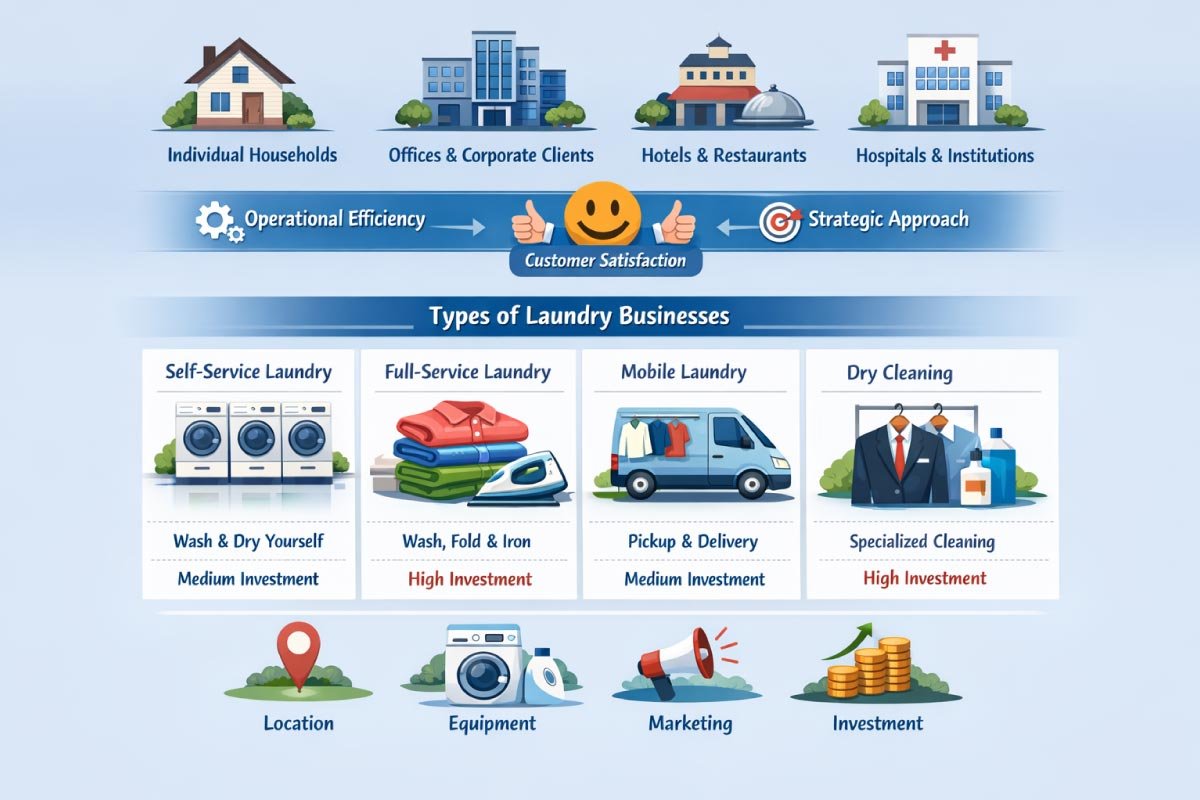
A strong grasp of the industry helps in making informed decisions, managing resources efficiently, and delivering high-quality services that meet client needs and drive business growth.
-
Individual households
-
Offices and corporate clients
-
Hotels and restaurants
-
Hospitals and institutions
The business requires minimal initial expertise but demands a strategic approach to operations, customer service, and marketing.
Types of Laundry Businesses
| Type | Description | Investment Level | Target Customers |
|---|---|---|---|
| Self-service Laundry | Customers wash and dry their own clothes using your machines | Medium | Students, singles, small families |
| Full-service Laundry | Includes washing, drying, folding, and ironing by staff | High | Families, corporate clients, hotels |
| Mobile Laundry | Pickup and delivery service | Medium | Busy professionals, elderly, office employees |
| Dry Cleaning | Specializes in delicate fabrics using chemical solvents | High | Professionals, luxury clothing owners |
Understanding the type of service you want to offer will guide your investment, location, equipment, and marketing strategy.
2. Conducting Market Research
-
Survey potential customers to gauge interest and preferences.
-
Analyze competitors to see what services they offer, their pricing, and what differentiates them.
-
Assess demand in various locations to determine high-traffic areas.
-
Identify target demographics, e.g., students, working professionals, families.
Market Analysis Table Example
| Factor | Importance | Observations | Actions |
|---|---|---|---|
| Population Density | High | Busy residential areas have higher demand | Target neighborhoods with many apartments |
| Competitor Pricing | Medium | Competitors charge $2–$5 per kg | Set competitive pricing or offer additional services |
| Laundry Needs | High | Families prefer full-service; singles prefer self-service | Customize service offerings based on segment |
| Accessibility | Medium | Locations near colleges/offices are preferable | Choose easily reachable locations |
Market research not only helps in identifying customers but also ensures your business meets their needs better than competitors.
3. Choosing the Right Location
Choosing the right location is critical for the success of a laundry business.
A strategic location with high visibility, easy accessibility, and proximity to target customers attracts more clients.
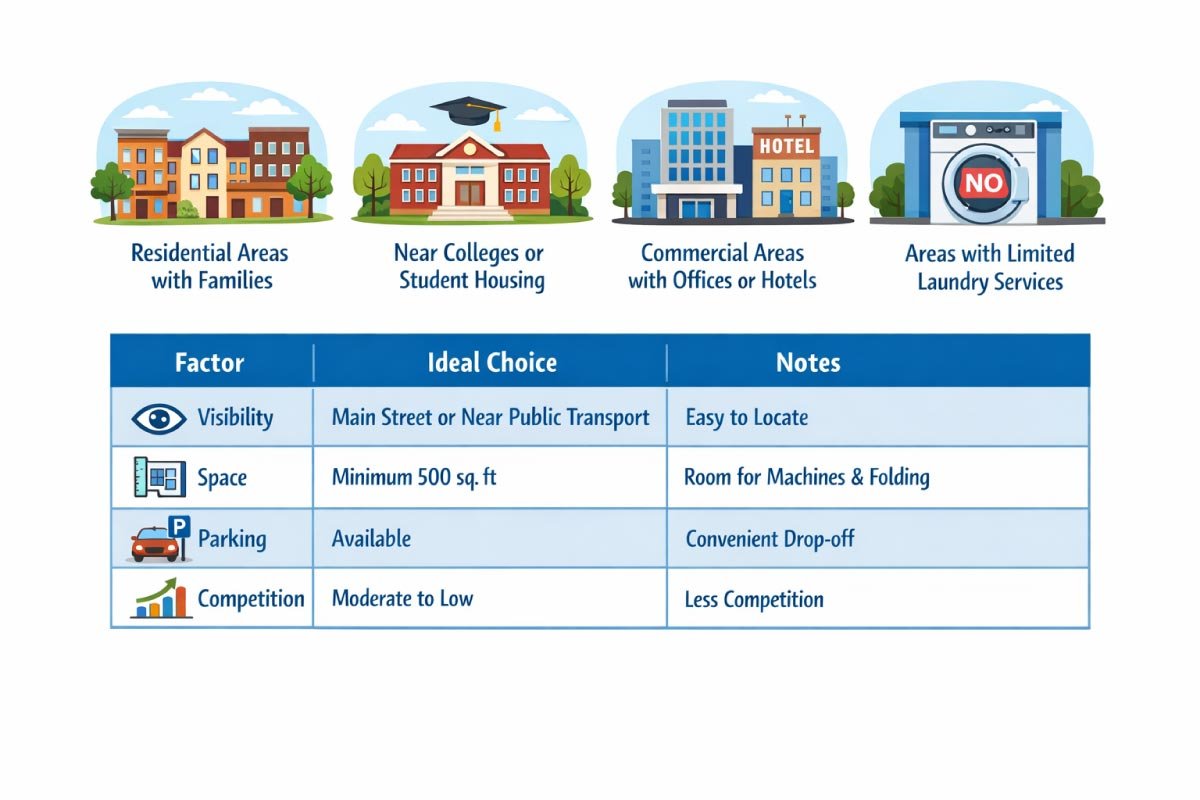
Considering factors like foot traffic, competition, and neighborhood demographics helps ensure steady demand, increased revenue, and long-term business growth.
-
Residential areas with many families or apartments
-
Near colleges or student housing
-
Commercial areas with offices or hotels
-
Areas with limited existing laundry services
Location Considerations Table
| Factor | Ideal Choice | Notes |
|---|---|---|
| Visibility | Main street or near public transport | Easier for customers to locate |
| Space | Minimum 500 sq. ft for small business | Include area for machines, folding, ironing, and waiting |
| Parking | Available | Customers prefer easy drop-off and pickup |
| Competition | Moderate to low | Less competition means higher potential |
A location that balances affordability and accessibility will give your laundry business a head start.
You May Also Like:
4. Legal Requirements and Business Registration
Registering your business legally is crucial to avoid future complications. Steps include:
-
Business Structure: Choose a sole proprietorship, partnership, or limited liability company (LLC).
-
Trade License: Obtain a local business license for operating a laundry service.
-
Environmental Permits: Ensure compliance with wastewater disposal regulations.
-
Tax Registration: Register for local and national taxes if applicable.
Legal Requirements Table
| Requirement | Purpose | Steps |
|---|---|---|
| Business Registration | Legal recognition | Register with local authorities |
| Trade License | Permit to operate | Apply through municipal office |
| Environmental Compliance | Wastewater management | Install filters and follow disposal rules |
| Tax Registration | Compliance with tax laws | Obtain tax identification number (TIN) |
Proper legal compliance not only ensures smooth operations but also builds trust with clients.
5. Estimating Startup Costs
Estimating startup costs is a crucial step when launching a laundry business.
This includes expenses for equipment, rent, utilities, supplies, staff, and marketing.
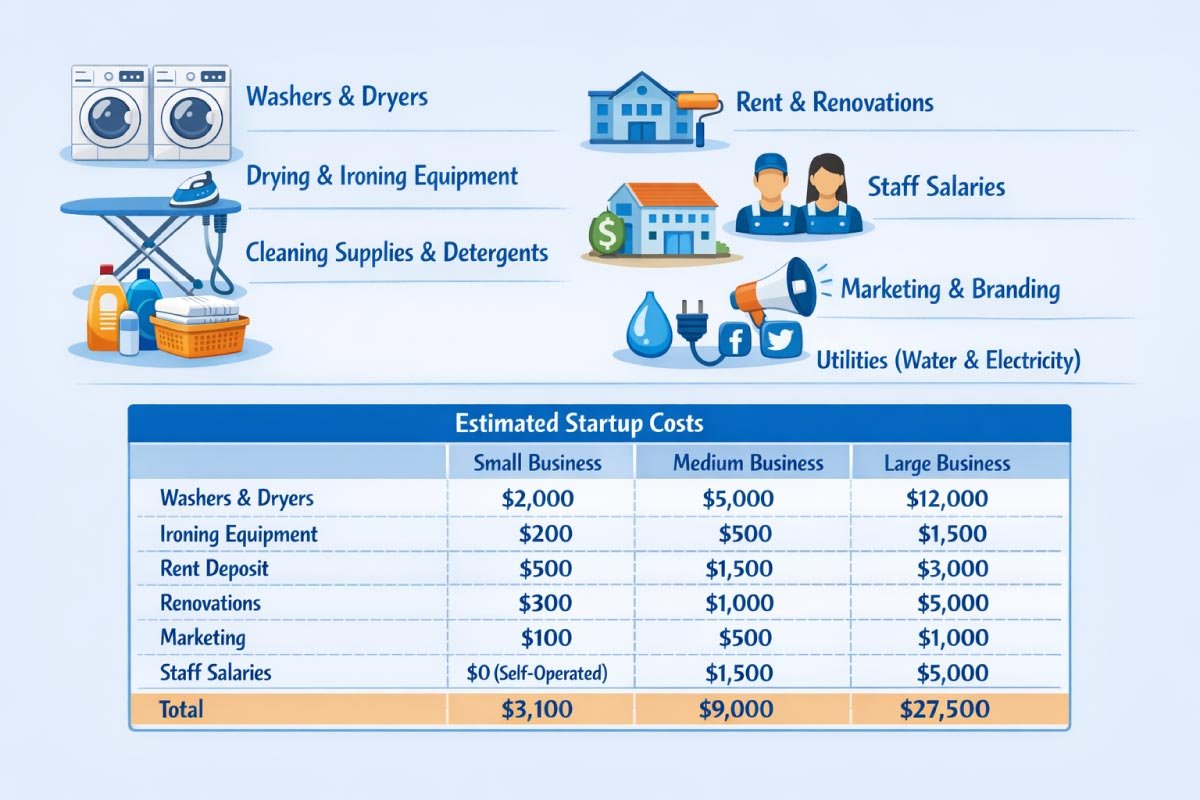
Accurate cost projections help plan budgets, secure funding, and avoid financial surprises, ensuring the business starts on a solid foundation and operates smoothly from day one.
-
Laundry machines (washers and dryers)
-
Drying and ironing equipment
-
Cleaning supplies and detergents
-
Rental deposit and renovations
-
Staff salaries
-
Marketing and branding
-
Utility connections (water, electricity)
Estimated Startup Cost Table (Example)
| Item | Small Business | Medium Business | Large Business |
|---|---|---|---|
| Washers & Dryers | $2,000 | $5,000 | $12,000 |
| Ironing Equipment | $200 | $500 | $1,500 |
| Rent Deposit | $500 | $1,500 | $3,000 |
| Renovations | $300 | $1,000 | $5,000 |
| Marketing | $100 | $500 | $1,000 |
| Staff Salaries | $0 (self-operated) | $1,500 | $5,000 |
| Total | $3,100 | $9,000 | $27,500 |
Budget planning ensures you are financially prepared and reduces the risk of operational hiccups.
You May Also Like:
6. Sourcing Equipment and Supplies
Sourcing quality equipment and reliable supplies is vital for the smooth operation of a laundry business.
Dependable vendors ensure timely deliveries, durable machines, and essential cleaning products.
Careful selection of equipment and materials helps maintain service quality, reduce downtime, control costs, and build a reputation for reliability and professionalism.
-
Quality over Cost: Invest in machines that are durable and energy-efficient.
-
Supplies: Detergents, fabric softeners, stain removers, and packaging materials.
-
Vendors: Build relationships with local suppliers for consistent stock.
For businesses offering dry cleaning, additional chemicals and specialized machines are required.
7. Hiring and Training Staff
Hiring and training skilled staff is essential for running a successful laundry business. Well-trained employees ensure efficient operations, high-quality service, and proper handling of customer garments.
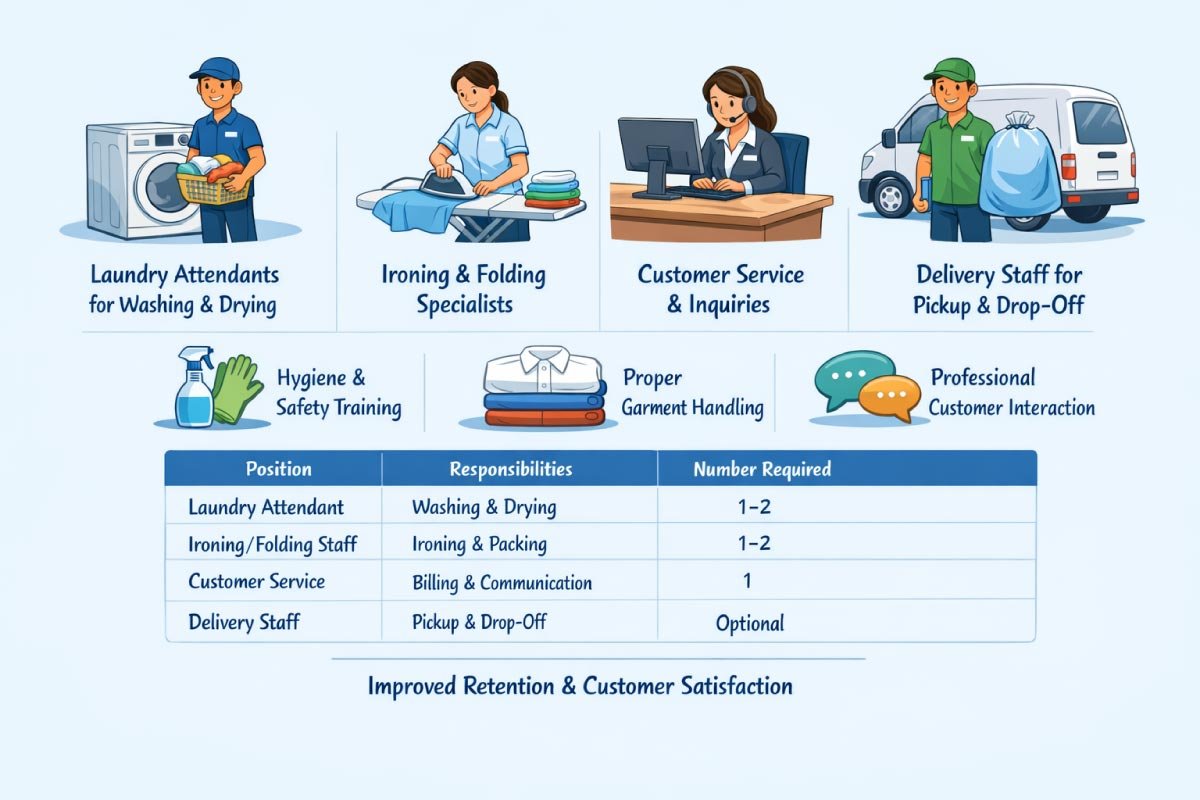
Comprehensive training in equipment use, customer service, and safety protocols helps maintain consistency, build trust, and contribute to the overall growth and reputation of the busin ess.
-
Laundry attendants for washing and drying
-
Ironing and folding specialists
-
Customer service representatives for billing and inquiries
-
Delivery staff if you offer pickup and drop-off
Training ensures staff adhere to hygiene standards, handle clothes carefully, and interact professionally with customers.
Staff Structure Table
| Position | Responsibilities | Number Required (Small Business) |
|---|---|---|
| Laundry Attendant | Washing and drying clothes | 1–2 |
| Ironing/Folding Staff | Ironing and packing | 1–2 |
| Customer Service | Billing and communication | 1 |
| Delivery Staff | Pickup and drop-off | Optional |
Well-trained staff can improve customer retention and referrals.
8. Setting Pricing Strategy
Setting an effective pricing strategy is crucial for the success of your laundry business. Competitive and well-structured pricing balances profitability with customer affordability.
Considering factors like service costs, market rates, and target clientele ensures fair pricing, attracts more customers, and supports sustainable revenue growth.
-
Local competitor rates
-
Service type (self-service, full-service, dry cleaning)
-
Volume-based discounts
-
Premium charges for urgent or delicate items
Pricing Example Table
| Service | Small Business Rate | Medium Business Rate | Notes |
|---|---|---|---|
| Washing per kg | $2 | $3 | Standard load |
| Dry Cleaning per item | $5 | $7 | Delicate fabrics |
| Ironing per item | $0.50 | $1 | Optional for self-service |
| Pickup & Delivery | $1 per km | $2 per km | Optional |
Clear pricing and added value services (like home delivery) can attract more clients.
You May Also Like:
9. Marketing Your Laundry Business
Marketing your laundry business effectively is essential for attracting new customers and retaining loyal clients.
Strategies such as social media promotion, local advertising, referral programs, and special offers increase visibility.
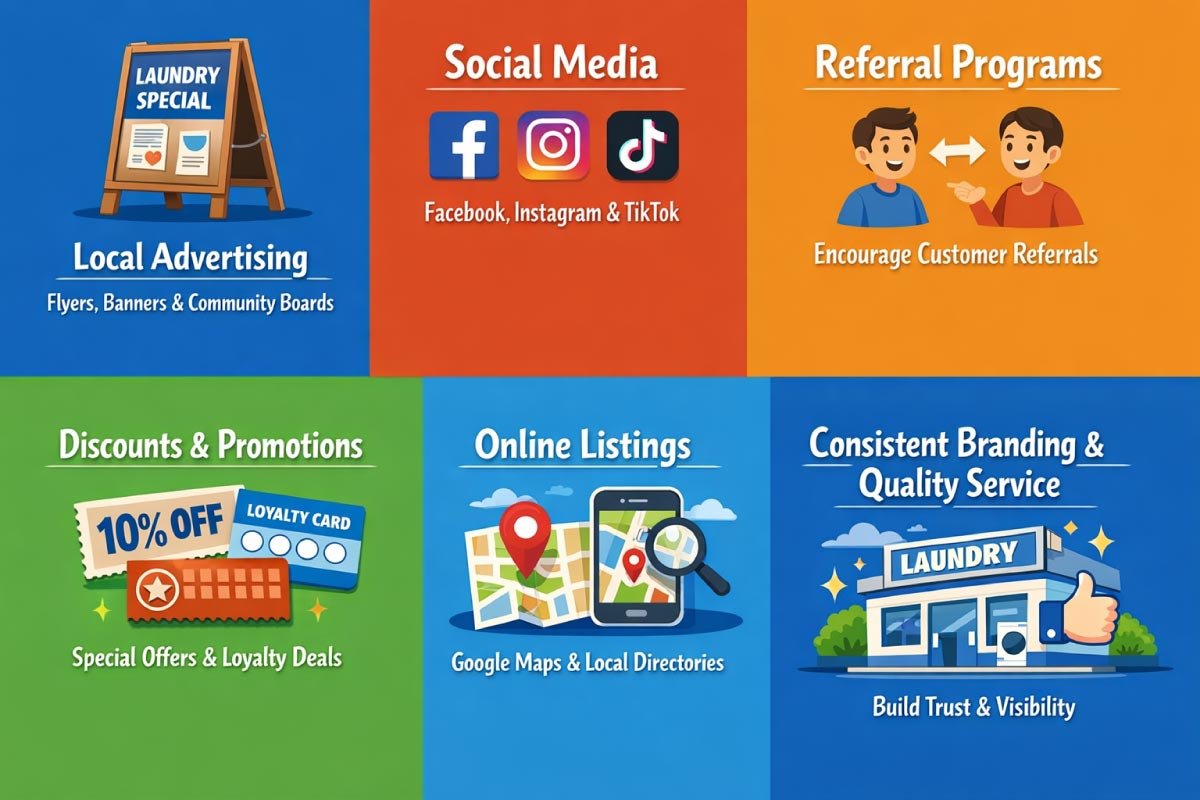
Highlighting convenience, quality service, and competitive pricing helps build a strong brand and drives consistent business growth.
-
Local Advertising: Flyers, banners, and community boards.
-
Social Media: Facebook, Instagram, or TikTok for local promotions.
-
Referral Programs: Encourage existing customers to bring in friends.
-
Discounts & Promotions: First-time customer discounts or loyalty programs.
-
Online Listings: Google Maps, local business directories, and apps.
Consistency in branding, professional signage, and excellent service improves visibility and customer trust.
10. Launching Your Laundry Service
Launching your laundry service successfully requires careful preparation and organization. From setting up equipment and hiring staff to establishing pricing and marketing strategies, a well-coordinated launch creates a positive first impression.
Proper planning ensures smooth operations, attracts customers, and lays the foundation for long-term business growth and success.
-
Soft Opening: Test services with friends and family to refine processes.
-
Grand Opening Promotion: Offer discounts, freebies, or loyalty cards to attract initial customers.
-
Collect Feedback: Gather customer opinions to improve operations.
-
Monitor Operations: Track machine usage, staff efficiency, and customer satisfaction.
You May Also Like:
11. Expanding Your Laundry Business
Expanding your laundry business requires strategic planning to grow revenue and reach more customers.
Opportunities may include adding new services, opening additional locations, or introducing pickup and delivery options.
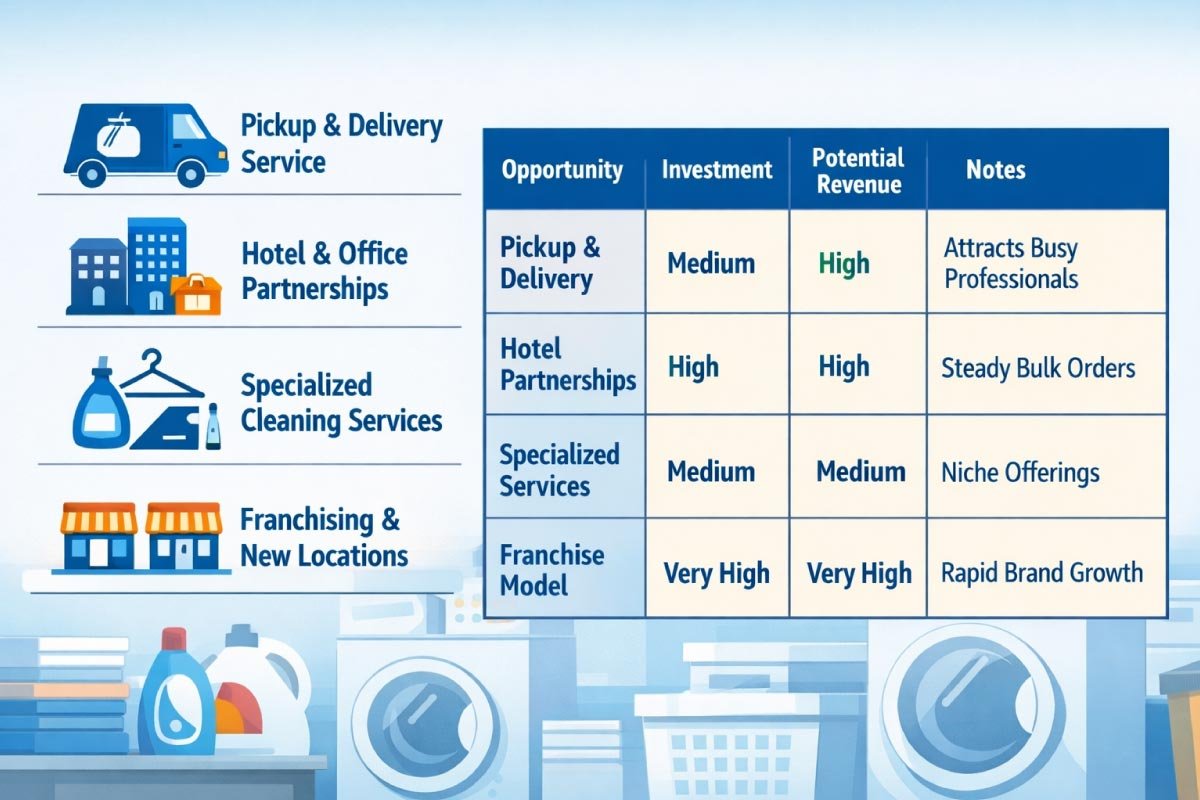
By analyzing market demand, competition, and operational capacity, expansion can increase profitability while maintaining service quality and customer satisfaction.
-
Introducing pickup and delivery service
-
Partnering with local hotels or offices
-
Offering specialized services (e.g., stain removal, dry cleaning)
-
Franchising or opening multiple branches
Expansion Opportunities Table
| Opportunity | Investment | Potential Revenue | Notes |
|---|---|---|---|
| Pickup & Delivery | Medium | High | Attracts busy professionals |
| Hotel Partnerships | High | High | Steady bulk orders |
| Specialized Services | Medium | Medium | Differentiates business |
| Franchise Model | Very High | Very High | Rapid brand growth |
Expanding services gradually ensures better resource management and increased profitability.
Conclusion
Starting a laundry service business is a promising venture if approached strategically.
From market research and location selection to staffing, pricing, and marketing, every step plays a crucial role in shaping your success.
With proper planning, quality service, and a customer-focused approach, your laundry business can become a trusted and profitable enterprise in your community.
Whether you start small with a home-based operation or launch a full-scale commercial service, the key is consistency, reliability, and understanding your customers’ needs.
The laundry business is not just about washing clothes—it’s about providing convenience and peace of mind to your clients.