
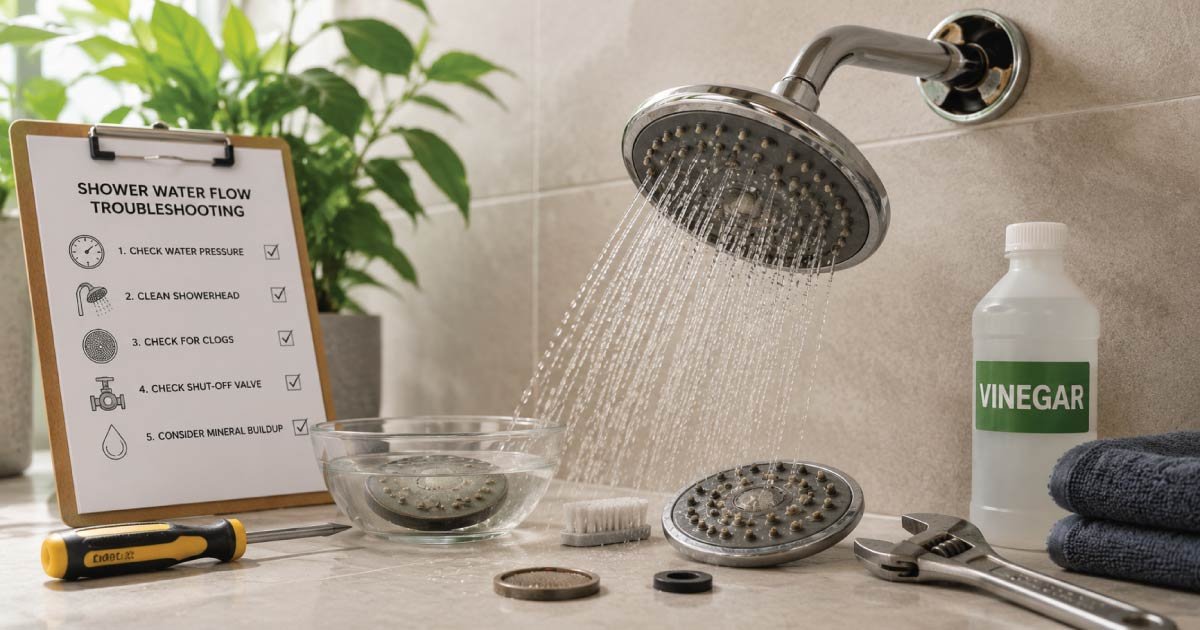
Low or weak shower water flow is a very common household issue. One day your shower feels powerful and refreshing, and the next it feels like a slow trickle. This problem is usually not serious, and in most cases you can fix it yourself without calling a plumber.
The cause can be anything from a clogged showerhead to pipe buildup, water pressure issues, or even a faulty valve. This guide will walk you through how to identify the problem and restore strong water flow step by step.
Common Reasons for Weak Shower Water Flow
This section explains the most common causes of weak shower pressure so you can properly identify the root problem before attempting repairs. Shower flow issues usually develop due to buildup, restrictions, or system-wide pressure problems, and understanding these causes helps you choose the correct fix instead of guessing.
1. Clogged showerhead
This section explains how mineral buildup blocks water flow inside the showerhead. Over time, calcium and lime deposits accumulate in tiny spray holes, restricting water output and causing uneven or weak spray patterns.Mineral deposits from hard water (calcium and lime) build up in the tiny holes of the showerhead, blocking water flow.
2. Low water pressure
This section explains how overall household water pressure can affect shower performance. If the pressure is low throughout the home, the issue is not limited to the shower and may require system-level inspection.Sometimes the problem is not the shower but the overall water pressure in your home.
3. Partially closed valve
This section explains how an incompletely opened valve can restrict water flow to the shower. Even a slightly closed valve can significantly reduce pressure and affect shower performance.The water supply valve to the shower may not be fully open.
4. Blocked pipes
This section explains how internal pipe buildup can reduce water flow. Rust, sediment, or debris inside pipes narrows the passage for water, leading to weaker shower pressure.Sediment, rust, or debris inside pipes can restrict water movement.
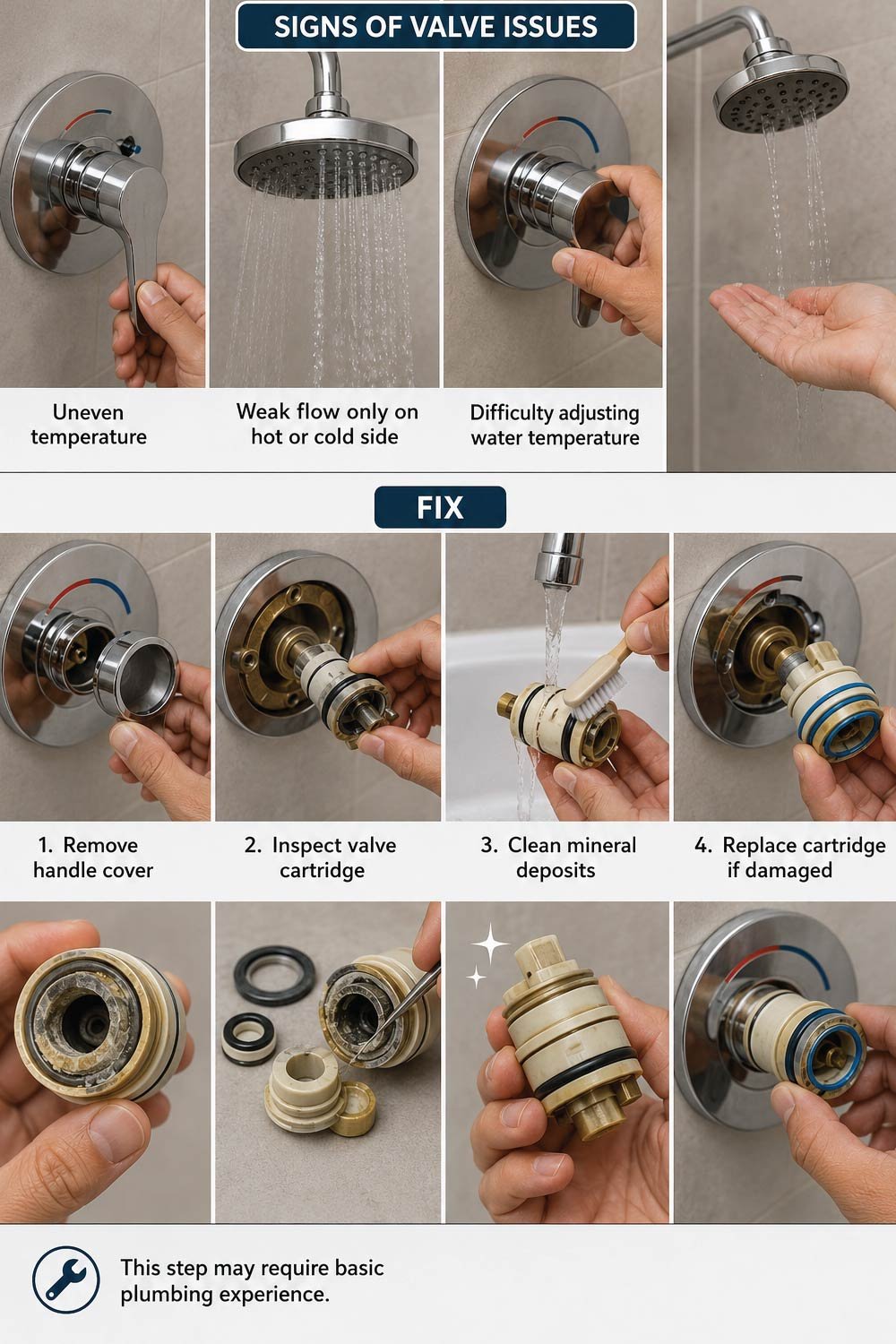
5. Faulty mixing valve
This section explains how a malfunctioning mixing valve can disrupt proper water flow and temperature balance. When stuck or damaged, it can limit pressure or cause inconsistent flow.The valve that controls hot and cold water may be damaged or stuck.
6. Hose or pipe kinks (hand showers)
This section explains how flexible shower hoses can restrict water flow when bent or twisted. Even minor kinks can significantly reduce pressure in handheld shower systems.Flexible shower hoses can bend or twist, reducing flow.
Step 1: Check If the Problem Is Only in the Shower
This section explains how to diagnose whether the issue is isolated to the shower or part of a larger plumbing problem. This step is important because it determines whether you need a simple local fix or a more complex system-wide solution.
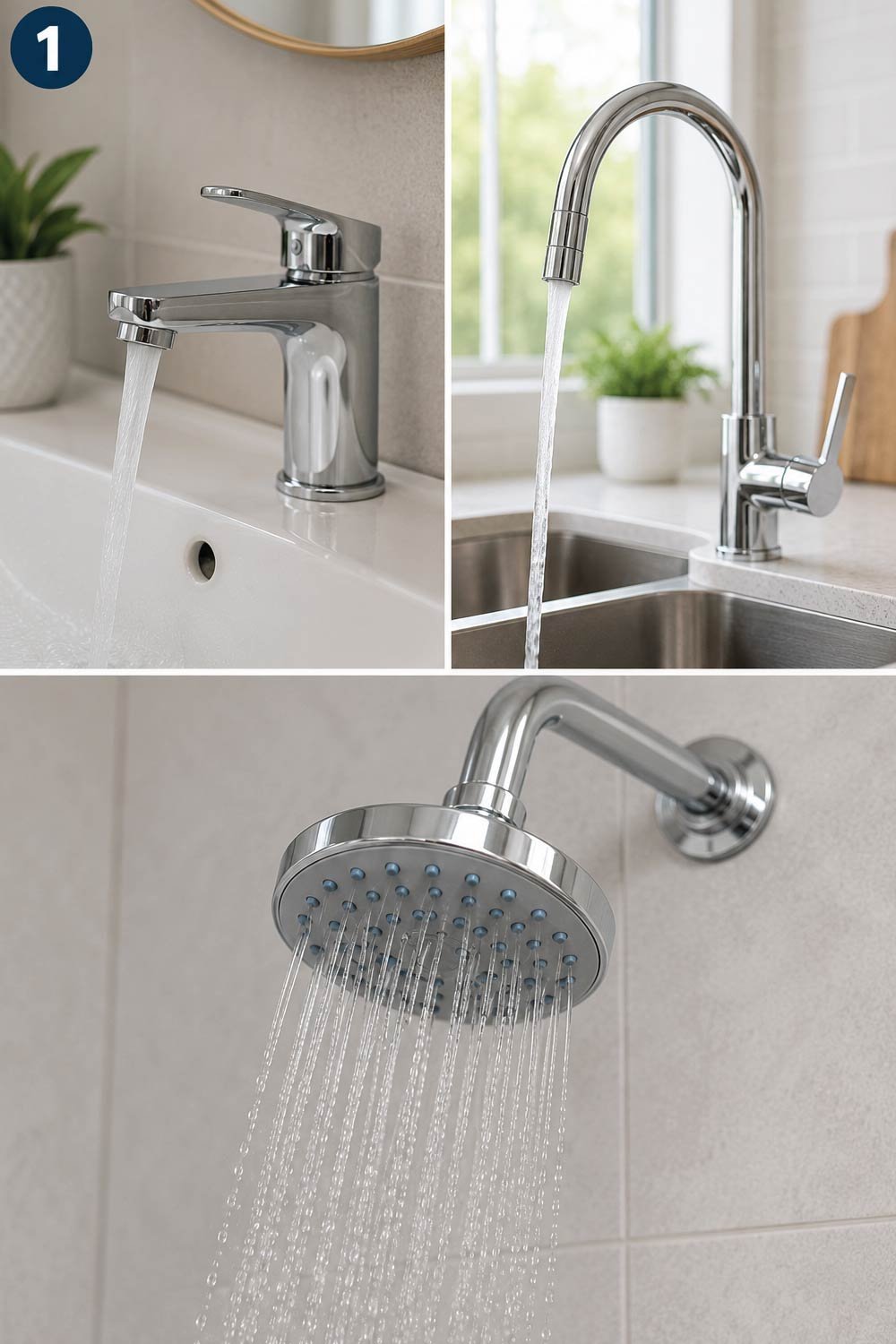
How to check
This section explains a quick method for comparing water pressure across different fixtures in the home to identify whether the issue is localized or affecting the entire plumbing system.
- Turn on bathroom sink tap
- Turn on kitchen tap
- Compare water pressure
Results
This section explains how to interpret the test results so you can accurately identify the source of the problem and decide the correct repair approach.
If all taps have low pressure → whole-house issue (likely supply or main pressure problem)
If only shower is affected → local shower issue (most common)
Step 2: Clean the Showerhead (Most Effective Fix)
This section explains how cleaning the showerhead is often the fastest and most effective solution for weak water flow. Mineral buildup is a common issue, and removing it restores normal spray pressure.
What you need
This section lists simple household items required to remove mineral deposits and clean the showerhead effectively without professional tools.
- Vinegar
- Plastic bag or bowl
- Old toothbrush
- Needle or pin
Method 1: Vinegar soak
This section explains how soaking the showerhead in vinegar helps dissolve mineral deposits that block water flow, restoring proper spray performance.
- Remove the showerhead (if possible).
- Fill a bowl or plastic bag with white vinegar.
- Soak the showerhead for 1–3 hours (overnight for heavy buildup).
- Scrub with a toothbrush.
- Rinse with clean water.
Method 2: Clean without removing
This section explains an alternative cleaning method for showerheads that cannot be removed, using a vinegar-filled bag to dissolve internal blockages.
- Fill a plastic bag with vinegar.
- Tie it around the showerhead so it’s submerged.
- Leave it for a few hours.
- Remove and run water to flush debris.
Why it works
This section explains the cleaning mechanism behind vinegar treatment, which breaks down calcium and lime deposits that clog spray holes and restrict water flow.
Vinegar dissolves calcium and lime deposits blocking the spray holes.
Step 3: Unclog Showerhead Holes Manually
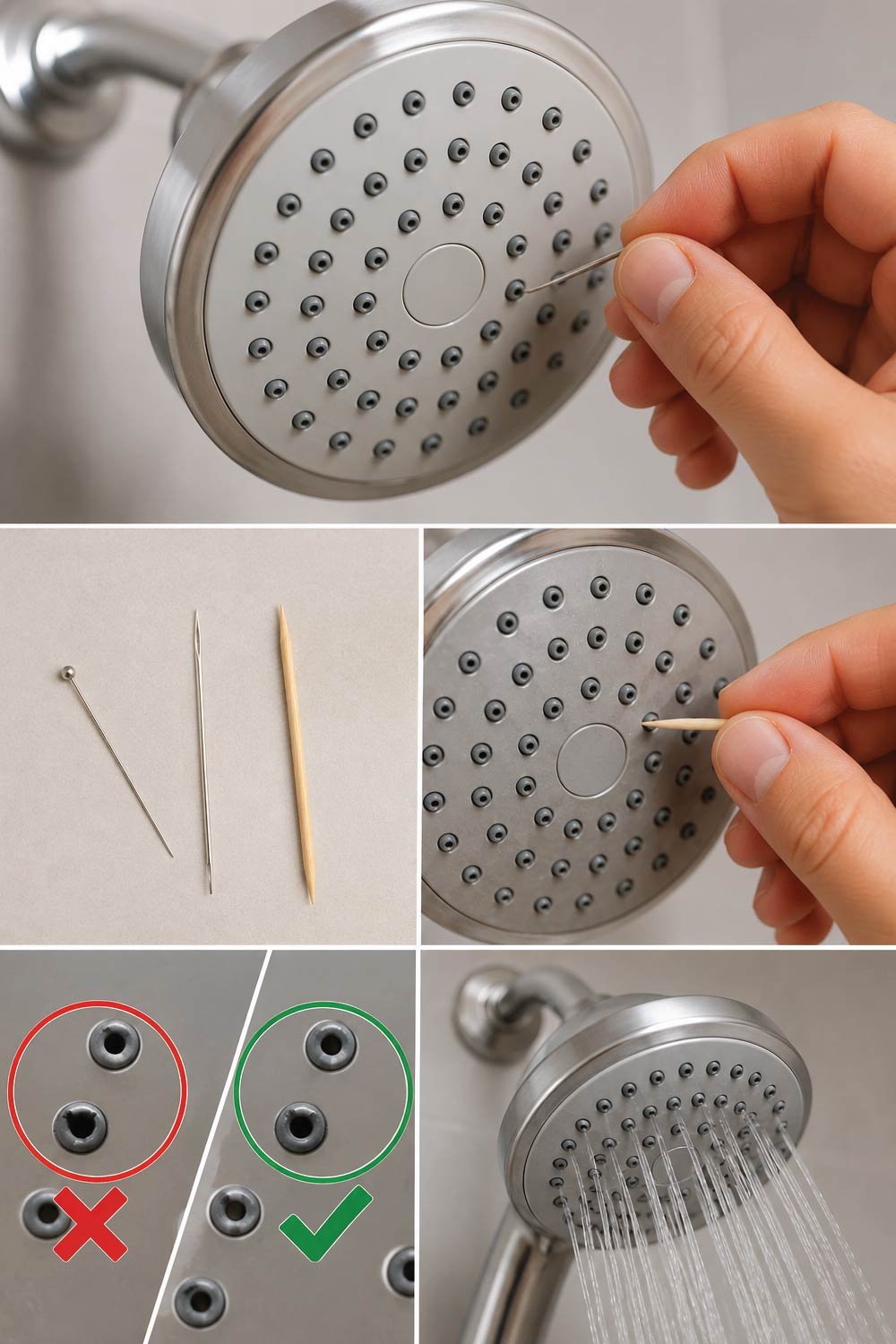
This section explains how to manually clear remaining blockages after soaking. Some debris may stay lodged inside spray holes, requiring careful physical cleaning to restore full and even water flow.
Steps
This section provides instructions for safely clearing blocked showerhead holes using simple tools without damaging the nozzle openings.
- Use a pin, needle, or toothpick
- Gently clear each spray hole
- Be careful not to enlarge the holes
- Rinse thoroughly afterward
This restores even water flow.
Also Read:
Step 4: Check Water Flow Without Showerhead
This section explains how to diagnose whether the issue is inside the showerhead or deeper in the plumbing system. Testing water flow directly from the pipe helps isolate the real cause of weak pressure.
Steps
This section outlines how to safely remove the showerhead and test raw water pressure from the pipe to determine whether the blockage is local or system-related.
- Unscrew the showerhead.
- Turn on water briefly.
- Observe water pressure directly from pipe.
Results
This section explains how to interpret the test results to identify whether the issue is caused by the showerhead or internal plumbing.
Strong flow → showerhead problem
Weak flow → pipe or valve problem
This step is very important for diagnosis.
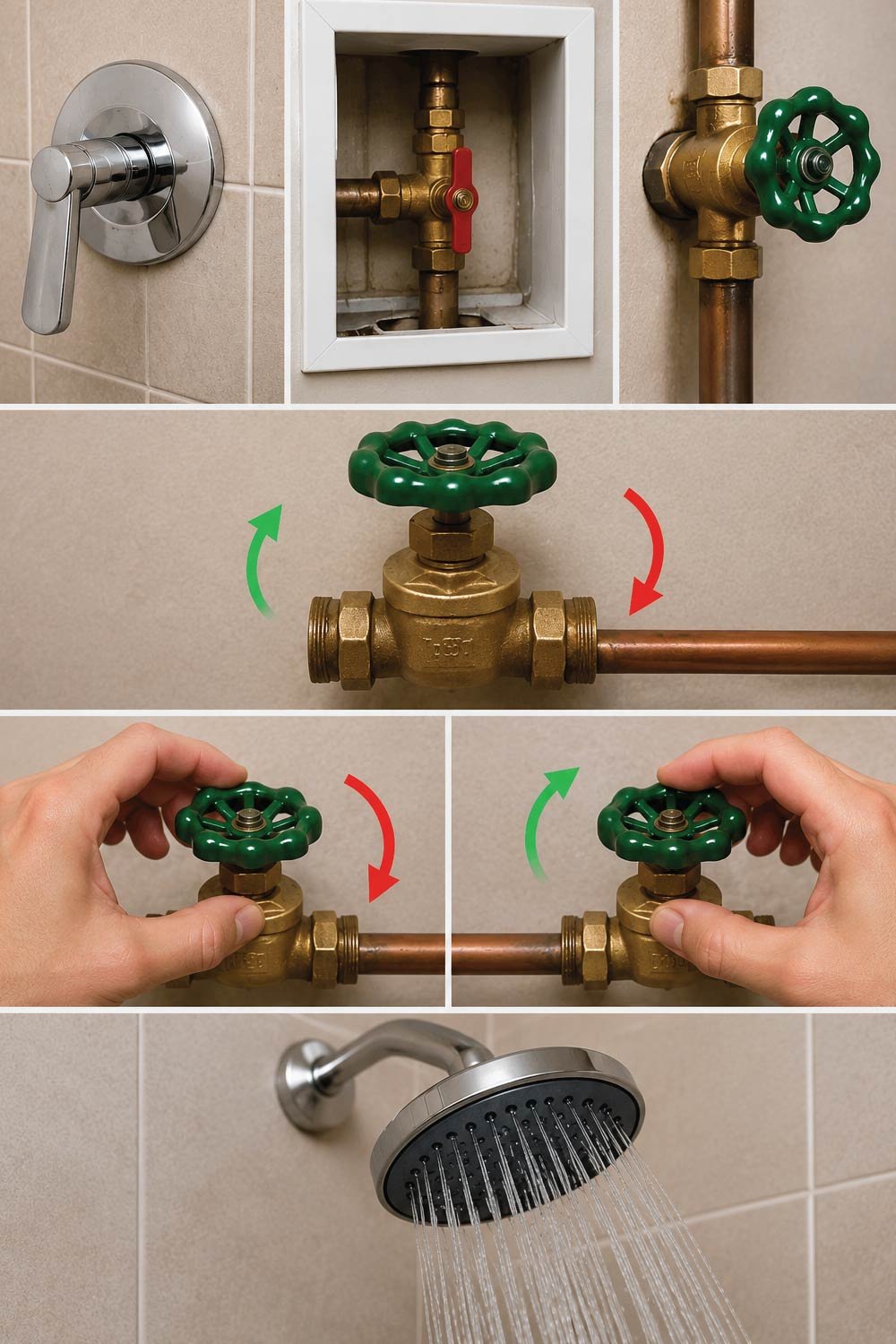
When to Call a Plumber
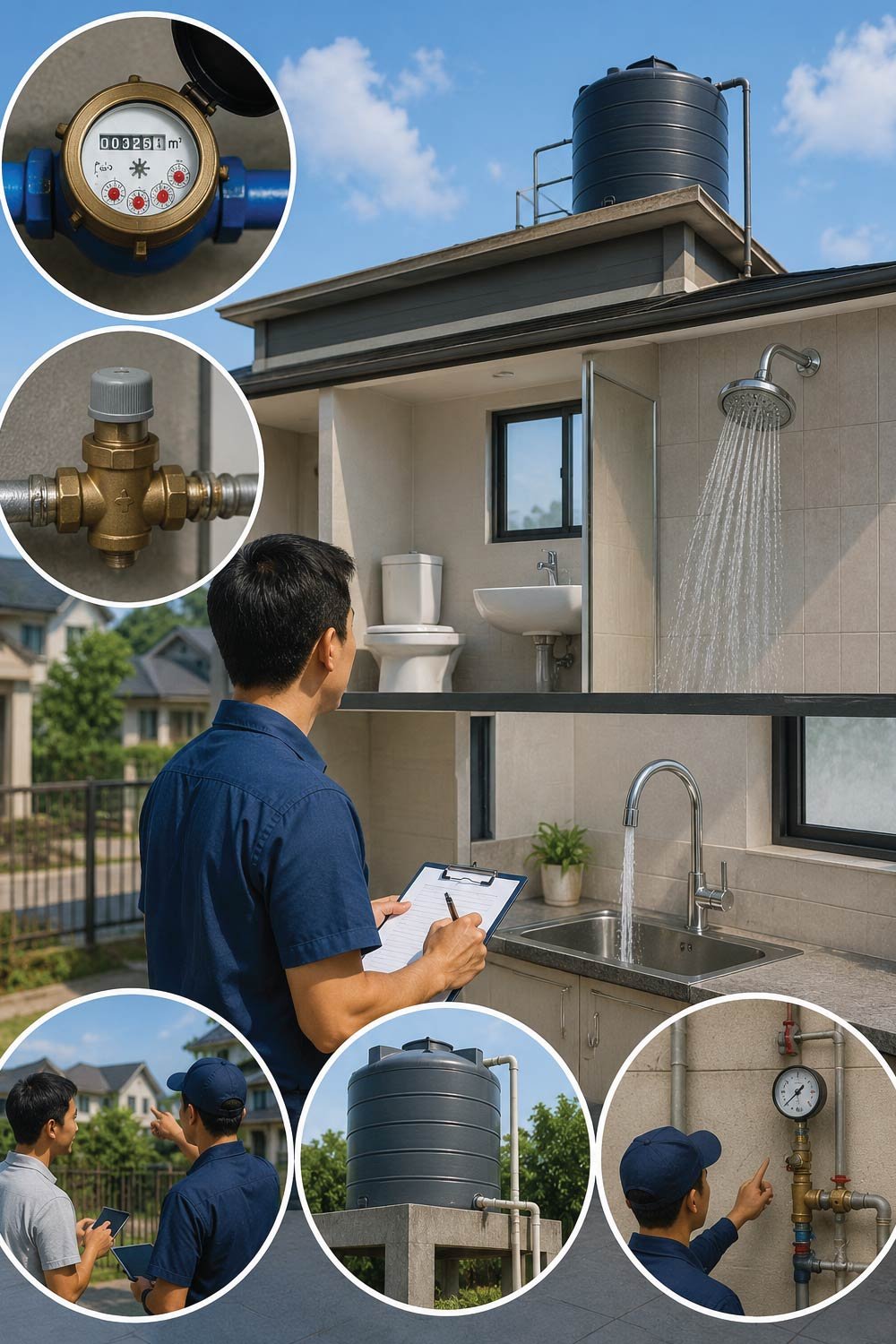
This section explains the situations where shower or water pressure problems go beyond simple DIY fixes and require professional plumbing expertise. While basic cleaning and adjustments can solve many issues, some problems indicate deeper system faults that need proper tools, pressure testing, and hidden pipe inspection to resolve safely and effectively.
- Multiple taps have low pressure
- Pipes are leaking or corroded
- Shower valve is damaged inside the wall
- Water flow suddenly dropped across entire house
- DIY cleaning doesn’t improve anything
A plumber can test pressure systems and inspect hidden pipe issues.
Final Thoughts
Fixing weak shower water flow is usually simple and affordable. In most cases, the problem comes down to mineral buildup inside the showerhead or a partially blocked filter. With basic tools like vinegar, a brush, and a few minutes of cleaning, you can often restore full water pressure.
Start with the easiest steps cleaning the showerhead and checking valves before moving to deeper plumbing checks. With regular maintenance, your shower can stay strong, consistent, and problem-free for years.