Why Your Door Won’t Close Properly
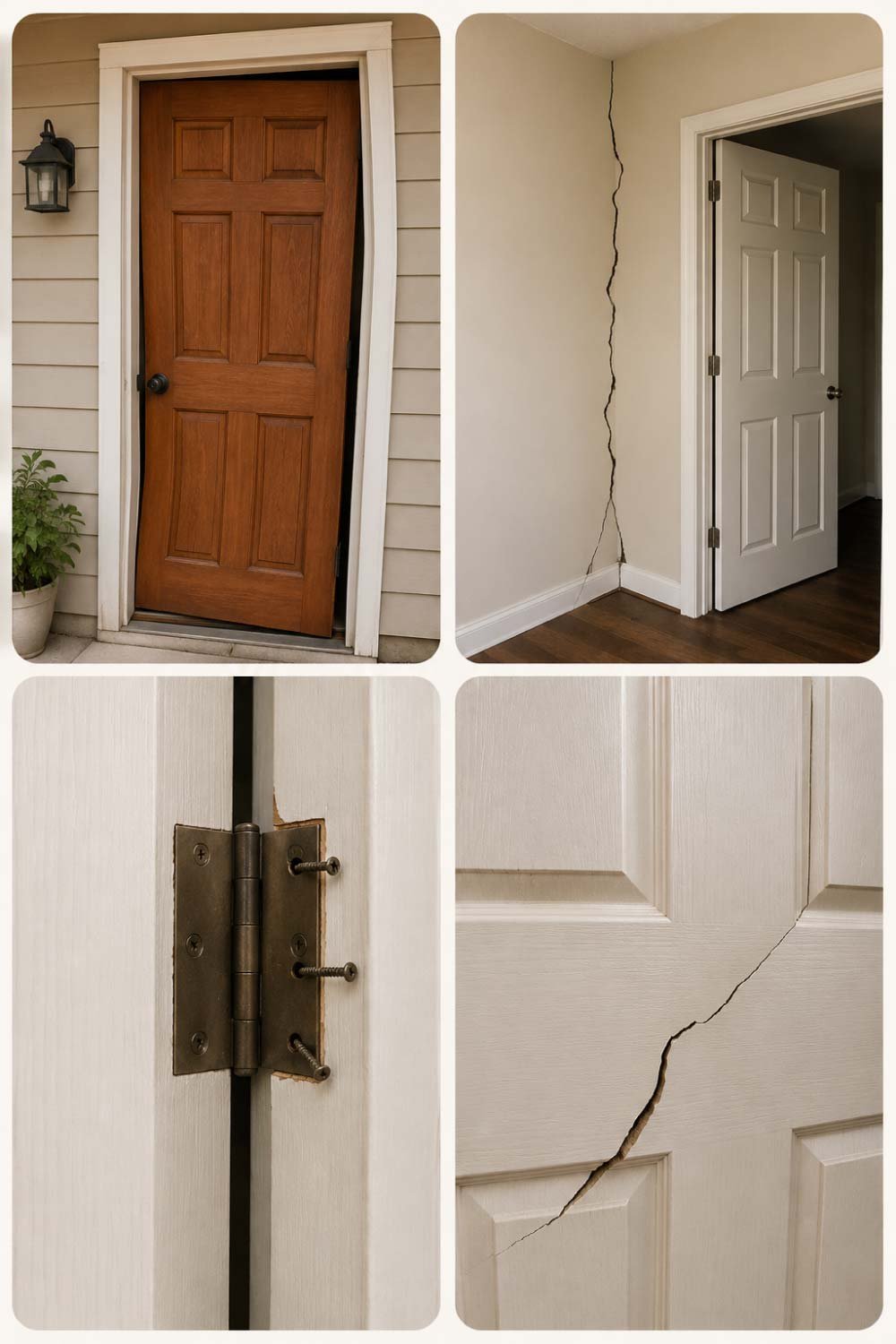
A door that refuses to close properly can be frustrating and confusing, especially when it seems like nothing is obviously wrong. In reality, even small shifts in hinges, wood, or framing can affect alignment. Understanding the root causes first helps you avoid random fixes and focus on what actually solves the problem.
Here are the most common reasons:
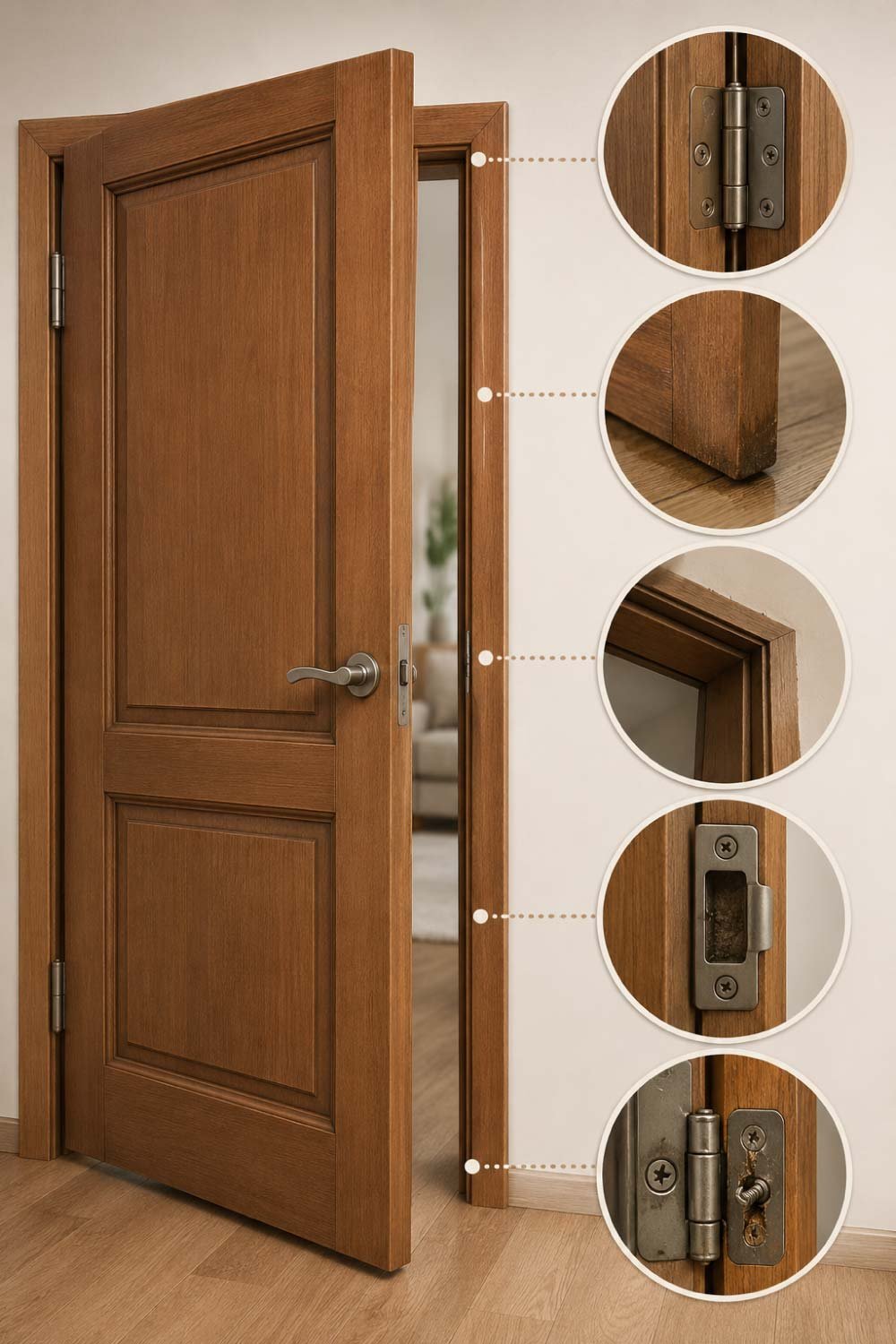
1. Loose or Misaligned Hinges
Over time, hinges can loosen due to constant use. Even a slight shift can cause the door to hang unevenly, making it rub against the frame or fail to latch.
- Hinges slowly loosen from daily opening and closing
- Even a 1–2 mm shift can affect alignment
- Door weight increases stress on top hinges over time
2. Swollen Wood (Humidity Issues)
If your door is made of wood, changes in weather—especially humidity—can cause it to expand. This is very common in rainy or humid climates, where doors suddenly feel “tight” or stuck.
- Moisture causes wood fibers to expand
- Seasonal changes can make doors suddenly stick
- Often temporary but can worsen without ventilation
3. Settling of the House
Homes naturally settle over time. This can slightly shift door frames, causing alignment issues even if the door itself hasn’t changed.
- Foundation movement affects door frames
- Small structural shifts build up gradually
- Common in both old and newly built homes
4. Dirty or Blocked Strike Plate
The strike plate is the metal opening where the latch goes in. Dust, debris, or misalignment here can prevent the door from closing fully.
- Dirt buildup blocks smooth latch entry
- Misalignment prevents proper locking
- Paint layers can also reduce clearance
5. Worn-Out Hinges or Screws
Stripped screws or old hinges can make the door sag downward, causing it to scrape the floor or jam at the top.
- Screws lose grip inside wooden frames
- Metal fatigue weakens hinge strength
- Door gradually drops from its original position
The Simple Fix That Works for Most Doors
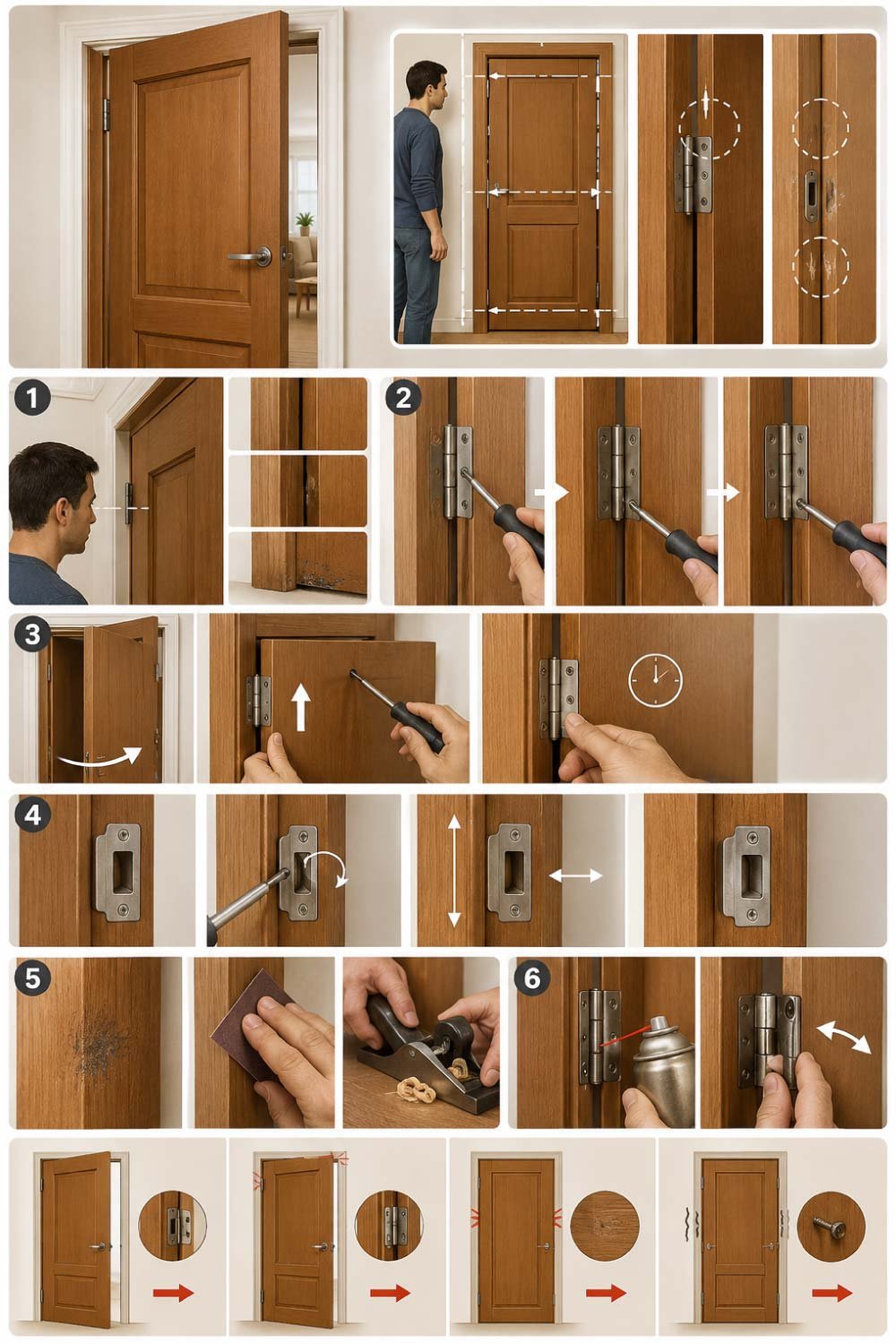
Most door problems don’t require expensive repairs or professional help. In fact, a majority of issues can be solved with basic tools and a careful step-by-step approach. The key is identifying misalignment and correcting it gradually instead of forcing the door shut.
Step 1: Check the Alignment First
Before making any adjustments, you need to understand how the door is sitting in its frame. A quick visual inspection can reveal whether the problem is at the top, bottom, or side, helping you target the exact issue instead of guessing.
- Stand at eye level to observe gaps clearly
- Compare spacing on both sides of the door
- Check for rubbing marks or tight corners
Step 2: Tighten All Hinge Screws
This is the most important and often most effective step.
What to do:
- Use a screwdriver to tighten every screw on the hinges (both door side and frame side). This helps restore stability and reduces unwanted movement.
- Start from the top hinge, then move downward. Working top to bottom ensures better balance and prevents uneven tension.
- If any screw keeps spinning (stripped hole), replace it with a longer screw for better grip. This anchors the hinge deeper into the frame.
Why this works:
Loose hinges are the number one cause of misaligned doors. Tightening them pulls the door back into its correct position.
Step 3: Lift and Tighten Trick (Pro Fix)
If tightening alone doesn’t solve the issue, try this simple but powerful trick.
Steps:
- Open the door halfway. This gives better control over weight distribution.
- Lift the door slightly upward while tightening the top hinge screws. This helps realign sagging.
- Hold it in position for a few seconds before releasing. This allows the hinge to settle properly.
This helps reset the door’s alignment within the frame.
Step 4: Check the Strike Plate Alignment
If the door closes but won’t latch, the strike plate is likely misaligned.
Fix it like this:
- Close the door slowly and see where the latch hits. This helps identify offset direction.
- If it’s slightly off, loosen the strike plate screws. This allows repositioning.
- Adjust it up, down, or sideways as needed. Even minor shifts can improve locking.
- Retighten once aligned. Secure it firmly so it doesn’t shift again.
Sometimes, even shifting it just 2–3 mm makes a big difference.
Water Stains on Walls? Remove Them Fast and Easily
Step 5: Sand or Plane the Problem Area (If Door is Rubbing)
If the door is physically scraping against the frame, alignment alone won’t solve it.
What you can do:
- Identify the rubbing area (usually visible as scuff marks). This shows exact contact points.
- Use sandpaper for small adjustments. This is best for minor friction.
- For stronger fixes, a hand plane can shave off a thin layer of wood. This is for more serious sticking issues.
Important tip:
Only remove a small amount at a time. You can always remove more later, but you can’t add wood back.
Step 6: Lubricate Hinges for Smooth Movement
Sometimes the door isn’t just misaligned—it’s also stiff.
Apply a small amount of lubricant such as silicone spray or light machine oil to the hinges. Open and close the door a few times to spread it evenly.
This reduces friction and helps the door settle naturally into place.
Quick Diagnosis Guide
If you’re unsure what’s wrong, here’s a simple breakdown:
- Door won’t latch → Strike plate misaligned
- Door scrapes top or bottom → Loose hinges or sagging
- Door feels tight all around → Wood swelling
- Door moves but won’t stay aligned → Settling frame or weak screws
Common Mistakes People Make
When dealing with a stubborn door, many people make the problem worse without realizing it.
1. Forcing the Door Shut
Slamming may temporarily close it but worsens alignment over time.
2. Ignoring Small Squeaks or Resistance
These are early warning signs that something is shifting.
3. Only Fixing One Hinge
All hinges work together—fixing just one rarely solves the problem completely.