
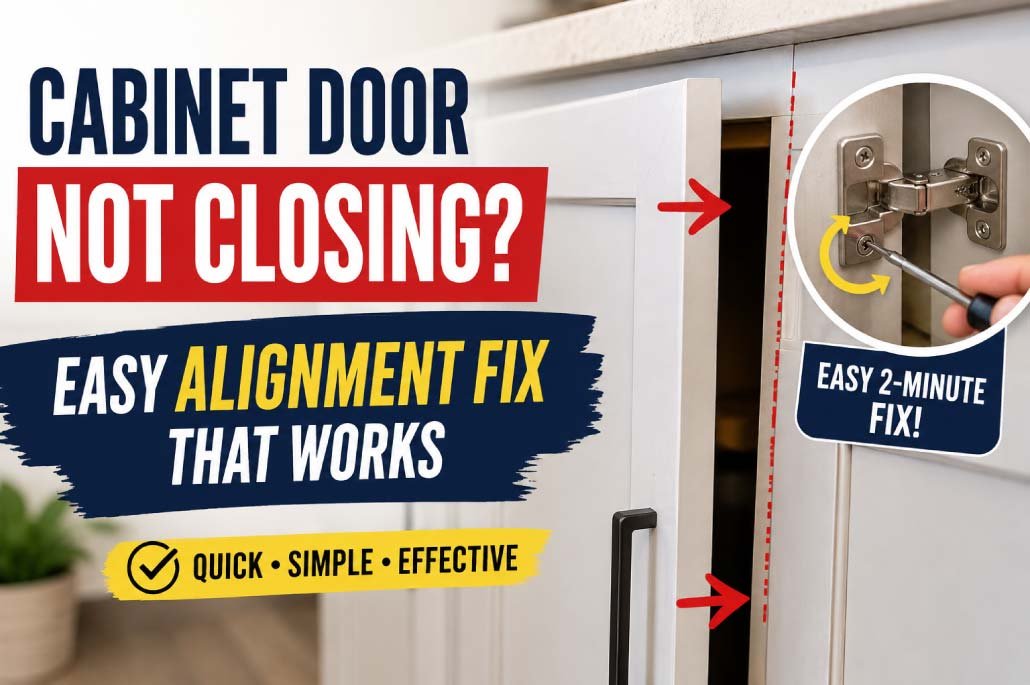
A cabinet door that won’t close properly can be surprisingly frustrating. It might hang slightly open, slam unevenly, or refuse to align with the frame no matter how many times you push it shut. While it may seem like a big repair job, in most cases the problem is simple: misalignment.
The good news is that you don’t need to replace the cabinet or call a professional right away. With a few basic tools and a little patience, you can fix most cabinet door alignment issues in under an hour. This guide walks you through the real causes of the problem and provides an easy, step-by-step fix that actually works.
Table of Contents
ToggleWhy Cabinet Doors Stop Closing Properly
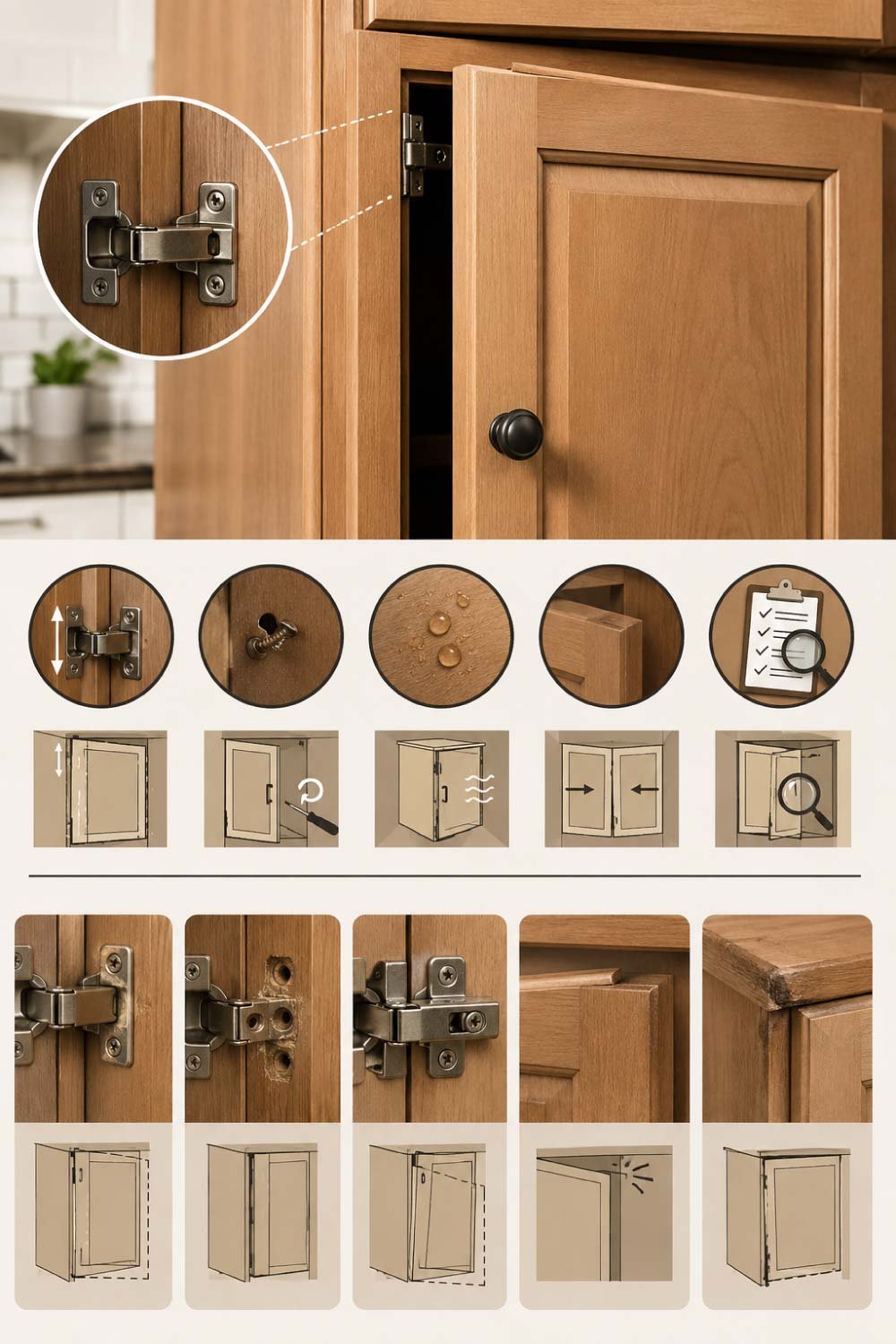
Cabinet doors may look simple, but they depend on precise hinge balance to function smoothly. Even a slight shift in alignment can prevent proper closing. Over time, everyday use, humidity, and hardware wear gradually affect how the door sits against the frame, leading to gaps, rubbing, or misalignment.
- Small hinge movement can change door position
- Daily use gradually loosens fittings
- Environmental changes affect wood structure
- Minor shifts create visible alignment issues
- Proper inspection is essential before repair
Here are the most common reasons:
1. Loose Hinges
Loose hinges are one of the most frequent causes of cabinet door problems. With constant opening and closing, screws naturally loosen over time. This causes the door to drop slightly, shift sideways, or fail to align properly with the cabinet frame.
- Screws gradually loosen from daily use
- Door begins to sag or tilt slightly
- Gaps appear uneven around edges
- Closing becomes harder or misaligned
- Early tightening prevents further damage
2. Misaligned Hinges
When hinges are not positioned evenly, cabinet doors cannot close correctly. Even a minor difference in hinge height or angle can lead to uneven spacing or rubbing against the frame. This issue often happens after repairs or improper adjustments.
- Hinges positioned at different heights
- Door does not sit evenly in frame
- One side may appear tighter than the other
- Causes scraping or uneven closing pressure
- Needs precise adjustment for correction
3. Swollen Wood or Humidity
Wood naturally reacts to moisture in the air. In humid conditions, cabinet doors can expand slightly, causing them to stick or rub against the frame. This is especially common in kitchens and bathrooms where moisture levels change frequently.
- Wood expands in high humidity conditions
- Door edges may rub against cabinet frame
- Seasonal changes worsen the issue
- Closing becomes tight or uneven
- Reducing moisture helps prevent recurrence
4. Stripped Screw Holes
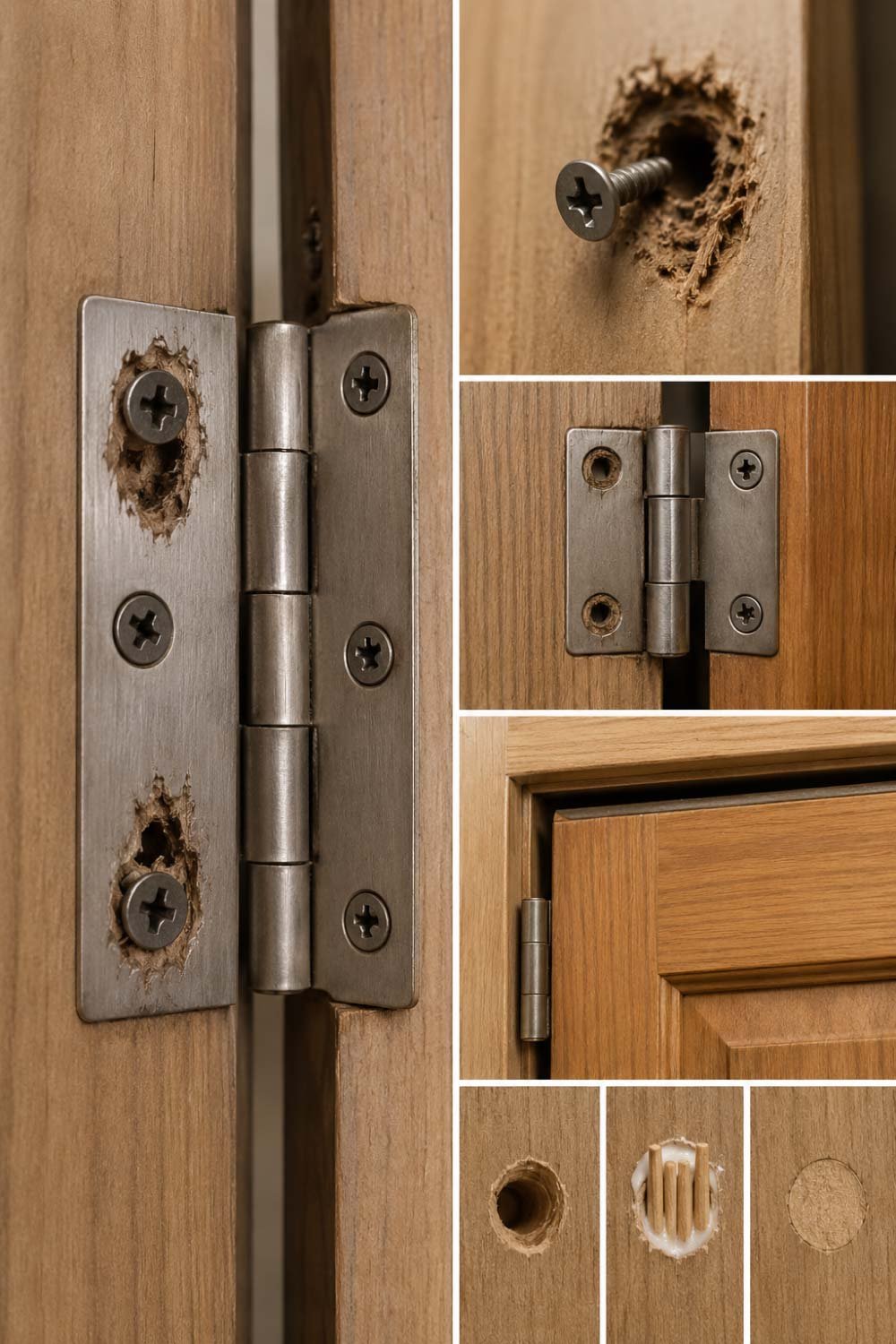
Stripped screw holes occur when screws lose their grip inside the wood. This weakens hinge support and causes the door to slowly drift out of alignment. Even repeated tightening will not hold if the internal wood is damaged.
- Screws no longer grip tightly in wood
- Hinges become unstable over time
- Door slowly shifts out of position
- Tightening does not solve the issue permanently
- Requires filling or reinforcement of holes
5. Improper Installation
Sometimes cabinet door issues start from the beginning due to incorrect installation. If hinges were not aligned properly during setup, the door will continue to show problems no matter how often it is adjusted.
- Hinges installed at incorrect angles
- Door alignment issues present from start
- Uneven spacing cannot self-correct
- Repeated adjustments only offer temporary fix
- Proper reinstallation may be required
Tools You will Need
One of the best parts of this repair is that it doesn’t require special equipment. Most households already have what’s needed, making this an easy DIY task without professional help or expensive tools.
- A screwdriver (Phillips or flathead depending on screws)
- A pencil
- A small level (optional but helpful)
- Wood glue or toothpicks (for stripped holes)
- A drill (optional for repairs)
- A soft cloth for cleaning dust
Step-by-Step Easy Alignment Fix
Now let’s get into the real solution. Follow these steps carefully, and your cabinet door should close smoothly again.
Step 1: Check the Door Movement
Start by opening and closing the cabinet door slowly. This helps you identify exactly where the issue is coming from. Watch carefully for rubbing points, uneven gaps, or sagging movement to understand the type of misalignment.
- Observe how the door moves when opening
- Check for rubbing at top or bottom edges
- Look for uneven spacing around the frame
- Notice if the door bounces or resists closing
- Identify whether issue is vertical or horizontal
Step 2: Tighten All Hinges
Most cabinet alignment problems start with loose screws. Tightening them restores basic stability and often improves alignment immediately. Be careful not to overtighten, as this can damage the wood further and worsen the issue over time.
- Tighten all hinge screws carefully
- Focus on both cabinet and door sides
- Avoid over-tightening to prevent stripping
- Test door movement after adjustments
- Often solves minor alignment issues quickly
Step 3: Adjust the Hinge Position
If tightening doesn’t fully fix it, the next step is adjusting the hinge itself. Small movements can correct alignment issues effectively. Most modern hinges allow slight adjustments in multiple directions for precise positioning.
- Slightly loosen hinge mounting screws
- Gently shift door position in needed direction
- Move in small, controlled adjustments only
- Retighten screws while holding alignment
- Test after each small correction
Step 4: Fix Sagging Doors
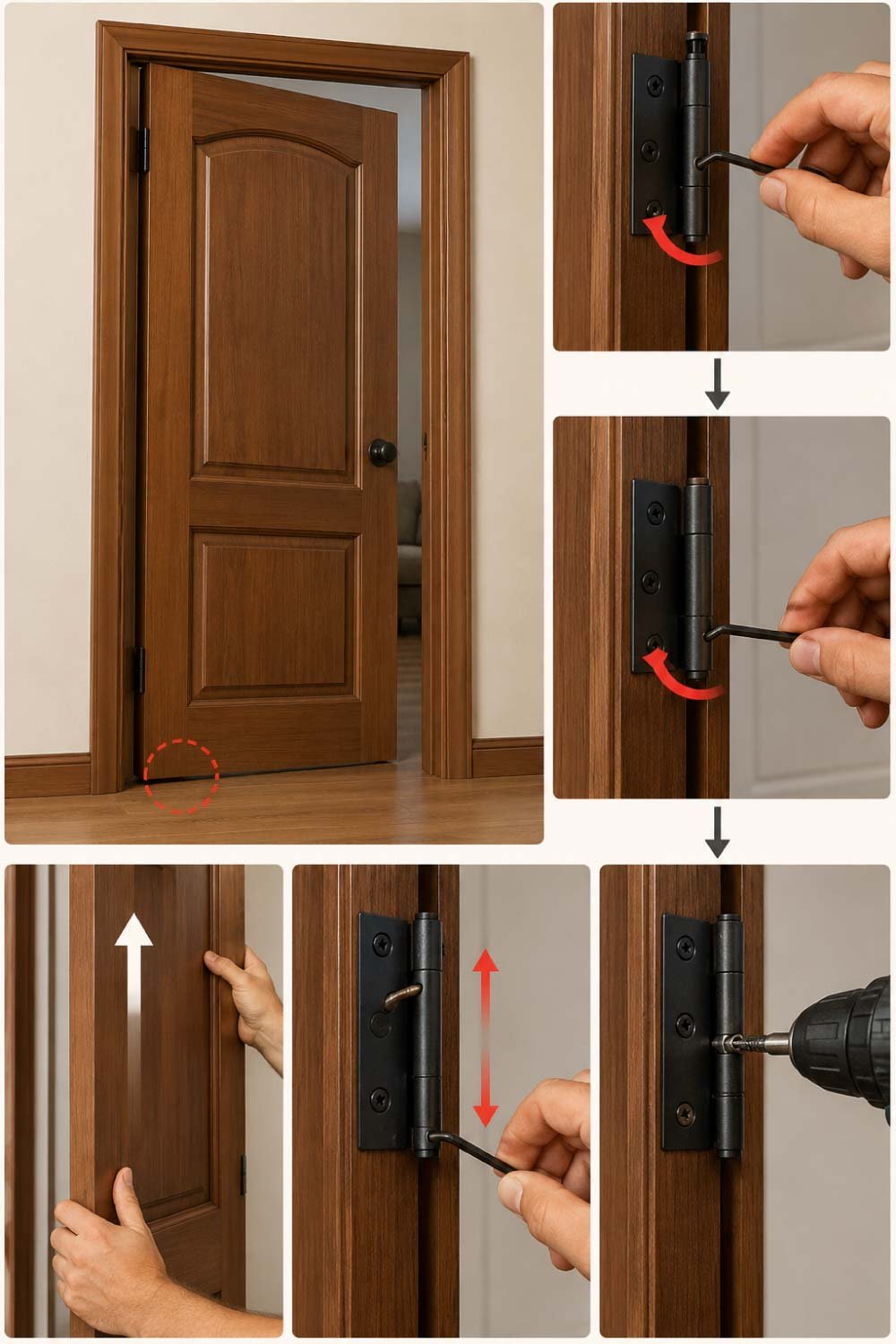
If the door is dragging downward or scraping the bottom frame, it likely needs vertical correction. This usually happens due to weight pressure over time, but it can be fixed by redistributing hinge tension properly.
- Loosen top hinge slightly for adjustment
- Tighten bottom hinge to lift door position
- Lift door gently while securing screws
- Rebalance weight across both hinges
- Add extra support screw if needed for heavy doors
Step 5: Repair Stripped Screw Holes
Stripped screw holes are a common reason cabinet doors stop staying aligned. When the wood inside the hole wears out, screws lose their grip and spin freely instead of tightening. This weak connection causes hinges to shift repeatedly, making the door unstable even after adjustments.
- Screws spin without tightening properly
- Hinge loses firm grip on cabinet frame
- Door slowly shifts out of alignment
- Repeated tightening gives no lasting fix
- Weak wood fibers cause instability
Quick Fix Method:
- Remove the loose screw completely
- Insert wooden toothpicks or matchsticks into the hole
- Apply a small drop of wood glue for strength
- Break off extra wood so it stays flush with surface
- Reinsert screw tightly into the repaired hole
This method works by filling the empty space inside the hole, giving the screw new material to grip. It instantly improves hinge stability and often restores proper door alignment without needing major repairs.
For a more permanent fix, wooden dowels or filler plugs can be used, especially for heavily damaged holes. However, the toothpick method is fast, simple, and effective for everyday cabinet repairs.
Also Read:
Step 6: Check Door Alignment Visually
After completing repairs, a visual check is essential to ensure everything is properly aligned. Sometimes small adjustments can still be needed even after tightening or fixing hinges. Standing back helps you see the full picture instead of focusing on one hinge area.
- Step back and close the cabinet door completely
- Check spacing between door and frame on all sides
- Look for even gaps from top to bottom
- Ensure door sits flat against cabinet surface
- Identify any slight tilt or uneven positioning
If something still looks off, make very small hinge adjustments. Even a millimeter shift can improve overall alignment. At this stage, precision is more important than applying force, so take time to fine-tune the position carefully.
Step 7: Test Opening and Closing Repeatedly
Once adjustments are complete, it’s important to test the cabinet door several times. This ensures the repair holds under normal use and confirms that alignment, movement, and closing action are all working smoothly together.
- Open and close the door multiple times slowly
- Check for smooth and silent movement
- Listen for any scraping or rubbing sounds
- Ensure latch or magnetic closure works properly
- Confirm alignment remains stable after repeated use
If the door continues to move smoothly without resistance, your repair is successful. Repeated testing also helps reveal any hidden issues that may not appear during a single opening or closing.
Bonus Fix: Soft Close Adjustment
Soft-close hinges can sometimes be affected when the door is misaligned or if tension settings are off. If the door doesn’t close gently or fully, the soft-close mechanism may need a quick reset or adjustment.
- Check damper or tension settings on hinge
- Adjust softness level if the feature allows
- Make sure nothing blocks hinge movement
- Ensure arm closes freely without resistance
- Reset mechanism if closing feels uneven
In many cases, simply adjusting tension restores proper soft-close function. Keeping hinges clean and properly aligned also helps maintain smooth operation over time.
Also Read:
Preventing Future Cabinet Door Problems
Once your cabinet door is working properly again, a little maintenance can keep it that way. Regular care helps avoid repeated repairs and keeps doors functioning smoothly for years.
1. Tighten Hinges Every Few Months
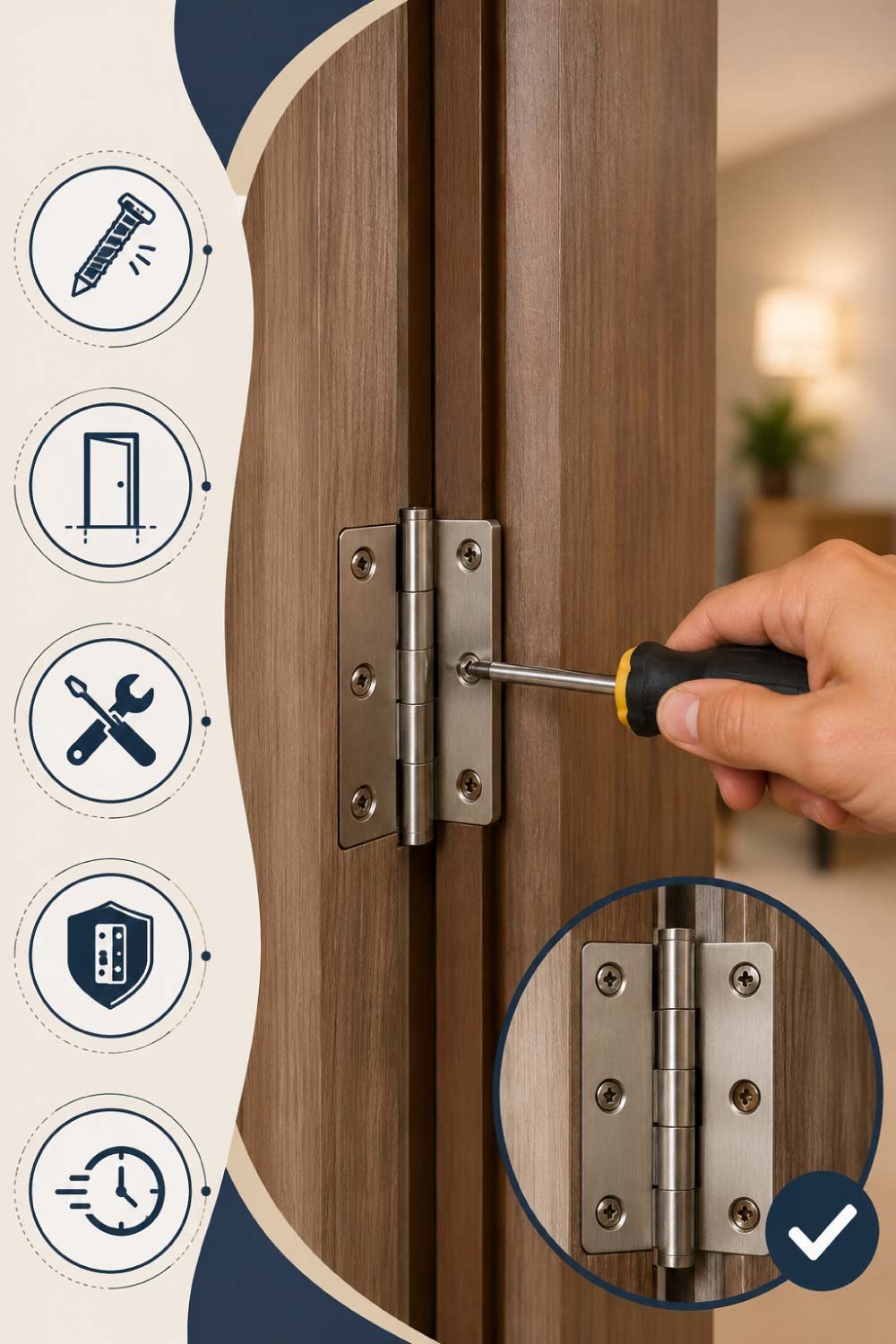
Regular use slowly loosens screws over time. Checking and tightening hinges every 3–4 months helps maintain stability and prevents doors from sagging or shifting unexpectedly.
- Prevents gradual loosening of screws
- Maintains proper door alignment
- Reduces need for major repairs later
- Keeps hinges stable under daily use
- Quick maintenance task with big benefits
2. Avoid Slamming Doors
Slamming cabinet doors puts sudden pressure on hinges and screws. Over time, this force can cause misalignment, loosen hardware, or even damage the cabinet frame.
- Reduces stress on hinge joints
- Prevents screws from loosening quickly
- Protects cabinet structure from damage
- Extends lifespan of hardware
- Ensures smoother long-term performance
3. Control Humidity
Moisture in the air can cause wood to expand, leading to sticking or misaligned doors. Keeping humidity under control helps maintain consistent cabinet shape and alignment.
- Prevents wood swelling and expansion
- Reduces seasonal door sticking issues
- Helps maintain consistent alignment
- Protects wood from long-term damage
- Improves overall cabinet durability
4. Clean Hinges Occasionally
Dust, grease, and dirt can build up on hinges over time, affecting movement. Regular cleaning ensures smoother operation and prevents unnecessary strain on screws and joints.
- Removes dust and grease buildup
- Improves hinge movement and flexibility
- Prevents corrosion or stiffness
- Enhances long-term durability
- Keeps doors operating smoothly
5. Replace Old Hinges When Needed
If hinges are bent, rusted, or worn out, no adjustment will fully fix the issue. Replacing damaged hardware ensures proper function and restores full alignment performance.
- Fixes permanent structural damage
- Restores proper door alignment
- Eliminates recurring adjustment issues
- Improves overall cabinet stability
- Best solution for worn-out hardware
Also Read:
When You Should Consider Replacement Instead
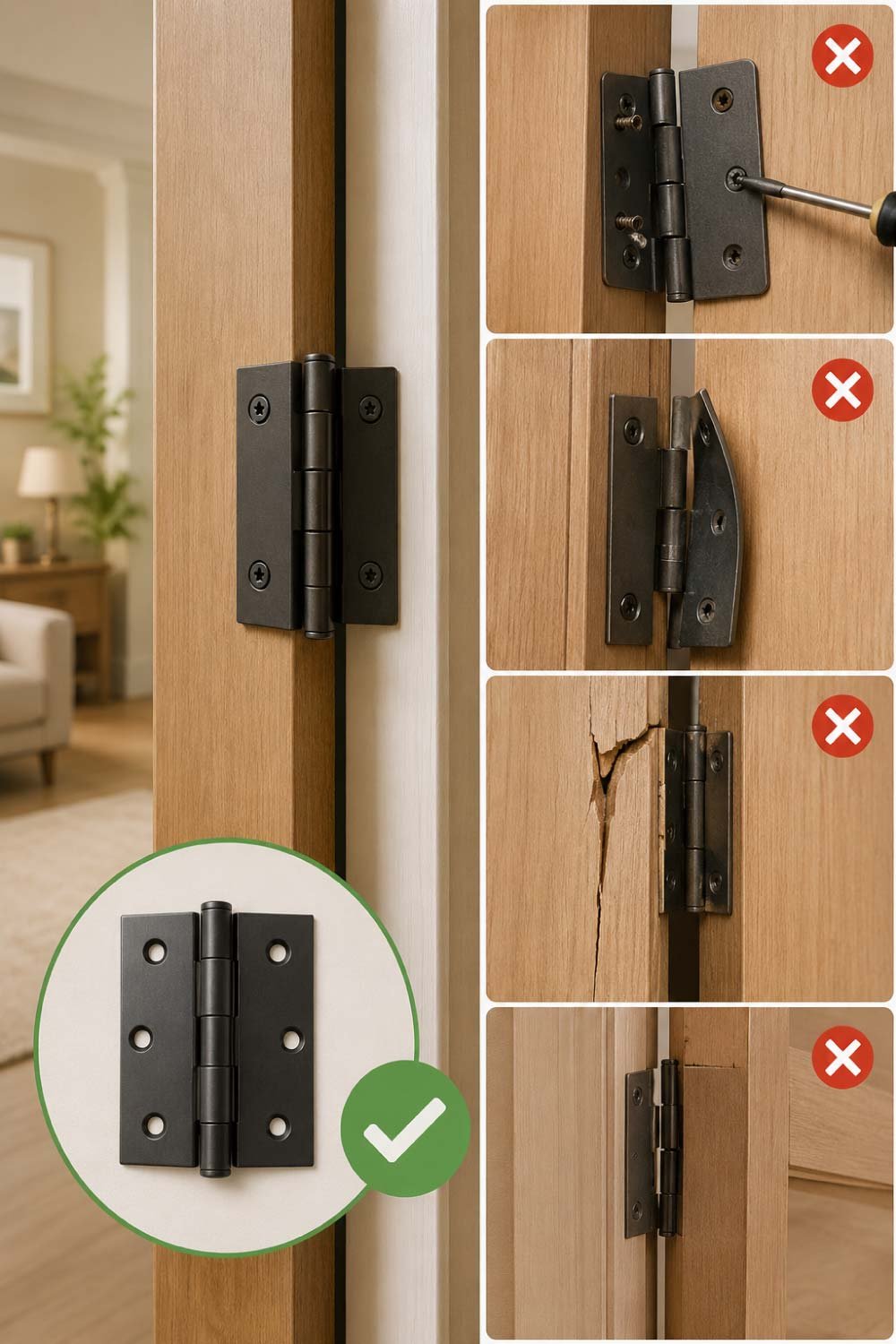
Sometimes, repair is not enough. You may need new hinges or doors if:
- Screws repeatedly loosen even after repair
- Hinges are visibly bent or damaged
- Wood around the hinge is cracked
- Door remains misaligned after multiple adjustments
In these cases, replacing hardware is more effective than repeated fixes.
Also Read:
Final Thoughts
A cabinet door that won’t close properly might seem like a major inconvenience, but in most cases, it’s a simple alignment issue that you can fix yourself. The key is to work slowly, make small adjustments, and understand how each hinge affects the door’s position.
Most problems come down to loose screws, minor misalignment, or worn-out screw holes—all of which are easy to repair with basic tools.
With the steps above, you can restore smooth, clean, and proper cabinet door operation without spending money on repairs or replacements. A little patience goes a long way, and once fixed, your cabinet will feel as good as new.