
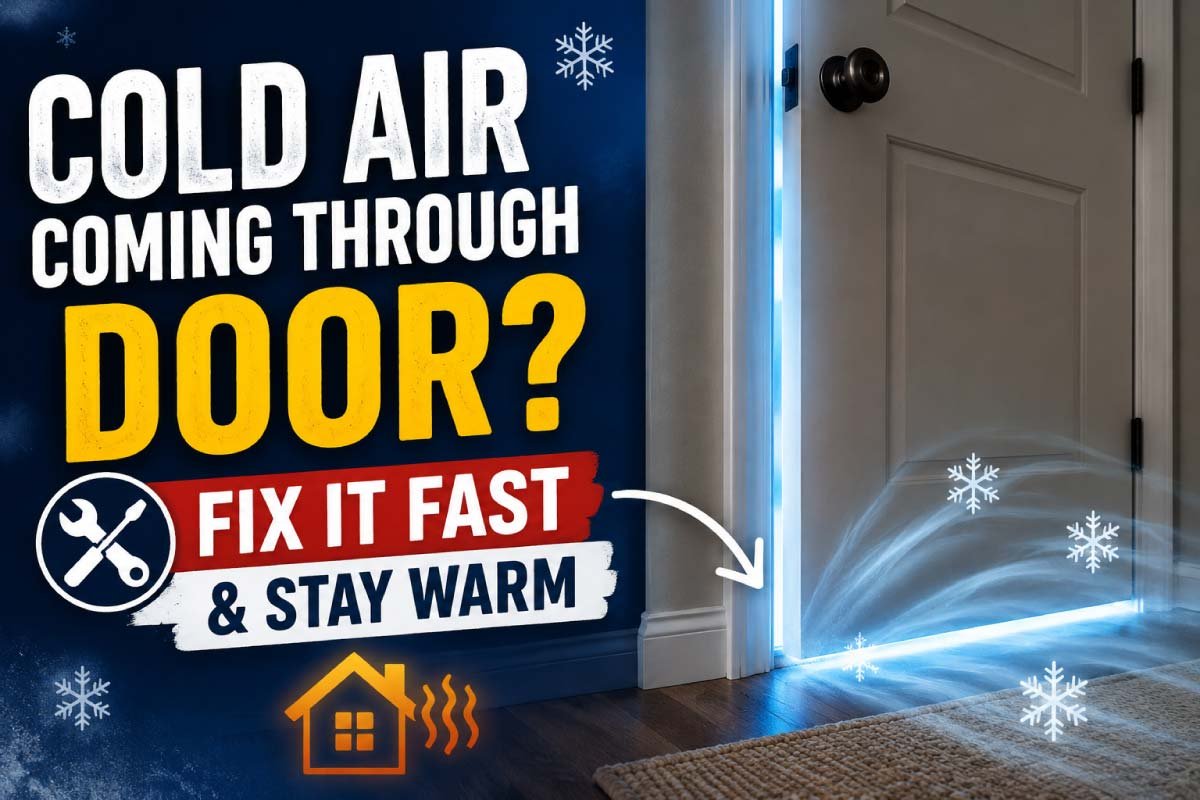
A chilly draft sneaking in from under or around your door can make your home uncomfortable, increase your energy bills, and turn even a cozy room into a cold zone. If you’ve ever felt that sudden rush of cold air near your feet, you’re not alone. Door drafts are one of the most common causes of heat loss in homes—but the good news is, they’re also one of the easiest problems to fix.
In this detailed guide, you’ll learn why cold air comes through doors, how to identify the exact source, and—most importantly—how to fix it quickly without replacing your door.
Why Cold Air Comes Through Your Door
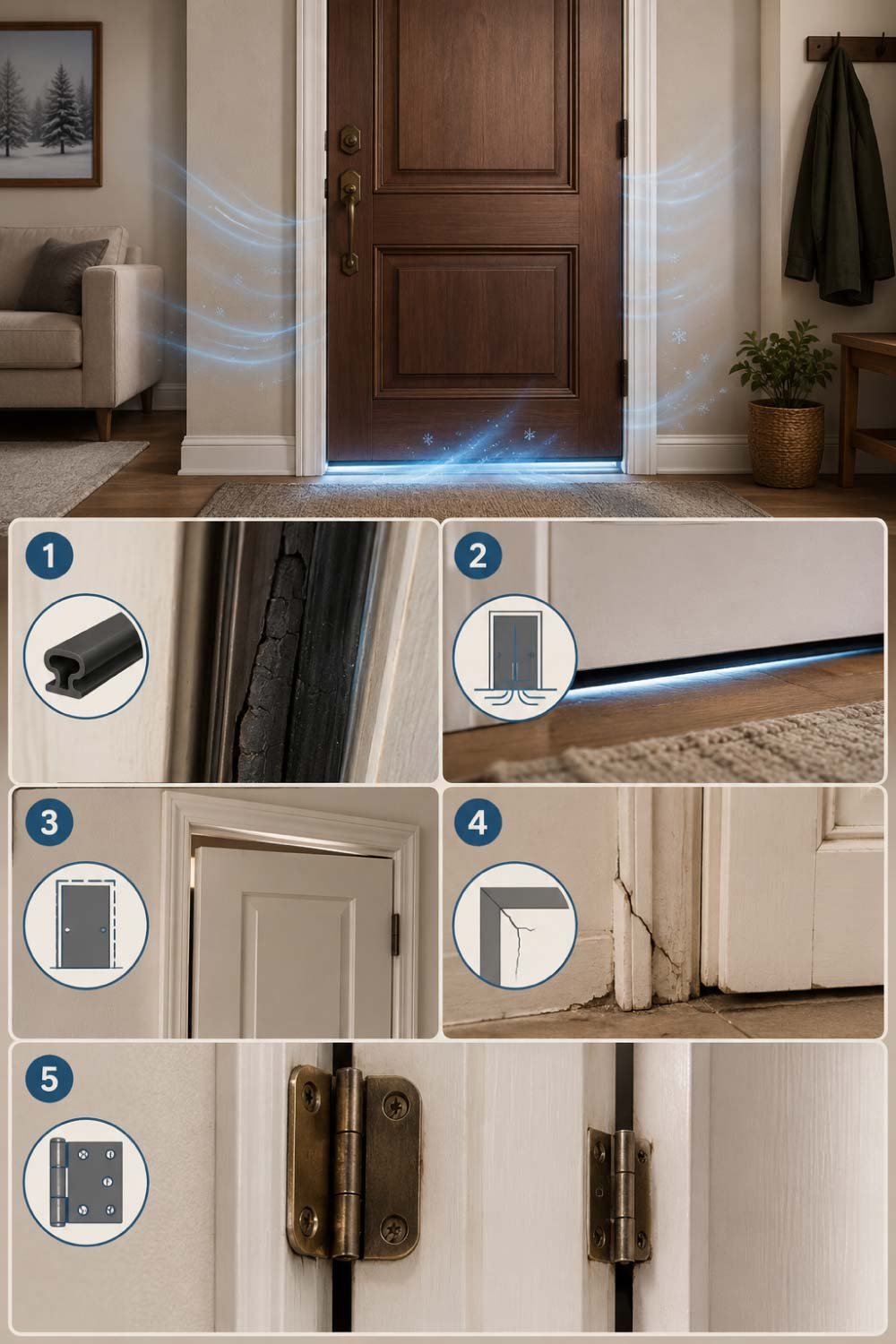
Before jumping into solutions, it helps to understand the root cause. Cold air intrusion usually happens because your door isn’t sealed tightly. Even small gaps can let in a surprising amount of cold air. Identifying the exact reason helps you choose the most effective fix instead of wasting time on temporary solutions.
Here are the most common reasons:
1. Worn-Out Weatherstripping
Over time, the protective seal around your door naturally degrades due to exposure to temperature changes, moisture, and daily use. When weatherstripping loses its flexibility, it can no longer form a tight seal, allowing cold air to pass through unnoticed and reduce your home’s energy efficiency.
Weatherstripping is the soft material lining the edges of your door. Over time, it becomes brittle, cracked, or compressed, losing its ability to block air.
2. Gap Under the Door
The space beneath your door is one of the most overlooked areas when it comes to drafts. Even a small visible gap can act like an open channel for cold air to flow inside, especially during windy or colder seasons when outside air pressure pushes inward.
If you can see light under your door, cold air is definitely coming through. This gap is one of the biggest sources of drafts.
3. Misaligned Door
Doors can shift out of alignment over time due to regular use, house settling, or loose hinges. When this happens, the door may no longer fit evenly within the frame, creating small but impactful openings that allow cold air to seep inside.
A door that doesn’t sit properly in its frame can leave uneven gaps around the edges.
4. Damaged Door Frame
Your door frame plays a crucial role in maintaining a tight seal. If the frame becomes cracked, warped, or worn, it creates hidden pathways for air to enter. These issues are often hard to spot but can significantly impact insulation.
Cracks or warping in the frame can create hidden entry points for cold air.
5. Loose Hinges or Hardware
Even minor hardware issues can affect how tightly your door closes. Loose hinges or screws may cause the door to sag slightly, disrupting the seal and creating gaps. These small misalignments can lead to noticeable drafts if not corrected early.
If your door sags slightly, even by a few millimeters, it can create gaps that let cold air in.
How to Detect Where the Cold Air Is Coming From
Before applying any fix, it’s important to locate the exact source of the draft. Without proper detection, you might fix the wrong area and still experience cold air leaks. These simple methods help you quickly identify problem spots with minimal tools.
Simple Methods to Check:
Hand Test:
A quick and effective way to feel temperature differences is by using your hand. Slowly move it along the edges of the door and notice any cold airflow. This method works best on windy or colder days when drafts are more noticeable.
Hand Test: Move your hand around the edges of the door to feel for cold air.
Candle Test:
Using a candle helps visually detect airflow that may not be easy to feel. The flame reacts instantly to air movement, making it a reliable indicator of drafts around door edges or gaps. Always be cautious when handling an open flame.
Candle Test: Hold a candle near the edges. If the flame flickers, there’s a draft.
Light Test:
This method works especially well during daylight hours. By turning off indoor lights and observing the edges of your door, you can easily spot any light passing through, which directly indicates gaps where cold air can enter.
Light Test: Turn off indoor lights and look for daylight around the door edges.
Once you identify the problem area, you can choose the right fix.
Quick Fixes to Stop Cold Air Instantly
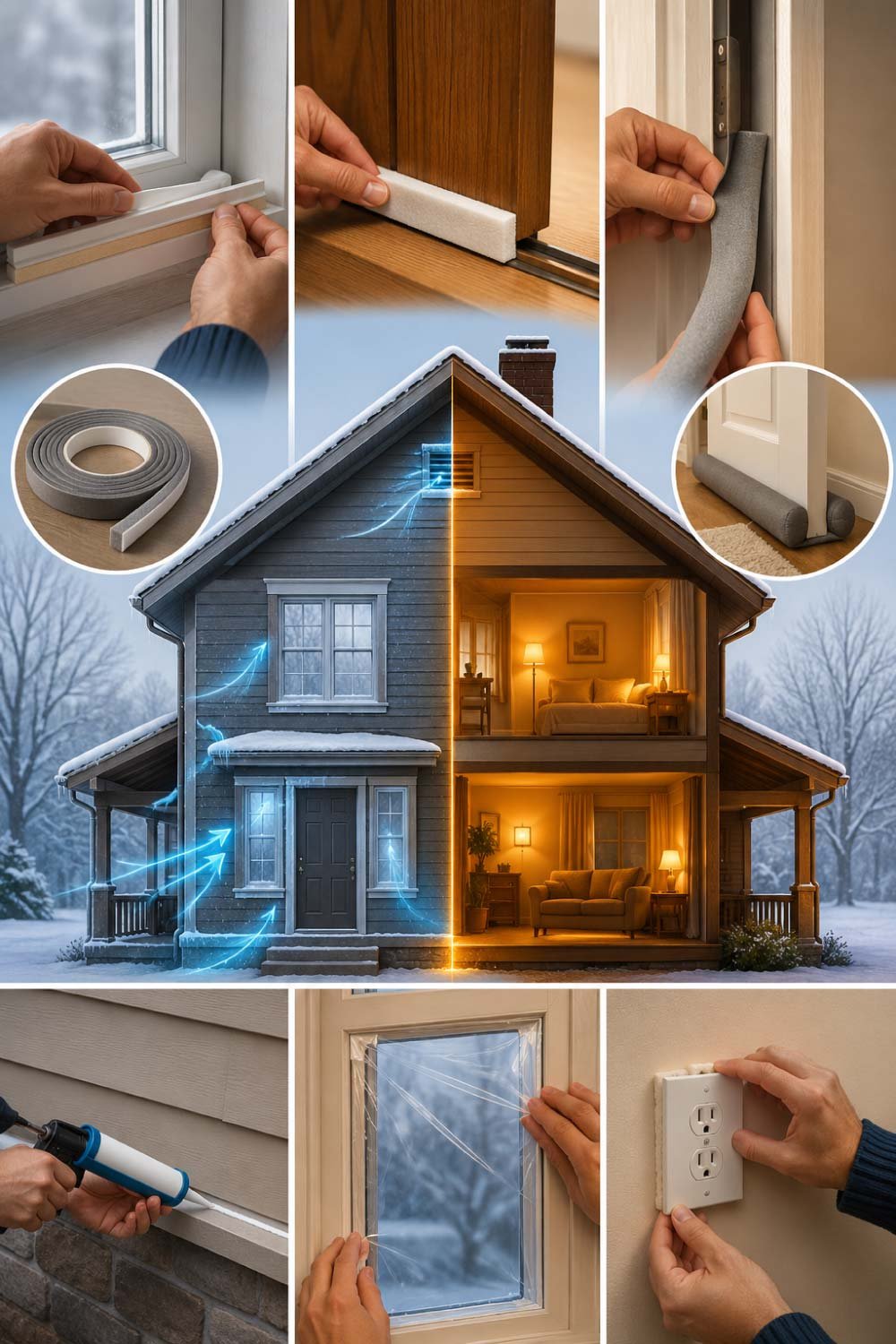
Now that you understand the causes and have identified the draft locations, it’s time to take action. These quick and practical solutions are easy to implement, cost-effective, and can make an immediate difference in keeping your home warm and energy-efficient.
Let’s get into practical solutions you can apply right away.
1. Install a Door Draft Stopper
If you need a fast and simple solution, a draft stopper is one of the easiest options available. It requires no installation and works instantly to block airflow from entering through the bottom of your door.
What it is:
A long, soft tube placed at the bottom of the door to block airflow.
Why it works:
It seals the gap under the door instantly.
How to use it:
Place it snugly against the bottom edge
Ensure it covers the entire width
Pro Tip: You can even make one using old fabric and stuffing for a DIY solution.
2. Replace or Add Weatherstripping
When drafts are coming from the sides or top of the door, upgrading your weatherstripping is the most effective fix. It creates a tight seal and significantly improves insulation, helping maintain indoor temperature and reduce energy loss.
Types of weatherstripping:
Foam tape (easy to install)
Rubber seals (durable)
Felt strips (budget-friendly)
Installation steps:
Remove old material
Clean the surface
Apply new weatherstripping along the edges
Close the door to ensure a tight seal
Result:
A properly sealed door blocks cold air completely.
3. Install a Door Sweep
A door sweep offers a more durable and long-term solution compared to draft stoppers. It is attached directly to the door and provides consistent protection against airflow, dust, and even insects entering from underneath.
Materials available:
Rubber
Silicone
Brush-style
Installation:
Measure the width of your door
Attach the sweep using screws or adhesive
Ensure it lightly touches the floor
Benefit:
Provides a more permanent solution than a draft stopper.
4. Seal Gaps with Caulk
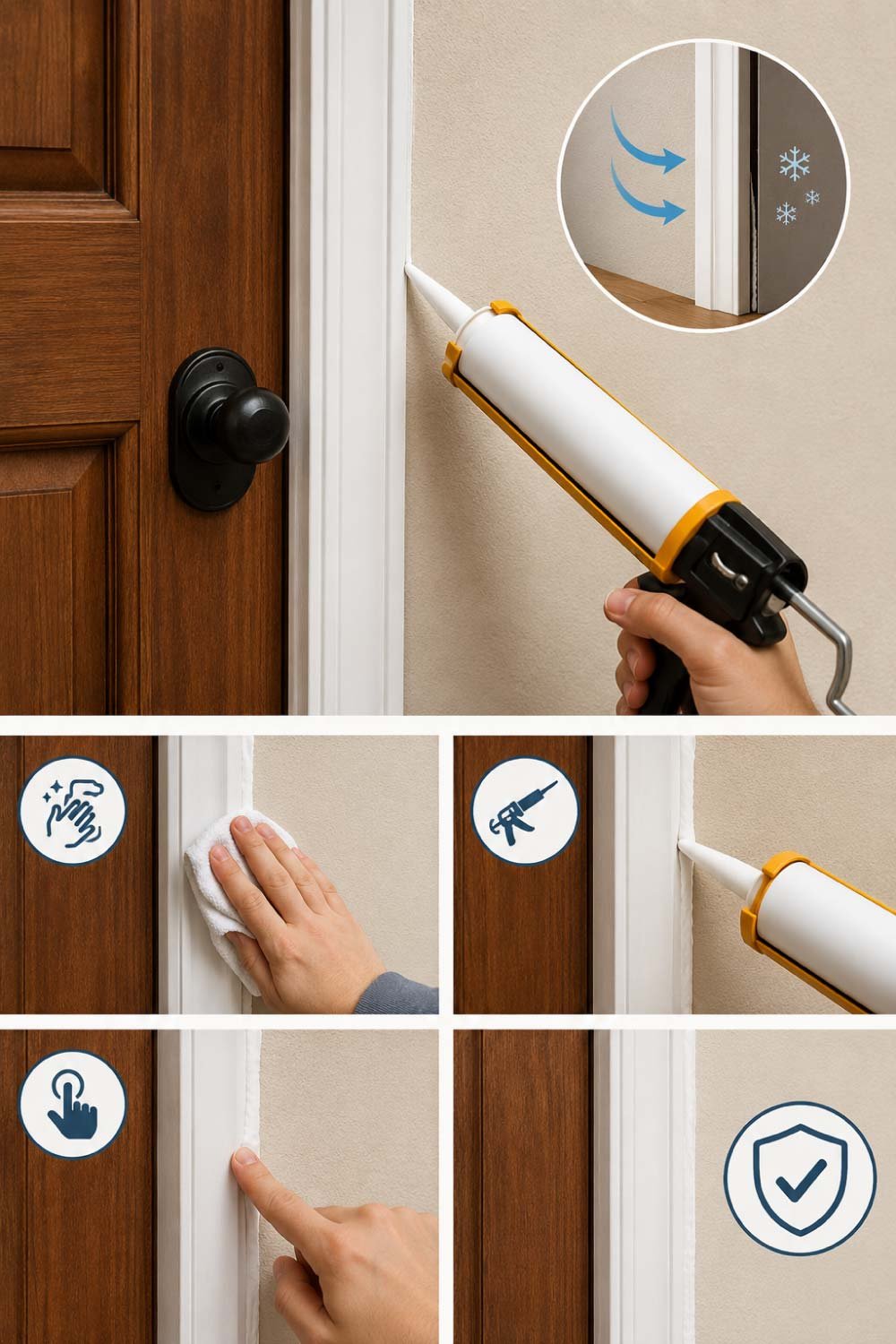
For cracks and small openings around the door frame, caulking is a highly effective method. It seals hidden gaps that are not immediately visible but can still allow cold air to enter your home and reduce insulation efficiency.
Best for:
Small gaps and cracks
Areas where the frame meets the wall
How to apply:
Clean the area
Apply caulk evenly
Smooth it out with your finger or tool
Let it dry completely
Outcome:
Prevents cold air from entering through hidden openings.
Also Read:
5. Use Door Seal Kits
Door seal kits are a convenient all-in-one solution designed to simplify the insulation process. Instead of buying separate components, these kits include everything needed to block air leaks effectively. They are ideal for beginners who want a quick, organized, and reliable way to improve door sealing.
What’s included:
Weatherstripping
Door sweep
Corner seals
Why choose this:
Complete solution in one go
Easy for beginners
6. Fix Door Alignment
If your door is not properly aligned, even the best sealing materials won’t fully stop drafts. Misalignment creates uneven pressure points and gaps that allow air to pass through. Fixing the alignment ensures the door closes evenly and improves the effectiveness of all sealing solutions.
Quick alignment fix:
Tighten hinge screws
Replace stripped screws with longer ones
Adjust hinges if necessary
Tip:
Lift the door slightly while tightening to correct sagging.
7. Add a Threshold Seal
A threshold seal is installed at the base of the doorway and plays an important role in blocking airflow from underneath. It creates a solid barrier between indoor and outdoor environments, helping maintain indoor temperature and reducing energy loss through floor-level gaps.
Purpose:
Closes the gap between door and floor
Improves insulation
Installation:
Position it under the door
Secure with screws or adhesive
Ensure the door closes tightly over it
8. Hang Thermal Curtains
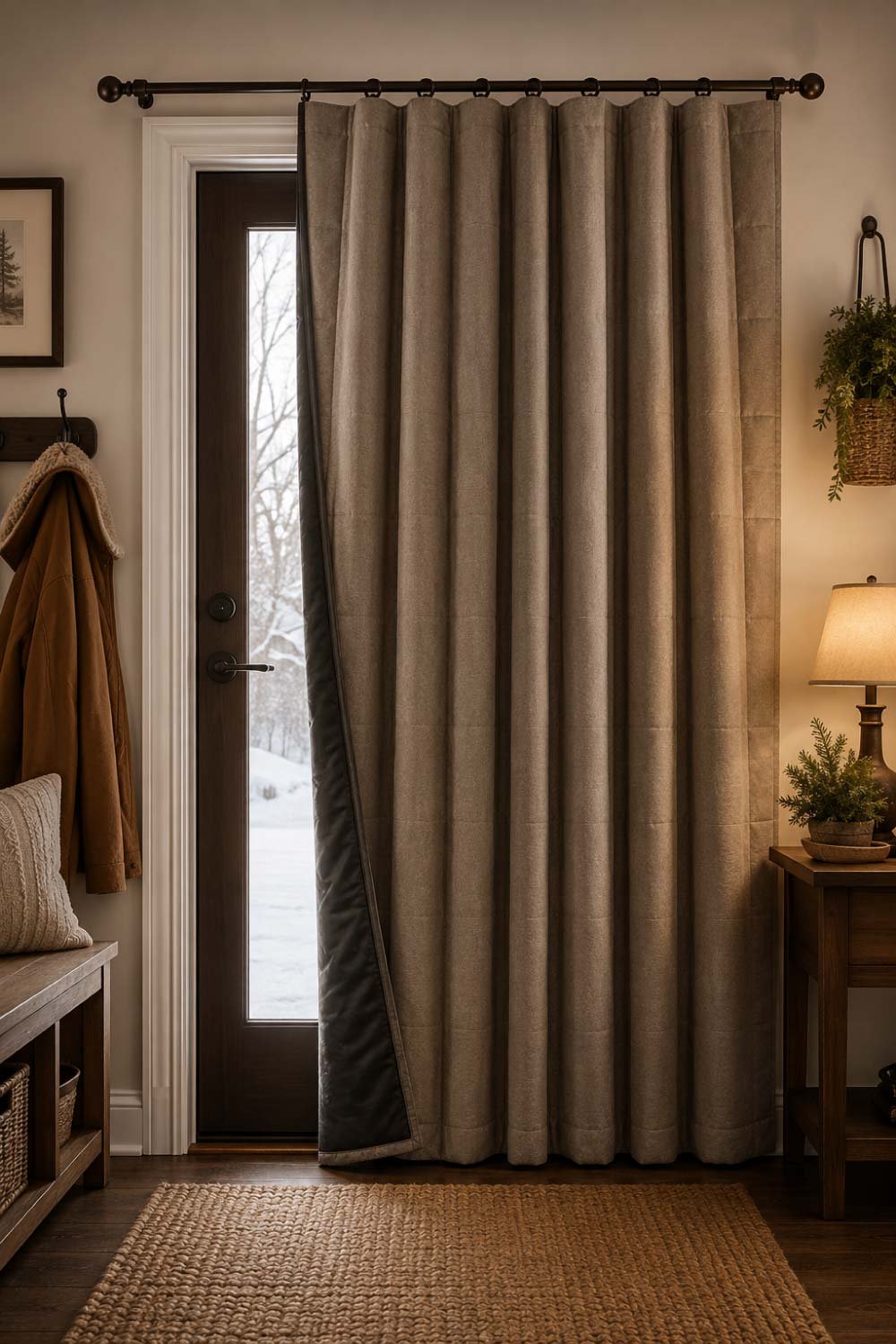
Thermal curtains are an often-overlooked but highly effective method for reducing heat loss around entry points. They act as an additional insulation layer, especially useful for doors exposed to strong winds or cold outdoor temperatures, helping maintain indoor warmth more efficiently.
How it helps:
Adds an extra layer of insulation
Blocks cold air from entering the room
Best for:
Entry doors
Balcony doors
Also Read:
9. Use Foam Insulation Tape
Foam insulation tape is one of the quickest and most affordable solutions for sealing small gaps around doors. It is flexible, easy to apply, and works well for temporary or seasonal fixes where immediate draft reduction is needed without professional tools.
Steps:
Measure the gap
Cut foam tape to size
Stick it along door edges
Advantage:
Affordable and easy to install in minutes.
Long-Term Solutions for Maximum Warmth
For homeowners looking for lasting protection against cold air, long-term solutions are essential. These upgrades not only improve insulation but also enhance energy efficiency, reduce maintenance needs, and provide consistent indoor comfort throughout colder seasons.
Upgrade to an Insulated Door
Older doors often lack proper insulation, making them a major source of heat loss. Upgrading to a modern insulated door significantly improves thermal efficiency and reduces drafts, ensuring your home stays warmer with less reliance on heating systems.
Better options:
Solid wood doors
Steel doors with insulation
Fiberglass doors
Install a Storm Door
A storm door acts as a protective outer layer, shielding your main door from harsh weather conditions. It significantly reduces air infiltration while also adding durability and an extra level of insulation for better energy conservation.
Benefits:
Reduces drafts
Improves energy efficiency
Protects your main door
Improve Overall Home Insulation
Sometimes cold air issues are not limited to doors alone. Poor insulation in other parts of the home can also contribute to heat loss. Addressing these areas ensures a more balanced and energy-efficient indoor environment overall.
Check:
Windows
Walls
Attic insulation
Fixing these areas enhances overall warmth and reduces energy loss.
Also Read:
Seasonal Maintenance Tips
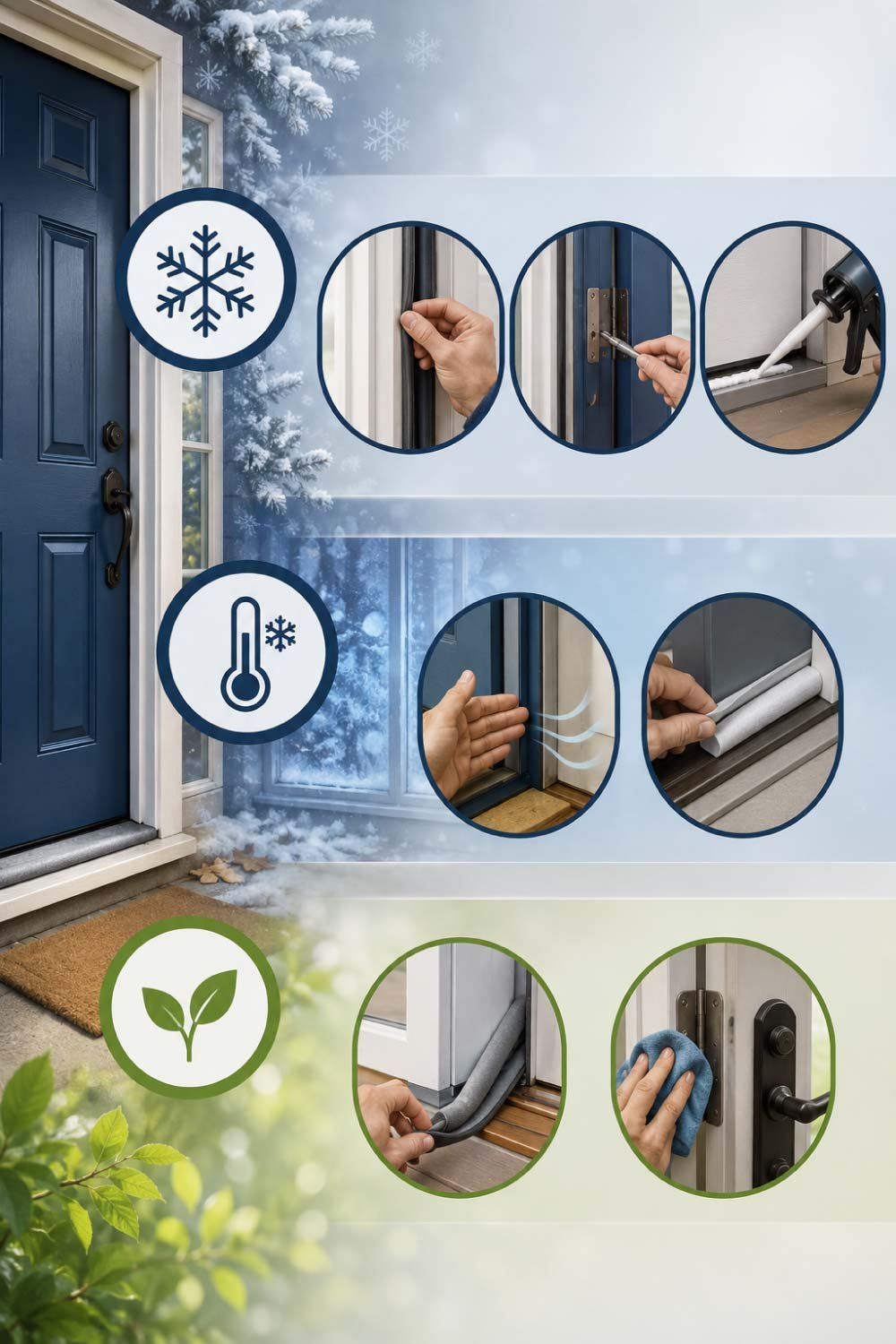
Regular maintenance is essential to keep your doors effective against drafts throughout the year. Seasonal checks help you identify early signs of wear and tear, ensuring small issues are fixed before they become major insulation problems.
Before Winter:
Inspect weatherstripping
Check door alignment
Seal any new gaps
During Winter:
Monitor drafts
Replace temporary fixes if needed
After Winter:
Remove temporary seals
Clean and maintain hardware
Common Mistakes to Avoid
Many people unintentionally reduce the effectiveness of their insulation efforts by making simple mistakes. Avoiding these errors ensures your door sealing solutions last longer and perform efficiently without unnecessary repairs or repeated work.
Avoid these errors when fixing door drafts:
Ignoring small gaps: Even tiny openings can cause significant heat loss
Using low-quality materials: Cheap seals wear out quickly
Over-tightening the door: This can damage hinges or make the door hard to close
Skipping cleaning before installation: Dirt prevents proper adhesion
Benefits of Fixing Door Drafts
Fixing door drafts is not just about comfort—it also improves energy efficiency, reduces costs, and enhances overall living conditions. Small improvements around your door can lead to noticeable benefits throughout your entire home.
Taking the time to fix cold air leaks offers several advantages:
1. Lower Energy Bills
Less heat escapes, so your heating system works less.
2. Improved Comfort
No more cold spots near doors.
3. Better Indoor Air Quality
Sealing gaps keeps dust and pollutants out.
4. Reduced Noise
Sealed doors also block outside noise.
5. Increased Home Value
Energy-efficient homes are more attractive to buyers.
DIY vs Professional Help
Most door draft problems can be solved with simple DIY methods using basic tools and materials. However, in some cases where structural damage or severe misalignment exists, professional help may be necessary for a long-lasting and safe solution.
Most door draft issues are easy DIY fixes. However, consider professional help if:
The door frame is severely damaged
The door is heavily warped
Structural issues are present
Final Thoughts
Cold air coming through your door might seem like a small annoyance, but it can have a big impact on your comfort and energy costs. The best part? You don’t need expensive tools or professional help to fix it.
Start with simple solutions like a draft stopper or weatherstripping, then move to more permanent fixes like door sweeps or threshold seals if needed. Even a few small improvements can make a noticeable difference.
With the right approach, you can seal out the cold, keep your home warm, and enjoy a more comfortable living space all winter long.