

If your room feels colder than it should, even when the heater is running, the problem might not be the weather—it could be your windows. Window drafts are one of the most common reasons for heat loss in homes. They silently let cold air in and push warm air out, making your space uncomfortable and increasing your energy bills.
The good news is that you don’t always need expensive replacements to fix this issue. In most cases, a few simple and affordable solutions can stop cold air from sneaking in and instantly improve your home’s comfort.
In this detailed guide, we’ll explore why window drafts happen, how to detect them, and the most effective ways to fix them for good.
Table of Contents
ToggleWhy Window Draft Problems Happen
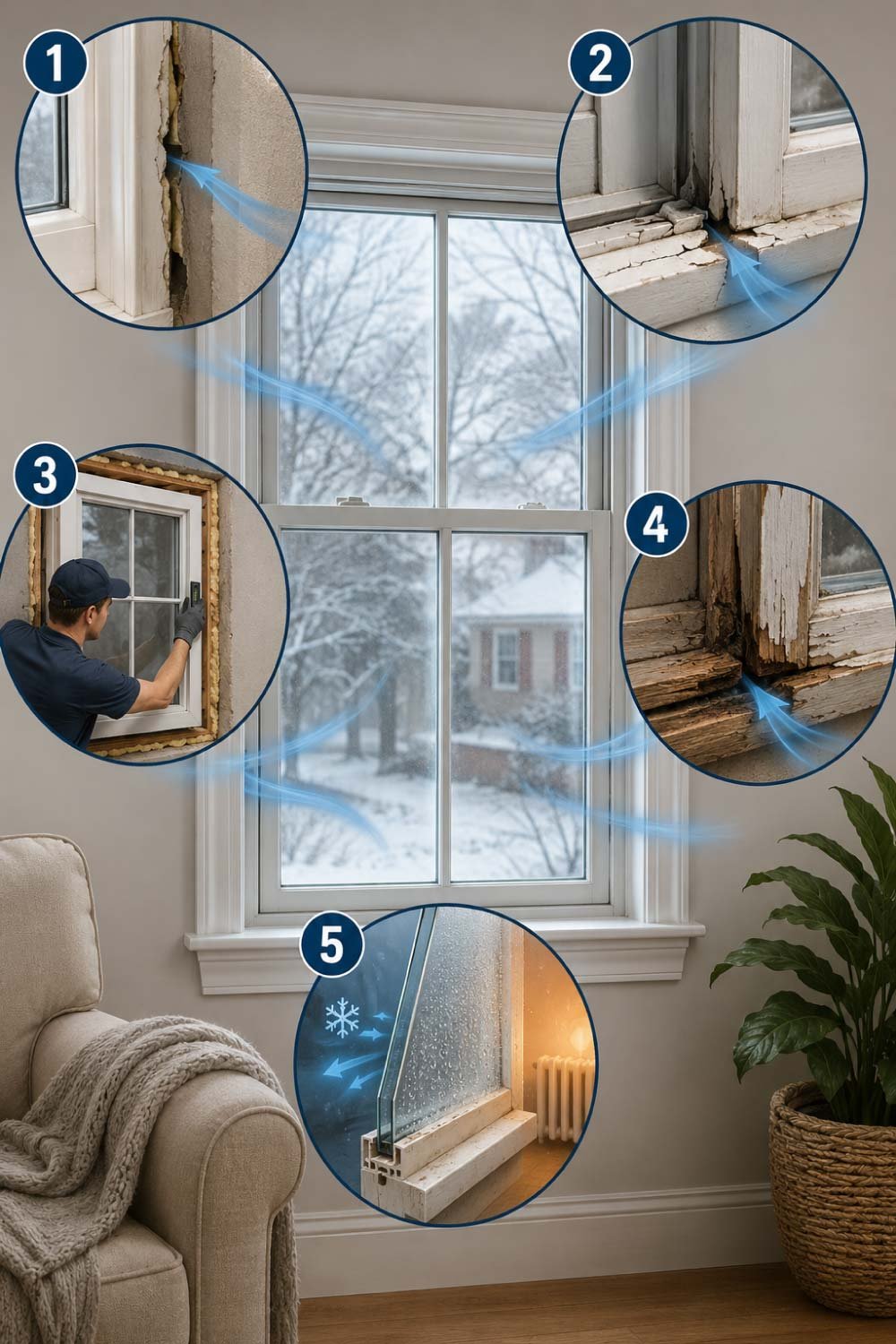
Window draft problems are a very common issue in both old and newly built homes, and they usually develop gradually over time. They are often the result of small structural weaknesses, weather exposure, or installation errors that slowly allow outside air to enter. Understanding the real cause is important because it helps you apply a permanent fix instead of just temporary solutions that don’t last.
Window drafts don’t appear without reason. They usually develop over time due to wear and tear, poor installation, or environmental changes. Understanding the cause helps you choose the right solution instead of just covering up the problem temporarily.
1. Gaps in Window Frames
One of the most common reasons for drafts is small gaps between the window frame and the wall. These gaps may be barely visible, but they allow continuous air leakage.
Over time, building materials naturally expand and contract due to temperature changes, which slowly creates openings.
Additional points:
- Seasonal temperature changes widen existing gaps
- Poor sealing during construction increases leakage risk
- Even hairline cracks can allow air passage
2. Worn-Out Seals and Caulking
Windows are sealed using caulk or rubber seals. These materials degrade with age, especially when exposed to sunlight, rain, and temperature fluctuations.
Once seals crack or shrink, cold air finds an easy path indoors.
Additional points:
- UV exposure weakens sealant over time
- Rubber loses flexibility and starts shrinking
- Moisture accelerates seal deterioration
3. Poor Installation Work
If windows were not installed properly in the first place, drafts are almost guaranteed. Uneven fitting or low-quality sealing materials often lead to long-term leakage problems.
Additional points:
- Misaligned frames create constant air gaps
- Low-grade materials fail faster under pressure
- Lack of insulation during fitting increases drafts
4. Old or Damaged Window Frames
Wooden frames may rot or warp over time, while metal frames can loosen or corrode. Both conditions create small openings that let air pass through.
Additional points:
- Wood expands and contracts with humidity
- Metal corrosion weakens frame strength
- Structural bending leads to poor sealing contact
5. Single-Pane Glass Windows
Older homes often use single-pane windows, which offer very little insulation. Unlike modern double-glazed windows, they do not trap air between layers, making them more vulnerable to temperature changes.
Additional points:
- No insulating air layer between glass sheets
- Heat escapes quickly during cold weather
- Condensation increases overall energy loss
How to Detect Window Drafts in Your Home
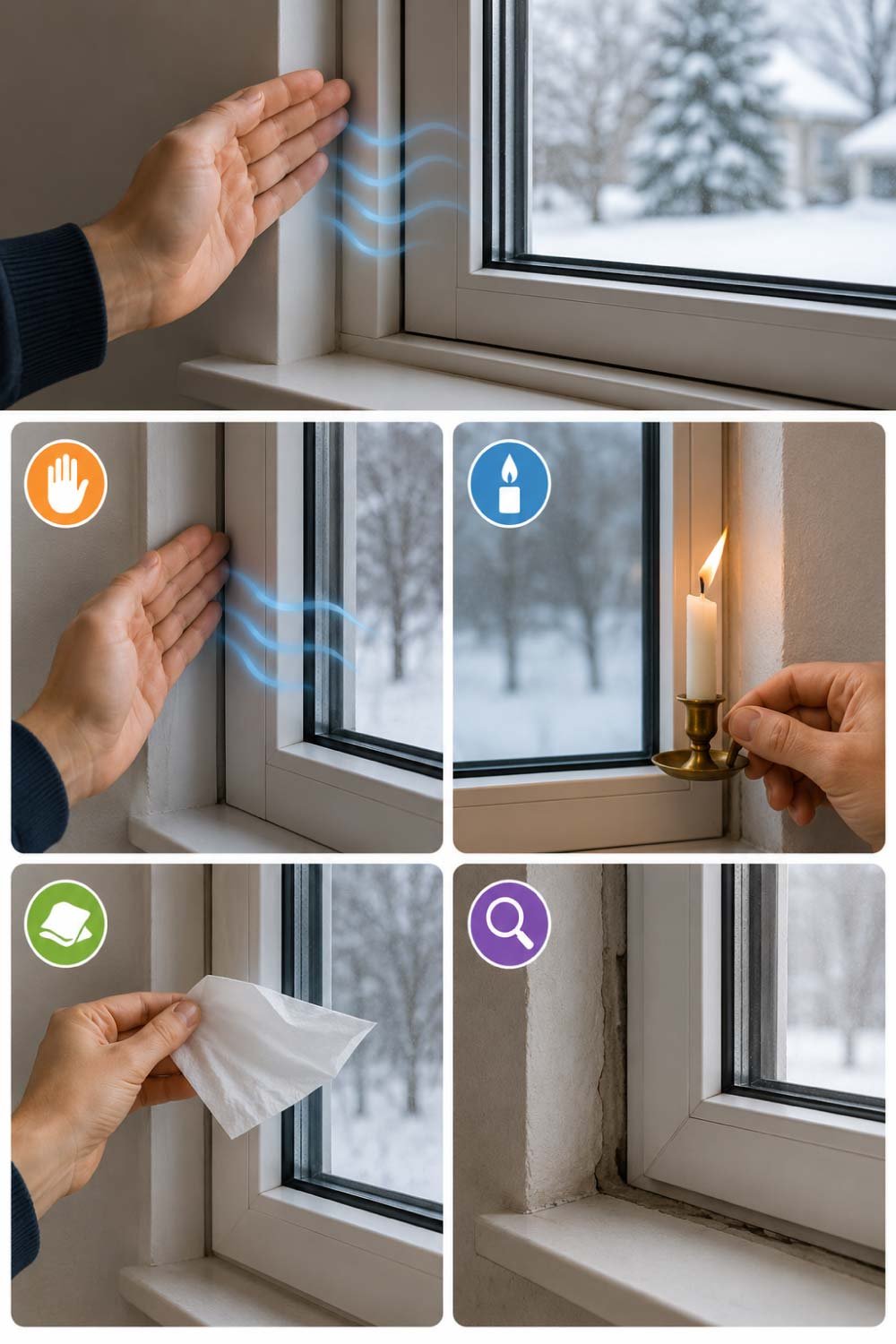
Before fixing the problem, it is important to clearly identify where the cold air is entering from. Detecting window drafts is usually simple and does not require expensive tools or technical knowledge. With a few easy household methods, you can quickly find weak points and decide where repairs are needed most.
Before fixing the problem, you need to identify where the cold air is coming from. Fortunately, detecting drafts is simple and doesn’t require special tools.
Hand Test Method
Place your hand around the edges of the window frame on a windy day. If you feel cold air moving, that’s a clear sign of leakage.
Candle or Lighter Test
Carefully hold a lit candle near the window edges. If the flame flickers or moves, it indicates airflow from outside.
Tissue Paper Test
Hold a thin tissue near the window frame. If it moves without any fan or wind inside the room, you likely have a draft problem.
Check for Visible Gaps
Sometimes, you can actually see small cracks or spaces between the frame and wall or around the edges of the glass.
Also Read:
Easy Fixes for Window Draft Problems
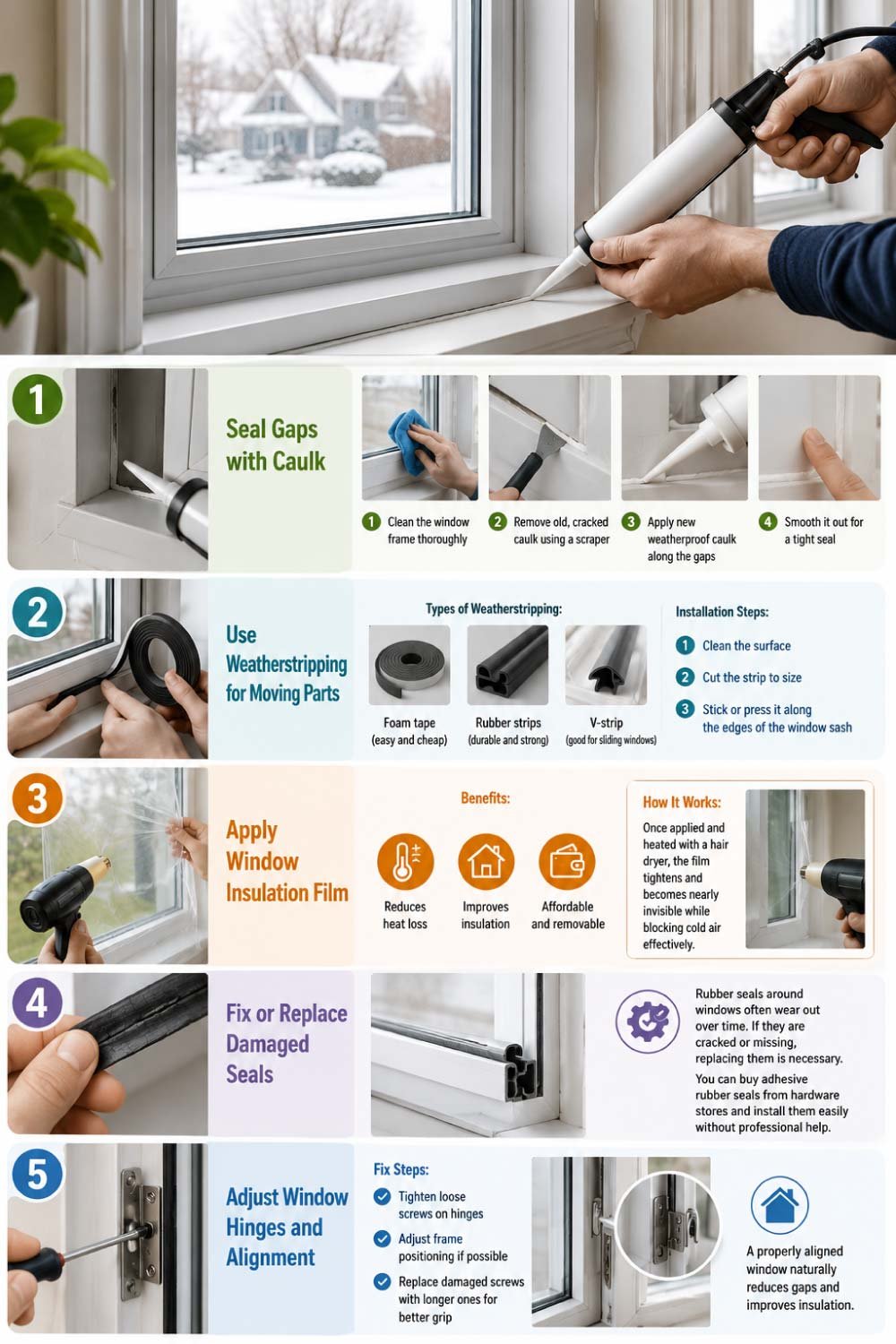
Once you have identified the areas where air is leaking, the next step is applying the right fix. Most window draft issues can be solved using simple, budget-friendly methods that do not require professional help. These solutions help improve insulation, reduce energy loss, and make your home noticeably more comfortable.
Once you’ve identified the problem areas, you can start fixing them. The following methods are practical, affordable, and effective for most households.
1. Seal Gaps with Caulk
Caulking is one of the most reliable and long-lasting solutions for window drafts.
How to Do It:
Clean the window frame thoroughly
Remove old, cracked caulk using a scraper
Apply new weatherproof caulk along the gaps
Smooth it out for a tight seal
Caulking blocks air completely and also prevents moisture from entering.
2. Use Weather stripping for Moving Parts
Weatherstripping is perfect for parts of the window that open and close. It creates a flexible seal without restricting movement.
Types of Weatherstripping:
Foam tape (easy and cheap)
Rubber strips (durable and strong)
V-strip (good for sliding windows)
Installation Steps:
Clean the surface
Cut the strip to size
Stick or press it along the edges of the window sash
This simple fix can significantly reduce drafts instantly.
3. Apply Window Insulation Film
Window insulation film is a plastic layer that sticks to your window and traps air between the glass and room.
Benefits:
Reduces heat loss
Improves insulation
Affordable and removable
How It Works:
Once applied and heated with a hair dryer, the film tightens and becomes nearly invisible while blocking cold air effectively.
4. Fix or Replace Damaged Seals
Rubber seals around windows often wear out over time. If they are cracked or missing, replacing them is necessary.
You can buy adhesive rubber seals from hardware stores and install them easily without professional help.
5. Adjust Window Hinges and Alignment
Sometimes the issue isn’t sealing but misalignment. If the window doesn’t close tightly, air will still leak in.
Fix Steps:
Tighten loose screws on hinges
Adjust frame positioning if possible
Replace damaged screws with longer ones for better grip
A properly aligned window naturally reduces gaps and improves insulation.
6. Use Heavy Curtains or Thermal Drapes
Heavy curtains are one of the simplest ways to reduce the impact of window drafts without doing any structural repair. They act as an extra insulation barrier, slowing down cold air entry and helping maintain indoor warmth. While they do not fix the root cause, they significantly improve comfort, especially during winter nights.
While not a direct fix, curtains add an extra layer of protection against drafts.
Best Options:
- Thick thermal curtains
- Blackout curtains
- Layered fabric curtains
These help trap warm air inside and reduce cold air penetration at night.
Also Read:
7. Seal Cracks in the Wall Around Windows
In many cases, the window itself is not the only problem—the surrounding wall can also develop cracks that allow air to seep inside. These gaps often go unnoticed but can contribute heavily to drafts, especially in older buildings or poorly finished constructions.
Sometimes drafts come from the wall surrounding the window rather than the window itself.
Fill small cracks using wall filler or sealant. For larger gaps, expanding foam can be used to completely block airflow.
Additional points:
- Inspect corners where frame meets wall carefully
- Use paintable sealant for a clean finish
- Expanding foam works best for deep gaps
8. Install Draft Stoppers
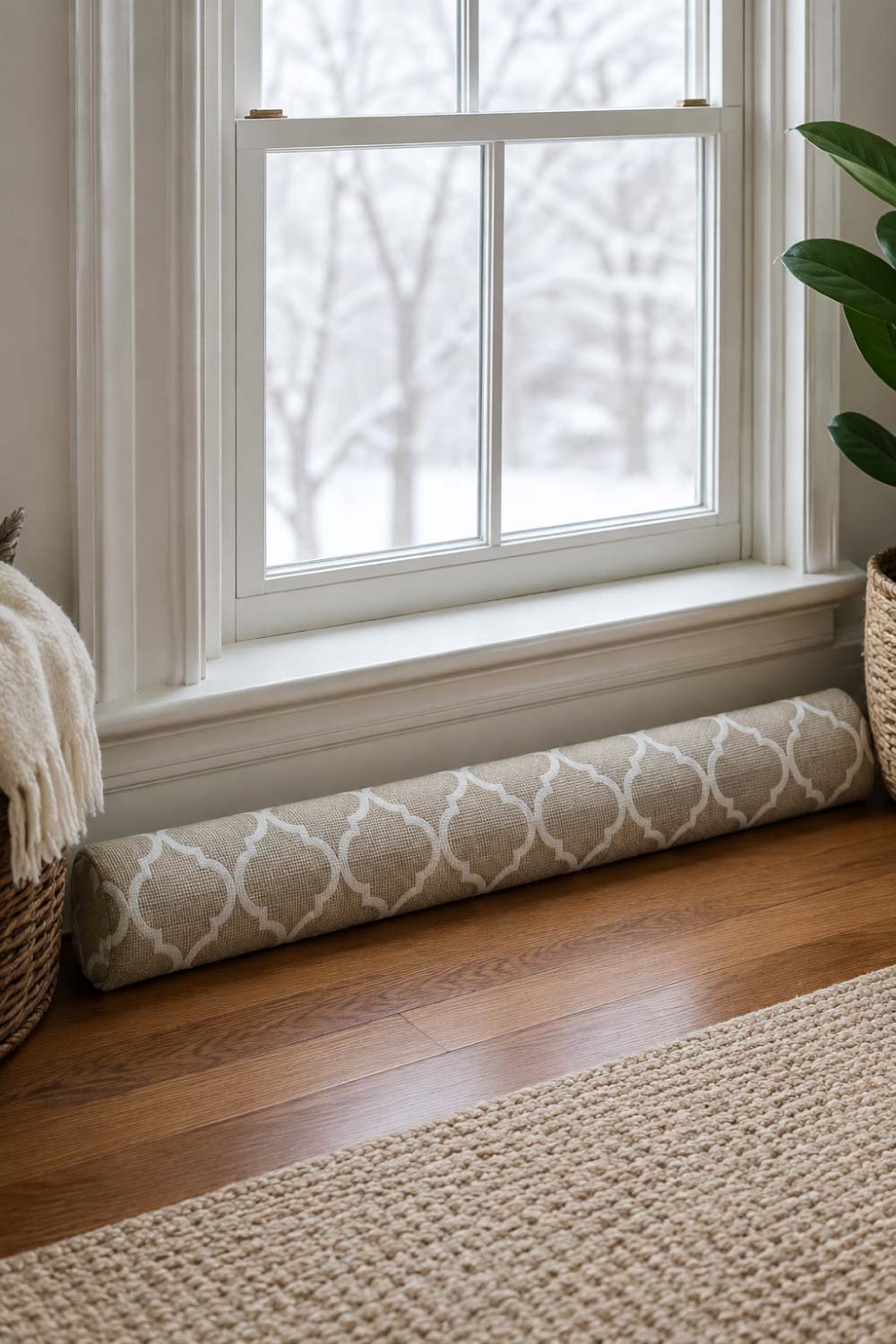
Draft stoppers are a quick and affordable solution for blocking cold air, especially at the bottom of windows. They are widely used in older homes where complete sealing is difficult. These simple tools act as a barrier, stopping cold air from entering the room at floor level.
Draft stoppers are long fabric tubes placed at the bottom of windows or sills.
They are:
- Cheap
- Easy to use
- Portable
They are especially useful for older windows that cannot be sealed completely.
Additional points:
- Can be moved between rooms easily
- Require no installation or tools
- Available in various sizes and designs
9. Consider Double Glazing Upgrade
If window drafts continue even after multiple repairs, upgrading to double glazing is the most effective long-term solution. Although it requires a higher initial investment, it provides excellent insulation and dramatically improves overall home comfort and energy efficiency.
If your home still has single-pane windows, upgrading to double glazing is a long-term solution.
Advantages:
- Excellent insulation
- Noise reduction
- Energy savings
Although it requires investment, it significantly improves comfort and reduces heating costs.
Additional points:
- Helps maintain stable indoor temperature
- Reduces condensation buildup
- Increases property value over time
Also Read:
How to Repair Drywall Holes: A Complete Step-by-Step Guide for Homeowners
Common Mistakes People Make
Many people try to fix window drafts quickly without properly understanding the real cause. This often leads to temporary results or even makes the problem worse. Avoiding common mistakes ensures your repair work lasts longer and performs more effectively.
When dealing with window drafts, people often try quick fixes that don’t last. Avoid these mistakes:
- Using tape alone as a permanent solution
- Ignoring small cracks thinking they are harmless
- Applying sealant without cleaning the surface
- Blocking airflow without identifying the real source
Proper diagnosis is always the key to a lasting fix.
How to Prevent Future Draft Problems

Once your windows are properly sealed, regular maintenance becomes essential to prevent drafts from returning. Simple inspection and care routines can keep your windows efficient for years and reduce the need for repeated repairs.
Once your windows are sealed, you should take steps to maintain them.
Maintenance Tips:
- Inspect windows every 6–12 months
- Reapply caulk when it starts cracking
- Clean window frames regularly
- Avoid slamming windows shut
- Check seals after extreme weather changes
Regular maintenance saves you from bigger repair costs later.
Final Thoughts
Window drafts may seem like a small issue, but they have a big impact on your home’s comfort and energy efficiency. Cold air sneaking through gaps forces your heating system to work harder, increasing energy bills and making rooms uncomfortable.
The good news is that most draft problems are easy to fix with simple tools like caulk, weatherstripping, insulation film, and proper alignment adjustments. Even small improvements can make a noticeable difference in how warm your home feels.
By taking action early, you not only improve comfort but also save money in the long run. A draft-free home is warmer, quieter, and far more energy-efficient—without needing expensive renovations.
Also Read:
Bathroom Plumbing Troubleshooting: Common Problems and How to Fix Them