How to Repair Drywall Holes: A Complete Step-by-Step Guide for Homeowners

Drywall damage happens in almost every home. Whether it’s from moving furniture, an accidental door handle impact, kids playing indoors, or simple wear and tear, holes in drywall are common—and thankfully, they’re also very repairable. You don’t need to be a professional contractor to fix drywall holes neatly and permanently. With the right tools, materials, and technique, you can restore your walls so well that no one will ever know there was damage.

This comprehensive guide will walk you through how to repair drywall holes of all sizes, from tiny nail holes to large damaged sections. By the end, you’ll know exactly what to do, what materials to use, and how to achieve a smooth, professional-looking finish.
Understanding Drywall Damage 

Drywall damage is a common issue in homes and commercial spaces, especially in high-traffic areas. Understanding what drywall is made of, why it gets damaged, and the different forms that damage can take helps you choose the correct repair method and avoid unnecessary mistakes during the fixing process.

Understanding Drywall Damage

Drywall, also called gypsum board or plasterboard, is made of a soft gypsum core sandwiched between layers of paper. While it’s lightweight and easy to install, it’s also prone to dents, cracks, and holes.

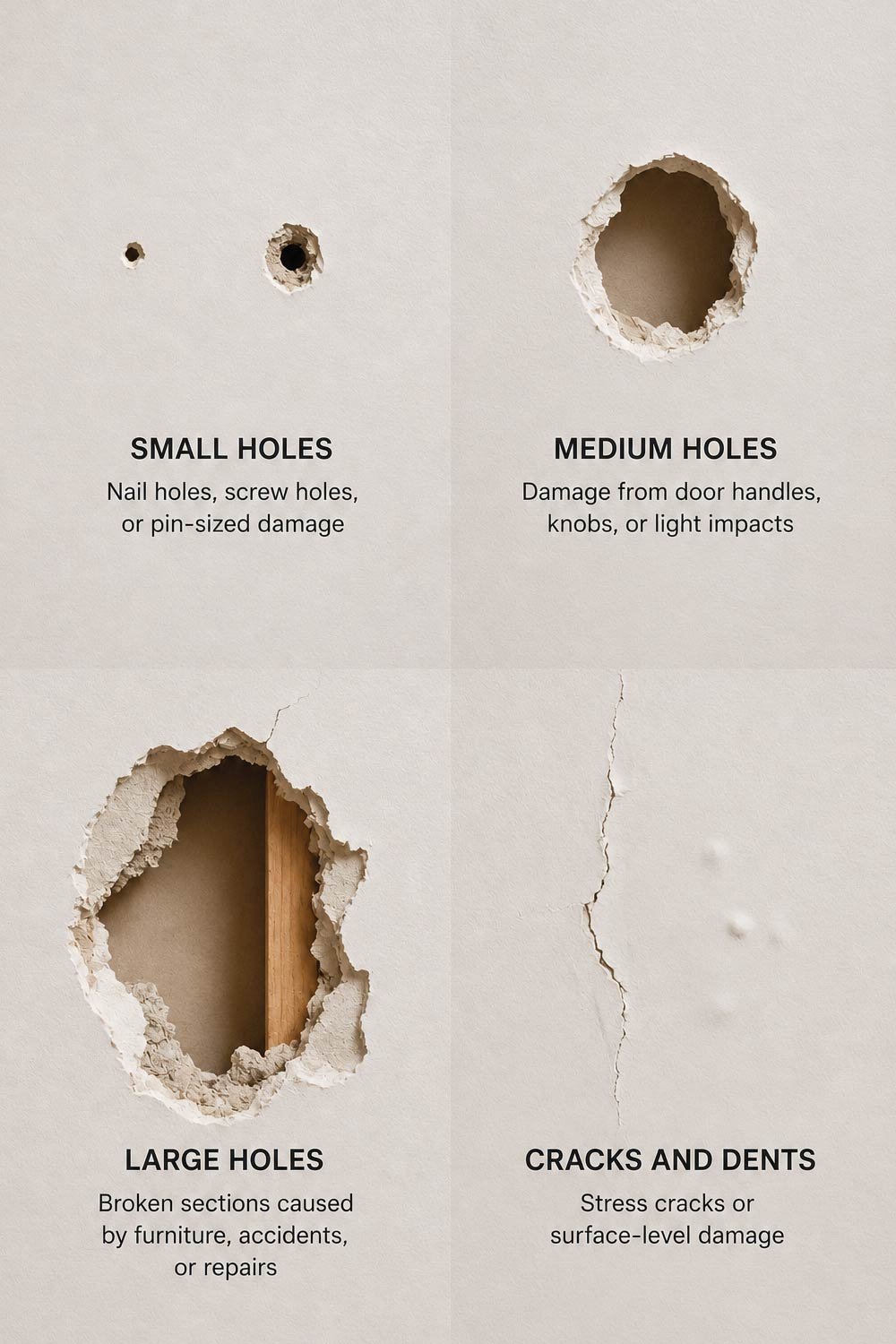
Drywall holes generally fall into four categories:

  • Small holes – Nail holes, screw holes, or pin-sized damage
  • Medium holes – Damage from door handles, knobs, or light impacts
  • Large holes – Broken sections caused by furniture, accidents, or repairs
  • Cracks and dents – Stress cracks or surface-level damage

Each type requires a slightly different repair approach, which we’ll cover step by step.


Tools and Materials You’ll Need

Before starting any drywall repair, it’s important to prepare the right tools and materials in advance. Having everything ready ensures a smoother workflow, reduces interruptions, and helps you achieve a cleaner, more professional-looking finish based on the size and type of damage.

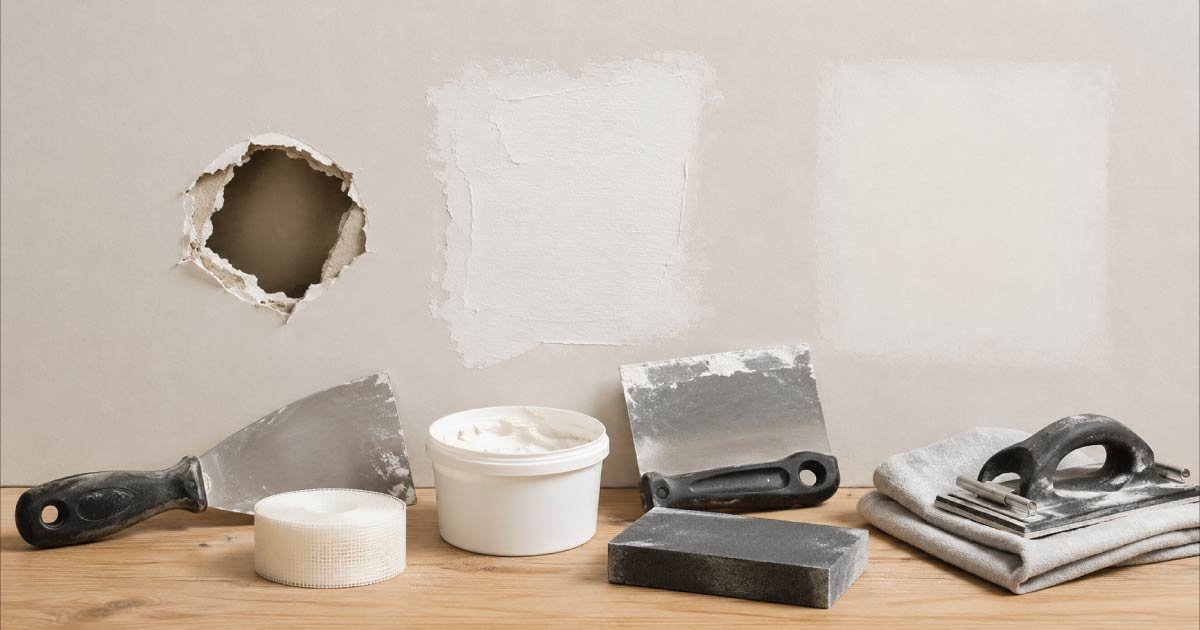
Before you start, gather the following basic tools. You may not need everything depending on the hole size.

Common tools:

These tools are essential for cutting, filling, sanding, and preparing the damaged drywall area. They help ensure accuracy, safety, and a smooth surface during and after the repair process.

  • Putty knife (2–6 inches wide)
  • Sanding sponge or fine-grit sandpaper (120–220 grit)
  • Utility knife
  • Drywall saw (for large holes)
  • Tape measure
  • Pencil
  • Dust mask

Materials:

The following materials are used to fill, reinforce, prime, and finish the repaired area. Choosing the correct materials helps improve durability and ensures the repaired section blends seamlessly with the surrounding wall.

  • Spackling compound or joint compound
  • Drywall patch or mesh tape
  • Drywall piece (for large holes)
  • Drywall screws
  • Wooden backing strips (scrap wood)
  • Primer
  • Matching wall paint

Having everything ready before you start will save time and help ensure a cleaner repair.


How to Repair Small Drywall Holes (Nail and Screw Holes) 

Small drywall holes are the most common and easiest type of damage to repair. With minimal tools and basic materials, these fixes can usually be completed quickly, making them ideal for beginners or quick touch-up projects around the home.

How to Repair Small Drywall Holes (Nail and Screw Holes) 2

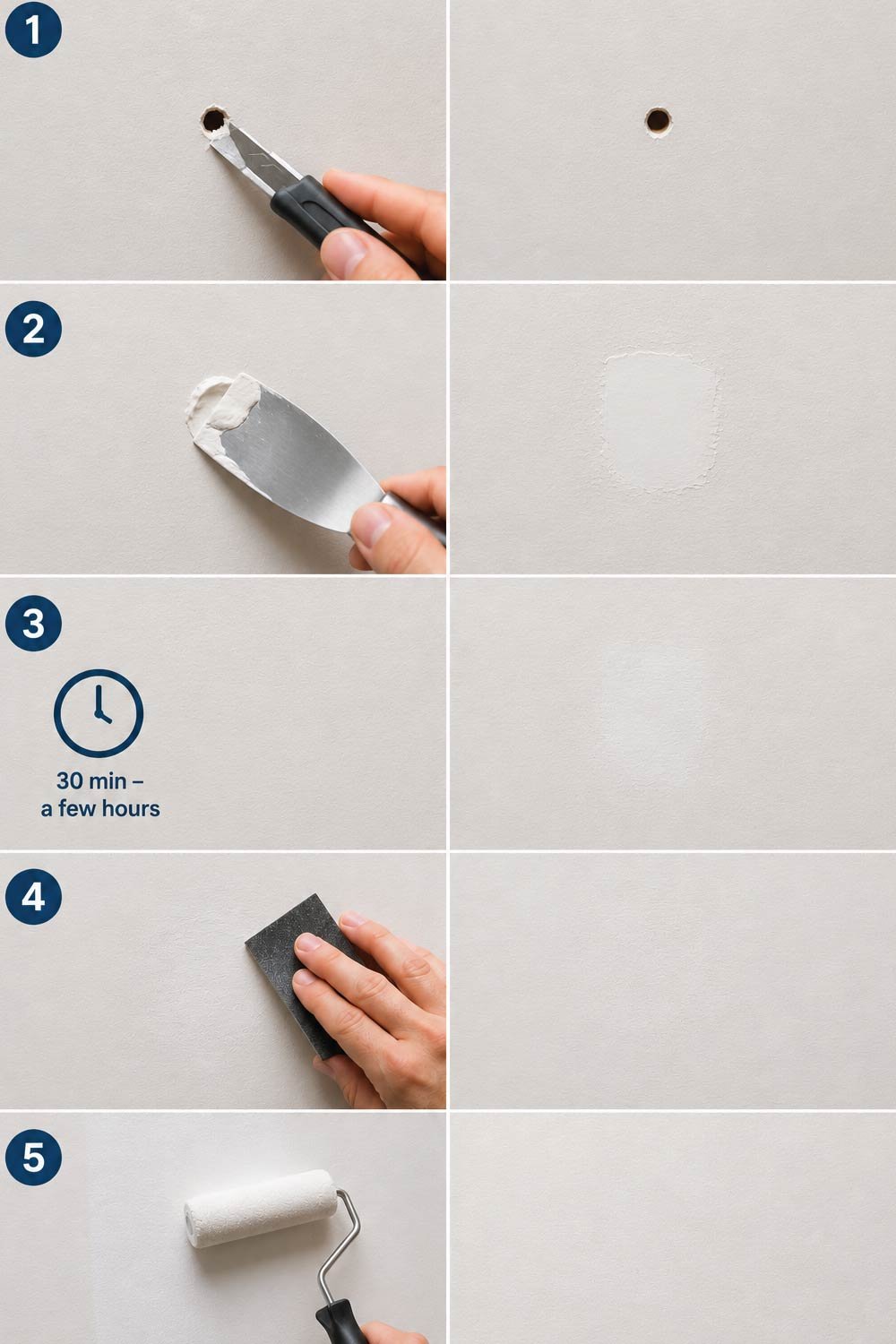
Small holes from nails, picture hooks, or screws are the easiest to fix and can usually be completed in under an hour (not counting drying time).

Step 1: Clean the Hole

Proper surface preparation is crucial for a long-lasting repair. Cleaning the hole removes loose material and dust, allowing the compound to adhere better and resulting in a smoother, more durable finish.

Remove any loose paper or crumbling drywall around the hole using a utility knife. Wipe away dust with a dry cloth.

Step 2: Apply Spackling Compound

Applying the compound correctly ensures the hole is completely filled and level with the wall surface. This step lays the foundation for a seamless repair once sanding and painting are complete.

Using a putty knife, press spackling compound directly into the hole. Smooth it flat so it’s flush with the wall surface.

Step 3: Let It Dry

Allowing sufficient drying time is essential for proper hardening of the compound. Rushing this step can lead to cracks, shrinkage, or an uneven surface during sanding.

Drying time varies by product, but most spackles dry within 30 minutes to a few hours.

Step 4: Sand Smooth

Sanding helps blend the repaired area with the surrounding wall. A light, careful sanding ensures the surface looks even and invisible once painted.

Lightly sand the area until it blends seamlessly with the wall.

Step 5: Prime and Paint

Priming and painting complete the repair and restore the wall’s original appearance. Primer prevents uneven paint absorption, while matching paint ensures a consistent finish.

Apply primer to prevent flashing, then paint to match the wall.

Pro tip: Overfill the hole slightly—compound shrinks as it dries.


How to Repair Medium Drywall Holes (Up to 6 Inches)

Medium drywall holes are larger than simple nail or screw damage and usually result from door handles, furniture bumps, or accidental impacts. These repairs require added reinforcement so the patched area doesn’t crack or sink over time, ensuring a strong and long-lasting wall surface.

Medium-sized holes often come from door handles or accidental impacts. These repairs need extra support to prevent cracking later.

Option 1: Using a Self-Adhesive Patch

A self-adhesive patch is one of the quickest and most reliable solutions for medium-sized drywall holes. It provides built-in reinforcement, reduces the need for backing wood, and works well for holes up to six inches in diameter.

Step 1: Prepare the Area

Proper preparation helps the patch adhere securely and creates a smoother finished surface once compound and paint are applied.

Trim loose drywall and lightly sand around the hole.

Step 2: Apply the Patch

Correct placement of the patch ensures even strength and prevents weak spots that could crack later.

Stick a metal or fiberglass mesh patch over the hole, centering it evenly.

Step 3: Apply Joint Compound

This step hides the patch and blends it into the wall, creating a seamless surface once finished.

Cover the patch with joint compound using a putty knife. Feather the edges outward.

Step 4: Let Dry and Sand

Drying and sanding are essential to achieving a smooth, professional-looking repair.

Once dry, sand smooth and apply a second thin coat if needed.

Step 5: Prime and Paint

Priming and painting restore the wall’s appearance and help the repaired area blend with the rest of the surface.

After sanding smooth, prime and paint.

Option 2: California Patch (Drywall Butterfly Patch)

The California patch is a strong repair technique that uses drywall paper as built-in tape. It’s ideal for medium holes when you want a durable fix with minimal materials and excellent finishing results.

This method uses a drywall piece slightly larger than the hole, with paper edges that act as built-in tape. It’s strong and produces excellent results.

Also Read:

Sink Trap Cleaning Guide: How to Clean a P-Trap and Fix Slow Drains


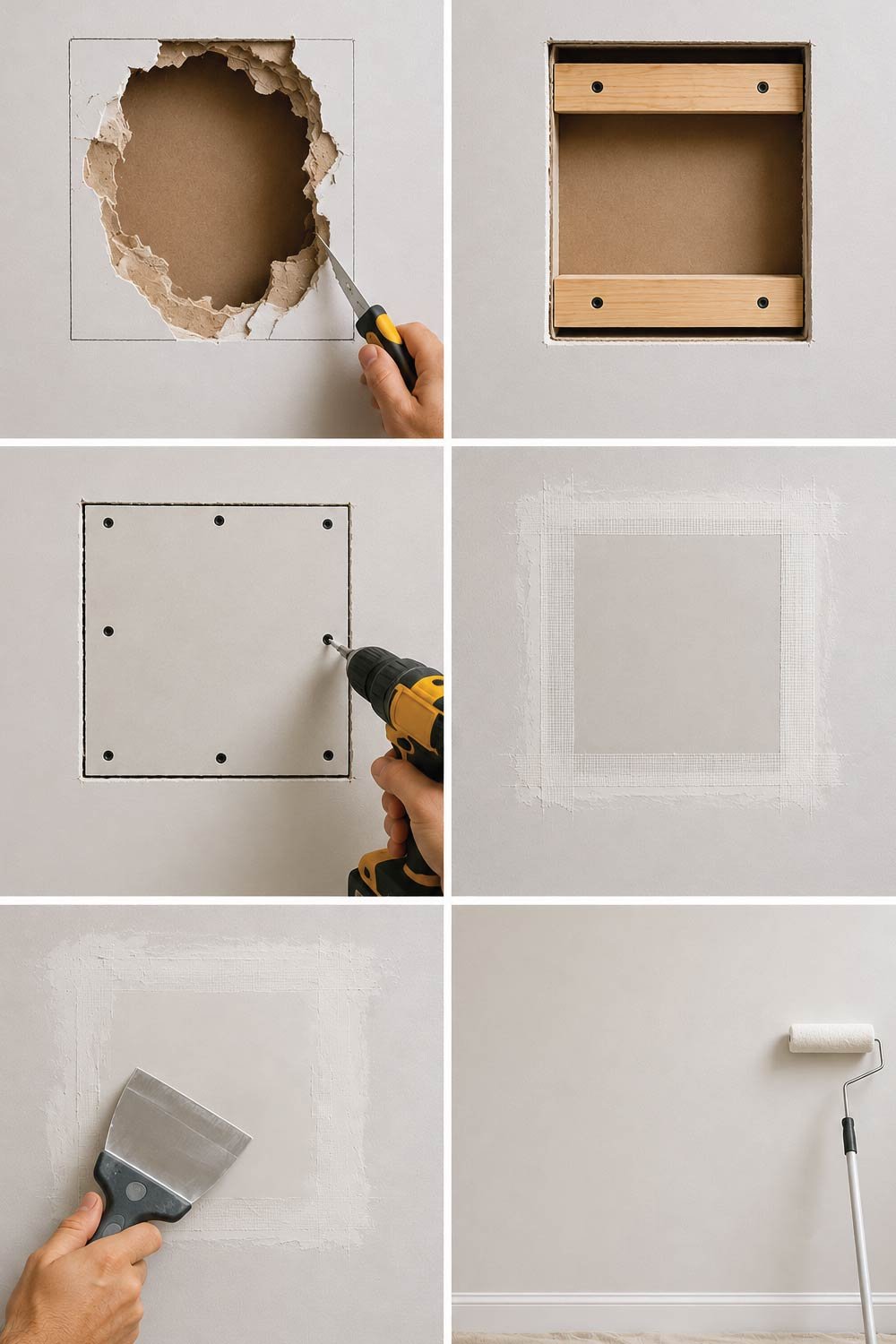
How to Repair Large Drywall Holes 

Large drywall holes require replacing an entire section of drywall rather than simply filling the damage. While this repair involves more steps and materials, it provides the strongest and cleanest result for holes larger than six inches.

How to Repair Large Drywall Holes

Large holes (over 6 inches) require replacing a section of drywall. This may sound intimidating, but it’s very manageable.

Step 1: Cut a Clean Square or Rectangle

Clean, straight edges make fitting the new drywall piece easier and result in smoother seams.

Use a drywall saw or utility knife to cut the damaged area into a clean shape. Straight edges make repairs easier.

Step 2: Install Backing Support

Backing support is necessary to hold the new drywall piece securely in place.

Cut two wooden strips slightly longer than the hole. Insert them into the hole and screw them to the existing drywall on each side. These strips provide support for the new drywall piece.

Step 3: Cut and Install New Drywall

Accurate measurements ensure the replacement piece fits snugly without gaps.

Measure the opening and cut a drywall piece to fit. Screw it into the backing strips.

Step 4: Tape the Seams

Taping strengthens the joints and prevents cracks from forming along the seams.

Apply drywall tape over the seams where the new piece meets the existing wall.

Step 5: Apply Joint Compound

Multiple thin coats create a smooth surface and hide the repair completely.

Spread joint compound over the taped seams, feathering outward. Let dry, sand lightly, and repeat with additional thin coats until smooth.

Step 6: Prime and Paint

The final step restores the wall’s appearance and protects the repair.

Once the surface is smooth and dust-free, apply primer and paint.

Also Read:

Emergency Plumbing Fixes: What to Do When Water Problems Strike


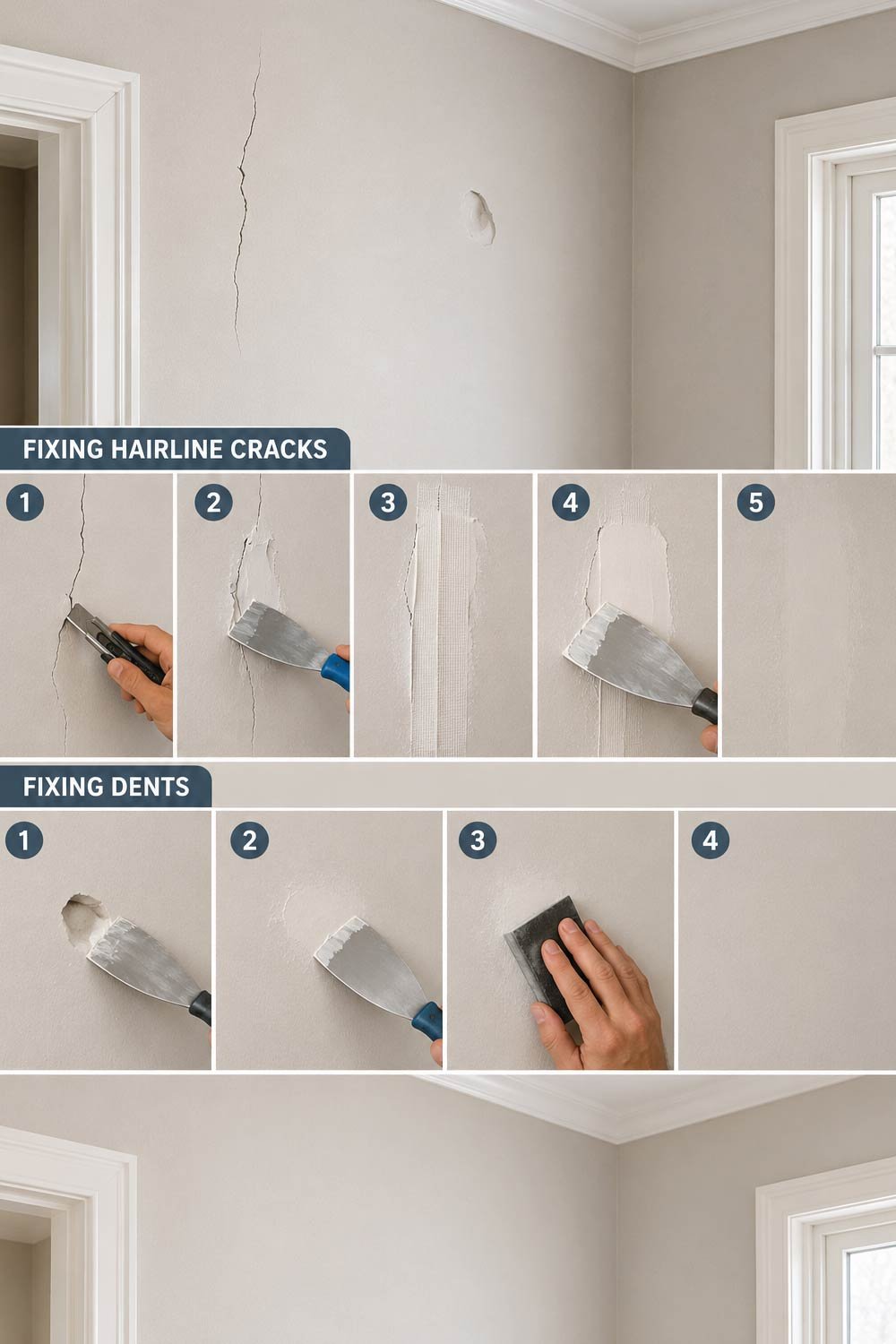
Fixing Cracks and Dents in Drywall 

Cracks and dents are common forms of drywall damage that often appear near doors, windows, and ceilings. While they may seem minor, addressing them early prevents further spreading and keeps the wall structurally sound.

Fixing Cracks and Dents in Drywall

Cracks and dents are common near doors, windows, and ceilings.

For Hairline Cracks:

Hairline cracks need reinforcement to stop them from reopening after repair.

  • Widen the crack slightly with a utility knife
  • Apply joint compound
  • Cover with drywall tape
  • Apply a thin finishing coat

For Dents:

Dents are usually shallow and easier to repair but still require proper finishing.

  • Fill with joint compound
  • Let dry
  • Sand smooth
  • Prime and paint

Ignoring cracks can lead to bigger problems later, so it’s best to repair them early.


Sanding and Finishing Tips for a Professional Look

Sanding and finishing determine how invisible your drywall repair will be once painted. Careful technique and patience at this stage help achieve a smooth surface that blends seamlessly with the surrounding wall.

Sanding is what separates a good drywall repair from a flawless one.

  • Use light pressure to avoid gouging the wall
  • Sand in circular motions
  • Shine a flashlight across the wall to spot imperfections
  • Apply multiple thin coats rather than one thick coat

Always clean dust off the wall before priming or painting.

Also Read:

How to Fix a Slow Draining Sink: Simple DIY Methods That Actually Work


Matching Paint and Texture

Matching paint and texture is often the most challenging part of drywall repair. Even a perfect patch can stand out if the paint sheen or wall texture doesn’t blend properly with the existing surface.

One of the most challenging parts of drywall repair is making the repair invisible.

Paint tips:

Using the right paint technique helps prevent noticeable differences after drying.

  • Use the same paint sheen (flat, eggshell, satin, etc.)
  • Blend paint outward rather than painting a hard square
  • Prime first to prevent flashing

Texture tips:

Matching texture requires practice and careful blending for realistic results.

  • Use spray texture for orange peel or knockdown walls
  • Practice on cardboard before applying to the wall
  • Blend edges carefully to match existing texture

Common Drywall Repair Mistakes to Avoid

Even small drywall repairs can fail if common mistakes are overlooked. Understanding these frequent errors helps you avoid uneven finishes, visible patches, and repeat repairs. Paying attention to preparation, application, and finishing techniques ensures stronger, cleaner, and longer-lasting drywall repair results.

  • Skipping primer before painting
  • Applying compound too thick
  • Not sanding between coats
  • Rushing drying time
  • Ignoring wall texture

Taking your time leads to better results and fewer repairs later.

Also Read:

How to Repair a Broken Plumbing Pipe: A Complete DIY Guide


When to Call a Professional

While many drywall repairs can be handled as DIY projects, some situations require professional expertise. Knowing when to step back and hire a specialist helps prevent costly mistakes, ensures safety, and guarantees proper repair for complex or high-risk drywall damage.

DIY drywall repair is great for most homeowners, but there are times when hiring a professional makes sense:

  • Extensive water damage
  • Structural cracks
  • Large ceiling repairs
  • Time-sensitive projects before selling a home

Knowing your limits can save frustration and ensure safety.


Final Thoughts

Learning how to repair drywall holes is a valuable skill that saves money, improves your home’s appearance, and boosts confidence in your DIY abilities. From tiny nail holes to large damaged sections, the process is straightforward when broken into simple steps.

With patience, proper tools, and attention to detail, you can achieve results that rival professional work. The next time your wall suffers a dent, crack, or hole, you’ll know exactly how to fix it—cleanly, confidently, and correctly.

Leave a Comment