
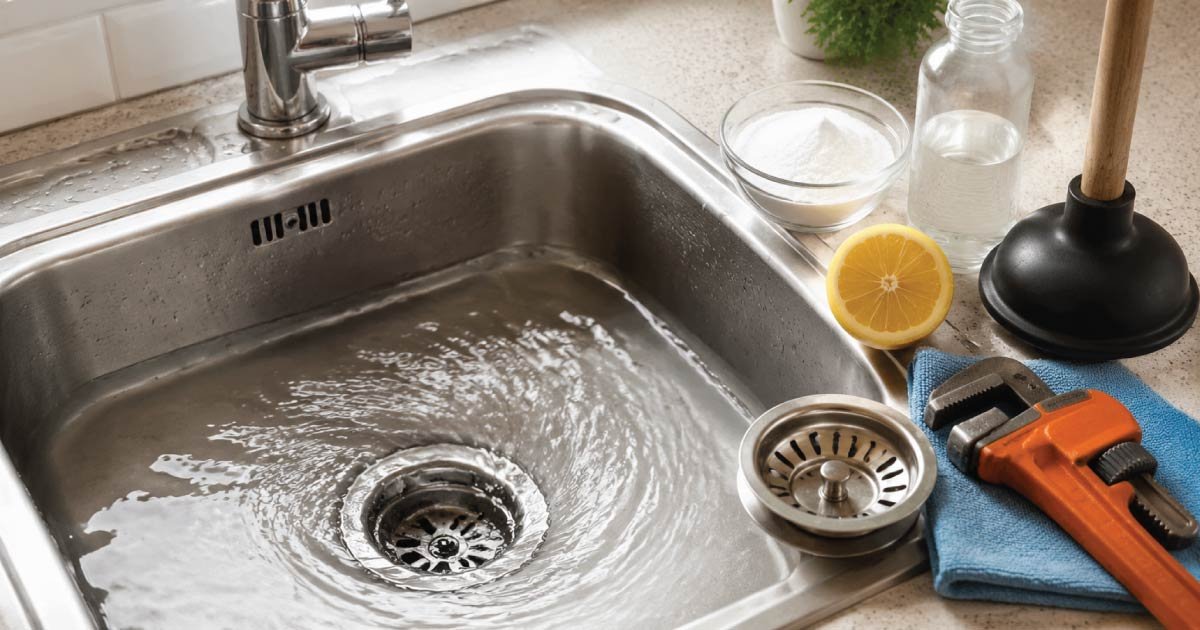
A slow draining sink is one of those household problems that starts small but quickly becomes annoying. Water pools in the basin, smells can develop, and everyday tasks like washing hands or dishes become frustrating. The good news is that in most cases, you don’t need a plumber right away.
A slow drain is usually caused by a buildup of hair, grease, soap scum, or debris and you can often fix it yourself with simple tools and methods.This guide explains the real causes of a slow draining sink and gives you step-by-step solutions to fix it effectively.
Why Is Your Sink Draining Slowly?
A sink that drains slowly is usually a sign of partial blockage or buildup inside the plumbing system. This happens gradually over time as everyday materials accumulate in the pipes, reducing water flow and making the drain less efficient. Identifying the cause early helps prevent complete clogs and more serious plumbing issues.
1. Hair buildup (bathroom sinks)
Hair buildup in bathroom sinks is one of the most common causes of slow drainage, as loose strands combine with soap residue and form sticky clumps that cling to pipe walls and restrict water flow over time.
2. Grease and food waste (kitchen sinks)
Grease and food waste from kitchen sinks gradually coat the inside of pipes, narrowing the passage for water and causing slow drainage as the buildup thickens with repeated washing and cooking activities.
3. Soap scum
Soap scum forms when soap mixes with hard water minerals, creating a sticky film that gradually accumulates inside pipes and reduces water flow efficiency over time.
4. Foreign objects
Foreign objects such as bottle caps, toothpaste lids, or small items accidentally dropped into the drain can partially obstruct water flow and cause sudden or progressive drainage problems.
5. Partial clog in the trap or pipe
A partial clog in the P-trap or nearby pipe section restricts water movement because debris naturally collects in curved areas, slowing drainage without completely blocking the system.
Tools You May Need
Having the right basic tools on hand makes it easier to diagnose and fix most slow-drain issues without professional help. These simple household items are usually enough to handle clogs, clean buildup, and restore normal water flow in sinks.
- Rubber gloves
- Bucket or bowl
- Plunger
- Baking soda
- Vinegar
- Hot water
- Screwdriver
- Drain snake or wire hanger
- Old toothbrush or small brush
Method 1: Boiling Water Flush (Quick Fix)
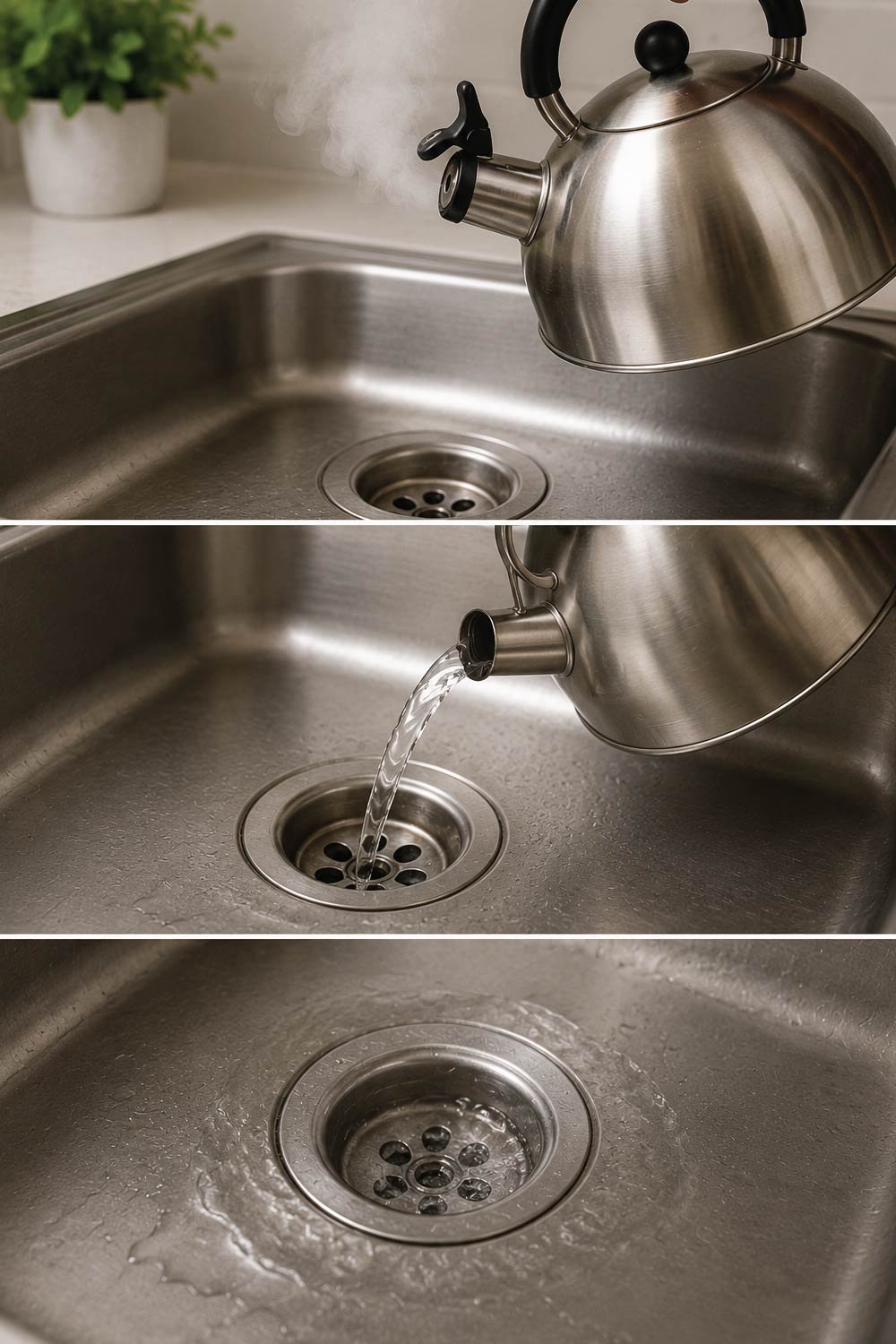
The boiling water flush is a simple first-step method that works best for light grease or soap buildup in the drain. It helps loosen and dissolve minor blockages quickly without requiring any tools or chemicals, making it an easy and fast solution for early-stage clogs.
Steps
This process uses hot water in controlled pours to break down soft buildup inside the drain and improve water flow in a short amount of time.
- Boil a kettle of water.
- Slowly pour it directly into the drain in two or three stages.
- Wait a few minutes between pours.
Why it works: Hot water melts grease and loosens soap deposits, helping them flow away.
⚠️ Avoid this method if you have PVC pipes that are very old or weak, as extremely hot water may damage them over time.
Method 2: Baking Soda and Vinegar (Natural Cleaner)
The baking soda and vinegar method is a safe and eco-friendly way to remove mild to moderate drain clogs. It works through a natural chemical reaction that helps break down grease, soap scum, and organic buildup inside pipes without damaging plumbing materials.
Steps
This method uses a fizzy reaction to loosen debris and clear buildup inside the drain safely and effectively.
- Pour half a cup of baking soda into the drain.
- Add one cup of vinegar.
- Let the mixture fizz and sit for 15–30 minutes.
- Flush with hot water.
What happens: The chemical reaction helps break down grease, soap, and organic buildup inside the pipe.
Also Read:
Method 3: Use a Plunger
A plunger is a highly effective tool for clearing partial blockages by creating pressure and suction that helps dislodge debris stuck inside the drain. This method is especially useful when water is still draining slowly but not completely blocked.
Steps
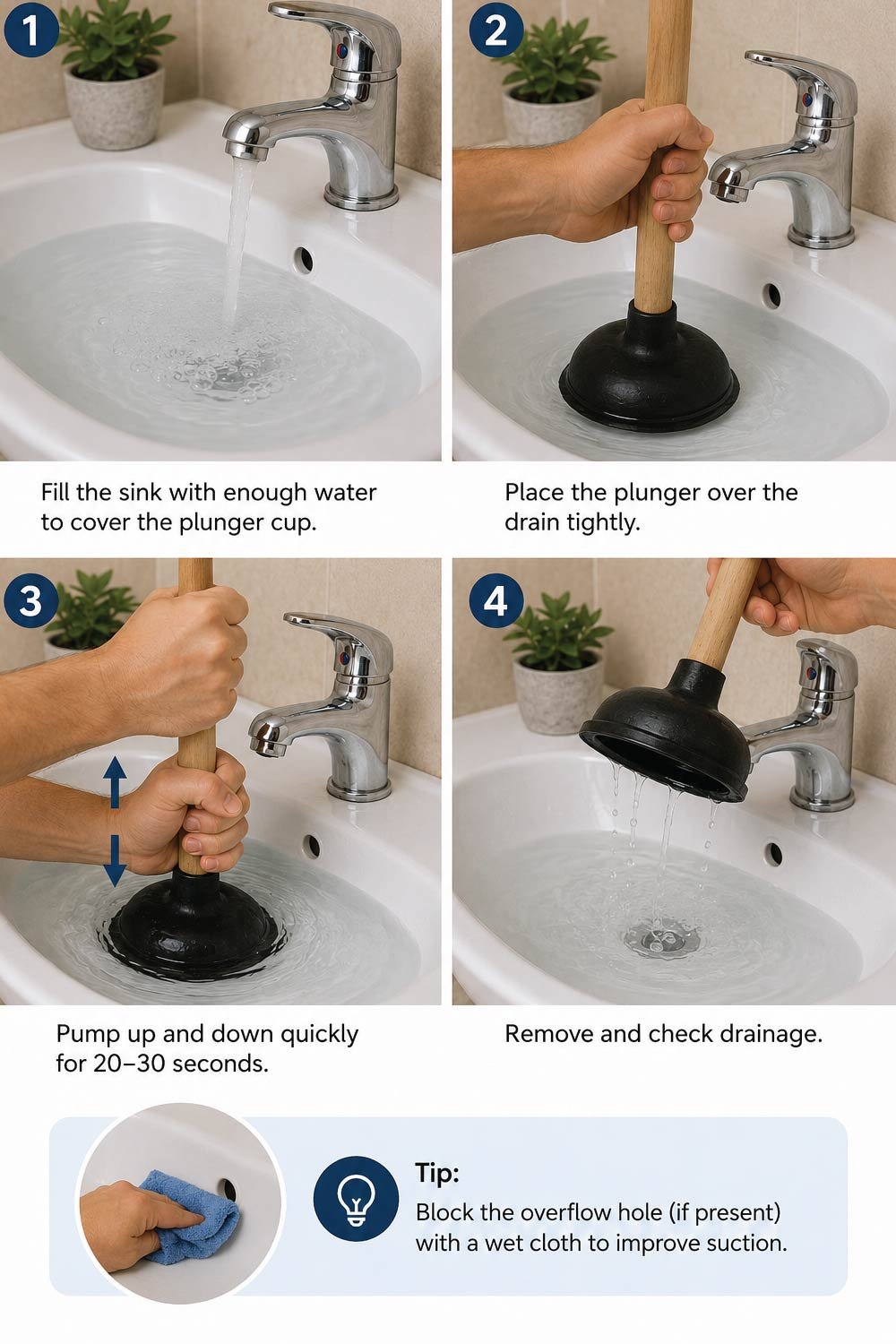
These instructions show how to create a proper seal and use pressure movements to loosen and remove clogs effectively.
- Fill the sink with enough water to cover the plunger cup.
- Place the plunger over the drain tightly.
- Pump up and down quickly for 20–30 seconds.
- Remove and check drainage.
Tip: Block the overflow hole (if present) with a wet cloth to improve suction.
Method 4: Clean the P-Trap (Most Effective Method)
Cleaning the P-trap is one of the most effective ways to fix slow or blocked sinks because this curved pipe section naturally collects debris over time. Removing and cleaning it allows you to directly eliminate buildup that cannot be cleared through surface methods.
Steps
This process involves safely removing the P-trap, cleaning trapped debris, and reinstalling it to restore full drainage capacity.
- Place a bucket under the sink.
- Unscrew the P-trap carefully.
- Remove and clean it using water and a brush.
- Check for trapped debris like hair, grease, or food.
- Reattach it tightly.
Why this works: Most blockages happen here because the curve naturally traps waste.
Method 5: Use a Drain Snake or Wire
A drain snake is designed to reach deeper clogs that cannot be cleared with plungers or flushing methods. It physically breaks apart or pulls out blockages such as hair, grease, or debris that are stuck further inside the pipe, restoring proper water flow when surface cleaning is not enough.
Steps
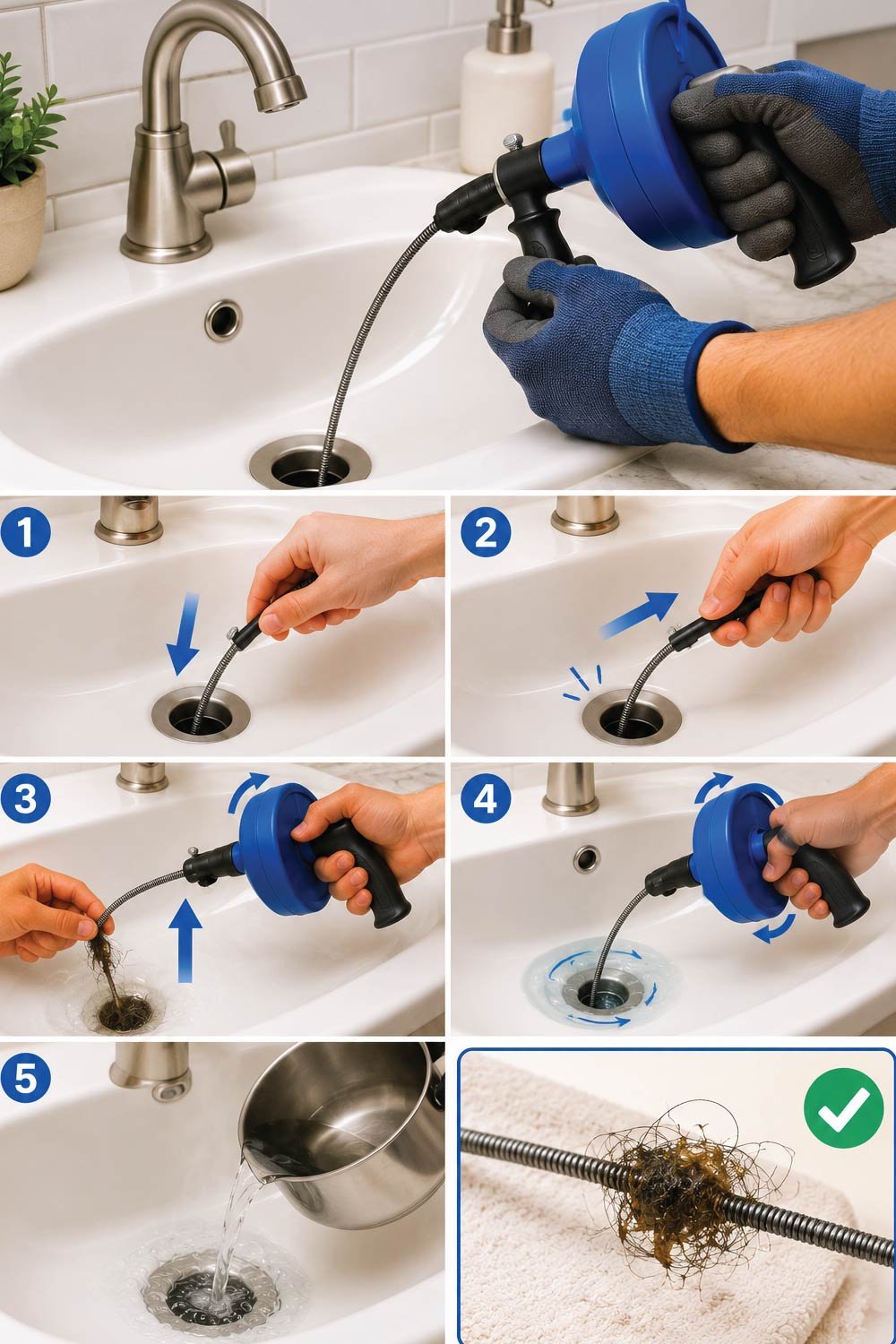
This method uses a flexible tool to reach inside the drain, break up stubborn clogs, and remove trapped material to restore normal drainage.
- Insert the snake into the drain.
- Push gently until you feel resistance.
- Twist and pull to break up or remove the clog.
- Repeat until water flows freely.
- Flush with hot water.
Safety tip: Avoid pushing too aggressively you don’t want to damage the pipe.
Also Read:
Method 6: Clean the Overflow and Drain Cover
Sometimes slow drainage is caused by buildup near the surface of the sink rather than deep inside the plumbing system. Dirt, hair, and soap scum can collect around the drain opening or overflow area, restricting water flow and creating the appearance of a deeper blockage.
Steps
This process focuses on cleaning visible openings and removing surface-level buildup that may be slowing water entry into the drain.
- Remove the drain cover if possible
- Clean hair and gunk around the opening
- Scrub with an old toothbrush
- Rinse thoroughly
This small step often improves drainage instantly.
When to Use Chemical Drain Cleaners
Chemical drain cleaners can be effective in breaking down tough clogs, but they should be used cautiously because they contain strong substances that may damage pipes or create health hazards if overused or misused.
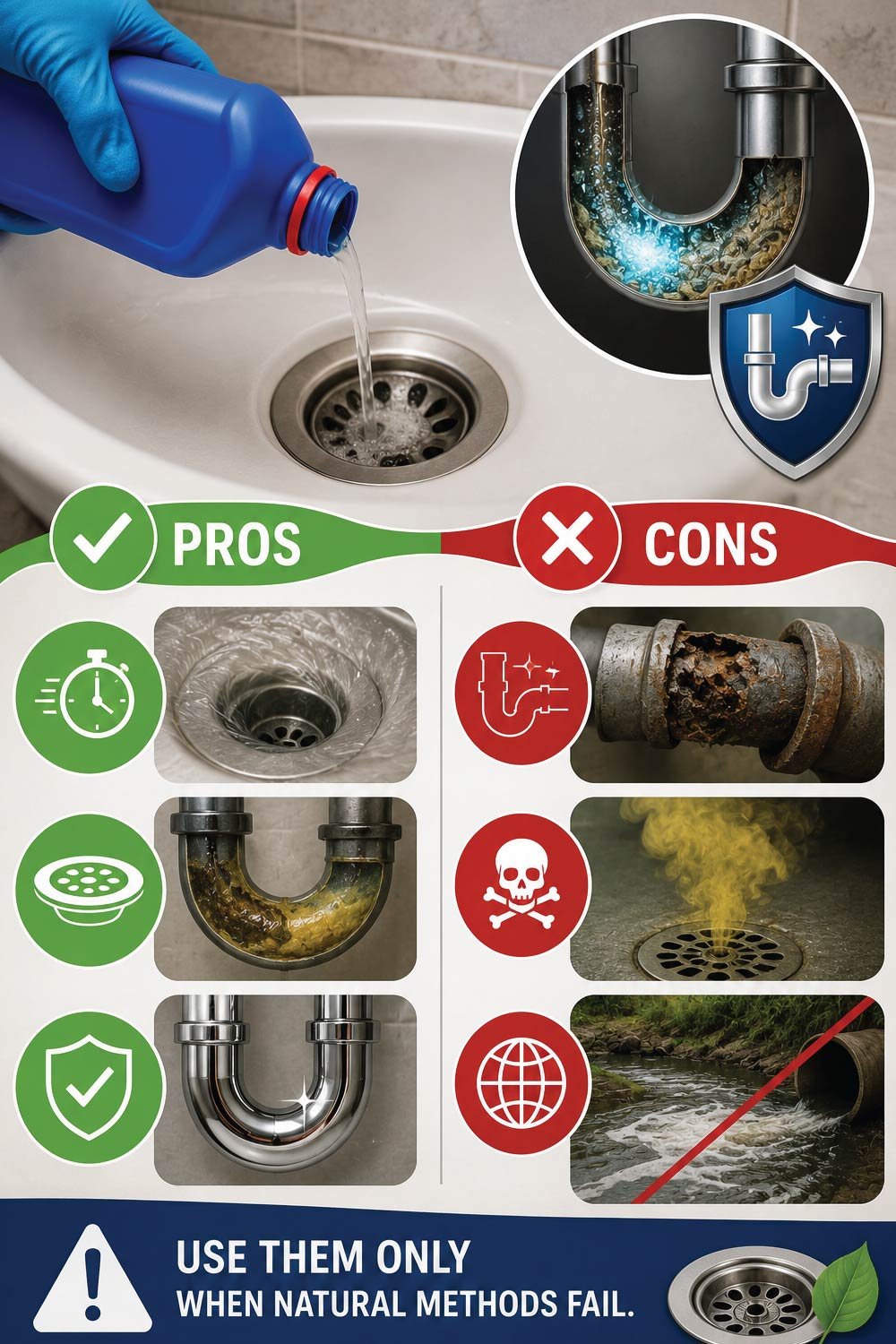
Pros and Cons
Pros: Chemical cleaners provide fast clog removal and are especially effective against grease and organic buildup when other methods fail.
Cons: They may damage older pipes, release harmful fumes, and are not environmentally friendly.
Use them only when natural methods fail.
How to Prevent Slow Drains in the Future
Preventing slow drains is easier and more cost-effective than repeatedly fixing clogs. Simple daily habits and regular maintenance can keep your plumbing system clean, reduce buildup, and ensure smooth water flow over the long term.
1. Use drain strainers
Drain strainers help prevent hair, food particles, and debris from entering the pipes, significantly reducing the chances of clogs forming over time.
2. Avoid pouring grease into sink
Grease should never go down the drain because it hardens inside pipes; instead, allow it to cool and dispose of it in the trash.
3. Flush with hot water weekly
Weekly hot water flushing helps dissolve early buildup and keeps pipes clear by preventing grease and soap from accumulating.
4. Clean regularly with baking soda
Monthly baking soda cleaning helps maintain pipe hygiene and reduces buildup caused by soap scum and minor debris accumulation.
5. Be mindful of what goes down the drain
Avoid flushing non-dissolvable materials like coffee grounds, tissues, and solid waste to prevent unnecessary blockages.
Also Read:
When to Call a Plumber
While many drain issues can be resolved with DIY methods, some problems indicate deeper plumbing system failures that require professional tools and expertise. Ignoring these warning signs can lead to more serious damage and costly repairs.
Warning Signs
Warning Signs: These conditions suggest major blockages or sewer line issues that cannot be safely or effectively handled with basic home methods.
- Water is not draining at all
- Multiple drains in your home are slow
- You notice sewage smell coming back
- The clog keeps returning quickly
- You suspect a deeper pipe blockage
This could indicate a main line issue rather than a simple sink clog.
Also Read:
Final Thoughts
A slow draining sink is usually caused by everyday buildup rather than serious plumbing damage. With simple tools like baking soda, vinegar, a plunger, or a drain snake, you can often fix the issue yourself in under an hour.
The key is to act early. A slow drain is a warning sign if ignored, it can turn into a complete blockage. Regular maintenance and good habits will keep your sink flowing smoothly and save you from unnecessary repair costs.