
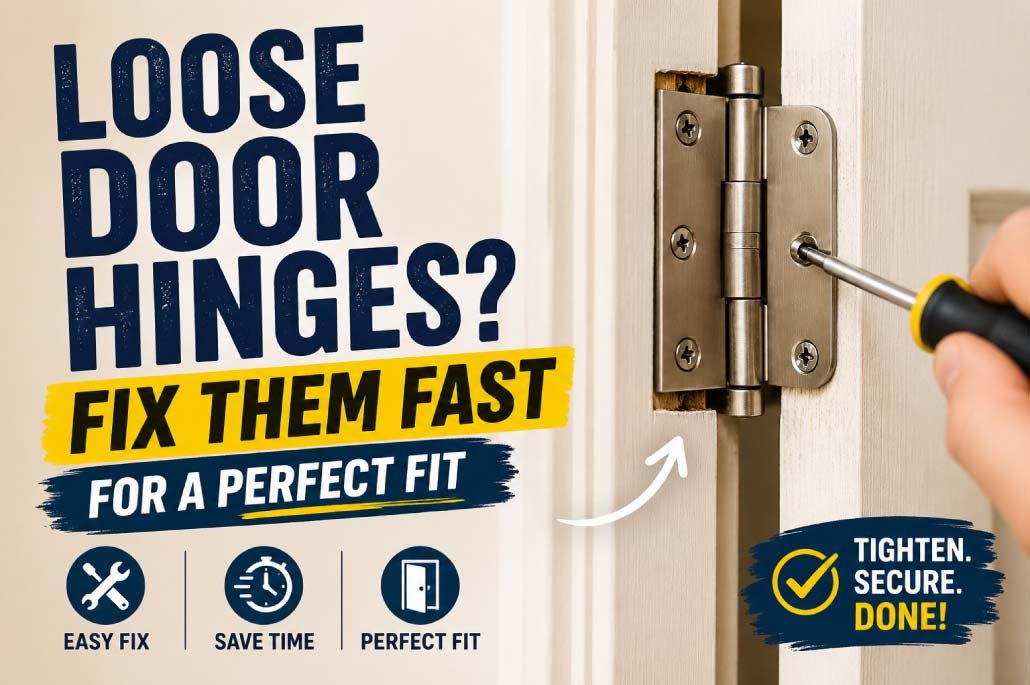
A door that doesn’t close properly can be surprisingly frustrating. It might scrape the floor, refuse to latch, or swing open on its own. In many cases, the real culprit isn’t the door itself—it’s loose hinges. Over time, hinges loosen due to regular use, shifting wood, or worn-out screws. The good news is that this is one of the easiest home repairs you can do yourself, often in just a few minutes.
In this detailed guide, you’ll learn why door hinges become loose, how to fix them quickly, and how to make sure the problem doesn’t return. No special skills required—just basic tools and a little patience.
Table of Contents
ToggleWhy Door Hinges Become Loose
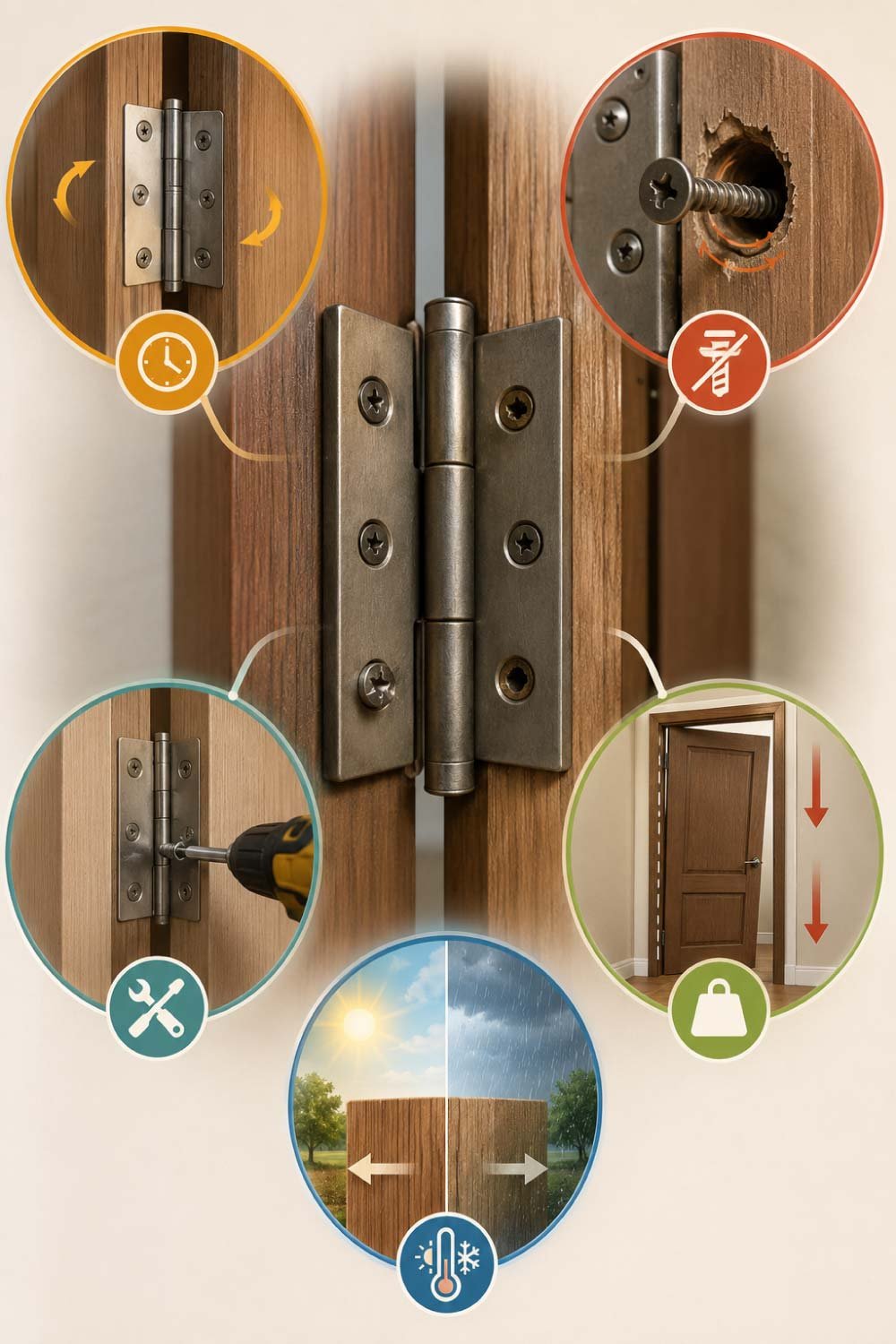
Before jumping into repairs, it helps to understand what actually causes the problem. Door hinges handle constant pressure every single day as doors open and close repeatedly. Over time, this repeated movement slowly weakens the grip of screws inside the wood, leading to looseness and misalignment.
Here are the most common reasons hinges loosen:
Regular Wear and Tear
Doors are used multiple times daily, and each swing adds small stress to the hinge screws. Over months and years, this constant movement gradually loosens the screws inside the wooden frame, especially in high-traffic areas like bedrooms and kitchens.
Stripped Screw Holes
When screws no longer grip the wood and spin freely, it usually means the holes have become stripped. This happens when the wood fibers break down over time, making it difficult for screws to stay tightly fixed in place.
Poor Installation
If hinges were installed using short screws or without proper alignment, they can loosen much faster. Weak installation does not provide enough support, causing early wear and repeated maintenance issues in a short time.
Heavy or Misaligned Doors
Doors that are too heavy or slightly out of alignment put extra pressure on hinges. This uneven load forces screws to work harder than normal, speeding up loosening and causing the door to sag or stick.
Seasonal Wood Expansion
Wood naturally expands in humid weather and shrinks in dry conditions. This constant movement affects how tightly screws hold in place, gradually weakening hinge stability over time.
Signs Your Door Hinges Are Loose
Loose hinges don’t always fail suddenly; they usually show warning signs first. Paying attention to these early symptoms can help you fix the issue before it becomes worse or damages the door frame or surrounding wood.
- Door feels heavy or uneven when opening
- Door scrapes against the frame or floor
- Gaps appear between door and frame
- Screws look slightly pulled out
- Door does not stay closed properly
- Visible wobble when you lift the door handle
If you notice one or more of these symptoms, it’s time to fix your hinges.
Tools You Will Need
Fixing loose door hinges does not require advanced tools or professional skills. Most homeowners already have these basic items at home, making this an easy and cost-effective DIY repair that can be completed in minutes.
- Screwdriver (flathead or Phillips depending on screws)
- Wooden toothpicks or matchsticks
- Wood glue (optional but helpful)
- Longer screws (if needed)
- Drill (optional for damaged holes)
Most fixes can be done without power tools, making this a beginner-friendly repair.
Quick Fix #1: Tighten the Screws
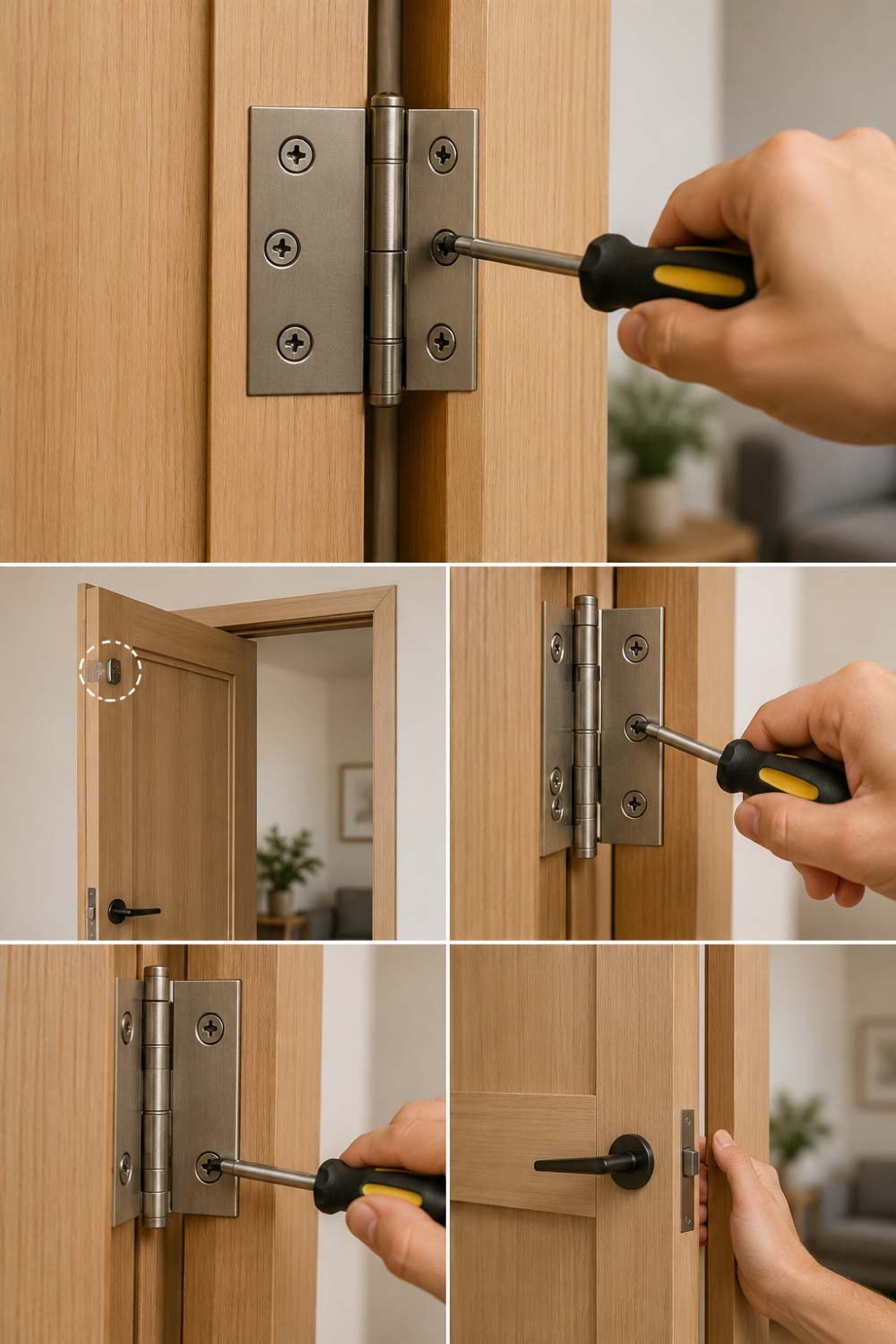
This is always the first and simplest step when dealing with loose hinges. In many cases, screws have only slightly come loose due to daily use. A quick tightening can immediately restore stability and improve door movement without any additional repair work.
Steps:
Open the door fully so hinges are accessible
Use a screwdriver to tighten each screw on all hinges
Check both the door side and frame side of hinges
Test the door movement
If the screws tighten firmly, your problem is solved. But if they spin without gripping, move to the next fix.
Quick Fix #2: Fix Stripped Screw Holes with Toothpicks
When screws no longer grip the wood, the issue is usually stripped holes. This simple DIY trick is highly effective because it rebuilds the missing material inside the hole, allowing screws to regain a strong hold without replacing the entire hinge or door frame.
Why It Works:
Toothpicks fill the empty space inside stripped holes, giving screws something to grip again.
Steps:
Remove the loose screw completely
Insert 2–3 wooden toothpicks into the hole
Add a small amount of wood glue (optional for strength)
Break off excess toothpick so it sits flush
Reinsert the screw and tighten firmly
This method often restores the hinge like new.
Quick Fix #3: Use Longer Screws for Stronger Hold
If tightening or filling the holes does not solve the problem, the screws may simply be too short to hold the weight of the door. Replacing them with longer screws provides deeper anchoring into solid wood or wall studs, making the hinge much more stable and durable.
Steps:
Remove one screw from the hinge
Replace it with a longer screw (1.5 to 2 inches is ideal)
Drive the screw deep into the wall stud behind the frame
Repeat for other screws if needed
Longer screws anchor the hinge into solid wood, providing much stronger support.
Also Read:
Quick Fix #4: Adjust the Hinge Alignment
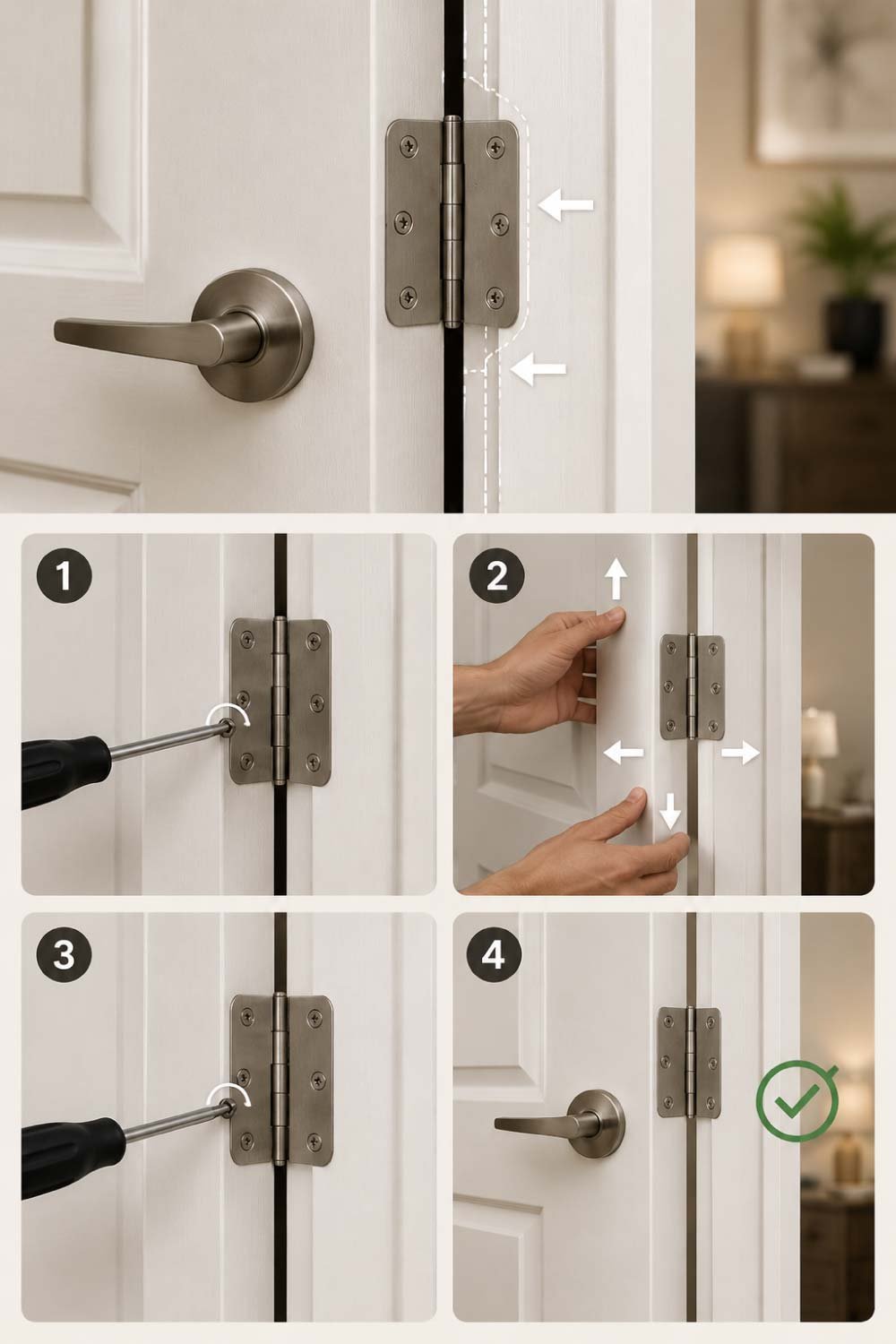
Sometimes a loose hinge isn’t the only issue—misalignment is the real cause. When a door hangs slightly off-position, it creates uneven pressure on hinges, leading to rubbing, scraping, or visible gaps. Adjusting alignment helps redistribute weight properly and restores smooth door movement without needing major repairs.
Steps:
Slightly loosen hinge screws (do not remove completely)
Adjust door position gently up, down, or sideways
Retighten screws while holding door in correct position
Test opening and closing motion
Even small adjustments can eliminate scraping or uneven gaps.
Also Read:
Quick Fix #5: Replace Damaged Hinges
If hinges are physically damaged, no amount of tightening or adjustment will fix the issue. Over time, metal can bend, rust, or weaken, especially in older doors. In such cases, replacing the hinge completely is the most reliable solution for restoring proper door function.
When to Replace:
- Metal is visibly warped
- Screws no longer hold even after repair
- Door still sags after multiple fixes
Steps:
Remove old hinge completely
Match replacement hinge size
Install new hinge using longer screws
Ensure proper alignment before tightening fully
Replacing hinges is still a simple DIY task and often restores full door function.
Preventing Hinges from Loosening Again
Once your door is working properly again, a few simple habits can help keep hinges tight and stable for a long time. Preventive care reduces wear, avoids frequent repairs, and ensures smooth door operation in everyday use.
Check Hinges Regularly
Inspect every few months for early signs of loosening or movement before they become serious issues.
Tighten Screws Occasionally
A quick screwdriver check every few months helps maintain firm grip and prevents gradual loosening.
Avoid Slamming Doors
Hard impacts increase stress on hinges and gradually weaken screws and surrounding wood.
Lubricate Hinges
Light lubrication reduces friction, prevents squeaking, and minimizes long-term wear on moving parts.
Use Quality Screws
Strong, durable screws provide better grip and resist loosening far longer than low-quality hardware.
Also Read:
Common Mistakes to Avoid
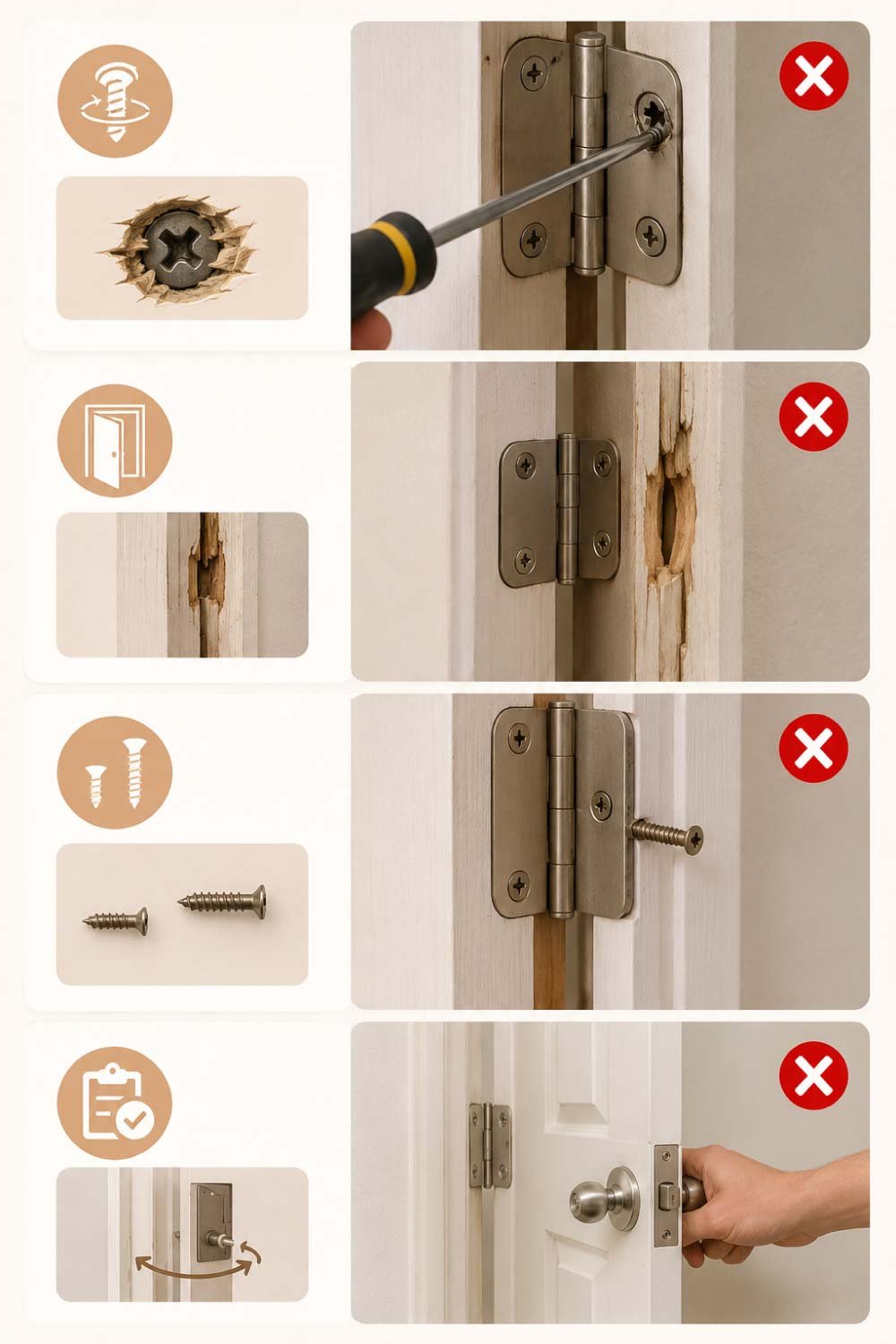
Even simple hinge repairs can fail if basic mistakes are made. Avoiding these errors ensures your fix lasts longer and prevents additional damage to the door or frame.
Over-Tightening Screws
Excess force can strip the wood further, making the hole weaker and harder to repair in the future.
Ignoring Frame Damage
Sometimes the real issue lies in the door frame, not the hinge itself, so always check both.
Using Incorrect Screw Size
Too short screws won’t hold properly, while overly long screws may damage the frame or structure.
Not Testing After Repair
Always open and close the door several times after fixing to ensure stability and smooth movement.
When You Might Need Professional Help
Most loose hinge problems can be handled at home, but some situations go beyond simple DIY fixes. If the underlying structure is damaged, professional repair may be necessary to prevent long-term issues or safety concerns.
- Door frame is cracked or warped
- Wall structure is damaged
- Multiple doors in the house have alignment issues
- Hinges keep loosening repeatedly even after repair
- In such cases, the problem may be structural rather than just mechanical.
Final Thoughts
Loose door hinges may seem like a small issue, but they can affect the comfort, safety, and appearance of your home. A door that doesn’t close properly can waste energy, create noise, and become a daily annoyance.
Fortunately, fixing loose hinges is one of the quickest and easiest home repairs you can do yourself. Whether it’s tightening screws, filling stripped holes with toothpicks, or upgrading to longer screws, each solution is simple and effective.
With just a few minutes of effort, you can restore your door to a perfect fit—smooth, silent, and secure. And with regular maintenance, you can make sure it stays that way for years to come.
Also Read: