
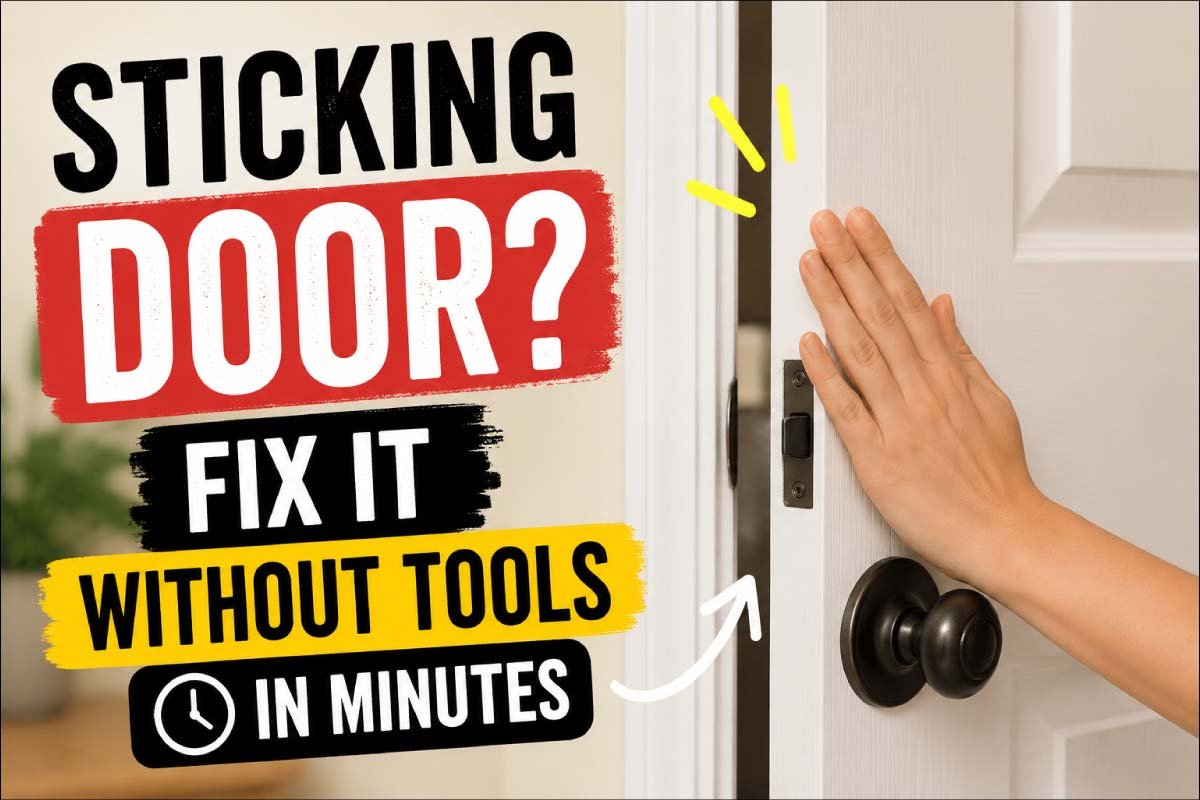
A sticking door is one of those small household problems that quickly becomes annoying. You push it, it resists. You pull it, it scrapes. Sometimes it even makes a loud dragging sound that wakes up the whole house. The good news is you don’t need special tools, expensive repairs, or a handyman to fix it. In most cases, you can solve the problem in just a few minutes using simple household tricks.
This guide explains why doors stick, what causes the problem, and most importantly, how you can fix it quickly without using any tools at all.
Table of Contents
ToggleWhy Doors Start Sticking in the First Place
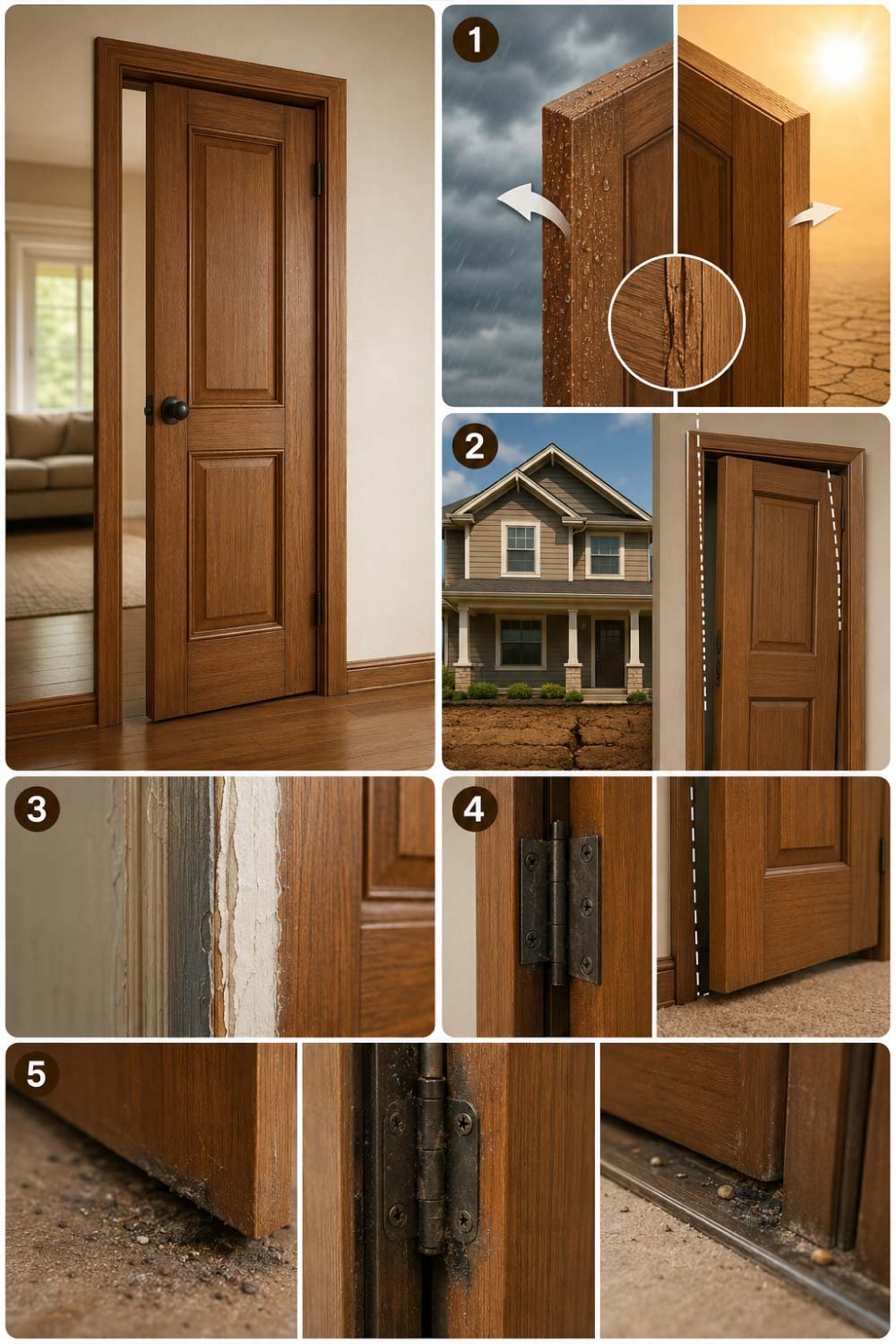
Before you start fixing a sticking door, it’s important to understand what’s actually causing the issue. Doors don’t usually stick randomly—there’s always a physical reason behind it, often linked to moisture, alignment changes, or everyday wear and tear inside the house.
1. Humidity and Weather Changes
Changes in weather and humidity have a direct impact on wooden doors. Wood naturally reacts to moisture in the air, which can cause it to expand or contract. This small change is often enough to create friction between the door and its frame, leading to sticking problems.
- Wood absorbs moisture in humid weather
- Expansion causes rubbing against the frame
- Dry weather can shrink or loosen alignment
- Seasonal changes increase sticking issues
Wood is a natural material. It expands when it absorbs moisture and shrinks when it dries. In hot or humid weather, your door may swell slightly and start rubbing against the frame.
2. House Settling Over Time
Over time, every house experiences slight structural movement as the foundation naturally settles. This gradual shift can affect door frames and cause them to become uneven. Even a minor misalignment can lead to doors dragging, sticking, or not closing smoothly as they once did.
- Natural settling shifts door frames
- Small structural movement affects alignment
- Hinges may become slightly uneven
- Doors may drag or jam gradually
Every house shifts a little over the years. This can cause the door frame to move slightly out of alignment, making the door harder to open or close.
3. Paint Build-Up
Repeated painting of doors over the years can lead to layers of dried paint accumulating along the edges. This buildup increases thickness and reduces clearance between the door and frame. As a result, even a properly aligned door may begin to feel tight or sticky when used.
- Multiple paint layers increase thickness
- Edges lose smooth clearance space
- Friction increases during opening or closing
- Old paint may crack or harden
If your door has been painted multiple times, layers of paint can build up along the edges. This extra thickness can cause friction when opening or closing.
4. Loose Hinges or Slight Misalignment
Door hinges play a crucial role in smooth movement. When they become loose or slightly shifted, the door no longer hangs evenly. This uneven positioning can cause scraping, dragging, or sticking, especially near the floor or frame edges during regular use.
- Loose screws affect door balance
- Hinges shift door position slightly
- Misalignment causes scraping or rubbing
- Movement becomes uneven over time
Even a small shift in hinges can cause the door to scrape the frame or floor.
5. Dirt or Debris
Dust, sand, and small particles often collect in door tracks, hinges, or along the bottom edge. Over time, this buildup creates resistance and prevents smooth movement. Even a clean-looking door can stick if hidden debris is interfering with its natural sliding or swinging motion.
- Dust accumulates in hidden areas
- Sand increases friction at the base
- Debris blocks smooth door movement
- Hinges may become clogged over time
Sometimes dust, sand, or small debris builds up along the bottom edge or inside the frame, making movement harder.
Now that you know the causes, let’s fix the problem step by step—without tools.
Quick Fix #1: The “Lift and Shift” Technique
This simple method helps correct minor alignment issues without needing any tools. It works by temporarily adjusting the door’s position to reduce friction and restore smoother movement. Often, doors only need a slight lift to settle back into a better functional alignment.
- Stand facing the door
- Open it slightly
- Place your hands on both sides
- Gently lift the door upward while moving it back and forth
Why it works:
Sometimes the door has dropped slightly due to gravity or loose alignment. Lifting it helps it settle back into a better position, reducing friction at the bottom.
If the door suddenly swings smoother after this, you’ve already solved the problem.
Quick Fix #2: Check the Bottom Edge for Rubbing
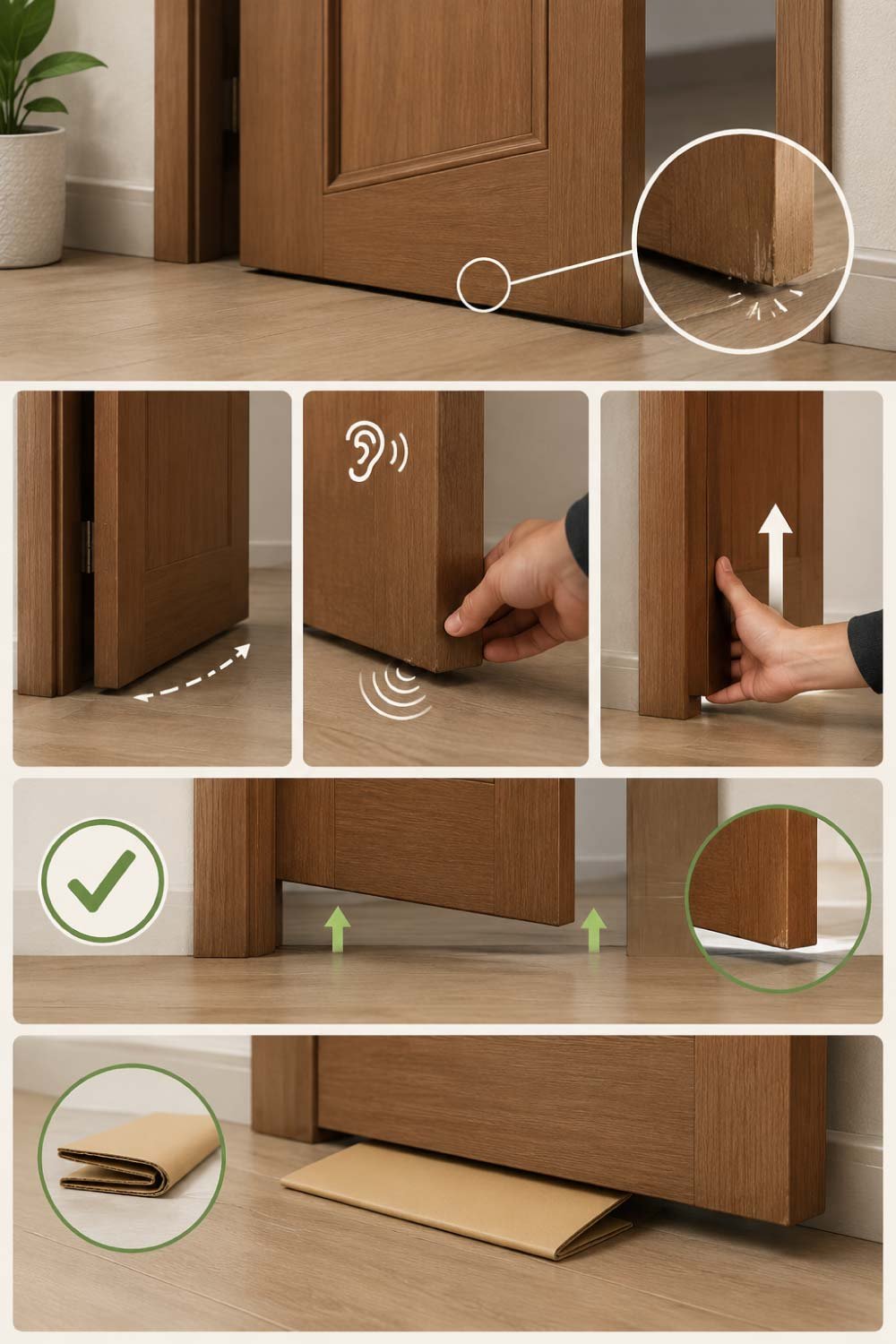
The bottom edge of a door often makes contact with the floor, especially when alignment shifts slightly. This can cause scraping sounds or resistance during movement. Identifying this contact point helps you understand whether the issue is with clearance rather than the door structure itself.
- Slowly open and close the door
- Listen or feel where it drags
- Gently push the door upward while moving it
If it clears the floor when lifted slightly, the issue is alignment, not damage.
Extra trick:
Place a folded piece of paper or cardboard under the door temporarily. This can help you test if clearance is the issue.
Also Read:
Quick Fix #3: Rub a Candle or Soap on the Problem Area
This traditional household trick is surprisingly effective for reducing friction on sticking doors. Wax or soap creates a smooth, slippery layer on rough edges, allowing the door to glide more easily against the frame without requiring repairs or tools.
- Identify where the door is sticking (edges or frame)
- Take a candle or soap bar
- Rub it directly along the sticky edge
Why this works:
The wax or soap reduces friction, allowing the door to glide smoothly against the frame.
It’s simple, clean, and surprisingly effective for minor sticking issues.
Quick Fix #4: Check for Swelling Due to Moisture
Moisture-related swelling is a common reason doors stick, especially during rainy or humid seasons. When wood absorbs moisture, it expands slightly and loses clearance within the frame. Identifying this pattern helps you apply temporary solutions until the material naturally stabilizes again.
- Open windows or improve airflow in the room
- Use a fan to dry the area around the door
- Avoid cleaning the door with excess water
Temporary relief trick:
If the door is slightly swollen, gently push it back and forth several times. Sometimes repeated movement helps the wood settle naturally.
Quick Fix #5: Loosen the Door by “Rocking It”
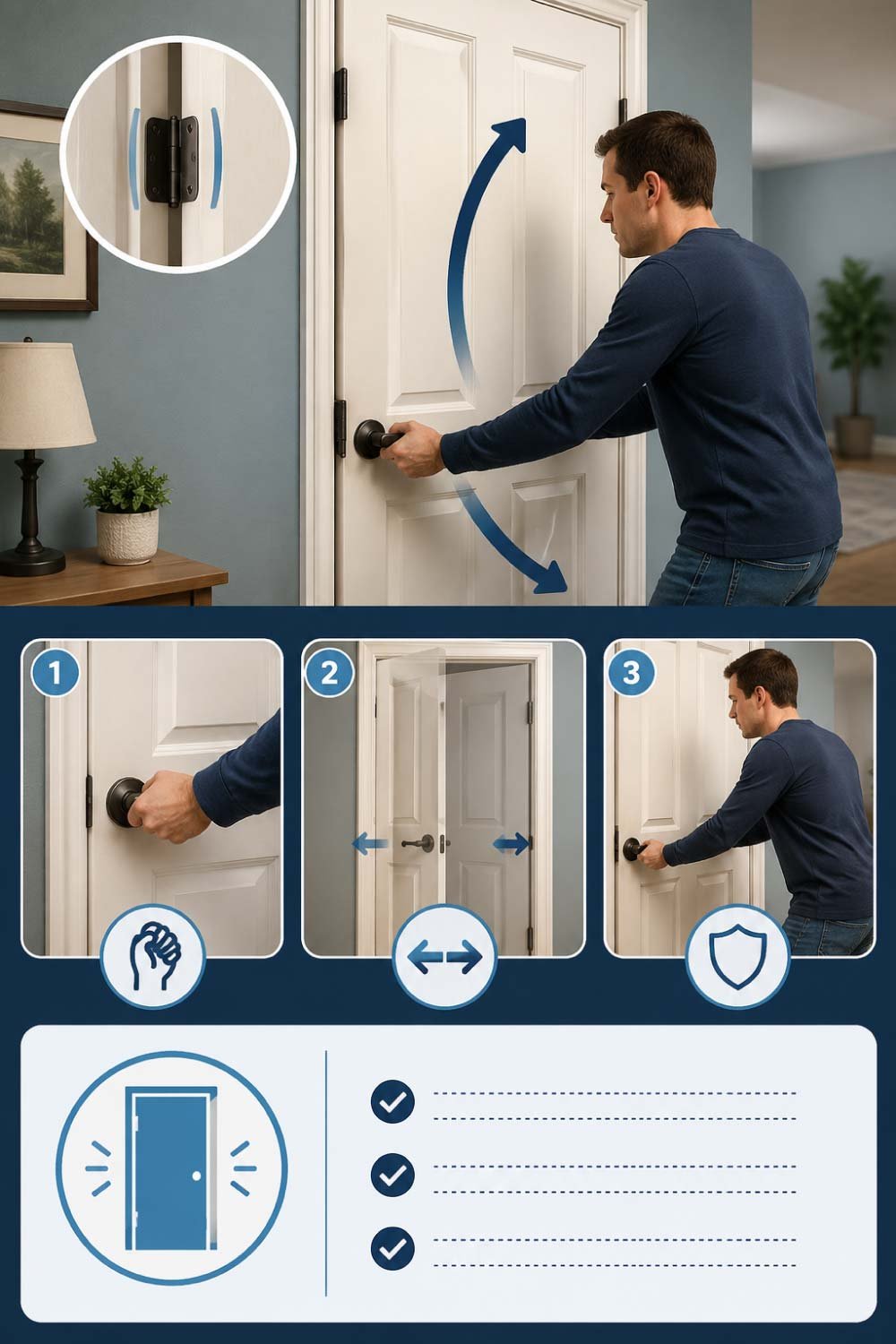
When a door feels generally tight rather than sticking at a single point, the issue is often minor pressure on the hinges or frame alignment. This simple rocking method helps redistribute tension across the door and can slightly shift its position back into smoother operation without tools.
- Hold the door handle or edge firmly
- Gently move the door forward and backward
- Apply light, controlled pressure while doing this
Why it helps:
This movement can help the door shift slightly on its hinges, reducing pressure points.
Think of it as “resetting” the door’s position without actually adjusting hardware.
Also Read:
Quick Fix #6: Check the Frame for Obstructions
Sometimes the door itself is perfectly fine, and the real problem lies in the frame. Even small obstructions inside or around the frame can create friction points that make the door feel stuck or uneven when opening or closing.
- Dust buildup inside corners
- Small stones or debris
- Old paint flakes
- Slightly swollen wooden edges
What to do:
- Wipe the frame with your hand or a dry cloth
- Remove any visible dirt or debris
- Recheck the door movement
Even a small piece of debris can make a big difference.
Quick Fix #7: The “Push Opposite Direction” Trick
This method is useful when the door consistently sticks on one specific side. Instead of forcing it open, you gently guide it in the opposite direction to temporarily balance its alignment. It’s a quick way to reduce friction at the exact problem spot.
- Open the door slightly
- Push it gently opposite to the sticking area
- Repeat the motion a few times slowly
Example:
If the door sticks at the top right corner, gently guide it toward the bottom left while moving it.
Why it works:
You are temporarily shifting the alignment just enough to reduce friction.
Quick Fix #8: Let the Door “Settle Naturally”
Not every sticking door needs active fixing. In many cases, mild friction resolves itself with repeated natural movement. Allowing the door to operate normally can help smooth out minor resistance points without any intervention or force.
- Open and close the door 10–15 times slowly
- Avoid forcing or jerking the movement
- Let it swing naturally each time
Over time, small friction points may gradually smooth out on their own.
When a Sticking Door Means a Bigger Issue
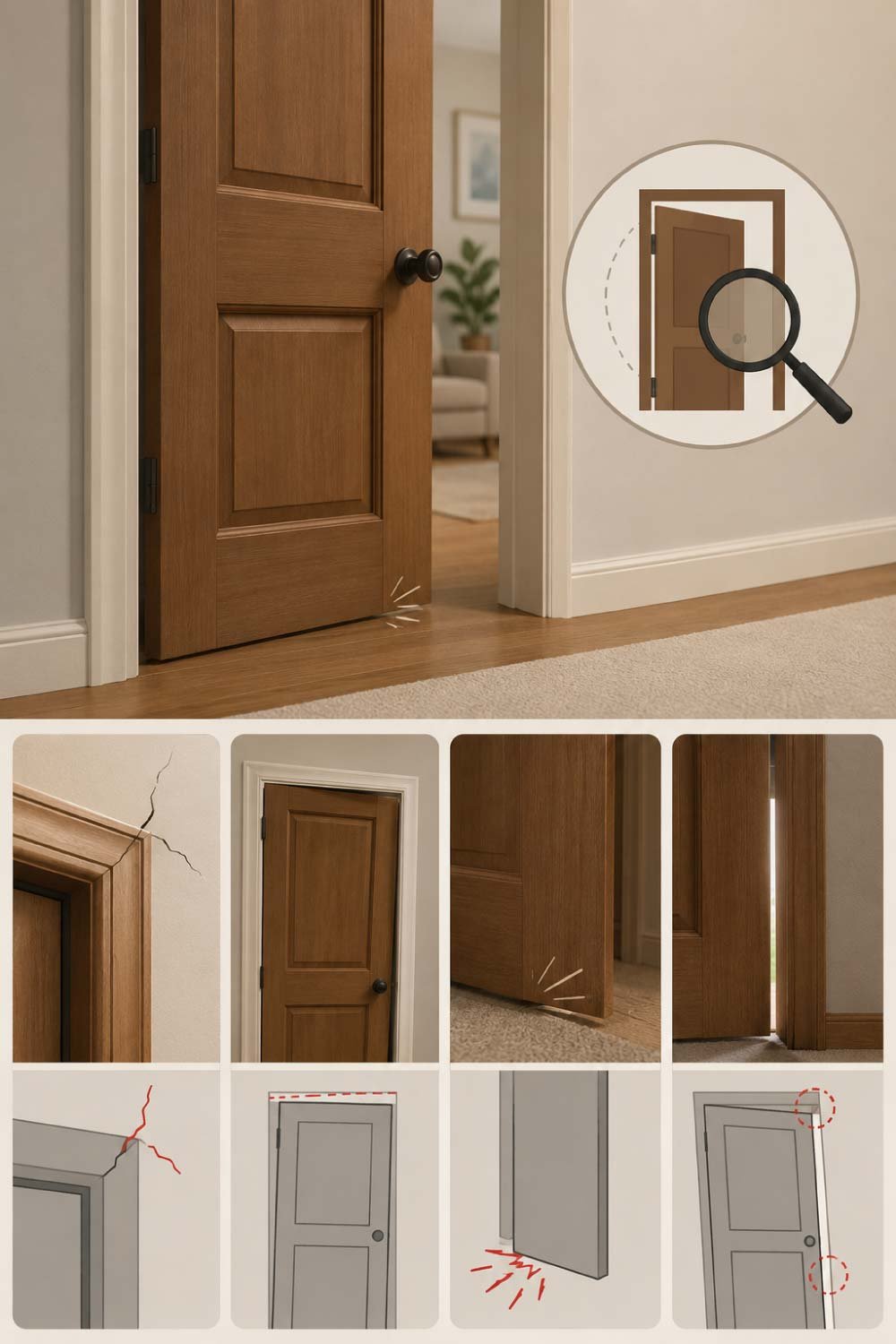
Most sticking doors are minor and easy to manage, but sometimes they indicate deeper structural or mechanical problems. If simple fixes don’t help, it may be a sign that the door or frame needs proper inspection or realignment.
Watch out for:
- Cracks in the door frame
- Visible sagging or uneven hanging
- Strong scraping even after adjustments
- Gaps appearing at the top or bottom
If you notice these, the door may need proper realignment later. But even then, the quick fixes above can help temporarily.
Also Read:
Prevention Tips to Avoid Future Sticking
Once your door is working smoothly again, a few simple habits can help keep it that way for the long term. Preventive care reduces wear, minimizes alignment issues, and helps your door stay easy to use in all seasons.
1. Keep humidity under control
Use ventilation or fans during humid weather to reduce moisture buildup that can swell wooden doors.
2. Avoid water exposure
Don’t wash wooden doors with excessive water, as it can lead to long-term swelling and damage.
3. Clean door edges regularly
Dust and dirt can slowly build up and create friction, so occasional cleaning helps maintain smooth movement.
4. Don’t slam doors
Hard impacts can shift hinges and gradually affect alignment, leading to future sticking issues.
5. Watch seasonal changes
Doors often expand in summer and contract in winter, so slight changes in movement are normal and should be monitored.
Final Thoughts
A sticking door can feel like a bigger problem than it really is. In reality, most cases are caused by simple issues like humidity, slight misalignment, or surface friction. The best part is that you don’t need tools or technical skills to fix it.
By using simple methods like lifting the door, reducing friction with soap or candle wax, or checking for debris, you can solve the issue in just a few minutes.
Next time your door sticks, don’t struggle with it—just apply one of these quick fixes and enjoy smooth, easy movement again.