

A window that refuses to close properly is more than just an inconvenience. It can let in dust, noise, rainwater, insects, and even reduce your home’s security. Many people assume this is a serious repair problem that requires professional help, but in most cases, the solution is surprisingly simple.
In fact, there is one quick trick that solves the majority of stuck or hard-to-close window issues—no special tools, no expensive repair, and no technical experience needed.
In this detailed guide, you’ll learn why windows stop closing properly, the simple trick that fixes most cases, and additional methods for stubborn problems. By the end, you’ll be able to restore your window’s smooth operation in minutes.
Why Your Window Won’t Close Properly
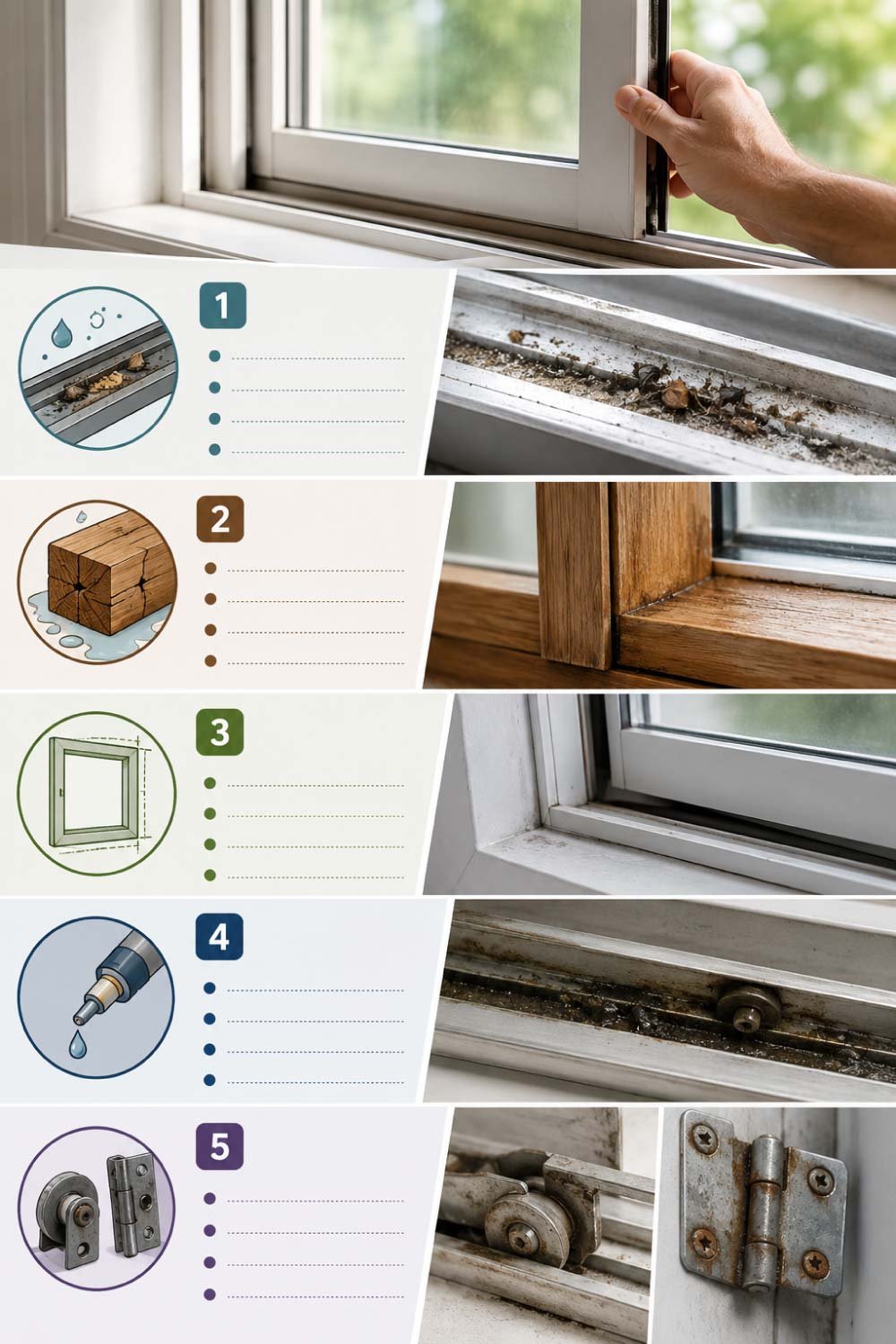
Before jumping into the fix, it helps to understand what’s causing the problem. Windows often stop closing smoothly due to everyday wear, dirt buildup, or structural changes in the frame. Identifying the exact cause makes it much easier to apply the right solution quickly and effectively.
1. Dirt, Dust, and Debris in Tracks
Window tracks naturally collect dust and small particles over time, especially in open environments. These tiny blockages create friction and prevent smooth sliding. If ignored, even a slightly dirty track can gradually turn into a major obstruction that stops the window from closing completely.
- Dust and sand accumulation
- Dead insects trapped in corners
- Rust or metal particles from aging tracks
- Sticky grime buildup over time
This buildup blocks smooth movement and creates friction.
2. Swollen Wooden Frames
Wooden window frames react strongly to moisture and humidity changes. During rainy seasons or in damp environments, the wood absorbs water and expands. This swelling reduces clearance between the frame and sash, making it difficult or even impossible to close the window properly.
- Expansion due to humidity
- Seasonal weather changes
- Water absorption in untreated wood
- Tight fit between sash and frame
This is especially common during humid or rainy weather.
3. Misaligned Window Sash
A window sash can shift slightly over time due to constant use, loose fittings, or structural settling of the building. Even a small misalignment can disrupt the smooth path, causing the window to jam or stop closing properly at certain points.
- Frame shifting over time
- Loose installation or fittings
- Building settling or movement
- Uneven pressure on the sash
When the window shifts slightly out of alignment, it no longer fits perfectly into its frame.
4. Old or Dry Lubrication
Sliding windows depend on proper lubrication to move smoothly along their tracks. Over time, lubricants dry out or collect dust, turning sticky and ineffective. This increases resistance and makes the window feel stuck or heavy while opening or closing.
- Dried grease or oil
- Dust mixing with lubricant
- Lack of maintenance over time
- Increased friction in sliding path
Windows with sliding tracks need smooth lubrication. When it dries out, movement becomes stiff.
5. Damaged Rollers or Hinges
In sliding or hinged window systems, mechanical parts like rollers and hinges play a key role in movement. When these parts wear out, crack, or become loose, they prevent smooth operation and may cause the window to jam or tilt incorrectly.
- Worn-out sliding rollers
- Rusted or broken hinges
- Loose mounting screws
- Uneven weight distribution
In sliding windows, worn-out rollers can make the window feel stuck or uneven.
The Simple Trick That Fixes Most Windows Instantly
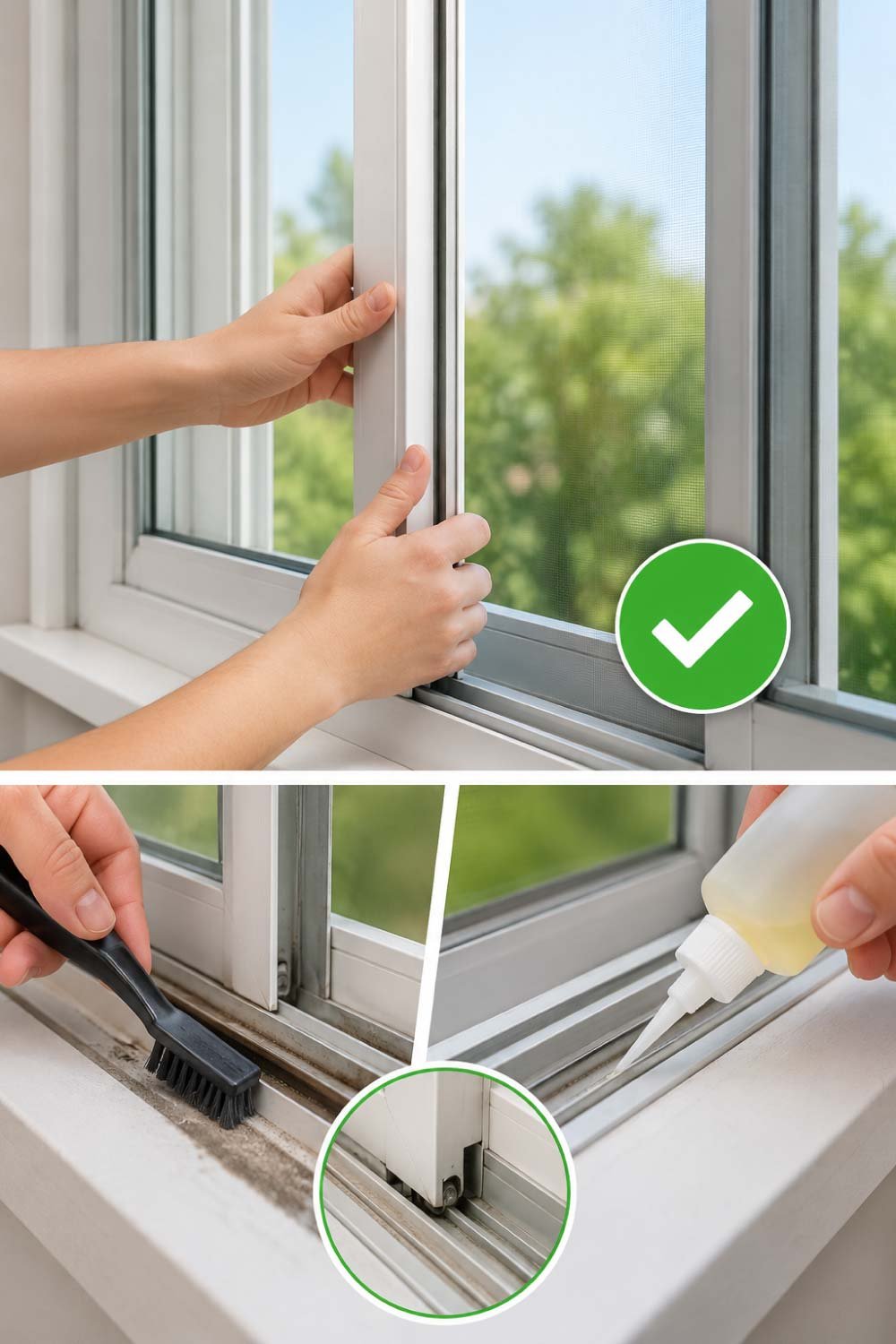
Now let’s get to the solution that works in most cases. This simple method focuses on cleaning and lubrication, which restores smooth movement quickly without needing tools or professional repair. In most situations, it immediately solves sticking or tight window problems.
The “Clean + Lubricate Track” Trick
This is the fastest and most effective method for fixing a window that won’t close.
Step 1: Clean the Window Track
Cleaning is the most important step because dirt and debris are the main reasons windows get stuck. A clean track allows the window to move freely without obstruction. This step removes hidden buildup that often goes unnoticed but causes major resistance.
You’ll need:
- A dry cloth or brush
- Vacuum cleaner (optional)
- Mild soap and water
How to do it:
- Open the window as far as it moves.
- Remove visible dust and dirt using a brush or vacuum.
- Wipe the track with a damp cloth.
- Let it dry completely.
Even small debris can block movement, so don’t skip this step.
Step 2: Apply Lubrication
Once the track is clean, lubrication restores smooth sliding and reduces friction. It helps the window glide easily without sticking or resistance. Choosing the right lubricant is important because some types attract dust while others stay clean for longer periods.
Best options:
- Silicone spray (best choice)
- Candle wax (emergency option)
- Graphite powder
How to apply:
- Spray a light coat along the window track.
- Move the window back and forth.
- Wipe away excess lubricant.
Silicone spray is ideal because it does not attract dust like oil-based products.
Step 3: Test the Window
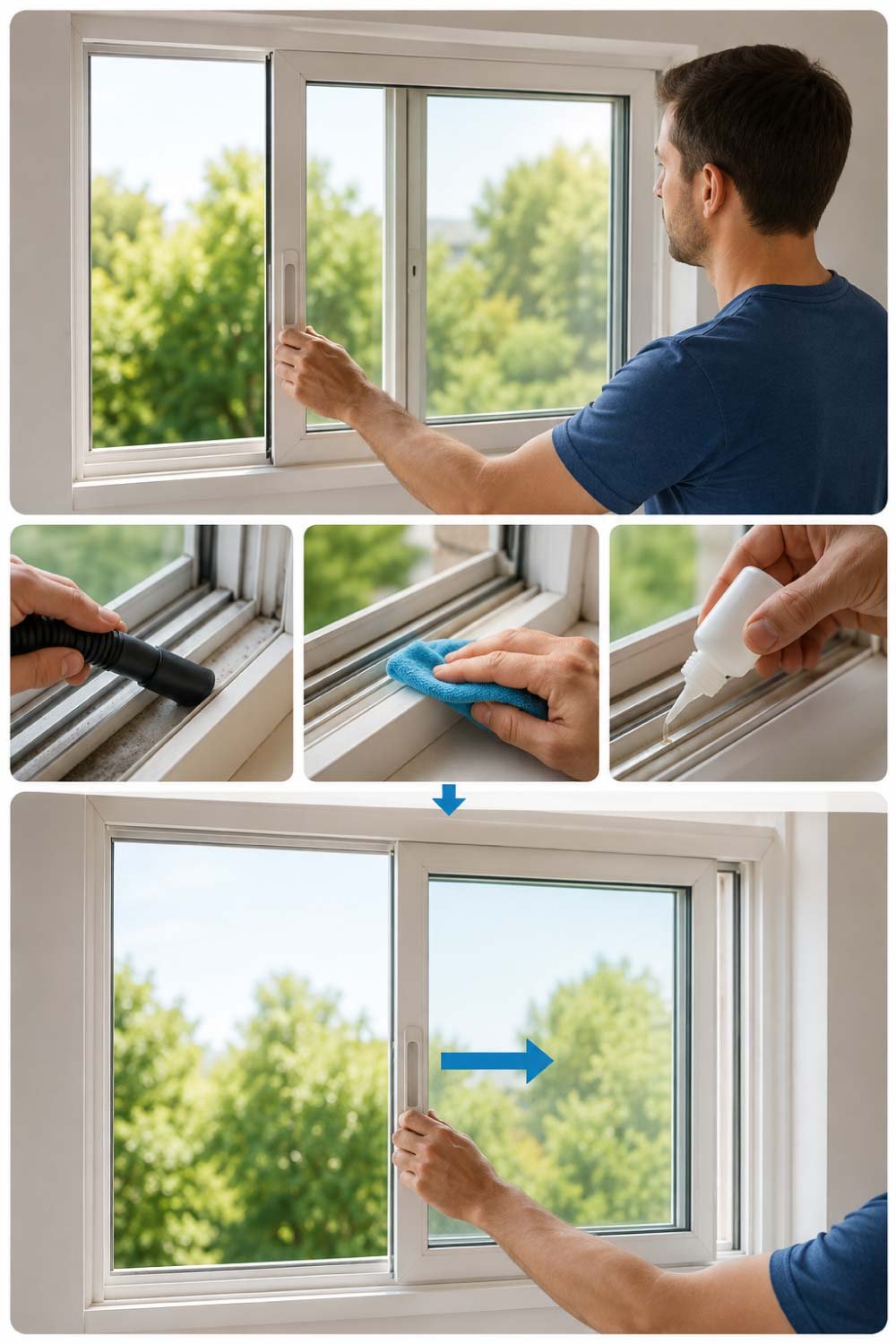
After cleaning and lubricating, testing confirms whether the issue is fully resolved. This step ensures that the track is smooth and the window is properly aligned. Most windows respond immediately with improved movement and easier closing.
Now try closing the window slowly.
In most cases, you’ll immediately notice:
- Smoother sliding
- Less resistance
- Proper alignment
This simple clean-and-lube trick fixes nearly 70–80% of stuck window problems.
Also Read:
How To Fix Loose Ceiling Fixture? Ceiling Fixture Repair Complete Guide
If the Window Still Won’t Close
If cleaning and lubrication don’t fully solve the issue, don’t worry. The problem may be due to obstruction or structural misalignment. These additional checks help identify deeper issues that require minor adjustments instead of major repairs.
Fix 1: Check for Obstructions
Sometimes the issue is not the window itself but something blocking its path. Small debris, hardened paint, or hidden objects inside the track can prevent full closure. Carefully inspecting the track often reveals the hidden cause.
Look for:
- Small stones in the track
- Bent metal pieces
- Loose screws
- Paint buildup
Remove any obstruction carefully using a screwdriver or scraper.
Even a tiny object can stop a window from closing fully.
Fix 2: Adjust the Window Alignment
Misalignment is another common reason windows fail to close properly. Over time, frames or sashes can shift slightly, affecting smooth movement. Realigning the window restores proper positioning and allows it to close without force.
For sliding windows:
- Lift the window slightly.
- Check if it sits properly on the track.
- Gently realign it into the groove.
For hinged windows:
- Check hinge tightness.
- Tighten loose screws.
- Adjust positioning if the frame has shifted.
Misalignment is very common in older homes.
Also Read:
How to Fix a Wobbly Table? Wobbly Table Repair Complete Guide
Fix 3: Fix Swollen Wooden Frames
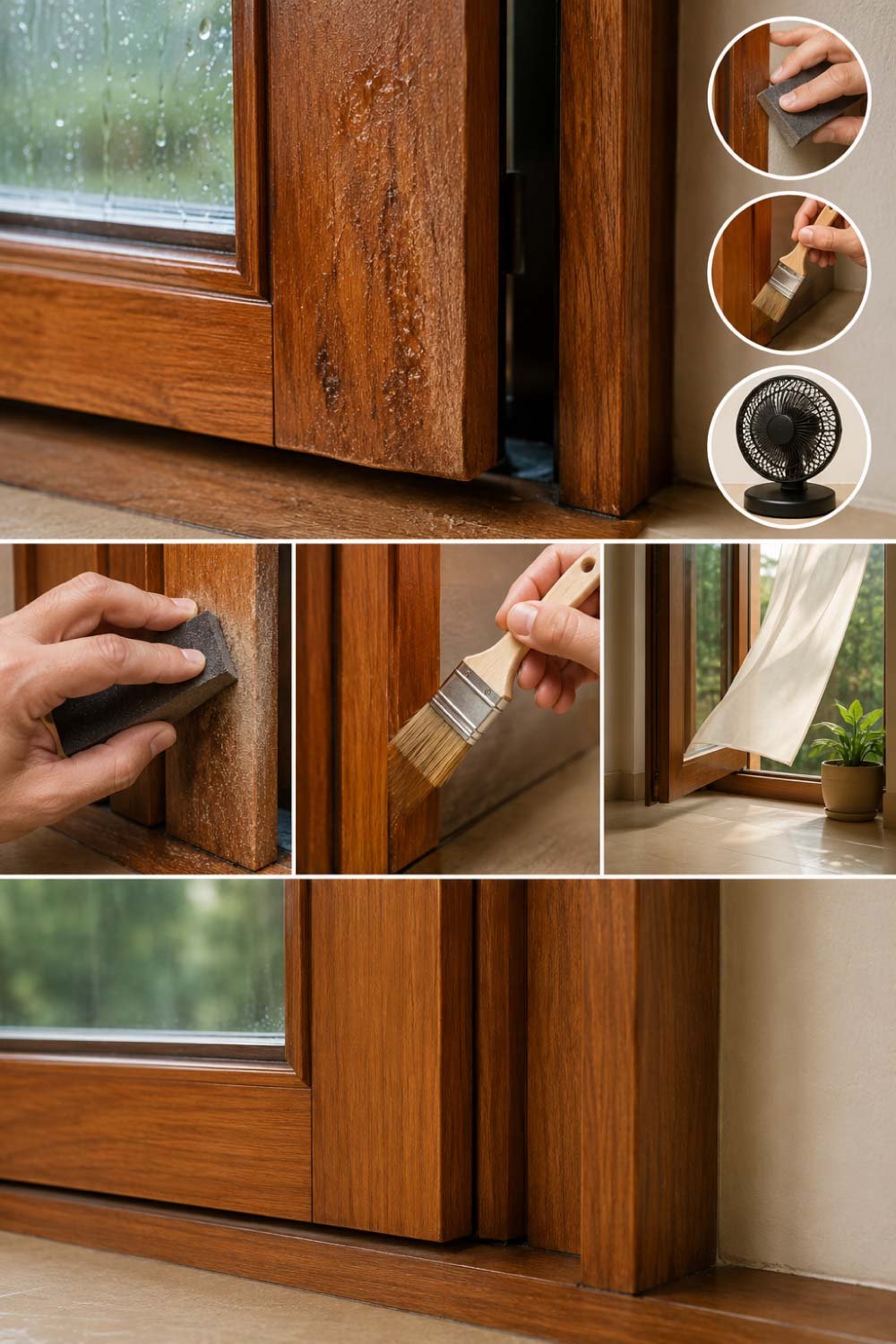
Wood expands when exposed to moisture, especially during monsoon season.
Quick solution:
- Sand the swollen edges lightly
- Apply a protective sealant
- Keep the area dry using airflow
If the swelling is minor, sanding alone is enough to restore smooth closing.
Fix 4: Tighten or Replace Screws
Loose screws can shift the entire window frame.
What to do:
- Check all screws on hinges and tracks
- Tighten any loose ones
- Replace stripped screws with slightly larger ones
A secure frame ensures smooth movement.
Fix 5: Repair or Replace Rollers (Sliding Windows)
If your sliding window feels heavy or uneven, the rollers may be damaged.
Signs of bad rollers:
- Grinding sound
- Uneven movement
- Window tilts while sliding
Solution:
- Remove the window panel
- Inspect rollers
- Replace if worn out
New rollers can completely restore smooth operation.
Also Read:
Preventing Future Window Problems
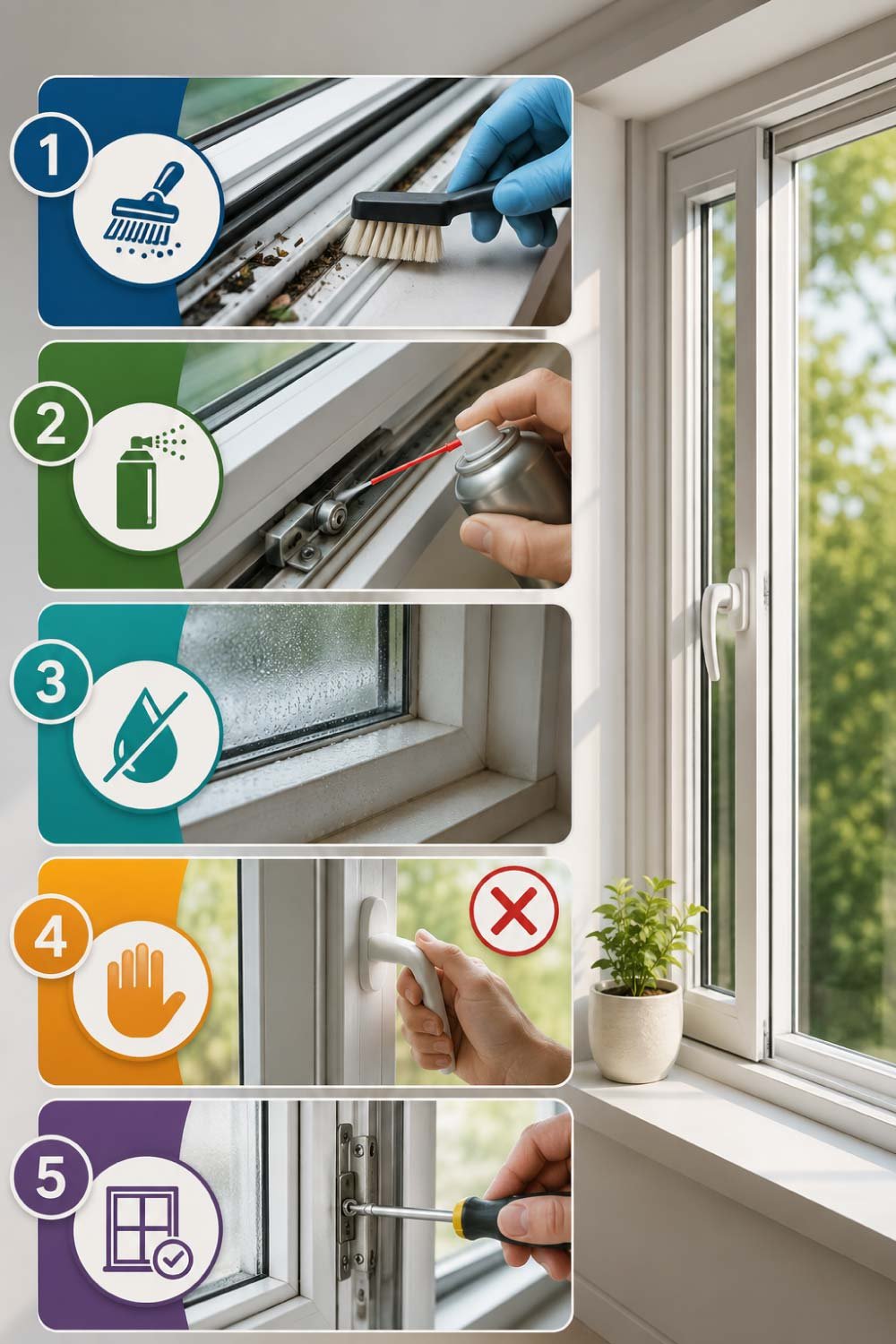
Common Mistakes to Avoid
Many people accidentally make the problem worse. Avoid these mistakes:
Using too much oil
It attracts dust and makes tracks sticky.
Forcing the window shut
This can bend the frame or damage rollers.
Ignoring small issues
A slight misalignment can turn into a major repair.
Skipping cleaning
Lubrication alone won’t help if dirt is still inside the track.
When to Call a Professional
Most window issues are simple DIY fixes, but sometimes professional help is necessary.
Call a technician if:
- The frame is broken or cracked
- The window is completely jammed
- Metal tracks are severely bent
- Glass is misaligned or loose
Safety should always come first, especially with large or high windows.
Also Read:
How to Fix a Broken Window Frame? Complete Guide About Broken Window Frame Repair
Final Thoughts
A window that won’t close properly might seem like a big problem, but in most cases, it’s caused by something very simple—dirt buildup, lack of lubrication, or slight misalignment.
The fastest and most effective solution is the clean + lubricate track trick, which restores smooth movement in minutes. If that doesn’t fully solve the issue, small adjustments like cleaning obstructions, fixing alignment, or tightening screws usually complete the job.
With regular maintenance, your windows can stay smooth, quiet, and fully functional for years.
A little care today prevents major repairs tomorrow—and keeps your home comfortable, secure, and energy-efficient.