
A cluttered bedroom can feel suffocating. Clothes piled on chairs, books scattered on the floor, and random items on every surface make it difficult to relax and sleep peacefully.
Decluttering your bedroom doesn’t have to be a long, drawn-out process. With the right strategy, you can reclaim your space and restore order quickly.
Here are five fast tips to declutter a bedroom efficiently, along with my personal experience of turning a chaotic bedroom into a peaceful sanctuary.
1. Set a Timer and Tackle Small Sections
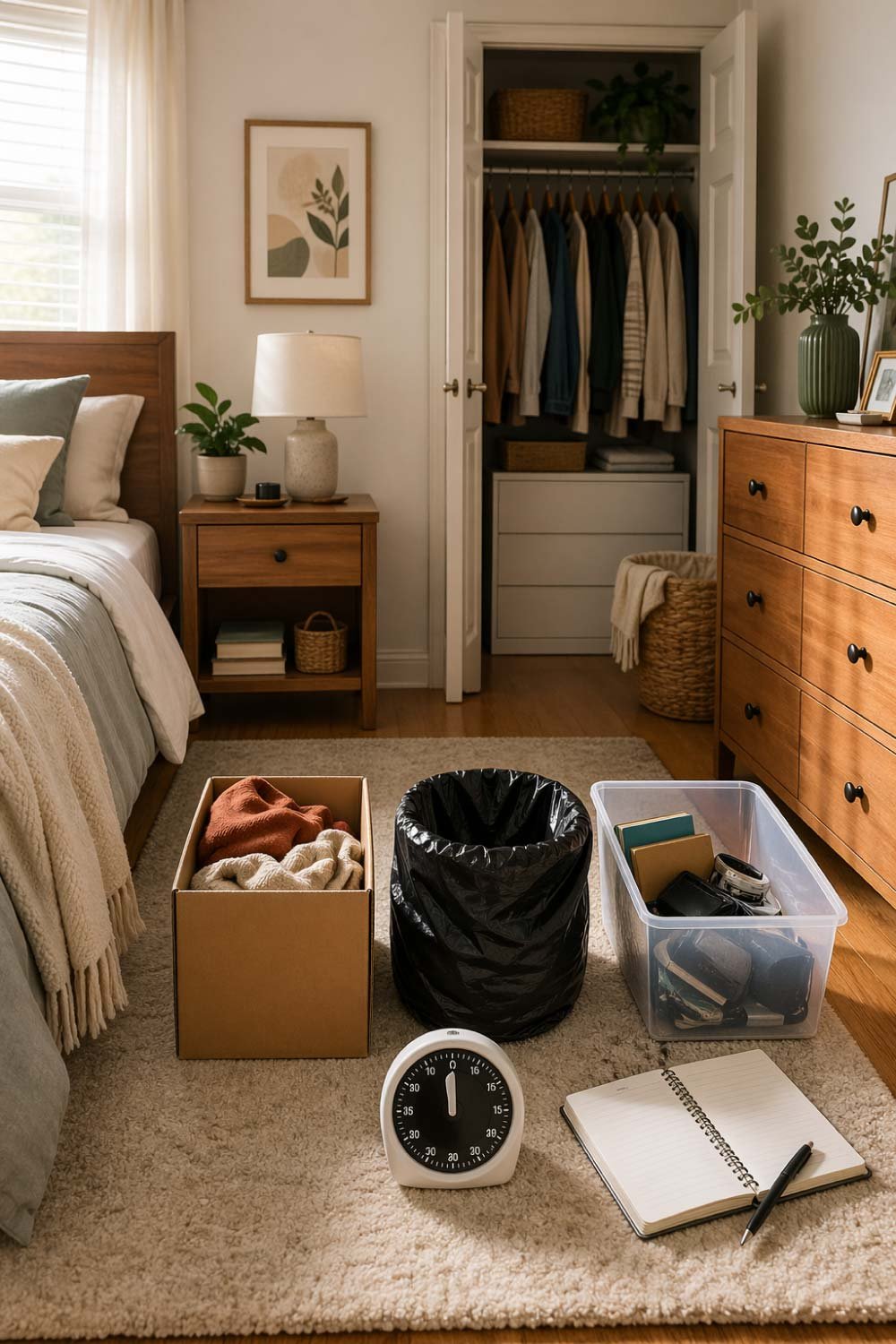
Decluttering a bedroom can feel overwhelming, especially if the space has been accumulating items for years. Many people make the mistake of trying to do everything at once—starting with the entire room in one go—which often leads to procrastination, stress, and even giving up. The key to decluttering quickly is to break the room into small, manageable sections. Think of your bedroom as a series of smaller zones: your nightstand, dresser, closet, bookshelf, or even just a single drawer or shelf. Focusing on one area at a time makes the process achievable and gives a sense of progress, which is incredibly motivating.
Why Breaking It Down Works
When you tackle a large task, your brain often sees it as too daunting, triggering avoidance. By breaking your bedroom into smaller chunks, you create a clear start and finish for each session. This taps into the psychological principle of “micro-progress”: completing small tasks provides the satisfaction of accomplishment, which builds momentum for the next task. Even 15 or 20 minutes of focused decluttering can dramatically reduce the feeling of chaos over time.
How to Declutter in Sections
Here’s a step-by-step method to make this approach work:
- Grab a Timer: Set it for 15, 20, or 30 minutes. The exact length depends on your stamina and schedule. Shorter intervals prevent burnout and make it easy to commit.
- Choose a Zone: Select a small, manageable area, like your nightstand or a single drawer. Don’t overthink it. The point is to have a clearly defined space to focus on.
- Sort Items Into Categories: As you pick up each item, quickly decide whether it should be:
- Keep: Items you use regularly or love.
- Donate/Sell: Items in good condition that you no longer need.
- Trash: Broken, worn-out, or unusable items.
- Relocate: Things that belong in another part of the house.
- Focus Only on That Section: Avoid getting distracted by other messy areas. Keep your attention solely on the small zone you chose.
- Complete Before Moving On: When the timer goes off, stop and assess your progress. Even if the section isn’t 100% done, the act of starting gives you momentum. You can set another timer to continue if you have energy.
Tips to Speed Up the Process
- Prepare Supplies First: Keep a trash bag, donation box, and a small bin for items to relocate handy. This prevents wasting time running around your room.
- Avoid Overthinking: Rapid decisions help you declutter faster. If an item sparks hesitation, ask yourself one quick question: “Have I used this in the last 12 months?” If not, it’s time to let it go.
- Celebrate Small Wins: Completing a section—even something as simple as a tidy nightstand—provides visible progress. This psychological reward reinforces your motivation.
Personal Experience
When I first decided to declutter my bedroom, I stood in the middle of the chaos feeling paralyzed. My floor was covered with clothes, old notebooks, and random gadgets. I didn’t know where to start. Then I remembered a technique I had read about: setting a timer for focused, short sessions. I grabbed my phone and set a 20-minute timer for my dresser. I committed to sorting only that surface.
I placed every item into “Keep,” “Donate,” or “Trash” piles. Within those 20 minutes, my dresser was cleared, and I had a small pile of items ready for donation. That tiny success gave me the confidence to tackle the next section: my nightstand. Over the next few days, working in 20-minute intervals, I decluttered the entire bedroom. It was amazing how focusing on small sections made a huge, overwhelming task manageable and even enjoyable.
Also Read:
2. Sort Clothes Fast Using the “One-In, One-Out” Rule
Clothes are often the biggest source of clutter in a bedroom. From unworn shirts and old pajamas to shoes collecting dust, they take up valuable space and make it difficult to find what you need. One of the most effective strategies for fast wardrobe decluttering is the “one-in, one-out” rule. This approach not only helps you declutter quickly but also prevents future clutter from accumulating.
Why the “One-In, One-Out” Rule Works
Many people keep old clothes because they think they might need them someday, leading to overcrowded closets and drawers. The “one-in, one-out” rule creates a natural balance. For every new item you bring into your wardrobe, you remove an old one. This ensures your closet remains manageable, organized, and clutter-free. The rule also helps you make faster decisions about your current wardrobe by creating a built-in system for letting go.
How to Implement the Rule Quickly
Here’s a step-by-step method for fast clothing decluttering:
- Empty Your Closet or Drawers: Take all your clothes off hangers or out of drawers and place them on your bed. Seeing everything at once gives you a clear picture of your wardrobe.
- Create Quick Sort Piles: Don’t overthink each piece of clothing. Use a simple system:
- Keep: Items you wear regularly and love.
- Donate/Sell: Clothes in good condition but no longer used.
- Trash: Worn-out, damaged, or unusable items.
- Ask Yourself One Question: For each item, ask, “Have I worn this in the last year?” If the answer is no, it belongs in the donate/sell or trash pile.
- Apply the One-In, One-Out Rule: Once you decide which items to keep, commit to removing an old item for every new piece you acquire. This creates space and prevents accumulation.
- Speed Up with a 3-Pile Quick Sort: For extremely fast decluttering, sort every item directly into Keep, Donate/Sell, or Trash without hesitation. Rapid decisions prevent overanalyzing and save hours.
Tips for Maximizing Efficiency
- Use Storage Bins or Bags: Place donation items in a bag or box immediately. This keeps your room tidy and prevents second-guessing.
- Work in Sections: Focus on one type of clothing at a time—shirts, pants, shoes, accessories. This prevents fatigue and speeds up the process.
- Be Honest with Yourself: Avoid the temptation to keep items for sentimental reasons if they don’t fit your lifestyle. Sentimental items can be stored separately if truly cherished.
Personal Experience
Before applying the “one-in, one-out” rule, I spent weeks trying to organize my closet. I would fold, hang, and refold clothes endlessly, but nothing worked. The main problem was indecision—I kept overanalyzing whether to keep each item. Once I decided to apply the rule, I dumped all my clothes onto the bed and quickly sorted them into three piles. I realized I had duplicate items and clothes I hadn’t worn in years.
Within two hours, my closet was transformed. I donated several bags of clothes and finally had space for my current wardrobe. The best part was how liberating it felt. Decluttering didn’t just create physical space—it reduced mental clutter too. I could see every item clearly, which made getting dressed faster and more enjoyable. The “one-in, one-out” rule has since become a permanent strategy for maintaining my wardrobe and preventing clutter from creeping back in.
Also Read:
3. Clear Surfaces and Use the “Touch It Once” Method
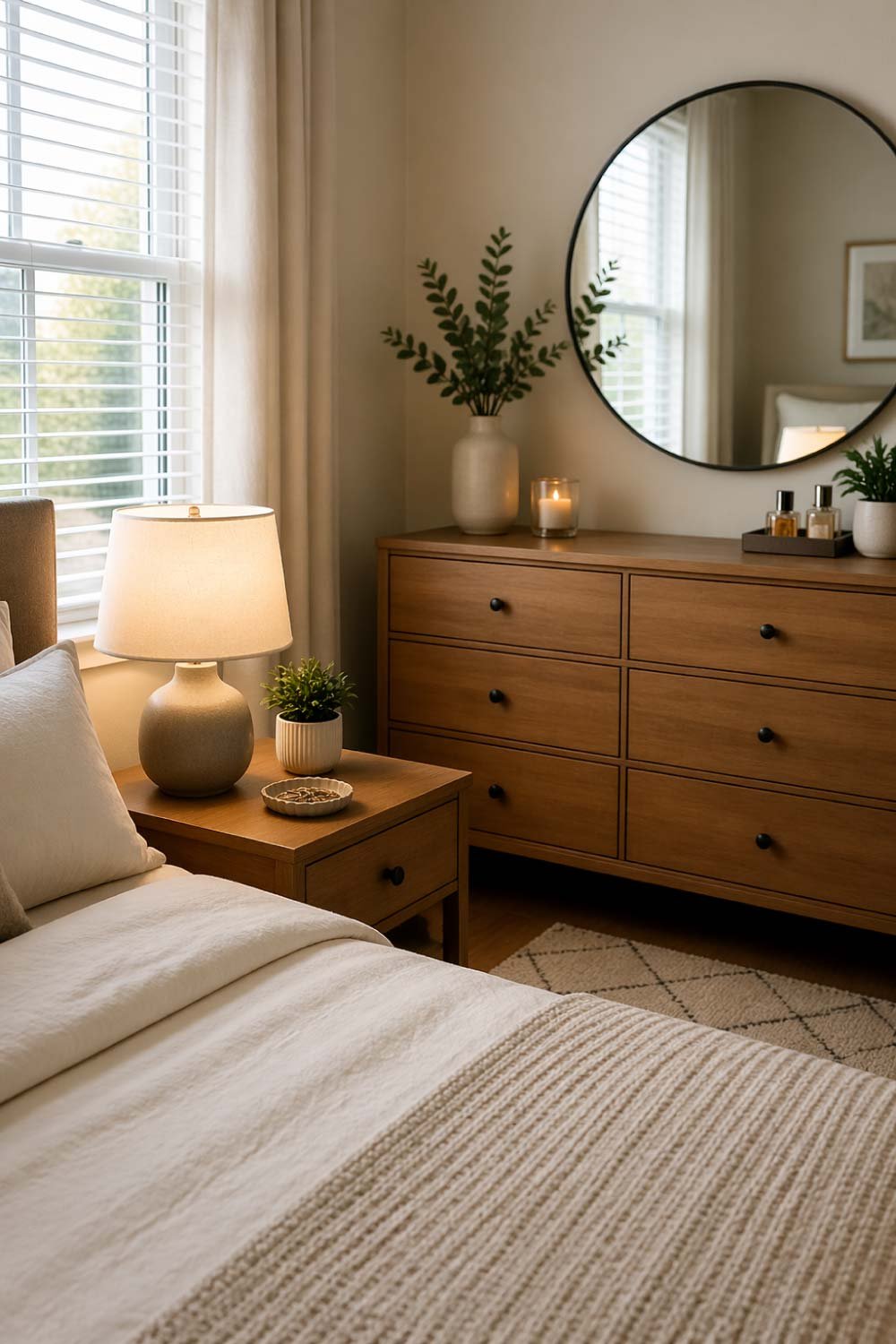
Flat surfaces in your bedroom—such as nightstands, desks, and dressers—are the most common hotspots for clutter. They act like magnets, attracting papers, jewelry, gadgets, makeup, and miscellaneous items. Left unchecked, these surfaces make even a tidy room feel messy. The “touch it once” method is a highly effective way to declutter surfaces quickly. The principle is simple: when you pick up an item, immediately decide what to do with it—put it away, throw it out, or donate it. By taking decisive action right away, you prevent clutter from simply being relocated, which is a common mistake many people make.
Why Flat Surfaces Accumulate Clutter
Clutter tends to accumulate on surfaces because these areas are the first “landing spots” when you come home. A bag, a book, or even a stray pen gets set down, and over time, these small deposits create visual chaos. Psychologically, cluttered surfaces also increase stress. Studies show that a messy environment can elevate cortisol levels, making it harder to relax, focus, or even sleep. Clearing surfaces not only improves physical organization but also boosts mental clarity.
Steps to Declutter Surfaces Quickly
- Start with the Biggest Surfaces First: Begin with the areas that are most visible and that generate the most stress, like your dresser or bedside table. The impact of clearing these surfaces is immediate and motivating.
- Pick Up Each Item Once: As you touch an item, ask yourself, “Do I need this right now?” If yes, return it to its proper place. If not, decide whether it belongs in the trash, donation pile, or a temporary relocation spot.
- Avoid Just Moving Items Around: The goal is not to shift clutter from one surface to another. Each item should have a clear destination. This prevents clutter from returning to the same problem areas.
- Group Similar Items: After clearing a surface, store items by category for easier access. Jewelry in a tray, papers in a file, and chargers in a drawer can reduce future clutter buildup.
- Maintain a Clear Surface Mindset: Make it a habit to put things away immediately. A surface-free environment discourages future clutter because there’s nowhere for stray items to land.
Tips to Speed Up the Process
- Set a Timer: Give yourself 10–15 minutes per surface. The pressure of a time limit encourages rapid decision-making.
- Keep Supplies Handy: Have trash bags, donation boxes, and bins ready. You’ll avoid unnecessary trips and keep momentum going.
- Use Vertical Organizers: For frequently used items, consider trays, shelves, or small containers. These help contain items without overcrowding flat surfaces.
Personal Experience
My bedside table was once a chaotic dumping ground for old receipts, pens, and charging cables. I would constantly knock over things when reaching for my lamp, which frustrated me daily. One weekend, I committed to the “touch it once” rule. I picked up each item and immediately decided where it belonged. Within just 10 minutes, the surface was completely clear. The sense of calm was immediate. I even discovered a necklace I thought was lost! Since then, keeping my surfaces clutter-free has been effortless because I handle items immediately rather than letting them pile up.
Also Read:
4. Maximize Hidden Storage for a Quick Declutter
Sometimes, you need a fast declutter without discarding everything permanently. Hidden storage solutions are perfect for this, allowing you to make your bedroom look clean instantly while keeping items organized. The trick is to utilize under-bed storage, multi-functional furniture, and decorative baskets to hide or store items efficiently.
Why Hidden Storage Works
Hidden storage creates a sense of order even when everything isn’t fully sorted. It’s particularly useful for temporary solutions—like before guests arrive—or when tackling items that need more time for proper sorting. By visually clearing surfaces and floors, you instantly reduce stress and make your bedroom feel more spacious.
Quick Storage Hacks
- Under-Bed Storage: Use flat storage bins or rolling drawers under the bed to store seasonal clothes, shoes, or extra linens. This space is often overlooked but is perfect for items that don’t need daily access.
- Decorative Baskets: Place baskets on shelves or in corners to store small items like scarves, belts, electronics, or toys. Choose baskets that complement your room décor to keep things visually appealing.
- Multi-Functional Furniture: Beds with built-in drawers, storage ottomans, or benches with hidden compartments serve dual purposes. They provide seating or sleeping space while concealing clutter at the same time.
- Temporary Containment: For a fast fix, hide miscellaneous items in boxes or bins. Even if you plan to sort them later, this instantly makes your room appear organized.
Tips for Effective Hidden Storage
- Label Boxes: If storing items under the bed or in drawers, label them for easy retrieval.
- Limit What Goes Hidden: Don’t use hidden storage as a permanent dumping ground. Make it a temporary solution or a place for truly infrequently used items.
- Optimize Vertical Space: Stackable bins or baskets maximize under-bed and closet storage, giving you more room without cluttering the floor.
Personal Experience
Before hosting a surprise visit from friends, my bedroom was a whirlwind of clutter—magazines, old notebooks, shoes, and miscellaneous items scattered everywhere. I needed a fast solution. I grabbed several storage boxes and slid them under my bed. Within 20 minutes, the room looked spotless. It wasn’t perfect organization, but the relief was immediate. Later, I sorted and donated many of those items properly, but the temporary fix bought me peace of mind and a functional, clutter-free space instantly. Hidden storage has since become a vital tool in my decluttering strategy.
Also Read:
5. Establish Daily Habits to Keep Your Bedroom Clutter-Free
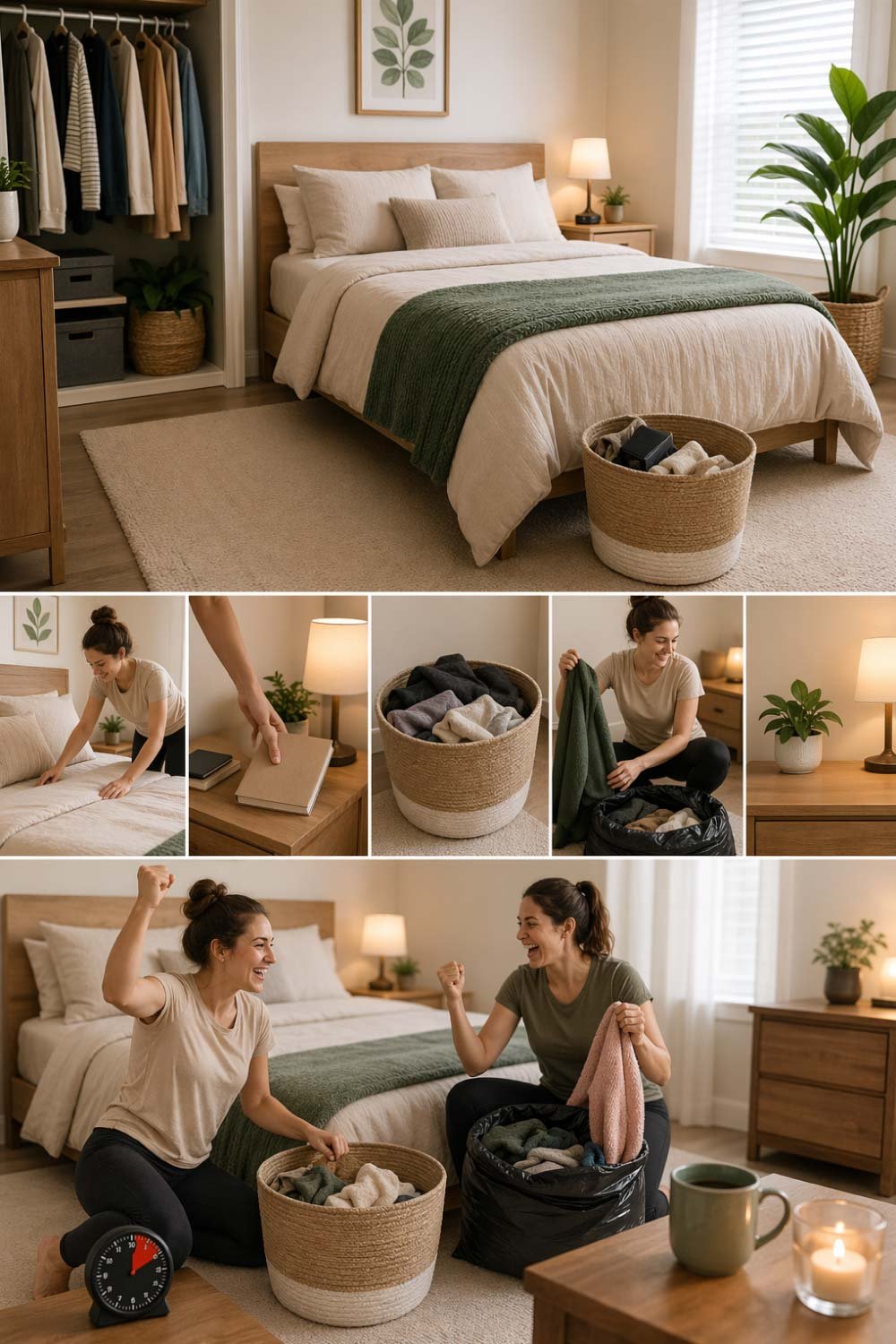
Decluttering isn’t a one-time task—it’s a lifestyle habit. Once you’ve spent hours tidying up, the key is maintaining that effort daily to prevent clutter from returning. Simple, consistent habits can keep your bedroom organized with minimal effort.
Daily Habits That Work
- Make Your Bed Every Morning: A neat bed instantly makes a room feel organized. It also discourages tossing items onto it, which is a common clutter hotspot.
- Return Items Immediately: Spend 5–10 minutes each day returning items to their designated places. Small, daily actions prevent mess from accumulating.
- Use a “Clutter Basket”: Keep a small basket for items that don’t belong in your bedroom. Empty it weekly by returning or donating items.
- Regularly Donate or Discard: Don’t let items linger indefinitely. If you haven’t used something in a year or it’s broken, discard or donate it promptly.
- Routine Surface Checks: Quickly scan surfaces before bed and remove anything that doesn’t belong. This keeps your room visually tidy every day.
Psychology Behind Daily Habits
The human brain tends to let clutter accumulate gradually, often because small actions feel inconsequential. Establishing daily rituals creates a routine that prevents clutter from escalating. It’s much easier to spend 10 minutes a day tidying than to face a week-long decluttering marathon.
Personal Experience
After a major decluttering session, I noticed that my bedroom slowly became messy again within days. To prevent this, I started spending 10 minutes every night returning items to their place and tidying surfaces. Within a month, my bedroom stayed consistently tidy. I no longer felt stressed when entering the room, and the space became a relaxing sanctuary rather than a source of anxiety. These small habits make a big difference over time and significantly reduce the need for future deep-cleaning sessions.
Also Read:
Bonus Tip: Make It Fun and Reward Yourself
Decluttering doesn’t need to feel like a chore. Turning it into a game or challenge can make the process enjoyable and motivate faster results.
- Set a Timer: See how much you can declutter before it goes off.
- Play Music: Upbeat songs energize the task and make it more enjoyable.
- Give Yourself a Reward: Treat yourself with coffee, a short walk, or a small indulgence afterward.
Personal Experience
Once, I made decluttering a mini-competition with my roommate. We set timers and raced to fill donation bags as fast as possible. Not only did we declutter quickly, but we also laughed and enjoyed the process. Rewards, even small ones, turn a potentially stressful task into a fun, motivating activity.
Final Thoughts
Decluttering a bedroom quickly is entirely possible when you approach it strategically. By breaking the room into sections, rapidly sorting clothes, clearing surfaces efficiently, using hidden storage, and adopting daily habits, you can transform even the messiest bedroom into a peaceful sanctuary.
From personal experience, I’ve learned that the fastest way to reclaim your space is to start small, act decisively, and maintain consistency. Decluttering isn’t just about a tidy room—it’s about creating an environment that promotes calm, relaxation, and a sense of control in your life.
Remember, a clean bedroom is more than just visually appealing—it’s a mental boost. Implement these tips, and you’ll not only see your bedroom transform but also feel lighter, calmer, and more focused every time you step inside.
Also Read: