
A sticky bathroom door can quickly turn into one of those small but endlessly annoying household problems. At first, it seems minor—you push a little harder, it squeaks a bit, and you move on. But over time, the door gets harder to close, harder to open, and sometimes even starts scraping the floor or frame. What should be a simple daily action becomes frustrating.
The good news is that a sticky bathroom door is usually not a serious issue. In most cases, it’s caused by humidity, swelling wood, loose hinges, or simple misalignment. Even better, you don’t need expensive tools or professional help to fix it in most situations. With a little understanding of the cause and a few easy steps, you can restore smooth movement in no time.
Let’s break down exactly why bathroom doors stick and how you can fix them quickly and properly.
Why Bathroom Doors Stick in the First Place
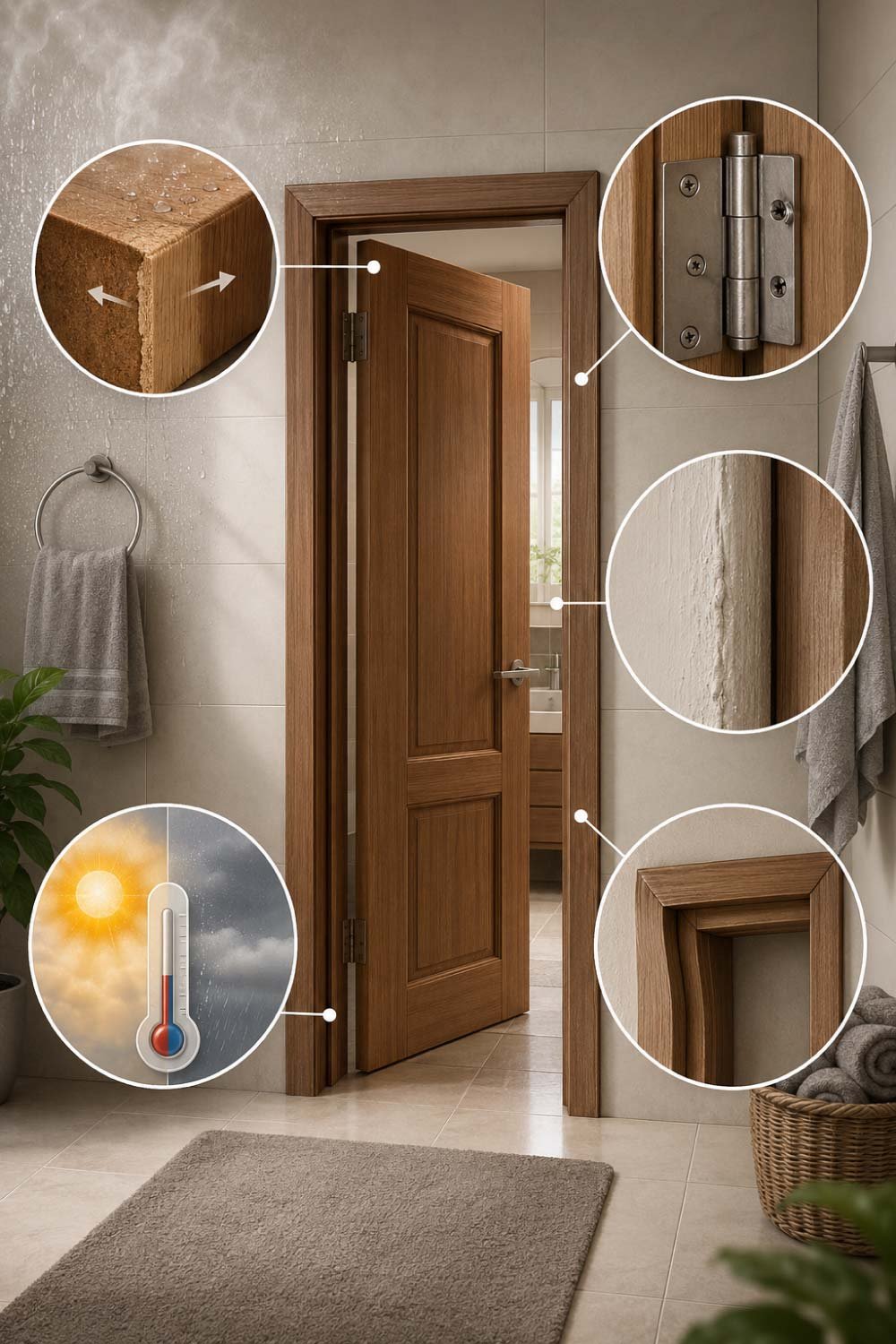
Bathroom doors sticking is a very common household issue, especially in homes with frequent hot showers and limited ventilation. The combination of steam, humidity, and daily use slowly affects door material and fittings. Over time, even a properly installed door can start to feel tight, rough, or difficult to open and close smoothly.
Bathroom doors are more prone to sticking than other doors in your home. The main reason is moisture. Bathrooms naturally have higher humidity due to hot showers, steam, and water use. Over time, this moisture affects the door material—especially if it’s made of wood or MDF.
1. Moisture and Wood Expansion
Moisture is the number one enemy of wooden doors in bathrooms. When wood absorbs humidity from the air, it naturally expands. This expansion is usually small but enough to disturb the perfect fit between the door and frame, leading to rubbing, resistance, and sticking issues.
Wood absorbs moisture from the air. In a bathroom, this happens constantly. When wood takes in water, it expands slightly. Even a small expansion can make the door rub against the frame or floor.
2. Loose or Misaligned Hinges
Hinges are responsible for holding the door in its correct position. With time and repeated use, screws may loosen, causing the door to shift slightly downward. This misalignment often results in the door scraping the floor or pressing tightly against the frame when opening or closing.
Hinges carry the full weight of the door. Over time, screws can loosen, causing the door to sag. When a door sags even a few millimeters, it may start sticking at the top or bottom.
3. Paint Buildup or Swelling Edges
Doors that have been painted multiple times often develop thick edges. This extra layer of paint increases friction when the door moves. In humid bathrooms, paint can also soften slightly, making the edges more prone to sticking against the frame.
Multiple layers of paint can build up along door edges. In humid conditions, paint can also soften slightly and add friction when opening or closing the door.
4. Changes in Temperature
Temperature fluctuations inside and outside the bathroom can affect door size and shape. During hot and humid weather, doors tend to expand, while in cooler or dry seasons, they may contract, leading to uneven fitting and occasional sticking.
Seasonal changes can affect how tightly a door fits in its frame. Hot and humid weather often makes doors swell, while dry weather may shrink them.
5. Warped Door Frame
Sometimes the issue is not the door itself but the frame surrounding it. If the frame becomes warped due to moisture, age, or structural shifts in the building, it can change the door alignment and cause continuous sticking problems.
In some cases, it’s not the door—it’s the frame. If the frame shifts or warps due to moisture or structural movement, the door alignment gets affected.
Step-by-Step Fast Fix for a Sticky Bathroom Door
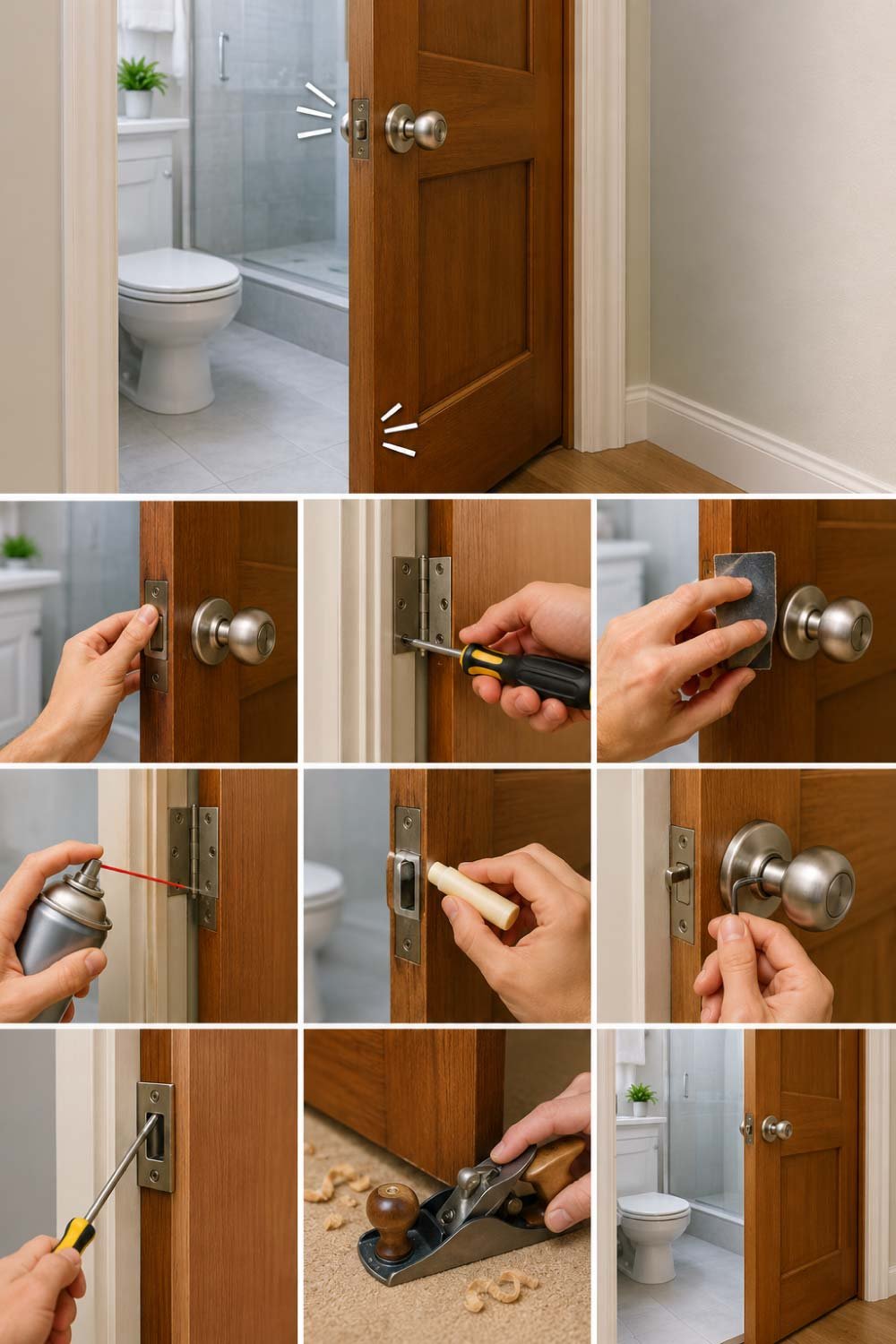
Fixing a sticky bathroom door does not always require professional help. Most issues can be solved with simple tools and basic adjustments at home. The key is to identify the exact cause first and then apply the correct fix step by step, starting with the easiest solutions before moving to deeper adjustments.
Now that you understand the causes, let’s move into practical solutions. Start with the simplest fixes first before moving to more advanced ones.
Step 1: Identify the Exact Sticking Point
Finding the exact spot where the door is rubbing is the most important first step. Without this, you may end up fixing the wrong area. Careful observation helps you understand whether the issue is at the top, bottom, or along the sides of the door frame.
Open and close the door slowly and observe:
Does it rub at the top?
Does it scrape at the bottom?
Does it stick near the latch side?
Or does it feel tight all around?
You can also run a piece of paper or thin cardboard along the edges to find where resistance happens. This step saves time and prevents unnecessary adjustments.
Step 2: Tighten All Hinges First
Loose hinges are one of the most common and easiest problems to fix. Even slight loosening can change the door’s position enough to cause sticking. Tightening screws can immediately improve alignment and restore smooth movement without any heavy repair work.
This is the easiest and most overlooked fix. Many sticky door issues come from loose screws.
Use a screwdriver to tighten all hinge screws on both the door and frame side. Pay special attention to the top hinge because it carries most of the load.
If a screw keeps spinning and won’t tighten, the wood hole may be worn out. In that case, insert a small wooden toothpick or matchstick with glue into the hole, let it dry, and then reinsert the screw. This gives it a tighter grip.
Even tightening hinges slightly can lift a sagging door enough to stop the sticking.
Also Read:
Step 3: Sand the Sticking Edge
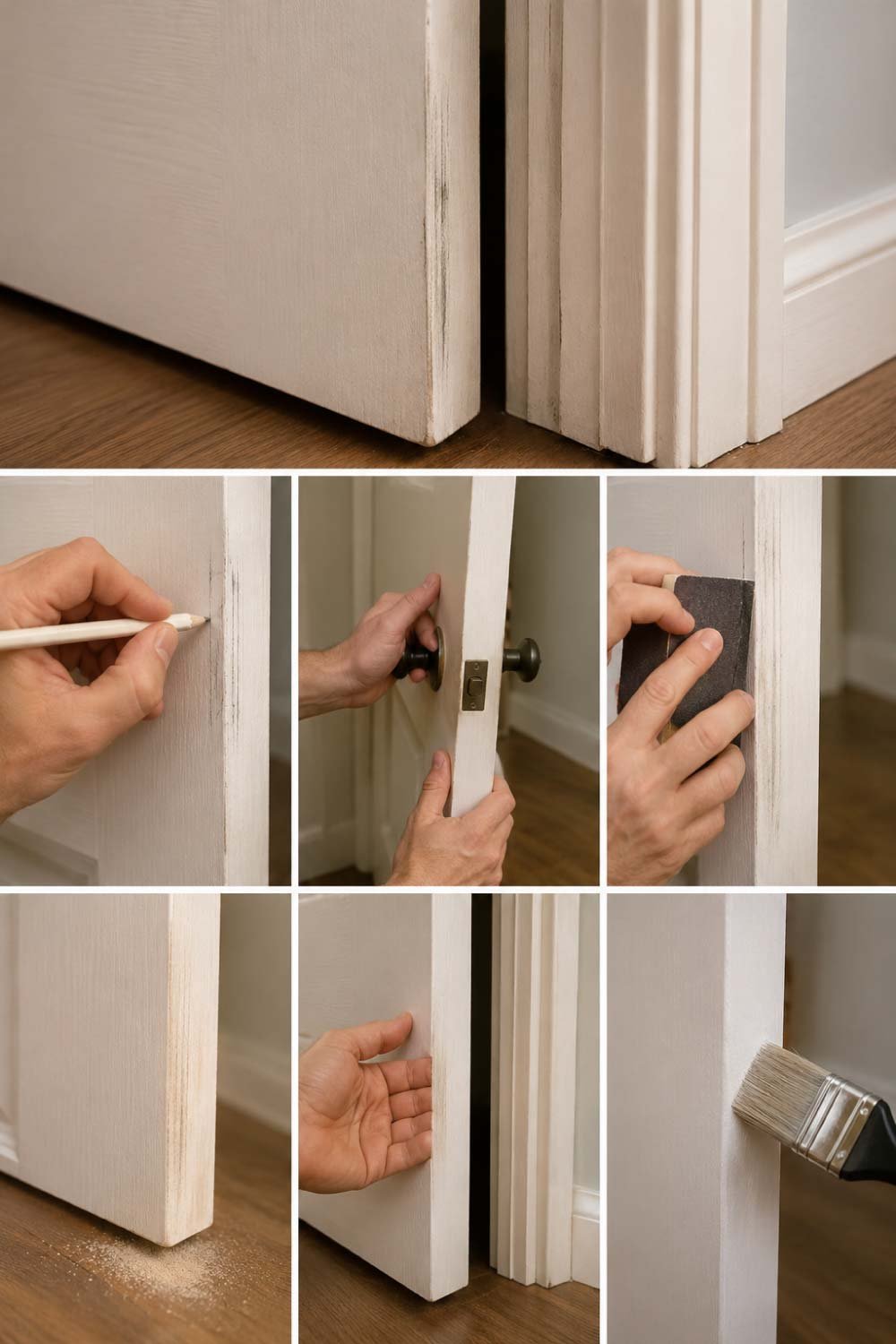
When a door physically rubs against the frame, sanding becomes an effective solution. Removing a small amount of material from the affected edge helps restore smooth clearance. This method works best for doors that have expanded due to moisture or paint buildup.
If the door is rubbing against the frame, sanding is often the quickest solution.
Here’s how to do it:
Mark the rubbing area with chalk or pencil
Remove the door if possible (optional but easier)
Use medium-grit sandpaper (around 120–150 grit)
Sand the marked area slowly and evenly
Check fit frequently
Don’t over-sand. The goal is to remove just enough material so the door swings freely again.
After sanding, you can repaint or seal the edge to protect it from moisture.
Step 4: Lubricate Hinges and Moving Parts
Sometimes the sticking problem is not about size or alignment but simple friction in the moving parts. Hinges can become dry or stiff over time, making the door feel heavy or difficult to operate even if it is properly aligned.
Sometimes the door isn’t sticking due to size—it’s just friction in the hinges.
Apply a lubricant such as:
Silicone spray
Light machine oil
Or even petroleum jelly in a pinch
Avoid using thick grease because it can attract dust over time.
Apply the lubricant directly to the hinge pins and move the door back and forth a few times. You’ll usually notice immediate improvement in smoothness.
Step 5: Check Door Alignment
If earlier fixes don’t fully solve the issue, the door may be slightly out of alignment. Even a small shift can create uneven gaps, causing the door to stick at certain points. Careful adjustment of hinges usually resolves this problem effectively.
If tightening and sanding don’t fully solve the issue, the door may be misaligned.
To check alignment:
Close the door slowly
Look at the gap between the door and frame
Gaps should be even from top to bottom
If one side has a tighter gap, the door is likely hanging unevenly.
To fix this:
Loosen the hinge screws slightly
Adjust the door position by pushing it up, down, or sideways
Retighten screws once alignment looks even
This small adjustment can completely eliminate sticking issues.
Step 6: Deal with Moisture Problems
Since bathrooms are humid environments, moisture control is essential for long-term results.
Here’s what helps:
- Keep the bathroom ventilated (open windows or use exhaust fans)
- Wipe excess water from the door after long showers
- Avoid leaving wet towels hanging on the door
- Use moisture-resistant paint or sealant on wooden doors
If the door is already swollen, reducing humidity may slowly help it return closer to its original shape.
Step 7: Trim the Door (Last Resort Fix)
If nothing else works and the door is severely rubbing, trimming may be necessary.
This involves shaving off a thin layer from the bottom or side of the door using a plane tool or saw.
Important tips:
- Remove only small amounts at a time
- Test frequently to avoid over-cutting
- Always seal the cut edge afterward to prevent future moisture damage
This step is usually done only when swelling or warping is permanent.
Also Read:
How to Fix Water Hammer in Pipes: Causes, Solutions, and Prevention
Preventing Future Door Sticking
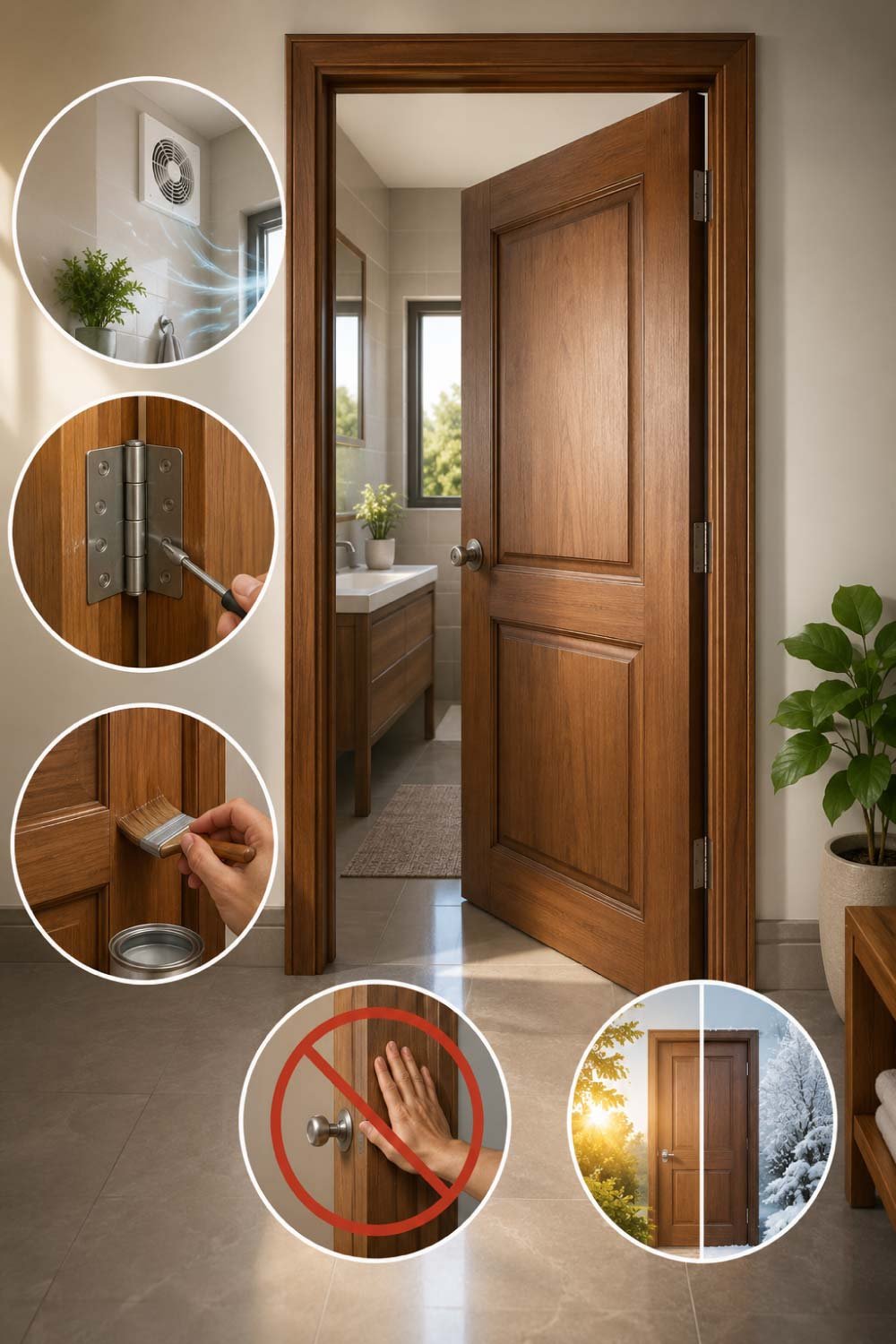
Fixing the problem is one thing—preventing it from coming back is even better.
Here are simple habits that make a big difference:
Keep the Bathroom Dry
Moisture is the number one cause. Good airflow is your best defense.
Regular Maintenance
Check hinges every few months and tighten them if needed.
Seal Wooden Doors
A protective seal or paint layer helps block moisture absorption.
Avoid Forceful Closing
Slamming doors repeatedly weakens hinges and misaligns frames over time.
Seasonal Checks
Doors often behave differently in summer and winter. A quick adjustment during seasonal changes can prevent bigger issues.
When You Should Call a Professional
Most sticky door problems are DIY-friendly. However, you may need professional help if:
- The entire door frame is warped
- The wall structure has shifted
- The door is cracked or severely damaged
- Hinges keep loosening despite repairs
In such cases, fixing it yourself might only offer temporary relief.
Final Thoughts
A sticky bathroom door may seem like a small inconvenience, but it often signals simple issues like moisture, loose hinges, or minor misalignment. The key is not to ignore it. A little early attention can prevent bigger repairs later.
Most of the time, tightening screws, sanding a small edge, or adjusting alignment is enough to bring the door back to smooth operation. And once you understand how humidity affects your bathroom door, you can easily prevent the issue from returning.
With these quick and practical fixes, your bathroom door can go from frustratingly sticky to smoothly functional in just a short time—no stress, no expensive repairs, just simple home maintenance done right.
Also Read: