
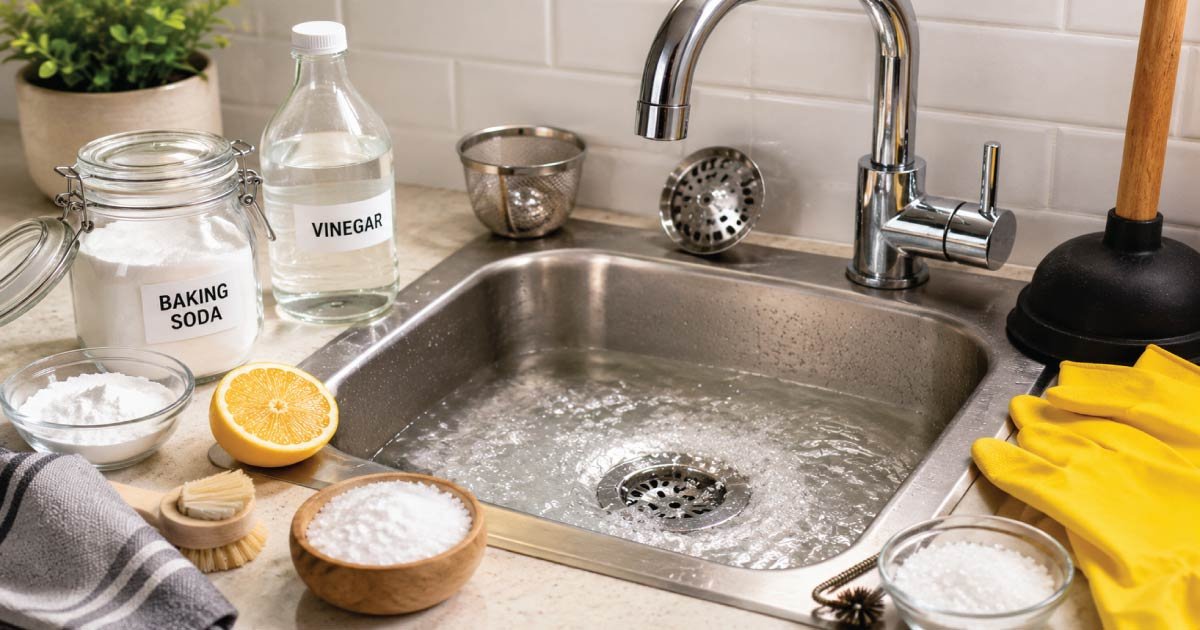
A clogged kitchen drain is more than an inconvenience it can bring cooking, cleaning, and daily routines to a halt. Unlike bathroom drains, which usually clog due to hair and soap, kitchen drains face tougher challenges: grease, food scraps, oils, starches, and soap residue all combine to create stubborn blockages. The result is slow drainage, foul odors, and sometimes complete backups.
The good news? You don’t always need harsh chemicals or an expensive plumber to fix the problem. With the right knowledge and a few smart kitchen drain cleaning hacks, you can clear minor clogs, maintain your pipes, and prevent future blockages before they start.This guide covers effective DIY methods, common mistakes to avoid, and simple habits that keep your kitchen drain running smoothly.
Why Kitchen Drains Clog So Easily
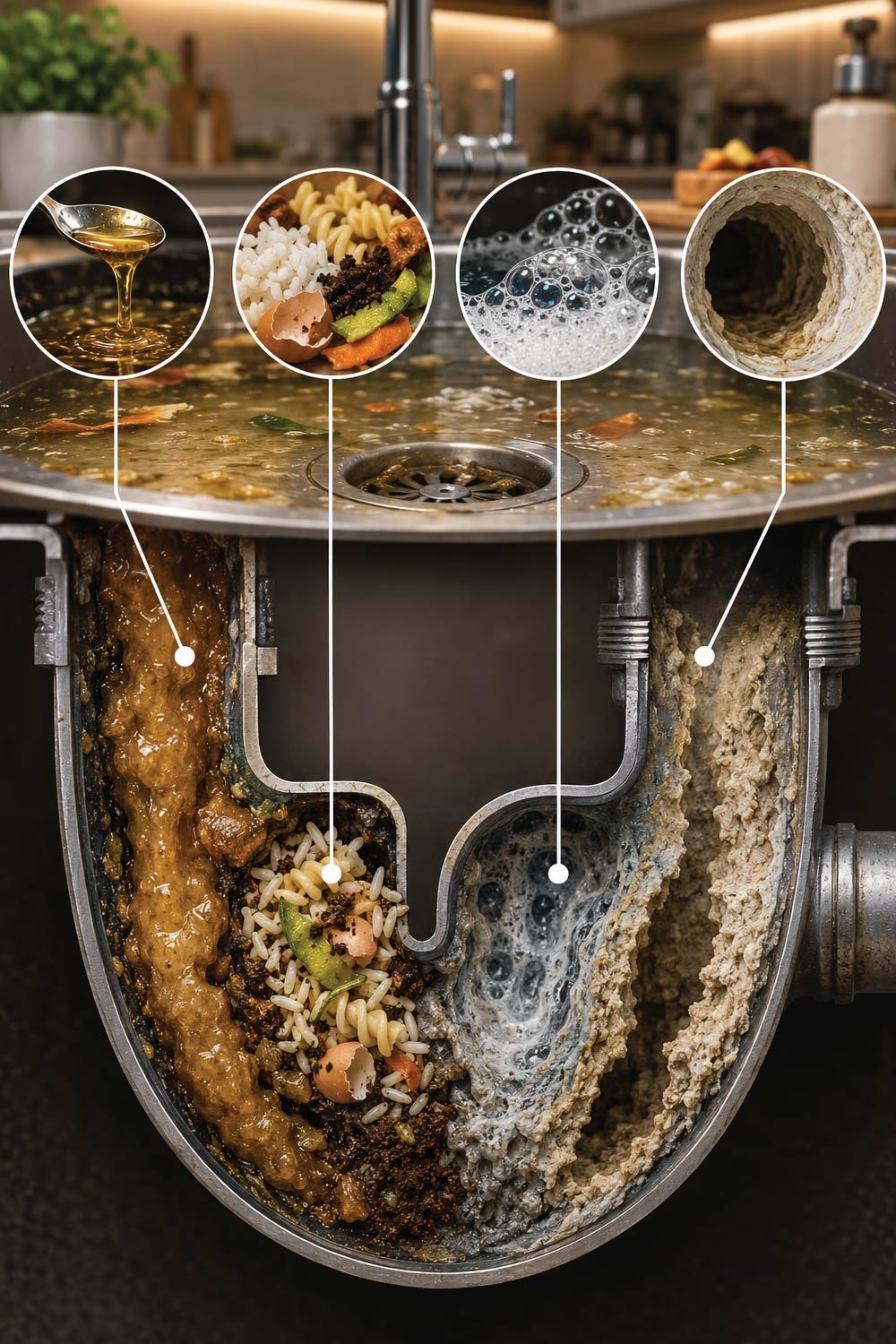
Kitchen drains clog easily because they handle a constant mix of grease, food particles, soap residue, and minerals. Unlike bathroom drains, kitchen plumbing is exposed to heavier waste daily, which gradually coats pipe walls, restricts water flow, and increases the likelihood of stubborn, recurring blockages over time.
1. Grease and Oil Buildup
Grease and oil are the most common causes of kitchen drain clogs because they may flow as liquid when hot but solidify as they cool. Once hardened, grease sticks to pipe walls and traps food debris, forming thick, persistent blockages.
Grease is the number one enemy of kitchen drains. Even when poured down hot, grease eventually cools and hardens inside pipes, trapping food particles and debris.
2. Food Waste
Food waste frequently causes kitchen drain clogs because many scraps expand, clump, or resist breakdown in water. When washed down sinks or garbage disposals, these materials collect inside pipes and create dense blockages that restrict drainage.
Rice, pasta, coffee grounds, eggshells, and vegetable peels swell or clump together, creating dense blockages—especially in garbage disposals.
3. Soap Residue
Soap residue contributes to kitchen drain clogs by combining with grease and minerals in water. Over time, this mixture forms a sticky film that coats pipe interiors, narrows the passageway, and makes it easier for debris to accumulate.
Dish soap combines with grease and minerals in water, forming a sticky coating that narrows pipes over time.
4. Hard Water Deposits
Hard water deposits develop gradually as minerals like calcium and magnesium accumulate along pipe walls. These deposits reduce pipe diameter, roughen interior surfaces, and create ideal conditions for grease and food particles to stick and cause clogs.
Minerals in hard water slowly build up along pipe walls, making it easier for debris to get stuck.
Early Warning Signs of a Kitchen Drain Problem
Kitchen drain problems rarely appear suddenly. They usually develop slowly, giving off warning signs that indicate restricted water flow or buildup inside the pipes. Recognizing these early symptoms allows you to address the issue before it turns into a full blockage, pipe damage, or costly plumbing repair.
- Slow-draining sink water
- Gurgling or bubbling sounds
- Water backing up into one sink when another is used
- Unpleasant, sour, or greasy odors
- Standing water after dishwashing
Ignoring these signs can lead to full blockages or pipe damage.
Easy Kitchen Drain Cleaning Hacks That Actually Work
Many kitchen drain clogs can be cleared or prevented using simple, proven methods that don’t require harsh chemicals. These practical cleaning hacks target grease and early buildup, helping restore proper drainage while protecting your pipes and reducing the risk of recurring kitchen plumbing problems.
1. Boiling Water Flush (Best for Grease)
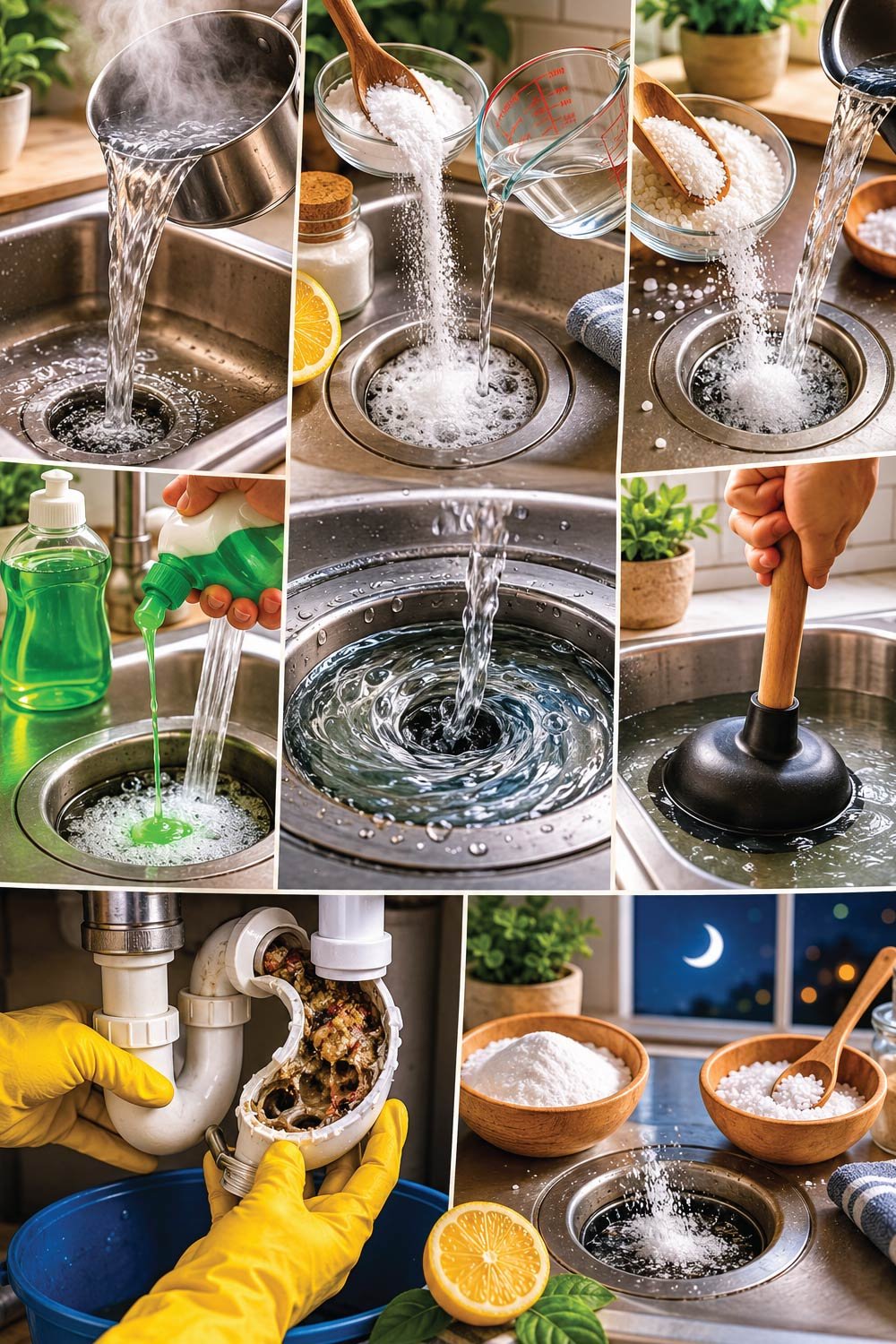
Boiling water is one of the easiest and most effective ways to tackle early grease buildup in kitchen drains. The heat helps melt and loosen grease lining the pipes, allowing it to wash away before it hardens and traps food debris.
How to do it:
- Boil a large pot of water
- Slowly pour it down the drain in two or three stages
- Wait a few minutes and test drainage
Repeat weekly as a preventative measure. Avoid this method if you have fragile or very old PVC pipes.
2. Baking Soda and Vinegar Power Clean
Baking soda and vinegar create a natural chemical reaction that helps break down grease, loosen light buildup, and neutralize odors. This method is especially useful for maintaining kitchen drains and preventing minor clogs from becoming serious blockages.
Steps:
- Pour ½ cup baking soda into the drain
- Add 1 cup white vinegar
- Cover the drain and let it fizz for 20–30 minutes
- Flush with hot water
This works best for mild clogs and routine maintenance.
3. Salt and Hot Water Scrub
Salt works as a gentle abrasive that helps scrub grease and residue from the inner walls of kitchen drain pipes. When combined with hot water, it loosens buildup and improves water flow, especially in drains affected by oily or greasy residue.
How to use:
- Pour ½ cup coarse salt into the drain
- Follow with boiling water
- Let it sit for a few minutes
This is especially useful for greasy kitchen drains.
4. Dish Soap and Hot Water (Grease Cutter Hack)
Dish soap is formulated to break down grease, making it an effective solution for slow kitchen drains caused by oil and fat buildup. Combined with hot water, it helps dissolve residue and flush it safely through the pipes.
Steps:
- Squirt a generous amount of grease-cutting dish soap into the drain
- Follow with very hot (not boiling) water
- Let it work for several minutes
This hack is excellent for slow drains caused by oil and fat.
5. Plunger for Kitchen Sinks
A plunger can be a powerful tool for clearing kitchen sink clogs by creating pressure that loosens blockages. When used correctly, it restores drainage without damaging pipes or pushing debris deeper into the system.
Tips:
- Fill the sink with enough water to cover the plunger cup
- Seal the other sink drain if you have a double basin
- Use quick, forceful plunges
- Test drainage after several attempts
Plunging loosens clogs rather than forcing them deeper.
6. Clean the P-Trap (Highly Effective)
The P-trap beneath the kitchen sink is designed to catch debris before it enters the main drain line, which also makes it a common clog point. Cleaning it manually allows direct removal of grease and food buildup.
How to clean it:
- Place a bucket underneath
- Unscrew the trap by hand or with pliers
- Remove grease and debris
- Rinse thoroughly and reinstall
This method is messy but extremely effective for stubborn blockages.
7. Baking Soda and Salt Overnight Treatment
This overnight treatment is ideal for recurring slow kitchen drains caused by gradual grease and residue buildup. The combination of baking soda and salt helps loosen debris over time, making it easier to flush the drain clean the next morning.
Steps:
- Mix ½ cup baking soda with ½ cup salt
- Pour into the drain
- Leave overnight
- Flush with hot water in the morning
Use monthly for maintenance.
Also Read:
Garbage Disposal Cleaning Hacks
Garbage disposals require regular cleaning to prevent clogs, odors, and buildup inside the grinding chamber. Using simple, safe cleaning hacks helps keep the disposal running smoothly and extends its lifespan without damaging internal components.
Ice and Salt Grind
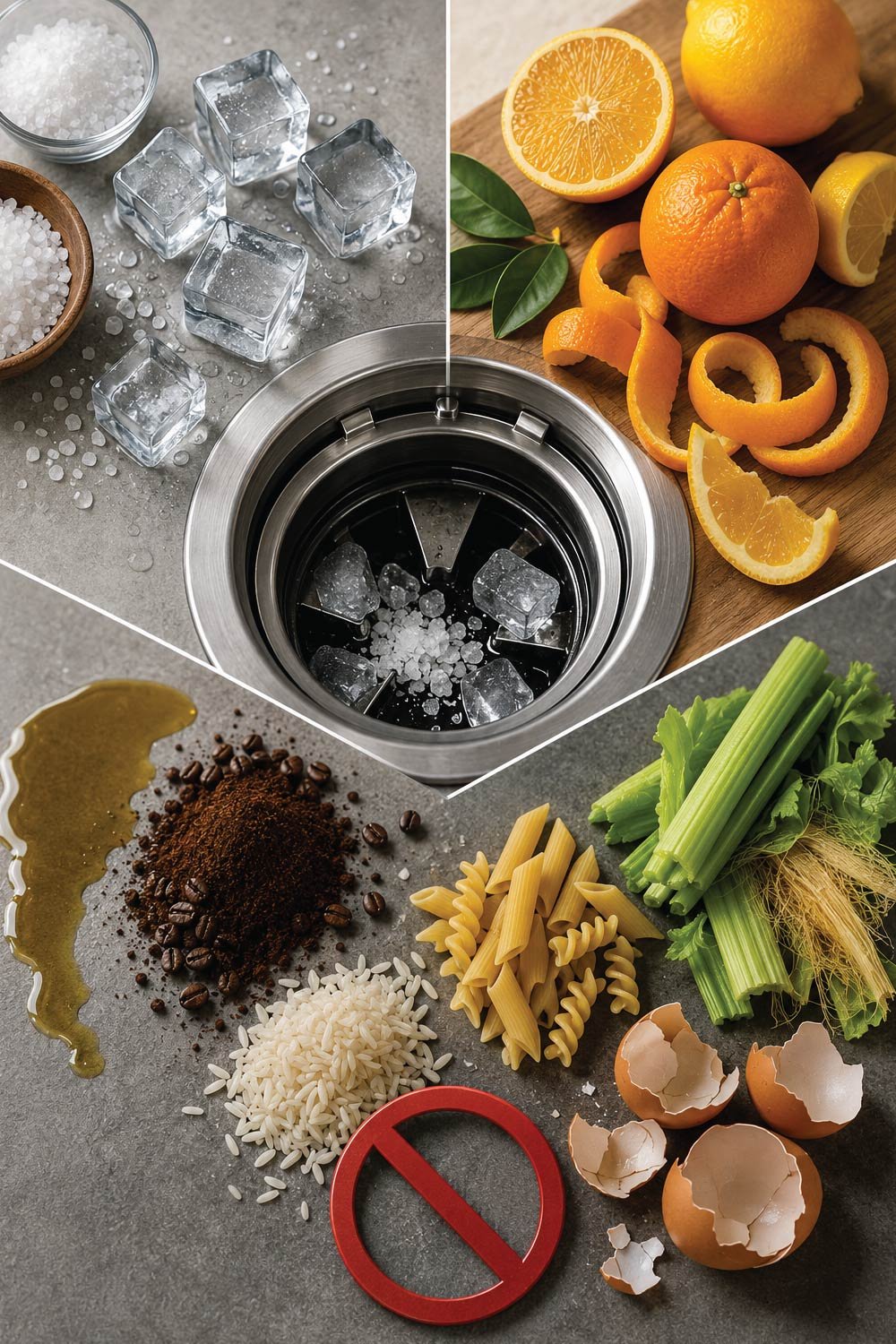
- Add ice cubes and a handful of salt
- Run cold water and turn on the disposal
This scrapes grease and debris from the blades and chamber.
Citrus Peel Freshener
- Drop lemon or orange peels into the disposal
- Run cold water and grind
This freshens odors but should be done sparingly.
What NOT to Put in a Garbage Disposal
- Grease or oil
- Coffee grounds
- Rice and pasta
- Fibrous vegetables (celery, corn husks)
- Eggshells
Avoiding these prevents most disposal-related clogs.
Kitchen Drain Cleaning Mistakes to Avoid
Many kitchen drain problems worsen because of common cleaning mistakes. Understanding what not to do is just as important as knowing the right cleaning methods, as improper habits can damage pipes and lead to stubborn, recurring clogs.
Overusing Chemical Drain Cleaners
Chemical drain cleaners may seem like a convenient solution, but frequent use can cause more harm than good. These products are harsh on plumbing systems and often fail to resolve the root cause of kitchen drain clogs, especially those caused by grease buildup.
- Damage pipes over time
- Can cause dangerous reactions
- Often fail against grease clogs
They should be a last resort, not a habit.
Pouring Grease “With Hot Water”
Many people believe flushing grease down the drain with hot water is safe, but this is a common misconception. While grease may appear liquid at first, it eventually cools, solidifies, and sticks to pipe walls, leading to serious clogs.
Ignoring Slow Drains
Slow drains are one of the earliest warning signs of a developing clog. Ignoring them allows buildup to worsen over time, increasing the risk of complete blockages, pipe damage, and more expensive plumbing repairs later.A slow drain is a warning not a minor annoyance.
Also Read:
Squeaky Door Hinges? Make Them Silent Instantly (Easy Fix Guide)
Preventative Kitchen Drain Maintenance Tips
Preventative maintenance is the most effective way to keep kitchen drains clear and functioning properly. Simple daily habits and routine cleaning reduce grease buildup, prevent food debris from entering pipes, and minimize the risk of stubborn clogs that can lead to costly plumbing repairs.
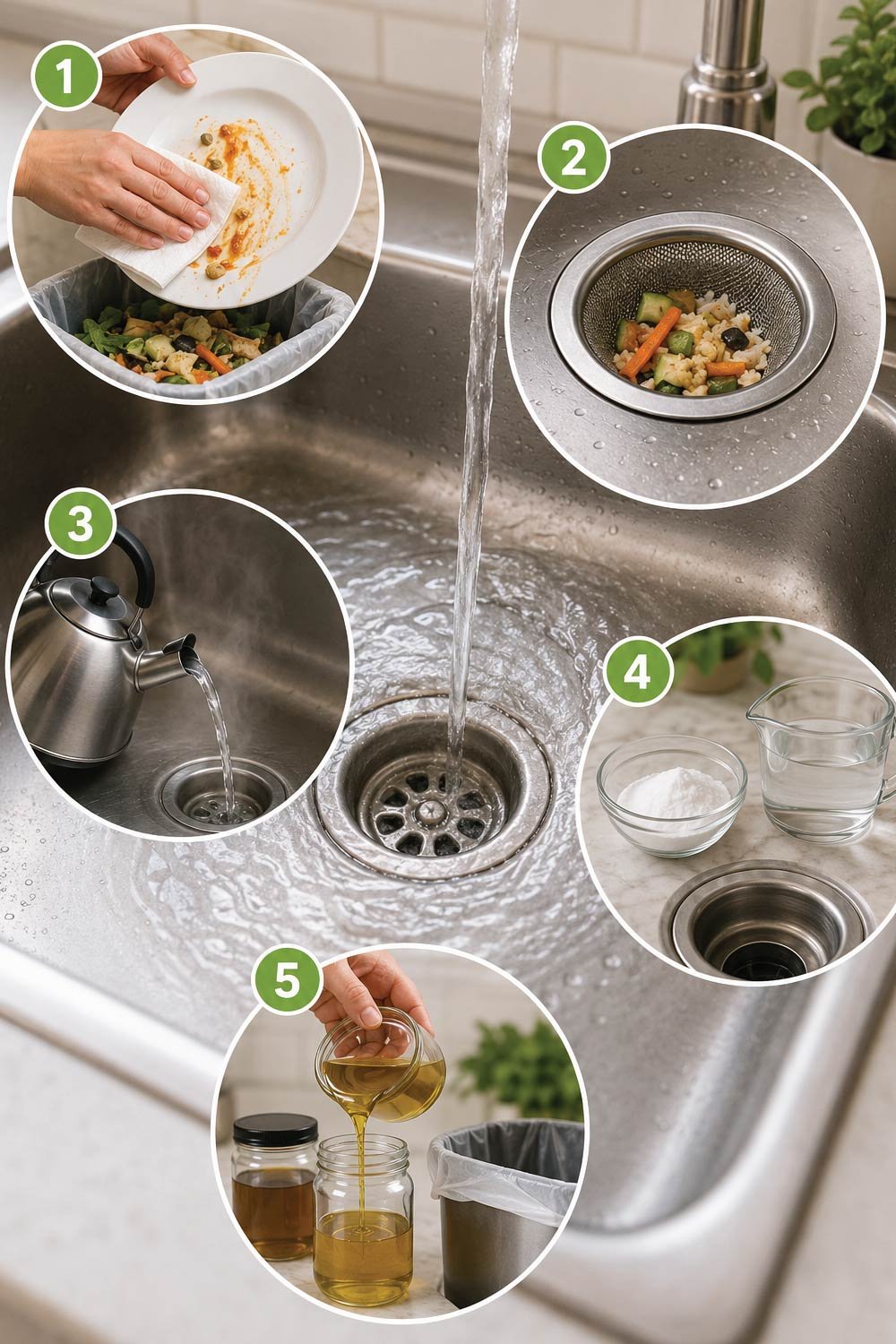
1. Wipe Plates Before Washing
Food scraps are a major contributor to kitchen drain clogs. Wiping plates before washing prevents solid waste from entering the plumbing system, reducing buildup inside pipes and helping drains stay clear over time.Scrape food scraps into the trash or compost instead of the sink.
2. Use Sink Strainers
Sink strainers act as a physical barrier that stops food debris from going down the drain. Using them consistently is an easy and inexpensive way to prevent clogs caused by accidental food waste.They catch food debris before it enters your pipes.
3. Weekly Hot Water Flush
A weekly hot water flush helps wash away grease residue before it hardens inside pipes. This simple habit keeps drains flowing smoothly and reduces the chance of grease-related blockages.Flush drains weekly with hot water to prevent grease buildup.
4. Monthly Natural Clean
Monthly natural cleaning helps break down light buildup and neutralize odors inside kitchen drains. Baking soda and vinegar provide a safe, chemical-free way to maintain healthy pipes.Use baking soda and vinegar once a month for maintenance.
5. Dispose of Grease Properly
Grease should never go down the drain, even with hot water. Proper disposal prevents one of the most common causes of kitchen drain clogs and protects your plumbing system long-term.Let grease cool, then pour it into a container and throw it away.
Also Read:
How to Fix Cracks in Ceiling? Complete Guide About Ceiling Cracks Repair
When DIY Hacks Aren’t Enough
Some kitchen drain problems go beyond basic home remedies and signal deeper plumbing issues. Knowing when to call a professional can prevent extensive damage and ensure the problem is fixed safely and correctly.
- Multiple drains clog at once
- Water backs up into sinks or dishwashers
- You smell sewage odors
- DIY methods fail repeatedly
- Pipes make loud gurgling noises
These may signal deeper issues like blocked vent lines or main sewer problems.
The Cost of Ignoring a Kitchen Drain Clog
Ignoring a kitchen drain clog may seem harmless at first, but small drainage problems can quickly escalate into serious plumbing and household issues. Delayed action allows buildup to worsen, increasing the risk of water damage, health concerns, and expensive emergency repairs that could have been easily avoided.
Putting off drain issues can result in:
- Water damage to cabinets and floors
- Mold and bacteria growth
- Pipe corrosion or leaks
- Expensive emergency plumbing repairs
Routine cleaning is far cheaper than repairs.
Also Read:
How to Fix a Broken Window Frame? Complete Guide About Broken Window Frame Repair
Eco-Friendly Kitchen Drain Cleaning Tips
Eco-friendly kitchen drain maintenance focuses on protecting your plumbing system while reducing environmental impact. Using natural and mechanical solutions minimizes chemical exposure, preserves pipe integrity, and supports sustainable household practices without sacrificing drain performance.
If you want greener solutions:
- Stick to mechanical and natural methods
- Use enzyme-based cleaners occasionally
- Avoid chemical drain openers
- Reduce water waste by fixing slow drains early
These approaches protect both your plumbing and the environment.
Final Thoughts
Kitchen drain cleaning doesn’t have to be complicated or expensive. With a few smart hacks—boiling water, baking soda and vinegar, dish soap, plungers, and regular maintenance—you can keep your sink draining smoothly and avoid most clogs altogether.
The key is consistency. Address slow drains early, avoid grease and food buildup, and treat your kitchen drain as part of your regular home maintenance routine. When DIY hacks stop working, don’t hesitate to bring in a professional before a small issue turns into a costly repair.
A clean kitchen drain means a cleaner, healthier, and more functional kitchen—every single day.