
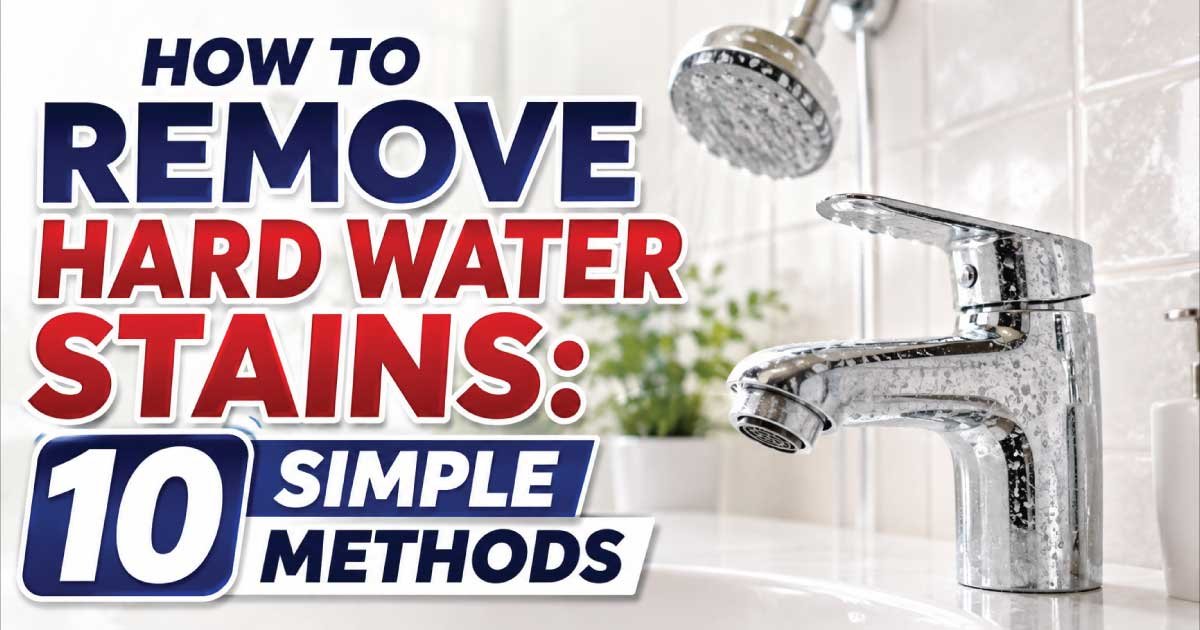
Hard water stains are one of the most frustrating cleaning challenges in any home. They appear as cloudy white spots, chalky residue, or stubborn mineral deposits on faucets, shower doors, sinks, toilets, and tiles. These stains are caused by minerals like calcium and magnesium that remain behind after water evaporates. If left untreated, hard water stains can become increasingly difficult to remove and may even damage fixtures over time.
Fortunately, you don’t need expensive products or professional cleaners to restore your surfaces. With a few common household ingredients and the right techniques, you can effectively remove hard water stains and keep your bathroom and kitchen looking spotless. In this guide, you’ll learn 10 simple methods to remove hard water stains, plus maintenance tips and common mistakes to avoid.
Table of Contents
ToggleWhat Causes Hard Water Stains?
Hard water contains high levels of dissolved minerals, primarily calcium and magnesium. When water dries on a surface, these minerals remain behind, creating visible deposits.
Common areas affected include:
- Shower glass doors
- Bathroom faucets
- Kitchen sinks
- Toilets
- Bathtubs
- Tile walls
- Showerheads
- Stainless steel fixtures
Factors that contribute to hard water stains include:
- High mineral content in the water supply
- Water left to air dry
- Poor ventilation
- Infrequent cleaning
- Leaking faucets
Regular cleaning helps prevent mineral buildup from becoming permanent.
Signs of Hard Water Stains
Recognizing hard water stains early makes them much easier to remove.
Common Signs
- White or chalky residue
- Cloudy glass surfaces
- Rust-colored stains around drains
- Soap scum that won’t rinse away
- Reduced water flow from showerheads
- Dull chrome fixtures
Addressing stains as soon as they appear prevents heavy buildup.
Cleaning Supplies You’ll Need
Gather these supplies before getting started.
| Cleaning Supply | Purpose |
|---|---|
| White vinegar | Dissolves mineral deposits |
| Baking soda | Gentle scrubbing and deodorizing |
| Lemon juice | Removes light mineral stains |
| Dish soap | Cuts through grease and soap scum |
| Spray bottle | Applies cleaning solutions |
| Microfiber cloth | Prevents streaks |
| Soft sponge | Gentle scrubbing |
| Old toothbrush | Cleans small crevices |
| Rubber gloves | Protects hands |
| Warm water | Rinsing surfaces |
Using soft cleaning tools helps avoid scratching delicate finishes.
Method 1: Use White Vinegar
White vinegar is one of the most effective natural solutions for removing hard water stains.
How to Use It
- Fill a spray bottle with undiluted white vinegar.
- Spray directly onto stained surfaces.
- Let it sit for 15–30 minutes.
- Wipe with a microfiber cloth.
- Rinse thoroughly with warm water.
- Dry completely.
Best For
- Faucets
- Shower glass
- Chrome fixtures
- Sink basins
Note: Avoid using vinegar on natural stone surfaces like marble, granite, limestone, or travertine, as the acid may damage the finish.
Method 2: Make a Baking Soda Paste
Baking soda provides gentle abrasion that helps loosen stubborn mineral deposits.
Instructions
- Mix baking soda with a small amount of water until it forms a thick paste.
- Apply the paste to stained areas.
- Let it sit for 10–15 minutes.
- Scrub gently with a soft sponge or toothbrush.
- Rinse thoroughly.
- Dry with a microfiber cloth.
Benefits
- Non-toxic
- Affordable
- Safe for many surfaces
- Helps remove lingering odors
Method 3: Combine Vinegar and Dish Soap
Soap scum often traps mineral deposits, making stains harder to remove.
DIY Cleaning Solution
| Ingredient | Amount |
|---|---|
| White vinegar | 1 cup |
| Dish soap | 1 cup |
How to Apply
- Mix the ingredients in a spray bottle.
- Spray generously onto the stained surface.
- Allow the solution to sit for 20 minutes.
- Wipe with a soft sponge.
- Rinse and dry thoroughly.
This mixture works especially well on shower doors and bathroom tiles.
Method 4: Remove Light Stains with Lemon Juice
Lemon juice contains natural citric acid that helps dissolve light mineral deposits.
Steps
- Cut a fresh lemon in half or squeeze the juice into a bowl.
- Rub the juice directly onto the stain.
- Leave it for 10–15 minutes.
- Wipe with a microfiber cloth.
- Rinse with clean water.
- Dry the surface.
Best Uses
- Chrome fixtures
- Sink faucets
- Glass surfaces
- Stainless steel
Lemon juice also leaves behind a pleasant, fresh scent.
Method 5: Soak Showerheads in Vinegar
Mineral buildup inside showerheads can reduce water pressure.
How to Clean
- Fill a plastic bag with white vinegar.
- Place it over the showerhead so the nozzles are submerged.
- Secure the bag with a rubber band.
- Leave it for several hours or overnight.
- Remove the bag and run warm water through the showerhead.
Benefits
- Restores water flow
- Removes mineral deposits
- Improves shower performance
Method 6: Clean Toilet Stains with Vinegar and Baking Soda
Hard water often leaves stubborn rings inside toilet bowls.
Instructions
- Pour one cup of white vinegar into the toilet.
- Add one cup of baking soda.
- Let the mixture fizz for about 15 minutes.
- Scrub using a toilet brush.
- Flush.
This method helps loosen mineral deposits while reducing odors.
Method 7: Use a Commercial Hard Water Stain Remover
For severe mineral buildup that doesn’t respond to household cleaners, consider using a commercial product designed specifically for hard water stains.
How to Use
- Follow the manufacturer’s instructions.
- Apply the cleaner to the affected surface.
- Allow the recommended contact time.
- Wipe or scrub gently if needed.
- Rinse thoroughly.
- Dry completely.
Always test the product on a small, inconspicuous area first and ensure it’s suitable for your surface.
Method 8: Polish Fixtures with a Microfiber Cloth
Once stains are removed, polishing helps restore shine.
How to Polish
- Dry fixtures completely.
- Buff with a clean microfiber cloth.
- Use gentle circular motions.
- Finish with straight strokes for a streak-free appearance.
Regular polishing helps reduce future water spotting.
Method 9: Dry Surfaces After Every Use
One of the easiest ways to prevent hard water stains is to remove water before it evaporates.
Daily Habits
- Wipe faucets after use.
- Dry shower doors.
- Clean around sinks.
- Remove standing water from countertops.
- Use a squeegee on shower glass.
These simple habits take only a few minutes but greatly reduce mineral buildup.
Method 10: Address Hard Water at the Source
If your home has consistently hard water, treating the water supply may reduce mineral deposits throughout the house.
Possible Solutions
- Install a whole-house water softener.
- Use a point-of-use water softener where appropriate.
- Replace worn plumbing fixtures if mineral buildup is severe.
- Maintain plumbing systems according to manufacturer recommendations.
Reducing mineral content at the source can make cleaning easier and help extend the life of appliances and fixtures.
Hard Water Stain Cleaning Schedule
Routine maintenance prevents stubborn deposits from forming.
| Task | Recommended Frequency |
|---|---|
| Wipe faucets | Daily |
| Squeegee shower glass | After every shower |
| Clean sinks | Weekly |
| Remove showerhead buildup | Monthly |
| Clean toilet stains | Weekly |
| Deep clean shower glass | Monthly |
| Inspect for leaks | Monthly |
A regular cleaning routine keeps surfaces looking newer for longer.
Tips to Prevent Hard Water Stains
Prevention is easier than removing heavy mineral buildup.
Helpful Tips
- Dry wet surfaces immediately.
- Use a squeegee after every shower.
- Repair leaking faucets promptly.
- Clean fixtures weekly.
- Improve bathroom ventilation.
- Avoid allowing standing water to remain on countertops.
- Use microfiber cloths for drying and polishing.
Small daily habits can significantly reduce cleaning time.
Common Mistakes to Avoid
Avoid these common mistakes when removing hard water stains.
- Using steel wool or abrasive scrubbers on glass and chrome
- Leaving acidic cleaners on surfaces longer than recommended
- Skipping the rinse step after cleaning
- Ignoring small stains until they become heavy deposits
- Using vinegar on natural stone surfaces
- Forgetting to dry fixtures after cleaning
Gentle, regular cleaning is far more effective than aggressive scrubbing after stains have built up.
Natural vs. Commercial Hard Water Cleaners
Both natural and commercial products can be effective, depending on the severity of the stains.
| Natural Cleaners | Commercial Cleaners |
|---|---|
| Eco-friendly | Designed for heavy mineral buildup |
| Budget-friendly | Often works faster on stubborn stains |
| Safe for routine maintenance | Convenient for deep cleaning |
| Readily available | Formulated for specific surfaces |
| Ideal for light to moderate stains | Better for long-standing deposits |
Choose the option that best matches your cleaning needs while always following product instructions.
When to Replace Instead of Clean
Sometimes hard water damage goes beyond surface stains.
Consider replacing fixtures if you notice:
- Deep corrosion
- Permanent etching on glass
- Peeling or damaged finishes
- Severely clogged showerheads that can’t be restored
- Cracked or deteriorating fixtures
Replacing worn fixtures can improve both appearance and functionality.
Conclusion
Hard water stains may be stubborn, but they don’t have to become a permanent problem. By using white vinegar, baking soda, lemon juice, dish soap, showerhead soaking, toilet cleaning techniques, commercial hard water removers, microfiber polishing, daily drying habits, and long-term water treatment solutions, you can restore the shine to your bathroom and kitchen surfaces with minimal effort.
The secret to success is consistency. Cleaning surfaces regularly, drying them after use, and addressing mineral buildup early will help prevent stubborn stains from forming. With these 10 simple methods, you’ll spend less time scrubbing and enjoy cleaner, brighter fixtures, glass, and tiles throughout your home.