
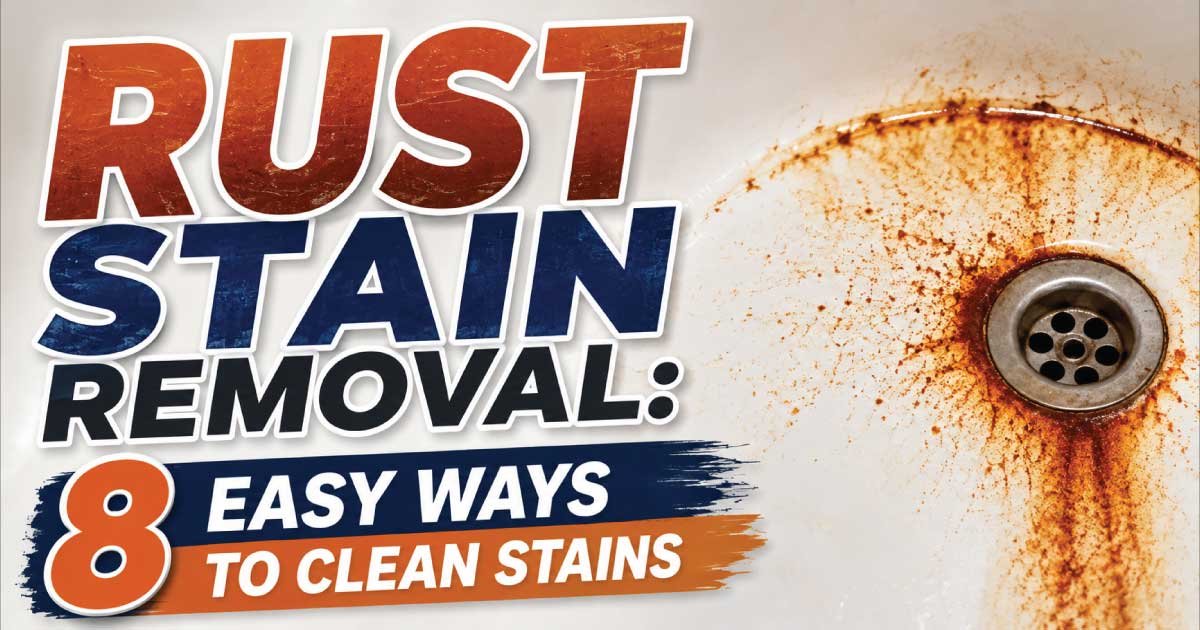
Rust stains are among the most stubborn marks you can encounter around the home. Whether they appear in your bathroom, kitchen, laundry room, or on outdoor surfaces, these reddish-brown stains can make otherwise clean areas look neglected. Rust stains often form when metal objects remain in contact with moisture, allowing iron to oxidize and leave behind unsightly marks.
Fortunately, removing rust stains doesn’t have to be difficult. With the right cleaning methods and a little patience, you can restore many surfaces without causing damage. From natural household remedies to commercial rust removers, there are several effective solutions that work on sinks, bathtubs, toilets, tiles, concrete, and more.
This guide covers eight easy ways to remove rust stains, along with tips for preventing future stains and avoiding common cleaning mistakes.
Why Rust Stains Form
Rust develops when iron or steel comes into contact with oxygen and moisture. As the metal corrodes, it leaves reddish-orange stains on nearby surfaces.
Common Causes of Rust Stains
- Metal cans left on wet surfaces
- Hard water with high iron content
- Rusty plumbing fixtures
- Shaving cream cans on bathtub edges
- Metal furniture exposed to rain
- Rusting tools or hardware
- Leaking pipes or faucets
Identifying the source of the rust can help prevent stains from returning after cleaning.
Cleaning Supplies You’ll Need
Before you begin, gather the following supplies.
| Cleaning Supply | Purpose |
|---|---|
| White vinegar | Dissolves light rust stains |
| Lemon juice | Natural acid for rust removal |
| Baking soda | Gentle scrubbing agent |
| Salt | Boosts the cleaning power of lemon |
| Microfiber cloth | Wiping and polishing |
| Soft sponge | Gentle cleaning |
| Soft-bristle brush | Scrubbing textured surfaces |
| Rubber gloves | Protecting your hands |
| Commercial rust remover | Tackling stubborn stains |
| Warm water | Rinsing cleaned areas |
Using the right tools helps remove stains effectively while protecting delicate surfaces.
Method 1: White Vinegar for Light Rust Stains
White vinegar is one of the most popular natural rust removers because its mild acidity helps dissolve rust without harsh chemicals.
How to Use It
- Pour or spray white vinegar directly onto the stain.
- Let it sit for 15–30 minutes.
- Scrub gently with a soft sponge or brush.
- Rinse thoroughly with clean water.
- Dry the surface completely.
Best For
- Bathroom sinks
- Bathtubs
- Ceramic tiles
- Metal fixtures
- Porcelain surfaces
Avoid leaving vinegar on natural stone surfaces, as it may damage the finish.
Method 2: Lemon Juice and Salt
Lemon juice contains citric acid, while salt acts as a gentle abrasive, making this combination highly effective for light to moderate rust stains.
Steps
- Sprinkle salt over the rust stain.
- Squeeze fresh lemon juice on top.
- Let the mixture sit for 20–30 minutes.
- Scrub gently with a sponge.
- Rinse and dry thoroughly.
Benefits
- Natural ingredients
- Fresh citrus scent
- Safe for many household surfaces
- Effective on fresh rust stains
This method works well on porcelain, ceramic, and stainless steel.
Method 3: Baking Soda Paste
Baking soda provides mild abrasive action that helps lift rust without scratching most surfaces.
How to Make the Paste
Mix:
- ½ cup baking soda
- Enough water to create a thick paste
Apply the paste directly to the stain and allow it to sit for about 20 minutes before scrubbing gently with a soft brush.
Ideal For
- Bathroom tubs
- Shower floors
- Outdoor furniture
- Kitchen sinks
Baking soda is especially useful for delicate finishes because it cleans without being overly abrasive.
Method 4: Commercial Rust Remover
Some stains require stronger cleaning products, particularly if they’ve been present for a long time.
How to Use Commercial Rust Removers
- Read the manufacturer’s instructions carefully.
- Wear rubber gloves.
- Apply the product to the affected area.
- Allow it to sit for the recommended time.
- Scrub gently if necessary.
- Rinse thoroughly with clean water.
Best For
- Heavy rust buildup
- Concrete surfaces
- Deep-set stains
- Outdoor equipment
Always test the product on a small hidden area before applying it to the entire surface.
Method 5: Cream of Tartar Paste
Cream of tartar is another mild acidic cleaner that can help remove rust stains from certain household surfaces.
How to Use It
- Mix cream of tartar with a small amount of water to create a paste.
- Apply the paste to the rust stain.
- Leave it for 15–20 minutes.
- Scrub gently with a soft sponge.
- Rinse and dry.
Works Best On
- Porcelain sinks
- Ceramic surfaces
- Bathroom fixtures
This method is gentle enough for regular maintenance.
Method 6: Pumice Stone for Toilet Rust Stains
Rust stains inside toilet bowls can be difficult to remove with liquid cleaners alone.
A pumice stone designed for toilet cleaning can safely remove stubborn stains when used correctly.
How to Use It
- Wet both the pumice stone and the toilet surface.
- Rub gently over the rust stain.
- Flush to rinse away residue.
Important Tip
Never use a dry pumice stone, as it can scratch porcelain surfaces.
Method 7: Hydrogen Peroxide and Baking Soda
For stubborn stains on certain non-porous surfaces, hydrogen peroxide combined with baking soda can provide additional cleaning power.
Cleaning Mixture
Mix:
- Baking soda
- Small amount of hydrogen peroxide
Apply the paste to the stain and let it sit for 15–20 minutes before scrubbing gently.
Best For
- Bathroom fixtures
- Ceramic tile
- Porcelain sinks
Always test the mixture on a hidden area first to ensure it won’t affect the finish.
Method 8: Prevent Rust Stains with Regular Maintenance
The easiest way to deal with rust stains is to stop them from forming in the first place.
Preventive Tips
- Dry wet metal objects immediately.
- Don’t leave shaving cream cans on bathtub edges.
- Fix leaking faucets and pipes.
- Use rust-resistant hardware whenever possible.
- Wipe sinks and tubs dry after use.
- Improve bathroom ventilation to reduce moisture.
- Clean surfaces regularly before stains develop.
Simple preventive habits can significantly reduce the likelihood of future rust stains.
Best Rust Removal Methods by Surface
Different materials require different cleaning approaches.
| Surface | Recommended Method | Avoid |
|---|---|---|
| Porcelain | Vinegar or baking soda paste | Steel wool |
| Ceramic tile | Lemon and salt | Harsh metal brushes |
| Stainless steel | Baking soda paste | Chlorine bleach |
| Toilet bowl | Pumice stone | Abrasive metal tools |
| Concrete | Commercial rust remover | Strong acids without testing |
| Fiberglass | Vinegar and soft sponge | Rough scrub pads |
Using the appropriate cleaning method helps protect surfaces while effectively removing rust.
Common Rust Stain Removal Mistakes
Avoid these mistakes to achieve better results and prevent surface damage.
- Using steel wool on delicate surfaces: It can leave scratches and worsen the appearance.
- Allowing rust to sit too long: Older stains become more difficult to remove.
- Skipping the rinse step: Cleaning product residue can damage some materials over time.
- Using harsh chemicals without testing: Always spot-test on a hidden area first.
- Ignoring the source of the rust: If the underlying cause isn’t fixed, stains are likely to return.
- Scrubbing too aggressively: Excessive force may damage porcelain, fiberglass, or painted finishes.
A gentle, methodical approach is usually more effective than aggressive cleaning.
Rust Stain Cleaning Schedule
Following a simple maintenance routine can help prevent stubborn stains.
| Cleaning Task | Recommended Frequency |
|---|---|
| Wipe wet surfaces dry | Daily |
| Inspect for new rust stains | Weekly |
| Clean light stains | As soon as they appear |
| Deep clean affected areas | Monthly |
| Check plumbing and fixtures for rust | Every 3–6 months |
Regular maintenance reduces the need for intensive cleaning and helps preserve household surfaces.
Extra Tips for Effective Rust Stain Removal
For the best results, keep these practical tips in mind.
- Clean rust stains as soon as you notice them.
- Always wear gloves when using commercial rust removers.
- Use soft brushes instead of abrasive scrubbers.
- Dry surfaces completely after cleaning.
- Store metal objects in dry areas to reduce rust formation.
- Replace rusted fixtures if they continue to stain surrounding surfaces.
These simple habits can help keep your home cleaner and minimize recurring rust problems.
Conclusion
Rust stains may seem difficult to remove, but with the right techniques, they can often be cleaned quickly and safely. These eight easy rust stain removal methods offer effective solutions for everything from light bathroom stains to stubborn buildup on concrete and outdoor surfaces. Natural options like white vinegar, lemon juice, and baking soda are ideal for everyday cleaning, while commercial rust removers can tackle more persistent stains.
The key to long-lasting results is regular maintenance and addressing the source of the rust. By drying wet surfaces, repairing leaks, and cleaning stains promptly, you can prevent rust from spreading and keep your sinks, tubs, toilets, and other surfaces looking clean and well-maintained. With a consistent cleaning routine and the right products, rust stains can become much easier to manage.