
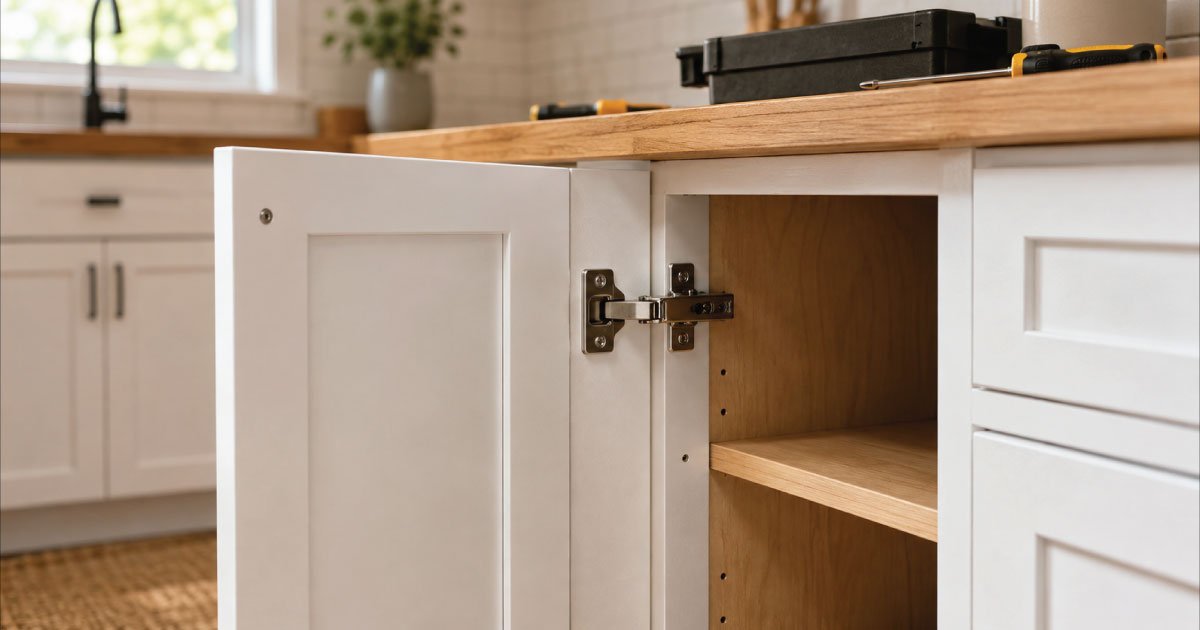
Kitchen cabinet doors are one of the most frequently used parts of any home. Over time, they can become loose, misaligned, squeaky, or even damaged. A cabinet door that won’t close properly or hangs unevenly is not just annoying it can also affect the overall look and functionality of your kitchen.
The good news is that fixing a kitchen cabinet door is usually a simple task that you can handle yourself with basic tools and a little patience. In this guide, we’ll walk you through everything you need to know to diagnose and fix common cabinet door problems, step by step.
Common Problems with Kitchen Cabinet Doors
Before starting any repair, it’s important to identify the exact issue affecting your cabinet doors. Proper diagnosis helps you apply the correct solution and prevents unnecessary adjustments or damage.
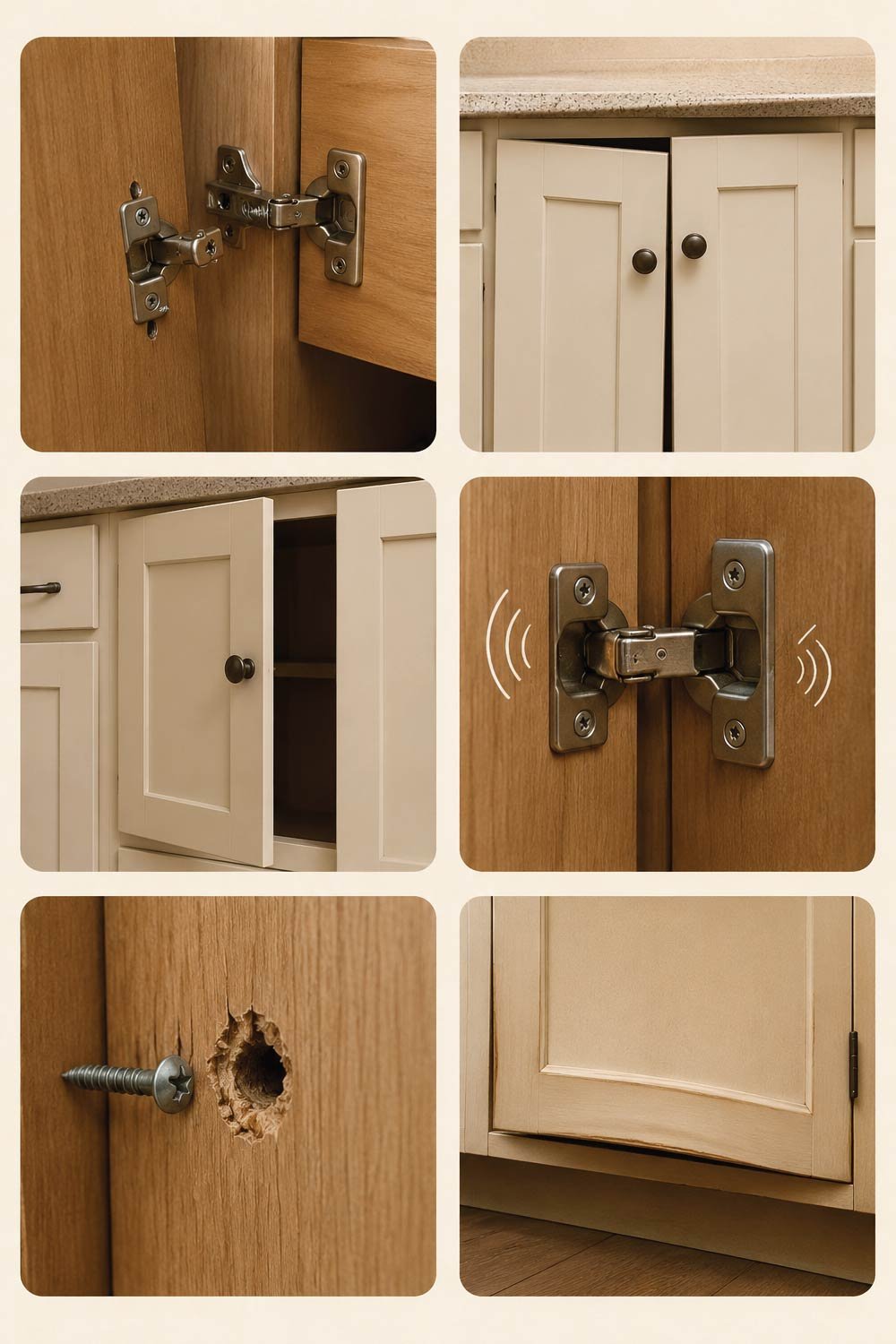
Typical Issues
Most cabinet door problems are easy to recognize and fix once you understand their cause. These are the most common issues you may encounter:
- Loose hinges
- Misaligned doors
- Doors that won’t close properly
- Squeaky or stiff hinges
- Stripped screw holes
- Warped or damaged doors
Identifying the problem correctly will help you choose the right fix and avoid unnecessary work.
Tools and Materials You May Need
Having the right tools ready before starting makes the repair process faster and more efficient. Most cabinet door fixes require only basic household tools.
- Screwdriver (Phillips or flathead)
- Drill (optional but helpful)
- Wood glue
- Toothpicks or wooden dowels
- Replacement screws
- Cabinet hinge replacements (if needed)
- Level
- Measuring tape
Having these tools ready will make the repair process smooth and efficient.
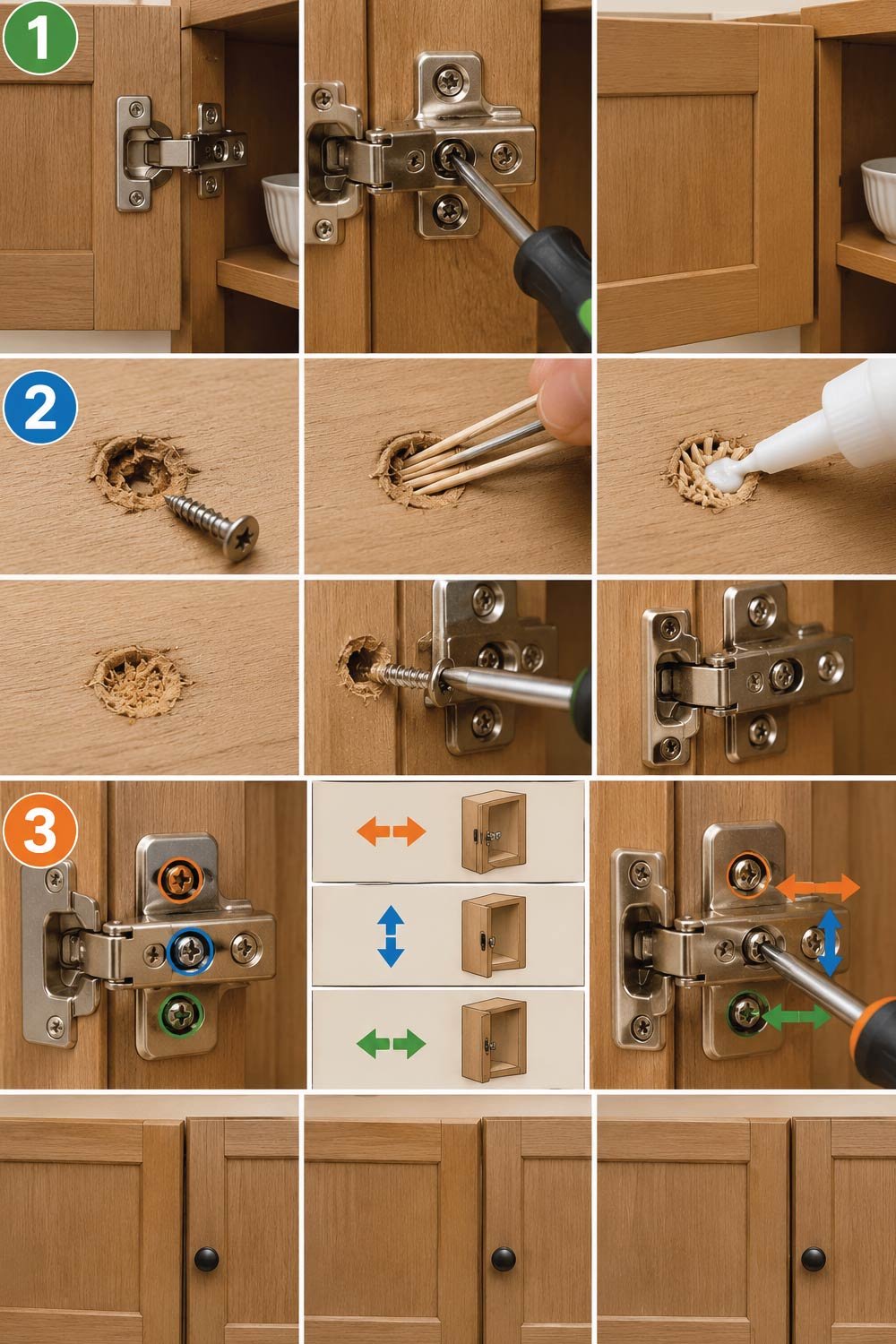
Step 1: Tighten Loose Hinges
Loose hinges are one of the most common causes of cabinet door problems. Regular use can cause screws to loosen, leading to misalignment and poor closing.
How to Fix It
A simple tightening process can often restore proper function and alignment within minutes.
- Open the cabinet door and locate the hinges.
- Use a screwdriver to tighten all screws on both the cabinet frame and the door.
- Check if the door is now properly aligned and closes smoothly.
If tightening the screws solves the problem, you’re done! If not, move on to the next step.
Step 2: Fix Stripped Screw Holes
When screws no longer tighten properly, the holes may be stripped. This prevents the screws from gripping the wood securely, causing loose hinges.
Quick Fix Using Toothpicks
This simple method restores grip inside the hole and allows the screw to hold firmly again.
- Remove the loose screw.
- Insert a few toothpicks into the hole.
- Add a small amount of wood glue.
- Break off the excess toothpicks so they are flush with the surface.
- Reinsert the screw and tighten it.
This simple trick gives the screw something to grip and often works surprisingly well.
Step 3: Adjust Cabinet Hinges
Modern cabinet hinges are designed with adjustment screws that allow precise positioning of the door. This is essential for fixing alignment issues and ensuring smooth operation.
Types of Adjustments
Understanding the different adjustment directions helps you correct alignment accurately.
- Side-to-side (left or right)
- Up-and-down (height)
- In-and-out (depth)
How to Adjust
Small, careful adjustments can make a big difference in how the door fits and functions.
- Locate the adjustment screws on the hinge.
- Turn the screws slowly—usually clockwise or counterclockwise.
- Make small adjustments and check the door alignment after each turn.
This step is key if your cabinet door looks uneven or doesn’t line up with adjacent doors.
Step 4: Fix a Door That Won’t Close
A cabinet door that won’t stay closed can be frustrating and often points to alignment or latch issues. Fixing it usually involves simple adjustments or replacing small components.
Possible Solutions
Checking both hinges and latching mechanisms helps identify the exact cause and apply the right fix.
- Tighten or adjust hinges
- Replace worn-out magnetic catches
- Clean debris blocking the door
If Your Cabinet Uses a Magnetic Catch
Magnetic catches are common in cabinets and can weaken over time. Inspecting and adjusting them can restore proper closing.
- Check if the magnet is still strong.
- Tighten the screws holding the catch in place.
- Replace it if it no longer works properly.
Step 5: Eliminate Squeaky Hinges
Squeaky hinges are a common annoyance but are very easy to fix. Proper lubrication reduces friction and restores smooth, quiet movement.
How to Fix
Applying lubricant correctly ensures it reaches all moving parts of the hinge and eliminates noise effectively.
- Apply a small amount of lubricant (like WD-40 or cooking oil) to the hinge.
- Open and close the door several times to spread the lubricant.
- Wipe off any excess to avoid mess.
This quick fix usually eliminates noise instantly.
Step 6: Repair or Replace Damaged Hinges
When hinges are worn out or damaged, simple fixes may not be enough. Replacing them ensures proper support and long-term functionality.
Signs You Need Replacement
Recognizing these signs helps you avoid wasting time on repairs that won’t last.
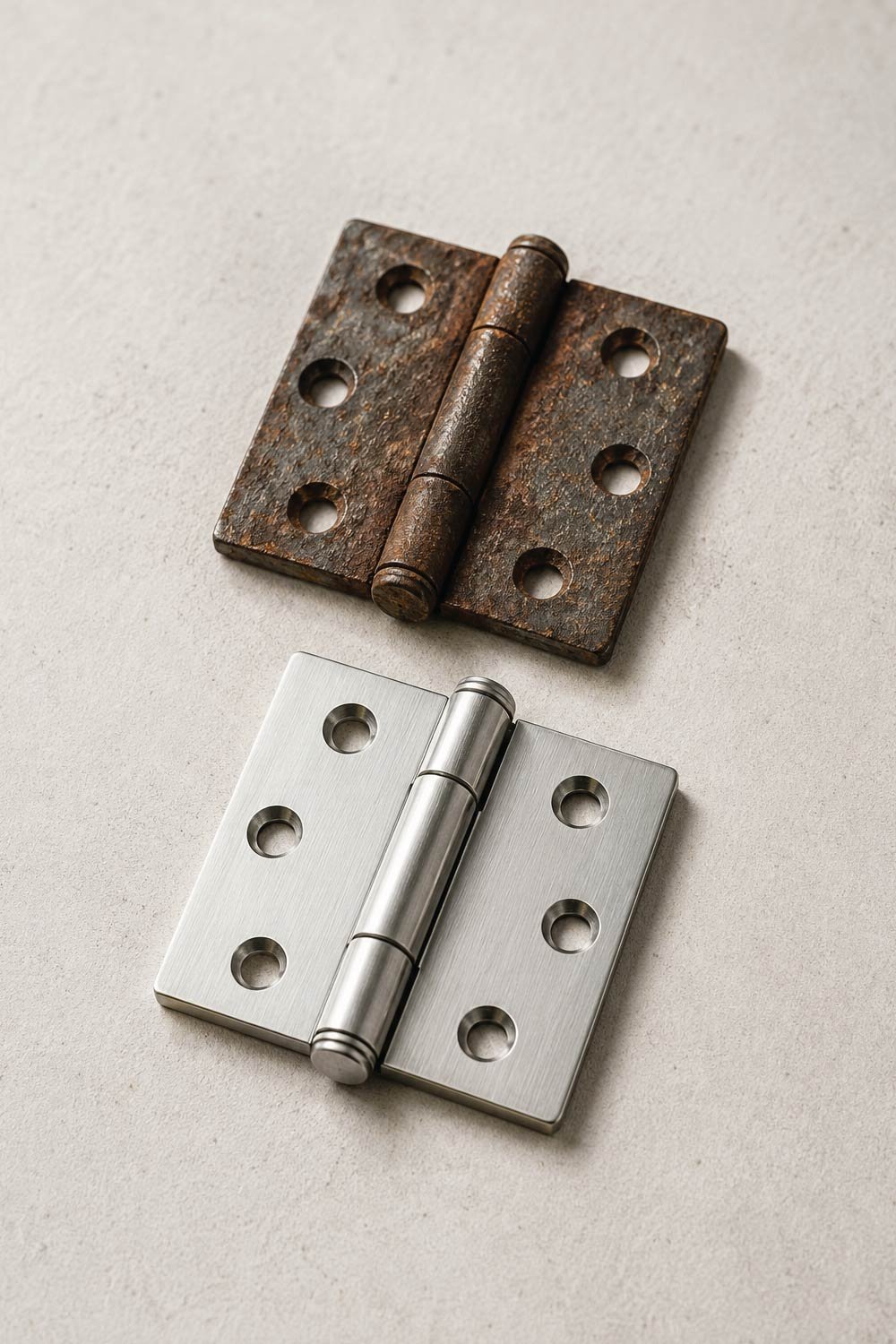
- Visible rust or damage
- Hinges that don’t hold the door properly
- Loose parts that can’t be tightened
Replacement Steps
Replacing hinges is straightforward if you follow the correct steps and use matching hardware.
- Remove the old hinge by unscrewing it.
- Take it to a hardware store to find a matching replacement.
- Install the new hinge using the same screw holes if possible.
Make sure the new hinge matches the size and type of the old one for best results.
Also Read:
Step 7: Fix a Warped Cabinet Door
Warped cabinet doors can affect both appearance and function. While minor warping can sometimes be corrected, severe cases may require replacement.
Minor Warping Solutions
Small adjustments and careful handling can help reduce slight warping and improve alignment.
- Tighten hinges and adjust alignment
- Store the door flat for a few days
- Apply gentle pressure in the opposite direction
When to Replace
If the damage is beyond repair, replacing the door is often the most practical solution.
If the warping is severe, replacing the door may be more practical than trying to fix it.
Step 8: Realign Multiple Cabinet Doors
When multiple cabinet doors are misaligned, the entire kitchen can look uneven. Careful alignment restores a clean and professional appearance.
How to Fix
Working step by step ensures consistent spacing and alignment across all doors.
- Start with one door as a reference point.
- Adjust neighboring doors to match its height and spacing.
- Use a level to ensure consistency.
Take your time with this step, as small adjustments can make a big difference in appearance.
Also Read:
Preventive Maintenance Tips
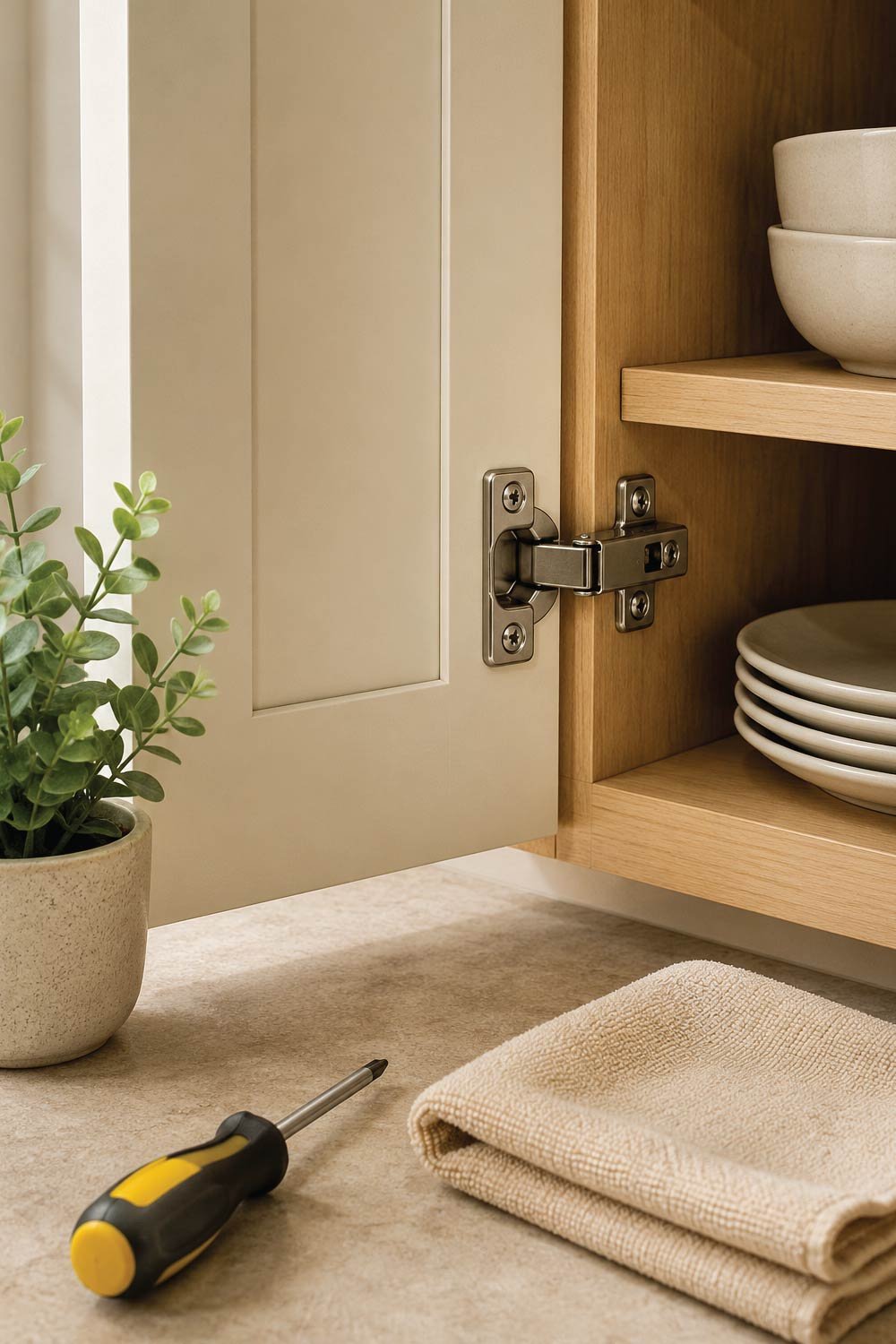
Regular maintenance helps keep cabinet doors functioning properly and reduces the need for future repairs. Simple habits can extend the life of your cabinets.
Maintenance Habits
Consistent care prevents wear and ensures smooth operation over time.
- Check and tighten screws every few months
- Clean hinges regularly to prevent buildup
- Avoid slamming cabinet doors
- Replace worn hardware early
Preventive care saves time and reduces the need for major repairs later.
Also Read:
When to Call a Professional
While most cabinet door issues are easy to fix at home, some situations require professional expertise. Knowing when to seek help can prevent further damage.
Situations That Need Expert Help
Complex or large-scale problems are better handled by experienced professionals.
- Severe structural damage
- Custom cabinetry with complex hardware
- Large-scale kitchen renovations
If you’re unsure or uncomfortable with repairs, hiring a professional can ensure the job is done correctly.
Also Read:
Final Thoughts
Fixing a kitchen cabinet door doesn’t have to be complicated or expensive. In most cases, a simple adjustment, tightening screws, or replacing a hinge is all it takes to restore functionality and appearance.
By understanding the common problems and following the step-by-step solutions in this guide, you can confidently tackle cabinet door repairs on your own. Not only will you save money, but you’ll also gain valuable DIY skills that can be used throughout your home.
So the next time a cabinet door starts acting up, don’t ignore it—grab your tools and fix it like a pro!