
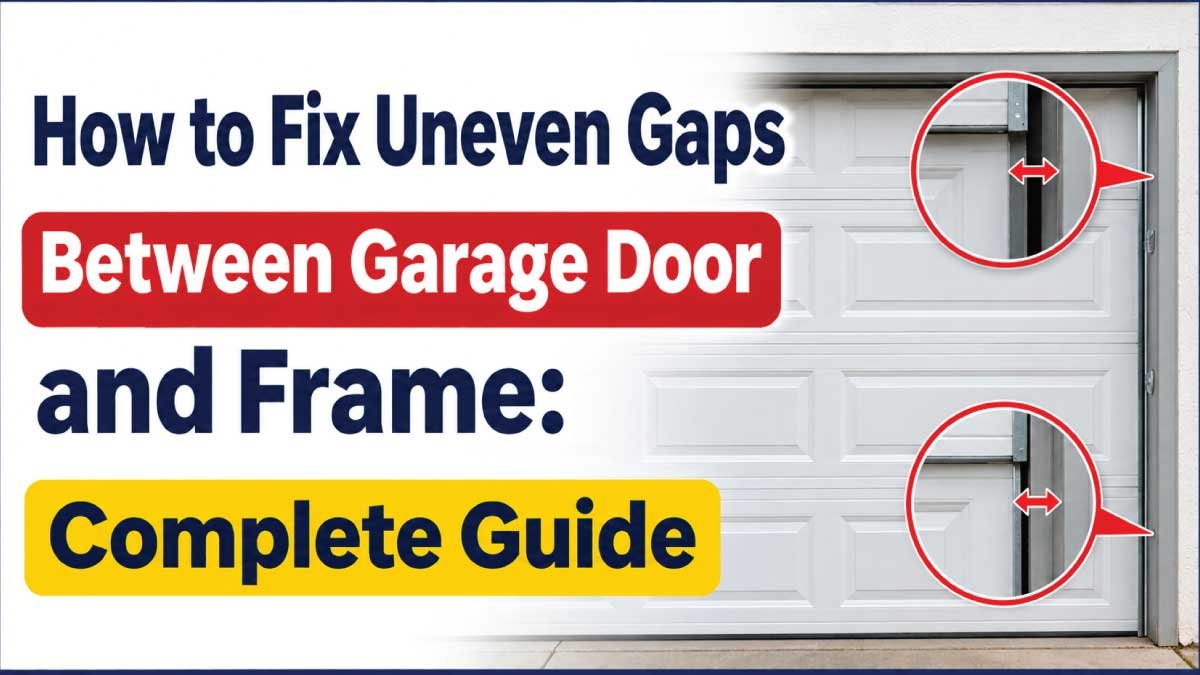
Uneven gaps between a garage door and its frame can allow rainwater, dust, insects, and outside air to enter your garage. This problem occurs when the door becomes misaligned, weatherstripping wears out, tracks shift, rollers become damaged, or the surrounding frame changes position. You may notice that one side of the closed door sits closer to the frame while the opposite side leaves a noticeable opening.
Learning how to fix uneven gaps between a garage door and frame starts with identifying why the door no longer sits evenly inside its opening. Although replacing damaged weatherstripping can solve some problems, gaps caused by track misalignment or structural movement require a different approach.
This repair guide explains the common causes, warning signs, inspection methods, and practical solutions for uneven garage door gaps. You will also learn which repairs are suitable for homeowners, what tools may be required, how much professional repairs can cost, and when it is safer to contact a qualified garage door technician.
Common Signs and Symptoms
Uneven gaps can develop gradually or appear suddenly after a garage door experiences an impact or mechanical problem. The difference between the door and frame may be difficult to notice from a distance, so inspect the entire perimeter when the door is fully closed. Recognizing these symptoms helps narrow down the possible cause before attempting repairs.
Common warning signs include:
- Uneven side clearance: One vertical edge has a larger opening than the opposite side.
- Visible daylight: Light passes through sections where the door should meet the frame.
- Water entering near one corner: Rainwater collects inside the garage despite the door being closed.
- Damaged weatherstripping: Rubber seals appear compressed, torn, loose, or missing.
- Crooked door position: The bottom edge does not appear level when viewed from inside.
- Unusual operating noise: Grinding, scraping, or rattling may indicate a mechanical problem.
- Uneven panel spacing: Sections of a sectional door appear misaligned or do not sit consistently.
- Air drafts: Cold or warm air enters through the larger opening around the door.
If the door suddenly becomes crooked or starts moving unevenly, stop operating it until a technician checks the mechanical system.
How a Garage Door and Frame Normally Work
A garage door must sit correctly inside its framed opening to provide reliable sealing and smooth operation. Its tracks, rollers, hinges, panels, and weatherstripping work together to maintain the correct position. Understanding how these components function makes it easier to distinguish a simple sealing problem from a mechanical or structural issue.
The main components include:
- Garage door frame: The stationary structure surrounding the opening that provides mounting points for the tracks and weatherstripping.
- Vertical tracks: Guide the rollers as the door travels upward and downward.
- Horizontal tracks: Direct the door toward the ceiling when it opens.
- Rollers: Move inside the tracks and help the door travel smoothly.
- Hinges: Connect individual sections of sectional garage doors.
- Weatherstripping: Flexible material that closes the clearance between the moving door and stationary frame.
- Bottom seal: Compresses against the floor when the door closes.
When these components remain in their correct positions, the door should close evenly and maintain reasonably consistent clearance around its perimeter.
Most Common Reasons This Problem Happens
Uneven garage door gaps usually result from mechanical movement, worn components, deteriorating seals, or changes in the surrounding structure. Identifying the exact cause is important because adjusting weatherstripping will not correct a door that has shifted inside its tracks. Inspect the visible symptoms carefully before deciding which repair is appropriate.
1. Misaligned Garage Door Tracks
Garage door tracks guide the rollers and maintain the door’s movement. If a track shifts because of loose mounting hardware, accidental impact, or structural movement, the door may no longer sit evenly inside the frame.
Symptoms: One side of the door appears closer to the frame, and the opposite side has a larger opening. The door may also scrape or make unusual noises.
Diagnosis: Look for visibly bent tracks, unusual roller positions, and inconsistent spacing around the door.
2. Worn or Damaged Rollers
Rollers support the garage door as it moves through the tracks. Worn, cracked, or damaged rollers can affect the door’s movement and positioning, especially when several rollers have deteriorated.
Symptoms: Grinding sounds, jerky movement, vibration, and uneven closing.
Diagnosis: Inspect the visible rollers for cracks, excessive wear, or obvious damage without removing them.
3. Loose Hinges and Hardware
Hinges connect the sections of sectional garage doors, while mounting hardware helps maintain the position of various components. Loose or damaged hardware can contribute to uneven panel positioning.
Symptoms: Gaps between door sections, rattling sounds, and visible movement around hinges.
Diagnosis: Look for missing fasteners, damaged hinges, or visibly loose components. Do not tighten hardware connected to springs, cables, or bottom brackets.
4. Damaged or Worn Weatherstripping
Weatherstripping closes the small spaces between the garage door and frame. Over time, rubber and vinyl seals can become flattened, brittle, torn, or detached.
Symptoms: One side allows more daylight or outside air to enter, even though the door appears reasonably straight.
Diagnosis: Compare both side seals and check whether they make consistent contact with the closed door.
5. Uneven Garage Door Frame
A garage door frame can shift because of foundation settling, moisture damage, deteriorating wood, or incorrect installation. This can change the clearance between the door and frame.
Symptoms: The gap remains uneven even when the door appears to operate normally.
Diagnosis: Examine the stationary frame for cracks, damaged trim, moisture deterioration, and visible changes in alignment.
6. Bent or Warped Door Panels
Garage door panels can become distorted after vehicle impacts, accidental damage, or long-term exposure to environmental conditions.
Symptoms: A section of the door appears bowed, dented, or out of line with neighboring panels.
Diagnosis: Inspect the closed door from inside and outside for visible deformation.
7. Incorrect Spring Balance or Lifting Problems
Garage door springs help counterbalance the door’s weight. A damaged spring or lifting cable can cause uneven movement and may prevent the door from closing correctly.
Symptoms: The door appears crooked, moves unevenly, becomes unusually heavy, or stops before reaching the floor.
Diagnosis: These conditions require professional assessment. Do not attempt to test, adjust, or repair springs and cables yourself.
8. Incorrect Garage Door Installation
A garage door installed with unsuitable dimensions, incorrectly positioned tracks, or an improperly prepared frame may have uneven clearance from the beginning.
Symptoms: Gaps appear consistently in the same locations despite replacing the weatherstripping.
Diagnosis: Compare the door’s position with the frame and have an experienced installer assess the original fitting if the problem has existed since installation.
Safety Precautions Before Troubleshooting
Garage doors contain heavy moving sections and high-tension components that can cause serious injuries. Before inspecting the gaps, make sure the door is completely closed and avoid placing your hands near moving joints or mechanical hardware. Simple visual inspections are generally manageable, but repairs involving the lifting system should never be treated as ordinary household maintenance.
Follow these safety precautions:
- Keep children and pets away from the garage door during inspection.
- Disconnect the automatic opener’s power before working near its electrical components.
- Never loosen torsion springs, extension springs, or lifting cables.
- Do not remove bottom brackets or cable-connected components.
- Never stand underneath a partially open or unsupported door.
- Avoid placing your fingers between sectional door panels.
- Wear safety glasses and protective gloves when handling weatherstripping.
- Use a stable ladder when checking upper frame seals.
- Do not force a crooked or jammed door to move.
- Stop using the door if it suddenly becomes unusually heavy or unstable.
Important: Track realignment, spring adjustment, cable replacement, and major roller repairs should be performed by a qualified garage door technician.
Tools and Materials Required
The tools needed depend on whether the uneven gaps come from deteriorated weatherstripping, damaged framing, or mechanical problems. Most basic inspections require only a few household items, while seal replacement may need additional materials. Do not purchase adjustment hardware until you understand the source of the problem.
| Tool or Material | Purpose |
|---|---|
| Tape measure | Measures clearance around the door |
| Spirit level | Checks visible alignment |
| Flashlight | Identifies small openings and damaged components |
| Cleaning brush | Removes dirt from the frame |
| Mild detergent | Cleans sealing surfaces |
| Utility knife | Cuts replacement weatherstripping |
| Screwdriver | Installs compatible seal fasteners |
| Replacement weatherstripping | Closes openings along the frame |
| Exterior-grade sealant | Seals suitable stationary frame cracks |
| Safety glasses | Protects eyes during inspection |
| Protective gloves | Protects hands while handling materials |
Step-by-Step Troubleshooting Guide
A systematic inspection helps determine whether the uneven gaps come from weatherstripping, the door position, or the surrounding frame. Start with simple visual checks and avoid adjusting mechanical components. Comparing the clearance at several points around the closed door can reveal whether the problem is limited to one section or affects the entire installation.
Step 1: Close the Garage Door Completely
Lower the door using its normal operating controls and allow it to reach the floor.
Examine the left side, right side, top edge, and bottom corners. Look for visible differences in clearance and note where the largest opening occurs.
Expected result: You should have a clear picture of the affected areas.
Next step: Record the locations before measuring individual gaps.
Step 2: Measure the Uneven Gaps
Use a tape measure to compare the clearance at the top, middle, and bottom of both vertical sides.
For example, one side may have approximately 6 mm of clearance while the opposite side has 20 mm. This difference suggests that the door or frame may not be positioned evenly.
Expected result: Measurements should help identify whether the opening is consistent or changes along the door.
Next step: Compare these measurements with the visible weatherstripping condition.
Step 3: Inspect the Weatherstripping
Check both vertical seals and the top seal for cracks, missing sections, loose fasteners, and flattened areas.
A damaged seal may create the appearance of an uneven gap even when the door itself is correctly positioned.
Expected result: Healthy weatherstripping should remain flexible and make consistent contact with the closed door.
Next step: Replace deteriorated material if the door alignment appears normal.
Step 4: Examine the Door Panels
Look across the closed door to identify dents, bends, or sections that appear out of line.
A damaged panel may create an opening on one side even when the tracks and surrounding frame appear normal.
Expected result: The door panels should appear reasonably straight and evenly connected.
Next step: Arrange professional assessment if you notice significant deformation.
Step 5: Check the Garage Door Frame
Inspect the stationary wooden or metal frame for cracks, rot, loose trim, and visible movement.
Use a spirit level to check accessible frame surfaces. Remember that an uneven frame may be the source of the gap rather than the door itself.
Expected result: The surrounding frame should be stable and free from obvious structural damage.
Next step: Repair minor stationary sealing problems or contact a building professional for substantial frame damage.
Step 6: Observe the Tracks and Rollers
Look at the visible track and roller positions without touching or adjusting them.
Check for bent metal, unusual spacing, damaged rollers, and signs of scraping.
Expected result: No obvious damage or unusual positioning should be visible.
Next step: If mechanical damage appears, stop troubleshooting and contact a technician.
Step 7: Choose the Appropriate Repair
Determine whether the problem involves worn seals, damaged stationary trim, bent panels, or mechanical alignment.
Expected result: You should have identified the most likely source of the uneven opening.
Next step: Select only the repair method suitable for that cause.
Step 8: Test the Door After Repair
After completing an approved sealing repair, operate the garage door normally and inspect its closed position.
Check that the seals make consistent contact and that the door opens and closes without resistance or unusual noises.
Expected result: The repaired areas should have improved sealing without interfering with operation.
Next step: If the gaps remain, arrange a professional inspection rather than adding more sealing material.
Quick Diagnosis Table
The location and appearance of an uneven opening often provide useful clues about the underlying problem. Comparing the symptoms with possible causes can help homeowners decide whether a simple seal replacement is appropriate or whether professional mechanical inspection is necessary.
| Symptom | Possible Cause | Recommended Solution |
|---|---|---|
| Large gap on one side | Door or track misalignment | Professional inspection |
| Small gaps along one edge | Damaged weatherstripping | Replace side seal |
| Door appears crooked | Track, cable, or spring problem | Stop operation and call a technician |
| Gap changes near the bottom | Uneven floor or damaged bottom seal | Inspect floor and replace seal if needed |
| Gap remains after seal replacement | Frame or door alignment problem | Inspect structure and door position |
| Visible space above the door | Missing or damaged top seal | Replace top weatherstripping |
| Bent door section | Panel damage | Professional panel assessment |
| Door makes grinding noises | Roller or track damage | Professional mechanical repair |
How to Fix Each Common Cause
Once you identify the likely source of the uneven opening, choose a repair that addresses the actual problem. Homeowners can generally replace damaged weatherstripping and seal suitable stationary frame cracks. However, mechanical alignment, lifting-system problems, and significant structural damage require professional attention.
Replace Damaged Side Weatherstripping
Damaged side weatherstripping is a common reason for uneven clearance along the vertical edges.
- Purchase replacement weatherstripping compatible with your garage door frame.
- Inspect the existing material and identify its mounting method.
- Remove deteriorated sections according to the manufacturer’s instructions.
- Clean the mounting surface and remove loose debris.
- Position the replacement seal along the stationary frame.
- Secure it using the recommended fasteners or adhesive.
- Close the door and check that the flexible section makes consistent contact.
Avoid installing excessively thick material that prevents the door from closing properly.
Replace Worn Top Weatherstripping
If the uneven opening appears above the garage door, inspect the top seal.
Remove damaged material where accessible and clean the stationary header. Install a compatible replacement seal following its manufacturer’s instructions. Check that the material closes the opening without interfering with the door’s upper section.
Repair Minor Stationary Frame Cracks
Small cracks between the stationary garage frame and surrounding wall can sometimes be sealed with exterior-grade caulk.
Clean the affected area, remove loose material, and allow the surface to dry. Apply a suitable sealant according to the manufacturer’s instructions.
Do not apply caulk to moving door edges, rollers, hinges, or tracks.
Address Track Misalignment
Track misalignment can cause uneven clearance and abnormal door movement.
A technician should inspect the track mounting points, roller position, and overall door alignment. Depending on the damage, the professional may reposition or replace affected components.
Do not loosen track brackets or attempt to reposition loaded tracks yourself.
Repair Damaged Rollers and Hinges
Worn rollers and damaged hinges can affect how the door sections travel and sit inside the frame.
A qualified technician can determine whether individual components need replacement and verify that the door moves smoothly afterward. Avoid removing rollers or hinges connected to sections under mechanical tension.
Correct Uneven or Damaged Door Panels
Bent panels may need professional straightening or replacement, depending on the material and extent of damage.
Minor cosmetic dents do not always affect operation, but panels that distort the door’s shape or interfere with closing should be assessed before further use.
Also Read:
How to Fix Squeaky Door Hinges: A Complete Step-by-Step Guide
Advanced Troubleshooting
Some uneven garage door gaps remain even when the weatherstripping appears healthy and the door looks reasonably straight. These cases may involve hidden structural movement, incorrect track geometry, or problems with the lifting system. Advanced diagnosis helps separate visible sealing defects from underlying mechanical and building-related failures.
Consider these possibilities:
- Foundation settlement: Changes in the concrete foundation can alter the shape of the garage opening and create uneven clearances.
- Header movement: A damaged or shifting header may affect the top and side dimensions of the opening.
- Track mounting movement: Loose or deteriorating mounting points may allow the tracks to shift over time.
- Cable imbalance: Unequal lifting forces can cause the door to travel unevenly.
- Incorrect door sizing: A door that does not match the opening dimensions may never achieve consistent perimeter clearance.
- Repeated impact damage: Previous collisions may have distorted the door or its supporting frame.
A qualified technician can inspect the door’s geometry, track positioning, lifting components, and hardware. For structural movement, a building professional may need to assess the foundation and framing.
When Repair Is Not Worth It
Some uneven garage door gaps indicate extensive damage rather than a simple maintenance problem. Replacing weatherstripping repeatedly will not provide a lasting solution when the door panels, frame, or supporting structure have deteriorated. Comparing the expected repair cost with the condition and age of the door helps determine whether replacement is more practical.
Consider replacement or major repair when:
- Multiple door panels are badly bent or damaged.
- The door has extensive corrosion that affects its strength.
- The surrounding frame has serious structural deterioration.
- Tracks or mounting components are severely damaged.
- The original door dimensions are unsuitable for the opening.
- Replacement parts are unavailable or uneconomical.
- Repeated repairs have failed to restore safe and consistent operation.
Ask a garage door specialist to compare the cost of repairing individual components with the cost of installing a properly fitted replacement system.
Also Read:
How to Fix a Garage Door That Won’t Open: A Complete DIY Guide
Preventive Maintenance Tips
Regular maintenance helps keep garage doors properly positioned and reduces the likelihood of uneven gaps developing again. Although some problems result from structural movement or accidental damage, routine visual inspections can identify deteriorating seals and mechanical warning signs early. A simple inspection every few months can prevent minor issues from becoming expensive repairs.
Follow these preventive maintenance practices:
- Inspect both side seals for cracks and missing sections.
- Check the top and bottom weatherstripping for deterioration.
- Look for visible changes in door clearance.
- Keep the garage floor and track areas free from dirt and debris.
- Avoid hitting the door with vehicles or stored equipment.
- Watch for new grinding, scraping, or rattling sounds.
- Monitor the surrounding frame for moisture damage and cracks.
- Follow the manufacturer’s recommended maintenance schedule.
- Arrange professional inspections if the door begins moving unevenly.
- Replace damaged weatherstripping before it stops providing adequate contact.
Common Mistakes to Avoid
Incorrect repairs can make uneven garage door gaps worse or create additional operating problems. Homeowners sometimes focus entirely on covering the opening without checking whether the door itself is properly positioned. Avoiding these common mistakes helps protect the sealing system and prevents unnecessary damage to mechanical components.
Common mistakes include:
- Adding excessive weatherstripping: Thick material may prevent the door from closing completely.
- Ignoring track problems: Replacing rubber seals will not correct mechanical misalignment.
- Using ordinary foam tape: Household foam tape may not withstand repeated garage door movement.
- Applying caulk to moving components: Sealant can interfere with normal operation.
- Ignoring structural damage: Cracked or deteriorating framing requires more than additional weatherstripping.
- Forcing a crooked door closed: This can increase stress on the lifting mechanism.
- Adjusting springs without experience: High-tension springs can cause severe injuries.
- Skipping measurements: Incorrectly sized seals may leave the original gaps uncovered.
- Ignoring unusual noises: Scraping and grinding can indicate mechanical damage.
Also Read:
How to Fix a Garage Door Sensor: A Complete Step-by-Step Guide
When to Call a Professional
Professional assistance is necessary when uneven gaps result from mechanical or structural problems rather than ordinary seal deterioration. Garage doors operate under significant tension, and incorrect adjustments can create dangerous conditions. If the door appears crooked or its movement changes suddenly, stop using it and arrange an inspection instead of attempting further adjustments.
Contact a qualified garage door technician when:
- One side of the door hangs noticeably lower.
- The tracks appear bent or displaced.
- Springs or lifting cables show visible damage.
- Rollers repeatedly come out of position.
- The door becomes unusually heavy or difficult to operate.
- Multiple panels are bent or distorted.
- The door reverses unexpectedly or stops before closing.
- Weatherstripping replacement does not correct the uneven gaps.
For damaged concrete, shifting foundations, or deteriorating frames, a qualified building contractor may also be necessary.
Estimated Repair Costs
The cost of fixing uneven garage door gaps depends on the underlying problem, door design, replacement materials, and local labor charges. Replacing weatherstripping is generally affordable, while correcting track alignment, replacing damaged panels, or repairing structural framing can be considerably more expensive. The following estimates are approximate US dollar figures for general budgeting.
| Repair | Estimated Cost | DIY or Professional |
|---|---|---|
| Side weatherstripping replacement | $10–$40 | DIY |
| Top weatherstripping replacement | $10–$35 | DIY |
| Bottom seal replacement | $15–$50 | DIY |
| Minor stationary frame sealing | $10–$40 | DIY |
| Professional weatherstripping installation | $75–$200 | Professional |
| Track alignment repair | $100–$300 | Professional |
| Roller replacement | $100–$250 | Professional |
| Hinge replacement | $100–$200 | Professional |
| Garage door panel replacement | $150–$500+ | Professional |
| Structural frame repair | $200–$800+ | Professional |
Actual prices vary by location, material availability, door size, and labor rates. Major spring repairs and complete garage door replacement can cost considerably more.
Frequently Asked Questions
Uneven garage door gaps can create confusion because several different problems produce similar symptoms. The following answers address common homeowner concerns about door alignment, sealing materials, repair methods, and maintenance. Understanding these differences helps you choose an appropriate solution and avoid unnecessary adjustments to potentially dangerous mechanical components.
Why Is There a Bigger Gap on One Side of My Garage Door?
A larger gap on one side often indicates uneven door positioning, damaged weatherstripping, or a problem with the frame. Loose or damaged tracks and rollers may also affect the door’s position. Compare the clearance at the top, middle, and bottom of both sides. If the door appears crooked, arrange professional inspection.
Can Uneven Garage Door Gaps Be Fixed With Weatherstripping?
Yes, weatherstripping can correct uneven gaps when the door itself is properly aligned and the existing seals are damaged or incorrectly positioned. Choose material that matches the frame and door design. However, thicker weatherstripping will not correct bent panels, damaged tracks, or structural movement. Identify the underlying cause before installing replacement seals.
How Do I Know If My Garage Door Tracks Are Misaligned?
Visible track damage, unusual spacing, scraping noises, and uneven door movement can indicate track misalignment. You may also notice that one side of the door sits differently from the other. Inspect the tracks visually without loosening their brackets. If they appear bent or displaced, stop operating the door and contact a technician.
Can a Crooked Garage Door Damage the Frame?
Yes, continued operation of a significantly misaligned garage door can place additional stress on tracks, rollers, mounting hardware, and surrounding components. Repeated scraping or uneven contact may also damage weatherstripping and frame surfaces. If the door becomes crooked or starts moving irregularly, stop using it until a qualified technician identifies the cause.
Should There Be a Gap Between a Garage Door and Its Frame?
A garage door needs a small amount of operating clearance so it can move without rubbing against the frame. However, the surrounding weatherstripping should close the unwanted openings when the door is shut. Large or noticeably uneven gaps are not desirable because they can allow drafts, moisture, dust, and insects to enter.
Why Does My Garage Door Have Uneven Gaps After Installation?
Uneven gaps after installation may result from incorrect measurements, poorly positioned tracks, unsuitable weatherstripping, or an improperly prepared frame. Sometimes the door dimensions do not match the opening correctly. Contact the original installer to inspect the fitting and determine whether adjustments or replacement materials are needed.
Can I Adjust Garage Door Tracks Myself?
Garage door track adjustments are generally not recommended as a beginner DIY repair because the tracks support a heavy moving door and interact with other tensioned components. Incorrect adjustments can cause the rollers to come out or the door to fall. A qualified technician should inspect and reposition damaged or misaligned tracks.
How Much Does It Cost to Fix Uneven Garage Door Gaps?
The cost depends on the source of the problem. Basic weatherstripping replacement may cost approximately $10–$50 in materials, while professional track alignment can cost $100–$300. Damaged panels, structural framing, and lifting-system problems may require more expensive repairs. Request an inspection and estimate before approving major work.
Will Uneven Garage Door Gaps Let Rainwater Inside?
Yes, large openings along the bottom, sides, or top can allow wind-driven rainwater to enter the garage. Water intrusion may also result from poor exterior drainage or an uneven concrete floor. Inspect the door seals and surrounding ground to determine where the water enters before choosing a suitable repair.
Final Thoughts
Fixing uneven gaps between a garage door and frame starts with identifying whether the problem involves damaged weatherstripping, incorrect door positioning, worn rollers, or structural movement. Although some sealing problems are easy to correct, mechanical and structural issues require a more careful approach.
For minor problems, replacing worn side seals, repairing suitable stationary frame cracks, and maintaining the weatherstripping can improve the fit around the closed door. Always measure the openings and check the condition of the surrounding frame before purchasing replacement materials.
However, do not try to correct a crooked door by forcing it into position or making unqualified adjustments to tracks, springs, and cables. These components carry significant loads and can cause serious injuries when handled incorrectly.
Inspect your garage door regularly, pay attention to unusual noises, and address visible damage before it becomes more serious. If the door hangs unevenly, moves unpredictably, or continues leaving large gaps after basic sealing repairs, contact a qualified garage door technician. Proper diagnosis and maintenance help maintain a secure, weather-resistant, and smoothly operating garage door.