
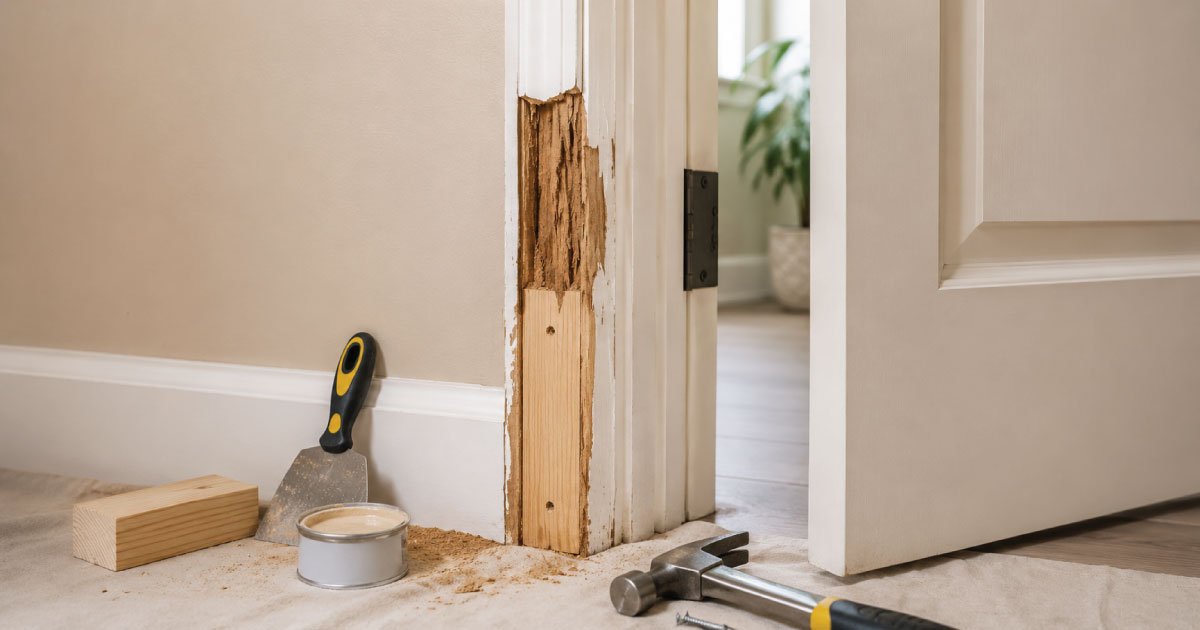
A damaged door frame is more than just a cosmetic issue. It can cause problems with security, insulation, and how smoothly your door opens and closes. Over time, door frames can crack, rot, warp, or loosen due to moisture, heavy use, or accidental force. The good news is that most door frame problems can be repaired at home with basic tools and a little patience.
In this guide, you’ll learn how to identify common door frame issues and repair them step by step, even if you’re not a professional carpenter.
Understanding Door Frame Damage
Before starting any repair, it’s important to clearly understand the type of damage affecting your door frame. Different materials react differently to wear and environmental conditions, so identifying the issue ensures you choose the correct repair method and avoid unnecessary work.
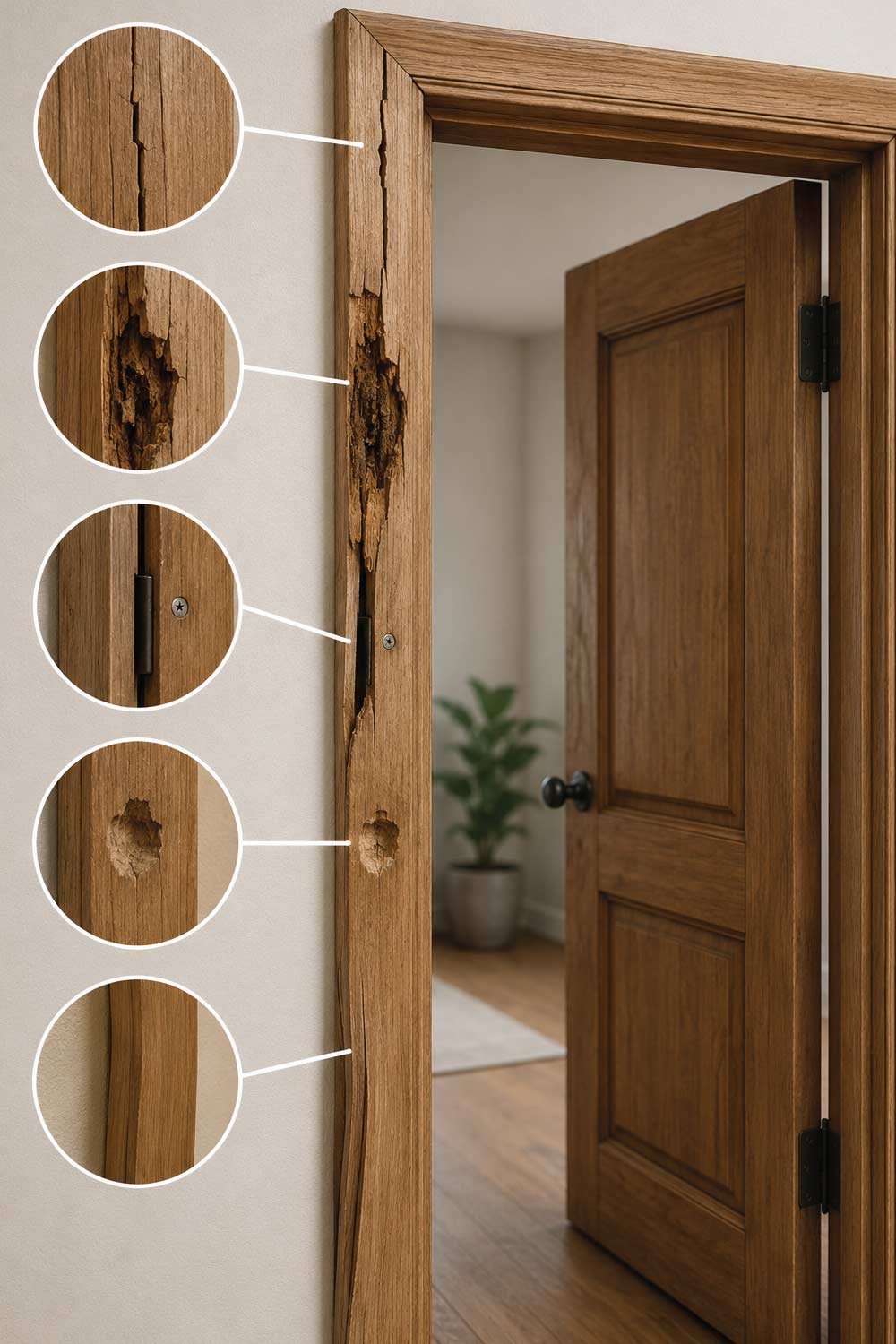
Door frames are usually made of wood, metal, or sometimes composite materials. Each type can suffer different kinds of damage.
1. Cracks and Splits
Cracks and splits are common in wooden frames and usually develop over time. These are often caused by environmental changes or physical stress on the frame.
Wooden frames often develop cracks due to aging, humidity changes, or physical impact. Small cracks are usually easy to fix.
2. Rotting Wood
Rot is a serious issue that weakens the structure of the frame. It typically occurs when moisture penetrates the wood and remains trapped for long periods.
If moisture enters the wood frame, it can start to rot. This is common in exterior doors exposed to rain or damp environments.
3. Loose or Misaligned Frame
Over time, structural components may loosen, causing the frame to shift. This affects how the door fits and operates.
Over time, screws and nails may loosen, causing the frame to shift. This leads to doors that don’t close properly.
4. Holes or Dents
Physical damage from impacts can leave visible marks or structural weaknesses. These issues may affect both appearance and function.
Accidental impacts, forced entry attempts, or furniture movement can create holes or dents in the frame.
5. Warping
Warping changes the shape of the frame, making it difficult for the door to move freely. This often results from moisture or low-quality materials.
Humidity or poor-quality wood can cause frames to bend or twist, making door movement difficult.
Once you’ve identified the issue, you can choose the correct repair method.
Tools and Materials You Will Need
Preparing your tools in advance ensures a smooth repair process without interruptions. Most door frame repairs require basic tools that are easily available at home or hardware stores.
Before starting, gather the following tools and materials:
- Screwdriver (manual or electric drill)
- Hammer
- Wood filler or epoxy putty
- Sandpaper (medium and fine grit)
- Wood glue
- Replacement wood pieces (if needed)
- Measuring tape
- Chisel
- Paint or wood finish
- Screws and nails
- Putty knife
- Safety gloves and goggles
Having everything ready will make the process smoother and faster.
Step-by-Step Guide to Repair a Door Frame
Repairing a door frame requires a systematic approach. By following step-by-step methods, you can fix both minor and major issues effectively while maintaining the strength and appearance of the frame.
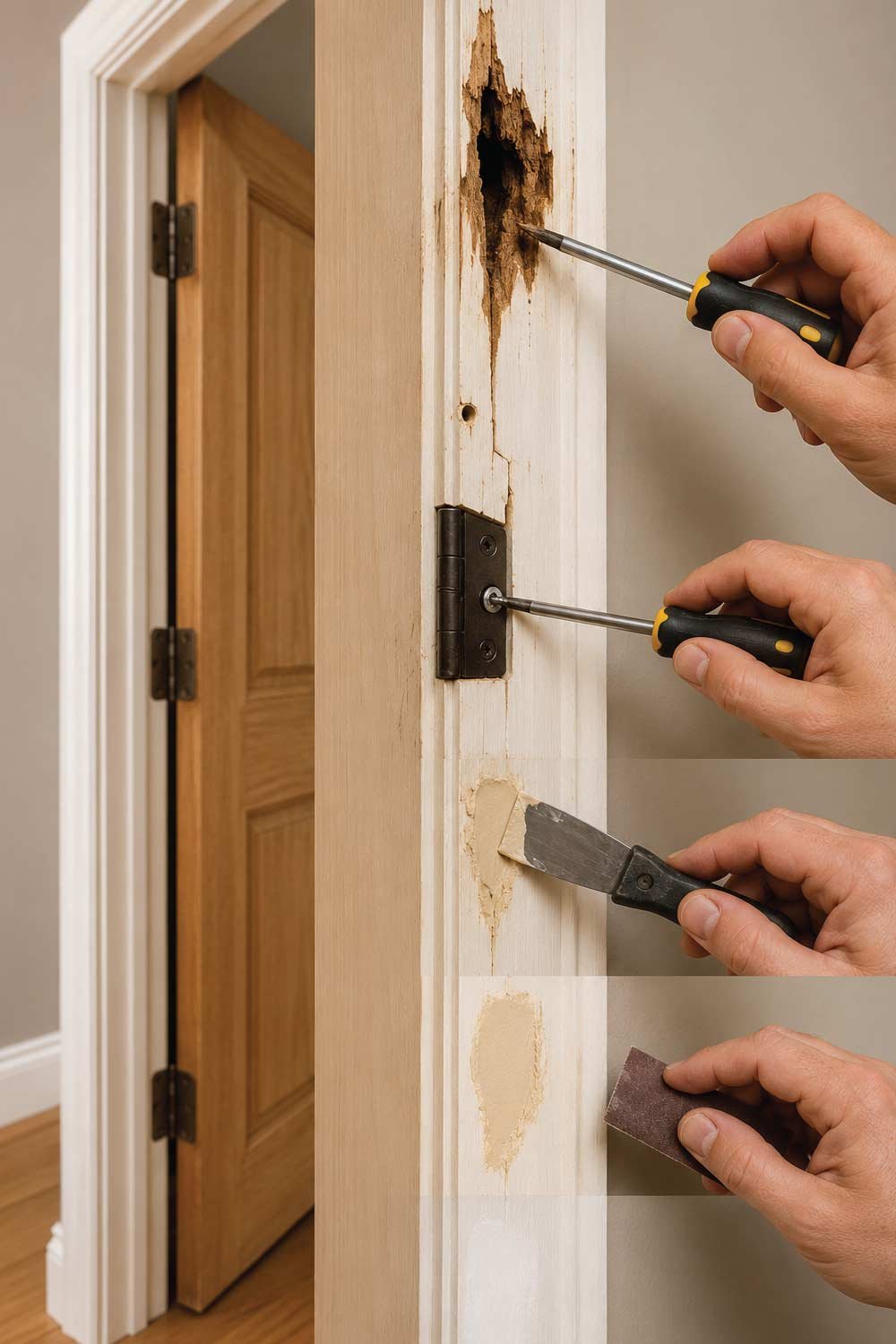
Step 1: Inspect the Damage Carefully
The first step is to thoroughly examine the door frame to locate all problem areas. Careful inspection helps you avoid missing hidden damage and ensures a complete repair.
How to Inspect
Observing the door’s movement and checking the frame structure gives you a clear understanding of the damage extent.
- Open and close the door several times. Check where it sticks, rubs, or feels loose. Look closely at joints, corners, and areas near the hinges.
- Tap the frame lightly with a screwdriver handle. If the wood sounds hollow, it may be rotten inside.
- Mark damaged areas with a pencil so you don’t miss them during repair.
Step 2: Tighten Loose Screws and Hinges
Loose screws and hinges can cause misalignment even if the frame itself is intact. Tightening them is a simple fix that often resolves minor issues quickly.
How to Fix
Ensuring all screws are secure helps stabilize the door and improve alignment without major repairs.
- Use a screwdriver to tighten all hinge screws.
- If screws don’t grip properly, remove them and fill the holes with wood filler or matchsticks dipped in wood glue.
- Reinsert screws once the filler dries.
This simple step often fixes minor misalignment issues.
Step 3: Repair Small Cracks and Holes
Minor surface damage can be easily repaired using fillers. This restores both the strength and appearance of the frame.
For Minor Cracks
Filling cracks properly prevents them from spreading and ensures a smooth surface for finishing.
- Clean the area using a dry cloth.
- Apply wood filler or epoxy putty using a putty knife.
- Press it deep into the crack.
- Smooth the surface and let it dry completely.
- Sand it down until it is level with the frame.
- Apply paint or finish.
For small holes, the same method works. Make sure the filler is packed tightly.
Step 4: Fix Larger Damaged Sections
When damage is extensive, replacing the affected section is the best solution. This method restores structural strength and ensures long-term durability.
Repair Method
Careful removal and replacement of damaged wood ensures a strong and seamless repair.
- Use a chisel to remove loose or damaged wood.
- Cut a new piece of wood that fits the removed section.
- Apply wood glue to the area.
- Fit the new piece tightly into place.
- Secure it with screws or nails.
- Allow it to dry for several hours.
- Sand and paint for a smooth finish.
This method restores both strength and appearance.
Also Read:
Conclusion
Repairing a door frame may seem complicated, but with the right tools and method, it becomes a manageable DIY project. Whether you’re dealing with cracks, loose hinges, rot, or warping, each problem has a clear solution.
By following the steps in this guide—inspection, tightening, filling, patching, and finishing—you can restore your door frame to a strong and functional condition.
Regular maintenance will help you avoid future repairs and keep your doors working smoothly for years to come.