
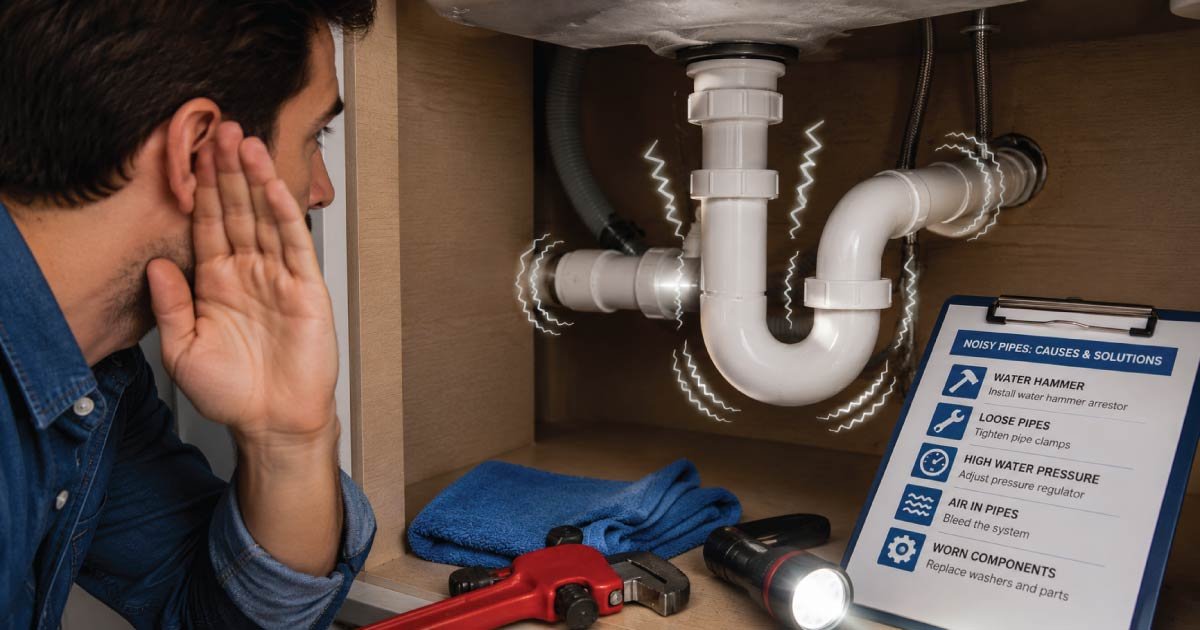
Noisy pipes can be annoying, disruptive, and sometimes alarming. Banging, rattling, whistling, gurgling, or humming sounds coming from your plumbing system are not just harmless background noisethey’re often warning signs that something isn’t working properly. While some pipe noises are minor and easy to fix, others can indicate pressure problems or potential damage.
This guide explains the most common types of pipe noises, what causes them, how to fix them safely, and how to prevent them from returning.
Common Types of Noisy Pipes and What They Mean
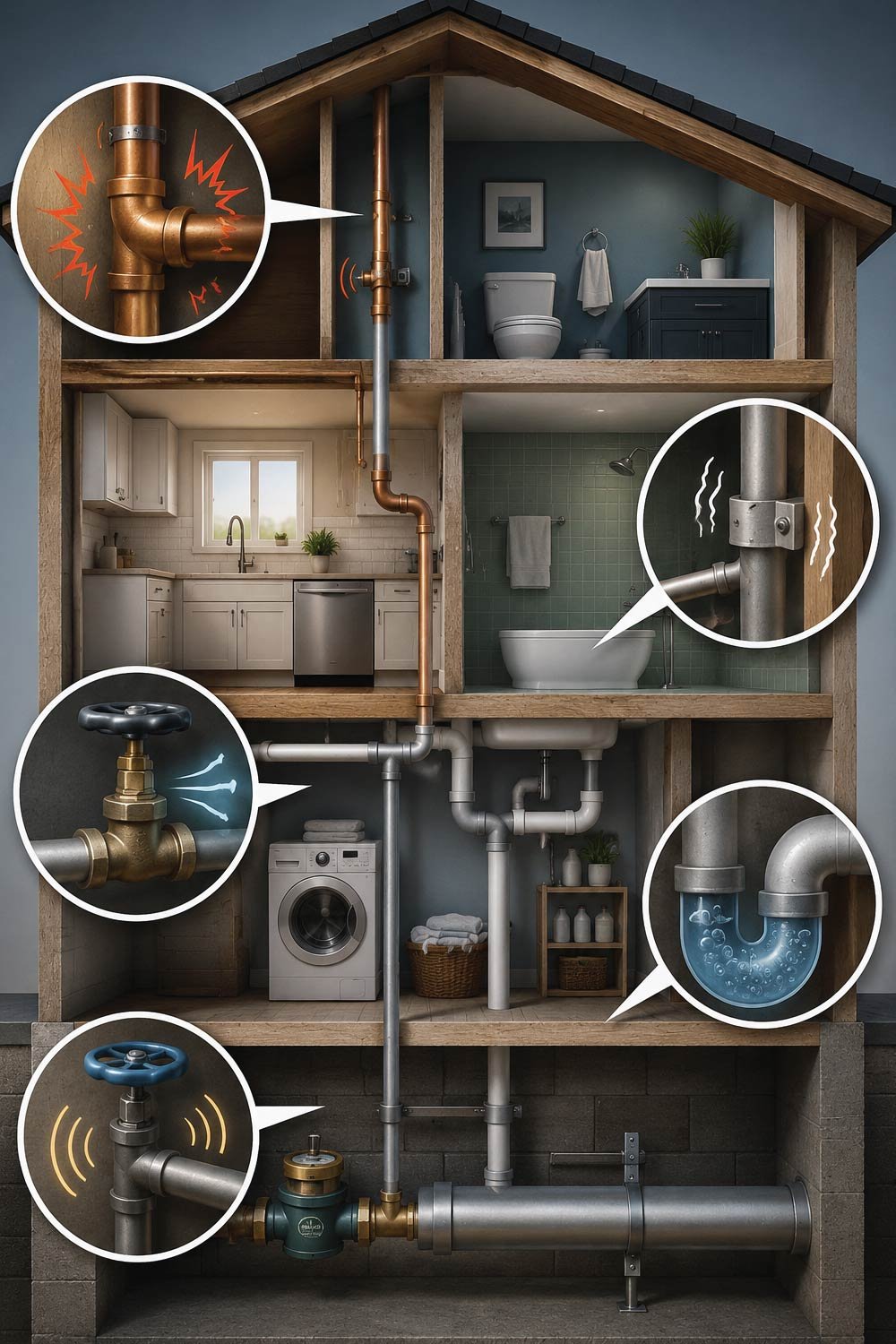
Noisy pipes in a plumbing system often indicate underlying issues that should not be ignored. Understanding the different sounds helps in quickly identifying potential problems such as pressure imbalance, loose fittings, or flow restrictions. By correctly interpreting these noises, homeowners can take timely action and prevent more serious plumbing damage.
Banging or Knocking
This sound usually occurs due to water hammer effects, loose pipe fittings, or sudden valve closures in the plumbing system. It often happens when water flow is abruptly stopped, causing pipes to shake against nearby structures and create a loud, disturbing impact noise throughout the system.
Rattling
Rattling noises typically happen when pipes are not securely fixed and move slightly against walls, floors, or framing. This vibration occurs during water flow and indicates that pipe supports or brackets may be loose or insufficient, allowing unwanted movement inside the plumbing structure.
Whistling or Screeching
Whistling or screeching sounds are generally caused by worn-out valves, high water pressure, or restricted water flow within the pipes. These sharp noises often appear when water passes through narrow openings, creating turbulence and vibration inside the plumbing system.
Gurgling
Gurgling noises are commonly linked to drainage or venting issues in the plumbing system. This sound usually occurs when air is trapped or water is struggling to flow smoothly through drains, indicating possible blockages or improper venting.
Humming or Vibrating
Humming or vibrating sounds are often associated with excessive water pressure or partially closed valves. These conditions cause continuous vibration in the plumbing lines, producing a steady noise that can be heard through walls or fixtures.
Each sound points to a different issue, so matching the noise to its cause is critical.
Step 1: Identify When and Where the Noise Happens
Carefully observing when and where plumbing noises occur is essential for diagnosing the issue accurately. Different fixtures, water temperatures, and timing patterns can reveal important clues about whether the problem is related to pressure, drainage, or mechanical movement within the pipes.
- Which fixture triggers the noise (sink, toilet, shower, appliance)
- Whether it happens when water starts, stops, or drains
- Whether it occurs with hot water, cold water, or both
- Whether the sound comes from walls, ceilings, or floors
This information helps narrow down the problem quickly.
Fixing Banging or Knocking Pipes
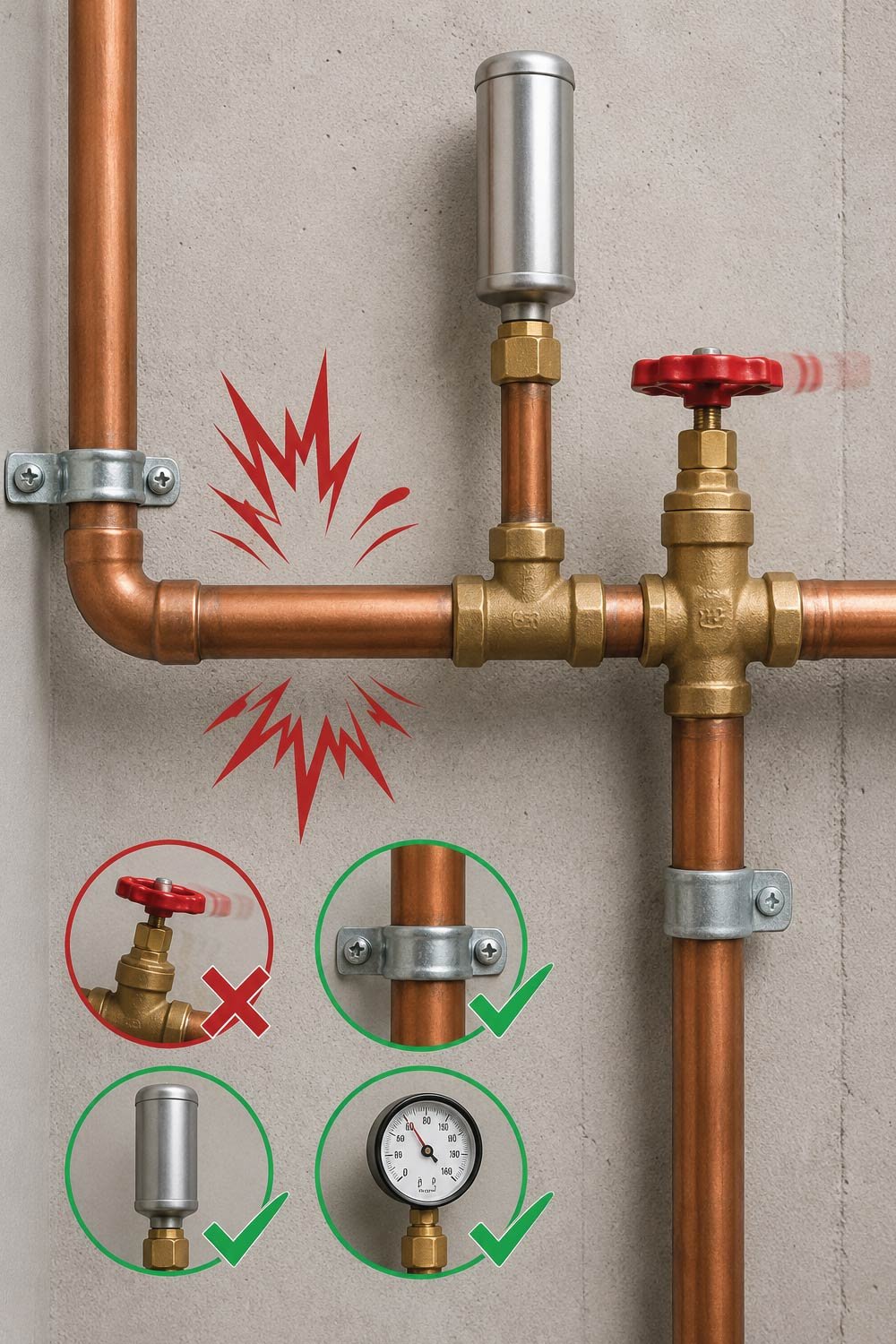
Banging or knocking pipes are a common plumbing issue caused by sudden changes in water flow or unstable pipe installation. This noise can indicate water hammer effects or pressure problems that may damage the plumbing system if left unresolved. Identifying the cause early helps prevent long-term structural and pipe damage.
Common Causes
- Sudden water flow stoppage
- Fast-closing valves
- Loose pipes
- High water pressure
How to Fix It
- Secure loose pipes using pipe straps or clamps
- Install water hammer arrestors near fast-closing fixtures
- Lower water pressure if it exceeds safe levels
- Avoid slamming valves shut
Persistent banging should not be ignored, as it can damage joints over time.
Fixing Rattling Pipes
Rattling pipes usually occur when plumbing lines are not properly secured and begin to move against surrounding surfaces. This vibration can create noise whenever water flows, often pointing to weak supports or poor installation that allows pipes to shift inside walls or structural framing.
Common Causes
- Pipes rubbing against framing
- Missing or loose pipe supports
- Thermal expansion and contraction
How to Fix It
- Add or tighten pipe straps
- Insert foam insulation or cushioning around pipes
- Ensure pipes are not in direct contact with wood or metal
This is one of the easiest pipe noise problems to fix.
Fixing Whistling or Screeching Pipes
Whistling or screeching pipes are typically caused by restricted water flow or worn-out internal components within faucets and valves. These high-pitched sounds often indicate pressure imbalance or narrowing inside the plumbing system that forces water through tight openings.
Common Causes
- Worn faucet washers or cartridges
- High water pressure
- Partially closed shut-off valves
How to Fix It
- Fully open all shut-off valves
- Replace worn faucet parts
- Reduce water pressure if necessary
If the noise happens only at one fixture, the issue is usually local to that valve.
Fixing Gurgling Sounds in Pipes
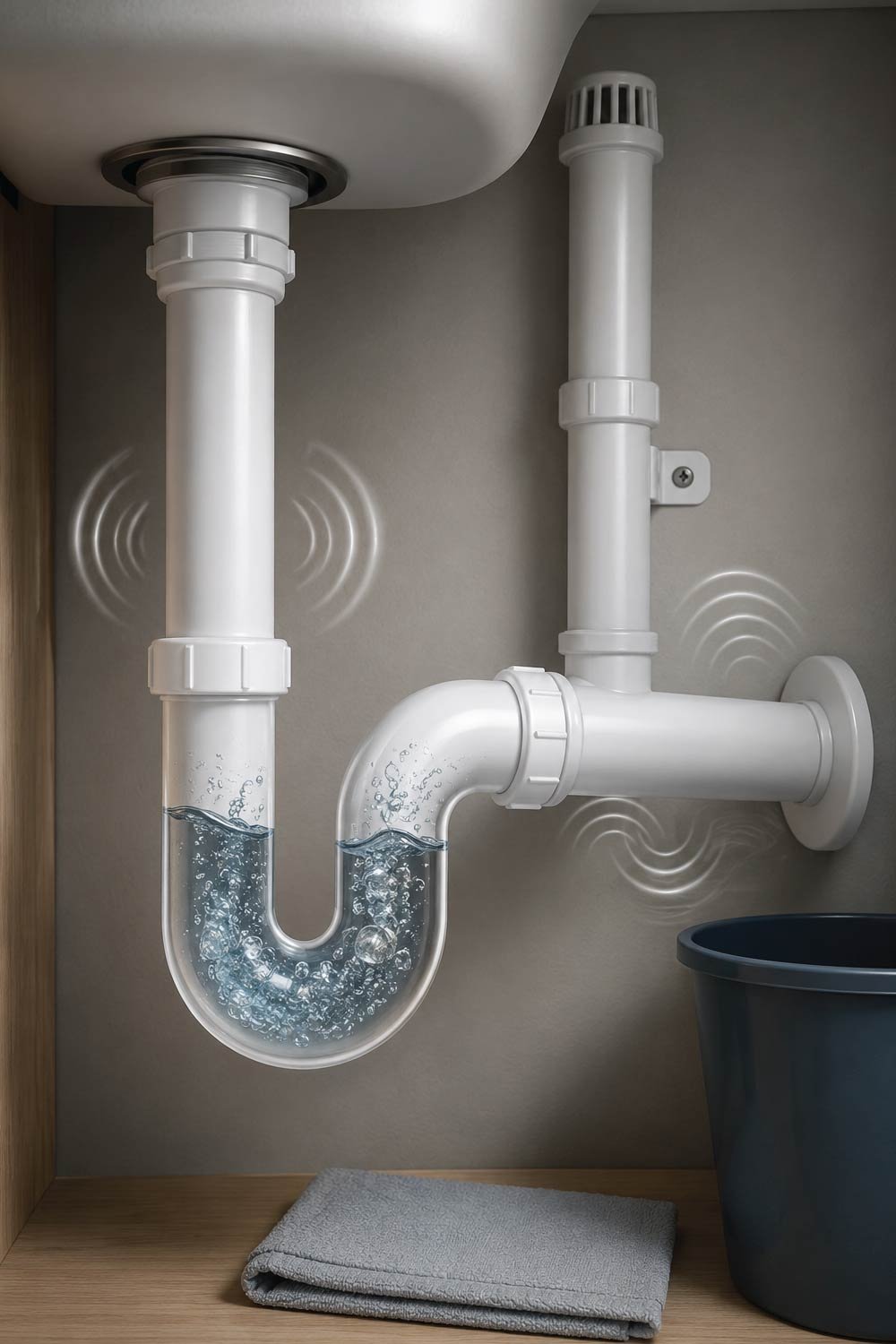
Gurgling sounds in pipes are usually linked to drainage or venting issues within the plumbing system. These noises occur when air is trapped or water struggles to move smoothly through drains, often signaling blockages or improper vent airflow.
Common Causes
- Partial drain clogs
- Vent pipe blockages
- Improper plumbing slope
How to Fix It
- Clean drains and sink traps
- Avoid chemical drain cleaners
- Ensure multiple fixtures aren’t draining simultaneously
Persistent gurgling may indicate a venting issue that requires professional inspection.
Fixing Humming or Vibrating Pipes
Humming or vibrating pipes are often caused by excessive water pressure or faulty control valves in the plumbing system. This continuous vibration can travel through walls and fixtures, creating an ongoing noise that signals pressure-related stress in the pipes.
Common Causes
- Excessive water pressure
- Faulty pressure-reducing valve
- Old or restrictive plumbing
How to Fix It
- Test household water pressure
- Adjust or replace the pressure regulator
- Replace aging valves if necessary
Humming often stops once pressure is brought into a safe range.
Also Read:
Check and Adjust Water Pressure
High water pressure is a major contributor to noisy pipes and long-term plumbing damage. Maintaining a safe pressure level ensures smooth water flow, protects fixtures, and prevents unnecessary stress on the entire plumbing system.
Safe Pressure Range
- Ideal: 40–60 psi
- Too high: above 80 psi
How to Reduce Pressure
- Adjust the pressure-reducing valve if installed
- Install one if your home lacks it
Lower pressure protects pipes, appliances, and fixtures.
Also Read:
Secure Pipes Throughout the House
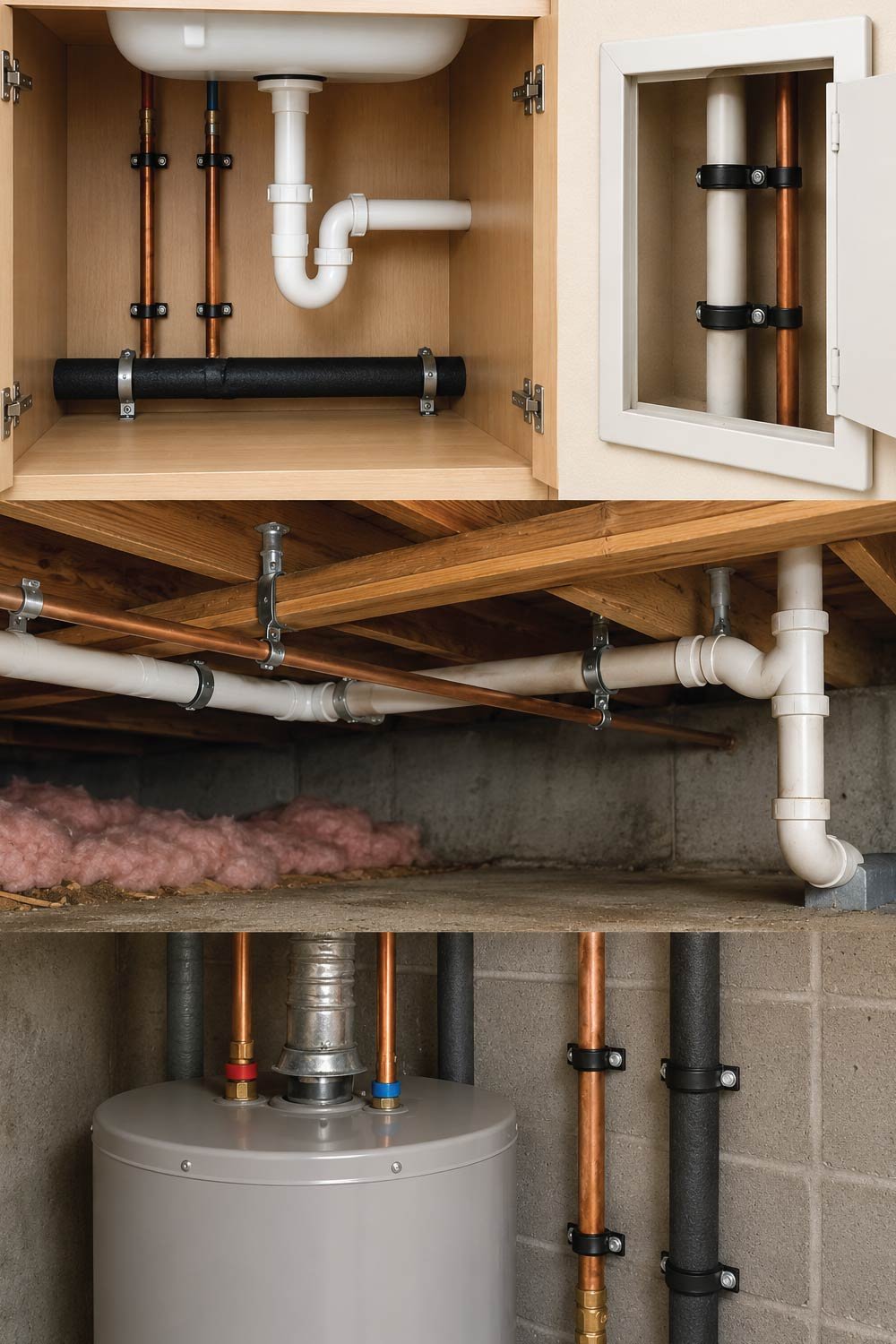
Loose pipes can significantly increase noise levels in a plumbing system because they vibrate and strike surrounding surfaces when water flows. Properly securing pipes throughout the home helps reduce movement, prevent damage, and maintain a quieter and more stable water system.
Areas to Check
- Under sinks
- In basements or crawl spaces
- Near water heaters
- Behind access panels
Use pipe clamps, brackets, or foam padding to secure them properly.
Drain the Plumbing System (Temporary Fix)
Draining the plumbing system can sometimes reduce pipe noise temporarily by removing trapped air or resetting pressure conditions inside the pipes. While not a permanent solution, it can help identify whether air or pressure imbalance is contributing to the noise problem.
How to Do It
- Turn off the main water supply
- Open the highest and lowest faucets
- Flush toilets
- Let the system drain fully
- Turn water back on slowly
This is not a permanent fix but can help diagnose the issue.
Also Read:
How to Fix Door Keeps Swinging Open? Stop It Fast With This Simple Fix
Check Appliances and Toilets
Household appliances and toilets are common sources of pipe noise due to rapid water flow changes and high-speed filling mechanisms. These fixtures can create pressure shocks in the plumbing system, leading to banging or vibration sounds in nearby pipes.
Common Noise Sources
- Washing machines
- Dishwashers
- Toilets with fast-fill valves
Solutions
- Install water hammer arrestors on supply lines
- Replace fast-closing valves
- Adjust appliance fill speeds if possible
Modern fixtures are often quieter and more efficient.
Common Mistakes to Avoid
Many plumbing noise issues worsen because of incorrect repair attempts or overlooked warning signs. Avoiding common mistakes ensures that the problem is addressed properly and prevents further damage to the plumbing system over time.
- Ignoring sounds that worsen over time
- Increasing water pressure to improve flow
- Using temporary fixes permanently
- Overtightening fittings
- Assuming noise is harmless
Pipe noise is usually a symptom, not the problem itself.
Also Read:
How To Fix Loose Ceiling Fixture? Ceiling Fixture Repair Complete Guide
When to Call a Professional Plumber
Some plumbing noise issues indicate deeper system problems that cannot be safely or effectively fixed without professional help. Calling a plumber ensures accurate diagnosis and prevents hidden damage from worsening inside walls or underground piping.
- Noises persist despite basic fixes
- Pipes are hidden behind walls or ceilings
- Water pressure is consistently too high
- Leaks develop near fittings
- You’re unsure of the noise source
Professional diagnosis prevents costly damage.
Preventing Noisy Pipes in the Future
Preventing noisy pipes is easier and more cost-effective than repairing them after problems occur. Regular maintenance and proper installation practices help keep the plumbing system stable, quiet, and efficient over the long term.
Helpful tips:
- Maintain proper water pressure
- Secure pipes during renovations
- Replace aging valves and fittings
- Install water hammer protection with new appliances
- Address noises early
Prevention is easier and cheaper than repairs.
Final Thoughts
Noisy pipes are more than an inconvenience they’re a signal that your plumbing system needs attention. Whether the issue is loose pipes, high pressure, worn valves, or water hammer, most causes can be fixed with the right approach.
By identifying the type of noise, securing pipes, controlling water pressure, and upgrading key components, you can restore peace and quiet to your home while protecting your plumbing system from damage. Addressing pipe noise early keeps your home safer, quieter, and more reliable.