
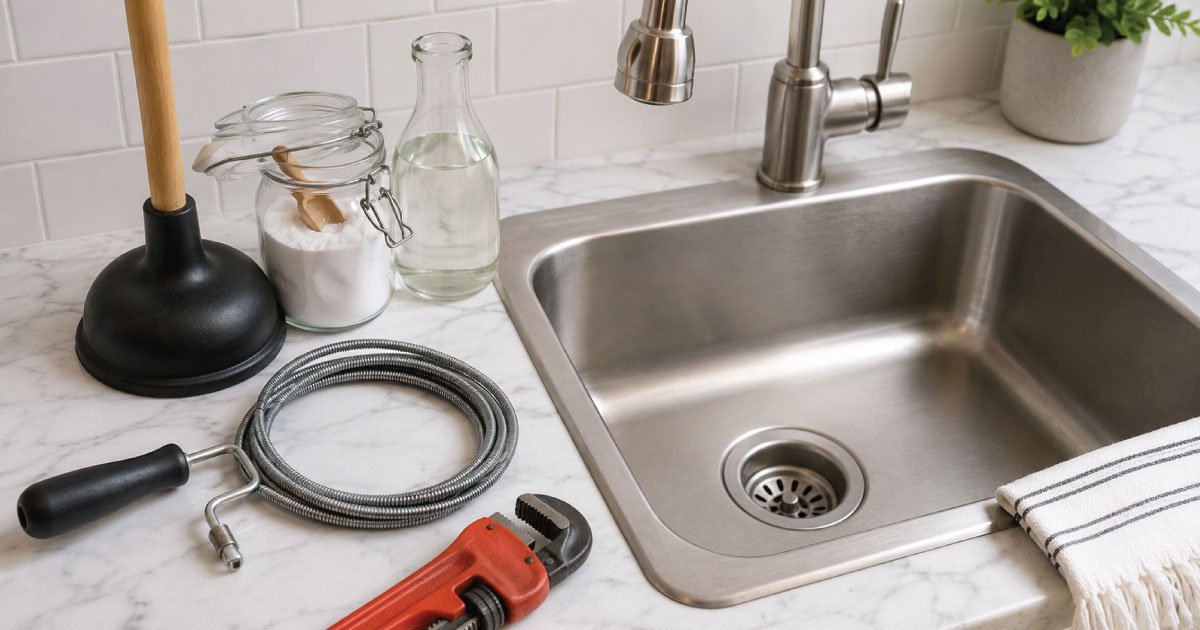
A clogged sink drain is one of the most common (and frustrating) household problems. Whether it’s a bathroom sink draining slowly or a kitchen sink backed up with greasy water, clogs can interrupt daily routines and quickly turn into bigger plumbing issues if ignored. The good news is that most sink clogs can be fixed at home using simple tools and methods often without calling a plumber.
This comprehensive guide walks you through why sink drains clog, how to identify the type of clog, and multiple proven methods to unclog a sink drain, from the gentlest fixes to more advanced techniques. You’ll also learn how to prevent future clogs and know when it’s time to call a professional.
Why Sink Drains Get Clogged
Sink drains clog when everyday waste gradually builds up inside the pipes, reducing water flow and eventually blocking it completely. Although drains are designed to carry wastewater away smoothly, repeated exposure to grease, hair, soap, and food particles causes slow accumulation. Over time, this buildup forms stubborn blockages that require cleaning or mechanical removal.
Common Causes in Bathroom Sinks
Bathroom sink clogs usually develop from personal care routines that introduce sticky and fibrous materials into the drain system. These substances combine over time and create thick buildup inside pipes.
- Hair buildup
- Soap scum
- Toothpaste residue
- Skin oils and grooming products
These materials combine over time, forming a sticky mass that narrows the pipe and slows drainage.
Common Causes in Kitchen Sinks
Kitchen sink clogs are mainly caused by cooking waste and food particles that harden or swell inside the drain. Grease is especially damaging because it solidifies after cooling and traps other debris.
- Grease and cooking oils
- Food scraps
- Coffee grounds
- Starchy foods like rice or pasta
Grease is especially problematic. It may go down the drain as a liquid, but it solidifies as it cools, trapping other debris.
Before You Start: Safety and Preparation
Proper preparation before unclogging a sink helps prevent spills, damage, and unsafe chemical reactions. Clearing space under the sink and using basic protective items makes the process safer and easier to manage.
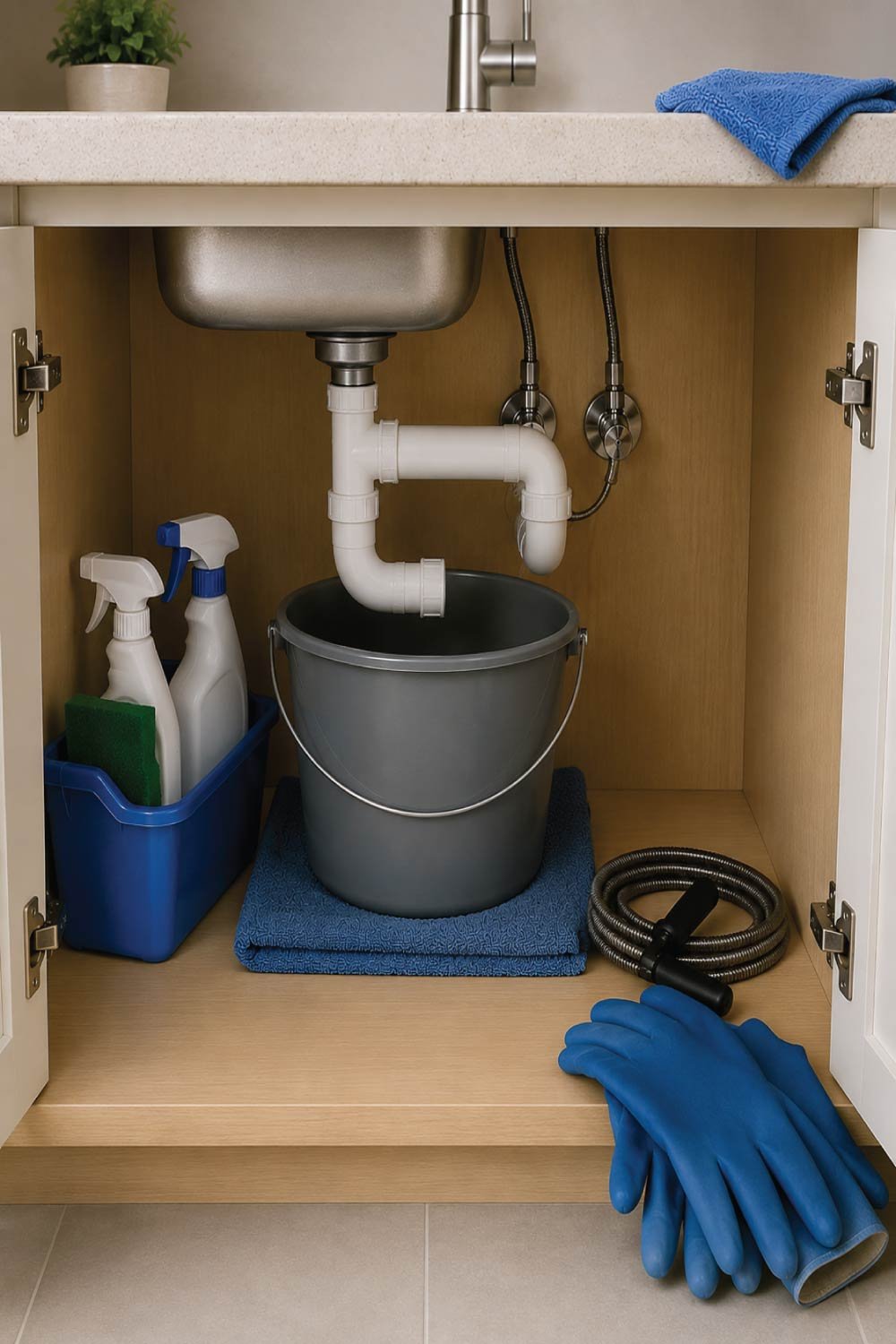
Safety and Setup Steps
These simple precautions reduce risk and make drain cleaning more efficient and controlled.
- Clear out the cabinet under the sink to give yourself room to work.
- Place a bucket or towel under the drain pipes to catch water.
- Wear gloves, especially if you plan to remove pipes or use a drain snake.
- Avoid mixing chemical drain cleaners, which can create dangerous reactions.
If you’ve already poured a chemical cleaner into the drain, wait several hours and flush thoroughly with water before trying any mechanical method.
Step 1: Try Boiling Water
Boiling water is one of the simplest and most effective first methods for clearing minor sink clogs caused by grease or soap buildup. The heat helps soften or dissolve blockages so they can wash away naturally through the drain system.
How to Do It
This method uses heat to break down soft clogs and restore normal water flow.
- Bring a large pot of water to a rolling boil.
- Slowly pour the water directly into the drain in two or three stages.
- Wait a few seconds between pours to let the heat work on the clog.
Why It Works
Boiling water melts grease and loosens soap residue, allowing buildup to break apart and flow away more easily.
When Not to Use It
High heat can damage certain pipe materials, so caution is important.
- Avoid boiling water if you have PVC pipes, as extreme heat can soften or warp them. Use very hot (but not boiling) water instead.
Step 2: Use a Plunger
A plunger is a simple yet powerful tool for removing soft clogs near the drain opening. It works by creating suction and pressure that helps dislodge blockages and push them through the pipe system.
How to Do It
This method uses air pressure to break up clogs and restore drainage.
- Remove the sink stopper if possible.
- Add enough water to cover the plunger cup.
- Place the plunger over the drain and create a tight seal.
- Plunge vigorously for 20–30 seconds.
- Lift the plunger and check drainage. Repeat if necessary.
Tip
Proper sealing improves pressure and makes plunging more effective.
- If the sink has an overflow hole, cover it with a damp cloth to maintain pressure.
Step 3: Baking Soda and Vinegar Method
This natural cleaning method is widely used for mild clogs and maintenance because it avoids harsh chemicals while still breaking down organic buildup inside pipes.
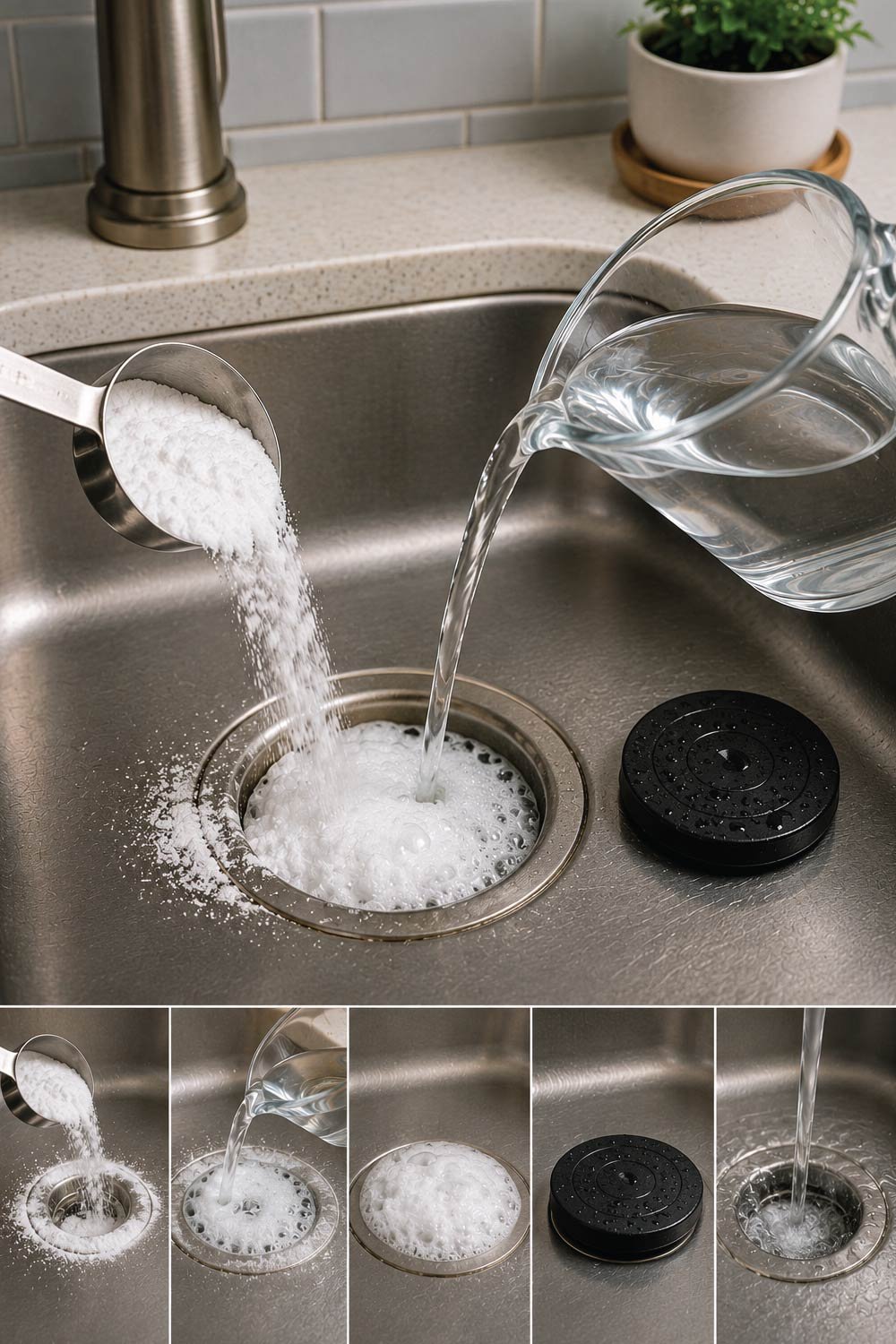
How to Do It
This reaction helps loosen debris and clean the drain gently.
- Pour about ½ cup of baking soda into the drain.
- Follow with 1 cup of white vinegar.
- Cover the drain opening to keep the reaction contained.
- Let it fizz and work for 15–30 minutes.
- Flush with hot water.
Why It Works
The chemical reaction creates fizzing that helps loosen debris, while mild acidity breaks down organic material inside the pipe.
This method is safe for most pipes and works best as a maintenance routine or early intervention.
Also Read:
Step 4: Clean the Sink Stopper
Sometimes sink clogs form right at the stopper instead of deep inside the pipe. Bathroom sinks especially collect hair and soap residue here, which slowly restricts water flow even if the drain pipe is clear.
How to Do It
Cleaning the stopper directly removes surface buildup that blocks water entry.
- Remove the stopper (some twist out, others lift out).
- Pull off any visible hair or debris.
- Wash the stopper with warm, soapy water.
- Reinsert and test the drain.
You may be surprised how much buildup collects here, especially in bathroom sinks.
Step 5: Check and Clean the P-Trap
The P-trap is the curved pipe beneath the sink designed to block sewer gases, but it also collects debris that can lead to stubborn clogs. Cleaning it is often the most effective solution for persistent drainage problems.
How to Do It
This method physically removes trapped debris inside the pipe system.
- Place a bucket under the P-trap.
- Loosen the slip nuts by hand or with pliers.
- Carefully remove the trap and empty it into the bucket.
- Clean out debris using a bottle brush or old toothbrush.
- Reattach the trap and tighten securely.
- Run water to check for leaks.
This method solves a large percentage of household sink clogs.
Step 6: Use a Drain Snake or Auger
A drain snake, also called a hand auger, is a flexible metal tool designed to reach deep into pipes where basic methods like plunging or cleaning the P-trap cannot reach. It is especially useful for stubborn clogs caused by hair, food buildup, or compacted debris further inside the plumbing system. This method helps break apart or pull out blockages that are otherwise inaccessible.
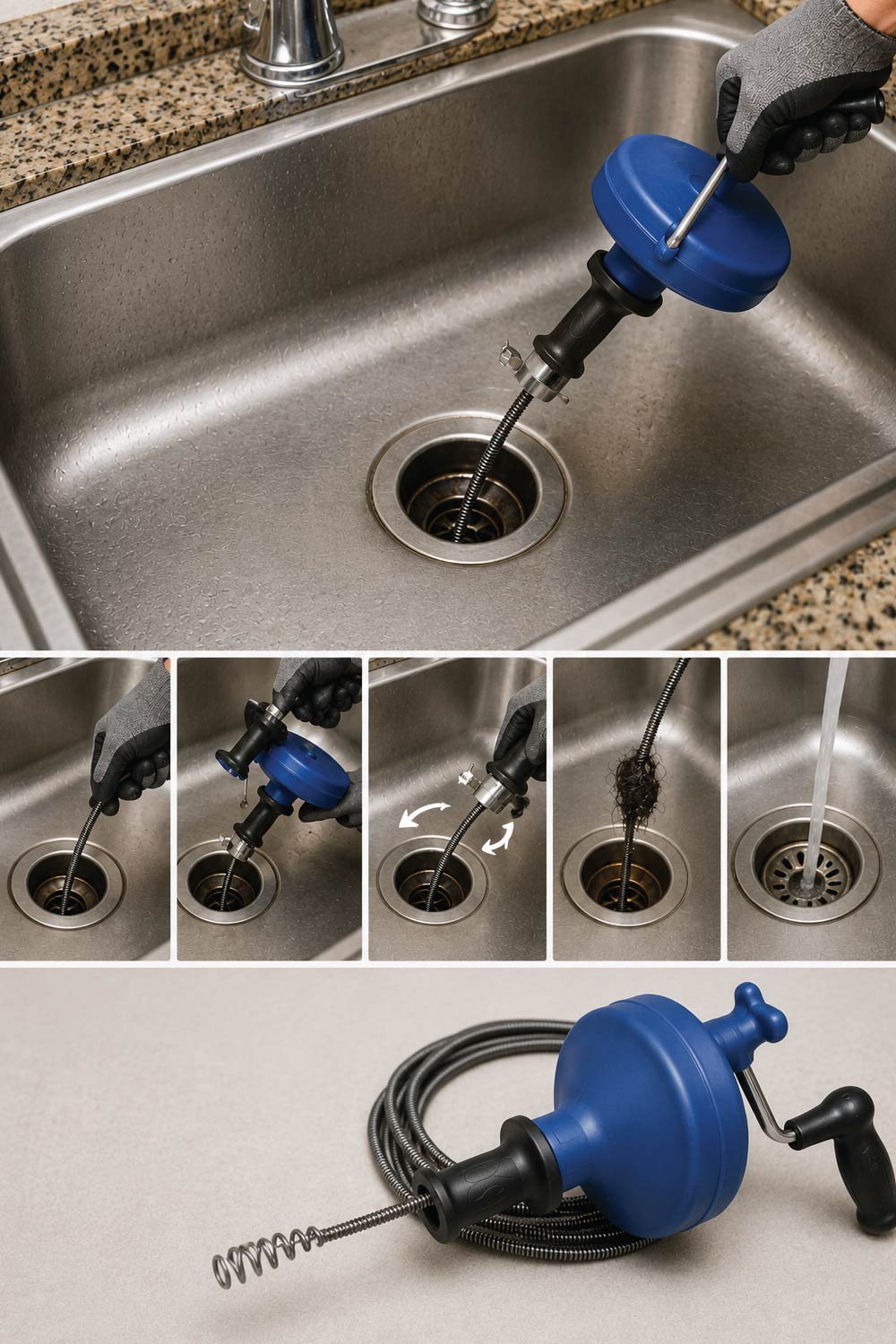
How to Do It
This process uses a rotating cable to physically break or retrieve deep clogs inside the pipe.
- Insert the snake into the drain opening.
- Push it in slowly while turning the handle.
- When you feel resistance, twist and push gently to break up the clog.
- Pull the snake out and clean off debris.
- Run hot water to flush the drain.
Drain snakes are inexpensive, reusable, and highly effective for hair and food clogs.
Also Read:
Step 7: Avoid or Use Chemical Cleaners with Caution
Chemical drain cleaners are widely available and can sometimes dissolve clogs, but they should only be used as a last resort due to their potential risks. While they may seem like a quick fix, repeated use can damage pipes and create safety hazards if not handled properly.
Pros and Cons
This section highlights the benefits and risks of using chemical drain cleaners before deciding to use them.
Pros:
- Easy to use
- Can dissolve certain types of clogs
Cons:
- Can damage pipes with repeated use
- Harmful to skin and eyes
- Dangerous if mixed with other chemicals
- Not environmentally friendly
If you choose to use one, follow the instructions exactly and never use more than recommended.
For more information on safer drain maintenance, see:
U.S. Environmental Protection Agency household hazardous waste guidance
How to Prevent Sink Drain Clogs
Preventing sink clogs is much easier and more cost-effective than dealing with blockages after they form. Simple daily habits and routine maintenance can keep water flowing smoothly and reduce the need for frequent drain cleaning or repairs.
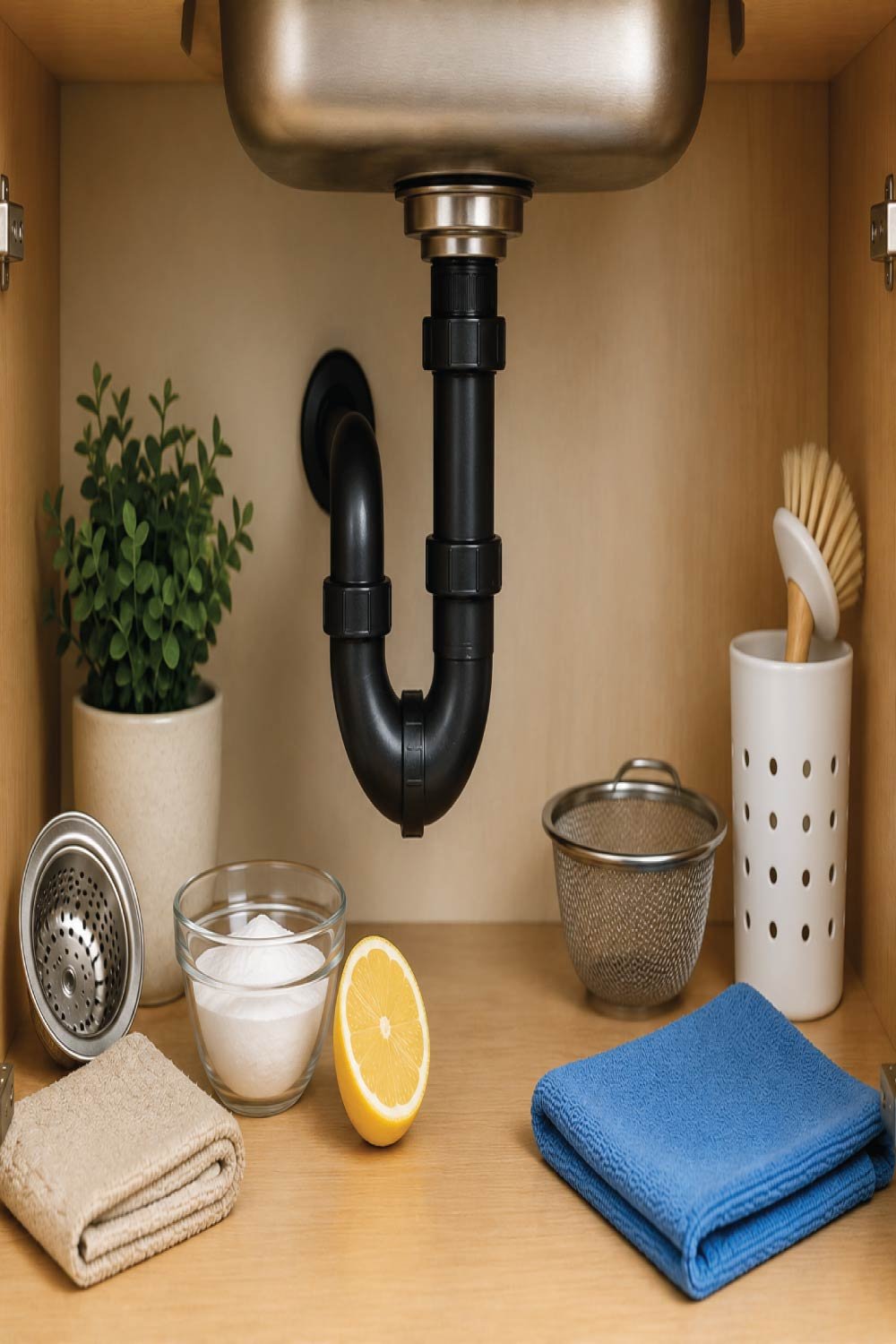
Kitchen Sink Prevention Tips
These habits help prevent grease and food buildup inside kitchen drains.
- Never pour grease or oil down the drain
- Use a sink strainer to catch food scraps
- Run hot water after washing dishes
- Dispose of coffee grounds in the trash
Bathroom Sink Prevention Tips
These practices help reduce hair and soap buildup in bathroom drains.
- Use a hair catcher or drain screen
- Wipe excess toothpaste into the trash
- Clean the stopper monthly
- Flush with hot water weekly
Regular maintenance with baking soda and hot water can also help prevent buildup.
For long-term plumbing care advice, homeowners often reference:
This Old House plumbing maintenance tips
Also Read:
When to Call a Plumber
While many sink clogs can be handled with DIY methods, some situations indicate deeper plumbing issues that require professional attention. Ignoring these signs can lead to more serious damage or recurring blockages throughout the home.
Call a Plumber If:
These warning signs indicate that the problem is beyond simple household fixes.
- Multiple sinks are clogged at once
- Water backs up into other fixtures
- You notice foul sewer odors
- Clogs keep returning despite repeated fixes
- You suspect a main drain or sewer line issue
Persistent or widespread drainage problems often indicate a deeper issue that requires professional tools and expertise.
Final Thoughts
Unclogging a sink drain doesn’t have to be stressful or expensive. By starting with simple methods like boiling water or plunging and gradually working up to more hands-on solutions like cleaning the P-trap or using a drain snake, most clogs can be resolved quickly and safely.
More importantly, developing good drain habits and performing regular maintenance can prevent most clogs before they start. With the right knowledge and a little patience, you can keep your sink drains clear and your plumbing system running smoothly for years to come.