

A window that doesn’t open or close properly is more than just a small annoyance. It can affect ventilation, security, energy efficiency, and even the lifespan of the window frame itself. One of the most common reasons behind a stubborn or misaligned window is loose hinges.
The good news is that this is usually an easy fix. You don’t need expensive tools or professional help in most cases. With a little attention and the right approach, you can tighten loose window hinges and restore smooth, effortless movement.
In this detailed guide, you’ll learn why window hinges become loose, how to fix them step-by-step, and how to prevent the problem from coming back.
Why Window Hinges Become Loose Over Time
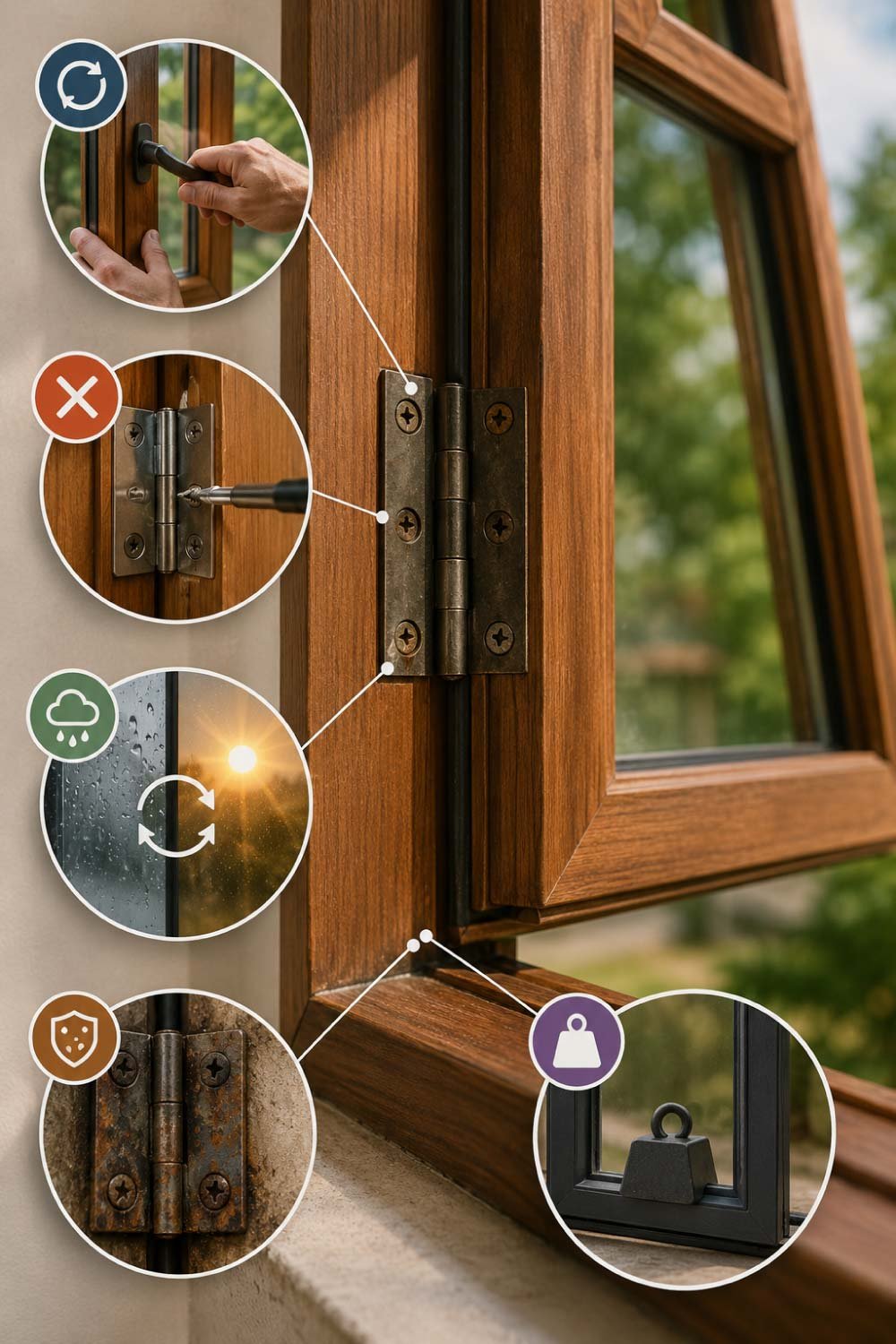
Window hinges are constantly under stress because they support repeated opening and closing motions every day. This continuous movement slowly affects screw tightness and joint stability. Over time, natural wear and environmental changes make the fittings weaker, leading to gradual loosening and reduced window performance.
Here are the most common reasons hinges become loose:
Regular Usage
Frequent opening and closing slowly loosens screws. This is the most natural cause and happens in almost every home.
Poor Installation
If the hinges were not installed tightly or correctly from the beginning, they will loosen much faster than expected.
Weather and Humidity
Changes in temperature and humidity cause wooden window frames to expand and contract. This movement can gradually loosen hinge screws.
Rust or Corrosion
In metal windows, moisture can lead to rust, weakening the grip of screws and hinges.
Weight Pressure
Heavy window panels put more strain on hinges, especially if the wrong type or size of hinge was used.
Understanding the cause helps you choose the right fix and avoid repeated issues.
Signs Your Window Hinges Are Loose
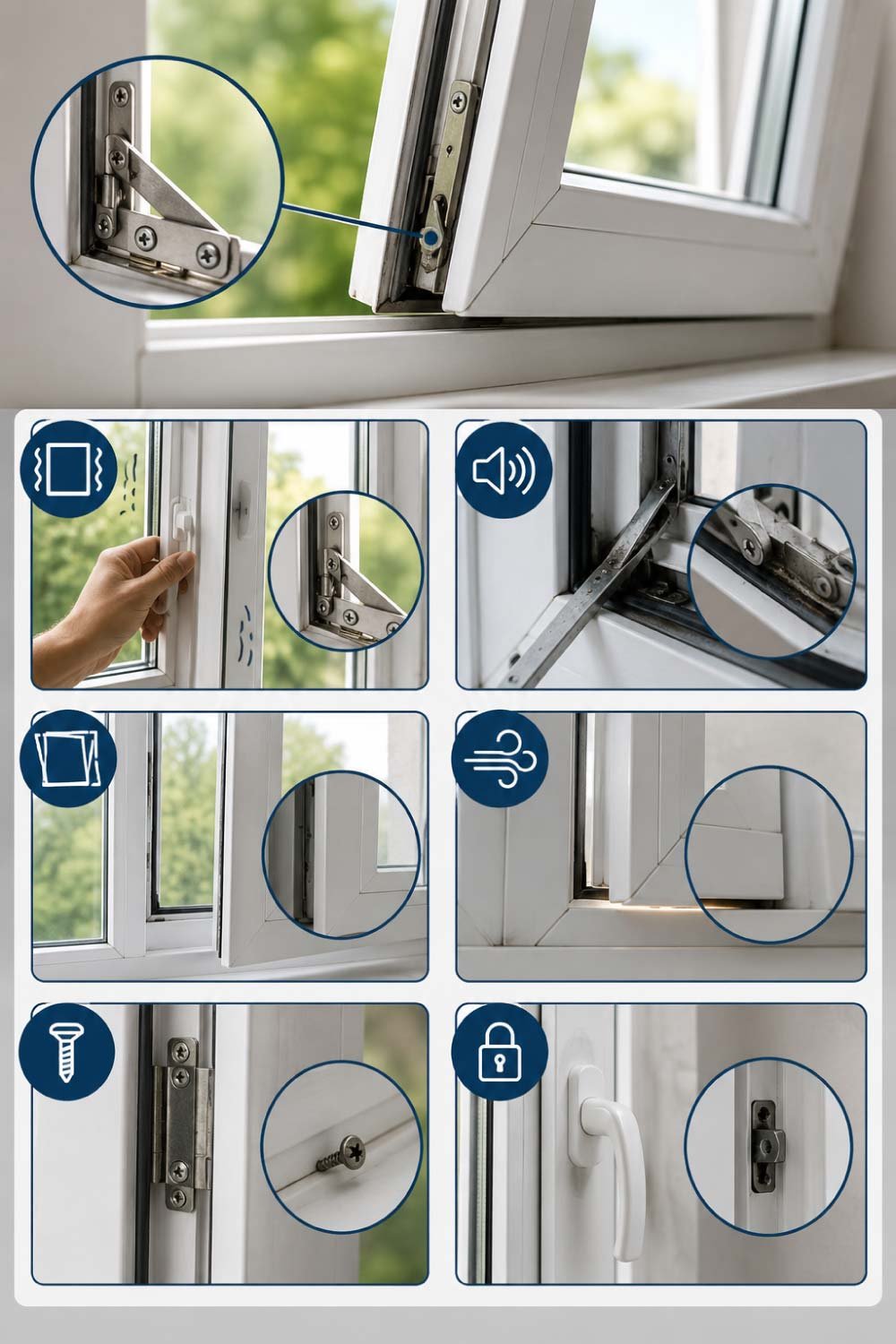
Loose window hinges usually develop gradually, so many homeowners don’t notice the issue until it becomes serious. Early detection is important because it prevents further damage to the frame and improves safety, smooth operation, and proper sealing of the window.
Watch for these warning signs:
Window feels shaky when opening or closing
Squeaking or grinding sound during movement
Window doesn’t align properly with the frame
Gaps appear when the window is shut
Screws look slightly out of place or raised
Difficulty locking the window
If you notice one or more of these issues, your hinges likely need immediate attention.
Tools You will Need for the Fix
Before starting any repair work, it’s important to gather the right tools so the process goes smoothly without interruptions. Most of these items are commonly available in households or can be easily found in local hardware stores.
Before starting, gather a few simple tools. Most homes already have them:
Screwdriver (Phillips or flat-head depending on screws)
Drill (optional, for stripped holes)
Wood glue or toothpicks (for loose screw holes)
Lubricant (like WD-40 or silicone spray)
Replacement screws (if needed)
Small brush or cloth for cleaning
Having everything ready makes the process faster and smoother.
Step-by-Step Guide to Tighten Loose Window Hinges
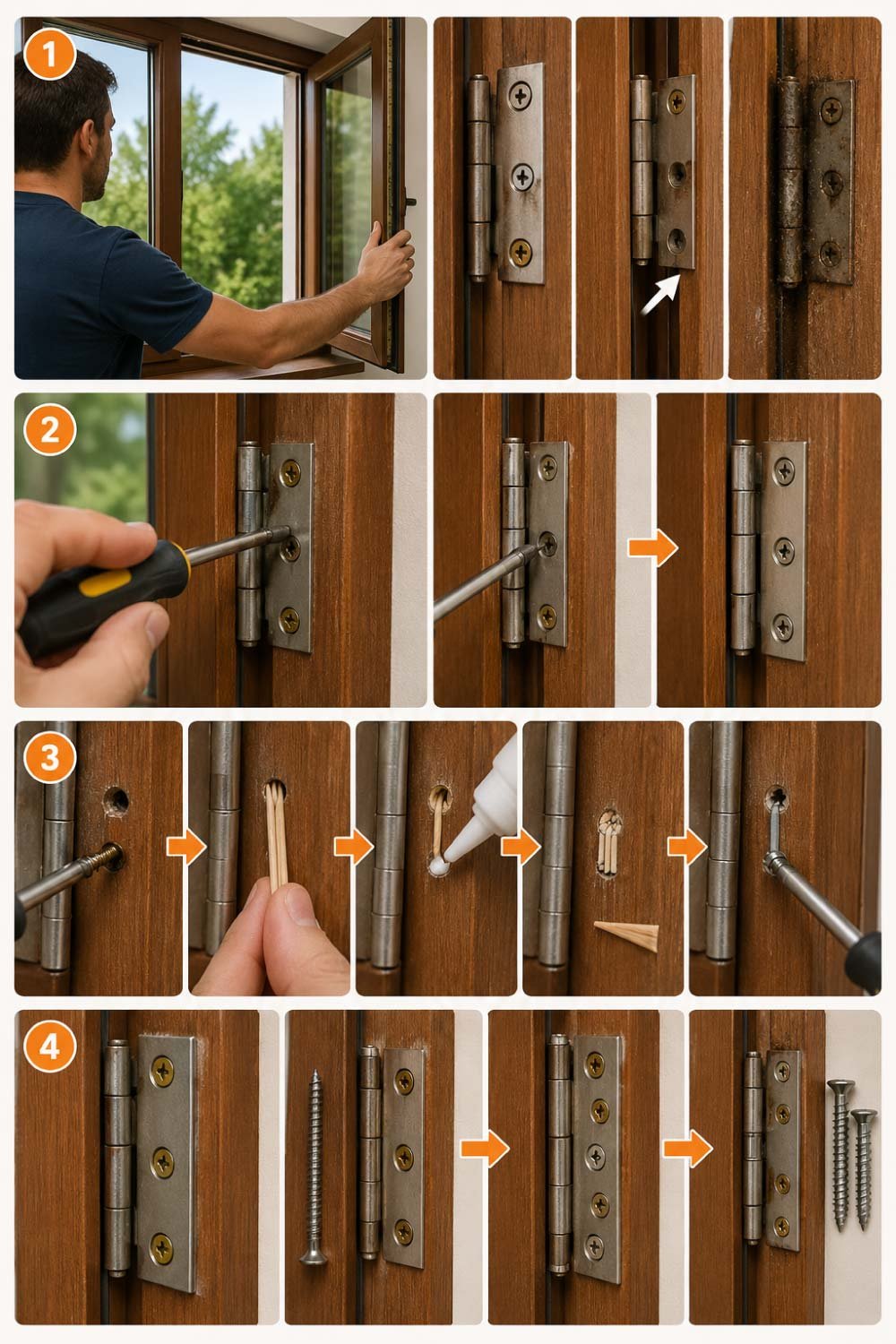
Fixing loose window hinges is usually straightforward if you follow the correct steps in order. Each step helps identify the exact problem and ensures the repair is long-lasting rather than a temporary solution.
Now let’s go through the practical fix. Follow these steps carefully for best results.
Step 1: Open the Window Fully
Start by opening the window completely. This gives you full access to the hinges and makes it easier to inspect the problem.
Check each hinge closely. Look for:
Loose screws
Gaps between hinge plate and frame
Rust or dirt buildup
Once you understand the condition, you can proceed with the right fix.
Step 2: Tighten the Screws
In many cases, the solution is as simple as tightening the screws.
Use a screwdriver and gently turn each screw clockwise. Be careful not to over-tighten, as this can strip the screw hole or damage the frame.
If the screw tightens properly, test the window movement after adjusting all screws.
Step 3: Check for Stripped Screw Holes
If a screw keeps spinning without tightening, the hole is likely stripped. This is a common issue, especially in wooden frames.
Here’s a simple fix:
Remove the loose screw
Insert 2–3 wooden toothpicks into the hole
Add a small drop of wood glue (optional but helpful)
Break off excess toothpicks so they are flush with the surface
Reinsert the screw and tighten again
The wood fills the gap and gives the screw a strong grip again.
Step 4: Reinforce Weak Hinges
If the hinge itself feels unstable even after tightening, it may need reinforcement.
You can:
Replace short screws with longer ones for deeper grip
Add additional screws if the hinge has extra holes
Use thicker screws if the old ones are worn out
Longer screws often provide a much stronger hold, especially in older wooden frames.
Step 5: Clean and Lubricate the Hinges
Over time, window hinges don’t just loosen—they also collect dust, grime, and sometimes rust particles. This buildup increases friction, making the window harder to move and putting extra strain on screws and joints. Cleaning and lubrication help restore smooth motion and extend hinge life significantly.
Use a dry cloth or small brush to clean around the hinge area. Remove dust, rust flakes, or debris.
Then apply a small amount of lubricant. This helps:
Reduces squeaking and noise during movement
Improves smooth opening and closing
Prevents future rusting and corrosion buildup
Make sure not to overuse lubricant, as excess can attract dust.
Also Read:
How to Fix a Broken Window Frame? Complete Guide About Broken Window Frame Repair
Step 6: Realign the Window (If Needed)
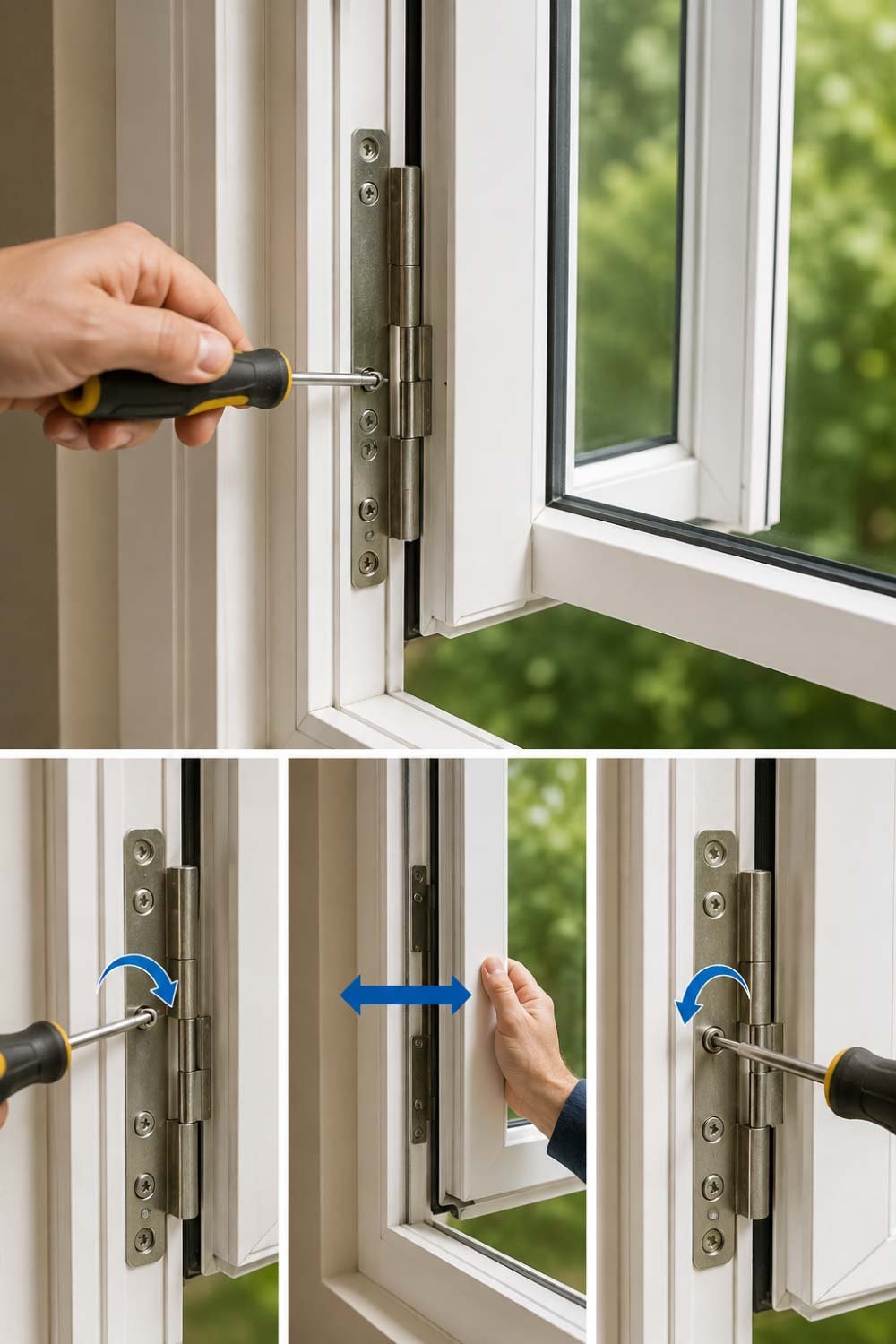
Sometimes tightening alone doesn’t solve the issue because the window frame itself may have shifted slightly over time. This causes misalignment, making the window feel stiff, uneven, or difficult to lock properly even after hinge repair.
To fix this:
Loosen the screws slightly
Adjust the window position carefully
Retighten the screws while holding it in place
This ensures the window sits properly in the frame without strain on the hinges.
When You Should Replace Hinges Instead of Fixing
Not every hinge problem can be solved with tightening or minor repairs. In some cases, the damage is too advanced, and replacement becomes the safest and most effective option for long-term performance and stability.
Consider replacing hinges if:
They are heavily rusted or corroded
Metal is bent or cracked
Screws no longer hold even after repairs
Window still sags after tightening
New hinges are relatively inexpensive and can dramatically improve performance.
Also Read:
How to Fix Cracks in Ceiling? Complete Guide About Ceiling Cracks Repair
Preventing Window Hinges from Loosening Again
After repairing loose hinges, taking a few preventive steps can help maintain their strength for a longer time. Regular care reduces wear and ensures smooth window operation without repeated issues.
Here’s how to keep hinges tight for longer:
While fixing loose window hinges is simple, small mistakes can reduce the effectiveness of your repair or even damage the frame further. Being careful during the process ensures a stronger and longer-lasting result.
Avoid these common errors:
Over-tightening screws until they strip
Ignoring rust buildup before tightening
Using the wrong screwdriver size
Forcing a misaligned window closed
Skipping lubrication after repair
Taking your time ensures a longer-lasting repair.
Why Fixing Loose Hinges Matters
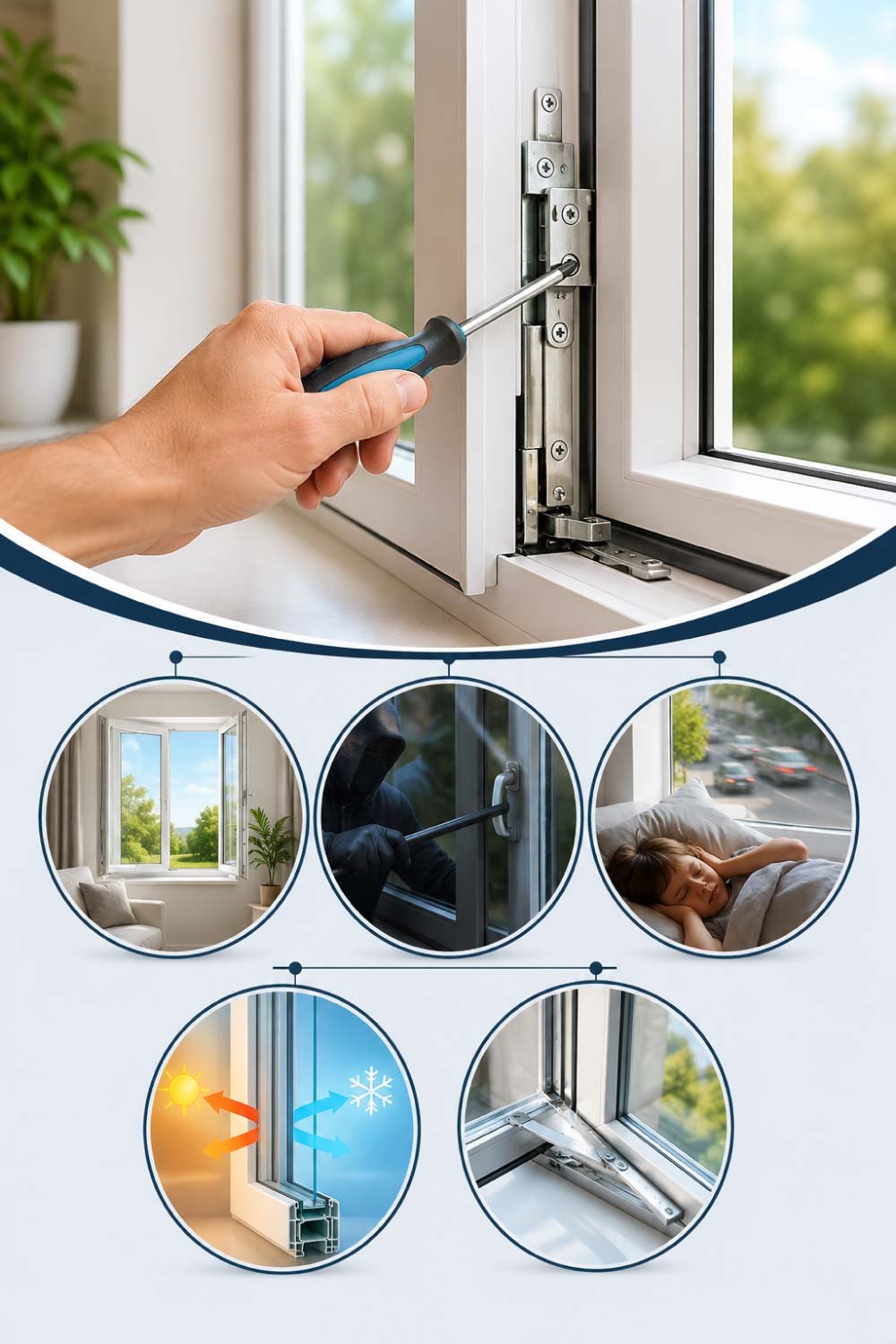
Loose window hinges may seem like a minor issue at first, but ignoring them can lead to bigger structural and functional problems over time. Proper maintenance improves comfort, safety, and energy efficiency in your home while preventing unnecessary damage.
Properly tightened hinges help:
Improve window lifespan
Enhance home security
Reduce noise and vibration
Improve insulation and energy efficiency
Ensure smooth daily use
A few minutes of maintenance can save you from costly repairs later.
Final Thoughts
Loose window hinges are a common household issue, but they are also one of the easiest to fix. With basic tools and a little patience, you can restore your window’s smooth movement in no time.
Whether it’s simply tightening screws, filling a stripped hole, or replacing old hardware, each step brings your window back to proper working condition.
Regular maintenance is the real key. A quick check every few months keeps your windows strong, stable, and hassle-free for years.
If your window is starting to feel loose today, don’t wait—it’s a small fix that makes a big difference.
Also Read: