
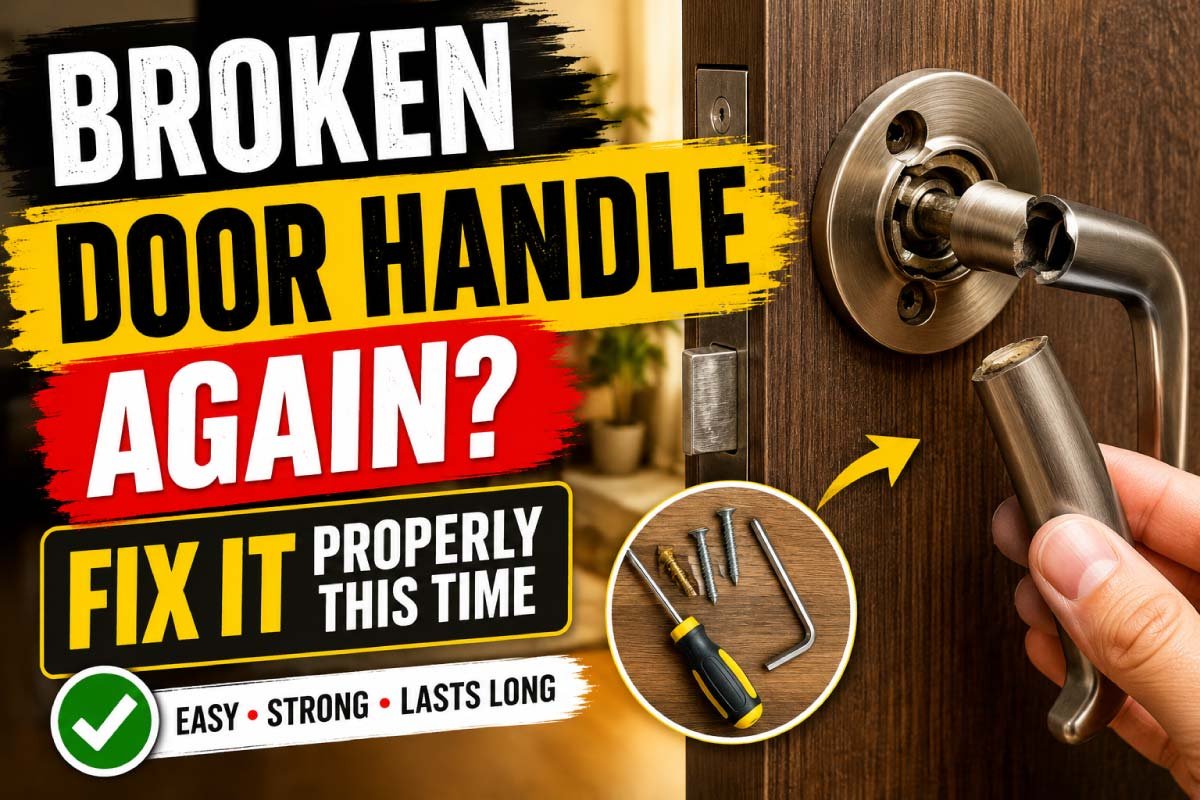
A broken door handle is one of those small household problems that somehow turns into a daily frustration. At first, it might just feel loose. Then it starts sticking. Eventually, it stops working when you need it most—like when your hands are full or you’re in a hurry. And before you know it, you’re either yanking the door, using unnecessary force, or avoiding it altogether.
The good news is that a broken or faulty door handle is usually not a complicated problem. In most cases, it doesn’t require a full replacement or expensive repair work. What it does require is understanding the cause and fixing it properly instead of doing a temporary patch that fails again in a few days.
This guide walks you through why door handles keep breaking, how to fix them correctly, and how to make sure you don’t face the same issue repeatedly.
Table of Contents
ToggleWhy Door Handles Keep Breaking
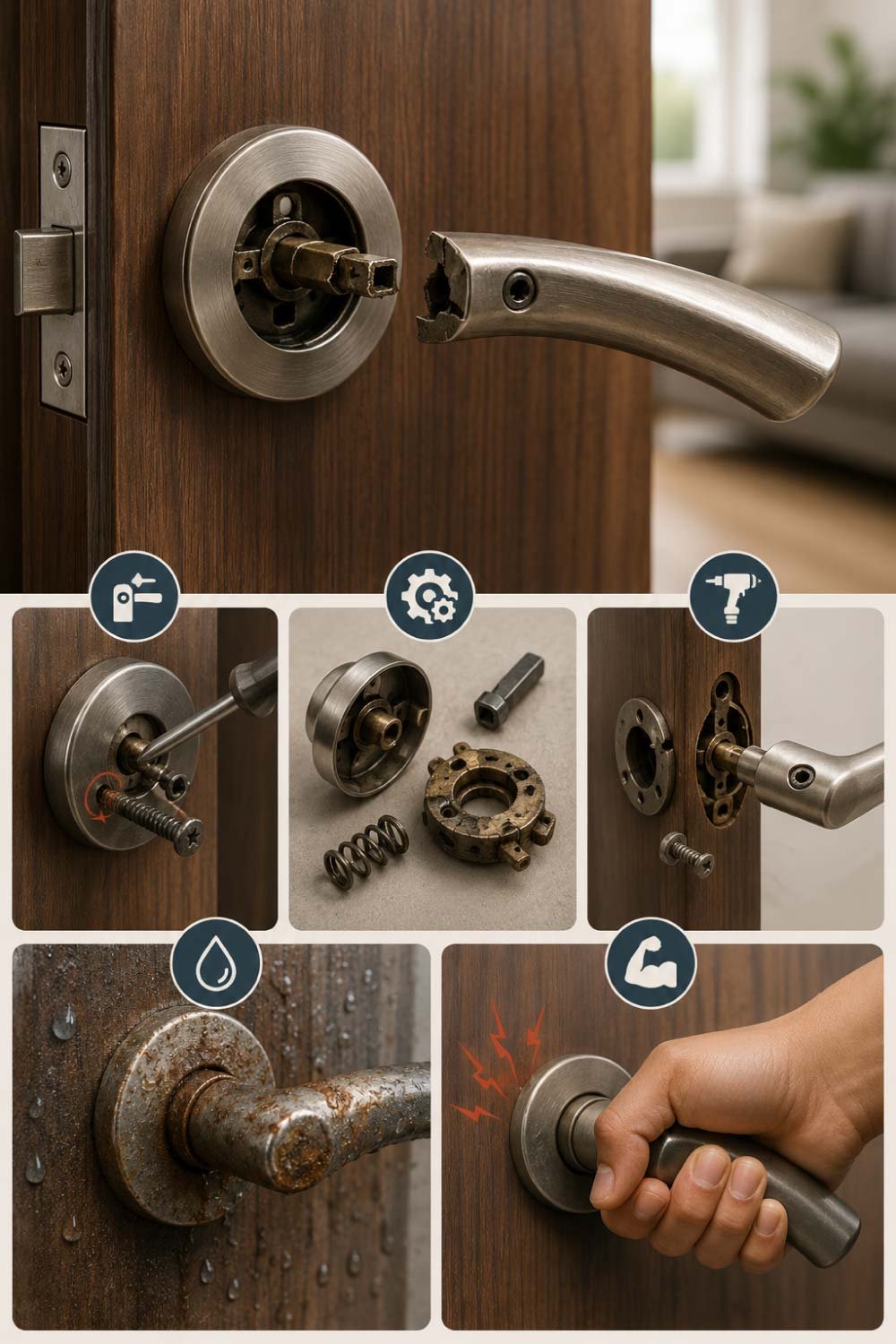
Door handles are used countless times every day, which slowly puts stress on their internal and external parts. Over time, even good-quality handles can start failing due to small unnoticed issues building up. Understanding these common causes helps you prevent repeated damage and fix problems more effectively instead of just replacing parts again and again.
Common reasons behind door handle failure:
- Daily usage creates constant pressure on screws and joints
- Internal parts slowly wear down with time
- Poor installation leads to early damage
- Dust, rust, and moisture affect smooth movement
- Excess force weakens the mechanism
Before jumping into repair mode, it’s important to understand what actually goes wrong. A door handle doesn’t usually break without reason.
1. Loose Screws Over Time
Loose screws are one of the simplest yet most overlooked causes of door handle failure. Constant opening and closing creates small vibrations that gradually weaken screw tightness. If ignored, the handle starts shaking, misaligning, and eventually stops working properly, making everyday use frustrating and unsafe over time.
- Frequent door movement causes gradual loosening
- Vibrations reduce grip strength of screws
- Handle becomes shaky and unstable
- Misalignment leads to functional failure
The most common issue is simply wear and tear. Every time you open or close a door, tiny vibrations occur. Over weeks and months, screws slowly loosen. Once they loosen enough, the handle becomes wobbly and eventually stops working properly.
2. Worn Internal Mechanism
Inside every door handle is a small but important mechanism that controls locking and opening. With continuous use, these internal springs and latch components weaken. Once worn out, the handle may still turn but fail to operate the latch, making the door difficult or impossible to open properly.
- Internal spring loses strength over time
- Latch mechanism becomes less responsive
- Handle rotates without opening door
- Gradual wear leads to complete failure
Inside most door handles is a small latch mechanism. With time, this internal spring or latch system weakens. When that happens, the handle may turn but not open the door.
3. Poor Installation
Incorrect installation is a major reason door handles fail early. If screws are misaligned or the handle is not fitted properly, it creates uneven pressure on components. Over time, this weak fitting leads to repeated loosening, poor performance, and frequent breakdowns even if the handle is new.
- Misaligned screws reduce stability
- Poor fitting causes uneven pressure
- Incorrect sizing leads to early damage
- Weak installation shortens lifespan
If the handle was not installed properly in the first place, it will never function reliably. Misaligned screws, poorly fitted plates, or incorrect sizing can lead to repeated failure.
4. Rust or Dirt Build-Up
Moisture and dust are silent enemies of door handles, especially in bathrooms or outdoor areas. Over time, they accumulate inside the mechanism, causing stiffness and resistance. This build-up prevents smooth movement, eventually leading to jamming or complete failure of the handle system.
- Moisture leads to rust formation
- Dust blocks internal movement
- Stiffness increases over time
- Mechanism may jam completely
Moisture and dust can collect inside the mechanism, especially in bathroom or outdoor doors. This causes stiffness, jamming, or complete failure of movement.
5. Excess Force Usage
Using excessive force on a door handle can cause serious internal damage. When a handle is stuck, forcing it instead of fixing the root issue bends internal parts and weakens the latch system. Over time, this repeated stress leads to permanent breakage or malfunction.
- Force bends internal metal parts
- Latch system gets damaged easily
- Increases long-term wear and tear
- Leads to sudden breakdown
Let’s be honest—most people don’t think twice before forcing a stubborn handle. But repeated force can bend internal parts or damage the latch completely.
Step-by-Step: How to Fix a Broken Door Handle Properly
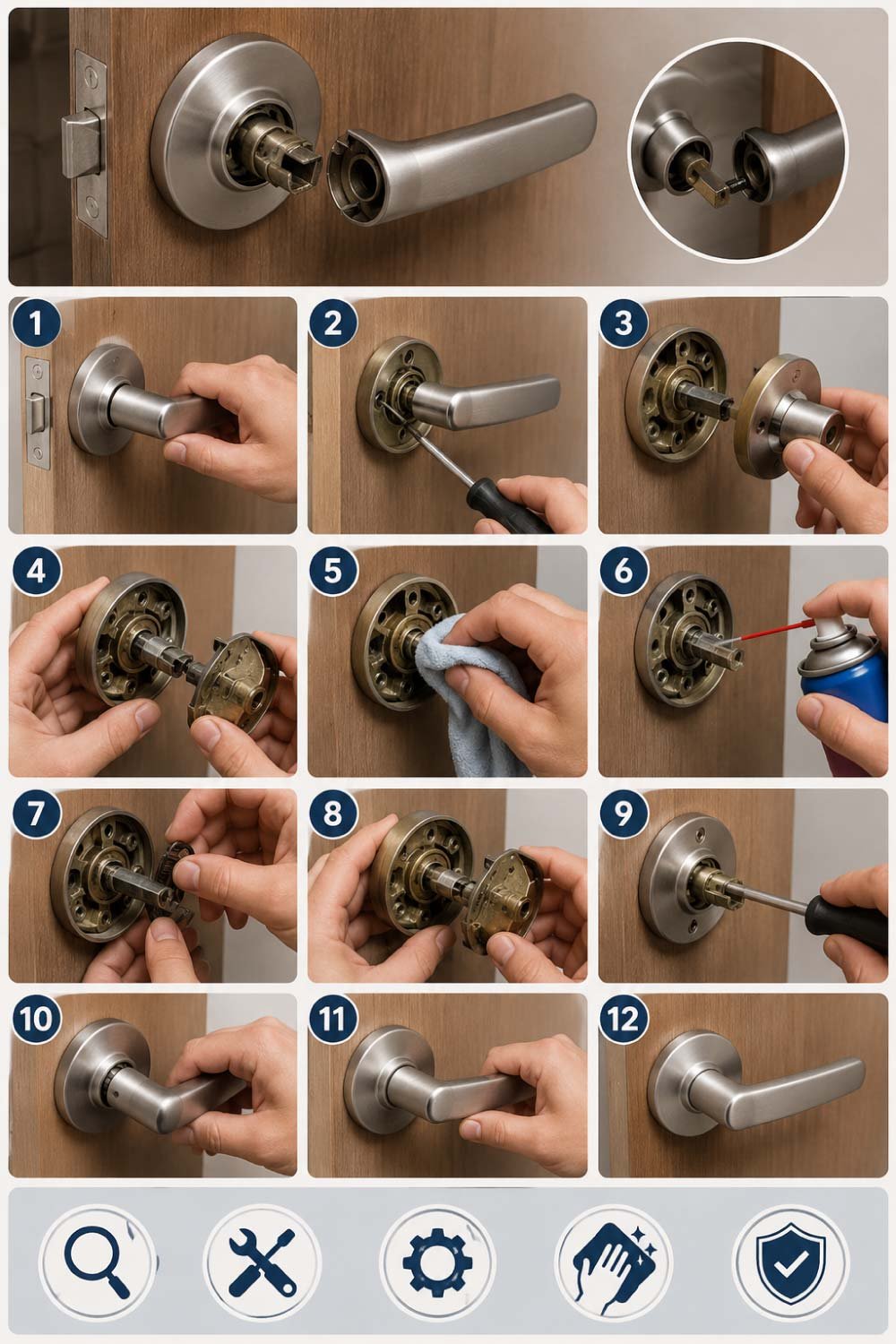
Repairing a door handle correctly requires patience and proper inspection. Instead of guessing the issue, a step-by-step approach helps you identify the exact problem and fix it efficiently. This method not only restores function but also improves durability, saving you from repeated repairs in the future.
Key things to focus on during repair:
- Proper diagnosis before starting repair
- Tightening and securing loose components
- Inspecting internal parts carefully
- Cleaning and maintaining mechanism
- Replacing damaged components when needed
Now that you know what causes the issue, let’s move on to fixing it the right way. Follow these steps carefully for a long-lasting solution.
Step 1: Identify the Exact Problem
Before repairing, it is important to understand what exactly is wrong with the handle. Careful observation helps you avoid unnecessary work and focus on the real issue. A quick check of movement, looseness, or sticking behavior will guide you toward the correct repair method.
- Check if handle is loose or firm
- Test if it turns without opening door
- Observe stiffness or resistance
- Identify if it is completely detached
Start by testing the handle gently.
Does it turn but not open the door?
Is it loose or wobbly?
Is it stuck or hard to move?
Or has it completely come off?
Each symptom points to a different issue. For example, a loose handle usually means screw problems, while a non-working turn suggests internal latch failure.
Taking a minute to identify the issue saves time later.
Step 2: Tighten All Visible Screws
Loose screws are often the easiest problem to fix. In many cases, simply tightening them restores full function. However, it’s important to tighten carefully to avoid damaging the threads or overtightening, which can create new issues later.
- Tighten side handle screws evenly
- Secure latch plate screws properly
- Avoid over-tightening
- Test stability after tightening
In many cases, this alone solves the problem.
Use a screwdriver to tighten:
Screws on both sides of the handle
Screws on the latch plate at the edge of the door
Make sure not to overtighten, as that can strip the screws. Just tighten until firm and stable.
If the handle becomes stable after this step, test it a few times before closing everything up.
Also Read:
Step 3: Remove the Handle for Inspection
If tightening does not solve the issue, removing the handle is necessary for deeper inspection. This allows you to see internal parts clearly and identify hidden damage or wear that is not visible from outside.
- Remove screws or hidden pins carefully
- Separate both handle sides
- Inspect spindle and latch condition
- Check for rust or breakage
If tightening doesn’t solve the issue, remove the handle completely.
Most door handles are held together with small screws or a hidden pin. Once removed, carefully separate both sides of the handle.
Now inspect:
The spindle (metal rod connecting both handles)
The latch mechanism inside the door
Any visible rust or broken parts
This step helps you clearly see whether repair or replacement is needed.
Step 4: Fix or Replace the Spindle
The spindle plays a key role in connecting both sides of the handle. If it becomes loose or damaged, the handle may rotate without operating the latch. Checking and replacing it when needed ensures smooth and reliable performance.
- Check spindle alignment and condition
- Tighten if slightly loose
- Replace if bent or damaged
- Ensure proper fitting before reassembly
The spindle is a small but important part. It connects both handles and rotates the latch.
If it’s loose, bent, or worn out:
Try tightening it back into position
If damaged, replace it with a new one
A faulty spindle often causes the handle to turn without opening the door.
Step 5: Clean the Internal Mechanism
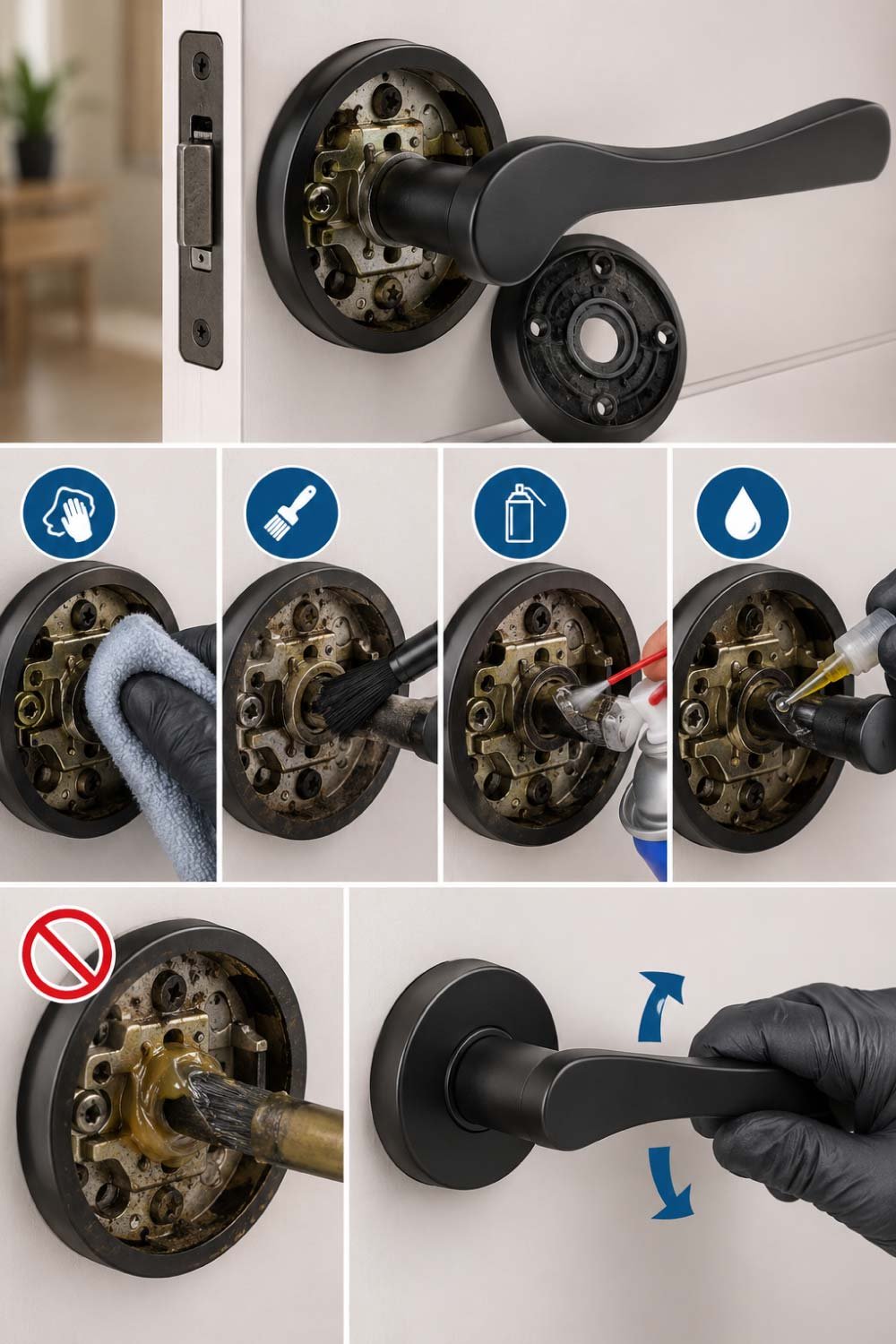
Cleaning the internal mechanism is essential when the handle becomes stiff or unresponsive. Dust, rust, and grime can block movement over time. A proper cleaning helps restore smooth operation and improves the lifespan of the entire handle system.
- Wipe visible dirt with cloth
- Use brush for tight areas
- Apply light lubricant carefully
- Avoid heavy grease buildup
If the handle feels stuck or stiff, dirt or rust might be the issue.
Use:
A dry cloth to wipe visible dirt
A brush to clean inside corners
A small amount of lubricant (like silicone spray or light machine oil)
Avoid using heavy grease because it can attract more dust over time.
Once cleaned, move the latch manually to ensure it moves smoothly.
Step 6: Repair or Replace the Latch
When the door handle still refuses to work properly after earlier fixes, the issue is usually inside the latch mechanism. The latch is responsible for locking and unlocking the door smoothly. If it becomes worn or damaged, simple tightening or cleaning will no longer be enough to restore proper function.
- Check if latch catches the strike plate properly
- Listen for clicking but no locking response
- Test if handle turns freely without resistance
- Inspect for internal spring or alignment damage
If the handle still doesn’t work properly, the problem is likely inside the latch mechanism.
Signs of a damaged latch:
Door doesn’t catch properly
Handle turns freely without resistance
You hear clicking but nothing happens
At this point, repairing may not last long. The better option is usually to replace the latch entirely.
Luckily, latch sets are inexpensive and widely available.
Step 7: Reassemble the Handle Properly
After completing repairs or replacing damaged parts, careful reassembly is very important. Even a small mistake in alignment can cause the handle to malfunction again. Proper fitting ensures smooth operation, stability, and long-term durability, so take your time during this final step.
- Align spindle correctly before fixing handles
- Ensure both sides sit tightly on the door
- Tighten screws evenly without overdoing it
- Test latch movement before closing door fully
Once repairs or replacements are done, reassemble everything carefully.
Make sure:
The spindle is aligned correctly
Both handle sides fit tightly
Screws are secure but not over-tightened
The latch moves smoothly before closing the door
Test the handle multiple times while the door is still open. This helps you avoid getting locked out due to incorrect installation.
Also Read:
How to Fix a Pipe Joint Leak: A Step-by-Step Homeowner Guide
Common Mistakes People Make (Avoid These)
Many door handle issues return again and again because of small but avoidable mistakes. These errors often lead to repeated breakdowns, unnecessary repairs, and wasted effort. Understanding them helps you fix the problem properly the first time and maintain your door handle for a much longer period.
- Quick fixes without proper inspection
- Ignoring early warning signs
- Applying excessive force during use
- Skipping regular maintenance steps
Many door handle problems come back because of simple mistakes.
1. Only tightening without checking internal parts
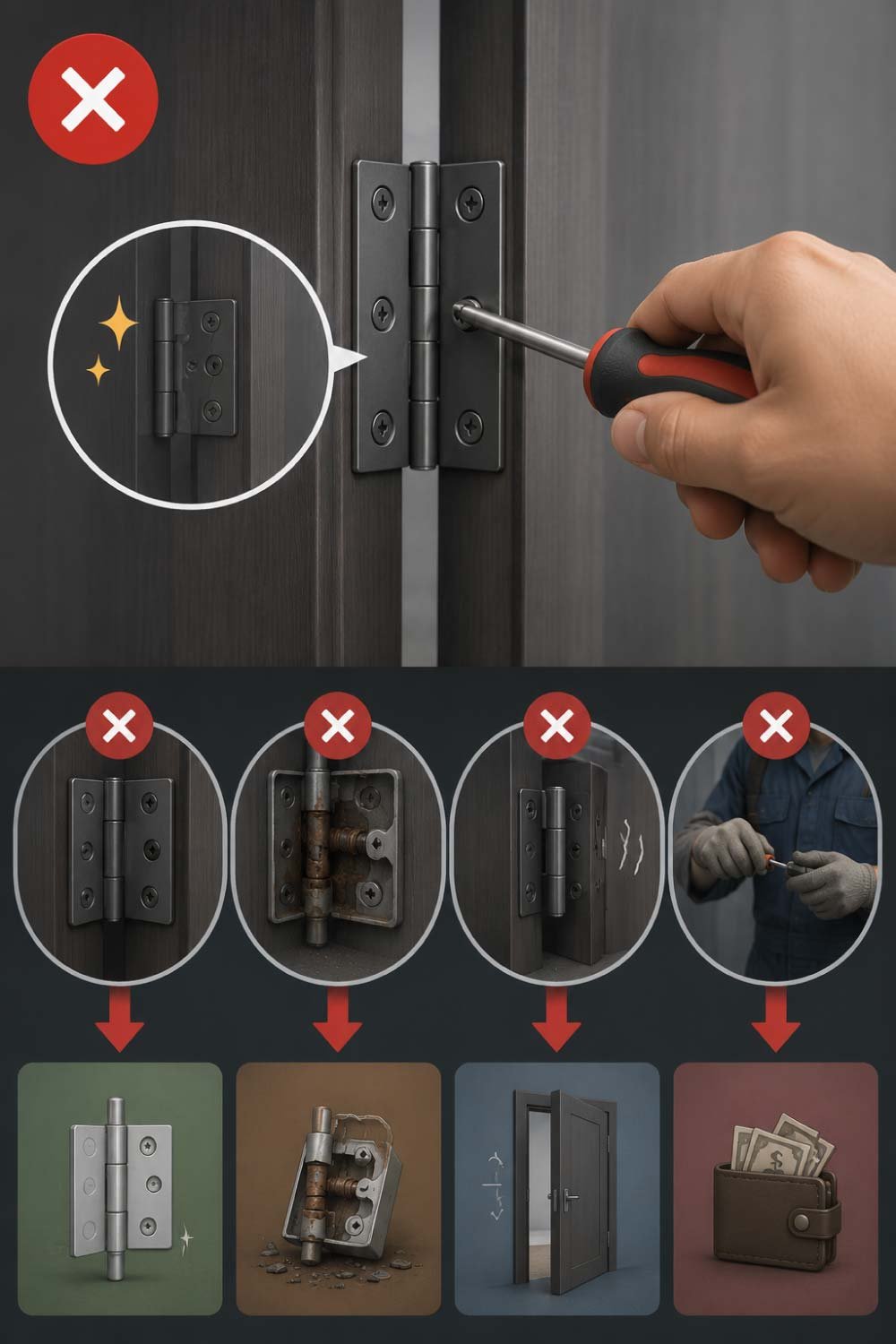
Many people assume tightening screws is enough, but this only fixes surface-level issues. If the internal mechanism is damaged, the problem will return quickly. Proper inspection is necessary to identify the root cause instead of repeatedly treating symptoms without a lasting solution.
- Fixes external issue only
- Internal damage remains untreated
- Problem returns quickly
- Leads to repeated repairs
This fixes symptoms, not the root cause.
2. Ignoring small looseness
A slightly loose handle may not seem serious, but it is often the first warning sign of a bigger problem. If ignored, it gradually worsens, leading to complete failure. Early attention can save you from costly repairs or full replacement later on.
- Small issue grows over time
- Increases risk of breakage
- Affects alignment gradually
- Leads to full failure
A slightly loose handle always becomes a broken handle later.
3. Using too much force
Forcing a stuck handle is one of the most damaging mistakes. Instead of solving the issue, it bends or breaks internal components. This often turns a simple repair into a complete replacement, increasing both effort and cost unnecessarily.
- Damages internal latch parts
- Bends metal components
- Makes repair harder
- Can cause permanent failure
Forcing a stuck handle usually damages the latch permanently.
4. Skipping lubrication
Lubrication is often ignored, but it plays a key role in smooth movement. Without it, friction increases inside the mechanism, causing stiffness and faster wear. Regular lubrication keeps the handle working efficiently and extends its overall lifespan significantly.
- Increases internal friction
- Causes stiffness over time
- Leads to early wear
- Reduces smooth performance
Dry mechanisms wear out faster and become noisy or stiff.
Also Read:
Home Water Leak Detection: How to Find Hidden Leaks Before They Cause Serious Damage
How to Make Your Door Handle Last Longer
Once your door handle is fixed, the next goal is keeping it in good condition for as long as possible. With a few simple habits and regular care, you can significantly extend its lifespan and avoid frequent repairs or replacements.
- Perform regular check-ups and tightening
- Use proper cleaning and lubrication
- Avoid rough or forced handling
- Protect from moisture and dust buildup
Fixing the problem is one thing—preventing it from coming back is even better.
1. Regular Maintenance
Routine maintenance helps catch small issues before they turn into major problems. Checking screws, alignment, and movement every few months ensures the handle stays stable and functional. This simple habit reduces unexpected breakdowns and keeps everything working smoothly.
- Check screws periodically
- Ensure proper alignment
- Identify early signs of wear
- Prevent sudden failure
Every few months, check for looseness and tighten screws if needed.
2. Light Lubrication
Lubrication reduces friction inside the mechanism and keeps movement smooth. A small amount applied once or twice a year is usually enough. It also helps prevent rust buildup and ensures the handle operates quietly and efficiently over time.
- Reduces friction inside parts
- Prevents rust formation
- Ensures smooth movement
- Improves durability
Apply a small amount of lubricant once or twice a year to keep movement smooth.
3. Gentle Usage
How you use the handle daily greatly affects its lifespan. Avoid hanging heavy items or pulling it aggressively. Gentle use prevents unnecessary stress on internal components and keeps the handle functioning properly for a longer time.
- Avoid excessive pulling force
- Do not hang heavy items
- Reduce strain on mechanism
- Extend handle life
Avoid hanging heavy items on door handles or using excessive force.
4. Keep It Clean
Dust, dirt, and moisture slowly damage door handles over time. Regular cleaning prevents buildup that can cause stiffness or rust. This is especially important in kitchens and bathrooms where humidity levels are higher.
- Wipe handles regularly
- Prevent dust buildup
- Reduce moisture damage
- Maintain smooth operation
Dust and moisture are silent enemies. Wipe handles regularly, especially in bathrooms and kitchens.
5. Replace Early Signs of Damage
Small issues like slight sticking or wobbling should never be ignored. These are early warnings that something is wrong inside. Fixing or replacing parts early prevents complete breakdown and saves both time and money in the long run.
- Address issues early
- Prevent major breakdowns
- Reduce repair costs
- Improve long-term reliability
If you notice repeated sticking or wobbling, fix it early instead of waiting for complete failure.
When You Should Replace the Entire Handle
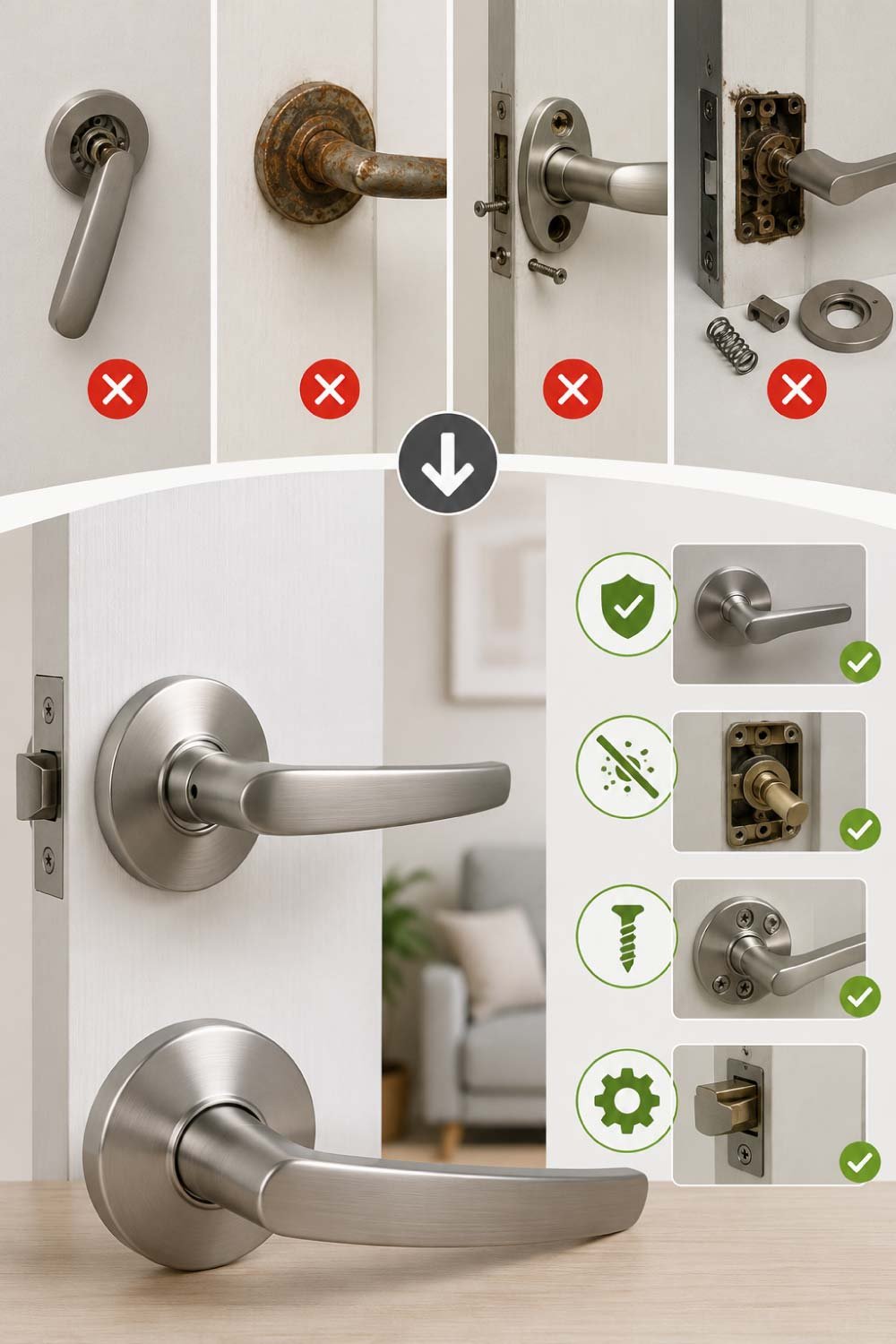
Sometimes, repairing is no longer practical, and replacement becomes the smarter choice. Constant breakdowns or severe internal damage indicate that the handle has reached the end of its usable life. Replacing it ensures safety, reliability, and long-term convenience.
- Frequent repeated failures
- Severe rust or corrosion
- Loose screw fittings no longer hold
- Internal mechanism fully damaged
Sometimes repair isn’t enough. Consider full replacement if:
The handle breaks repeatedly
Internal parts are heavily rusted
Screws no longer tighten properly
The latch system is outdated or damaged beyond repair
A new handle is often more cost-effective than constant repairs.
Final Thoughts
A broken door handle may seem like a small inconvenience, but it quickly becomes a daily annoyance when ignored. The key to fixing it properly is not just tightening screws—it’s understanding the real cause behind the problem.
Most issues can be solved with simple tools, a bit of cleaning, and careful reassembly. But the real difference comes from doing it properly once, instead of repeating quick fixes that fail again.
When repaired correctly, a door handle should feel smooth, solid, and reliable every single time you use it. And with a little maintenance, you can make sure it stays that way for years.
Also Read:
How to Fix Noisy Pipes at Home: Causes, Solutions, and Prevention