
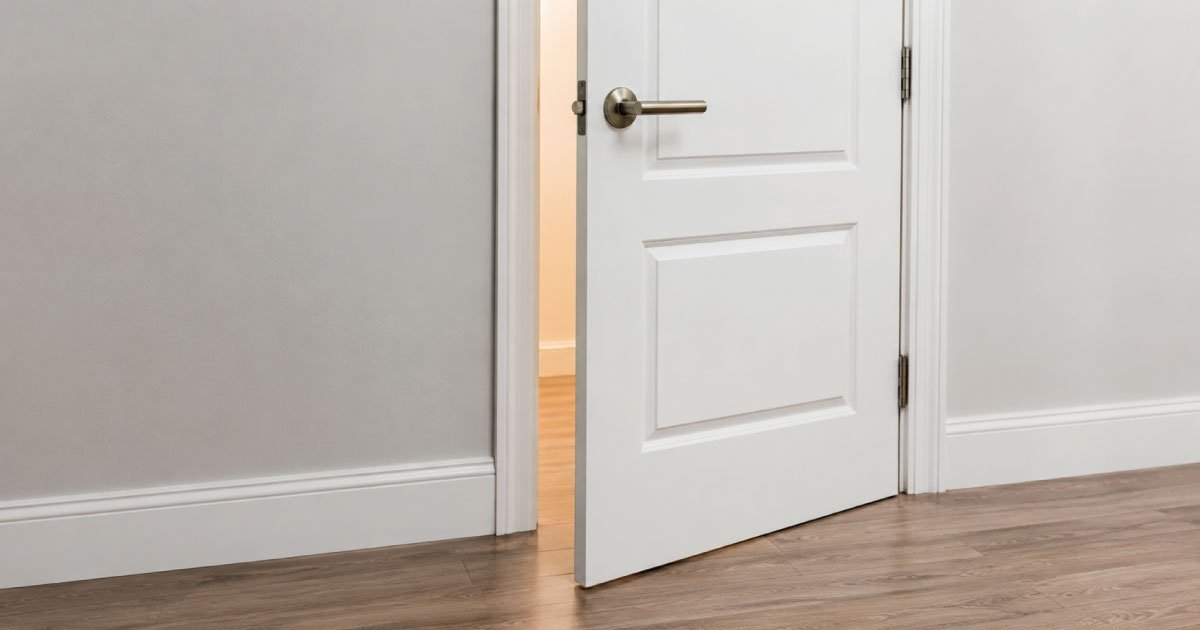
A door that won’t close properly is one of those small household problems that can quickly become annoying. It might rub against the frame, bounce open, refuse to latch, or require a strong push just to shut. While it can feel like a serious carpentry issue, most door problems are actually caused by a few common and fixable issues—such as loose hinges, misalignment, humidity changes, or a faulty strike plate.
This guide walks you through how to diagnose and fix a door that won’t close properly using simple tools and practical steps. You don’t need to be a professional carpenter—just a bit of patience and a basic toolkit.
6. Look for Obstructions
Before assuming a mechanical issue, it’s important to check for simple physical obstructions. Many door problems are caused by small external factors that are easy to overlook but can significantly affect door movement.
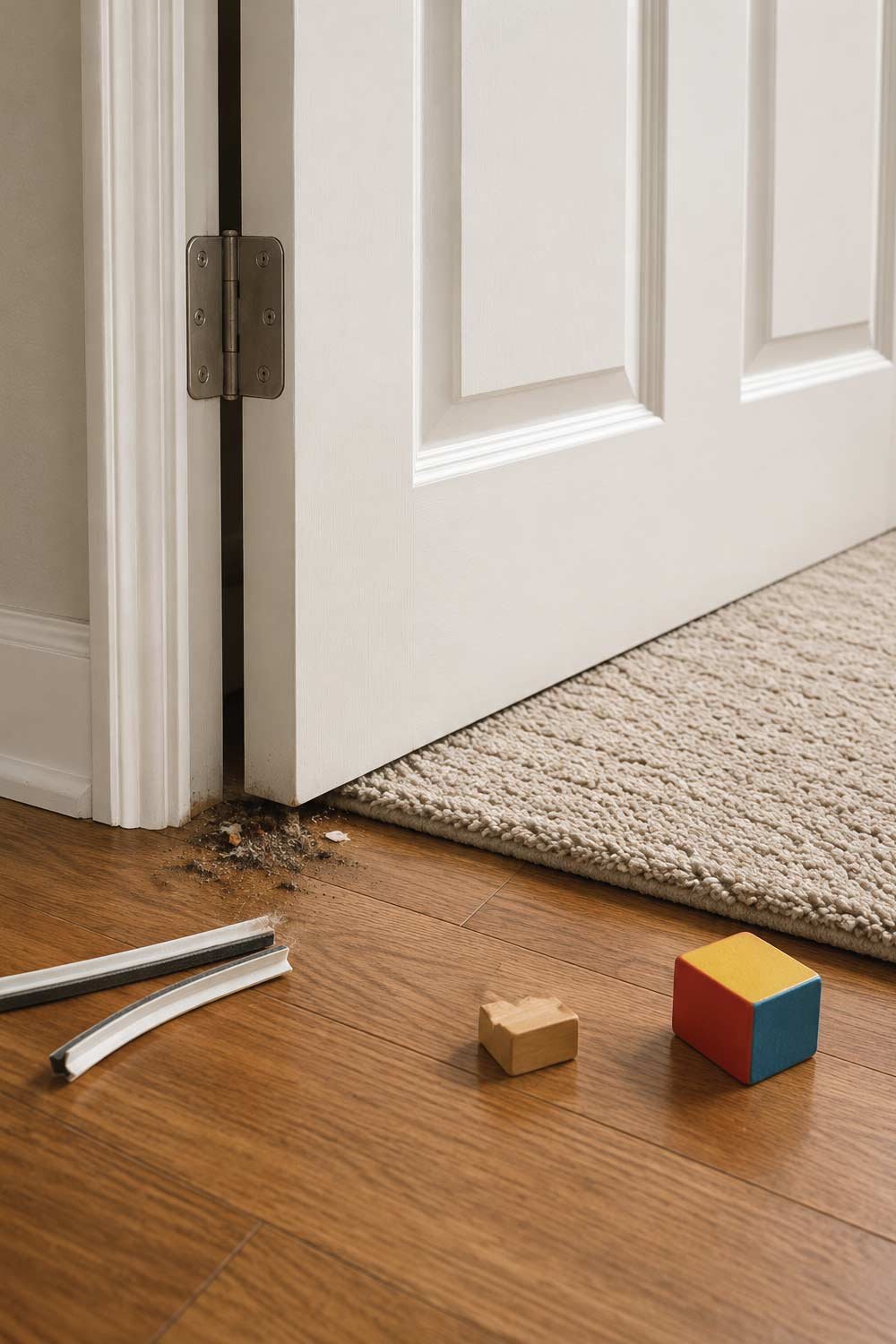
Check For
A quick inspection of the surrounding area can reveal hidden causes. Even minor blockages can prevent the door from closing or opening properly.
- Dirt or debris in the hinge area.
- Carpet or rug blocking the bottom of the door.
- Loose weather stripping.
- Objects stuck near the door frame.
Even a small obstruction can prevent full closure.
Fix
Removing obstructions is often the quickest solution. Cleaning and clearing the area ensures smooth, uninterrupted door movement.
Clean the area thoroughly and remove anything interfering with movement.
7. Fix a Sagging Door
A sagging door occurs when one side drops lower than the other, usually on the latch side. This misalignment makes closing difficult and can cause rubbing against the floor or frame.
Signs
Identifying sagging early helps prevent further wear and damage. These signs clearly indicate that the door is no longer properly supported.
- The door rubs the floor.
- The top corner doesn’t align with the frame.
- You can visibly see the tilt when the door is open.
Fix
Correcting a sagging door involves reinforcing hinge support and adjusting alignment. Even small improvements can restore smooth operation.
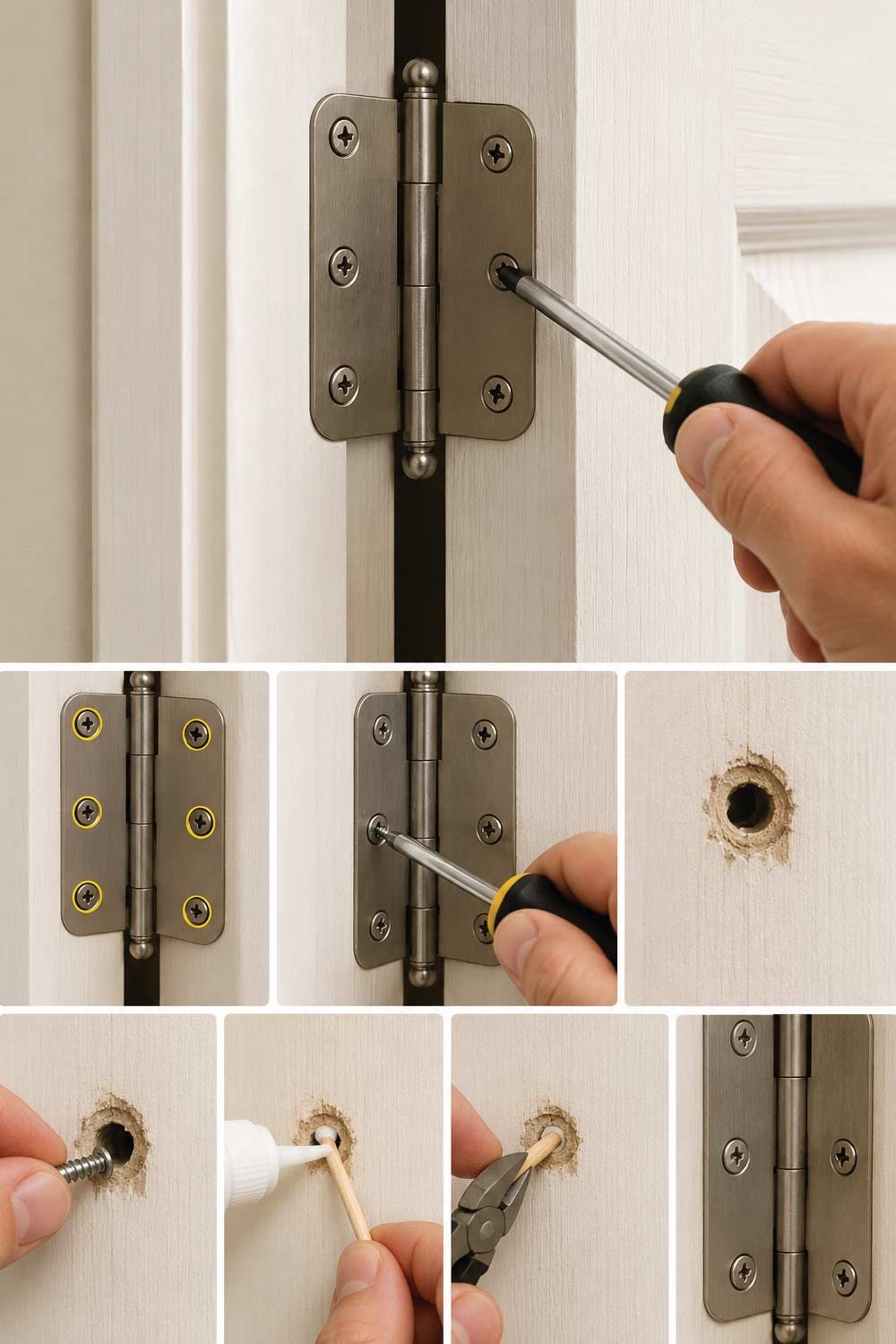
Step 1: Tighten Hinges
Start with the simplest fix by securing all hinge screws. This often reduces sagging immediately.
Start with all hinge screws.
Step 2: Replace One Hinge Screw with a Longer Screw
Using a longer screw improves grip and pulls the door back into proper position. This method is highly effective for persistent sagging.
- Remove the top hinge screw closest to the door stop.
- Replace it with a 2–3 inch screw.
- This pulls the door frame tighter and lifts the door slightly.
This is one of the most effective and underrated fixes.
Also Read:
8. Fix the Door Latch Itself
Sometimes the issue lies within the latch mechanism rather than the door or hinges. A faulty latch can prevent proper opening or closing even if everything else is aligned.
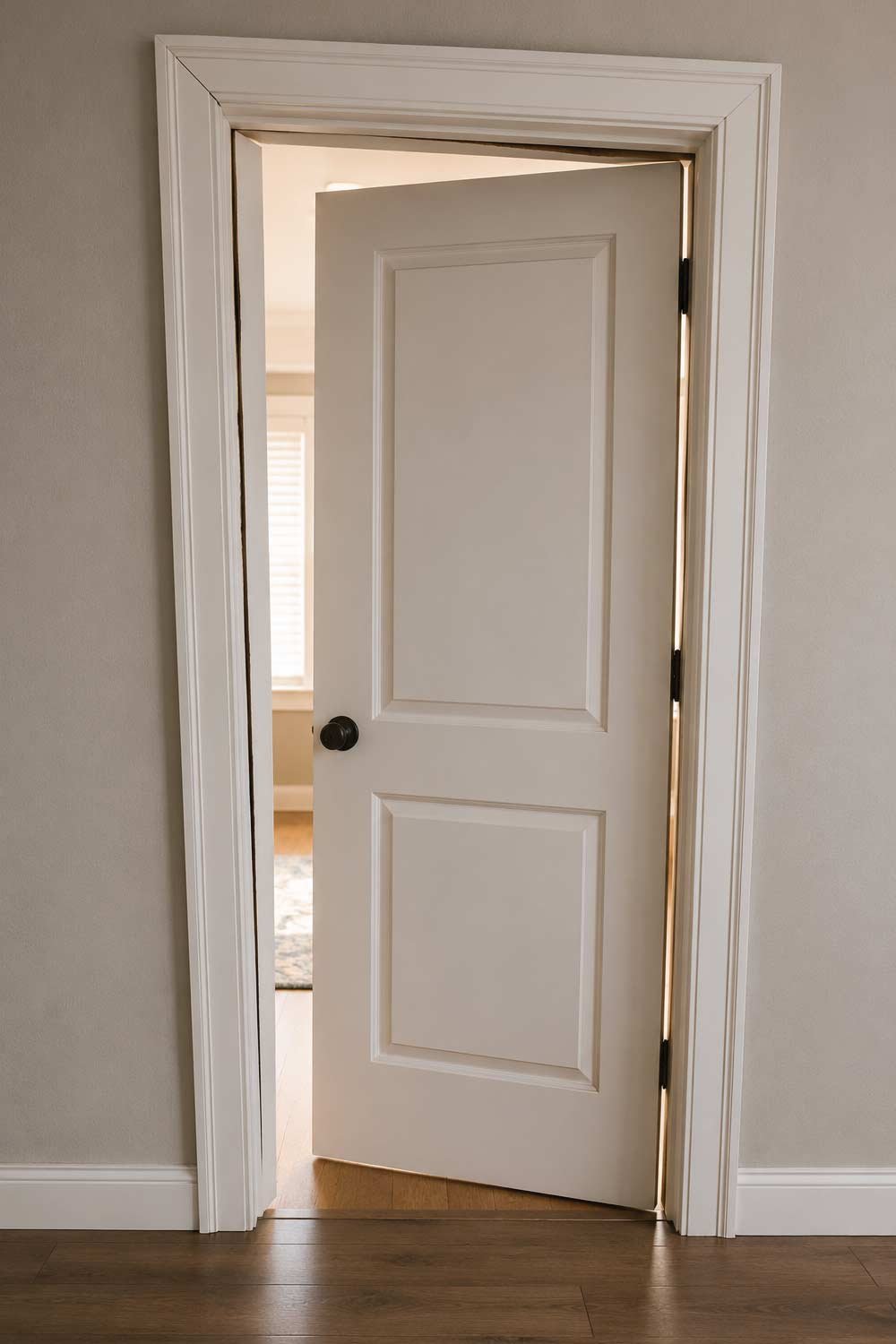
Signs
Recognizing latch-related problems helps you focus on the correct component instead of adjusting the entire door unnecessarily.
- Handle turns but latch doesn’t retract properly.
- Latch is stuck or sluggish.
Fix
Cleaning and lubricating the latch can restore its function. In more severe cases, replacement may be necessary.
- Apply lubricant (like silicone spray or graphite powder).
- Remove handle and clean internal mechanism if necessary.
- Replace latch if it is worn out.
Avoid using heavy grease as it attracts dust.
9. Check the Door Frame
If all other fixes fail, the door frame itself may be the root cause. Structural issues with the frame can affect multiple aspects of door alignment and movement.
Signs
Frame problems often present multiple symptoms at once. Observing these carefully helps confirm whether deeper repair is needed.
- Visible gaps between door and frame.
- Frame looks tilted or uneven.
- Multiple doors in the house have similar issues.
Fix Options
Depending on severity, solutions can range from simple adjustments to professional repairs. Proper assessment is key before taking action.
- Minor frame issues can sometimes be corrected by adjusting hinges.
- Severe warping may require professional carpentry work.
- In some cases, reinstallation of the frame is necessary.
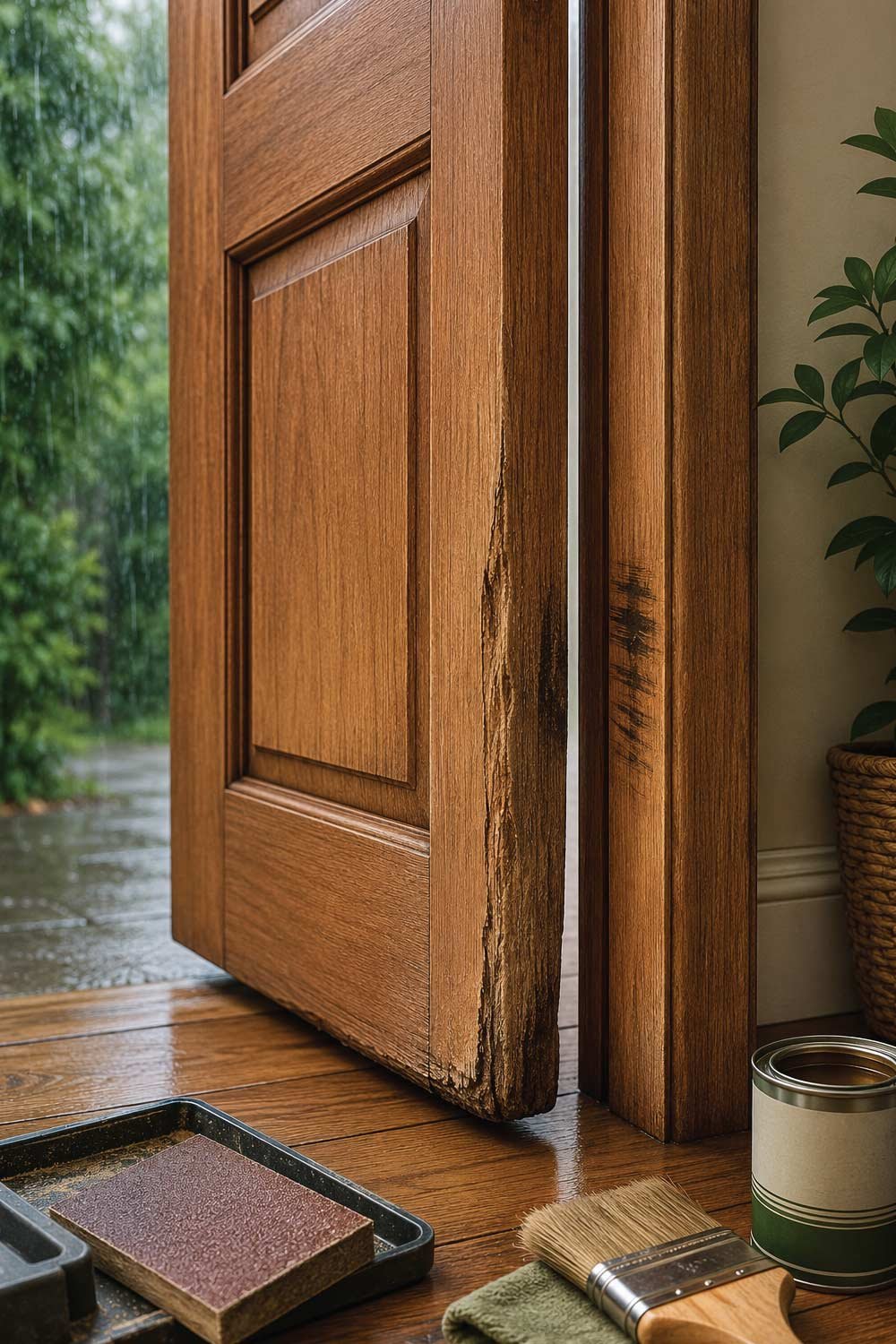
10. Seasonal Expansion Awareness
Wooden doors naturally expand and contract with seasonal changes. Understanding this behavior helps you manage temporary issues without overcorrecting or damaging the door.
What to Do
Adapting to seasonal changes ensures your door continues to function properly throughout the year. Small adjustments can make a big difference.
- In humid seasons, expect slight swelling.
- Keep edges lightly sanded (do not overdo it).
- Maintain consistent indoor airflow.
Wood naturally expands and contracts—this is normal behavior, not damage.
Also Read:
11. Prevent Future Door Problems
Once your door is functioning properly, consistent maintenance helps prevent future issues. Simple habits can extend the life of both the door and its hardware.
Maintenance Tips
Regular upkeep reduces wear and minimizes the need for repairs. These small actions help maintain smooth and reliable door operation.
- Tighten hinge screws every few months.
- Oil hinges once or twice a year.
- Repaint or reseal wooden doors periodically.
- Avoid slamming the door.
- Check alignment during seasonal changes.
Small maintenance steps prevent bigger repairs later.
Conclusion
A door that won’t close properly is usually caused by simple mechanical or environmental issues—loose hinges, misalignment, swelling wood, or strike plate problems. The good news is that most of these can be fixed with basic tools like a screwdriver, sandpaper, and a bit of patience.
The key is to diagnose correctly before fixing. Start with the easiest solutions (tightening hinges and checking obstructions) and move toward more advanced adjustments (shimming, sanding, or realigning hardware).
With the steps in this guide, you can usually restore smooth door operation in under an hour without professional help.