
The barbering industry has seen a resurgence in recent years. A well-run barber shop not only provides grooming services but also creates a community space for customers to relax and connect.
Starting a barber shop can be lucrative, but it requires careful planning, investment, and business acumen. This guide walks you through everything you need to know to launch a successful barber shop business.
1. Understand the Barber Shop Industry
Before starting, it’s crucial to research the barber shop industry and understand current trends.
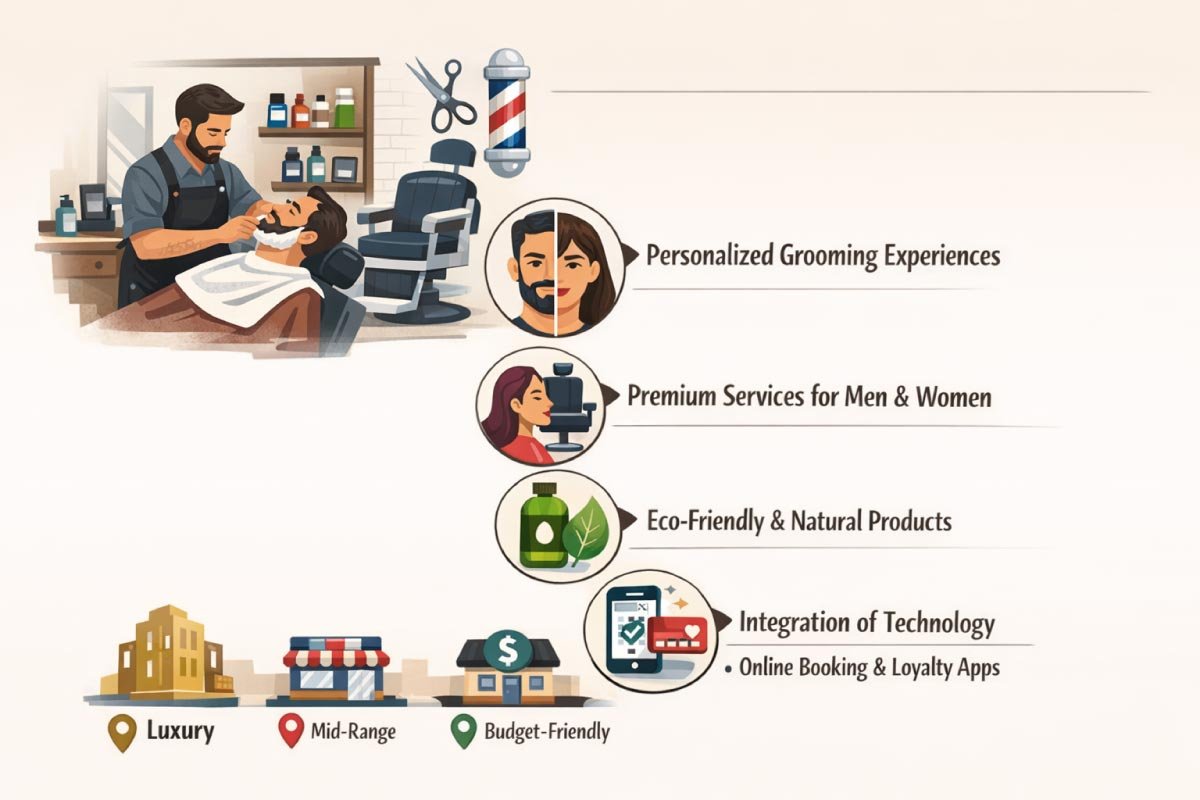
The modern barber shop combines traditional grooming services with an enhanced customer experience,
often offering specialty haircuts, beard trims, hot towel shaves, and grooming products for sale.
Key Trends in Barbering:
-
Personalized grooming experiences
-
Premium services for men and women
-
Eco-friendly and natural products
-
Integration of technology (online booking, loyalty apps)
Understanding the market helps you identify the kind of barber shop you want to create—luxury, mid-range, or budget-friendly—and what your target audience expects.
2. Conduct Market Research
Conducting market research is essential for understanding customer preferences, local demand, and competitor offerings in the barber shop industry.
Insights gained help identify service gaps, set competitive pricing, and tailor marketing strategies. Effective research ensures your barber shop meets client needs and is positioned for sustainable growth and success.
-
Who is my target customer?
-
What are competitors offering?
-
What are the pricing trends in my area?
A good starting point is to create a simple market research table to visualize opportunities:
| Aspect | Details | Notes |
|---|---|---|
| Target Demographic | Men aged 18-45, Professionals | Focus on style-conscious clients |
| Competitors | 5 local barber shops within 5 km | Assess pricing, service, and popularity |
| Service Gaps | Few shops offer beard care & grooming products | Opportunity for niche services |
| Pricing Trend | $10-$30 per haircut | Adjust pricing based on target audience |
3. Create a Business Plan
A business plan is your roadmap. It outlines your vision, target market, services, operational strategies, and financial projections.
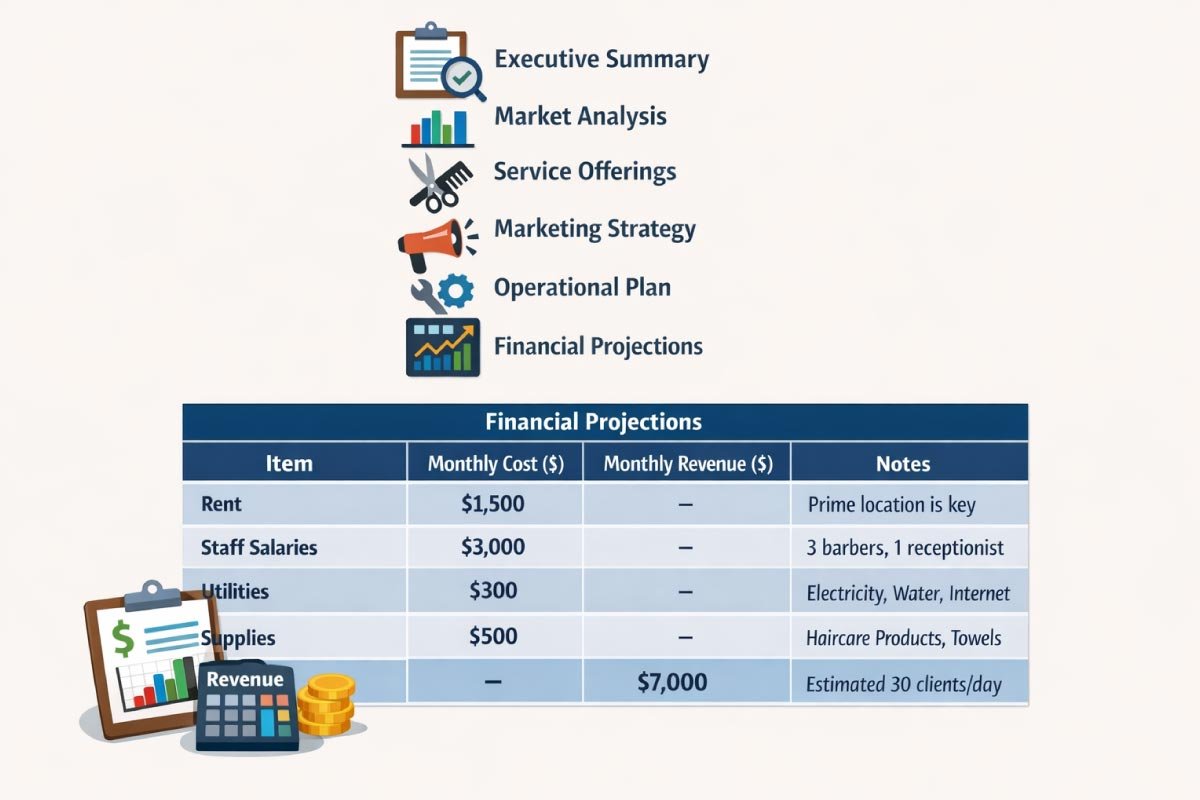
A solid business plan also helps when applying for loans or attracting investors.
Key Components of a Barber Shop Business Plan:
-
Executive Summary
-
Market Analysis
-
Service Offerings
-
Marketing Strategy
-
Operational Plan
-
Financial Projections
A financial projection table can help you forecast revenue and expenses:
| Item | Monthly Cost ($) | Monthly Revenue ($) | Notes |
|---|---|---|---|
| Rent | 1,500 | – | Prime location is key |
| Staff Salaries | 3,000 | – | 3 barbers, 1 receptionist |
| Utilities | 300 | – | Electricity, water, internet |
| Supplies | 500 | – | Haircare products, towels, chairs |
| Revenue | – | 7,000 | Estimated 30 clients/day |
Also Read:
4. Choose the Right Location
Choosing the right location is critical for the success of a barber shop. A strategic location with high visibility, easy accessibility, and proximity to your target clientele attracts more customers.
Considering foot traffic, competition, and neighborhood demographics helps ensure steady business growth and long-term profitability.
-
High Foot Traffic: Shopping streets, malls, or near offices.
-
Visibility: Easy to find, good signage.
-
Accessibility: Parking, public transportation, and safety.
-
Competition: Avoid areas saturated with similar shops unless you have a unique offering.
Location Analysis Table:
| Location | Foot Traffic | Rent ($/month) | Competitor Density | Suitability |
|---|---|---|---|---|
| Downtown Street | High | 2,000 | Medium | Excellent |
| Suburban Mall | Medium | 1,200 | Low | Good |
| Residential Area | Low | 800 | Low | Moderate |
| Office Complex | Medium | 1,500 | High | Fair |
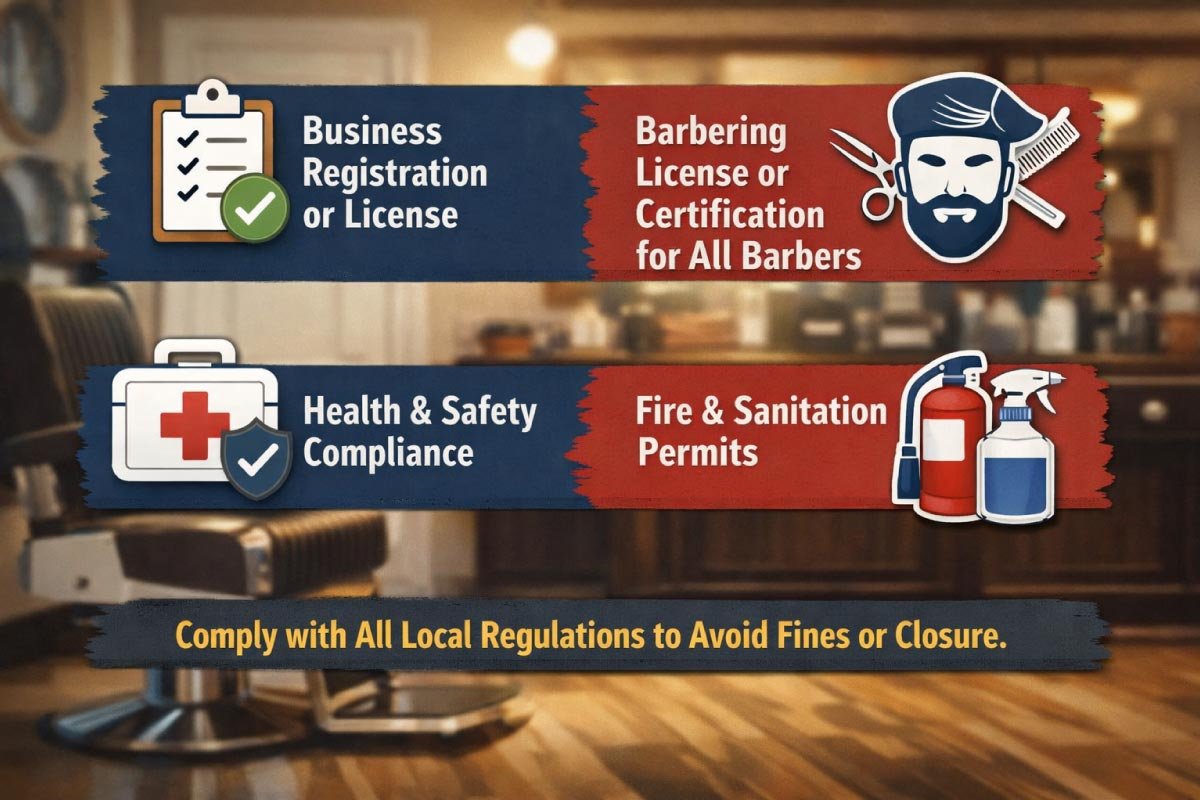
5. Legal Requirements & Licenses
-
Business registration or license
-
Barbering license or certification for all barbers
-
Health and safety compliance
-
Fire and sanitation permits
Ensure you comply with all local regulations to avoid fines or closure.
Also Read:
6. Set Up Your Barber Shop
Setting up your barber shop requires careful planning and organization. This includes arranging workstations, purchasing quality equipment, creating a comfortable waiting area, and ensuring a clean, welcoming environment.
A well-designed setup enhances workflow, improves customer experience, and lays the foundation for a professional and successful barber shop.
Key Setup Elements:
-
Barber chairs and mirrors
-
Waiting area with comfortable seating
-
Reception and point-of-sale system
-
Washing stations
-
Storage for tools, products, and towels
Setup Cost Table (Estimate):
| Item | Quantity | Cost ($) | Notes |
|---|---|---|---|
| Barber Chairs | 3 | 1,200 | Comfortable and durable |
| Mirrors | 3 | 300 | Large wall-mounted |
| Waiting Area Furniture | 1 set | 400 | Sofa + coffee table |
| Reception Desk & POS | 1 | 500 | For booking & payments |
| Haircare Tools & Supplies | – | 600 | Clippers, scissors, products |
Also Read:
7. Hire Skilled Staff
A barber shop is only as good as its barbers. Hire skilled and certified barbers who can provide high-quality haircuts and grooming services.
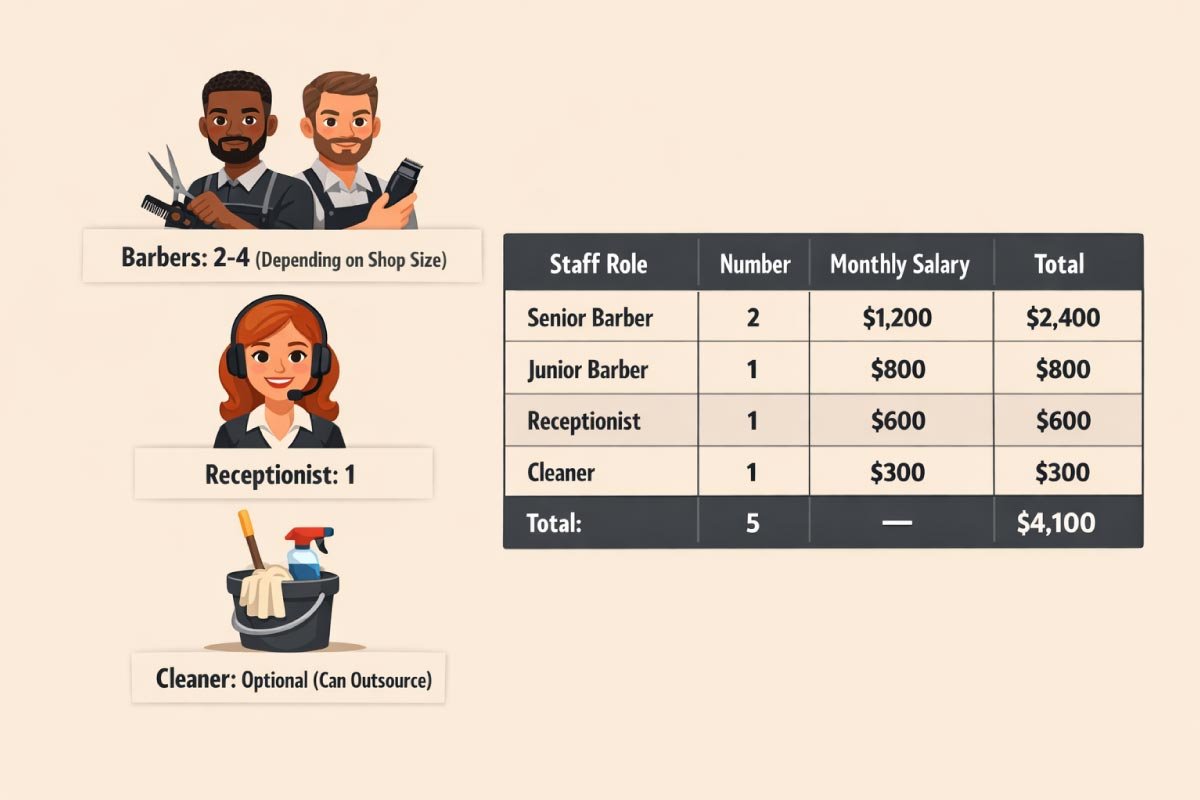
Additionally, a friendly receptionist enhances customer experience.
Staffing Recommendations:
-
Barbers: 2-4 depending on shop size
-
Receptionist: 1
-
Cleaner: Optional, can outsource
Staffing Cost Table:
| Staff Role | Number | Monthly Salary ($) | Total |
|---|---|---|---|
| Senior Barber | 2 | 1,200 | 2,400 |
| Junior Barber | 1 | 800 | 800 |
| Receptionist | 1 | 600 | 600 |
| Cleaner | 1 | 300 | 300 |
| Total | 5 | – | 4,100 |
Also Read:
8. Pricing Your Services
Pricing your services correctly is crucial for the success of a barber shop. Competitive and well-structured pricing balances profitability with customer affordability.
Considering factors like service costs, market rates, and target clientele ensures fair pricing, attracts customers, and supports sustainable revenue growth while maintaining the shop’s reputation.
Sample Pricing Table:
| Service | Price ($) | Notes |
|---|---|---|
| Haircut | 15 | Standard adult haircut |
| Beard Trim | 10 | Includes shaping & grooming |
| Hot Towel Shave | 20 | Luxury grooming experience |
| Haircut + Beard | 25 | Package deal |
| Kids Haircut | 8 | Discounted rate |
9. Marketing Your Barber Shop
Marketing your barber shop effectively is key to attracting new clients and retaining loyal customers.
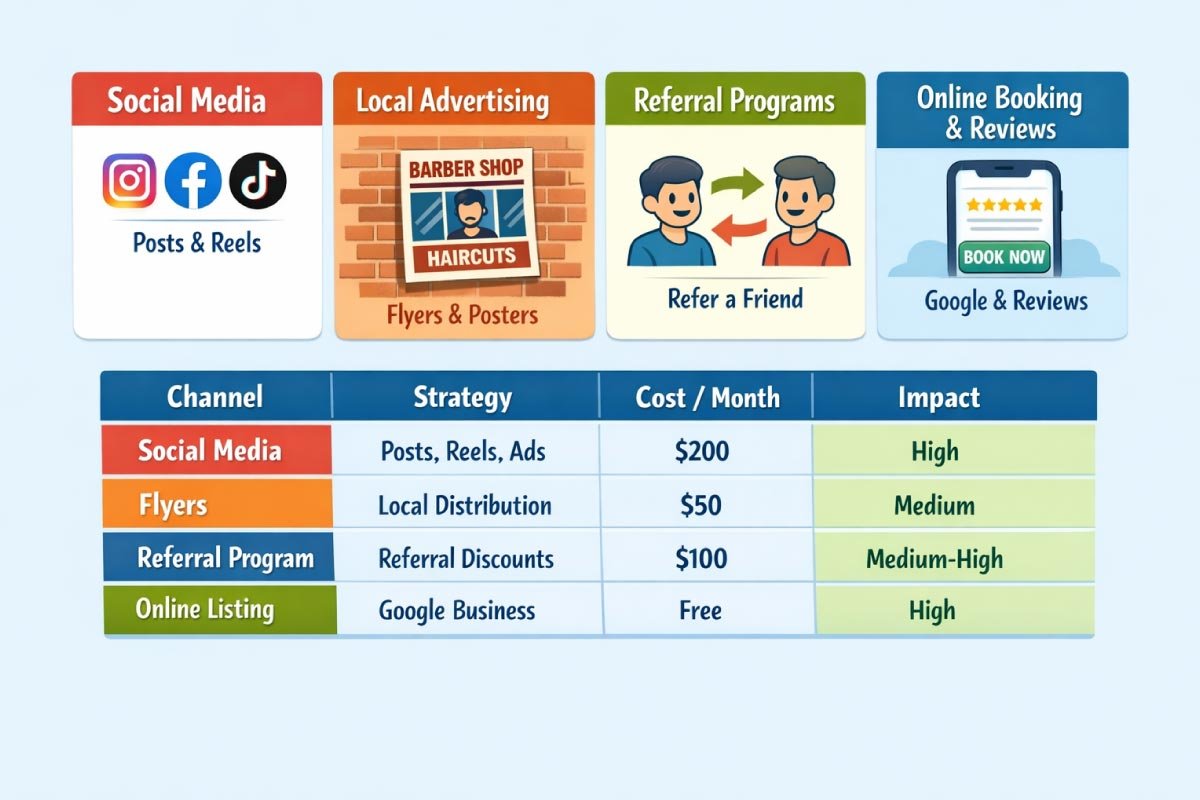
Using social media, local advertising, referral programs, and promotions increases visibility.
Highlighting skilled barbers, unique services, and a welcoming atmosphere helps build brand recognition, drive repeat business, and grow your barber shop successfully.
-
Social Media: Instagram, Facebook, TikTok to showcase haircuts
-
Local Advertising: Flyers, posters, and banners in nearby areas
-
Referral Programs: Encourage existing clients to refer friends
-
Online Booking & Reviews: Google My Business for reviews and easy booking
Marketing Strategy Table:
| Channel | Strategy | Cost ($/month) | Expected Impact |
|---|---|---|---|
| Social Media | Posts, reels, ads | 200 | High |
| Flyers | Local distribution | 50 | Medium |
| Referral Program | Discounts for referrals | 100 | Medium-High |
| Online Listing | Google Business | Free | High |
10. Manage Operations Efficiently
Managing operations efficiently is essential for the smooth running of a beauty salon.
Streamlined scheduling, inventory control, staff management, and service workflows ensure productivity and reduce downtime.
Effective operational management enhances client satisfaction, lowers costs, and supports consistent growth and profitability for the salon.
-
Use a booking system to avoid overbooking
-
Keep inventory of products and tools
-
Monitor expenses and revenue weekly
-
Train staff for customer service excellence
11. Offer Products and Retail Items
Offering products and retail items in your beauty salon adds value and boosts revenue. By selling quality hair, skin, and beauty products, you meet client needs beyond services.
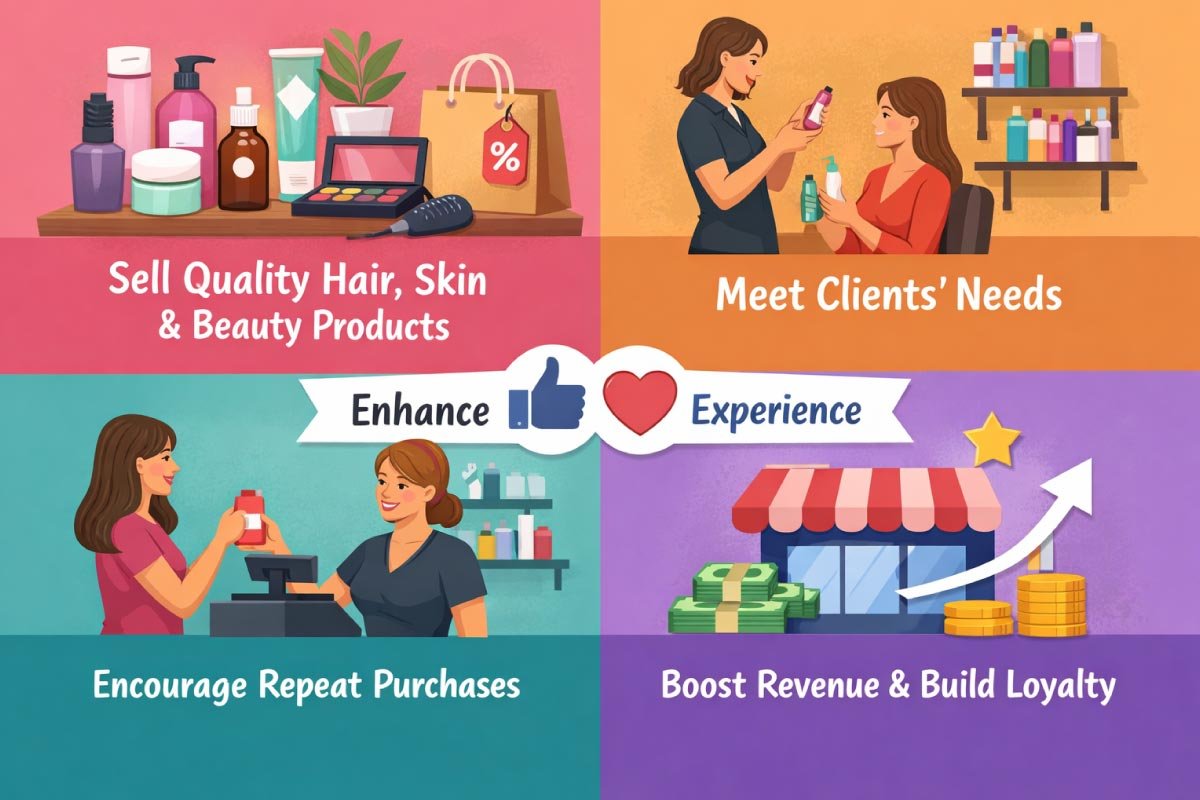
Strategically promoting these items enhances the overall customer experience, encourages repeat purchases, and strengthens the salon’s profitability and brand reputation.
12. Focus on Customer Experience
Focusing on customer experience is crucial for building loyalty and a strong reputation in a beauty salon.
Providing personalized services, attentive care, and a welcoming environment ensures client satisfaction.
Exceptional experiences encourage repeat visits, positive reviews, and referrals, directly contributing to the salon’s growth and long-term success.
-
Comfortable seating and ambiance
-
Friendly and skilled barbers
-
Timely service
-
Loyalty programs and promotions
Repeat customers are the backbone of a profitable barber shop.
13. Financial Planning & Break-Even Analysis
Financial planning and break-even analysis are essential for running a successful beauty salon.
Careful budgeting, expense management, and revenue forecasting help maintain cash flow and profitability.
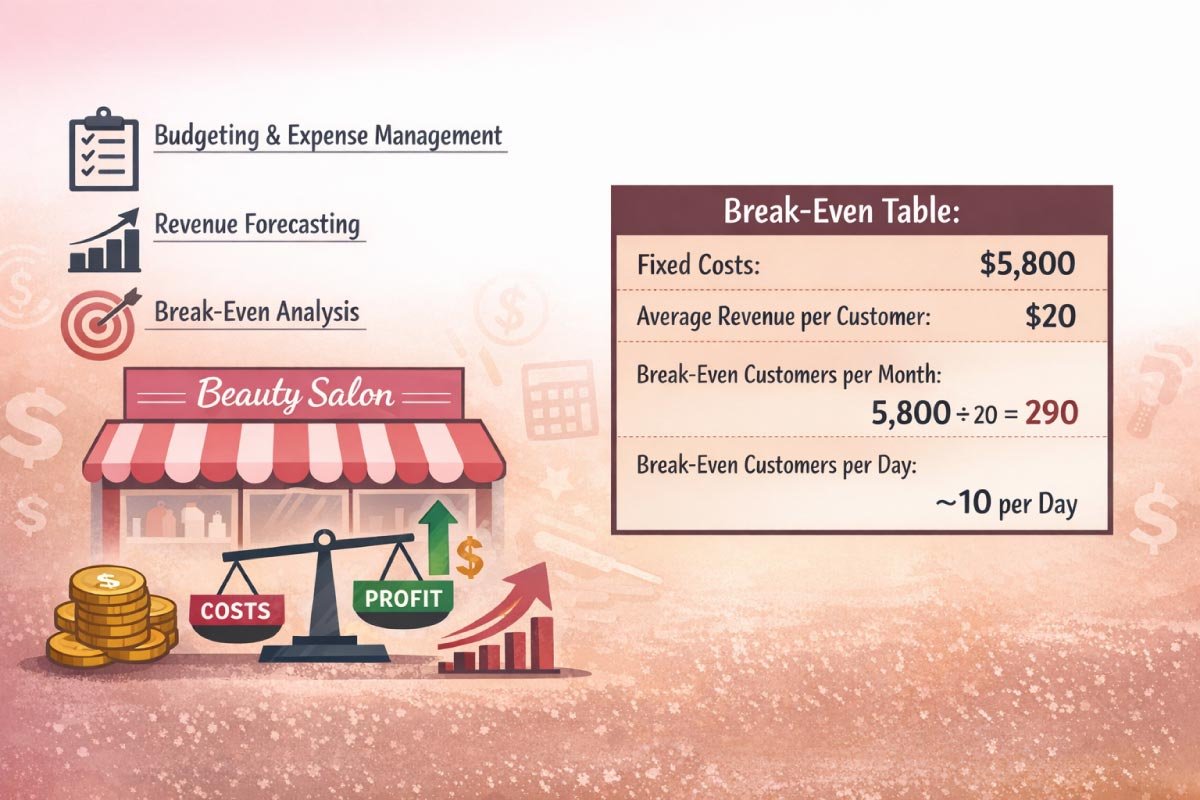
Break-even analysis identifies when the salon will start generating profit, guiding pricing, investments, and strategic decisions for sustainable growth and financial stability.
Break-Even Table:
| Item | Amount ($) |
|---|---|
| Fixed Costs (Rent + Salaries + Utilities) | 5,800 |
| Average Revenue per Customer | 20 |
| Break-Even Customers per Month | 5,800 ÷ 20 = 290 |
| Break-Even Customers per Day | ~10 (assuming 30 days) |
14. Expand and Innovate
Expanding and innovating your beauty salon is key to staying competitive and growing your business.
This can include adding new services, introducing modern treatments, or opening additional locations.
By analyzing client demand and industry trends, you can implement creative strategies that enhance customer experience, increase revenue, and ensure long-term success.
Once your barber shop is stable, consider growth opportunities:
-
Open additional branches in nearby areas
-
Offer premium services (hair coloring, scalp treatments)
-
Launch your own grooming product line
-
Partner with local events or influencers for promotions
Innovation keeps your brand relevant and competitive.
Conclusion
Starting a barber shop is a rewarding venture that combines creativity, entrepreneurship, and service excellence.
By conducting thorough market research, creating a detailed business plan, hiring skilled staff, offering quality services, and providing an exceptional customer experience, you can build a profitable and sustainable business.
Remember, the key to success lies not only in haircuts but also in creating an atmosphere that makes customers feel valued and eager to return.
With strategic planning, financial management, and continuous innovation, your barber shop can thrive in today’s competitive market.