
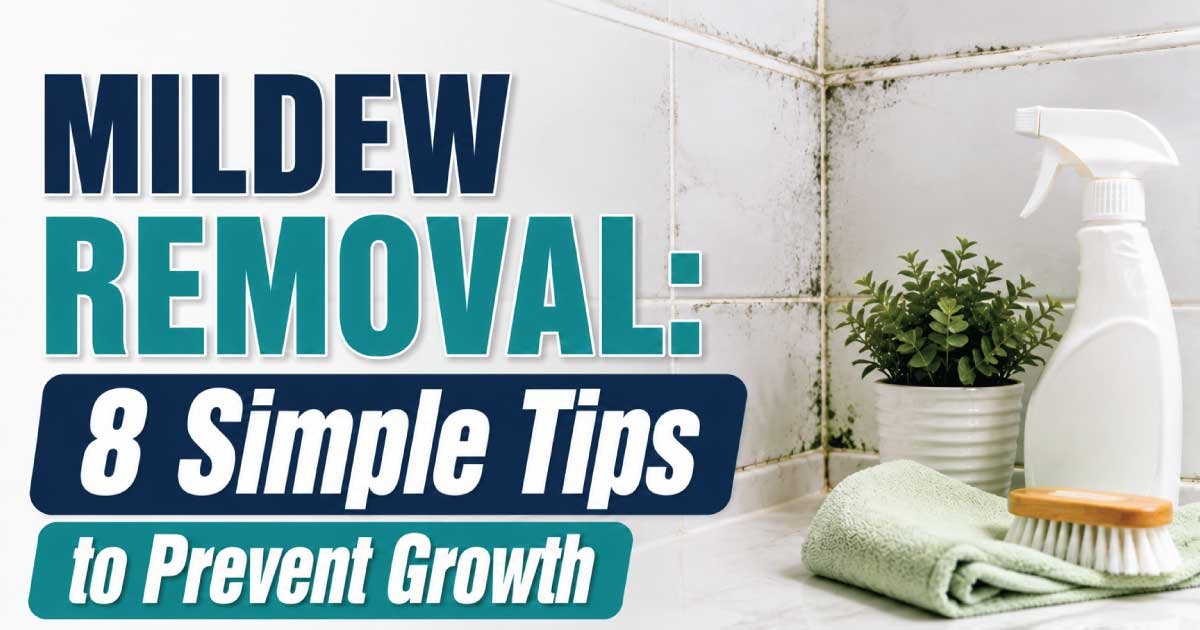
Mildew is a common problem in bathrooms, kitchens, basements, and other damp areas of the home. It often appears as white, gray, or black patches on walls, tiles, grout, ceilings, shower curtains, and other moisture-prone surfaces. Besides making your home look unclean, mildew can produce unpleasant odors and, if left untreated, may damage surfaces over time.
The good news is that mildew is preventable with proper cleaning, ventilation, and moisture control. By following a few simple habits, you can stop mildew from spreading and maintain a healthier living environment.
In this guide, you’ll learn eight simple tips to remove mildew and prevent it from returning.
Why Mildew Grows in Your Home
Mildew thrives in warm, damp, and poorly ventilated spaces where moisture remains for long periods. Bathrooms are especially vulnerable because of frequent showers, steam, and standing water.
Common Causes of Mildew
- High humidity levels
- Poor ventilation
- Water leaks
- Standing water
- Condensation on walls and windows
- Wet towels or bath mats left to dry indoors
- Infrequent cleaning
Identifying and addressing these conditions is the first step toward preventing mildew growth.
Signs You Have Mildew
Recognizing mildew early makes it easier to remove before it spreads.
Common Warning Signs
- White, gray, or black spots on walls or tiles
- Musty or damp odors
- Discolored grout lines
- Stains around windows or ceilings
- Spots on shower curtains or bath mats
- Persistent moisture on surfaces
If mildew continues to return after cleaning, excess moisture is likely the underlying cause.
Essential Supplies for Mildew Removal
Before cleaning, gather the right supplies.
| Cleaning Supply | Purpose |
|---|---|
| Rubber gloves | Protecting your hands |
| Microfiber cloth | Wiping surfaces |
| Soft scrub brush | Cleaning mildew stains |
| Old toothbrush | Cleaning grout and corners |
| Mild detergent | Everyday cleaning |
| White vinegar | Removing light mildew on suitable surfaces |
| Baking soda | Cleaning and deodorizing |
| Spray bottle | Applying cleaning solutions |
| Bucket | Mixing water and cleaning products |
| Exhaust fan or portable fan | Improving airflow while drying |
Always follow the instructions on any commercial mildew remover and ensure the room is well ventilated during cleaning.
1. Improve Bathroom Ventilation
One of the easiest ways to prevent mildew is by reducing humidity.
How to Improve Airflow
- Turn on the exhaust fan before and during showers.
- Leave the fan running for at least 20 minutes afterward.
- Open windows whenever possible.
- Leave the bathroom door open after bathing.
- Use a portable fan if natural ventilation is limited.
Benefits
- Reduces humidity
- Speeds up drying
- Prevents condensation
- Discourages mildew growth
Good ventilation is one of the most effective long-term prevention methods.
2. Wipe Down Wet Surfaces After Every Shower
Moisture left on shower walls, doors, and tiles creates ideal conditions for mildew.
Daily Routine
- Use a squeegee on glass doors.
- Wipe tiles with a microfiber cloth.
- Dry faucets and fixtures.
- Remove standing water from shower floors.
Taking just a few minutes after each shower can greatly reduce moisture buildup.
3. Clean Tiles and Grout Regularly
Grout absorbs moisture and easily traps dirt, making it a common place for mildew to develop.
Cleaning Steps
- Apply a mild bathroom cleaner or an appropriate grout cleaner.
- Gently scrub grout lines with a grout brush or old toothbrush.
- Rinse with clean water.
- Dry the area completely.
Focus on These Areas
- Shower walls
- Tile corners
- Around bathtubs
- Floor grout
- Behind bathroom fixtures
Regular cleaning helps prevent mildew from becoming deeply embedded.
4. Remove Existing Mildew Promptly
The sooner you clean mildew, the easier it is to stop it from spreading.
Cleaning Method
- Wear rubber gloves.
- Apply a suitable mildew remover or a cleaner recommended for the affected surface.
- Allow the cleaner to sit for the recommended amount of time.
- Gently scrub the area.
- Rinse if required by the product instructions.
- Dry the surface thoroughly.
Important Safety Tips
- Never mix bleach with ammonia or acidic cleaners, as dangerous gases can form.
- Test any cleaner on a small, hidden area first.
- Follow the manufacturer’s directions for safe use.
For large areas of mold or recurring growth caused by water damage, professional assessment may be necessary.
5. Fix Leaks and Plumbing Problems
Small leaks often go unnoticed but create constant moisture that encourages mildew.
Inspect These Areas
- Under bathroom sinks
- Around toilets
- Shower plumbing
- Bathtub edges
- Pipe connections
- Window frames
Repairing leaks promptly helps eliminate one of mildew’s primary sources.
6. Wash and Dry Bathroom Fabrics Frequently
Bathroom fabrics hold moisture long after showers are finished.
Items to Clean Regularly
- Towels
- Bath mats
- Shower curtains
- Washcloths
- Fabric storage baskets
Best Practices
- Hang towels fully open to dry.
- Wash bath mats according to their care instructions.
- Replace damp fabrics promptly.
- Allow shower curtains to dry completely after use.
Keeping fabrics dry reduces the risk of mildew and unpleasant odors.
7. Control Indoor Humidity
High humidity affects more than just bathrooms—it can encourage mildew throughout your home.
Ways to Reduce Humidity
- Use a dehumidifier in damp rooms.
- Improve air circulation.
- Avoid leaving wet clothes indoors for extended periods.
- Dry spills immediately.
- Keep air vents unobstructed.
Ideal Indoor Humidity
| Humidity Level | Recommendation |
| Below 30% | Air may become too dry |
| 30–50% | Ideal range for most homes |
| Above 60% | Increased risk of mildew and mold |
Monitoring indoor humidity can help prevent recurring moisture problems.
8. Follow a Consistent Cleaning Schedule
Routine cleaning is the best defense against mildew.
Weekly Tasks
- Wipe shower walls
- Clean bathroom tiles
- Scrub grout
- Wash sink and countertops
- Empty trash bins
- Dry wet surfaces
Monthly Tasks
- Deep clean the shower
- Wash shower curtains
- Inspect caulk and grout
- Check for plumbing leaks
- Clean exhaust fan covers
A consistent routine prevents mildew from gaining a foothold.
Recommended Mildew Prevention Schedule
Keeping up with simple maintenance can save hours of cleaning later.
| Task | Frequency |
| Wipe shower walls | Daily |
| Dry bathroom surfaces | Daily |
| Run exhaust fan | After every shower |
| Clean tiles and grout | Weekly |
| Wash bath mats | Weekly |
| Wash shower curtain | Monthly |
| Inspect for leaks | Monthly |
| Deep clean bathroom | Monthly |
Regular maintenance significantly reduces the likelihood of mildew returning.
Common Mildew Prevention Mistakes
Avoid these common mistakes to keep your bathroom mildew-free.
- Ignoring excess moisture after showers.
- Leaving wet towels in a pile instead of hanging them to dry.
- Skipping grout cleaning, allowing mildew to spread.
- Failing to repair plumbing leaks promptly.
- Blocking ventilation by keeping windows and doors closed all the time.
- Waiting too long to remove mildew, allowing it to spread further.
- Using unsuitable cleaning products for delicate surfaces.
Correcting these habits makes mildew prevention much more effective.
Additional Tips for Long-Term Mildew Prevention
Small daily habits can make a big difference.
- Keep shower doors open after use.
- Dry sinks and countertops after cleaning.
- Replace worn or damaged caulk when needed.
- Store cleaning supplies in a dry location.
- Clean spills immediately.
- Check hidden corners regularly for early signs of mildew.
- Improve airflow in enclosed spaces.
- Address water damage as soon as it occurs.
These simple practices help create a cleaner and healthier home.
Natural Cleaning Options for Light Mildew
Many homeowners prefer natural solutions for routine cleaning of light mildew on suitable surfaces.
| Natural Cleaner | Best Used For |
| White vinegar* | Light mildew and mineral deposits |
| Baking soda | Gentle scrubbing and odor removal |
| Mild dish soap | Everyday cleaning |
| Warm water | Rinsing and surface cleaning |
| Hydrogen peroxide (where appropriate) | Light surface cleaning on compatible materials |
*Always confirm that the cleaning solution is suitable for the surface you’re treating. Avoid acidic cleaners such as vinegar on natural stone surfaces unless recommended by the manufacturer.
Conclusion
Preventing mildew is much easier than dealing with widespread growth. By improving ventilation, drying wet surfaces, cleaning tiles and grout regularly, repairing leaks, washing bathroom fabrics, controlling indoor humidity, and following a consistent cleaning schedule, you can significantly reduce the conditions that allow mildew to thrive.
The key to long-term success is consistency. Simple daily habits combined with weekly maintenance and monthly inspections help keep moisture under control and prevent mildew from returning. With these eight practical tips, you can maintain a cleaner, fresher, and healthier bathroom while protecting your home’s surfaces from unnecessary damage.