
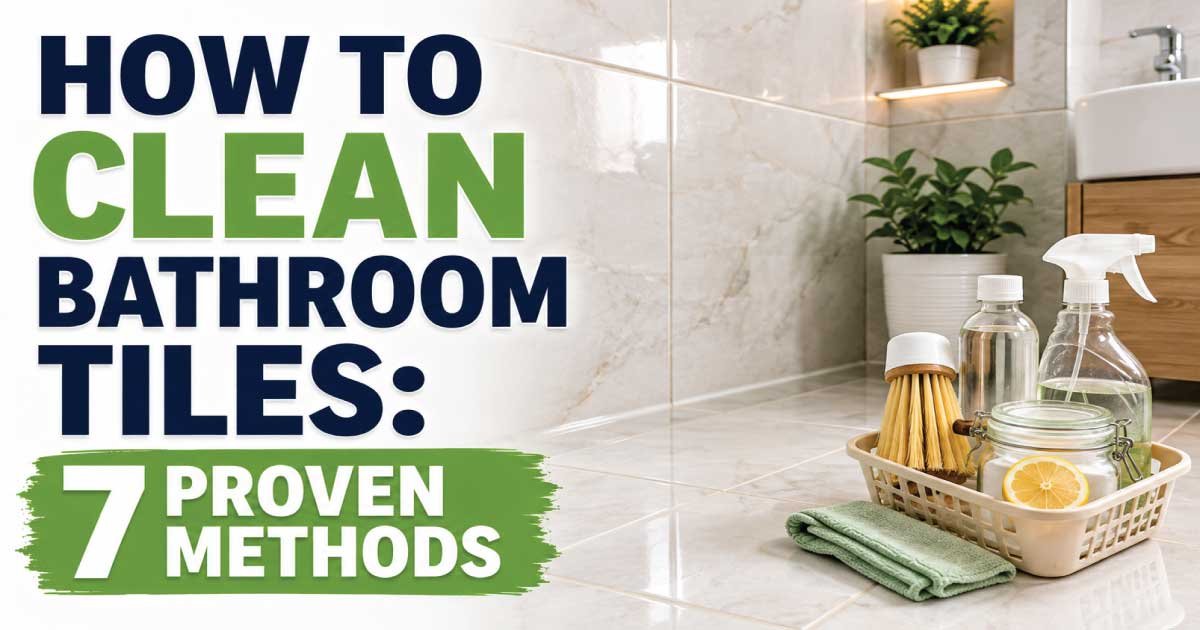
Bathroom tiles add beauty, durability, and water resistance to your space, but they also require regular cleaning to stay looking their best. Over time, soap scum, hard water stains, mold, mildew, and dirt can accumulate on tile surfaces and grout lines, making even a modern bathroom appear dull and unhygienic. The good news is that you don’t need expensive cleaners or professional services to restore the shine.
With the right cleaning techniques and a few household ingredients, you can remove stubborn stains, brighten grout, and keep your bathroom tiles sparkling. Whether you have ceramic, porcelain, or natural stone tiles, these 7 proven cleaning methods will help you achieve excellent results while protecting your surfaces.
In this guide, you’ll learn the best ways to clean bathroom tiles, essential cleaning supplies, common mistakes to avoid, and maintenance tips to keep your bathroom fresh and spotless.
Why Regular Bathroom Tile Cleaning Is Important
Bathroom tiles are constantly exposed to moisture, soap residue, shampoo, and mineral deposits. Without regular maintenance, these elements can lead to discoloration, mold growth, and stubborn stains.
Benefits of cleaning your bathroom tiles regularly include:
- Prevents mold and mildew growth.
- Removes soap scum and hard water stains.
- Keeps grout looking bright and clean.
- Improves bathroom hygiene.
- Extends the lifespan of tiles and grout.
- Maintains the bathroom’s overall appearance.
- Reduces the need for intensive deep cleaning.
Cleaning your tiles weekly and performing a deeper clean once a month helps prevent long-term damage.
Supplies You’ll Need
Before you begin, gather the right cleaning supplies.
| Cleaning Supply | Purpose |
|---|---|
| Microfiber cloth | Wiping and polishing tiles |
| Soft sponge | Gentle surface cleaning |
| Soft-bristle brush | Scrubbing stubborn stains |
| Old toothbrush | Cleaning grout lines |
| White vinegar | Dissolving mineral deposits |
| Baking soda | Removing stains and odors |
| Mild dish soap | General cleaning |
| Spray bottle | Applying homemade cleaners |
| Bucket of warm water | Rinsing surfaces |
| Rubber gloves | Protecting your hands |
Using non-abrasive tools helps prevent scratches and preserves the finish of your tiles.
1. Clean Tiles with Warm Water and Dish Soap
For routine cleaning, a simple mixture of warm water and mild dish soap is highly effective.
Steps:
- Mix a few drops of dish soap into a bucket of warm water.
- Dip a microfiber cloth or sponge into the solution.
- Wipe down all tile surfaces.
- Rinse with clean water.
- Dry with a clean microfiber cloth.
Best for:
- Weekly cleaning
- Light dirt
- Soap residue
- Everyday maintenance
2. Remove Soap Scum with Baking Soda
Soap scum can leave a cloudy film on bathroom tiles.
Baking soda works as a gentle abrasive that lifts residue without damaging most ceramic or porcelain tiles.
How to use it:
- Sprinkle baking soda onto a damp sponge.
- Gently scrub affected areas.
- Let it sit for 10 minutes.
- Rinse thoroughly with warm water.
This method restores shine while removing stubborn buildup.
3. Dissolve Hard Water Stains with White Vinegar
Hard water leaves white mineral deposits on tiles, especially around showers and faucets.
White vinegar naturally dissolves these deposits.
Instructions:
- Fill a spray bottle with equal parts white vinegar and warm water.
- Spray directly onto stained tiles.
- Let the solution sit for 10–15 minutes.
- Wipe clean with a sponge.
- Rinse with fresh water.
Note: Avoid using vinegar on natural stone tiles such as marble, limestone, or travertine, as the acid can damage the surface.
4. Brighten Grout with Baking Soda and Hydrogen Peroxide
Dirty grout lines can make clean tiles appear old and neglected.
Mix baking soda with a small amount of hydrogen peroxide to create a thick paste.
Steps:
- Apply the paste to grout lines.
- Let it sit for 15 minutes.
- Scrub gently using an old toothbrush.
- Rinse thoroughly with warm water.
This method effectively removes stains while restoring grout’s original color.
5. Steam Clean for Deep Cleaning
A steam cleaner provides a chemical-free way to remove dirt, grease, and bacteria from tiles and grout.
Benefits include:
- Kills germs naturally.
- Loosens stubborn grime.
- Removes mold from grout.
- Reduces the need for harsh cleaners.
Steam cleaning is especially effective for heavily used bathrooms.
6. Use Lemon for Shine and Freshness
Lemon juice contains natural acids that help remove light mineral deposits while leaving a pleasant scent.
To clean with lemon:
- Cut a fresh lemon in half.
- Rub it directly over stained tile surfaces.
- Let the juice sit for a few minutes.
- Wipe clean with a damp cloth.
This method works well for ceramic and porcelain tiles but should not be used on natural stone.
7. Dry Tiles After Every Shower
The easiest way to reduce cleaning time is to prevent buildup in the first place.
After showering:
- Use a squeegee on tiled walls.
- Wipe excess moisture with a microfiber cloth.
- Leave the shower door open.
- Run the exhaust fan for at least 20 minutes.
Keeping tiles dry helps prevent mold, mildew, and water spots from forming.
Bathroom Tile Cleaning Schedule
Following a regular routine keeps tiles looking their best.
| Cleaning Task | Frequency |
|---|---|
| Wipe tiles after shower | Daily |
| Clean with soap and water | Weekly |
| Remove soap scum | Weekly |
| Clean grout | Monthly |
| Steam clean | Monthly |
| Remove hard water stains | Monthly |
| Inspect for mold | Monthly |
Consistency helps reduce heavy buildup and makes each cleaning session quicker.
Common Bathroom Tile Cleaning Mistakes
Avoid these mistakes to protect your tiles and achieve better cleaning results.
- Using abrasive scrubbers that scratch glossy tile surfaces.
- Skipping grout cleaning, allowing mold and stains to spread.
- Using bleach too frequently, which may weaken grout over time.
- Ignoring ventilation, leading to excess moisture and mildew.
- Leaving cleaning products on tiles for too long, which can damage finishes.
- Using vinegar on natural stone, causing etching and discoloration.
Choosing the right cleaning method for your tile type is essential.
Tips for Keeping Bathroom Tiles Cleaner Longer
A few daily habits can dramatically reduce cleaning time.
Consider these practical tips:
- Wipe shower walls after every use.
- Run the exhaust fan after showers.
- Clean spills immediately.
- Use liquid soap instead of bar soap to reduce residue.
- Wash bath mats weekly.
- Keep shampoo bottles organized to prevent water rings.
- Repair damaged grout promptly to prevent moisture penetration.
Preventive maintenance is far easier than removing stubborn stains later.
How to Choose the Right Cleaning Method
Different tile materials require different cleaning approaches.
| Tile Type | Recommended Cleaning Method | Avoid |
|---|---|---|
| Ceramic | Dish soap, baking soda, steam | Abrasive steel wool |
| Porcelain | Vinegar (diluted), baking soda, steam | Highly abrasive cleaners |
| Glass | Glass cleaner, vinegar solution, microfiber cloth | Scratchy pads |
| Marble | pH-neutral stone cleaner | Vinegar, lemon, bleach |
| Granite | Stone-safe cleaner | Acidic products |
| Travertine | Mild stone cleaner | Vinegar and citrus cleaners |
Always test a new cleaning product on a small, inconspicuous area before applying it to the entire surface.
Signs Your Bathroom Tiles Need a Deep Clean
Even with regular maintenance, there are times when a more thorough cleaning is necessary.
Look for these signs:
- Grout has turned dark or discolored.
- Soap scum remains after wiping.
- White mineral deposits appear on tiles.
- Mold or mildew is visible in corners.
- Tiles have lost their shine.
- Persistent musty odors remain after routine cleaning.
Addressing these issues early helps prevent permanent staining and costly repairs.
Conclusion
Keeping bathroom tiles clean doesn’t have to be difficult or time-consuming. By following these 7 proven methods, you can effectively remove soap scum, hard water stains, mold, and grime while protecting the beauty of your tile surfaces. Simple household ingredients like baking soda, white vinegar, and mild dish soap, combined with regular maintenance, can deliver impressive results without the need for expensive cleaning products.
The secret to sparkling bathroom tiles is consistency. Wiping down surfaces after each shower, cleaning weekly, and deep cleaning grout once a month will keep your bathroom looking fresh, hygienic, and inviting. With the right techniques and a little routine maintenance, your bathroom tiles can remain bright, clean, and durable for years to come.