
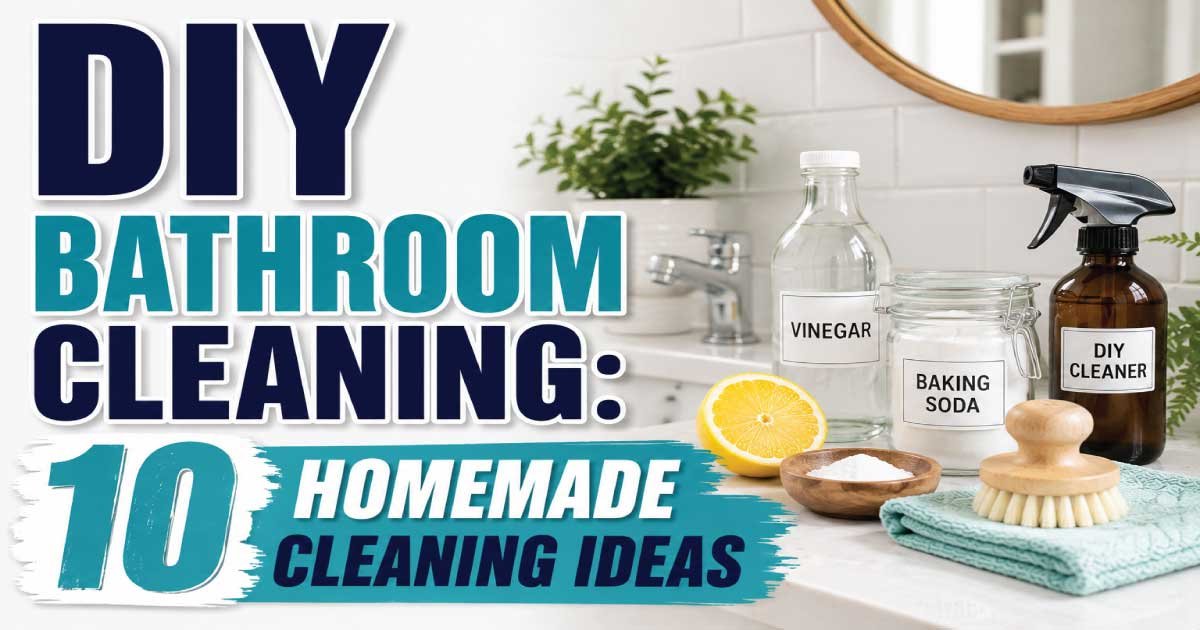
Keeping your bathroom clean doesn’t always require expensive commercial products. Many effective cleaning solutions can be made using simple household ingredients that are already in your kitchen or laundry room. DIY bathroom cleaners are budget-friendly, easy to prepare, and can help tackle common problems like soap scum, hard water stains, mildew, and unpleasant odors.
Homemade cleaning solutions are also a great way to reduce the number of harsh chemicals used in your home. While they may not replace specialized disinfectants for certain situations, they work well for routine bathroom maintenance and everyday cleaning.
If you’re looking for affordable and effective ways to keep your bathroom fresh, these ten homemade cleaning ideas are a great place to start.
Table of Contents
Toggle1. Baking Soda Paste for Sink and Bathtub Stains
Baking soda is one of the most versatile natural cleaning ingredients. Its mild abrasive texture helps remove dirt, soap scum, and surface stains without scratching most bathroom surfaces.
How to make the paste
- Mix baking soda with a small amount of water.
- Stir until it forms a thick paste.
- Apply it directly to stained areas.
- Let it sit for 10 to 15 minutes.
- Scrub gently with a soft sponge and rinse.
This simple cleaner works well on sinks, bathtubs, countertops, and ceramic surfaces.
Best uses for baking soda paste
| Surface | Cleaning Benefit |
|---|---|
| Bathtub | Removes light stains and soap scum |
| Sink | Cleans toothpaste and water spots |
| Countertops | Lifts everyday dirt |
| Tile | Freshens surface grime |
Avoid using abrasive scrubbers that may damage delicate finishes.
2. Vinegar Spray for Soap Scum
White vinegar is a popular homemade cleaner because its natural acidity helps dissolve soap residue and mineral deposits.
DIY vinegar spray recipe
- Mix equal parts white vinegar and warm water.
- Pour the mixture into a clean spray bottle.
- Spray onto shower walls, tubs, and faucets.
- Let it sit for 10 to 20 minutes.
- Wipe clean with a microfiber cloth.
This solution is excellent for removing cloudy buildup from bathroom fixtures.
Do not use vinegar on natural stone surfaces such as marble or granite, as it can damage the finish.
3. Lemon Juice Cleaner for Hard Water Stains
Lemon juice contains natural acids that help break down hard water deposits while leaving a fresh citrus scent.
How to use lemon juice
- Squeeze fresh lemon juice onto stained areas.
- Allow it to sit for about 10 minutes.
- Wipe gently with a soft cloth.
- Rinse with clean water.
Areas where lemon juice works well
- Faucet bases
- Shower fixtures
- Glass shower doors
- Bathtub edges
Regular use helps reduce mineral buildup before it becomes difficult to remove.
4. Baking Soda and Vinegar Drain Freshener
Bathroom drains often collect soap, hair, and residue that can lead to unpleasant odors. A homemade drain treatment helps freshen the drain and loosen minor buildup.
Simple drain cleaning steps
- Pour baking soda into the drain.
- Slowly add white vinegar.
- Allow the mixture to fizz for several minutes.
- Flush the drain with hot water.
This method is best used as part of routine maintenance rather than for severe clogs.
5. Dish Soap and Warm Water for Daily Cleaning
A few drops of dish soap mixed with warm water create a gentle cleaning solution that removes grease, body oils, and everyday dirt.
How to prepare
- Fill a bucket with warm water.
- Add a few drops of dish soap.
- Mix gently.
- Use a sponge or microfiber cloth to clean bathroom surfaces.
This homemade solution is ideal for routine cleaning of sinks, bathtubs, countertops, and shower walls.
6. Hydrogen Peroxide for Mold and Mildew Spots
Hydrogen peroxide is commonly used to help remove mold and mildew stains in damp bathroom areas.
How to apply
- Pour hydrogen peroxide into a spray bottle.
- Spray directly on affected areas.
- Let it sit for several minutes.
- Scrub gently with a soft brush.
- Rinse thoroughly.
Always test a small hidden area first to ensure compatibility with your bathroom surfaces.
7. Homemade Glass and Mirror Cleaner
Bathroom mirrors often develop streaks from toothpaste splashes, fingerprints, and water spots. A simple DIY cleaner can help restore a streak-free shine.
Homemade mirror cleaning solution
| Ingredient | Amount |
|---|---|
| White vinegar | 1 cup |
| Water | 1 cup |
Mix both ingredients in a spray bottle and shake gently before use.
Cleaning tips
- Spray onto a microfiber cloth instead of directly onto the mirror.
- Wipe in circular motions.
- Finish with a dry cloth for a streak-free shine.
Using microfiber cloths helps prevent lint and streaks.
8. Salt and Lemon for Rust Stains
Small rust stains around drains or metal fixtures can often be reduced using lemon juice and salt.
How to use this combination
- Sprinkle salt over the rust stain.
- Add fresh lemon juice.
- Let the mixture sit for 15 to 20 minutes.
- Scrub gently with a soft brush.
- Rinse thoroughly.
This natural method works best on light rust stains before they become deeply embedded.
9. DIY Air Freshener Spray
A fresh-smelling bathroom feels cleaner and more inviting. Instead of relying on commercial air fresheners, you can make a simple homemade version.
Basic DIY air freshener recipe
| Ingredient | Amount |
|---|---|
| Water | 1 cup |
| Baking soda | 1 tablespoon |
| Essential oil (optional) | 8–10 drops |
Shake well before each use and lightly spray around the bathroom to help reduce odors.
Avoid spraying directly onto polished surfaces or electronics.
10. All-Purpose Homemade Bathroom Cleaner
Instead of making several different cleaners, you can prepare one simple solution for regular bathroom maintenance.
Easy all-purpose cleaner recipe
- 2 cups warm water
- 1 tablespoon liquid dish soap
- 1 tablespoon baking soda
Mix the ingredients in a spray bottle until well combined.
Best places to use this cleaner
- Bathroom countertops
- Sink surfaces
- Bathtub exterior
- Cabinet doors
- Toilet exterior
- Shelves
This solution is suitable for general cleaning and helps remove everyday dirt and residue.
Safety Tips for Homemade Bathroom Cleaners
Even natural ingredients should be used carefully to protect your bathroom surfaces and your health.
Important safety guidelines
- Wear gloves if you have sensitive skin.
- Label homemade cleaning bottles clearly.
- Store cleaning solutions away from children and pets.
- Test new mixtures on a hidden area first.
- Never mix bleach with vinegar, ammonia, or hydrogen peroxide.
Following these precautions helps ensure safe and effective cleaning.
Benefits of DIY Bathroom Cleaning Solutions
Homemade cleaners offer several advantages for homeowners who want a simple and affordable cleaning routine.
Why many people choose DIY cleaners
- Lower cleaning costs
- Easy-to-find ingredients
- Quick preparation
- Reduced chemical exposure during routine cleaning
- Customizable recipes for different surfaces
- Less packaging waste compared to many commercial products
While homemade solutions work well for everyday maintenance, heavily stained or heavily contaminated areas may still require specialized cleaning products or disinfectants.
Conclusion
DIY bathroom cleaning is an effective way to maintain a fresh and hygienic space without relying solely on commercial cleaners. Everyday ingredients like baking soda, vinegar, lemon juice, dish soap, hydrogen peroxide, and salt can handle many common bathroom cleaning tasks, from removing soap scum to freshening drains and polishing mirrors.
By using these ten homemade cleaning ideas and following a regular cleaning routine, you can keep your bathroom looking clean, smelling fresh, and staying easier to maintain. Consistency, combined with the right DIY solutions, is the key to achieving professional-looking results while saving time and money.