
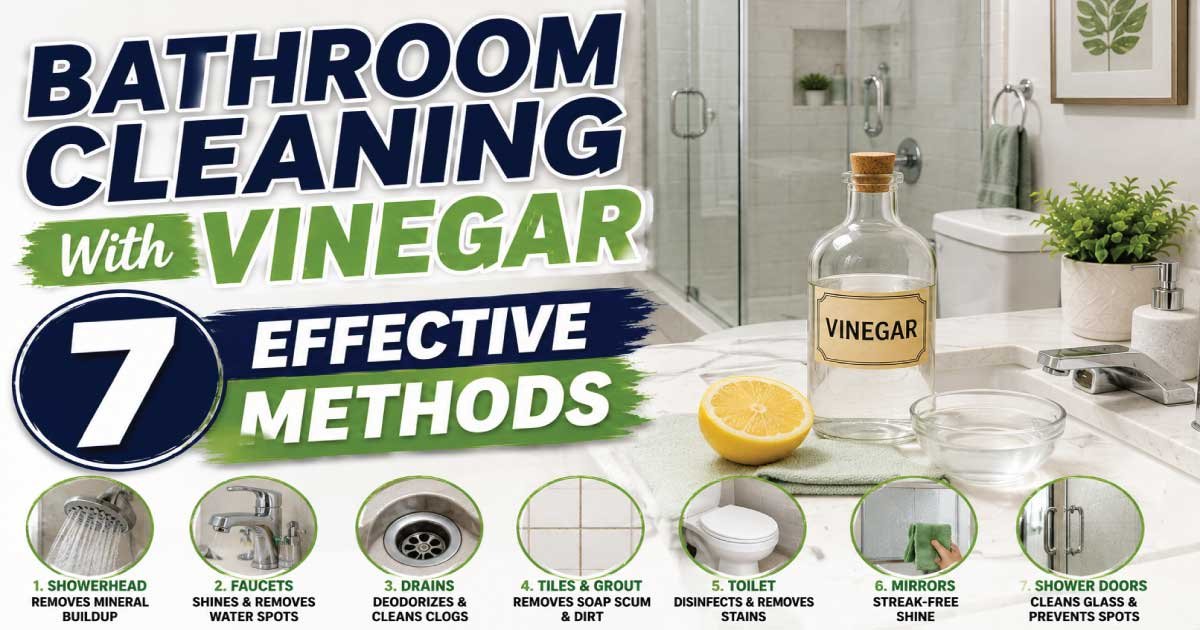
White vinegar is one of the most versatile and affordable household cleaning solutions. Thanks to its natural acidity, it can help dissolve soap scum, hard water deposits, and mineral buildup that commonly collect in bathrooms. Many homeowners use vinegar as part of their regular cleaning routine because it works on a variety of surfaces without requiring multiple specialized products.
While vinegar is highly effective for many bathroom cleaning tasks, it’s important to use it correctly. It should not be used on certain materials, such as natural stone, because its acidity can damage the surface. When paired with the right cleaning tools and proper techniques, vinegar can help keep your bathroom fresh, bright, and hygienic.
Below are seven effective methods for cleaning your bathroom with vinegar.
1. Remove Soap Scum From Shower Walls
Soap scum is one of the most common bathroom cleaning challenges. It forms when soap combines with minerals in hard water, leaving behind a cloudy film on shower walls and bathtub surfaces.
To clean shower walls with vinegar:
- Mix equal parts white vinegar and warm water in a spray bottle.
- Spray the solution generously onto the affected areas.
- Let it sit for 10–15 minutes.
- Scrub gently with a soft sponge or microfiber cloth.
- Rinse thoroughly with clean water.
This method helps loosen soap residue, making it easier to wipe away without excessive scrubbing.
2. Clean Glass Shower Doors
Glass shower doors quickly develop water spots, soap scum, and streaks that make them appear dull. Vinegar helps dissolve mineral deposits and restore clarity.
Follow these steps:
- Spray a vinegar and water solution over the glass.
- Allow it to sit for several minutes.
- Wipe the surface using a microfiber cloth.
- Finish by drying the glass with a squeegee or dry cloth.
Regular cleaning prevents heavy buildup and keeps shower doors looking clear and polished.
| Cleaning Step | Purpose |
|---|---|
| Spray vinegar solution | Loosens soap scum |
| Let it sit | Breaks down mineral deposits |
| Wipe with microfiber cloth | Removes residue |
| Dry completely | Prevents streaks and water spots |
3. Remove Hard Water Stains From Faucets
Bathroom faucets often collect white mineral deposits caused by hard water. Vinegar helps dissolve these deposits and restore shine.
To clean faucets:
- Soak a cloth in white vinegar.
- Wrap it around the faucet.
- Leave it in place for 10–20 minutes.
- Wipe away loosened deposits with a soft cloth.
- Rinse and dry the fixture.
For stubborn buildup around small crevices, use a soft toothbrush after soaking.
4. Freshen Bathroom Tiles
Bathroom tiles collect dirt, soap residue, and moisture over time. A vinegar solution can help remove everyday grime and leave tiles looking brighter.
To clean tiles:
- Spray the vinegar mixture evenly across the tiles.
- Let it sit briefly.
- Scrub gently using a soft brush or sponge.
- Rinse thoroughly with warm water.
This method works well for ceramic and porcelain tiles but should not be used on natural stone tiles such as marble, travertine, or limestone.
5. Clean Mirrors Without Streaks
Bathroom mirrors often become covered with toothpaste splashes, fingerprints, and water spots. Vinegar provides an effective streak-free finish when used correctly.
For best results:
- Spray a light mist of vinegar solution onto the mirror.
- Wipe using a clean microfiber cloth.
- Polish the surface until completely dry.
Avoid using excessive liquid, as too much moisture may drip behind the mirror frame.
6. Deodorize Bathroom Drains
Bathroom drains can develop unpleasant odors due to soap residue, hair, and organic debris. Vinegar can help freshen drains as part of a regular maintenance routine.
A simple cleaning process includes:
- Pour warm water into the drain.
- Add white vinegar.
- Allow it to sit for several minutes.
- Flush with more warm water.
This helps reduce odors and remove light residue, although severe drain blockages may require other solutions.
7. Wipe Down Bathroom Fixtures
Many bathroom fixtures benefit from regular vinegar cleaning. Handles, towel bars, shower controls, and other non-stone surfaces can be wiped down to remove fingerprints, water spots, and light mineral deposits.
Common fixtures to clean include:
- Sink faucets
- Shower handles
- Towel racks
- Toilet flush handles
- Metal accessories
After wiping with vinegar, rinse if necessary and dry thoroughly to maintain a polished finish.
How to Make a Simple Vinegar Cleaning Solution
One of the advantages of vinegar cleaning is its simplicity. A basic solution is suitable for many everyday bathroom tasks.
| Ingredient | Amount |
|---|---|
| White vinegar | Equal part |
| Warm water | Equal part |
| Spray bottle | 1 |
Shake the mixture gently before each use to ensure it is evenly combined.
Bathroom Surfaces Suitable for Vinegar
Vinegar works well on many common bathroom materials, but not all surfaces are compatible.
| Surface | Vinegar Safe? |
|---|---|
| Glass shower doors | Yes |
| Ceramic tiles | Yes |
| Porcelain surfaces | Yes |
| Chrome faucets | Yes |
| Acrylic tubs | Use with caution and rinse well |
| Marble | No |
| Granite | No |
| Limestone | No |
When cleaning an unfamiliar surface, always test the solution in a small, hidden area first.
Essential Supplies for Vinegar Bathroom Cleaning
Using the right tools improves cleaning efficiency and protects bathroom surfaces.
- White vinegar
- Spray bottle
- Microfiber cloths
- Soft sponge
- Soft scrub brush
- Old toothbrush for tight spaces
- Rubber gloves
- Squeegee for shower glass
Keeping these supplies together in a cleaning caddy makes regular maintenance more convenient.
Common Mistakes to Avoid
Using vinegar incorrectly can reduce its effectiveness or damage certain materials. Avoid these common mistakes.
Using Vinegar on Natural Stone
Natural stone surfaces such as marble, granite, and travertine can be etched by acidic cleaners. Always use stone-safe cleaning products instead.
Leaving Vinegar on Surfaces Too Long
Although vinegar helps dissolve buildup, prolonged exposure is unnecessary for most surfaces. Follow with a thorough rinse when appropriate.
Using Abrasive Scrubbing Pads
Harsh scrubbing tools may scratch tubs, fixtures, or shower doors. Soft cloths and non-abrasive sponges are usually sufficient.
Skipping Regular Cleaning
Allowing soap scum and mineral deposits to accumulate makes cleaning more difficult. Frequent light cleaning is easier than occasional heavy scrubbing.
Benefits of Cleaning Your Bathroom With Vinegar
Many homeowners choose vinegar because it offers several practical advantages.
- Helps dissolve soap scum
- Removes light hard water deposits
- Reduces water spots on glass
- Freshens bathroom surfaces
- Affordable and widely available
- Suitable for many everyday cleaning tasks
- Simple to mix and use
When combined with a consistent cleaning routine, vinegar can help maintain a cleaner and brighter bathroom.
Safety Tips When Using Vinegar
Although vinegar is commonly used for household cleaning, it should still be handled properly.
- Wear gloves if you have sensitive skin.
- Keep the bathroom well ventilated while cleaning.
- Store vinegar safely away from children and pets.
- Read the labels of other cleaning products before using them nearby.
- Never mix vinegar with bleach or products containing bleach, as this can produce hazardous chlorine gas.
Following these safety practices helps ensure effective and safe bathroom cleaning.
Final Thoughts
White vinegar is a simple, budget-friendly solution for many bathroom cleaning tasks. From removing soap scum and hard water stains to cleaning mirrors, tiles, and faucets, it can help maintain a fresh and polished bathroom with minimal effort.
The best results come from using vinegar on compatible surfaces, cleaning regularly, and following proper safety precautions. By incorporating these seven effective methods into your routine, you can reduce buildup, improve cleanliness, and keep your bathroom looking bright and well maintained.