
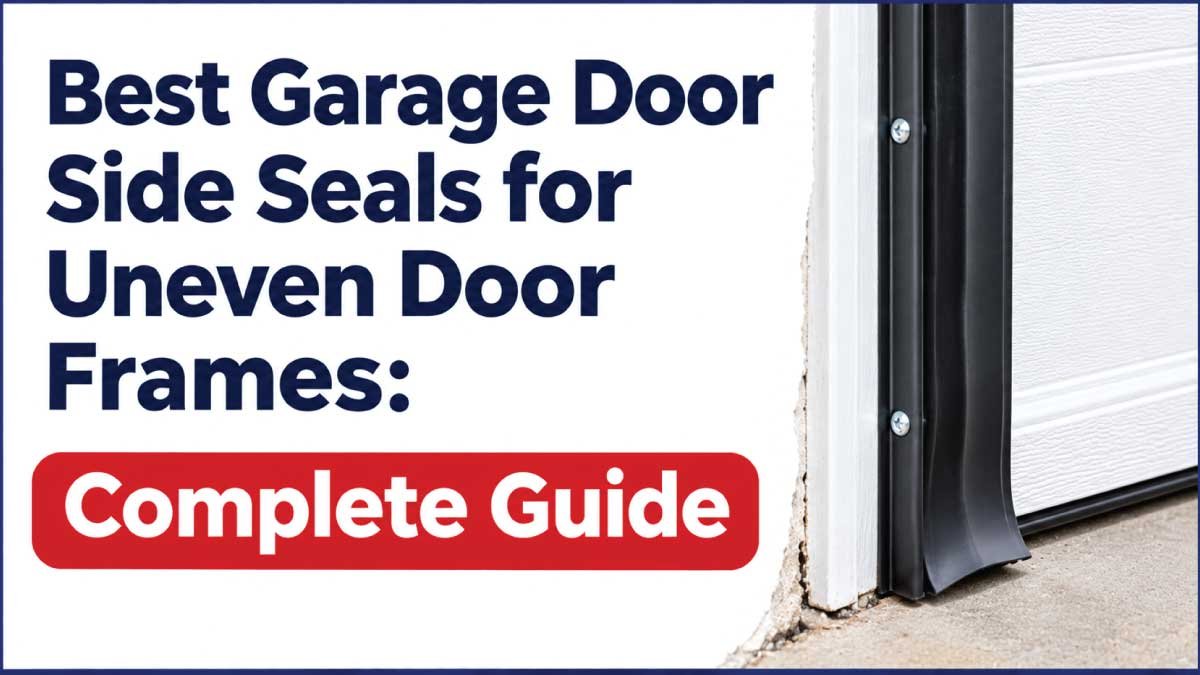
Choosing the best garage door side seal for an uneven door frame can be challenging. A standard weatherstrip may close the gap in one area but leave openings in another. This happens when the vertical frame is warped, the door sits unevenly, or the distance between the door and jamb changes along its height.
The right side seal should be flexible enough to accommodate small variations while maintaining contact with the closed garage door. Rubber compression seals, adjustable vinyl weatherstripping, and brush seals are among the options worth considering. However, each works best under different conditions.
Before buying a replacement, inspect the size and shape of the gap, check the condition of the frame, and identify how the existing weatherstrip is attached. This guide compares the most useful garage door side seal types, explains how to choose the right one, and provides practical installation and maintenance advice.
Why Do Garage Door Frames Become Uneven?
An uneven frame creates inconsistent spacing between the garage door and the vertical jambs. Understanding why the gap exists helps you choose a seal that can handle the problem without interfering with normal door movement.
1. Warped Wooden Door Frames
Wooden garage door frames can change shape because of moisture, temperature fluctuations, and natural aging. One section may bow outward while another remains relatively straight.
This creates different gap sizes along the side of the door. A standard flat weatherstrip may touch the door in some areas but leave openings elsewhere.
2. Incorrectly Installed Door Frames
A garage door frame that was not installed square or plumb can create uneven spacing from the beginning.
The side jambs may lean inward or outward, causing the gap to become wider toward the top or bottom. In this situation, an adjustable weatherstrip may help with minor variations, but significant framing problems should be corrected.
3. Settling or Movement Around the Garage Opening
Changes in the building structure can affect the position of the garage door frame. Small shifts may cause one side of the opening to become slightly uneven.
If the gap has appeared gradually and the frame shows signs of movement, inspect the surrounding structure before replacing the seals.
4. Damaged or Loose Side Trim
The side weatherstrip is often attached to a piece of trim called stop molding. If this trim becomes loose, warped, or damaged, the seal may no longer sit in the correct position.
Sometimes the weatherstrip itself is still usable, but the mounting surface needs repair or adjustment.
5. Garage Door Alignment Problems
An uneven gap does not always mean the frame is defective. The garage door may be sitting incorrectly within the opening.
Damaged rollers, track problems, or other hardware issues can affect the door’s position. If the door looks crooked or moves unevenly, have it inspected before trying to compensate with a thicker seal.
Best Types of Garage Door Side Seals for Uneven Door Frames
Different weatherstripping profiles handle uneven gaps in different ways. The best choice depends on how much the gap changes, the material of the frame, and the amount of flexibility required.
1. Rubber P-Bulb Side Seal
<AsyncImage query=”garage door rubber P bulb side weather seal profile close up” aspectRatio=”16:9″ width=”100%” />
<badge color=”success”>Best for minor uneven gaps</badge>
A P-bulb seal has a rounded, hollow section that compresses when the garage door closes. Its shape allows it to adapt to small differences in spacing between the door and frame.
Unlike a thin flat strip, the hollow profile can compress at tighter points while remaining in contact with areas where the gap is slightly wider.
Advantages:
- Flexible compression helps accommodate minor variations.
- Can provide a consistent contact surface.
- Helps reduce drafts, dust, and insects.
- Available in different sizes and materials.
Disadvantages:
- The bulb must be sized correctly for the gap.
- Excessive compression can interfere with door closing.
- Compatibility with the mounting system must be checked.
A P-bulb seal is worth considering when the frame is slightly uneven but the door itself is properly aligned.
2. Adjustable Vinyl Garage Door Side Seal
<AsyncImage query=”adjustable vinyl garage door side weatherstripping stop molding flexible flap” aspectRatio=”16:9″ width=”100%” />
<badge color=”success”>Best overall for adjustable installation</badge>
An adjustable vinyl side seal usually has a mounting base and a flexible sealing flap. Some systems allow the base to move closer to or farther from the garage door before the fasteners are fully tightened.
This makes it useful when the frame has small variations along its height. The installer can position the seal to maintain more consistent contact with the closed door.
Advantages:
- Position can be adjusted during installation.
- Suitable for many standard residential garage doors.
- Helps cover small gaps along uneven jambs.
- Replacement strips are available for some systems.
Disadvantages:
- Some vinyl products become less flexible in very cold weather.
- The mounting surface must be reasonably sound.
- Incorrect positioning can create excessive pressure.
This is a practical option for homeowners who need a flexible flap and some adjustment during installation.
3. Flexible Rubber Side Weatherstrip
<AsyncImage query=”flexible rubber garage door side weather stripping seal installed” aspectRatio=”16:9″ width=”100%” />
A flexible rubber weatherstrip can maintain contact with a garage door when the frame is not perfectly straight. Its flexibility helps it follow small changes in the gap.
Rubber products are available in different profiles, including flat strips, compression seals, and molded perimeter weatherstripping.
Advantages:
- Flexible material can accommodate minor irregularities.
- Provides a barrier against outdoor air and dust.
- Available in different thicknesses and profiles.
- Some formulations remain flexible in cold conditions.
Disadvantages:
- Quality and durability vary by material.
- Some products can deteriorate under prolonged sunlight.
- A flat rubber strip may not fill a large or changing gap effectively.
Choose a profile that matches the opening rather than assuming a thicker rubber strip will always provide a better seal.
4. Brush Garage Door Side Seal
<AsyncImage query=”garage door vertical brush seal weatherstrip installed on frame” aspectRatio=”16:9″ width=”100%” />
<badge color=”info”>Useful for irregular openings</badge>
A brush seal uses closely spaced flexible bristles attached to a mounting base. The bristles can bend and follow irregular surfaces, making this type of seal useful for certain openings that are difficult to cover with a solid rubber flap.
Brush seals are commonly used in commercial and specialty applications. They can help reduce dust and allow some flexibility where the gap varies.
Advantages:
- Bristles can follow irregular surfaces.
- Suitable for certain wider or changing openings.
- Helps reduce dust and debris entry.
- Can accommodate movement without a rigid contact edge.
Disadvantages:
- Does not provide the same airtight contact as a suitable compression seal.
- Water resistance may be limited.
- Bristles can collect dirt and debris.
- Product compatibility with residential garage doors must be checked.
A brush seal is best considered when the opening is irregular and a conventional flap cannot maintain suitable contact. It is not automatically the best choice for keeping out cold air or wind-driven rain.
5. Heavy-Duty Vinyl Stop Molding
<AsyncImage query=”heavy duty garage door vinyl stop molding side seal installed” aspectRatio=”16:9″ width=”100%” />
Heavy-duty vinyl stop molding combines a mounting strip with a flexible sealing flap. It is commonly installed along both vertical sides and across the top of the garage door opening.
Some designs allow the flap to be positioned to improve contact with the door. This can help when the frame has minor imperfections.
Advantages:
- Provides a continuous perimeter sealing surface.
- Available in different lengths and profiles.
- Can be secured to suitable wooden or compatible frame surfaces.
- Helps reduce air and water entry.
Disadvantages:
- A fixed profile may not accommodate major frame irregularities.
- Vinyl quality varies between products.
- Poor installation can leave gaps at corners.
This option is suitable for standard residential openings when the frame is generally sound but needs a more effective sealing strip.
Comparison of Garage Door Side Seal Types
The following table summarizes the main differences to help you narrow down the most suitable option.
| Side Seal Type | Best Use | Flexibility | Main Limitation |
|---|---|---|---|
| Rubber P-bulb seal | Small uneven gaps | High | Must be correctly sized |
| Adjustable vinyl seal | Minor frame variations | Medium to high | Requires careful positioning |
| Flexible rubber seal | Changing contact along the frame | High | Performance depends on profile |
| Brush seal | Irregular openings | Very high | Less airtight than compression seals |
| Heavy-duty vinyl stop molding | Standard residential frames | Medium | Limited adjustment on some models |
For most residential garage doors with minor frame irregularities, an adjustable side seal or suitable rubber compression profile is a good starting point. Brush seals are more specialized and should be selected according to the actual opening and sealing requirements.
How to Choose the Best Side Seal for an Uneven Garage Door Frame
Before purchasing weatherstripping, evaluate the gap at several points. A product that works well at the top may not provide enough contact near the bottom.
1. Measure the Gap at Multiple Points
Close the garage door and measure the distance between the door and frame at the top, middle, and bottom of each side.
Record each measurement separately. Do not rely on one measurement because an uneven frame may have several different gap sizes.
This information helps determine whether a flexible flap, compression bulb, or another profile is appropriate.
2. Identify the Type of Mounting System
Some side seals attach directly to the door frame, while others use a separate retainer or mounting base.
Inspect the existing installation before purchasing a replacement. If the current retainer is in good condition, you may only need a compatible replacement insert.
Check the dimensions and shape of the mounting channel. A replacement strip that does not fit the retainer securely may loosen during use.
3. Consider the Amount of Flexibility Needed
Small variations can often be handled by a flexible vinyl or rubber flap. A hollow compression seal may be useful when the gap changes slightly along the frame.
Brush seals may suit certain irregular openings where a solid flap cannot maintain consistent contact.
Choose a product based on the actual gap rather than selecting the thickest option available.
4. Choose a Suitable Material for Your Climate
Weatherstripping is exposed to temperature changes, sunlight, moisture, and repeated door movement.
Consider the following material characteristics:
- EPDM rubber: Commonly used where flexibility and weather resistance are important.
- Vinyl: Widely available and suitable for many standard applications, although some products become less flexible in cold weather.
- Thermoplastic elastomer: Used in some flexible sealing products and blends characteristics of rubber and plastic.
- Nylon or polypropylene bristles: Used in brush seals where flexibility around irregular openings is needed.
Check the manufacturer’s temperature and outdoor-use specifications instead of relying only on the material name.
5. Check the Seal’s Contact With the Door
The selected seal should touch the closed door consistently without forcing it inward.
If the material is too thick, it may create excessive resistance. If it is too thin, it may leave openings where the frame is farther away.
The goal is light, consistent contact along the side edges.
How to Install Garage Door Side Seals on an Uneven Frame
Installing replacement weatherstripping requires careful measurement and positioning. The following steps apply to common surface-mounted side seals. Always follow the instructions supplied with the specific product.
Step 1: Inspect the Door and Frame
Close the garage door and examine both vertical sides.
Check whether the frame is warped, the trim is loose, or the existing seal has become damaged. Look for visible gaps at the top, middle, and bottom.
If the door appears crooked or the tracks and rollers look damaged, stop and arrange a professional inspection. Do not attempt to correct alignment by adjusting springs or cables.
Step 2: Measure the Uneven Gaps
Measure the distance between the closed door and the frame at several points.
Record the measurements for both sides. This helps you identify the largest opening and determine how much flexibility the replacement seal needs.
Also measure the height of each side because the two vertical edges may not be identical.
Step 3: Remove the Old Weatherstripping
Remove the old seal carefully using the appropriate screwdriver or hand tool.
If the weatherstrip is attached to a retainer, check whether the retainer can be reused. Remove damaged or loose mounting components if the replacement system requires a new base.
Avoid damaging the frame while removing old nails, screws, or adhesive.
Step 4: Repair the Mounting Surface
Clean the vertical frame and remove dirt, loose paint, and old adhesive.
If the wood is slightly rough, prepare it according to the seal manufacturer’s instructions. Replace deteriorated trim or repair damaged mounting areas before continuing.
A weatherstrip cannot remain secure if its mounting surface is loose or rotting.
Step 5: Position the New Seal
Hold the replacement seal against the frame with the garage door closed.
For adjustable products, position the flexible edge so it makes light contact with the door. Check the top, middle, and bottom rather than adjusting only one section.
If the frame has small variations, the mounting base may need slight repositioning at different points, depending on the product design.
Step 6: Secure the Mounting Base
Attach the weatherstrip using the fasteners specified by the manufacturer.
For adjustable mounting systems, leave the fasteners slightly loose until you have checked the position along the full length. Once the seal is correctly aligned, tighten them as instructed.
Avoid overtightening, which can distort the base or damage the frame.
Step 7: Check the Corners and Ends
Inspect where the side seals meet the top weatherstrip and bottom seal.
These areas can leave small openings if the pieces are cut incorrectly or positioned unevenly.
Trim excess material carefully and use compatible corner components where the product system provides them.
Step 8: Test the Door
Operate the garage door using its normal controls while standing clear of the moving components.
Watch for any catching, folding, or excessive friction along the new seals. When the door closes, inspect the full side edges to confirm consistent contact.
If the door struggles, reverses, or makes unusual noises, stop using it and have the cause inspected. Do not disable safety features or force the door to close.
Also Read:
What to Do If the Gap Is Too Large for a Standard Side Seal
A standard weatherstrip is not designed to correct every type of uneven frame. If the opening is too large or changes significantly along its height, consider these steps before installing a larger seal.
1. Check Whether the Frame Needs Repair
A severely warped or damaged frame may need carpentry work. Replacing the trim or correcting the mounting surface can provide a more reliable foundation for weatherstripping.
2. Consider an Adjustable Retainer System
An adjustable mounting system may help when the frame has minor variations but remains structurally sound.
It allows the sealing edge to be positioned more accurately in relation to the closed door. Check the product’s adjustment range before purchasing.
3. Use a Suitable Brush Seal for Specialized Openings
For certain irregular openings, a brush seal may provide more flexible coverage than a solid strip.
However, it should be selected with care because bristles do not create the same type of compression contact as a rubber bulb or vinyl flap.
4. Have the Door Alignment Checked
If the gap is caused by the door sitting incorrectly, the frame seal is not the underlying problem.
A garage door technician can inspect the tracks, rollers, door balance, and related hardware. Correcting the door’s position may eliminate the need for an unusually thick seal.
Also Read:
How to Fix Uneven Gaps Between Garage Door and Frame: Complete Guide
Common Mistakes to Avoid When Choosing Garage Door Side Seals
A poorly selected seal can create more problems than it solves. Avoid these common mistakes when purchasing and installing replacement weatherstripping.
1. Buying the Thickest Seal Available
A thicker seal does not automatically provide better protection. It may create excessive pressure against the garage door and interfere with closing.
Choose a product designed for the measured opening and follow its recommended compression range.
2. Ignoring the Existing Retainer Profile
Replacement inserts must match the retainer or mounting system.
Buying a seal based only on its visible width can result in a poor fit. Check the profile, channel dimensions, and manufacturer’s compatibility information.
3. Measuring Only One Point
An uneven frame requires measurements at several locations.
If you measure only the widest or narrowest point, you may select a seal that does not fit the rest of the opening properly.
4. Using Ordinary Foam Tape as a Permanent Solution
Basic foam tape may compress, detach, or deteriorate when exposed to outdoor conditions and repeated contact.
Use a garage door-specific product for the moving side edges.
5. Ignoring a Damaged Frame
New weatherstripping will not stay secure if the underlying trim is loose or deteriorating.
Repair the mounting surface before installing a replacement seal.
6. Adjusting Door Springs or Cables
Never attempt to adjust torsion springs, extension springs, cables, or bottom brackets to correct a side gap.
These components can be under significant tension. Leave repairs involving them to a qualified garage door technician.
Also Read:
How Much Do Garage Door Side Seals Cost?
The cost depends on the seal type, material, length, and mounting system. The following figures are general estimates in US dollars.
| Seal or Repair Type | Approximate Cost |
|---|---|
| Basic vinyl side weatherstripping | $10–$30 |
| Flexible rubber side seal | $15–$40 |
| Rubber P-bulb seal | $15–$45 |
| Adjustable side seal kit | $20–$60 |
| Brush weatherstripping | $20–$70 |
| Replacement mounting retainer | $15–$50 |
| DIY installation supplies | $5–$20 |
| Professional side seal installation | $75–$200 |
| Minor frame or trim repair | $50–$200 |
| Professional door alignment or hardware repair | $100–$300+ |
These are broad estimates, not fixed market prices. Actual costs depend on the garage door dimensions, product quality, labor rates, and the extent of any frame or hardware damage.
How to Maintain Garage Door Side Seals
Regular inspection helps prevent weatherstripping from becoming loose or losing contact with the door.
Inspect the Seals Every Few Months
Look for cracks, tears, flattening, and loose mounting points. Check both sides because one seal may wear faster than the other.
Keep the Seals Clean
Remove dust, cobwebs, and debris using a soft cloth. Follow the manufacturer’s cleaning instructions and avoid harsh chemicals that could damage rubber or vinyl.
Check Contact Along the Full Height
Close the door and inspect the side edges from top to bottom. If a section no longer touches the door, check whether the seal has shifted or deteriorated.
Protect the Frame From Moisture
Repair damaged paint, loose trim, and water-related deterioration. A dry, stable mounting surface helps weatherstripping remain secure.
Replace Damaged Material Promptly
Do not wait until the entire seal fails. Replacing a damaged section or compatible insert early can help maintain a consistent barrier against drafts, dust, and insects.
When Should You Call a Garage Door Professional?
Some weatherstripping replacements are manageable DIY projects, but an uneven frame can sometimes indicate a larger problem.
Contact a professional if:
- The garage door appears crooked in the opening.
- One side gap is much larger than the other.
- The frame is severely warped or structurally damaged.
- The tracks or rollers appear bent or displaced.
- The door struggles, reverses, or makes unusual noises.
- The gap remains after installing compatible weatherstripping.
- You notice loose cables or damaged spring components.
A technician can determine whether the problem comes from the frame, the door’s alignment, or the operating hardware. Correcting the underlying issue is usually more reliable than trying to cover a large gap with an oversized seal.
Conclusion
The best garage door side seal for an uneven door frame depends on the size and shape of the opening. An adjustable vinyl weatherstrip is a practical choice for many minor frame variations, while a rubber P-bulb seal can provide flexible compression where the gap changes slightly. Brush seals may help with certain irregular openings, but they are less suitable when a tighter air or water barrier is required.
Before purchasing a replacement, measure both sides at several points and inspect the existing mounting system. Choose a compatible profile that makes light, consistent contact with the closed door. Avoid installing oversized seals that create excessive pressure or interfere with normal operation.
If the frame is badly warped, repair the mounting surface first. If the garage door itself is crooked or moves unevenly, have its alignment and hardware inspected by a qualified technician. A properly selected and installed side seal can reduce drafts, dust, insects, and water entry while allowing the garage door to operate safely.
Frequently Asked Questions
1. What Is the Best Garage Door Side Seal for an Uneven Frame?
An adjustable vinyl side seal or flexible rubber compression seal is a good starting point for minor frame irregularities. Both can accommodate some variation in spacing when correctly installed. The best choice depends on the gap size, mounting arrangement, and whether the frame is structurally sound.
2. Are Rubber or Vinyl Garage Door Side Seals Better?
Rubber is generally more flexible, while vinyl is widely available and works well in many standard residential applications. Some vinyl products become less flexible in very cold weather, but performance varies by formulation. Compare the manufacturer’s temperature and outdoor-use specifications before choosing either material.
3. Do Brush Seals Work on Uneven Garage Door Frames?
Brush seals can follow irregular surfaces because their bristles bend when they contact the door. They can help reduce dust and debris entering through certain openings. However, they usually do not provide the same airtight or water-resistant contact as a properly fitted rubber compression seal.
4. How Do I Measure an Uneven Garage Door Side Gap?
Close the garage door and measure the distance between the door and frame at the top, middle, and bottom of both sides. Record each measurement separately. This reveals how much the gap changes and helps you select a seal with an appropriate profile and adjustment range.
5. Can I Use a P-Bulb Seal for Garage Door Sides?
A P-bulb seal can work in applications designed for that profile, provided its mounting system and compression range are compatible with the door. Its hollow shape allows it to compress against the door. Confirm the product is specifically intended for the side-sealing arrangement before installation.
6. How Do I Seal a Large Uneven Gap Along a Garage Door?
First determine whether the gap comes from the frame or the door’s alignment. Minor variations may be handled by an adjustable seal, but a severely warped frame may require repair. If the door is crooked or moves unevenly, have a technician inspect it before installing a larger weatherstrip.
7. Can I Install Garage Door Side Weatherstripping Myself?
Many surface-mounted weatherstripping products can be installed by a homeowner using basic tools. The important steps are measuring accurately, preparing the frame, positioning the seal, and testing the door afterward. Do not attempt to adjust springs, cables, or loaded brackets as part of the repair.
8. Why Does My New Garage Door Side Seal Still Leave a Gap?
The replacement may have the wrong profile, insufficient thickness, or an incompatible mounting arrangement. The frame may also be more uneven than the seal can accommodate. Check the measurements and installation position. If the door itself is misaligned, weatherstripping alone will not solve the problem.
9. How Long Do Garage Door Side Seals Last?
The lifespan depends on material quality, sunlight, temperature, moisture, and how frequently the garage door operates. Inspect the seals regularly rather than relying on a fixed replacement schedule. Replace them when they become brittle, cracked, loose, or unable to maintain contact with the closed door.
10. Should I Replace Both Garage Door Side Seals at the Same Time?
Replacing both sides is a good idea when both seals are similarly aged, brittle, or damaged. It can provide a more consistent appearance and sealing performance. However, if only one side is worn and the other remains in good condition, replacing the damaged side may be sufficient.